
Alcázar of Toledo: what to see inside the fortress

The Alcázar of Toledo is one building with two jobs: a Renaissance fortress crowning the city's highest hill and, inside it, the Museo del Ejército, Spain's army museum. Go for the architecture and the hilltop position rather than a single star exhibit, and plan on a compact half day rather than a full morning. This page covers where the building sits, which door you actually use, what the ticket includes, how the museum is laid out for visitors, and how to fit the Alcázar around the rest of the old town.
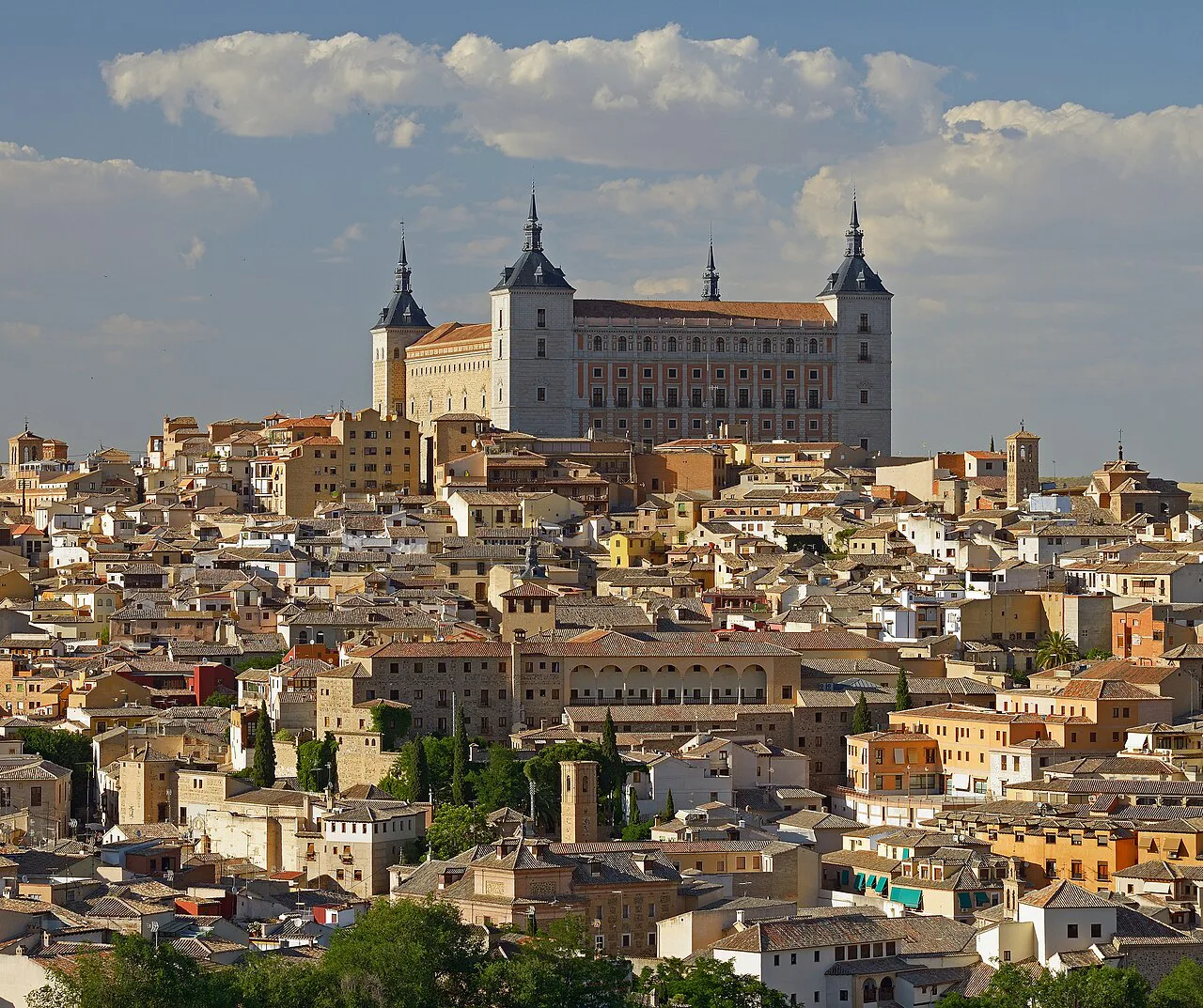
A fortress on Toledo's highest hill
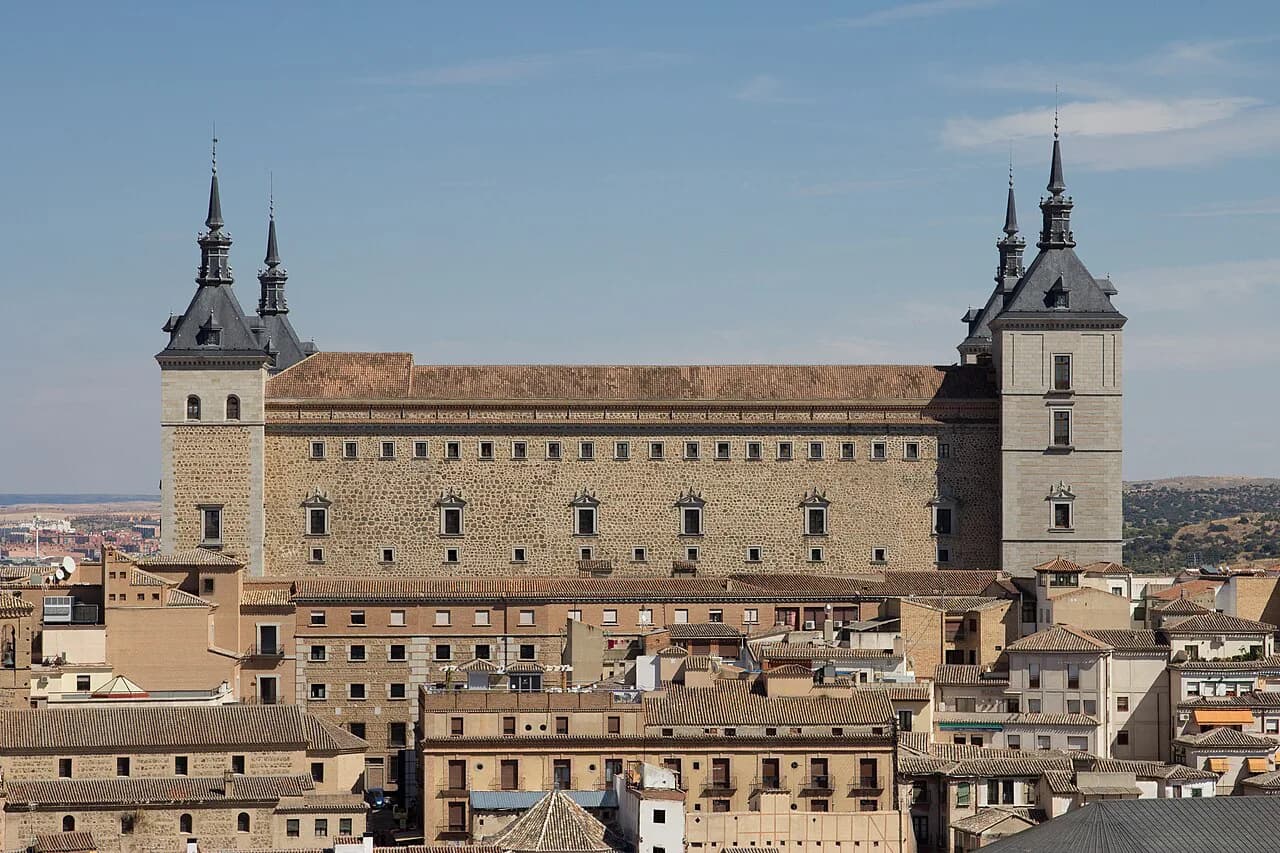
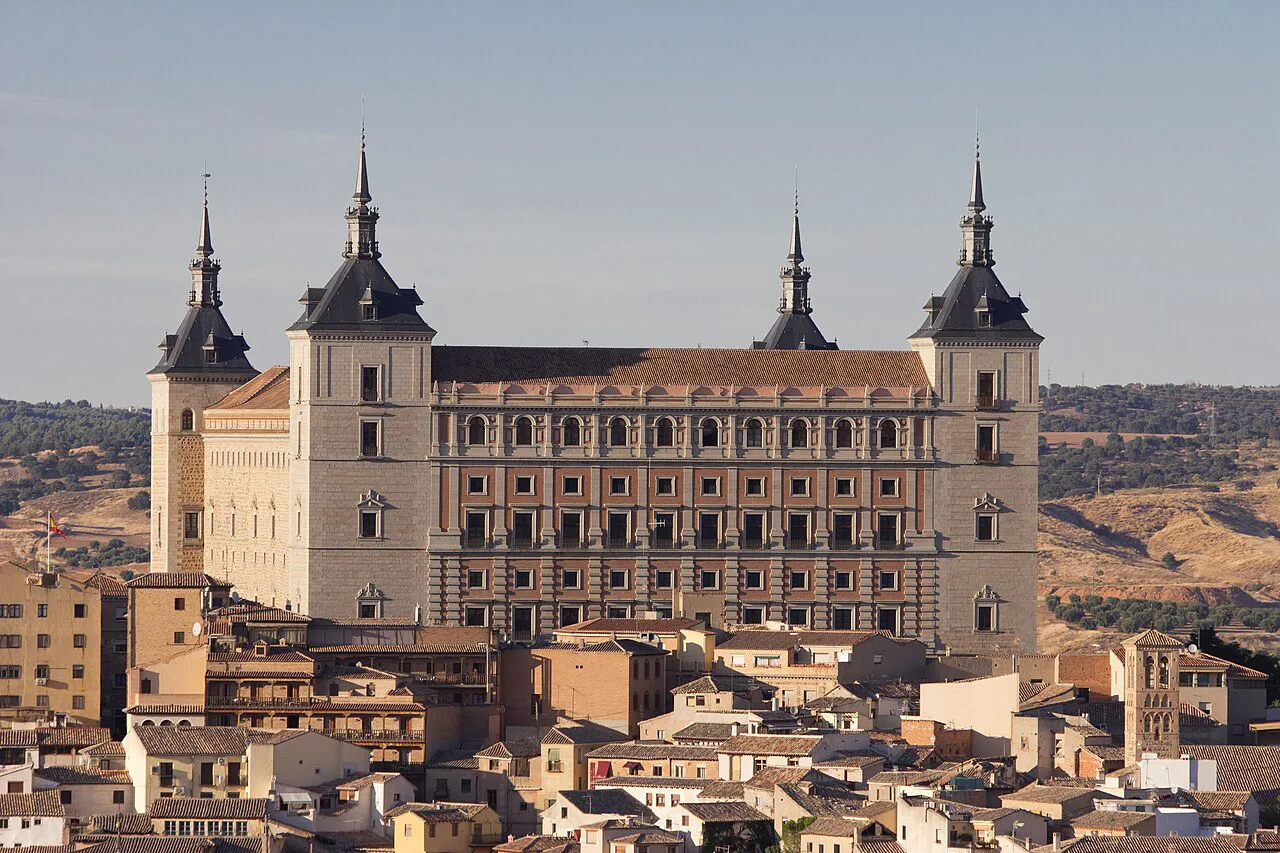
The building occupies the strategic high point of Toledo, a site used since Roman times and reshaped across the centuries into the square, four-towered block you see today. Its present outline dates from the Renaissance, when Carlos V and Felipe II turned the fortress into a royal residence. The result is a severe, symmetrical profile of the kind Castile does well, and it dominates the skyline from almost every approach to the old town.
Because the Alcázar holds the army museum, a visit mixes two registers: historic stonework and a modern, state-run collection with its own ticketing and closure rules. Treat them as separate decisions so you know how much of your day the building deserves. The wider set of monuments around it is mapped out in our Toledo Attractions: 6 Visitor Guides if you want to slot the fortress into a longer city plan.

Where the Alcázar is and where you go in
You enter the Alcázar from Calle de la Paz, not from the grand facade that fills the postcards. That single fact saves a slow circuit of the hill: aim for the street on the northern side of the building and follow it to the museum entrance. The address is given as Calle de la Paz, with the museum entrance on that side.
Toledo's old town is compact and steep, so the practical question is not distance but gradient. The Alcázar sits at the top of the historic centre, close to the cathedral quarter and the Plaza de Zocodover, which makes it easy to pair with a walk through the centre rather than a separate trip. Wear shoes that cope with cobbles and polished stone, and carry water in summer.

Opening days, hours and tickets
The museum opens Tuesday to Sunday from 10:00 to 17:00 and closes every Monday, so a Monday in Toledo should be built around the cathedral and the churches instead. General admission is 5 euros, and entry is free on Wednesdays. Over-65s, pensioners, under-18s, people with disabilities, university students, the unemployed, large-family and young-person card holders, and serving military and teaching staff in an official capacity also enter free with proof. The museum closes on 1 and 6 January, 1 May and 24, 25 and 31 December.
Tickets are sold through the army museum's own website rather than a city tourism pass, so buy from the official museum site and ignore resale listings with mark-ups. The tourism board for Castilla-La Mancha links to that sales page alongside a contact email and telephone number.
The free Wednesday is the single biggest lever on a short break: it turns the Alcázar into a low-cost stop that pairs neatly with the cathedral, which charges separately. Note that free admission does not mean shorter queues at peak holiday weeks, and the 17:00 closing is early enough that an afternoon start can feel rushed. Arrive in the morning if you want a calm run at both the building and the galleries.
What the Army Museum holds
Inside, the Museo del Ejército is a national collection covering the Spanish army across centuries, displayed in a modern museum format within the historic shell. It is a substantial, text-heavy museum, and the risk for a short-break visitor is gallery fatigue before you reach the building's own spaces. Decide in advance whether you are there for the collection or the architecture, and let that choice set your pace.
If you are travelling with someone who prefers art to military history, split up: the cathedral and the Museo del Greco, Toledo are within easy reach of the Alcázar and make a natural pairing with a shorter fortress stop.
The building itself
The fortress reads as a square block with a tower at each corner, a plan that conveys balance and power rather than ornament. That severity is the point: the Renaissance remodelling under Carlos V and Felipe II converted a medieval stronghold into a royal residence, and the current outline reflects that phase. Walk a full circuit outside if time allows, because the profile changes with the angle and is best understood from below.
The hilltop position gave the building its military logic: it commands the course of the Tajo and the roads into the city. That same elevation is why the Alcázar appears in so many views of Toledo from across the river. Our guide to Mirador del Valle explains the classic viewpoint on the far bank, where the fortress forms the anchor of the skyline.
How long to allow
Budget around two hours for a focused visit to the museum and the exterior, and up to three hours if you read the labels and linger in the galleries. Because the museum closes at 17:00, a late-afternoon start is a poor bet; allow 60 to 90 minutes if you mainly want the fortress and the hilltop setting.
Build the visit into a half day in the old town rather than a standalone trip. The cathedral, the churches and the narrow lanes of the centre sit within a short walk, and the Alcázar makes a sensible first stop before the streets fill. The Toledo cathedral is the obvious second anchor, and its own hours and ticket rules are set out in our guide.
Views over Toledo and the Tajo
The value of the Alcázar's position is the outlook: from the hill you read the whole shape of Toledo, the river gorge and the tiled roofs below. Photographers should plan a separate stop at the Mirador del Valle across the river, where the fortress becomes the subject rather than the vantage point. Between the two you get both directions of the same view.
Nearby sights in the same quarter
The cathedral, the Catedral Primada de Toledo, is the most important building within walking distance and the natural pairing with the Alcázar. Its opening pattern differs from the museum's, with Sunday hours that start in the afternoon, so check both before you fix a day. The treasury, cloister, choir and sacristy collection make it a substantial visit in its own right.
For a smaller, older stop, the Mezquita Cristo de la Luz on Calle Cristo de la Luz is a tenth-century mosque and the only one in Toledo still open to visitors. It sits in the same cluster of monuments and is included on the city's tourist bracelet, which also covers the Iglesia de Santo Tomé, home to El Greco's burial of the Count of Orgaz.
San Juan de los Reyes, Toledo lies further west and works well as a final stop, with its Gothic cloister and the chains hung on the facade. Pairing it with the Cristo de la Luz and the Alcázar gives a north-to-west sweep of the old town without backtracking.
Practical trade-offs
The Monday closure is the one fixed constraint: if your break includes a Monday, put the Alcázar on another day and give Monday to the cathedral and churches. Wednesday's free entry is the other decision point, though the galleries are busiest when admission costs nothing. The museum also shuts on 1 and 6 January, 1 May and 24, 25 and 31 December.
The last hour before 17:00 is the weakest slot: the museum's galleries reward slow reading, and staff need time to close the building. Come in the morning or early afternoon and leave the hilltop exterior for the cooler end of the day. Inland Castilian summers at midday are unforgiving on the exposed approach to the hill, so treat the climb as real exertion rather than a stroll.
Fitting the Alcázar into a Toledo break
Treat the Alcázar as a two-hour, half-day anchor rather than a whole morning: enter from Calle de la Paz, go Tuesday to Sunday, and use the free Wednesday only if you can accept more company. If your break includes a Monday, swap it for the cathedral and the churches and put the fortress on a different day. To see how it fits with the rest of the city, start from our Toledo Attractions: 6 Visitor Guides.
Explore more Toledo guides
Frequently Asked Questions
Can you buy Alcázar of Toledo tickets online?
Yes, the army museum's own website is the official sales channel, and the Castilla-La Mancha tourism page for the Alcázar links to it along with a contact email and phone number. Buy there rather than through resale sites, which add nothing. The museum site carries the current ticket types, prices and free-entry conditions.
Is the Alcázar of Toledo worth visiting?
Yes if you want a Renaissance fortress on the city's highest hill combined with a national army museum in one stop. It suits travellers who like military history and architecture together; those who prefer art and churches should keep it short and give the time to the cathedral and Santo Tomé instead.
What is the nearest other sight to the Alcázar?
The cathedral quarter sits within a short walk downhill, along with the Plaza de Zocodover and the Mezquita Cristo de la Luz on Calle Cristo de la Luz. San Juan de los Reyes is further west but still in the old town.