Things to Do in Palma: Old Town, Bellver and La Seu
Plan things to do in Palma: old-town lanes and Plaça Major, La Seu, Bellver's city views with free slots, and a sensible walking order for a short break.
On this page
If you have one day in Palma, give the morning to the old town and La Seu, the early afternoon to the Almudaina or Santa Catalina, and the late afternoon to Bellver Castle for the view back over the whole city. The sights sit in three bands — the walled old town, the port and Passeig Marítim, and the wooded hill of Bellver — so a sensible order saves a lot of walking. This guide covers what to see, how the city is laid out, which museums and palaces open free at specific times, and how Palma fits around island trips to Sóller, Valldemossa, Deià and Alcúdia.
How Palma is laid out: old town, port and Bellver hill
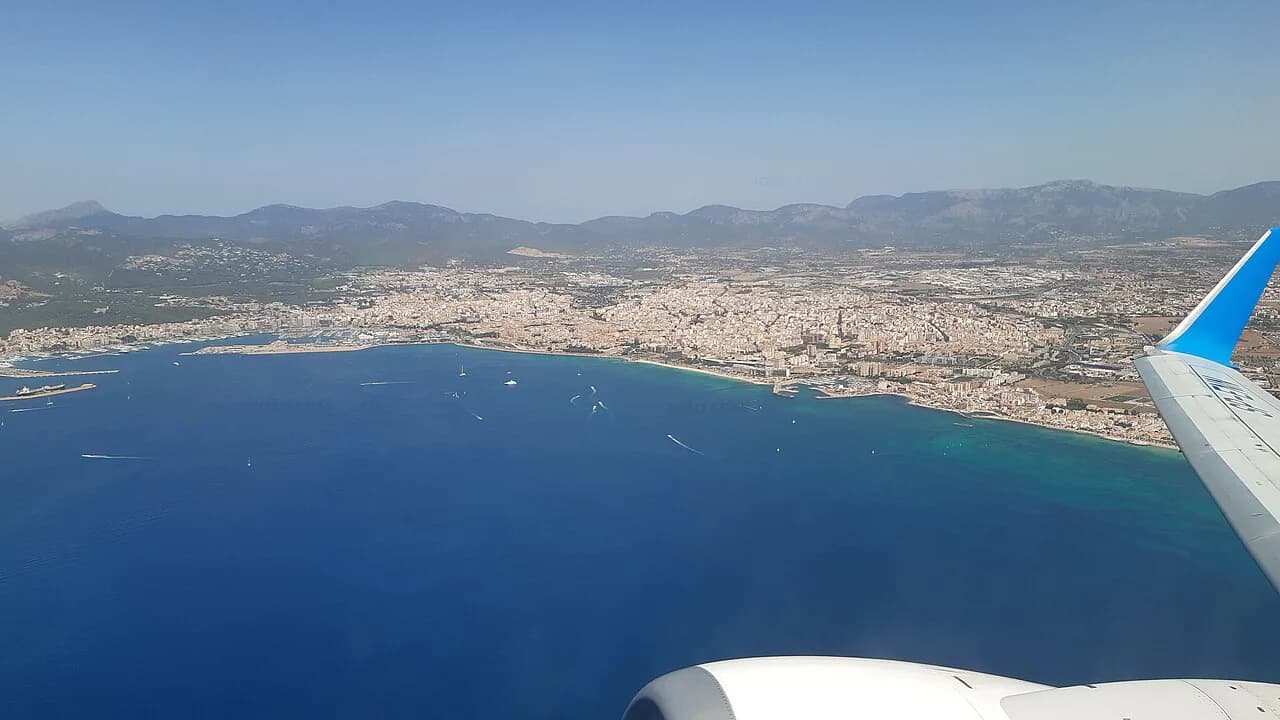
Almost everything that draws visitors sits within a compact core. The old town is a knot of narrow, cobbled lanes that is effectively pedestrian, so you explore it on foot rather than by car or bus. East of it, the Passeig Marítim runs along the waterfront and frames the harbour on both sides, which is where Palma makes its first impression on anyone arriving by ferry or cruise.
Bellver sits apart, on its own wooded hill west of the centre, and rewards the climb with a panorama over the entire city. Plan the day so the old town and waterfront come first and Bellver last, because it pulls you out of the centre and back. If you are building a route yourself rather than following a fixed plan, a Palma map of the old town lanes and the Bellver road is worth having on your phone, since the street pattern defeats guesswork.
Start in the old town: Plaça Major, Passeig des Born and Passeig de la Rambla
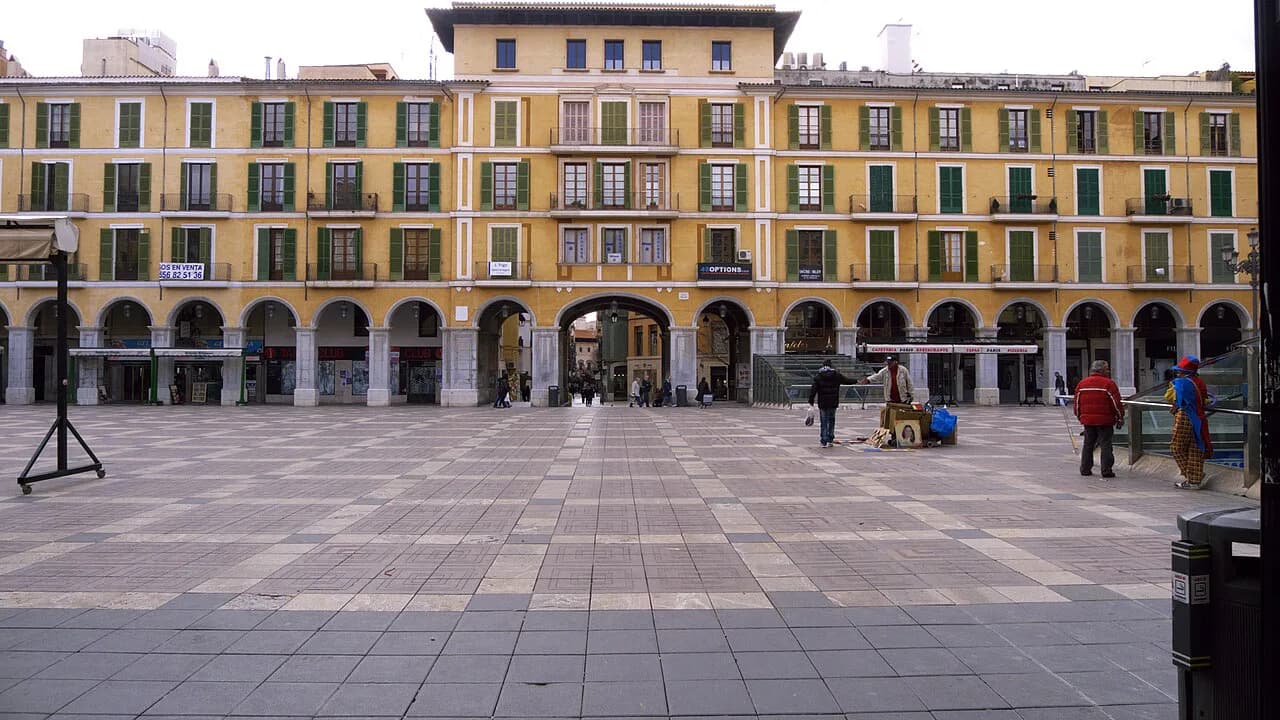
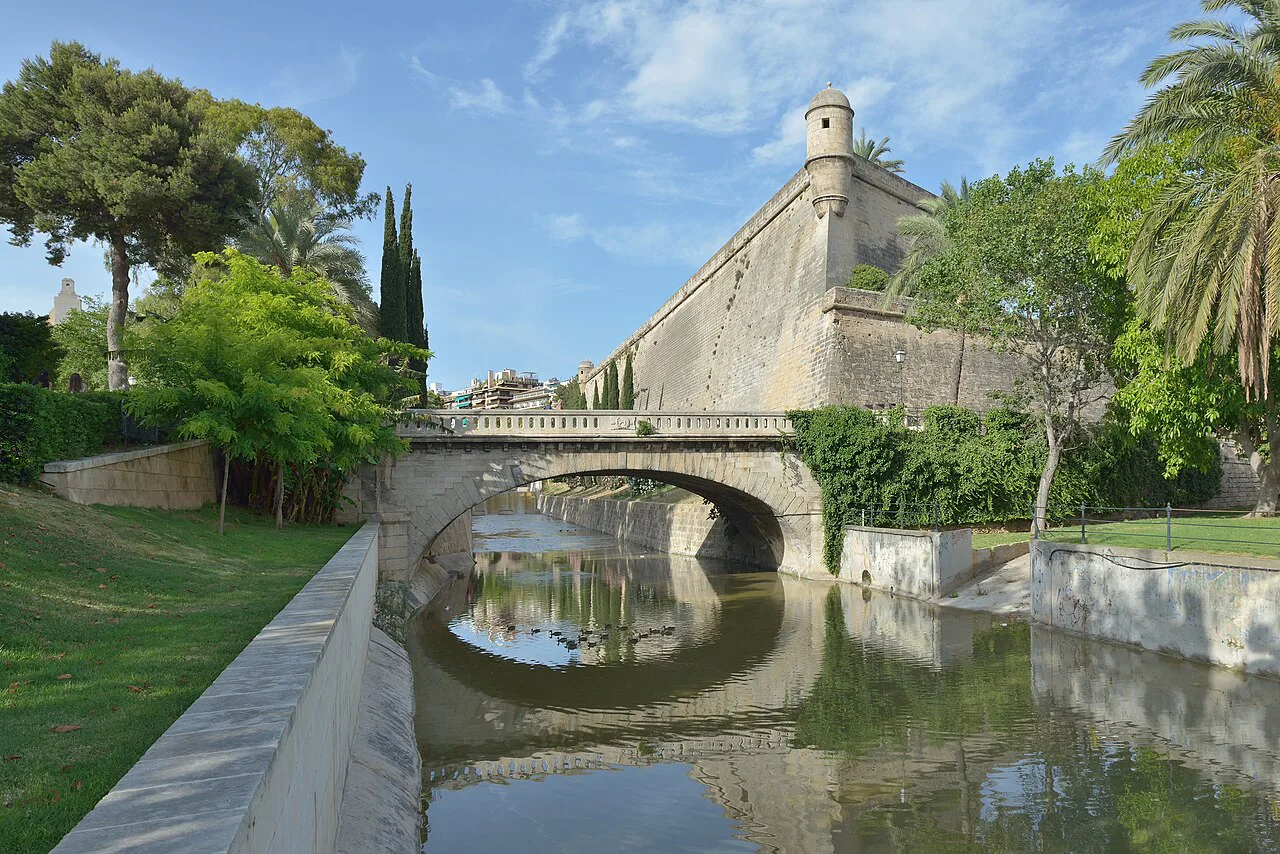
Begin at Plaça Major, the largest and most handsome square in the old town and a natural orientation point. From there the lanes radiate towards the cathedral quarter, with Gothic churches and old palaces appearing at almost every turn. Allow the old town half a day rather than an hour: the pleasure is in the wandering, not in ticking off a list.
For shops, the two addresses to know are the Passeig des Born and the Passeig de la Rambla, where most of the city's stores are concentrated. The Born is the grander of the two, a tree-lined promenade that the old town's better-known boutiques face onto. If retail is part of the plan, our guide to shopping in Palma sets out the streets and what each one is good for.
La Seu: Palma's cathedral and the winter light through the windows
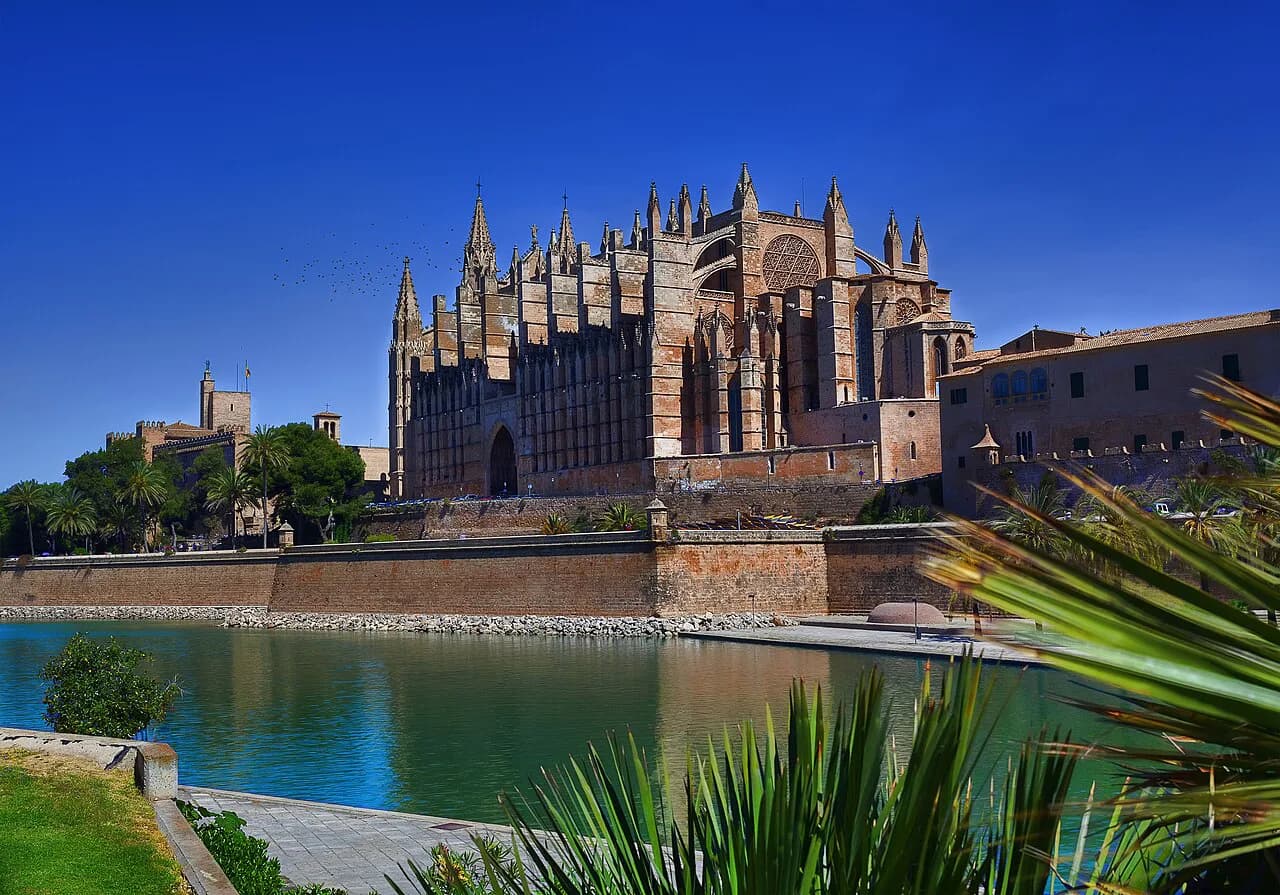
La Seu is the emblem of Mallorca and the one building in Palma that repays a fixed slot in the day. It is Gothic, enormous, and famous for the coloured light thrown through its windows; at the winter solstice the sunrise falls between the glass and the interior fills with light, which is why it carries the nickname the Cathedral of the Light. Antoni Gaudí is credited with the cathedral's present appearance. Our Palma old town guide places the cathedral among the lanes, courtyards and churches around it.
Ordinary visitors pay to go in, and the cathedral is open to island residents free of charge. It also runs themed guided visits inside from time to time, including visits to the tombs in the cathedral. If you want to time a visit around one of those, follow the cathedral's own channels rather than relying on anything published second-hand.
Palau Reial de l'Almudaina and free entry on Wednesday and Sunday afternoons
The Palau Reial de l'Almudaina stands opposite the cathedral and belongs on the same morning. It is free to visit on Wednesdays and Sundays between 15:00 and 18:00, with the last entry at 17:00. Those two afternoon windows are the cheapest way to see inside a royal palace in the city, and they are worth building the day around if the Almudaina is on your list.
The change of the guard falls on the last Saturday of each month and is free to watch, with the last Almudaina entry at 17:00 on free afternoons. For the longer story of how the Almudaina and the cathedral quarter evolved, the Palma history pages put the buildings into sequence.
Bellver Castle: the circular Gothic fortress and city views
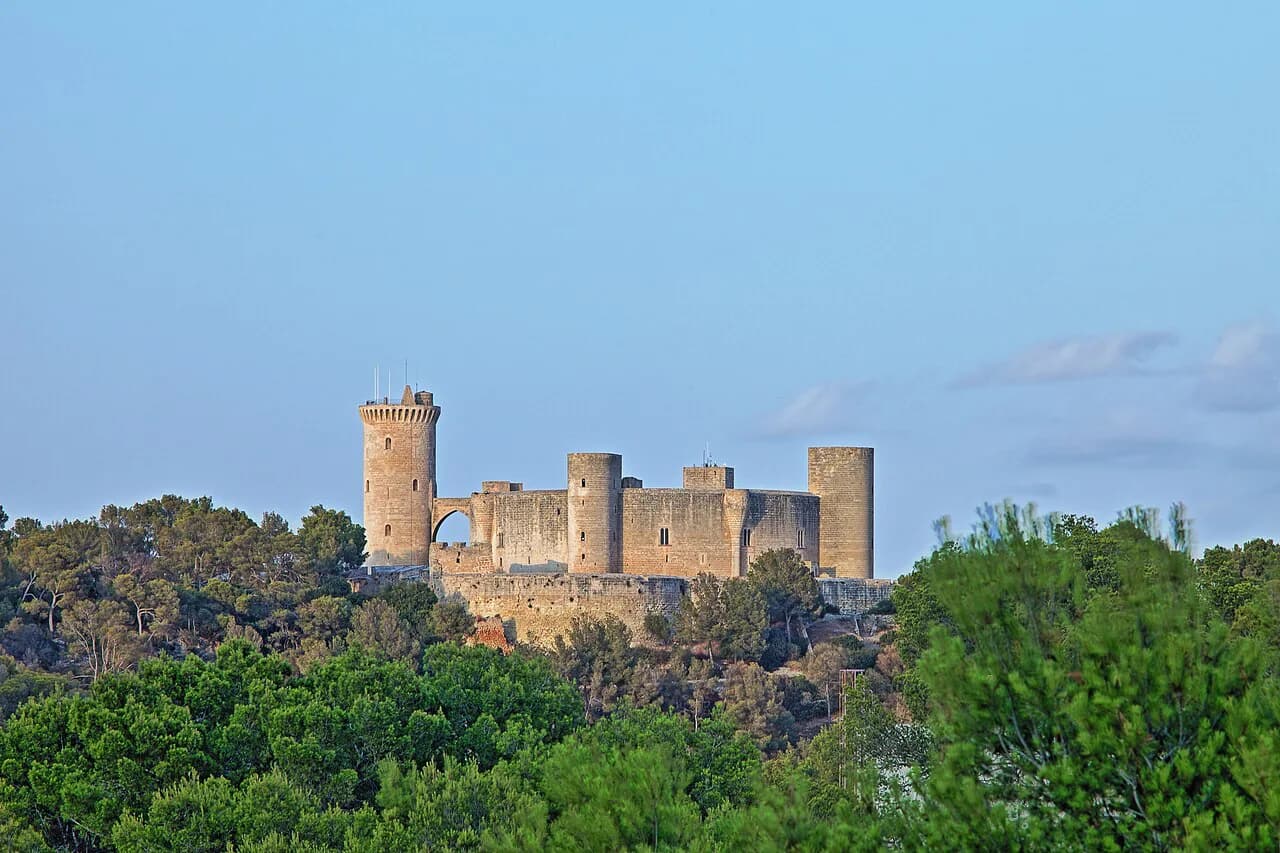
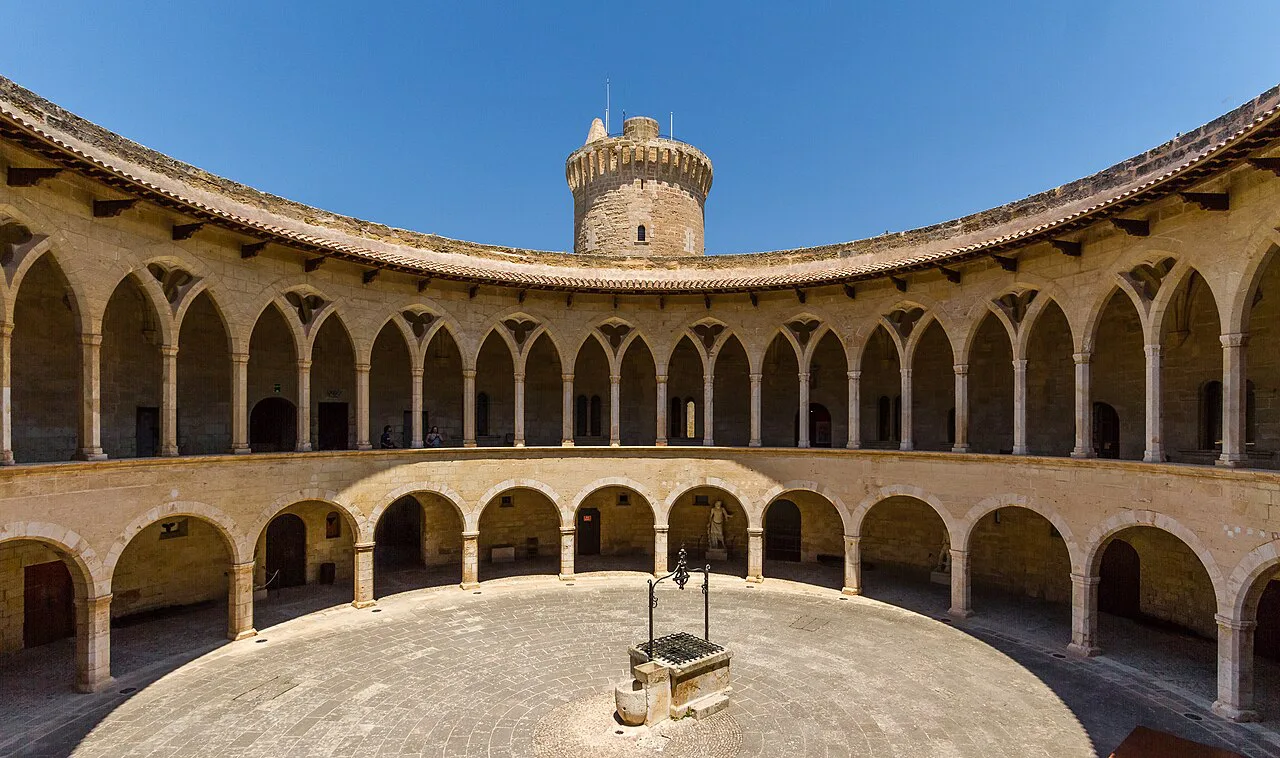
Bellver is one of the few circular castles in Europe, built from the fourteenth century, and the two-storey arcaded courtyard inside makes the heavy walls feel delicate once you are through them. The real prize is the roof: from up there the whole of Palma, the harbour and the plain behind it spread out at once. It is the single best viewpoint in the city, and it justifies the detour up the hill.
The castle is closed on Mondays. From Tuesday to Saturday it opens 10:00-19:00, dropping to 10:00-18:00 from October to March, and on Sundays and public holidays the hours are 10:00-15:00. Entry costs €4, except on Sundays, when the Gothic fortress is free to enter; on those days some rooms and exhibitions stay shut while the building and roof remain open.
Treat the Monday closure as the fixed point in your planning: a short break that starts on a Monday puts Bellver out of reach on arrival day, so hold it for the Tuesday morning instead. If the walk up the hill is unappealing, budget for a taxi in each direction rather than trying to combine it with an old-town loop.
Santa Catalina: the old fishing quarter and its market
Santa Catalina is the counterweight to the solemn old town, a former fishing quarter that has become the most mixed neighbourhood in Palma and now draws residents and visitors in equal measure. Its small streets are lined with shops, and the Mercat de Santa Catalina is the place to see the fish and the local produce. Afternoons are when the district socialises, so plan it as a late-afternoon stop rather than a morning one.
Pair it with the waterfront rather than the cathedral quarter: the Passeig Marítim, the harbour and the lanes of Santa Catalina sit close enough to make one continuous loop. That is also where a Palma boat trip fits naturally into the day, on the water rather than across the city.
Museums with free or reduced entry: Es Baluard, Fundació Juan March and Can Balaguer
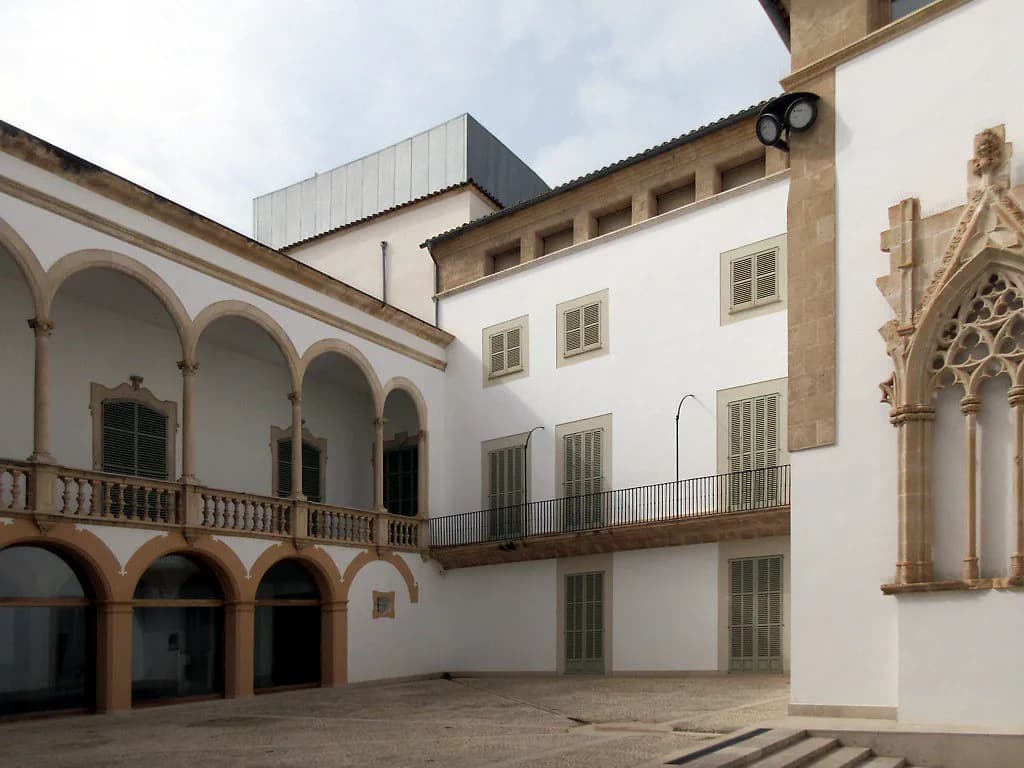
Palma keeps a surprising number of free doors open. The Es Baluard Museu d'Art Contemporani has free entry, the Fundació Juan March shows twentieth-century Spanish art free, and Can Balaguer, a town palace, is open to the public at no charge. None of these is a substitute for La Seu or Bellver, but on a hot or wet afternoon they are where the city's museums pay for themselves in shade and time.
Es Baluard shows contemporary art, while the Juan March foundation and Can Balaguer are both in the centre, so a museum hour can be added to an old-town morning without a detour. Opening days vary between the three, so check each one before you go.
Porto Pi lighthouse and Castillo de San Carlos
The Faro de Porto Pi is one of the oldest lighthouses in the Mediterranean, dating from around 1300, and it is among the oldest in Spain still working. Guided visits are free: Wednesday to Friday 10:00-15:00 and 16:00-19:00, and Saturdays 10:00-15:00. It is a good reason to push further along the waterfront than most short-break itineraries go.
The Castillo de San Carlos is further out again, and is a military museum with walls to walk; entry is free. Treat both it and Porto Pi as a half-day pairing for a second visit rather than trying to fold them into a single day in the centre.
Other free slots: the Ajuntament de Cort and the Marivent gardens
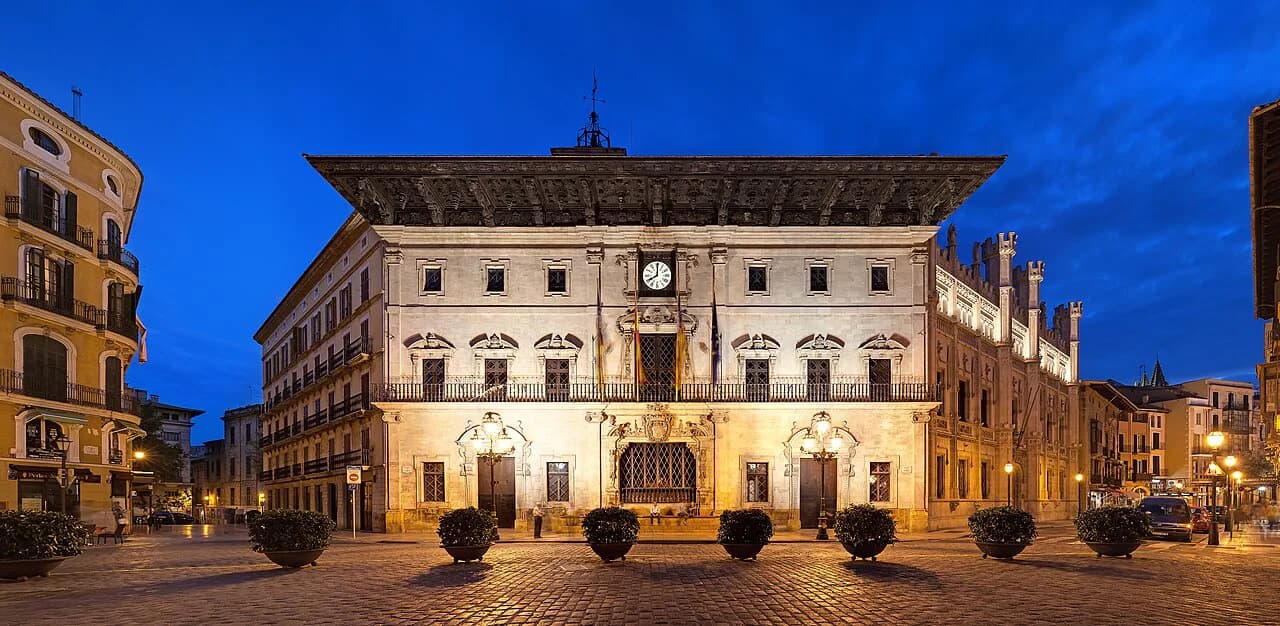
The Ajuntament de Cort, Palma's town hall, opens its doors to visitors on the second Sunday of each month, with two visits: one at 11:00 in Catalan and one at 12:00 in Spanish. Places must be booked in advance. It is a short, formal visit rather than a sight, but the building itself is one of the old town's better pieces of civic architecture.
The Jardins de Marivent are open all year apart from the fortnight around Easter and from mid-August, when they close to visitors. They are gardens rather than a monument, so they suit a slower second day. If you are travelling in those windows, leave them out rather than rearranging the trip.
Walking times between the main sights and how to get around
The old town is pedestrian, so La Seu, the Almudaina, Plaça Major and Santa Catalina can all be linked on foot within a single morning, though the cobbles and narrow lanes slow you down more than the distances suggest. Bellver is the exception: the hill sits outside the centre and needs either a taxi or a steady climb. A structured walking tour of the centre is a sensible first morning if you want the layout explained before setting off alone.
Keep a taxi budget for Bellver and Porto Pi, and walk everything in between. There is also a free-tour scene in Palma: a two-hour monumental walk and a night tour built around the city's legends, both paid by tip at the end. Those suit travellers who want the old town narrated rather than read.
One day in Palma: an order that avoids backtracking
Start at La Seu and the Almudaina while the morning is cool and the lanes are quiet, then drop into the old town towards Plaça Major and the Born for a coffee and a look at the shops. Take the early afternoon in Santa Catalina and along the Passeig Marítim, and finish at Bellver for the view before it closes. The order works precisely because it never doubles back.
If your day falls on a Wednesday or Sunday, reverse it slightly: save the Almudaina for the 15:00-18:00 free window and give Bellver the morning, remembering that Sunday hours at the castle end at 15:00. A pre-planned Palma itinerary makes that switching easy when the calendar forces your hand.
Where Palma fits a Mallorca short break: Sóller, Valldemossa, Deià and Alcúdia
Palma is the base from which the rest of Mallorca opens up, and the Sóller railway is the classic anchor: the line runs from the city to Sóller, where a tram has linked the town with its port since 1913. From Palma it is a straightforward day out without a car, and the vintage carriages are half the point of the journey.
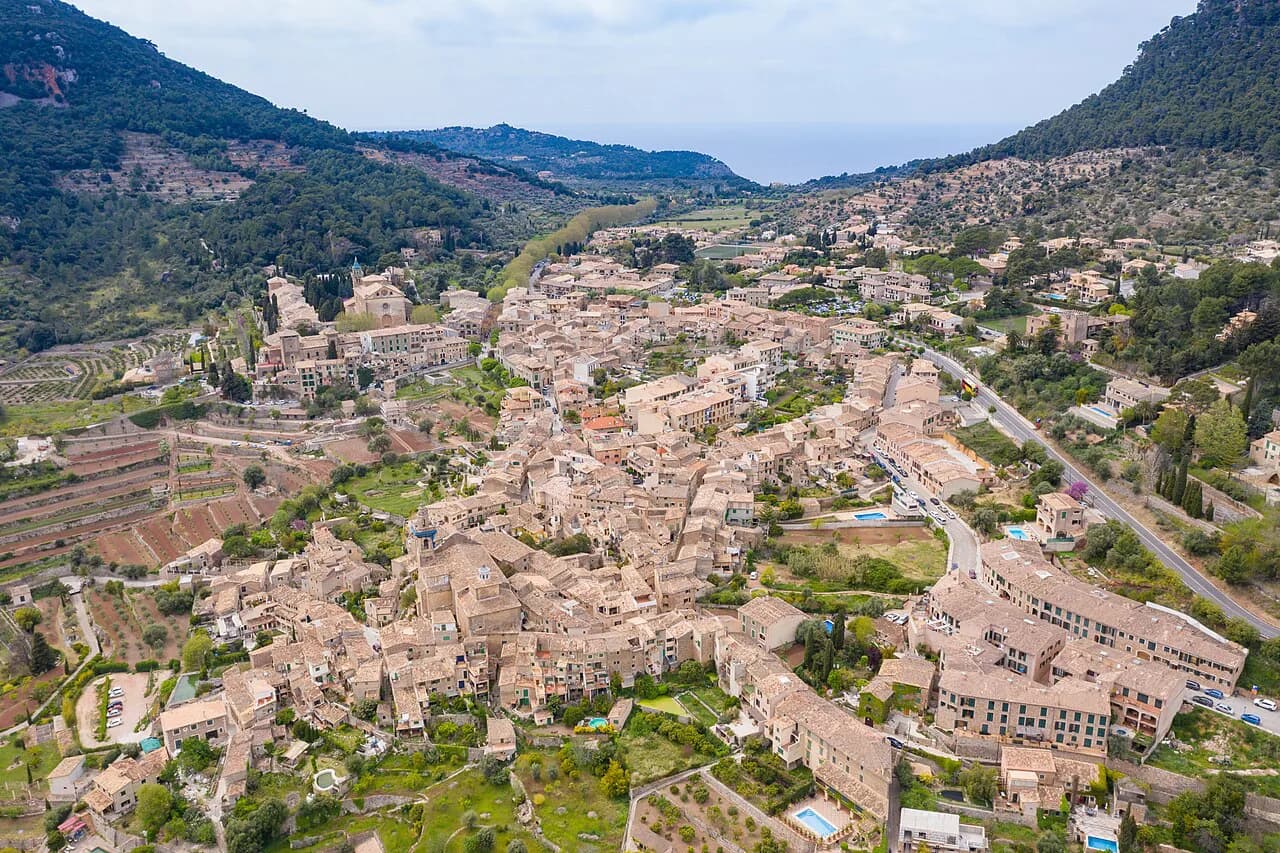
Beyond Sóller, the Tramuntana villages of Valldemossa and Deià make up the other obvious pairing. Valldemossa's Real Cartuja is where George Sand and Chopin spent the winter of 1838-39, and Deià was home to Robert Graves, whose house is open to visitors. Both villages have steep stone lanes that make a slow wander the right approach. Our guide to the best towns in Mallorca beyond Palma covers the alternatives if you want a different short-break base.
For a second island day, Alcúdia is the strongest contrast to Palma: a walled town declared a Conjunto Histórico Artístico, with medieval gates and the ruins of the Roman city of Pollentia just outside. The two towns tell completely different versions of Mallorca's history, and splitting a break between them is a sound use of time.
Which Palma day suits your short break?
For a first short break, build the day around La Seu, the Almudaina and the old town, and keep Bellver for a clear afternoon when the view will carry. If your visit lands on a Sunday, the free castle before 15:00 and the free Almudaina from 15:00 make one of the best-value days in Spain; on a Monday, keep to the centre because Bellver is closed.
Use Palma as the anchor and let the rest of the island orbit it: Sóller by train, Valldemossa and Deià by road, and Alcúdia as the second walled town. If you are weighing a different historic city with a walled core and a waterfront, our guide to things to do in a Coruña covers a comparable mix of old town and harbour. The city rewards a slow walk more than a checklist, and the lanes of the old town are the part you will remember.
Explore more Palma guides
Frequently Asked Questions
What is Palma de Mallorca famous for?
Palma is known above all for La Seu, the Gothic cathedral whose winter-solstice light gives it the nickname the Cathedral of the Light, and for Bellver, the circular Gothic castle on its wooded hill with the best panorama in the city. Around those sit the old town's lanes, the Almudaina palace opposite the cathedral, and the one-time fishing quarter of Santa Catalina.
Is Palma worth visiting for a short break?
Yes, because the essentials are compact: the old town is pedestrian and the cathedral, the Almudaina and Plaça Major sit within a morning's walk of one another. That leaves the afternoon spare for Santa Catalina or Bellver, and it means a two- or three-night break does not feel rushed.
What can you do in Palma for free?
Several of Palma's sights open free at specific times. Bellver is free on Sundays, when hours run 10:00-15:00, and the Almudaina is free on Wednesdays and Sundays 15:00-18:00 with last entry at 17:00. Es Baluard, the Fundació Juan March and Can Balaguer all admit visitors free, guided visits to the Faro de Porto Pi are free, and the Castillo de San Carlos is free to enter.
Sources
Notes for your next Spanish town break
Optional updates to our guides.
You might also like
Continue reading
More guides you'll find useful