Palma Old Town: Streets, Squares and Monuments to Walk
Plan a walk through Palma old town, from Plaça d'Espanya to La Seu, with the kasbah lanes, squares and monuments that make sense in walking order.
On this page
Walk Palma old town from Plaça d'Espanya to the sea and you cross the whole historic centre in one legible line: market, old Jewish quarter, arcaded square, Arab Baths, cathedral and palace. The core is a compact warren of lanes that rewards an ordered route rather than an alphabetical list of sights. This guide sets the order, explains why the streets twist as they do, and flags the heat and closing hours that shape when to walk.
What Palma old town is and where it sits in the city
Palma is the capital of Mallorca and the economic and cultural centre of the island, and its old town is the walled historic quarter at the heart of it. The quarter grew as an Arab kasbah, which is why it reads as a maze of narrow lanes rather than a grid, and walking is the natural way to cover it. The modern city wraps around this core, so you can step from wide modern avenues into medieval stonework within a few minutes.
For planning purposes the old town is one district with several distinct edges: the commercial streets near Plaça d'Espanya, the cathedral terrace above the Parc de la Mar, and the old sea wall where Es Baluard stands. Castell de Bellver sits on its hill beyond the centre, so it belongs to a separate outing rather than the middle of this walk. Treating these as edges keeps the centre uncluttered and the day realistic.
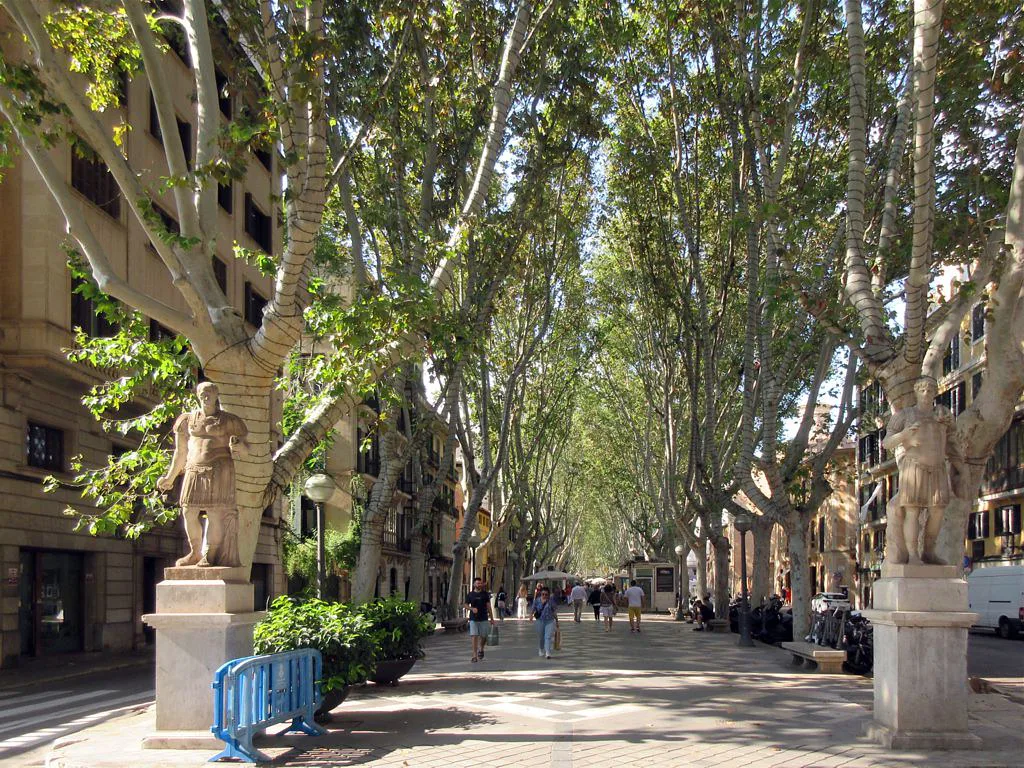
How the old town is laid out: kasbah lanes, walls and the sea
The street pattern descends from the Islamic medina, so lanes bend, narrow and occasionally dead-end, and two parallel streets can lead to very different places. The reliable anchors are the squares and the market: Plaça d'Espanya, Plaça Major, Plaça de la Seu and the Mercat de l'Olivar give you fixed points to steer between. Once you accept the detours, the quarter becomes easy to read.
A published accessible walking route through the old town runs about 2 km, starting at Plaça d'Espanya and finishing at Plaça de la Seu, and describes the ground as almost entirely flat with wide pavements and generous open spaces. That profile suits most walkers, though the lanes off the main line can narrow where the medieval street pattern survives.
The walk has a natural direction: inland squares first, then the cathedral terrace, then the sea. Save the maritime end for last so the Parc de la Mar and the palace frontage crown the day rather than arriving before you have seen the centre.
Start at Plaça d'Espanya and Mercat de l'Olivar
Plaça d'Espanya is the practical starting point: the city's nerve centre, close to the transport hubs and easy to find from any part of Palma. From there the route runs to the Mercat de l'Olivar, which puts you immediately in the working heart of the centre. Arriving early gives you the market before the lanes fill.
The Olivar market is a useful orientation stop rather than a destination in itself: it tells you where the commercial streets sit relative to the old quarter. From the market, the route continues along Carrer de Sant Miquel, where the church of the same name stands. Use these two landmarks to fix your bearings before the streets tighten.
Carrer de Sant Miquel and the old Jewish quarter
Carrer de Sant Miquel carries you through the old Jewish quarter, a stretch of emblematic houses and commercial streets that shows how layered the centre is. This is where Palma old town feels lived-in rather than museum-like: shopfronts, doorways and narrow facades line the way. Walk it slowly, because the interest is in the detail of the street rather than a single monument.
The same stretch leads to the Fundació Joan March, which the accessible route places on the way from Sant Miquel towards the bigger squares. The foundation's base, the Palau March, is a historic mansion combining Mediterranean and neoclassical elements, and it stages temporary exhibitions and events, so its programme is worth checking before you build a stop around it.
Plaça Major and its arcades
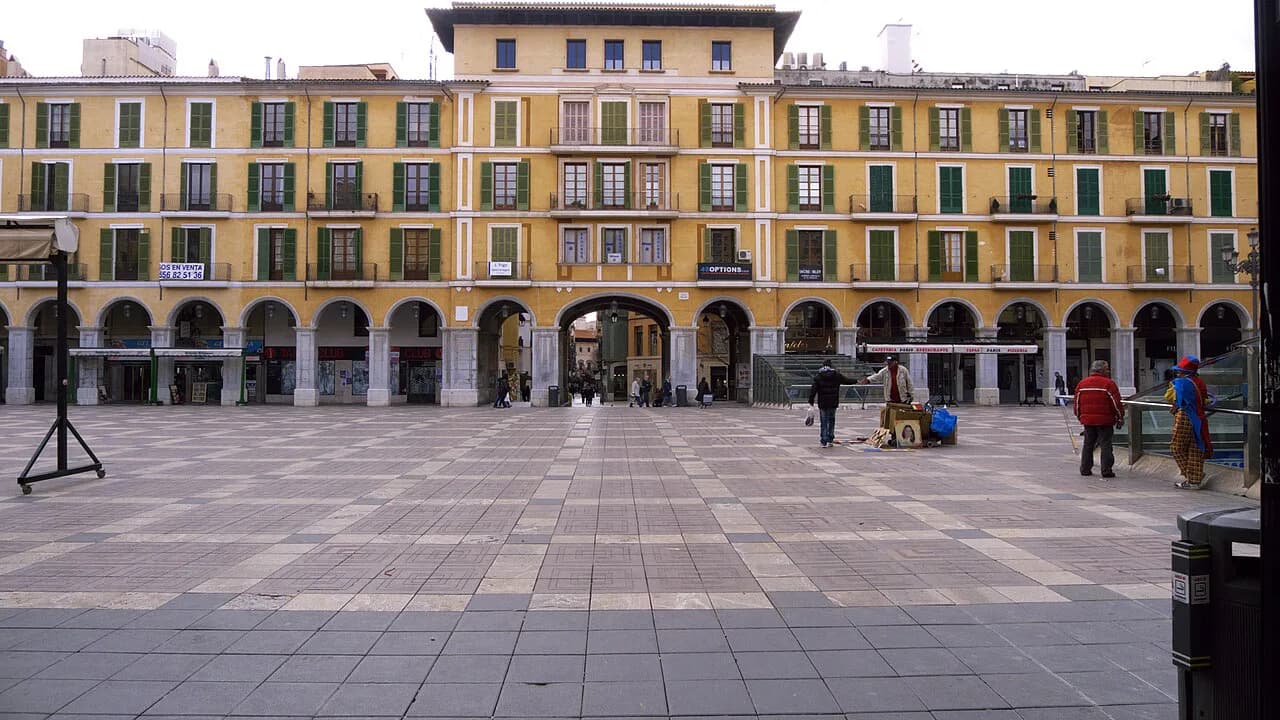
Plaça Major is the great open room of the old town, busy at any hour and framed by architecture of the fourteenth century. Its arcades give shade and a natural pause, and the square works as a mid-walk reset before the lanes close in again towards the cathedral. Come through it rather than around it; it is the clearest point on the map between the market and La Seu.
From Plaça Major the accessible route continues towards the Passeig Marítim, passing the tourism office before reaching Plaça de la Seu, the cathedral square facing the Parc de la Mar. That sequence is worth keeping: the square opens onto the sea view at the end rather than the beginning.
The lanes between Plaça Major and the cathedral are the densest part of the kasbah, and they are where a map earns its place. Keep the cathedral towers in view where you can, and accept that the straight line is rarely the shortest here.
The Arab Baths (Banys Àrabs)
The Banys Àrabs are a well-preserved example of Arab architecture dating from the tenth century, built around a vaulted central hall with smaller chambers around it. The layout reflects the bathing rituals of the period, and the gardens make a quiet pause in the middle of the city. It is a small site with a clear story, best taken as a short, deliberate stop rather than a long visit.
The baths also explain the Islamic imprint on the island that the street pattern already hints at, which makes them a good pairing with the lanes around them. Small historic sites in Spain often keep short and changeable hours, so plan the baths for the morning or late afternoon rather than the middle of the day.
La Seu, Plaça de la Seu and Parc de la Mar
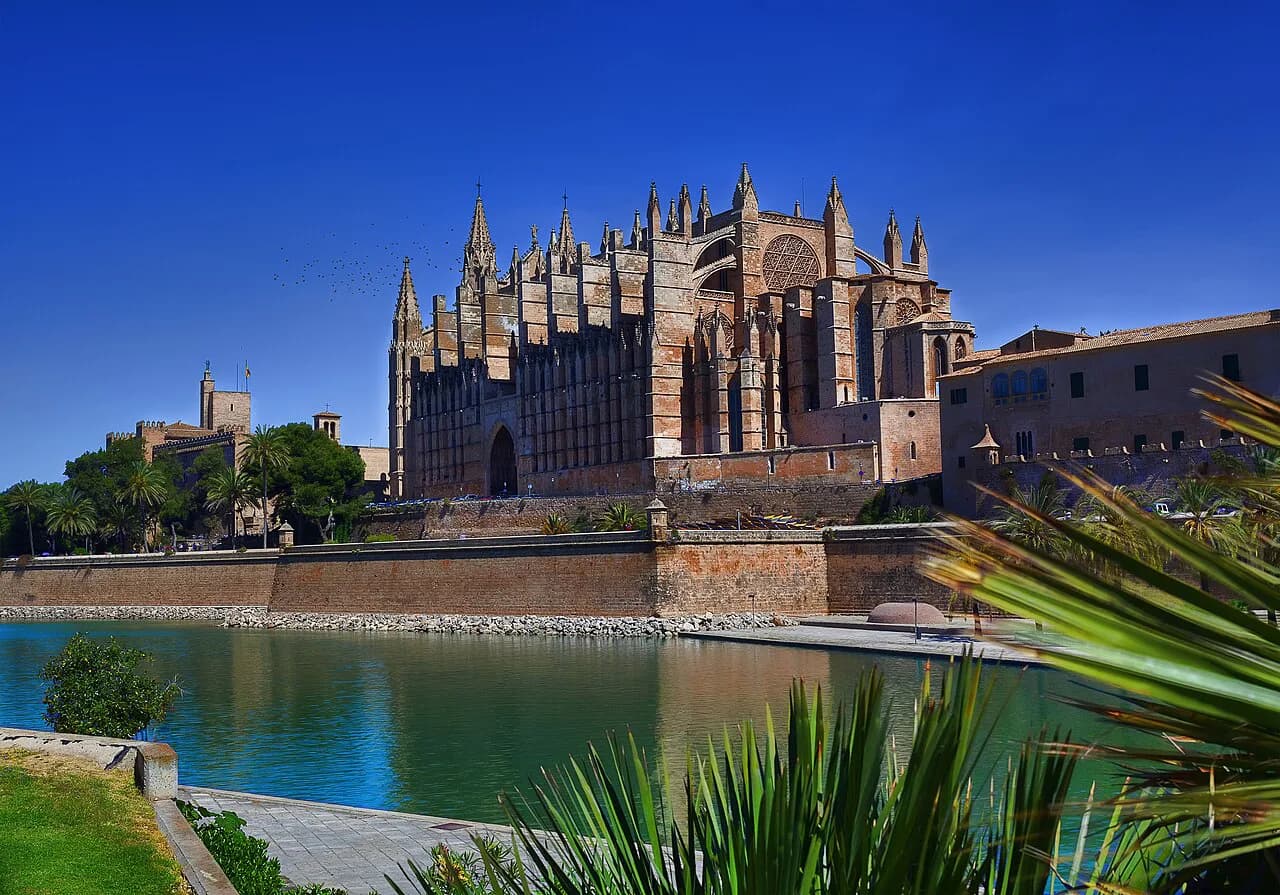
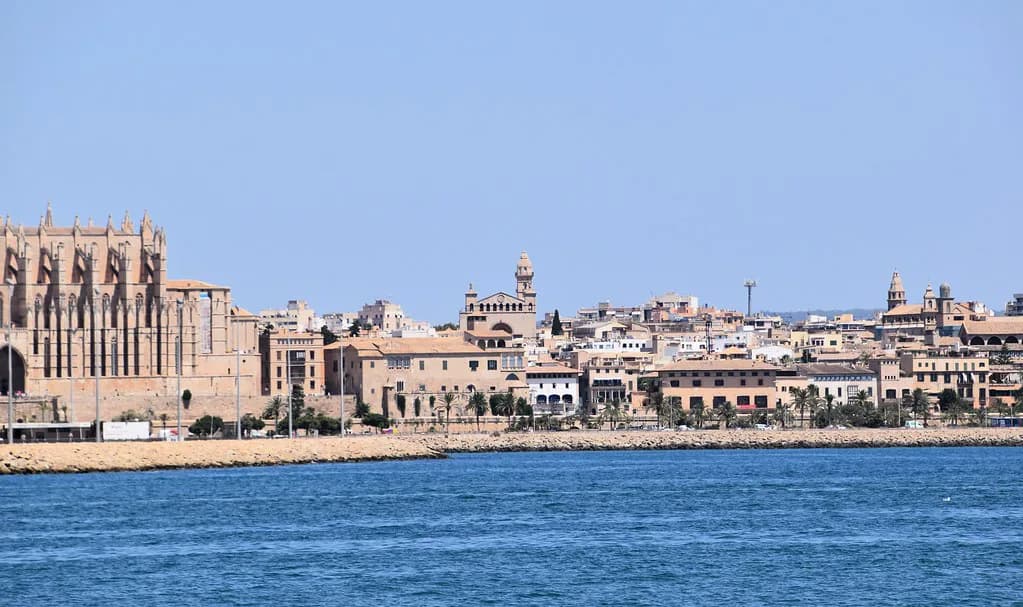
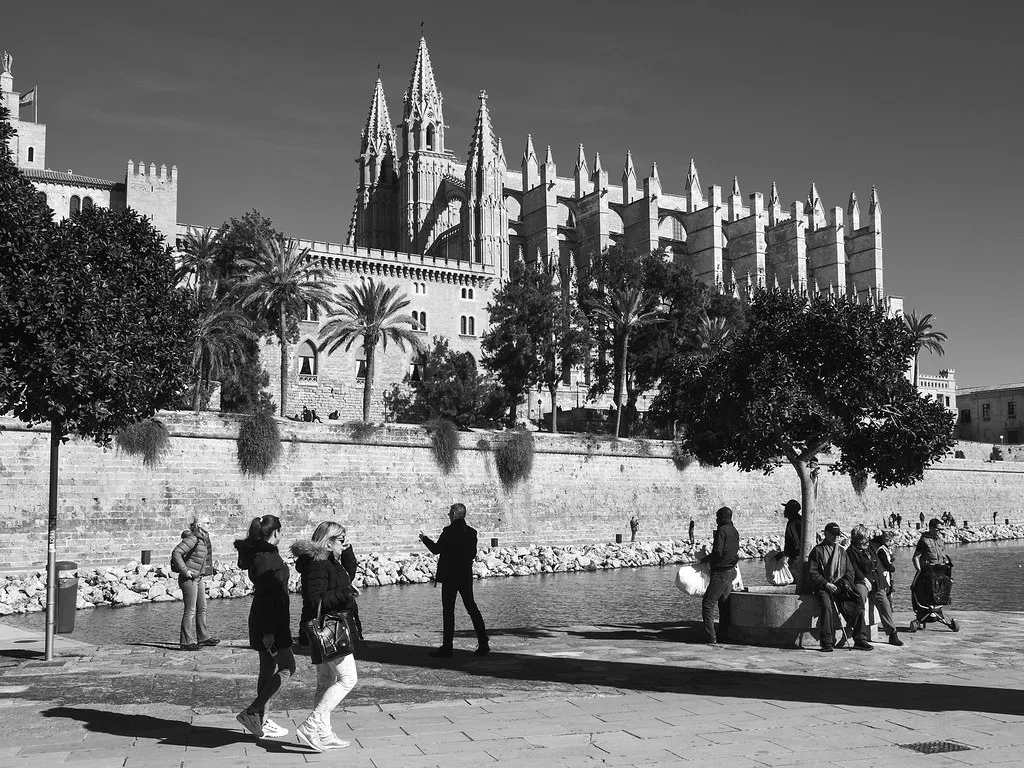
La Seu, Palma's cathedral, rises above the Parc de la Mar and the Mediterranean, known for its Gothic architecture and its rose window. Inside, the nave and stained glass carry the visit, and the interior includes work associated with Antoni Gaudí. The cathedral square, Plaça de la Seu, is the pivot between the old lanes and the waterfront.
Below the cathedral, the Parc de la Mar is a seafront park with reflecting pools that mirror the building, plus fountains and open lawns, and it is one of the city's best spots to watch the sunset. It is also the natural end point of the walk, where the kasbah lanes finally open out. The cathedral is a working church, so check the notice at the door for visiting times before you queue.
Palau de l'Almudaina next door
The Palau de l'Almudaina stands beside the cathedral and began as a Muslim fortress before becoming a royal residence, showing a blend of Moorish and Gothic architecture. Inside, the royal rooms, courtyards and the Chapel of Santa Ana, with its medieval frescoes, trace the island's changes of rule. It is the one stop on this walk that rewards a proper hour rather than a glance.
Because it sits directly next to La Seu, the palace fits naturally between the cathedral and the sea without adding distance to the route. Give it an hour so the royal rooms and the Chapel of Santa Ana are not rushed.
Es Baluard on the old sea wall
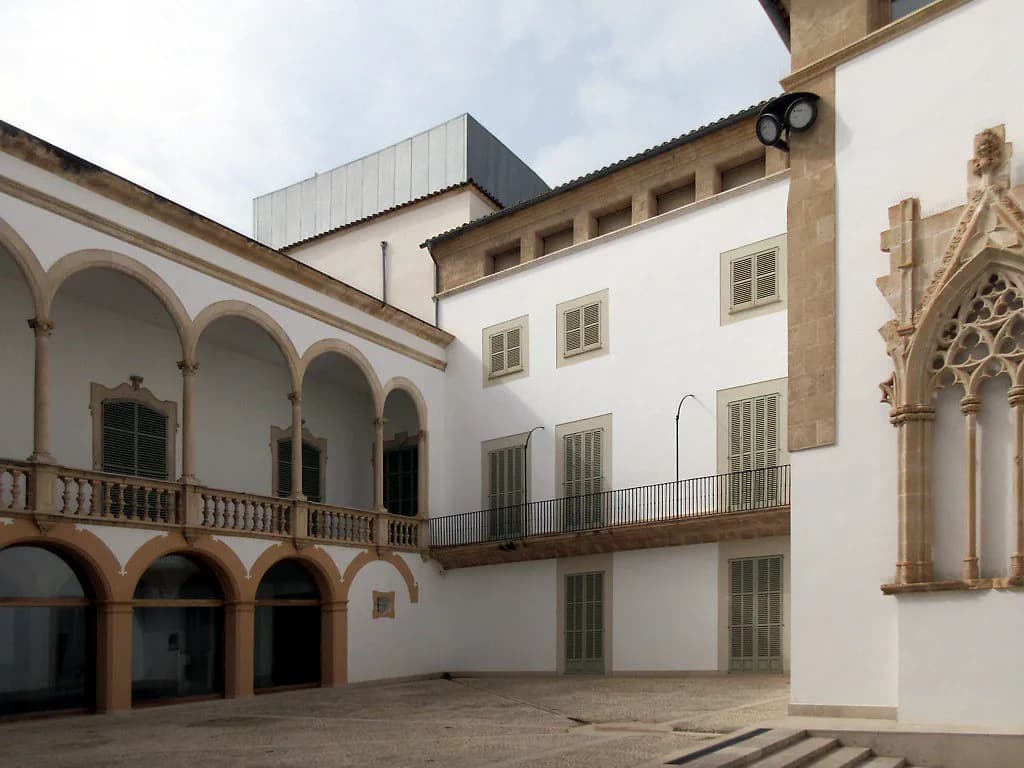
Es Baluard is Palma's contemporary art museum, housed in a former military fortress on the old sea wall, with a collection of Balearic and Spanish art including works by Joan Miró and Picasso alongside installations and sculpture. The building itself, historic stone meeting modern design, is part of the draw, and its position gives wide views over the city, the port and the coast.
Treat Es Baluard as the western edge of the old town rather than a stop in the middle, and give it its own slot if contemporary art is your reason for coming. A wider survey of the city's collections sits alongside it in our guide to museums in Palma, which helps if you are choosing between institutions rather than visiting all of them.
Castell de Bellver beyond the centre
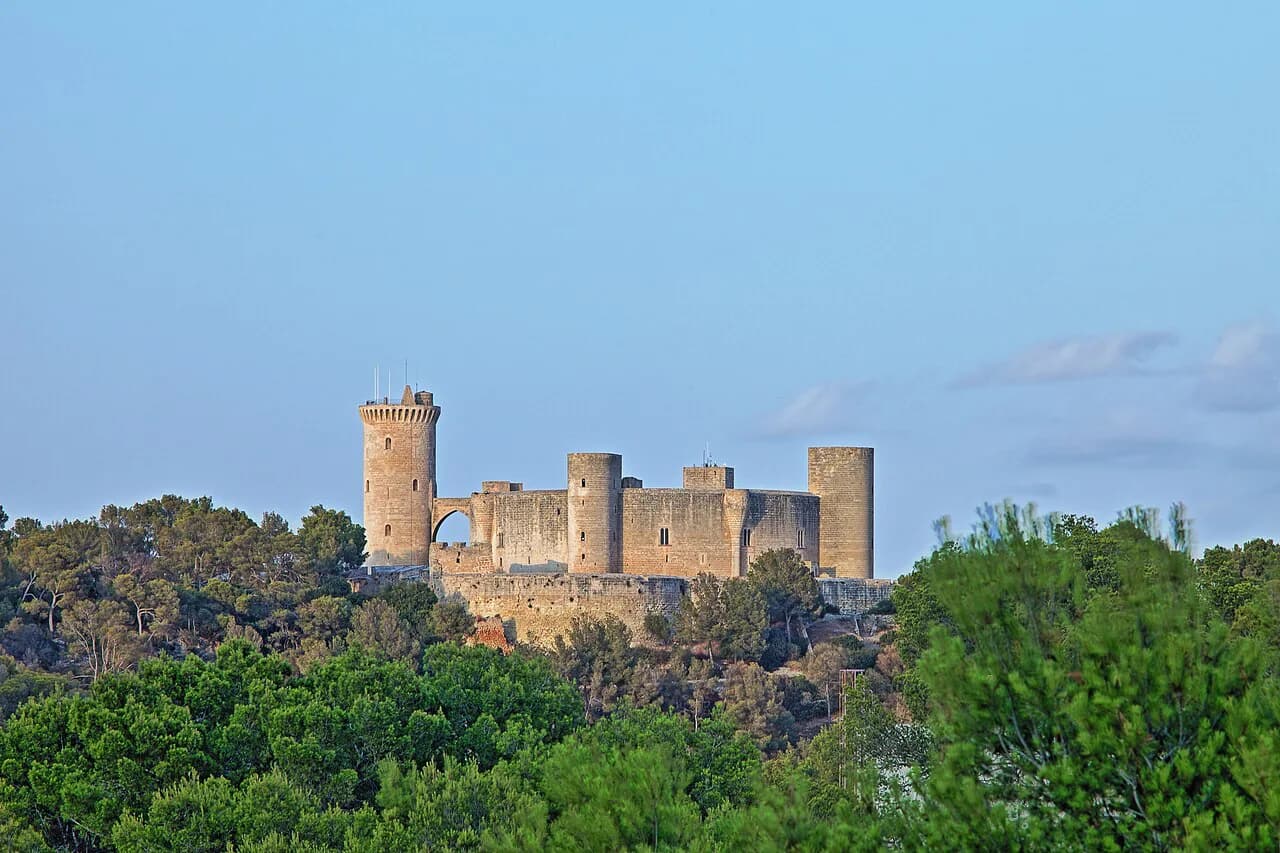
Castell de Bellver is the fourteenth-century Gothic castle on the hill above the city, unusual for its circular plan, and it once served as a royal residence and a prison. Visitors can see the inner courtyard, the chapel and a museum of archaeological and historical material from the island, and the hilltop setting gives wide views over Palma and the surrounding countryside.
Bellver is not part of the old-town circuit: it requires its own trip out of the centre and back, which is why it belongs to a second day or a half-day. If you have only one day in Palma, the lanes and the cathedral will use it well; keep Bellver for a longer stay.
A practical walking order and how long the circuit takes
The order that works is Plaça d'Espanya, Mercat de l'Olivar, Carrer de Sant Miquel and the old Jewish quarter, the Fundació Joan March, Plaça Major, the Banys Àrabs, Plaça de la Seu and La Seu, the Palau de l'Almudaina, the Parc de la Mar, and finally Es Baluard if the museum is on your list. It follows the published accessible route and adds the palace, the baths and the museum at the points where they naturally sit.
As a measured figure the accessible route is about 2 km, which is the walking distance alone; add the time spent inside La Seu, the Almudaina and the baths, and the day stretches accordingly. Do not compress the cathedral and palace into a rushed hour if you want to see both properly.
If you would rather not plan the sequence yourself, our fuller guide to things to do in Palma covers the wider city beyond the walls, and the Palma Attractions hub gathers the individual monument guides so you can read up on the cathedral or the castle before you go.
When to walk it: heat, siesta hours and crowds
Palma's summer midday heat makes the exposed squares and the cathedral terrace hard work, so walk the lanes early and leave the waterfront for the evening when the light is better and the reflecting pools do their work. Small historic sites often close for part of the afternoon, so front-load the interiors and keep the open-air stretches for later.
Crowds build through the morning around Plaça Major and Plaça de la Seu, and the market is at its most useful early. Starting at Plaça d'Espanya soon after opening puts you ahead of the groups at the cathedral end.
Accessibility of the route and its pavements
The published route through the old town is described as almost entirely flat, with wide pavements and spacious open areas, which makes the main line manageable for many visitors with limited mobility. Off that line, the kasbah lanes narrow, and steps and slopes can appear where the medieval street pattern survives.
Plan the day around the flat spine and treat the tighter lanes as optional detours rather than the route itself. The same source lists the cathedral square and the seafront promenade among the open, generous spaces, so the rewards at the end are the easiest part to reach.
Which end of the old town to save for last
Finish at the sea. Walk Palma old town from Plaça d'Espanya in the morning, take the market, Sant Miquel, Plaça Major and the Arab Baths at an unhurried pace, and leave La Seu, the Almudaina and the Parc de la Mar for the afternoon and early evening. That order keeps the interiors for the cooler hours and lets the cathedral terrace close the day.
If you have a second day, give it to Es Baluard on the old sea wall or to Castell de Bellver on its hill rather than squeezing either into the centre circuit. And if you want to carry the walk into the rest of the island, the best towns in Mallorca beyond Palma are the natural next step.
Frequently Asked Questions
What is Palma de Mallorca famous for?
For its old town above all: the Gothic cathedral La Seu, the royal Palau de l'Almudaina beside it, the Arab Baths, the arcaded Plaça Major and the seafront Parc de la Mar. The circular Castell de Bellver on the hill above the city is the other landmark people associate with Palma.
How much time do you need in Palma?
One full day covers the old-town walk from Plaça d'Espanya to the Parc de la Mar, including the cathedral and the palace, if you start in the morning. Add a second day for Es Baluard or Castell de Bellver, both of which sit outside the centre circuit.
How did the Islamic past shape Palma old town?
The old town grew as an Arab kasbah, which is why its lanes twist and dead-end rather than forming a grid. The Arab Baths, dating from the tenth century, and the fortress origins of the Almudaina are the clearest surviving traces in the centre.
Sources
Notes for your next Spanish town break
Optional updates to our guides.
You might also like
Continue reading
More guides you'll find useful