Palma Walking Tour: A Self-Guided Route Through the Old Town
Follow a self-guided Palma walking tour through the old town, from the Parc de la Mar and the Cathedral to the Plaza Mayor, with stops in a sensible order.
On this page
A self-guided walk is the best way to see Palma's old town, and the route below runs in a single line from the Parc de la Mar to the Mercat de l'Olivar, so you never double back. It takes in the Cathedral, the Palacio Real de l'Almudaina, the patios of the noble houses, Santa Eulàlia, the Plaza de Cort and the Plaza Mayor, with the Barrio judío as an optional detour. This guide gives each stop in walking order, says what to look at, and sets the do-it-yourself route against a guided alternative; for the wider picture of things to do in Palma, keep this walk as the spine of the day.
Budget roughly half a day for the core loop if you go inside the Cathedral or l'Almudaina, and rather less if you treat both as exterior stops. The guided version of much the same ground runs two hours, which is a fair benchmark for the pace of a compact old town. Start early in summer, when the stone squares and open waterfront are most comfortable before the sun climbs and the shaded lanes become the pleasant part of the walk.
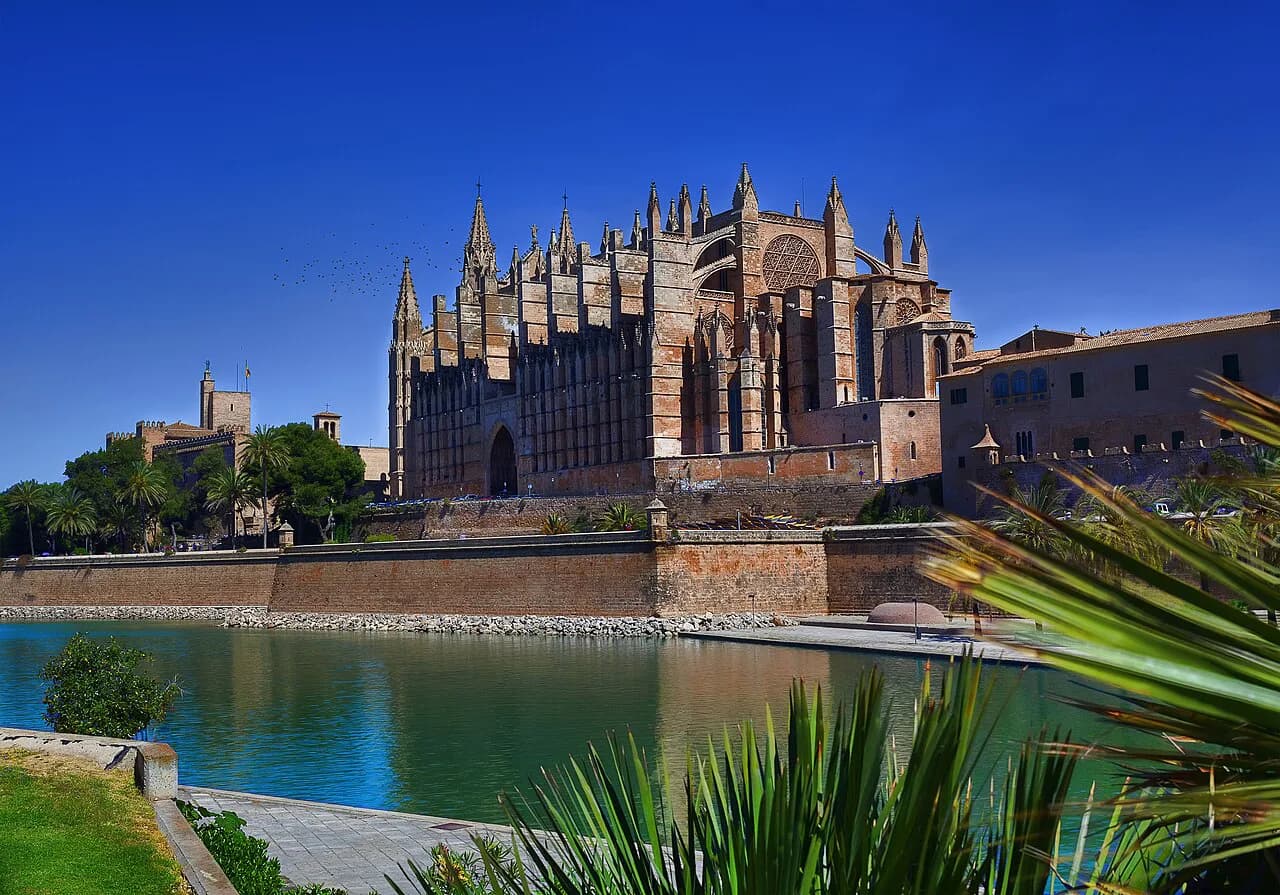
Start at the Parc de la Mar: the Cathedral reflected in the artificial lake
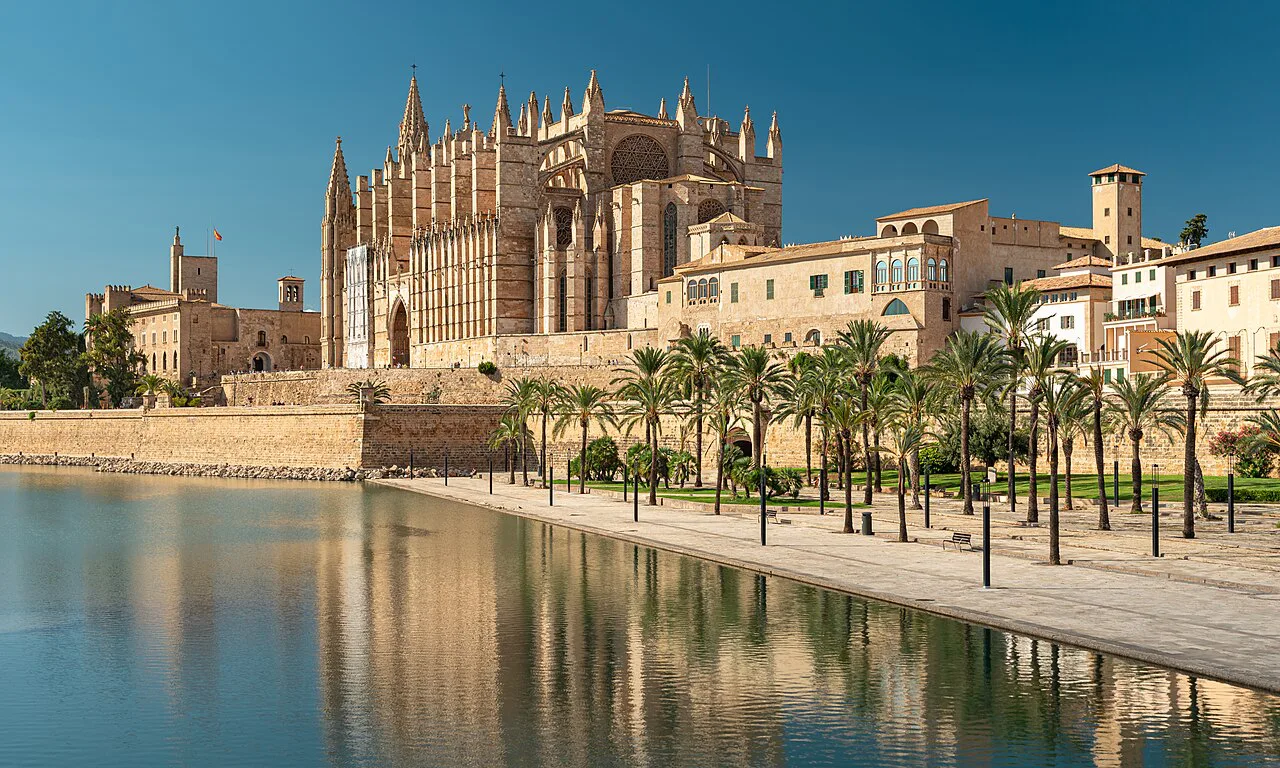
Begin at the Parc de la Mar, in front of the tourist information office, where the artificial lake throws the Cathedral back at you across the water. The operator of the private old town walk uses exactly this spot as its meeting point, and the reflection is the reason. Look past the water to the city walls behind you: the lake recreates the line the Mediterranean once reached below them.
From here the route climbs gently towards the Cathedral and l'Almudaina, so keep the water on your left and follow the edge of the old town uphill. This first stretch is the one part of the walk where the sea air is still with you, and it is worth slowing down before the lanes close in.
Palacio Real de l'Almudaina and the Cathedral exterior
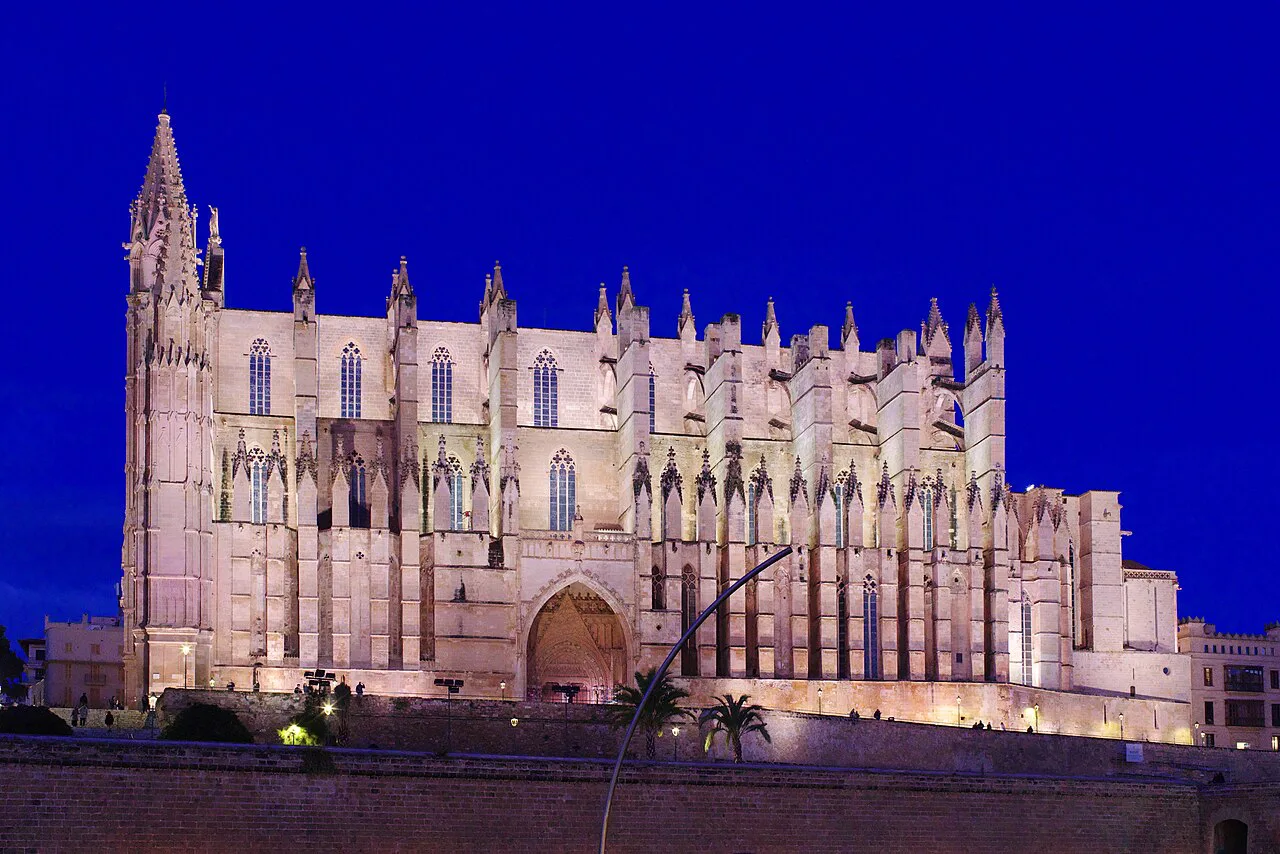
The Palacio Real de l'Almudaina and the Cathedral-Basílica de Santa María, known as La Seu, stand almost side by side above the Parc de la Mar, and the guided route treats them as a pair of exterior stops before turning inland. Walk between them to read the two buildings against each other: the fortress-like Almudaina on one side, the cathedral's flying buttresses and golden sandstone on the other. Whether you go inside is the main decision of the day, and it is the one that sets your timings.
Treat the pair as your first big fork in the road. If you want interiors, the Cathedral and the Almudaina are the two stops worth your time and money; if you would rather keep moving, the exteriors and the view back over the lake are enough for a short break. Check the Cathedral's published visitor hours and any Mass times before you commit, since services take precedence over sightseeing.
Mallorcan patios and noble houses of the old town
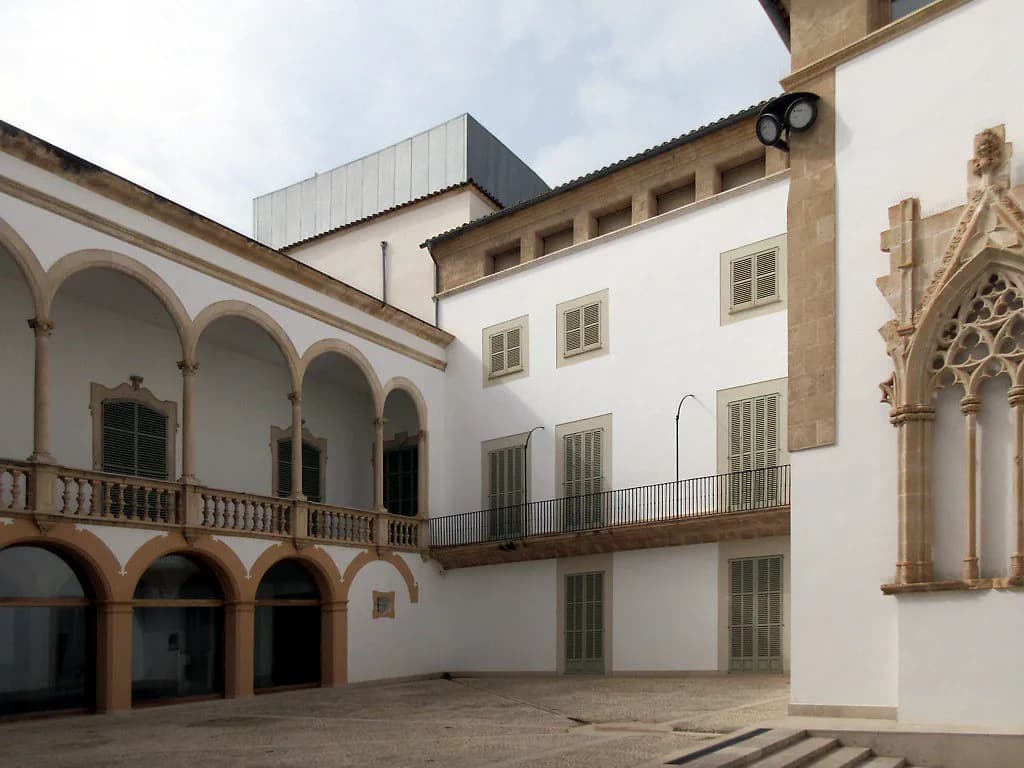
Leaving the Cathedral behind, the walk turns into the lanes north and east of it, where the old town's patios do the quiet work. The private tour makes these Mallorcan courtyards a named stop, and they reward a slower pace than the waterfront: stone staircases, potted palms and the cool that comes with thick walls. Many are attached to private houses, so look from the doorway rather than treating them as public halls.
This is the stretch where the walk stops feeling like a checklist and starts feeling like a town. Cross the small squares as they come and keep the Cathedral roughly behind you; the lanes here are short and connected, so a wrong turn costs you a minute rather than a detour.
Santa Eulàlia, the Ayuntamiento and the Plaza Mayor
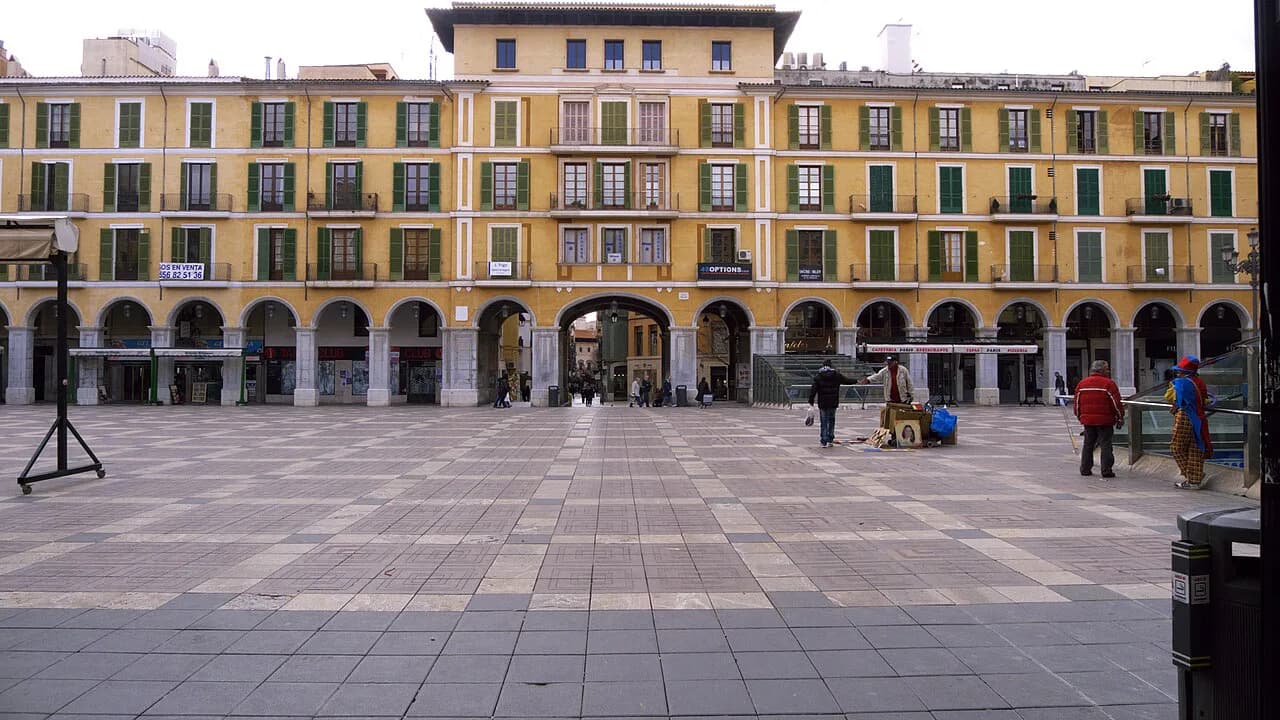
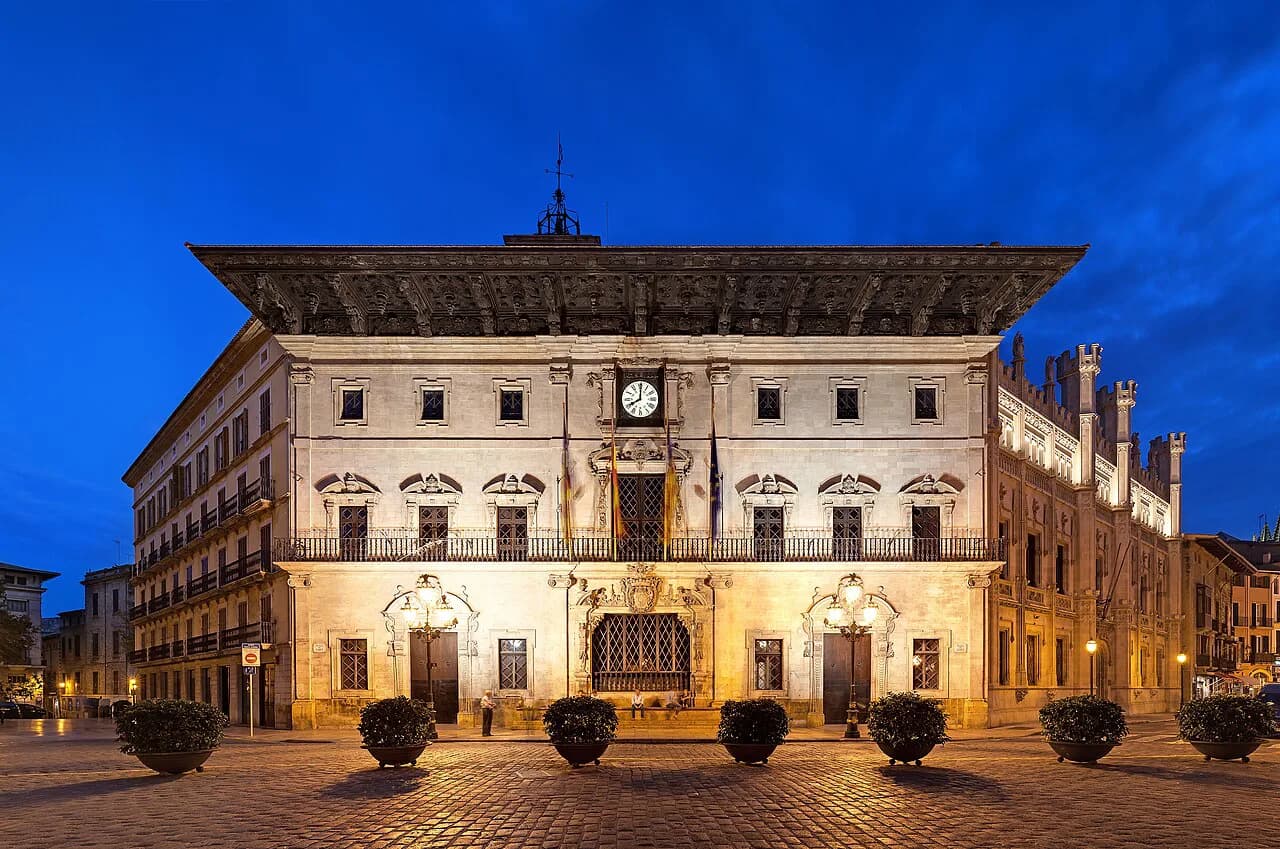
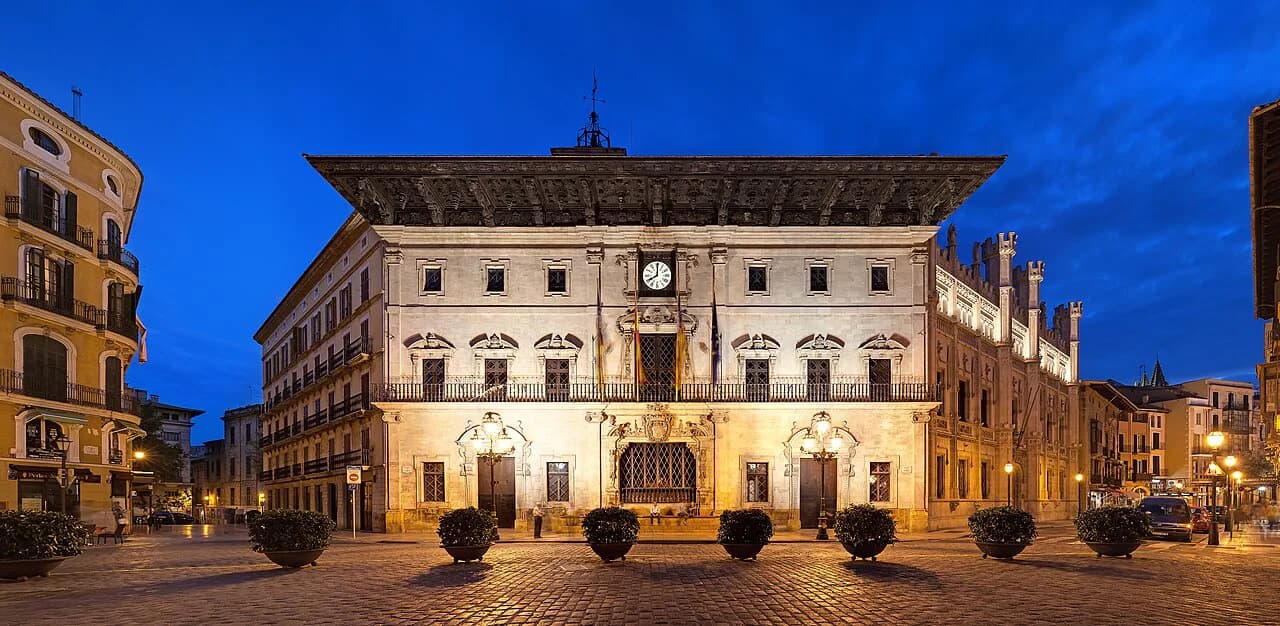
The parish church of Santa Eulàlia and the Ayuntamiento de Palma anchor the heart of the walk, with the Plaza de Cort as the hinge between them. Stand in the square and look at the town hall façade and the street life around it before pushing on to the Plaza Mayor, the large arcaded square at the centre of the old town.
The Plaza Mayor is the natural place to pause, and the arcades give shade at any hour. From here the route turns towards the Barrio judío, so this is your last easy chance to sit down before the narrower lanes. If you want to browse rather than walk, the surrounding streets are Palma's main shopping ground.
Optional detour to the Barrio judío and the Banys Àrabs
The old Jewish quarter sits just east of the Plaza Mayor, and it is the part of the walk that rewards a map. Its lanes are tight and its history is layered, so a short detour here works best when you know what you are looking at rather than wandering blind. Read up on the city's successive layers, from the Roman town to Madina Mayurqa to the Christian Ciutat de Mallorques, before you set out.
The Banys Àrabs are the stop most worth building in if you have the appetite for one more interior, and the lane approach is part of the point. Include them and the walk stretches into a fuller half-day; skip them and you keep the loop tight.
Finishing at the Mercat de l'Olivar
Finish at the Mercat de l'Olivar, the municipal market where the private old town tour ends its route. After the churches and courtyards, the market stalls give you the other half of the city: colour, produce and the smell of a working food hall. It is a natural full stop for a walk that has been about buildings, because it puts people back in the frame.
From the market you are a short walk from the Santa Catalina Palma neighbourhood, which is worth tacking on if you still have legs. Do the old town first and treat Santa Catalina as the extension rather than the start, so the historic core gets your freshest hours.
Adding the Lonja and the Castillo de Bellver if you have more time
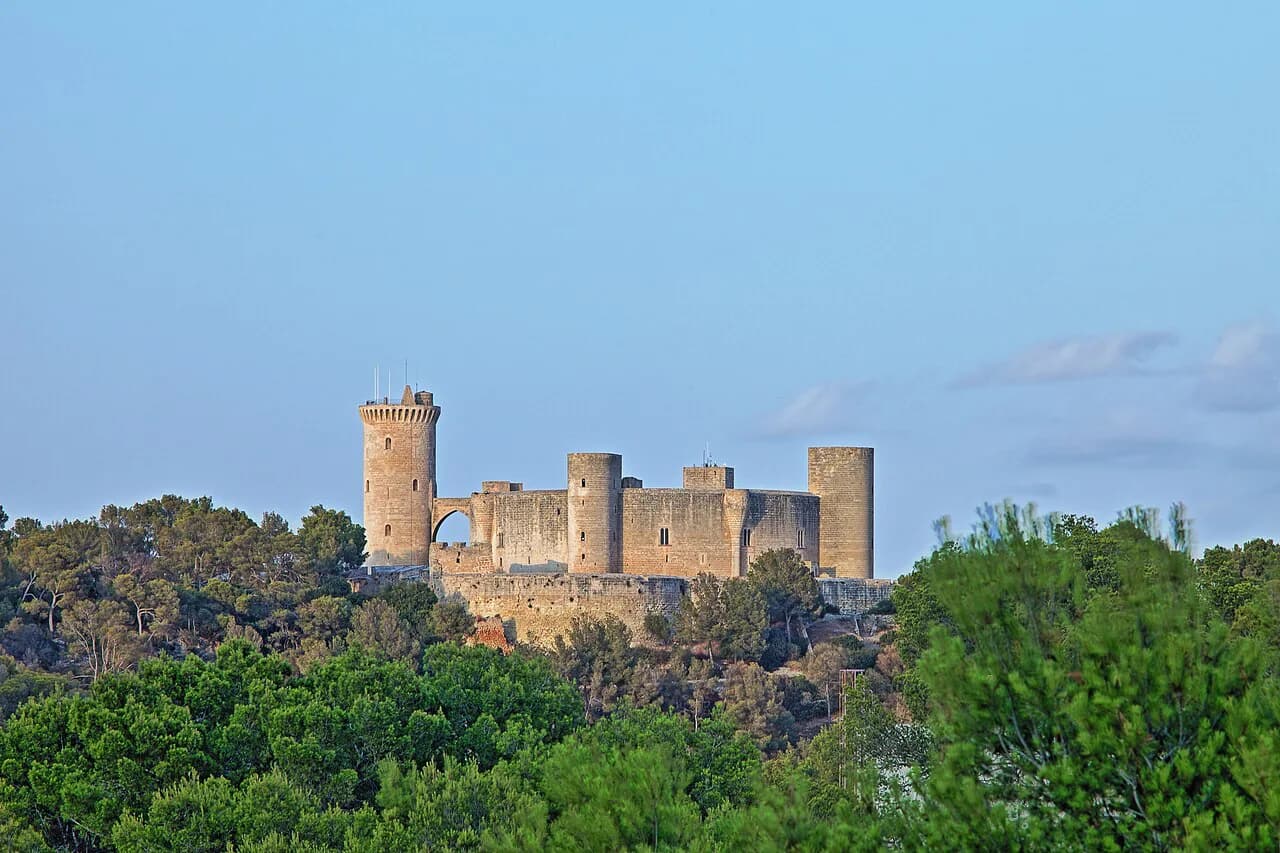
Two add-ons are worth knowing about without forcing them into the core loop. The Lonja de Palma, the old merchants' exchange near the waterfront, is a fine civil building and can serve as a second possible start point for a guided walk. The Castillo de Bellver sits above the city and is a separate trip rather than a step on the old town route, so give it its own slot.
For interiors beyond the Cathedral, the museums in Palma fill a wet or very hot afternoon well, and several are clustered close enough to the old town to reach on foot. If your walk has left you wanting more art, plan a second day around them rather than bolting one on at the end of a long morning.
When a guided or free walking tour is worth it
Mallorca Premium Tours runs a private old town walk of about two hours for 180 € for one to fifteen people, starting at the Parc de la Mar tourist information office or at the Lonja, with an accredited official guide. The price includes the guide and 21% VAT but excludes monument tickets and food and drink, so the Cathedral and Almudaina come on top if you go inside. At that rate it makes sense for a group splitting the cost, less so for a solo traveller.
Tip-based free tours are the other option, and they work on a simple principle: you pay what you think the walk was worth at the end. That suits a first visit when you want the history of the lanes explained rather than read from a page. Compare what is on offer before you book, since the format and meeting points vary between operators.
Go self-guided if you want to stop for photographs, change pace or break for coffee without consulting a group. Go guided if Palma is the only stop on your trip and you would rather hear the city than navigate it. The route above works either way, because a guide covers much the same ground in the same order.
Practicalities: heat, closed churches and booking ahead
Walk early. Palma's old town is compact but the stone squares bake by midday in summer, and the shaded lanes only stay cool while the sun is still low. Churches and small shops also tend to close for part of the afternoon, so the morning is when the interiors are reliably open. Confirm Mass times before planning a Cathedral visit, as worship takes priority over tourists.
Book the private tour in advance if you want a guide on a specific date, as the operator recommends to secure availability. Carry water and wear shoes that cope with cobbles and shallow steps; the route is flat to gently sloping but the surfaces are uneven. A printed map of the old town is more useful than a screen in bright sun.
Which Palma walk suits your day
Take the self-guided route if you have a morning, want to set your own pace, and are content to look up the Cathedral and Almudaina interiors as you go. Choose the private walk if you are a group of up to fifteen and want the lanes explained by an accredited guide for a set group fee, with monument tickets on top, or a tip-based free tour if you are travelling alone or as a pair and prefer to pay at the end.
Whichever you pick, start at the Parc de la Mar, finish at the Mercat de l'Olivar, and keep the Lonja and Bellver for another slot so the old town gets the time it deserves.
Explore more Palma guides
Frequently Asked Questions
Is Palma old town walkable in a morning?
Yes. The route from the Parc de la Mar to the Mercat de l'Olivar is compact, and the guided version of the same ground is timed at about two hours. Add time for the Cathedral or Almudaina interiors if you want to go inside, and start early in summer before the squares heat up.
Do I need to book a walking tour in Palma?
The private old town walk asks for advance booking to secure a guide on your chosen date. Tip-based free tours generally take walk-ups, but places can fill, so check with the operator you choose before relying on turning up.
Sources
Notes for your next Spanish town break
Optional updates to our guides.
You might also like
Continue reading
More guides you'll find useful