Things to Do in Málaga: Alcazaba, Cathedral, Picasso and Gibralfaro
Plan a short break in Málaga with the Alcazaba, Gibralfaro, the cathedral and the Picasso Museum, plus prices, opening hours and a one-day walking route.
On this page
Give Málaga two days and you can see the Alcazaba, climb to Gibralfaro, look round the cathedral and spend an afternoon with Picasso without rushing. The core sights are stacked on and around a single hill above the port, so a short break here is a matter of working down one slope rather than crossing a big city. This guide groups the main monuments, museums, streets and green spaces by area, with prices, opening hours and free-entry slots where they are published, and a one-day route you can stretch to two.
What to see in Málaga in a day: the short answer
One day covers the Roman theatre, the Alcazaba and the cathedral, then Calle Marqués de Larios and the old town streets, with Gibralfaro fitted in if your legs allow it. The Alcazaba is the one sight I would not cut: it is an eleventh-century palace-fortress with gardens, patios and fountains inside its walls, and the visit takes longer than the ticket price suggests. The cathedral comes second, and a museum third if you still have energy.
What you cannot do in a day is the museums properly. Málaga has an unusual concentration of them for a city of its size, and the Picasso, Thyssen and Pompidou collections each want a couple of hours. Treat the first day as the monuments and the old town, and keep a second day for art.
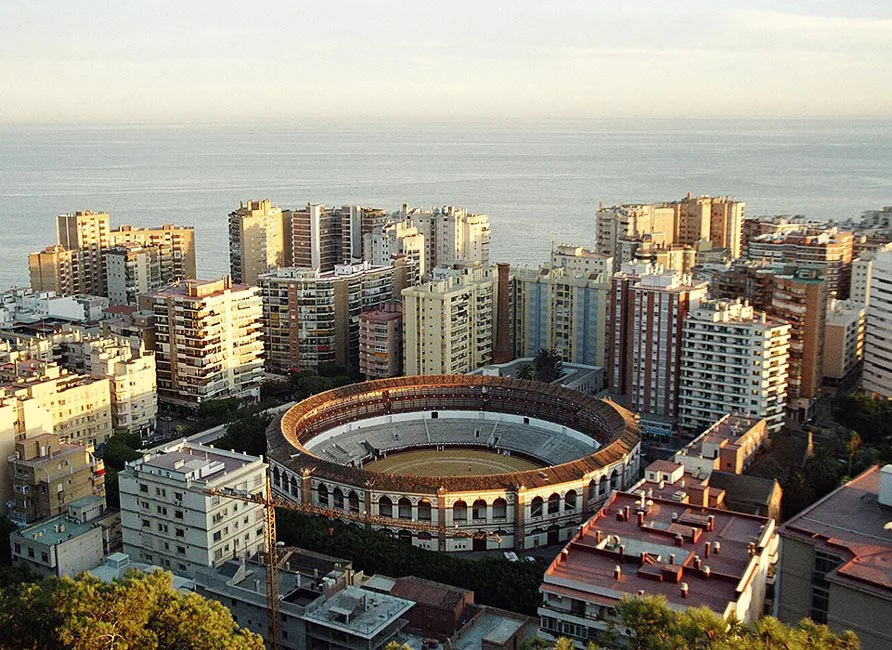
How Málaga's centre fits together: Alcazaba, Roman theatre and cathedral on one slope
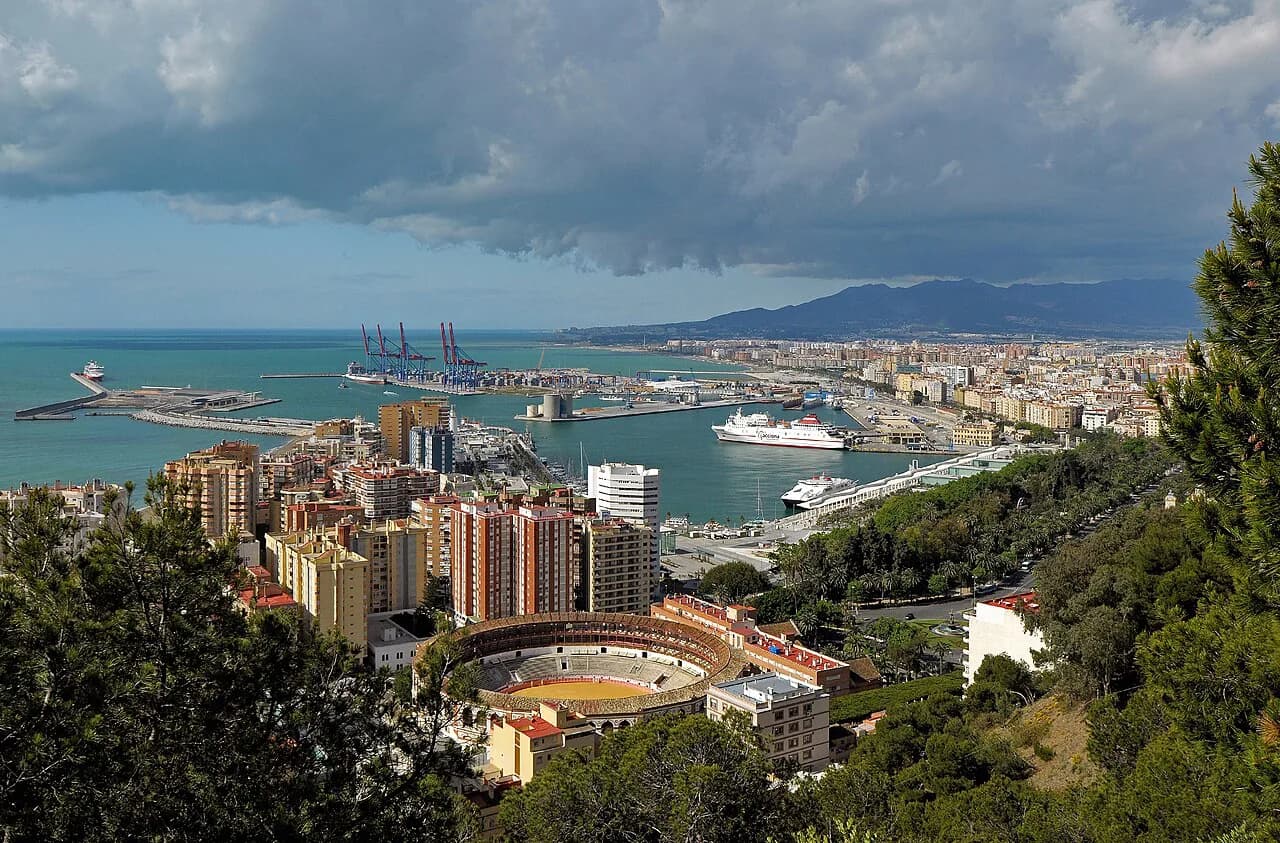
The historic centre sits between the port and the foot of Monte Gibralfaro, and the key monuments are within a few minutes of each other. The Roman theatre and the Alcazaba entrance face each other across a small square, and the cathedral stands a few streets inland beside the old Muslim fortifications, which explains the tight, layered feel of the streets around it. Plan the day as a loop: port and theatre, up into the Alcazaba, then the cathedral and the shopping streets behind it.
Because everything is close, you can walk the whole centre and only use transport to reach the botanical garden or the beach. The streets between the cathedral and Calle Larios are narrow and mostly pedestrian, so allow time to wander rather than treating them as a corridor between sights. A printable layout helps on the first morning, before the street pattern makes sense.
The Alcazaba: palace-fortress, gardens and patios, ticket price and seasonal hours
The Alcazaba was built in the eleventh century as a fortified palace, the residence of the city's Muslim governors, and it is a palace as much as a fortress. Inside the walls you find cared-for gardens, water channels, patios and a small Moorish palace with fine architectural detail, all looking out over the port and the sea. The defensive walls, with their crenellations and arrow slits, are what you see from below; the gardens are the reason to go in. If you want to compare it with the other great surviving palaces of al-Andalus, see Moorish Spain: Where to See al-Andalus Beyond Granada.
Admission for an adult is €3.50, with a reduced rate of €1.50, and the site opens daily until 20:00 in summer and until 17:00 from November to March. Go early in the morning or late in the afternoon: the terraces are exposed and the inland sun at midday in summer is punishing. Note that the Alcazaba and Gibralfaro are separate monuments from different periods, and they are visited separately.
Castillo de Gibralfaro: the walk up, the mirador and the city and bay views
Gibralfaro is the castle on the hilltop above the Alcazaba, built in the fourteenth century by the Nasrid king Yusuf I on foundations that reach back to the Phoenician lighthouse that gave the hill its name. The reward is the view: the whole city, the port and the bay laid out below, and on a clear day the Rif mountains across the water. It is a separate monument from the Alcazaba, so decide whether you want both.
The honest trade-off is the climb. Walking up in summer heat costs an hour and a lot of water, and if your time is short the Alcazaba's gardens and patios give you a richer visit for the effort. Take the castle for the panorama, or skip it and spend the saved time in a museum. Either way, keep the uphill leg for the morning.
Teatro Romano at the foot of the Alcazaba and the best photograph of the pair
The Roman theatre at the foot of the Alcazaba dates from the first century AD, under Augustus, and is the main surviving Roman monument in the city. It was later used as a cemetery and partly quarried for stone to build the Alcazaba. From the small square in front of it you get the classic Málaga photograph: the curved seating in the foreground, the Moorish walls rising behind.
The theatre is a five-minute stop, not a sight in its own right, so fold it into the walk between the port and the Alcazaba entrance rather than making a separate trip. The square is free to enter and open to the street. It is also the natural starting point for a morning on the hill.
Catedral de la Encarnación (La Manquita): the unfinished tower, Pedro de Mena's choir stalls, price, hours and Sunday opening
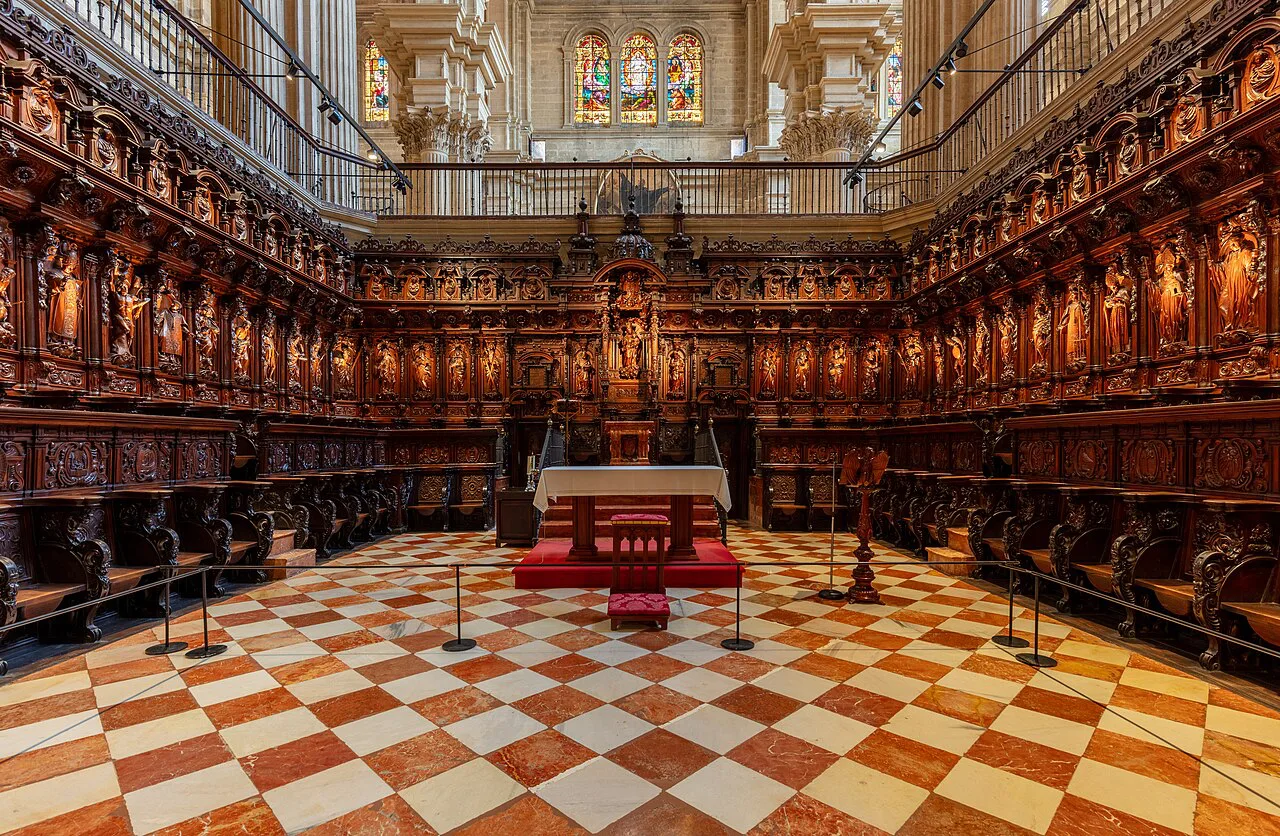
The cathedral is nicknamed La Manquita, the little one-armed lady, because only one of its two towers was ever finished; money ran out and the second never rose. Construction ran from the sixteenth to the eighteenth century on the site of the old mosque, which is why it stands so close to the Alcazaba, and the Patio de los Naranjos survives from that earlier building. Inside, look for the choir stalls and high altar carved by Pedro de Mena.
Entry for an adult is €8. Opening hours are 10:00 to 18:30 Monday to Friday, Saturdays close half an hour earlier, and Sundays run 14:00 to 18:00, with last entry 45 minutes before closing. The Sunday afternoon window is short but works well if you arrive that day and start on the hill first.
Calle Marqués de Larios, Plaza de la Constitución and the old town streets around them
Calle Marqués de Larios, known simply as Calle Larios, is Málaga's grand shopping street, a long pedestrian avenue of nineteenth-century buildings running from the port end of the centre towards the old town. It is the city's social spine, and the streets off it lead to Plaza de la Constitución, the main square of the historic centre, and the tangle of lanes around the cathedral. Walk it once in the morning and once after dark; the two experiences are different.
This is also where a guided introduction earns its place, if only to get the street names and the old town layout straight in the first hour. The free walking tours that leave from the centre take in Calle Larios, the bishop's square, the cathedral and the Roman theatre. After that you can navigate yourself.
Museo Picasso in the Palacio de Buenavista: the collection, the €12 ticket and the free Sunday afternoon slot
The Museo Picasso Málaga sits in the Palacio de Buenavista, a Renaissance palace a few lanes from the cathedral, and holds more than 200 works spanning Picasso's early years to his late work, including paintings, sculpture, ceramics and drawings. It is the city's headline museum and the one to book around.
Admission is €12, and entry is free in the last two hours of Sunday and on 28 February, 18 May and 27 September. Opening hours are 10:00 to 18:00 daily. The Sunday slot is the budget lever: arrive before it opens, take the free window, and use the money saved on the Thyssen or Pompidou instead.
Museo Carmen Thyssen and Centro Pompidou for a second museum day
The Museo Carmen Thyssen concentrates on nineteenth-century Spanish painting, particularly Andalusian scenes, which makes it a good counterweight to the Picasso. The Centro Pompidou, on the waterfront at Muelle Uno, brings a slice of the Paris collection with temporary exhibitions and a permanent selection of modern and contemporary work. Between them they fill a second day comfortably.
Both are indoor, air-conditioned and open when the heat is at its worst, which makes them the sensible midday choice in summer. Check current exhibitions before you go, since the Pompidou's programme changes. Queue at opening rather than mid-afternoon if you want the galleries quiet.
Mercado de Atarazanas: the nineteenth-century market hall and when it is busiest
Atarazanas is Málaga's central market, a nineteenth-century iron-and-glass hall built on the site of Moorish shipyards, and its building alone makes it worth a look even if you are not shopping. It is busiest in the morning, when the stalls are fully open and the city does its food shopping. Go early for the atmosphere and the building rather than as a lunch stop.
The market sits between the old town and the Alameda, on the walk from Calle Larios down towards the port, so it fits naturally into a morning route. Málaga's gardens and shaded promenades are close by if you need to break up the day.
Muelle Uno, the port promenade and Parque de Málaga as a flat, shaded link between centre and waterfront
Muelle Uno is the redeveloped quay on the port side, a broad waterfront promenade of shops and terraces with the Pompidou cube at its heart. It connects the old town to the sea on the flat, which matters on a hot day, and the Parque de Málaga along the Alameda gives you shade between the centre and the port. Use the two together as the easy hour between monuments.
From the port you can also take to the water: boat trips leave from the harbour for views back at the city and the hills. It is a pleasant way to see the skyline if the afternoon is too hot for walking. Book or check sailing times at the quay rather than assuming a fixed schedule.
Jardín Botánico-Histórico La Concepción: the subtropical garden outside the centre, price and afternoon free entry
La Concepción is a nineteenth-century subtropical garden on the edge of the city, with more than 2,000 plant species, palms, ponds and shaded paths that feel a world away from the port. Admission is €5.20, with free entry on Sunday afternoons, and closing time varies by season, later in summer and around 17:30 in winter. It is the best half-day escape from the city heat if you have a second day.
It sits outside the walkable centre, so treat it as a trip rather than a stroll and check how you will get there before setting out. The reward is a genuinely different Málaga: water, shade and exotic planting instead of stone and sun.
A sample one-day route on foot with rough walking times
Start at the Roman theatre around opening time, spend an hour in the Alcazaba, then decide on Gibralfaro: the climb and visit take roughly two hours including the view. Come down for the cathedral in the early afternoon, walk Calle Larios to Plaza de la Constitución, and finish at Atarazanas, Muelle Uno and the port as the light softens. Total walking inside the centre is modest; the only real climb is Gibralfaro.
If you would rather see the city with a guide first, the free tours cover this ground in a couple of hours and leave you free to return to whichever sight deserves more time. Evening flamenco is the natural close to the day, and Málaga has a strong tradition of it.
How many days Málaga needs, and what a second day adds
Two days is the right shape: one for the hill and the old town, one for the museums and the waterfront. A third day lets you add La Concepción, the beach at La Malagueta, or a trip out along the Costa del Sol. Rushing the museums into the same afternoon as the Alcazaba is the common mistake, and it leaves you with neither properly seen.
If you are extending a trip in Spain, the same approach works elsewhere: pick a base, group the sights by area, and leave room for one long lunch. Our guides to things to do in A Coruña and things to do in Alcúdia follow the same pattern for other short breaks.
Practical trade-offs: Monday closures, midday heat, cathedral mass times
The heat is the main planning constraint in summer: do the exposed monuments before 11:00 or after 17:00, and put museums, the market and the shaded parks in the middle of the day. Churches and cathedrals in Spain may also close to tourists during services, so a visit can be interrupted by a mass even inside published opening hours. Build slack into any cathedral plan rather than scheduling it to the minute.
Check the specific opening day of each museum and monument you care about, since a single closed day can reshape a short break. Book the Picasso and any timed entry in advance when you can. That is the one place where a little planning pays off.
Getting to Málaga and moving around the centre
Málaga airport serves the city and is a common arrival point for a Costa del Sol short break. Within the centre, everything in this guide is walkable, and taxis are only worth it for La Concepción or late nights. Allow a comfortable half-day for arrival and settling in rather than trying to see a monument on the way.
For a wider view of what else is within reach, browse the Málaga attractions collection before you finalise the plan.
Book the Picasso around the free Sunday window
The decision that shapes a Málaga short break is where you put the museums. Take the free last two hours at the Picasso on Sunday and the Sunday afternoon at La Concepción, and you free up budget and daylight for the Alcazaba and the cathedral. If your dates miss Sunday, buy the Picasso ticket and cut something else instead.
Explore more Málaga guides
- Museums in Málaga
- Málaga Boat Trips
- Málaga Botanical Garden
- Málaga Flamenco Shows
- Málaga Gardens and Parks
- Málaga History
- Málaga Itinerary
- Málaga Map
- Málaga Old Town
- Málaga Port and Muelle Uno
- Málaga Roman Ruins
- Málaga Tours
- Málaga Viewpoints
- Málaga Walking Tour
- Pedregalejo, Málaga
- Shopping in Málaga
- Soho Málaga
Frequently Asked Questions
Why is Málaga famous?
Málaga is known for its Phoenician and Roman origins, its Moorish Alcazaba and Gibralfaro castle, its unfinished cathedral and, above all, as the birthplace of Picasso, whose museum anchors the city's strong museum scene.
What can I see in Málaga in one day?
In one day you can cover the Roman theatre, the Alcazaba, the cathedral and the old town streets around Calle Larios, with the port and Muelle Uno in the late afternoon. Add Gibralfaro only if you are willing to climb in the heat.
How many days should I spend in Málaga?
Two days is enough for the monuments and the main museums without rushing. A third day allows La Concepción, the beach at La Malagueta or a trip along the Costa del Sol.
Sources
Notes for your next Spanish town break
Optional updates to our guides.
You might also like
Continue reading
More guides you'll find useful