Málaga Gardens and Parks: Green Spaces in the City
A guide to Málaga's parks and gardens, from the central Parque de Málaga to the terraced Jardines Puerta Oscura and the big neighbourhood parks.
On this page
The garden you will almost certainly walk through is the Parque de Málaga, the long strip of palms, paths and statues running along the Paseo del Parque between the port and the old town. Everything else needs a decision: the terraced Jardines Puerta Oscura sit right below the Alcazaba and cost nothing in time, while the big parks at Parque del Oeste, Teatinos and Martín Carpena are a bus or taxi ride from the historic centre. This guide sorts Málaga's green spaces by where they sit and what is actually in them, so you pick the ones that fit your short break, and you can widen the picture with our Things to Do in Málaga guide.
Parque de Málaga: the central strip along the Paseo del Parque
This is the city's front garden, a rectangular slab of land softened by curving paths that loop around planted islands, so you lose any sense of the straight lines around you. The layout is deliberately landscape-led rather than formal, and the effect is a shaded corridor you can cross slowly on the way from the port to the cathedral quarter.
Look for the kiosks, among them the music kiosk, the fountains, and a run of statues of figures linked to the city, including the painter Bernardo Ferrándiz and the writers Salvador Rueda, Narciso Díaz de Escovar, Rubén Darío and Arturo Reyes. Treat it as a through-route with stops rather than a destination: twenty minutes of strolling covers the length, and it slots naturally into a circuit of the centre that also takes in the cathedral and the Picasso quarter.
Because the park sits at the foot of the old town, it is the easiest green space to combine with sightseeing. Come out of the Alameda or Calle Larios end and you are straight into it, which makes it the obvious place to sit for ten minutes between monuments rather than a separate excursion.
Jardines Puerta Oscura y Coracha: terraces below the Alcazaba
These gardens were designed in 1937 by the Málaga architect Fernando Guerrero-Strachan and occupy roughly 14,000 square metres on the south slope of Monte Gibralfaro, directly behind the Ayuntamiento and below the Alcazaba and Castillo de Gibralfaro. The design unfolds as a succession of terraces, paths and small circular clearings, and the city council describes the result as a balance of nature and architecture that recalls traditional Islamic gardens.
The position is the real draw. The gardens run between the Teatro Romano and the Museo Picasso Málaga, so you can walk up from the Roman theatre, climb through the terraces and come back down into the centre without any transport at all. If you are already visiting La Alcazaba, the gardens make a natural approach rather than a detour.
At the eastern end of the Alcazaba, between the mouth of the old tunnel and the city museum, a stepped area known as the Subida a la Coracha continues the same landscaped logic. Jacarandas, cypresses and other species grow across both sections; in late spring the jacaranda blossom is the reason to take the upper paths rather than the direct route.
Parque del Oeste: the big family park near La Paz
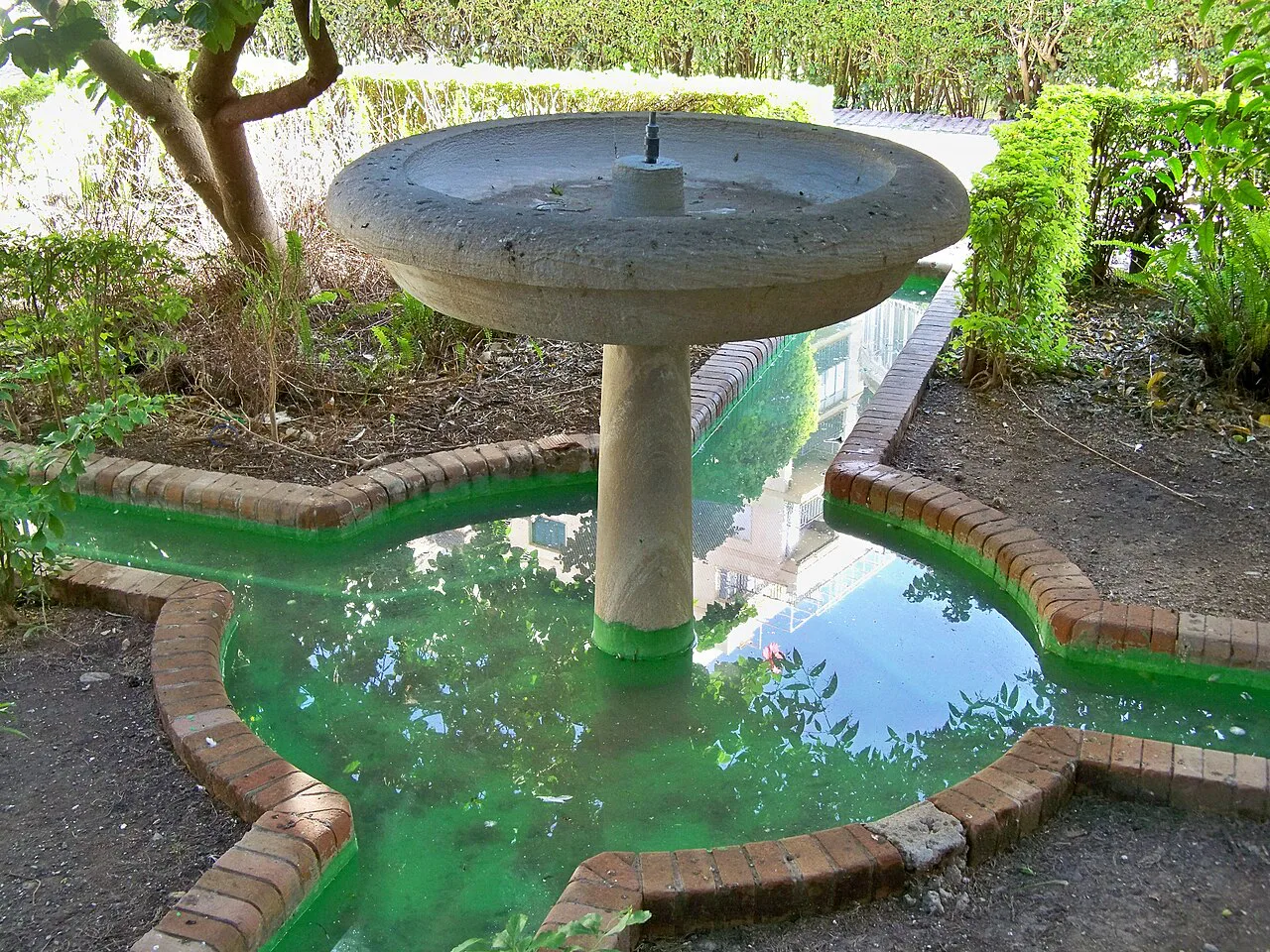
Parque del Oeste is the classic Málaga park and by far the largest of the central options, spread over 74,000 square metres between the La Paz and Santa Paula neighbourhoods in the Carretera de Cádiz district. Its centrepiece is a large lake with a geyser, and 45 sculptures by the German-born artist Stefan von Reiswitz, some of them mythological, are placed through the grounds.
For anyone travelling with children, the play provision is the point: more than 400 square metres of swings and play equipment, plus ducks and other waterfowl around the lake. It is a park for a whole family rather than a quick look, with separate zones that let small children and older visitors use the same space without getting in each other's way.
The trade-off is location. This is a residential district west of the centre, not a stroll from the cathedral, so it earns its place on your plan only if you want a proper park afternoon rather than a shaded shortcut.
Parque del Cine in Teatinos: a film-themed garden
In Teatinos, the Parque del Cine takes cinema as its theme across 10,000 square metres of gardens. Paths are drawn like a coloured film reel, a yellow brick road echoes The Wizard of Oz, and a walk of fame imitates the Hollywood version; the largest structure rests on a giant rubber book that opens like a pop-up.
Beyond the theming there is a zip line, swings shaped like a whale and a rhinoceros, a trampoline, climbing structures, rotating play equipment and a ping-pong table, alongside sports space and separate play areas for different age groups. It is the most distinctive of the neighbourhood parks and the one most likely to hold a child's attention for an hour.
Teatinos is a university district north-west of the historic centre, so this is a deliberate trip by bus or taxi, not something you pass. Worth knowing if you are basing yourself near the old town: the central gardens are closer, but they have nothing comparable for children.
Parque Litoral: the artificial hill and slides by Martín Carpena
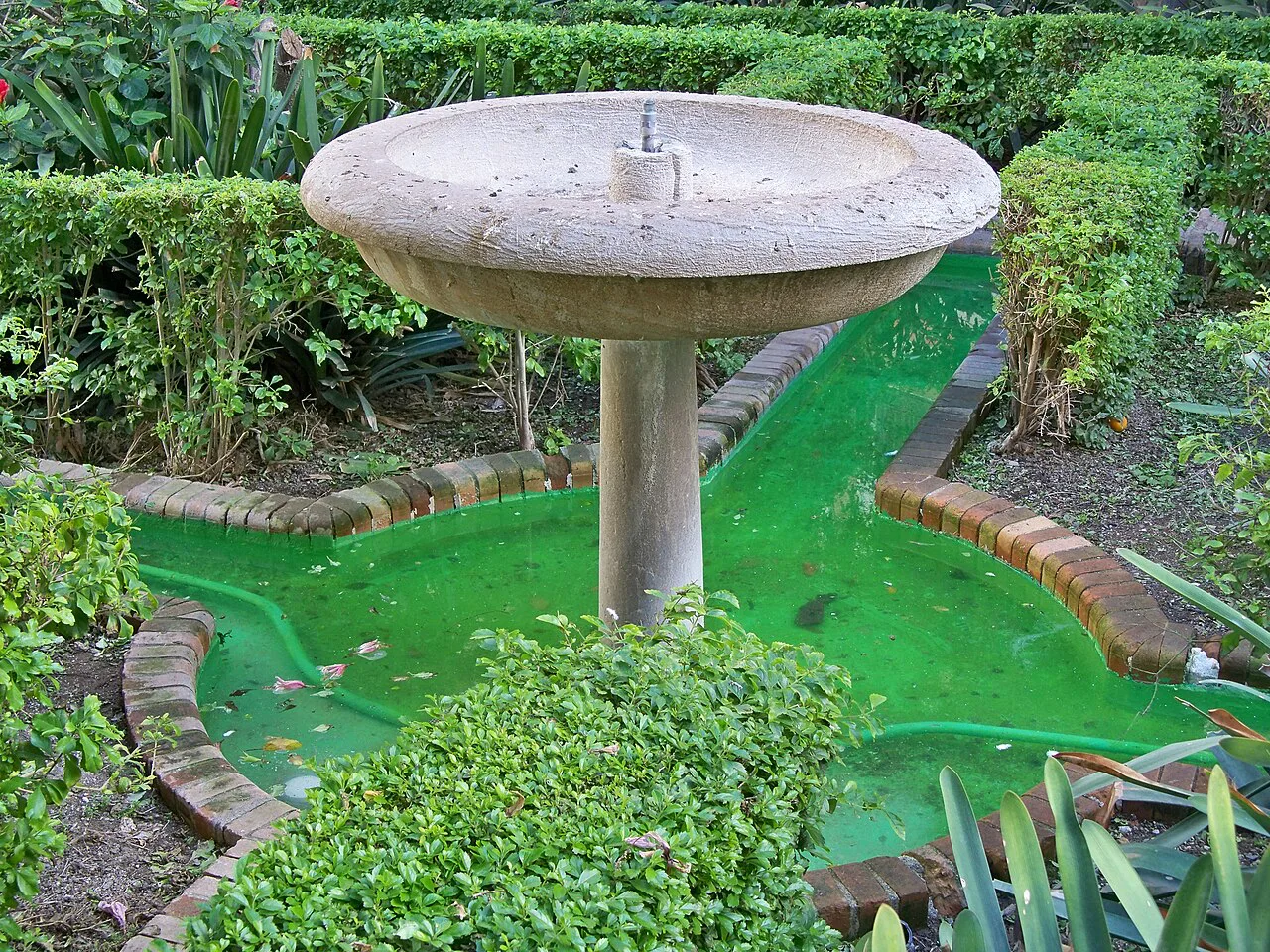
Parque Litoral, on Calle Villanueva de Algaidas in the Martín Carpena area near the Quirón hospital, is built around an artificial hill that you climb in order to come down its slides, which sit at several different heights. A five-metre metal structure with three slides, one of them four metres high, was added in February 2018 as part of the park's play provision.
It also has a sports court and an outdoor gym, which makes it the most active of the city parks and a reasonable stop if you are heading to or from the western end of the city. The slides are steep and fast, so judge them by the ages in your group rather than by the photos.
Which green spaces fit a short break
Split the list in two. Parque de Málaga and the Jardines Puerta Oscura y Coracha are walkable from the old town and belong in any two- or three-day plan; Parque del Oeste, Parque del Cine and Parque Litoral sit in residential districts and need a bus or taxi each way, so they only pay off if a park is the point of the outing rather than a pause between monuments.
A workable pairing is the central strip in the morning, when the light is softer and the paths are quieter, then the terraces below the Alcazaba on the way up to the castle. If museums are on your list too, the Museo Picasso Málaga sits at the foot of the Jardines Puerta Oscura, so the two combine without extra walking.
For the neighbourhood parks, group them by geography instead of trying to tick off several in one day: Parque del Oeste and Parque Litoral both lie west of the centre, while Parque del Cine sits out in Teatinos to the north-west.
Shade, water and timing in the summer heat
Málaga's gardens are places of shade and water rather than lawns to lie on. The Parque de Málaga's curving paths and mature planting give genuine cover along the Paseo del Parque, the lake and geyser at Parque del Oeste create a cooler pocket, and the terraces of the Jardines Puerta Oscura break up the climb to the Alcazaba. In July and August, walk the exposed stretches early or late and use the gardens as the middle of the day.
Practical detail matters more than it sounds: the play areas are the sunniest parts of the neighbourhood parks, so children's energy is best spent before noon or after the worst heat. Carry water, and treat fountains as scenery rather than a supply.
Which garden earns your afternoon?
If you only have an hour, take the Parque de Málaga: it is free to wander, sits between the port and the old town, and needs no planning at all. If you have half a day and are already seeing the Alcazaba, add the terraced Jardines Puerta Oscura and the Subida a la Coracha, which cost you nothing but the climb.
Book a bus or taxi only if a proper park is the goal: Parque del Oeste for the lake and play areas, Parque del Cine for film-themed play, Parque Litoral for the slides and outdoor gym.
Explore more Málaga guides
Sources
Notes for your next Spanish town break
Optional updates to our guides.
You might also like
Continue reading
More guides you'll find useful