Antequera Dolmens: Menga, Viera and El Romeral Visit Guide
Plan the Antequera dolmens: what Menga, Viera and El Romeral are, why Menga faces the Peña de los Enamorados, and how to handle two separate sites.
On this page
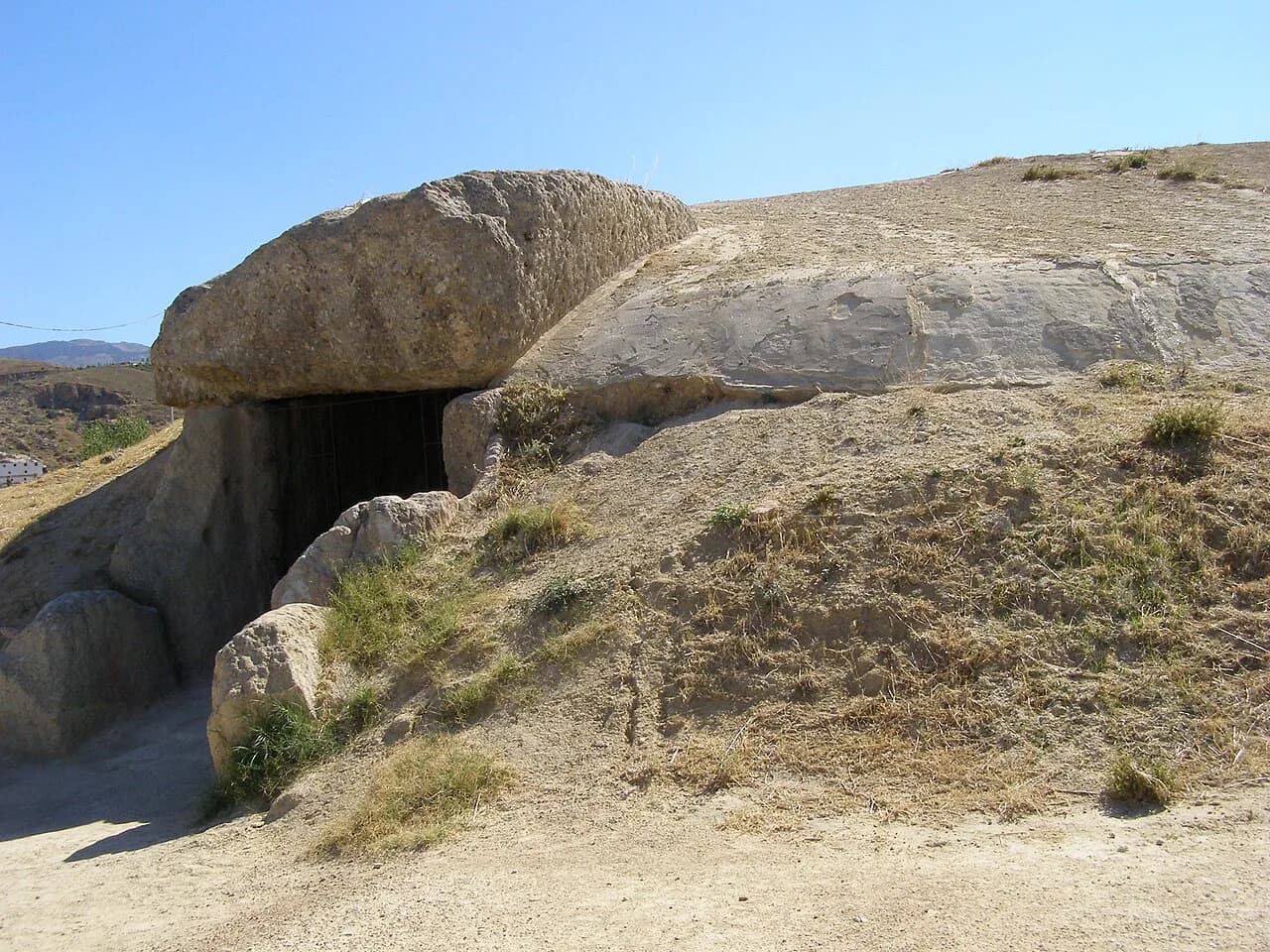
The Antequera dolmens are not one site but two: Menga and Viera stand together in the main enclosure on the Carretera de Málaga, and the Tholos de El Romeral lies about four kilometres away. Allow a morning or an afternoon without rushing, see all three in the order Menga, Viera, El Romeral, and the layout of the prehistoric landscape falls into place. This guide covers what each monument is, why their alignments matter and how they fit around the town's castle hill.
These are Neolithic and Bronze Age chambered tombs, and the reason they hold World Heritage status is the relationship between the stone architecture and the landscape around it, not sheer age alone. The monumental natural features they point at, the Peña de los Enamorados and El Torcal de Antequera, are part of the same inscription.
What the three monuments are
The conjunto Arqueológico brings together three megalithic monuments built between the Neolithic and the Chalcolithic: the Dolmen de Menga, the Dolmen de Viera and the Tholos de El Romeral. Two are dolmens in the strict sense, with upright slabs supporting flat roof stones; the third is a tholos, a different architectural tradition with masonry walls and a corbelled roof. Seeing all three is what makes the visit worth the extra drive.
Nobody visits expecting carved decoration or buried treasure on display. What you get is the interiors themselves: chambers you can step into, built from stones whose scale is hard to judge from photographs. The interpretation area in the main enclosure explains the World Heritage story before you walk into the monuments.
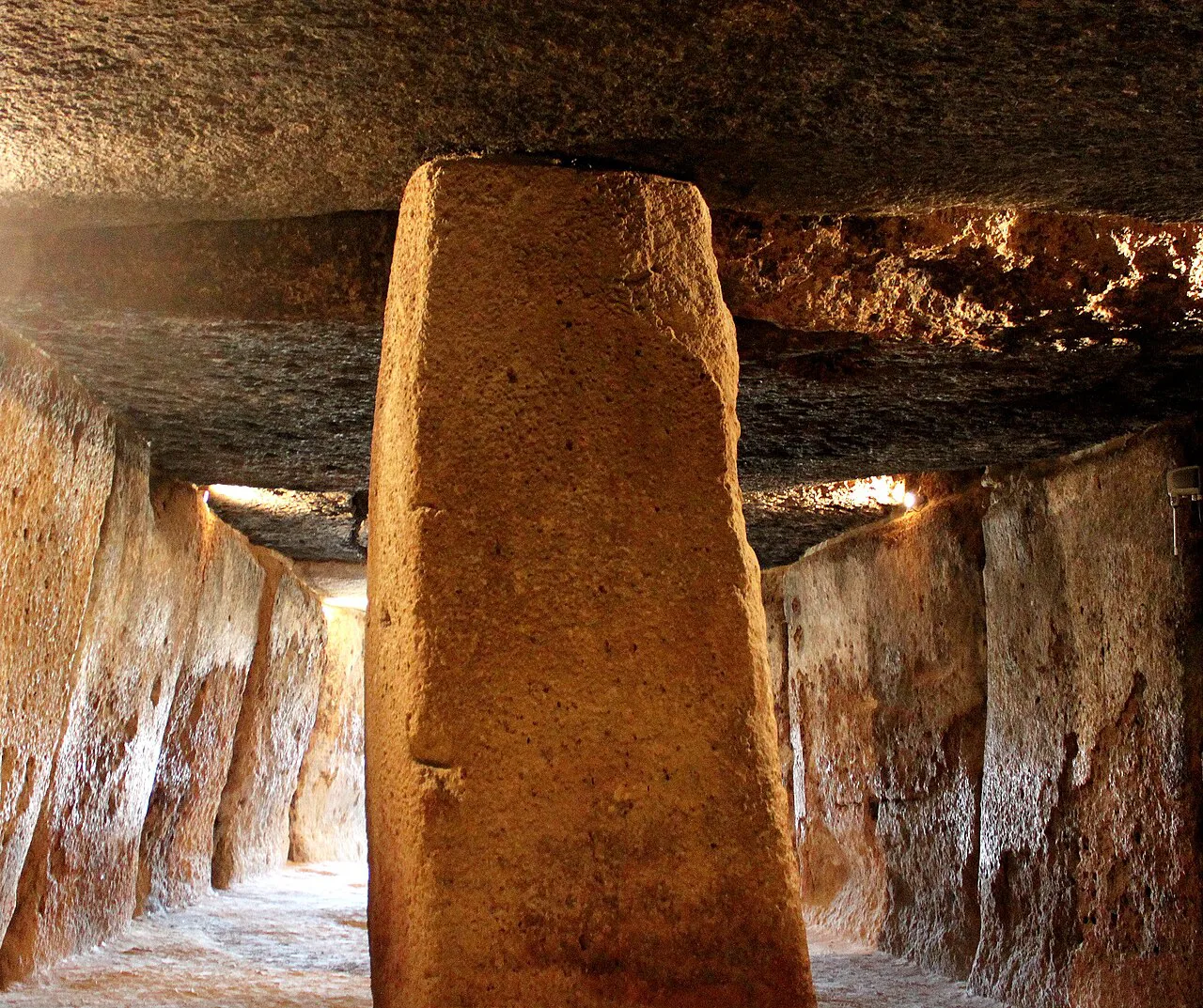
Why Menga looks at the Peña de los Enamorados and El Romeral at El Torcal
Most megalithic tombs in Europe are oriented towards the sun, and Viera follows that pattern. Menga breaks it: its entrance and chamber look out towards the Peña de los Enamorados, the rock formation whose profile resembles a human face, and that silhouette can be picked out from the doorway. El Romeral does something similar with the limestone ridges of El Torcal. This triple link between built monuments and natural landmarks is the core of the UNESCO case.
Knowing this changes how you look at the stones. Stand at the entrance rather than straight into the chamber, and the framing of the landscape becomes the point of the monument rather than a backdrop. The UNESCO inscription, granted on 15 July 2016, covers the monuments and these associated natural features together, not the tombs in isolation.
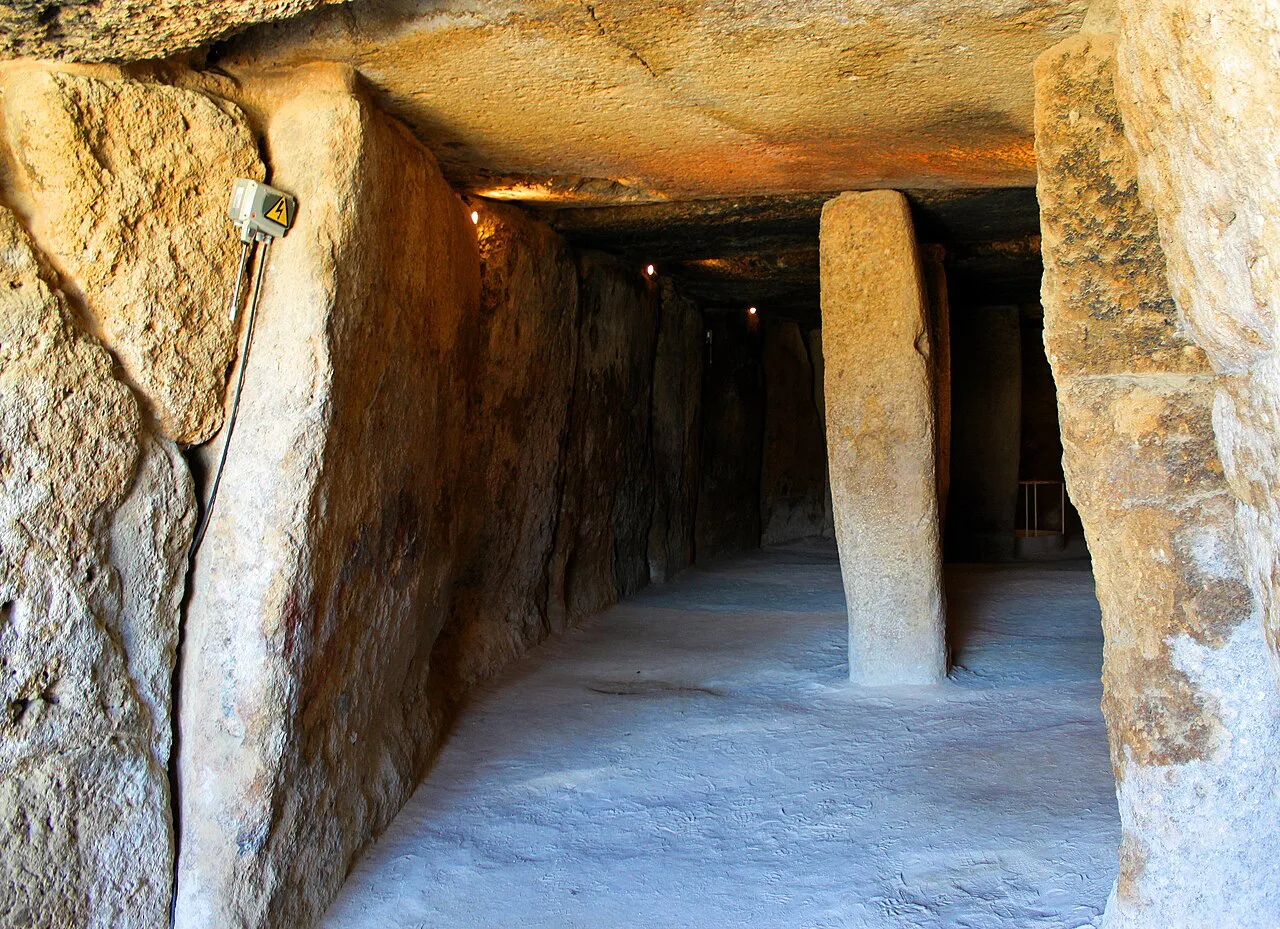
Dolmen de Menga: uprights, roof slabs and the deep well
Menga is the monument that stops people mid-sentence. Enormous vertical orthostats carry covering slabs, and the interior is reinforced by central pillars; at the back of the chamber a well drops roughly 19.5 metres into the rock, an unusual feature in a tomb of this kind. The space is roomy enough to stand upright and walk around.
It is also the busiest of the three, since it sits in the main enclosure beside the reception and interpretation facilities. Arriving early in the day gives you a better chance of standing inside without a crowd behind you.
Dolmen de Viera: the long corridor aligned to the equinox sunrise
Viera sits a short walk from Menga, so the two are seen in one stretch rather than as two separate stops. A long corridor of large slabs runs to the burial chamber, decorated with cup marks, and the whole structure is aligned to receive the rising sun at the equinoxes. Walking the corridor gives you a clearer sense of construction technique than Menga's broad chamber does.
Tholos de El Romeral: masonry walls and a false dome
El Romeral is the odd one out architecturally. Instead of flat slabs spanning upright stones, it is built with masonry walls and a roof formed by corbelled courses, a false dome created by layering stone inward. A long passage leads to a large circular chamber with a smaller one beyond it, and the monument's orientation turns towards El Torcal.
If you only have time for Menga and Viera, you will still see the essentials of the group. Adding El Romeral is what shows you that these builders worked in more than one tradition, and it justifies the short transfer between the two locations.
How the visit is laid out
Menga and Viera share the principal enclosure on the Carretera de Málaga, where the reception and interpretation installations are also located. Start there to pick up the context and the World Heritage explanation, then walk the two monuments in sequence. El Romeral stands at a separate point roughly four kilometres away, so it is a second stop, not a stroll from the first.
That split catches people out. Treat the visit as two addresses rather than one, and plan how you will cover the gap before you set off. A car or taxi is the practical way to reach both; the tourism office page covers access and guided visit arrangements, and the Conjunto Arqueológico's own information is the place to confirm current access.
How long to allow and the best order
Budget a morning or an afternoon with slack in it rather than a tight hour. The monuments themselves are compact, but the interpretation displays, the walk between Menga and Viera and the transfer to El Romeral all take time. Rushing the first stop to fit in the third is the usual mistake.
The order that works is reception and interpretation first, Menga and Viera second, El Romeral last. Doing it that way means the context is fresh when you enter the chambers, and the architectural contrast at El Romeral lands as a change rather than a repetition.
Getting there from Antequera
Menga and Viera sit in the main enclosure on the Carretera de Málaga, a short trip from the town centre rather than a long excursion. For El Romeral you need wheels or a taxi, because the four-kilometre separation is not a stretch to add to a hot afternoon on foot.
Antequera also has the Antequera-Santa Ana rail station, served by trains towards Málaga, Córdoba, Sevilla, Granada and Madrid, which makes the town easy to include in a wider Andalusian trip. Station-to-monument connections are not something to guess at, so check the current timetable and local transport options for the day you travel.
Hours, access and guided visits
Times and entry arrangements for the Conjunto Arqueológico change with the season and with staffing, and the tourism office directs visitors to its own dolmen page and the official site before travelling. Confirm both the opening pattern and whether you need to join a guided group, because access to the interiors is not always self-guided.
Guided visits run through official channels rather than ad hoc arrangements at the gate, and a scheduled slot is the safest way to see all three monuments on the same day. Ask about accessibility at the same time if anyone in your group has mobility needs, since the two locations present different terrain.
Combining the dolmens with the Alcazaba and the historic centre
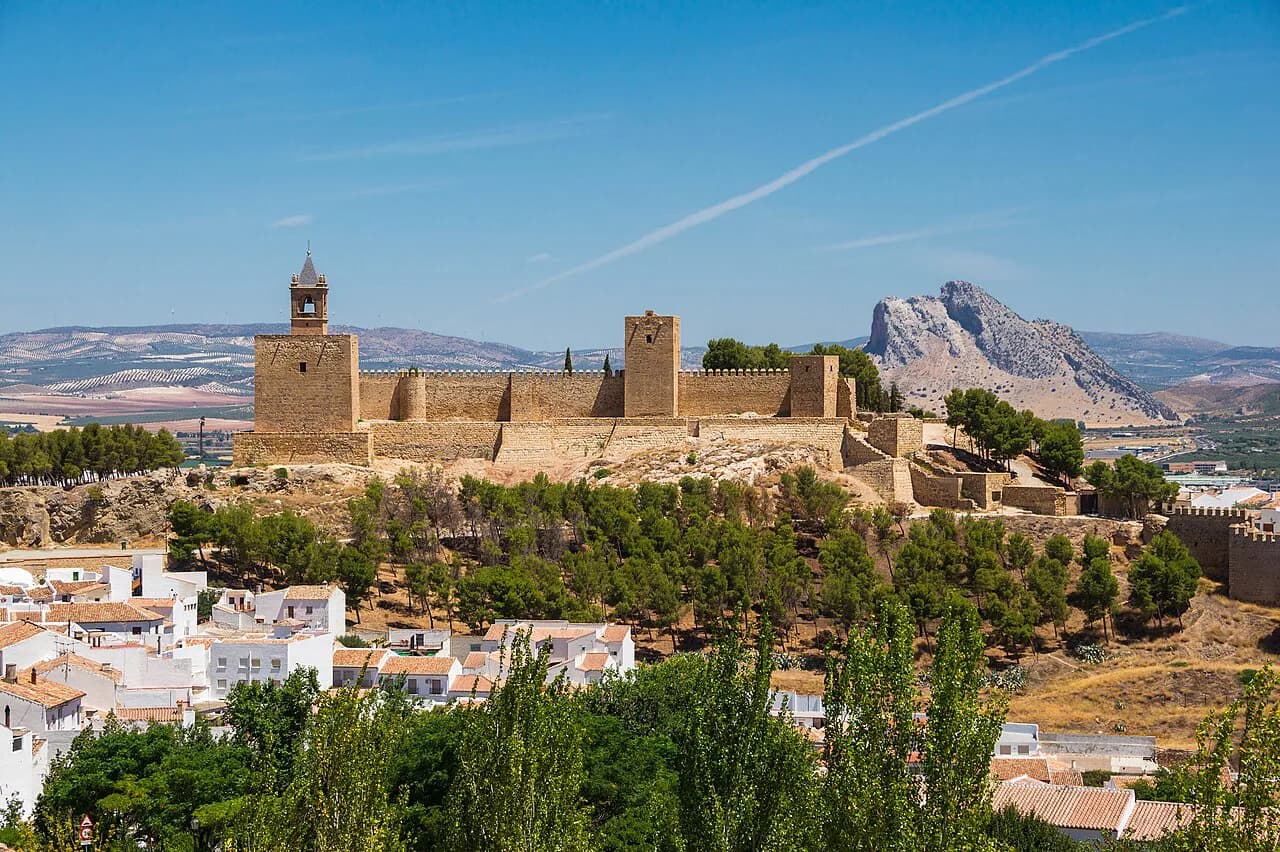
The dolmens are a short drive from the town's own castle hill, and pairing them with the Alcazaba and the Colegiata de Santa María la Mayor makes a coherent day. Start at the high ground early, when it is cooler and quieter, and work down towards the Plaza de San Sebastián and the city museum before or after the prehistoric sites.
If you are building a longer trip around Málaga, the dolmens make a strong inland counterweight to the coast, and the wider set of Costa del Sol towns is worth sketching before you commit days. Marbella old town is the coast's best-known old quarter, while the Caminito del Rey is the other obvious inland draw on this stretch of the province.
Practical points: heat, access and what to bring
Antequera sits inland and gets properly hot at midday in summer. The interiors of Menga and Viera are shaded and cool, but the walks and the El Romeral transfer happen outdoors, so early starts and a hat do more for the day than any amount of planning.
Bring water, sun protection and shoes that cope with uneven ground and gravel paths. The tourism office publishes accessibility information for the site, which is the right thing to read before assuming a wheelchair or pushchair will manage every part of the route.
Which of the three tombs to see first
Begin at the main enclosure on the Carretera de Málaga, take in the interpretation area and the two dolmens side by side, then drive the four kilometres to El Romeral for the contrast. That order gives you the logic of the site before the variation, and it keeps the transfer from eating into your time at Menga.
Confirm the visit through the official Conjunto Arqueológico information, plan the El Romeral leg in advance, and pair the dolmens with the Alcazaba and the Colegiata for a full day inland. The monuments are modest in size and enormous in implication, and they repay the unhurried half-day.
Explore more Málaga guides
Frequently Asked Questions
What were the Antequera dolmens used for?
They are prehistoric funerary monuments: chambered tombs built during the Neolithic and Chalcolithic periods for burial and ritual use. Their design is notable for the way each one is oriented towards a major natural landmark or the sun, as well as for the scale of the stones and the construction techniques involved.
Are the Antequera dolmens free to enter?
The Conjunto Arqueológico sets its own admission and guided-visit arrangements, and these can change with the season. Check the official Conjunto Arqueológico Dólmenes de Antequera information before you travel rather than relying on older accounts.
Can you visit Menga, Viera and El Romeral on foot?
Menga and Viera share one enclosure and are visited together on foot. El Romeral lies about four kilometres from them, so the practical approach is a car, taxi or an organised guided visit that covers both locations.
What else should I see in Antequera alongside the dolmens?
The Alcazaba on the high ground and the Renaissance Colegiata de Santa María la Mayor next to it make the obvious pairing, with the Plaza de San Sebastián and the city museum filling out a walk down into the centre. El Torcal de Antequera is the natural add-on if you have a second day.
Sources
Notes for your next Spanish town break
Optional updates to our guides.
You might also like
Continue reading
More guides you'll find useful