Things to Do in Toledo: Old Town, Cathedral, Alcázar and Miradors
Plan a Toledo short break around the old town, cathedral, Alcázar, San Juan de los Reyes and the best miradors, grouped by area so you can walk between them.
On this page
Toledo's essential sights sit inside a single loop of the Tagus, so a first visit is a walk rather than a tour: the cathedral and the Alcázar form the core, San Juan de los Reyes anchors the old Jewish quarter, and the gates and bridges frame the whole. This guide groups the monuments, museums and miradors by cluster, explains how the streets connect them, and flags the trade-offs — midday heat, church closures and the busy Valle viewpoint.
Toledo is a UNESCO World Heritage city whose layers run from Roman foundations through a Visigothic capital to a Moorish city and a Castilian court. That depth is why the place rewards slow walking: the same street can pass a mosque turned church, a Gothic monastery and a Renaissance square within a few minutes.
What to see in Toledo first: the compact old town inside the Tagus meander
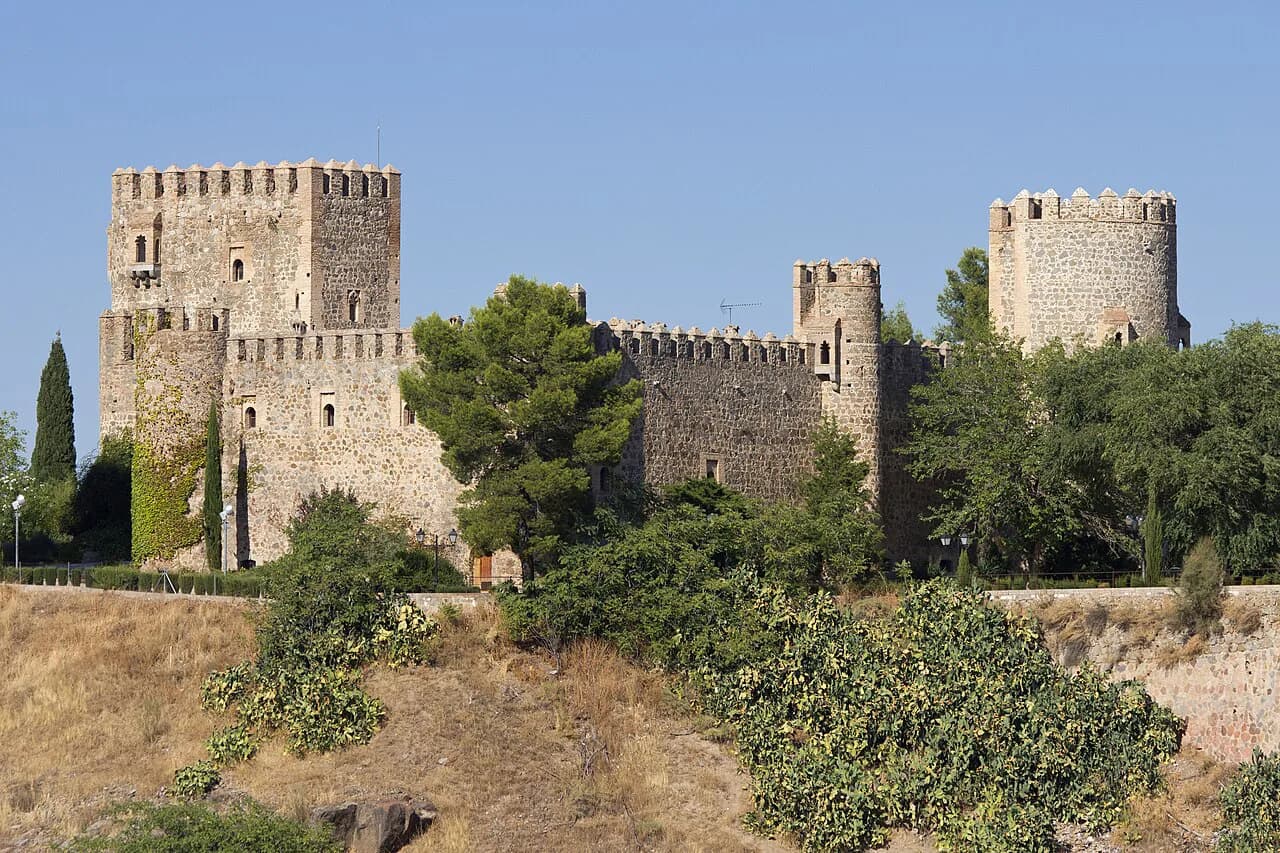
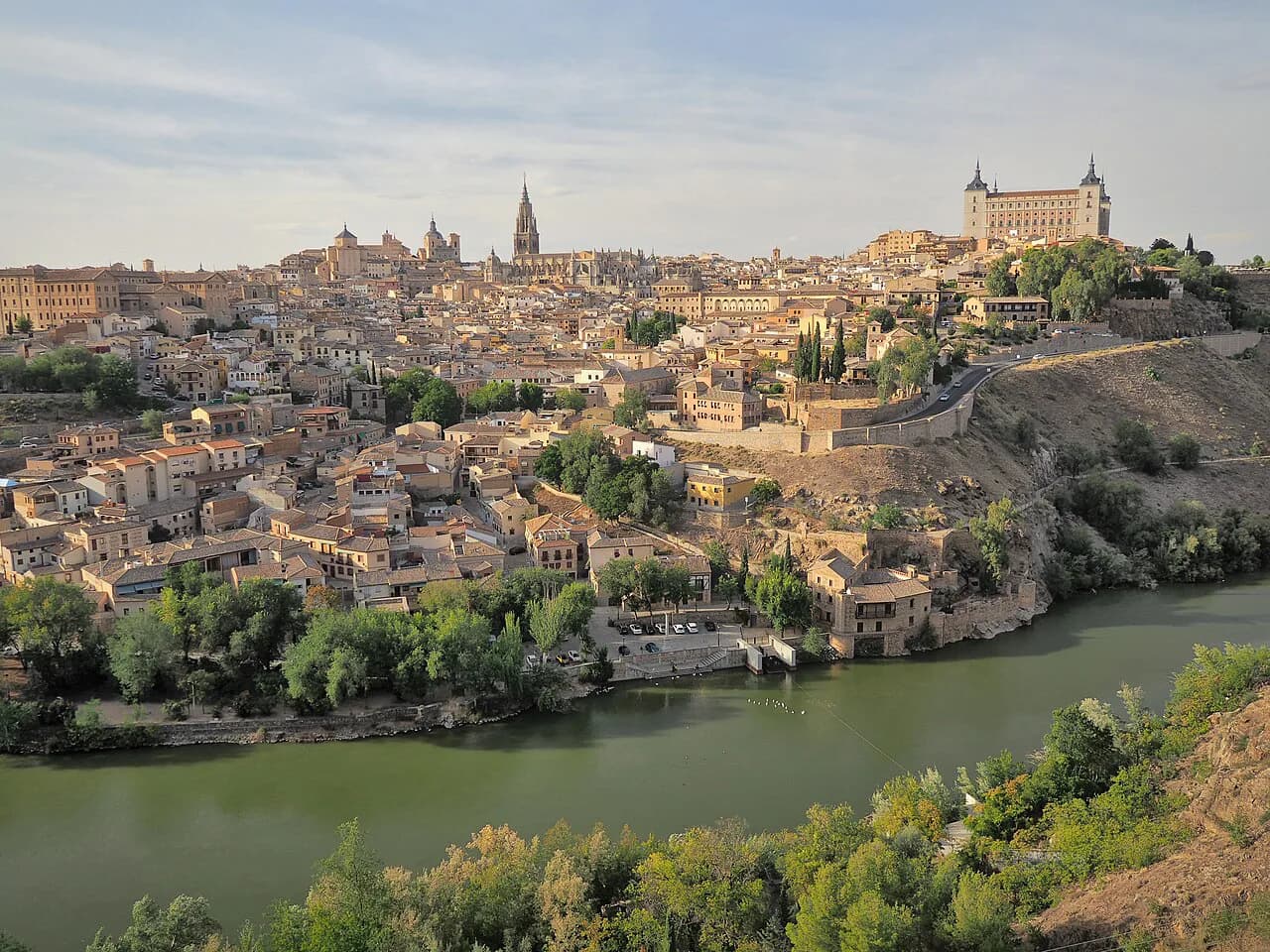
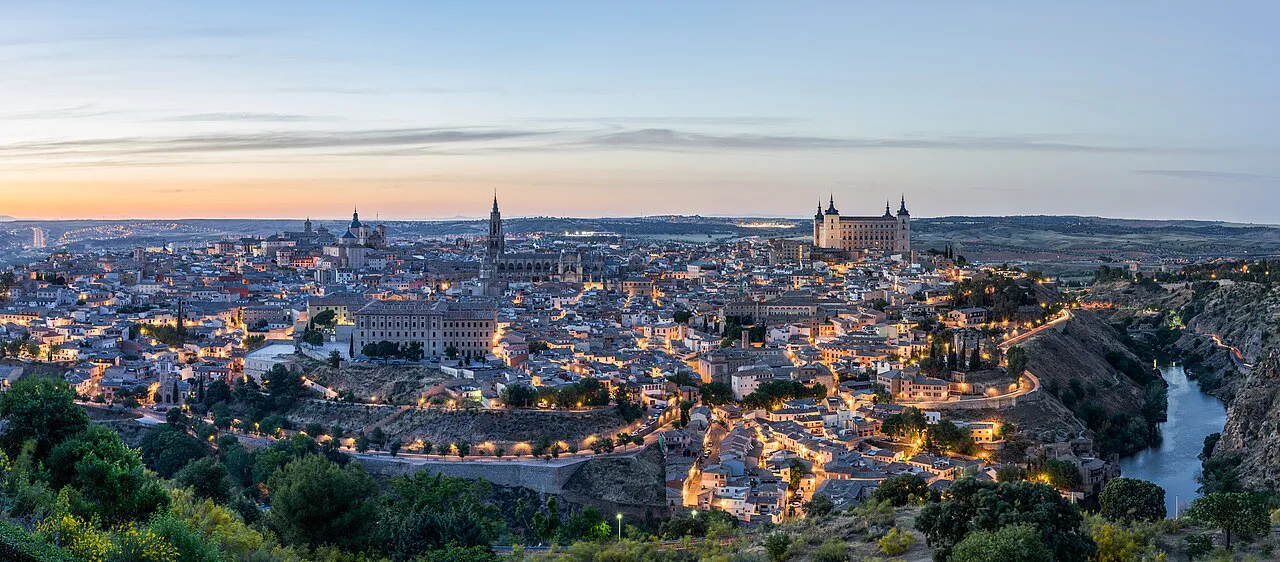
Start with the shape of the city. Toledo's historic centre occupies a rocky plateau almost entirely enclosed by the Tagus, entered through stone gates such as the Puerta Nueva de Bisagra on the north side. Because the plateau is small, the cathedral, the Alcázar and the main squares sit within a walkable ring.
The practical consequence is that you can see the headline sights without transport once you are inside the walls. Pick a base point such as the Plaza de Zocodover, orient yourself with a Toledo map, and plan a loop rather than a there-and-back route so you keep discovering new streets.
The old town is also steep and paved, with short climbs between the river level and the plateau. Comfortable shoes matter more here than in most Spanish cities, and the narrow lanes mean you should allow more time than the distance on a map suggests.
Toledo Cathedral (Catedral de Santa María): the centrepiece of the old town
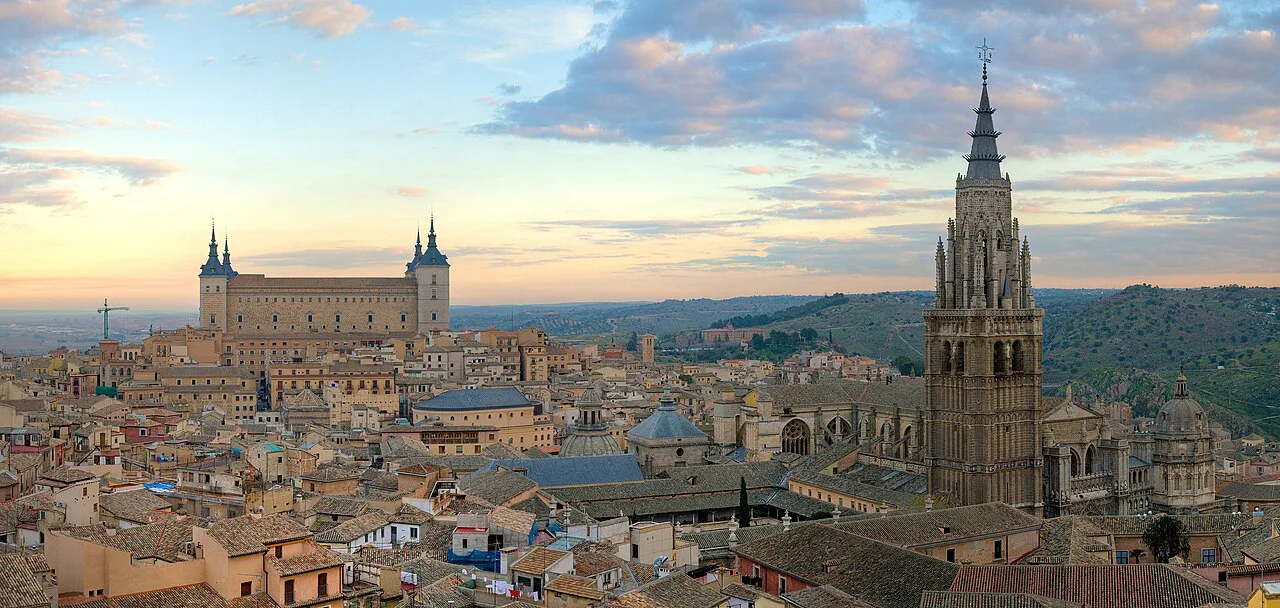
The Catedral de Santa María is the pivot of the old town, a vast Gothic building whose interior holds the choir, the main chapel and a treasury of religious art. Even travellers with limited time tend to make this the first stop, because everything else radiates from it.
As with any working cathedral, tourist visits are fitted around services, so treat the building as a church first and a monument second. Plan the cathedral early in the day when energy and light are best, and keep the rest of the loop flexible so you can return later if a service interrupts your visit.
The Alcázar of Toledo: fortress, square and city views
The Alcázar is Toledo's other landmark, a fortress on the highest point of the plateau that dominates the skyline from every approach. Its position makes it a useful orientation point as much as a sight: from its surroundings you can read the layout of the old town below and the river bend beyond.
The building's story runs from royal residence to military academy to siege-scarred ruin, which is why it reads differently from the cathedral: more austere, more about power than faith. Pair it with the nearby squares rather than treating it as a standalone stop.
San Juan de los Reyes Monastery: the Isabelline church in the Jewish quarter
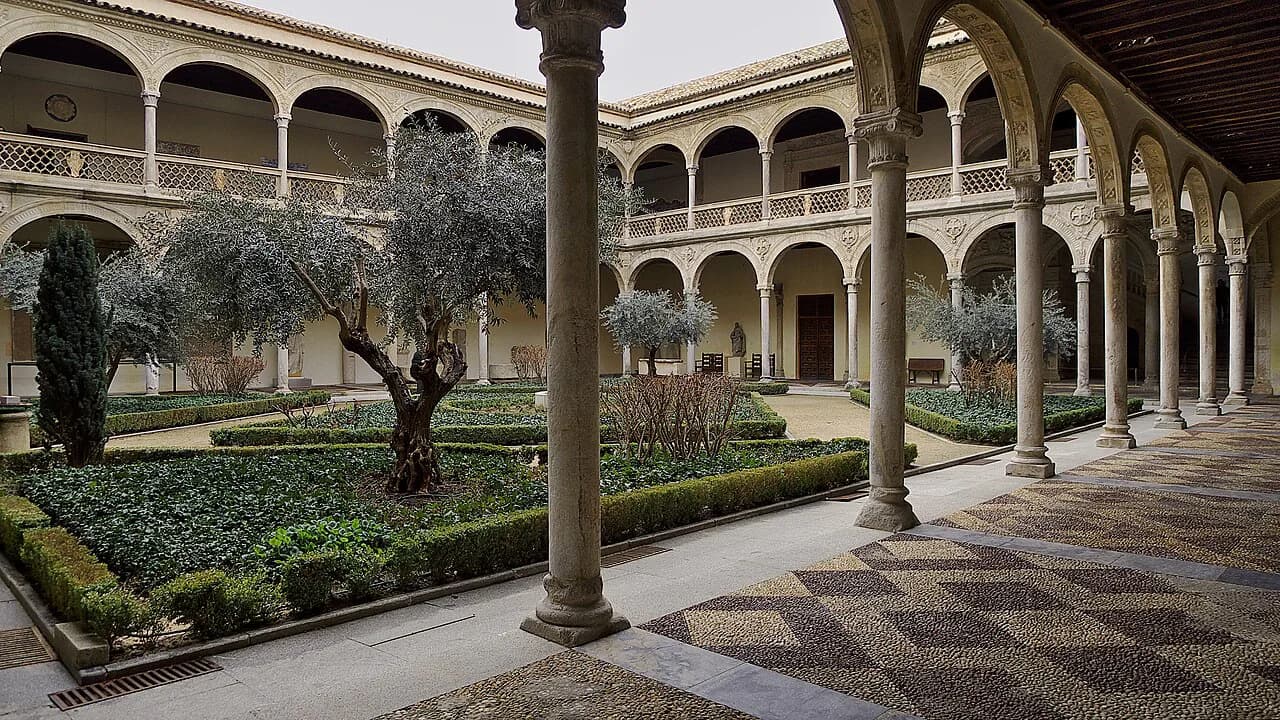
San Juan de los Reyes sits in the old Jewish quarter on the western edge of the plateau, founded by the Catholic Monarchs and finished in a flamboyant late-Gothic style. Its cloister and church are the highlight of that side of town, and the building is closely tied to the story of the city's Jewish community.
Combining the monastery with the synagogues and the Jewish quarter gives you a coherent half-day on the quieter side of the centre. Walk it after the cathedral rather than before, when the main sights are less crowded.
Mosque-church Cristo de la Luz and Toledo's Visigothic and Moorish remains
The Cristo de la Luz is the small former mosque just inside the northern walls, later converted into a church, and it is one of the clearest surviving pieces of Toledo's Moorish period. Its compact size makes it an easy add-on to a walk between the Puerta de Bisagra and the centre. For more of the same story across the country, see Moorish Spain: Where to See al-Andalus Beyond Granada.
For the earlier layer, Toledo preserves fragments of its Visigothic past, including the city's role as the Visigothic capital before the Moorish conquest. That history is what makes the city unusual among Castilian towns: the Islamic and Visigothic traces sit alongside the Gothic and Renaissance ones rather than being buried beneath them.
The synagogues and the Jewish quarter: Toledo as the city of three cultures
Toledo's nickname, the city of three cultures, comes from the centuries when Christian, Jewish and Muslim communities lived side by side. Two medieval synagogues survive in the old Jewish quarter, one of them the Synagogue of El Tránsito with its richly decorated interior, and both are now museums rather than places of worship.
The quarter also holds the Museo del Greco, devoted to the painter who lived and worked in the city. Build the synagogues and the museum into one walking loop rather than zig-zagging across the centre.
Museums worth your time: the Visigothic museum and the city's cultural collections
Toledo's museums lean towards archaeology and painting rather than blockbuster shows, and they are strongest where they explain the city's layers. The Visigothic collections are the natural complement to the mosque-church and the synagogues, filling in the centuries that the buildings only hint at.
Because the old town is compact, one or two museums fit comfortably into a day without crowding out the monuments. Choose the collections that match what you have already seen on foot, and leave the rest for a longer stay.
Puerta de San Martín, Puente de Alcántara and the river approaches
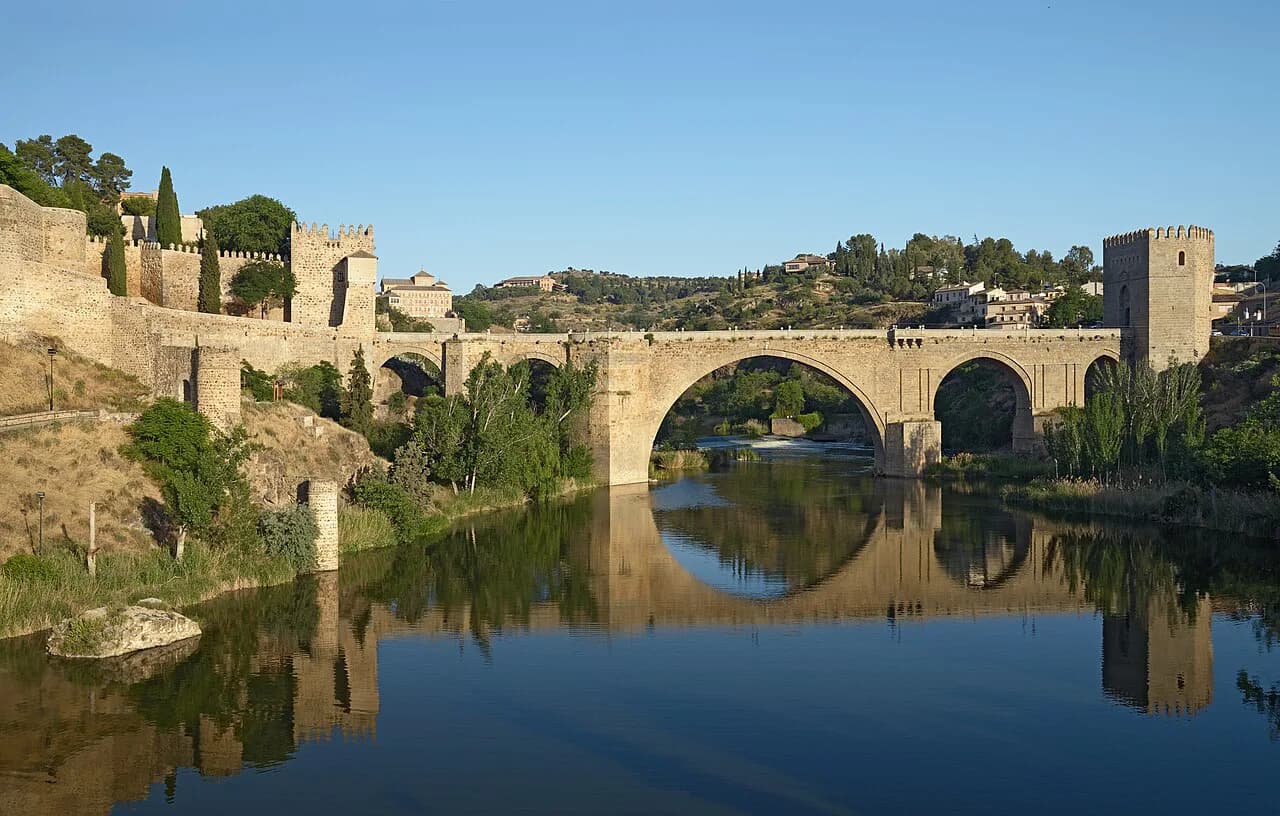
The river approaches give Toledo its famous silhouette. The Puente de Alcántara on the east side and the Puerta de San Martín on the west are the classic viewpoints from below, where the city's outline rises above the water and the gates lead you back up into the streets.
Walking in from a bridge also shows you the scale of the plateau in a way that arriving by bus or car does not. Leave time for the climb back up, and pick the bridge that suits where you are staying rather than trying to do both in one walk.
The best miradors and viewpoints over the city
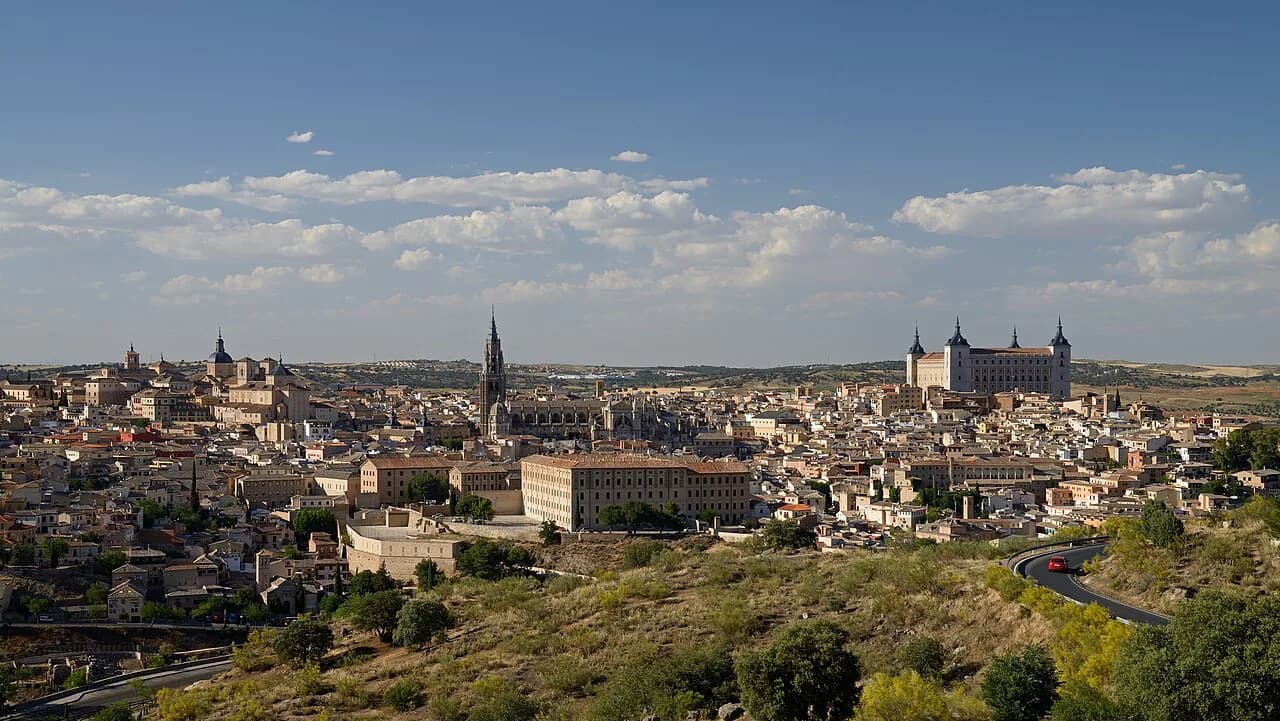
Toledo's viewpoints are spread around the rim of the meander, and each gives a different angle on the old town. The Valle area on the opposite bank is the classic panorama, with the river, the bridge and the whole city laid out below; the bridges and gates give closer, ground-level views of the same skyline.
Work out the light before you choose a viewpoint: the panorama is a different picture at different times of day, and the exposed rocks offer little shade. Take water, pick one or two viewpoints rather than all of them, and use the walk back to the centre as part of the outing.
The Valle mirador: the postcard panorama and how crowds affect it
The Valle viewpoint on the far side of the Tagus is the image most travellers carry home, and it has become a victim of its own success. Neighbours in the historic centre have complained about coach traffic and congestion around the Valle, with buses queuing for parking and blocking narrow pavements, and the council has said it is studying measures rather than having settled on a scheme.
Expect the area to be busiest around public holidays and on fine weekend afternoons, and plan your visit outside those peaks if you want a quieter view. The council's tourism department has discussed signage and information about parking availability, so check access arrangements with the town hall before planning a coach drop-off or driving there.
How the old town is laid out and how to walk between sights
Toledo's old town is a tangle of lanes rather than a grid, with steep steps and dead ends, so a plan helps. The cathedral and the Plaza de Zocodover are useful anchors, with the Alcázar above and the Jewish quarter below on the west side.
Group the cathedral, the Alcázar and Zocodover into one walk, then do the Jewish quarter, San Juan de los Reyes and the synagogues as a second. That split keeps you from crossing the centre repeatedly and leaves the bridges and viewpoints for a third outing, ideally when the light is better.
A sample day in Toledo for a short break
Begin at the cathedral when it is quietest, then climb to the Alcázar and its surroundings for views over the plateau. Break at the Plaza de Zocodover or the streets around it to rest your legs, then spend the afternoon on the Jewish quarter, San Juan de los Reyes and the synagogues.
If you have energy left, finish with the river side and one mirador rather than trying to fit in every museum. A Toledo walking tour or guided tour can replace the plan with a route that suits your pace and the day's opening arrangements.
How long Toledo needs for a first visit
One full day is enough for the cathedral, the Alcázar, San Juan de los Reyes and a walk through the old town, and it is the classic short-break format from Madrid. Two days lets you add the museums, both synagogues, a river walk and a proper look at the viewpoints without rushing.
If you want to use Toledo as a base beyond the city walls, allow extra time for the countryside and the nearby towns. The city rewards a slower pace more than a longer list of sights, so a second day is usually better spent revisiting than racing to new monuments.
Practical trade-offs: midday heat, siesta-hour closures and Monday closures
Inland Castilla-La Mancha gets hot in summer, and the old town's stone streets trap the heat, so plan the walking for the morning and the museums or a long lunch for the middle of the day. Many churches and smaller sites close during siesta hours, and some monuments take a weekly rest day, commonly at the start of the week.
Cathedrals and working churches may close their doors to tourists during mass, and the Montefiore area and the cathedral itself are not simply open all day. Check the official pages for the cathedral and each monastery before you build your route around a single opening time, and use a walking route that passes several sights so a closure costs you less.
Getting to Toledo and getting around without a car
Toledo is close enough to Madrid for a day trip by train, and the station sits below the old town with a climb or a short ride up to the centre. Allow time for the walk up from the station to the cathedral area or take the bus if the climb is unwelcome.
Inside the walls, walking is the sensible way to get around; the streets are too narrow for driving to be useful and parking is limited. For the Valle viewpoint and the river approaches, use public transport or a tour, and treat coach traffic near the miradors as a weekend reality rather than a surprise.
Day trips from Toledo: the Barrancas de Burujón and Cabañeros National Park
The Barrancas de Burujón east of Toledo are eroded red-gold cliffs above the Tagus, a landscape rather than a monument, and a natural add-on for anyone with a second day. Cabañeros National Park, further south, covers Mediterranean woodland and open dehesa, and needs a proper half-day or more rather than a quick detour.
Treat these as car or tour days, not walking days, and check transport options before committing. If time is short, keep your second day in the city itself; Toledo's old town has enough for two visits and the countryside is better saved for a longer break.
What Toledo is famous for and what to skip
Toledo is famous for its three cultures, its cathedral and its Alcázar, and for the swords and damascene metalwork that the city still sells. Its position above the Tagus is the other half of the identity: the river and the meander are what make the skyline so recognisable.
That leaves plenty to skip without guilt. Speciality food shops are worth a glance, but Toledo is not a shopping destination; the military history of the Alcázar interests some travellers and leaves others cold, and the city's museums are better value as context than as collections in themselves.
Free and low-cost things to do in Toledo
Toledo's best free experiences are its streets and its viewpoints: walking the old town, crossing the bridges, and finding the miradors around the rim of the meander. The cathedral and monastery interiors are ticketed, so build a free day around the urban landscape rather than the monuments.
Where a site does have a free window, it is usually tied to a specific evening slot or to residents, and it changes by site and by season. Check each monument's own opening information rather than relying on a general list, and use the saved budget for one paid highlight you actually want to see.
Which Toledo sights should you book or plan first?
Fix the cathedral and the Alcázar as your anchors, then decide whether the Jewish quarter and San Juan de los Reyes deserve a half-day or a full one. If the Valle panorama matters to you, give it a separate outing and aim for an off-peak time rather than squeezing it in at midday.
For a short break, one day covers the essentials and two days makes the city comfortable. If you are travelling further in Spain, the same approach works in smaller historic towns, from the Galician coast at La Marina in A Coruña to the old gates of Mallorca at Puerta de Xara in Alcúdia,
Explore more Toledo guides
Frequently Asked Questions
What is the single best thing to see in Toledo?
The cathedral is the natural centrepiece, and the Alcázar comes a close second for its position and history. If you only have a short time, do those two and walk through the old town between them rather than adding museums.
Can you see Toledo's main sights in one day?
One day covers the cathedral, the Alcázar, San Juan de los Reyes and a walk through the old town. Two days makes room for the synagogues, museums and viewpoints without rushing, and suits anyone who wants to explore the river approaches as well.
Is the Valle viewpoint in Toledo worth it?
It gives the classic postcard view of the city above the Tagus, and it is free. It can also be congested when coaches queue for parking, so go outside public holidays and busy weekend afternoons if you want a calmer visit.
Are there free things to do in Toledo?
Toledo's streets, bridges and viewpoints cost nothing to walk. The cathedral, synagogues and monasteries are ticketed, and any free-entry slots vary by site, so check each monument's own page rather than a general list.
Sources
Notes for your next Spanish town break
Optional updates to our guides.
You might also like
Continue reading
More guides you'll find useful