Cuenca, Spain: Old Town, Hanging Houses and a Walking Route
Plan a short break in Cuenca, Spain: the old town on its ridge, the Hanging Houses, the gorge viewpoints and a walkable route through the historic centre.
On this page
Cuenca earns a stop because its historic centre is a UNESCO World Heritage site built across a ridge between the Júcar and Huécar gorges, so the sights sit close together but on slopes. One day covers the cathedral, the Casas Colgadas, Plaza Mayor and the main viewpoints without rushing. This guide sets out the layout, a walking order, the trade-offs of the terrain and how Cuenca fits alongside a short break based on Toledo.
What Cuenca is and where the old town sits
The old town occupies a promontory where the rivers Júcar and Huécar cut deep gorges on either side, which is why the streets climb and fall rather than run flat. Its Arab origins, medieval street plan and preserved heritage together give it a character unlike the grid-like new town across the river.
Treat the ridge as the spine of your day: the castle and its viewpoint at one end, the cathedral and Plaza Mayor in the middle, and the Hanging Houses and Puente de San Pablo at the other. Walking the length once, rather than doubling back, saves the steepest climbs for when you have fresh legs.
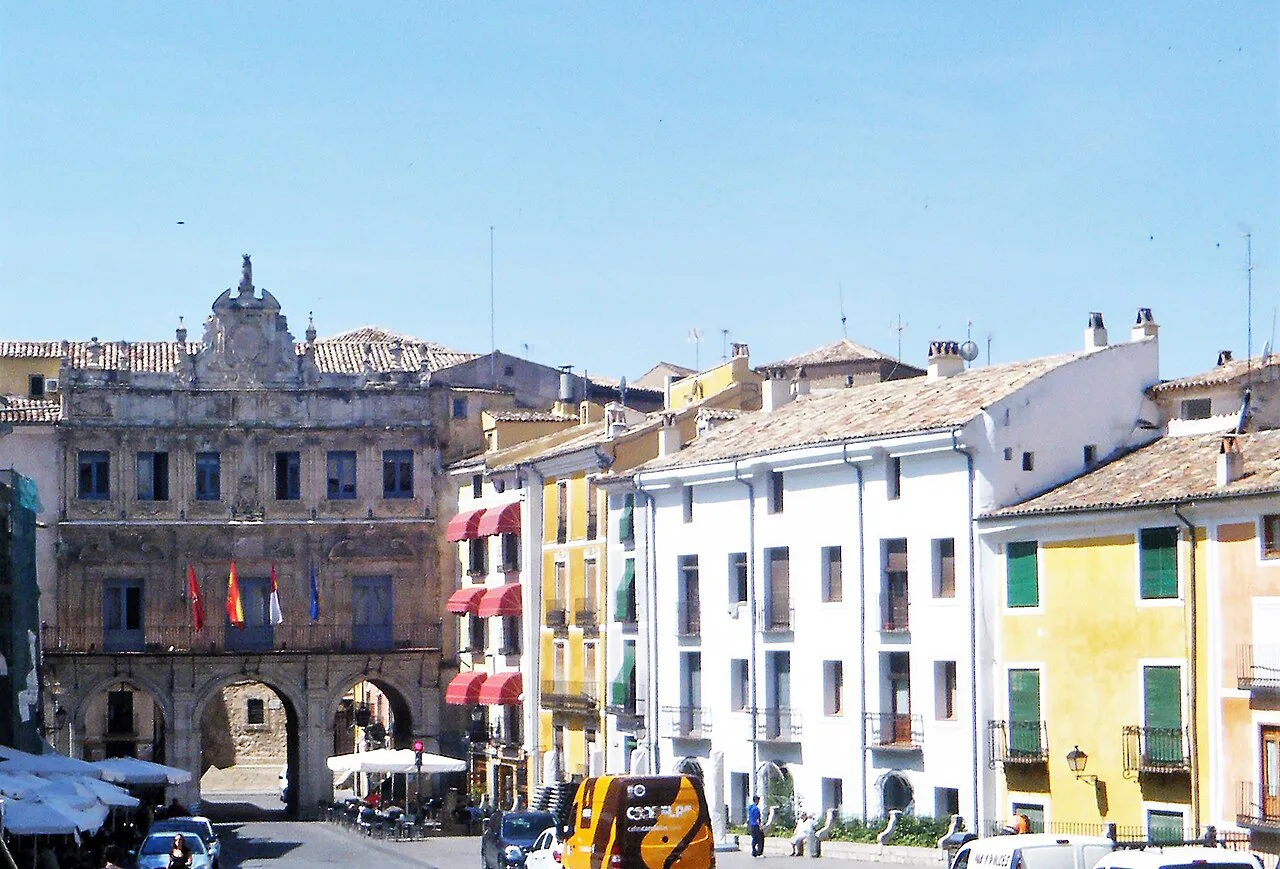
The Hanging Houses (Casas Colgadas) and the Huécar gorge
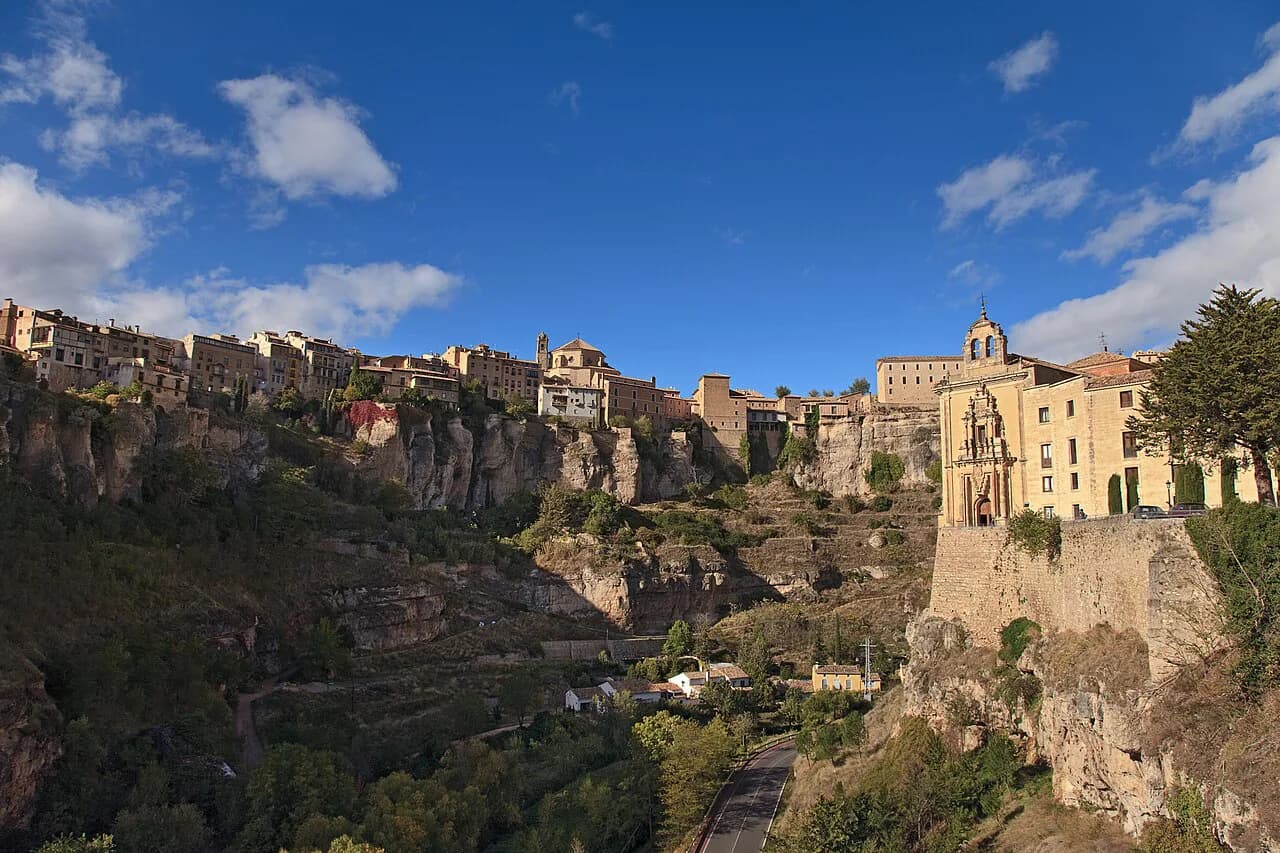
The Casas Colgadas are Cuenca's emblem, wooden balconies projecting over the Huécar gorge from the edge of the old town. They are best seen from the opposite rim, where the full cantilever reads clearly against the rock.
The Puente de San Pablo crosses the Huécar to the Parador side, a walk that puts you level with the hanging balconies and gives the classic view back to the town. Plan the crossing as a there-and-back: the far side is short on sights, so return the same way rather than looping.
Cuenca Cathedral: what to see inside
The cathedral, officially Santa María and San Julián, was the first Gothic cathedral built in Spain and its façade draws on Notre-Dame in Paris. Inside, the triforium, the cloister and the main altar are the elements to seek out, and the building holds one of the finest viewpoints in the city.
Check the cathedral's own published times for visiting and for services before you build the day around it, since tourist visits pause during mass. Give it more time than the exterior suggests; the art and glass reward a slower pass.
Plaza Mayor and the streets around it
Plaza Mayor is not the square you might expect: irregular rather than square, laid out from the sixteenth century and remodelled since, ringed by a row of colourful houses. The cathedral, the Ayuntamiento and the Convento de San Pedro all front onto it, making it the natural starting point for the historic centre.
From the square, Calle Alfonso VIII leads across the ridge towards the Torre de Mangana and Plaza Mangana, passing the medieval tower houses Cuenca calls its skyscrapers. It is the most straightforward axis for anyone worried about getting lost in the tangle of lanes.
The castle, the Arco de Bezudo and the castle viewpoint
At the far end of the ridge, the remains of the Castillo de Cuenca stand beside the Arco de Bezudo and the Mirador del Castillo. The viewpoint looks over the Casas Colgadas and the Huécar canyon, so it makes a strong opening or closing frame for the walk.
If you arrive by car, the parking by the castle is free and puts you at the top of the town, which means the day runs downhill and back up rather than the reverse. Walkers coming from the new town face the climb either way, so start early in warm weather.
The medieval tower houses and Calle Alfonso VIII
Cuenca's rascacielos medievales are tall medieval houses that grew upwards because the ridge offered so little room to spread out. Seen along Calle Alfonso VIII, they explain the town's dense, vertical feel better than any single monument.
Pair the street with the small sights that punctuate it, such as the Cristo del Pasadizo and the Calle de los Tintes, which sit close enough to take in without a detour. These are short stops: the pleasure is in the lanes themselves, not in ticking off interiors.
Torre de Mangana and Plaza Mangana
The Torre de Mangana marks the transition between the old town and the newer streets, standing over Plaza Mangana. It is a useful orientation point: from here you can read which way leads back to Plaza Mayor and which drops towards the river.
Use the plaza as a breather between the ridge and the gorge edge, since the ground here is more open than the alleys behind the cathedral. It also makes a sensible meeting point if your group splits up.
The Puente de San Pablo and the Parador side of the gorge
The Puente de San Pablo is the high footbridge over the Huécar that puts you opposite the Casas Colgadas, with the Parador de Cuenca on the far bank. It is the single most photographed crossing in the city precisely because the whole cliff face comes into view.
Allow for the wind and for crowds bunching at the midpoint, where everyone stops for the same photograph. If you want the view without the crush, cross first and walk the far bank before returning over the same bridge.
The Júcar gorge: viewpoints and the riverside walk
On the Júcar side, the Mirador de Florencio Cañas gives a panorama over the Parador and the Huécar canyon, reached by dropping down Calle de San Pedro from the castle. Below the old town, the paseo and waterfalls of the Júcar offer a gentler stretch after the lanes.
The riverside is also where the heat argument settles: inland Castilla-La Mancha gets fierce at midday in summer, so save the exposed gorge paths for the cooler ends of the day and keep the shaded alleys and cathedral for the middle.
How long Cuenca needs and how to pace a short break
A single full day covers the cathedral, Plaza Mayor, the Casas Colgadas, the Puente de San Pablo, the castle viewpoint and the Mangana quarter at an unhurried pace. With a second day, add the museums and the Serranía de Cuenca landscapes outside the city.
Pace the day around the slopes: front-load the climb to the castle, work along the ridge through the cathedral and Plaza Mayor, then finish at the gorge for the late light. Rest in Plaza Mayor or Plaza Mangana rather than retracing the steepest lanes twice.
Getting there and fitting Cuenca into a Toledo or Madrid trip
Cuenca sits east of Madrid and works as an overnight stop rather than a rushed excursion if you want the gorges and the old town in one go. Base yourself in the historic centre near the cathedral so the walk starts at your door.
Combining Cuenca with Toledo is a natural pairing for a short Spanish break, but treat them as two separate stops with their own nights rather than trying to see both between breakfast and dinner. Check current train times before fixing the order of the trip.
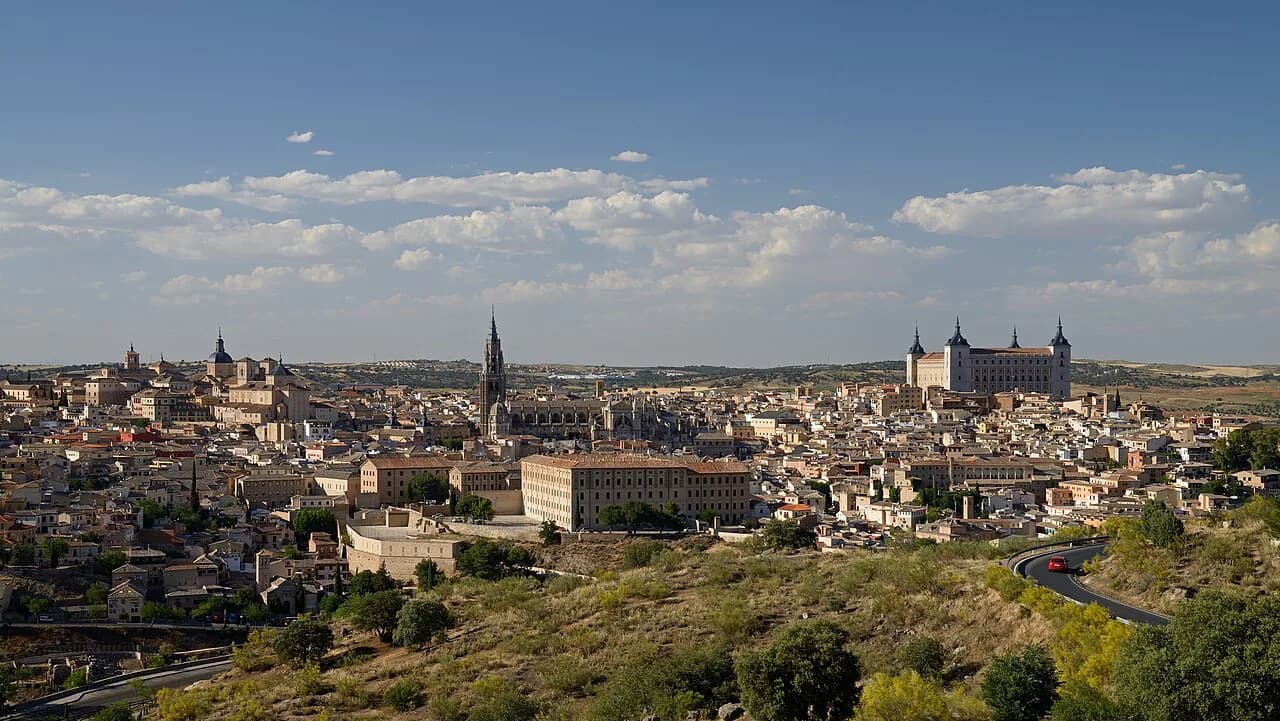
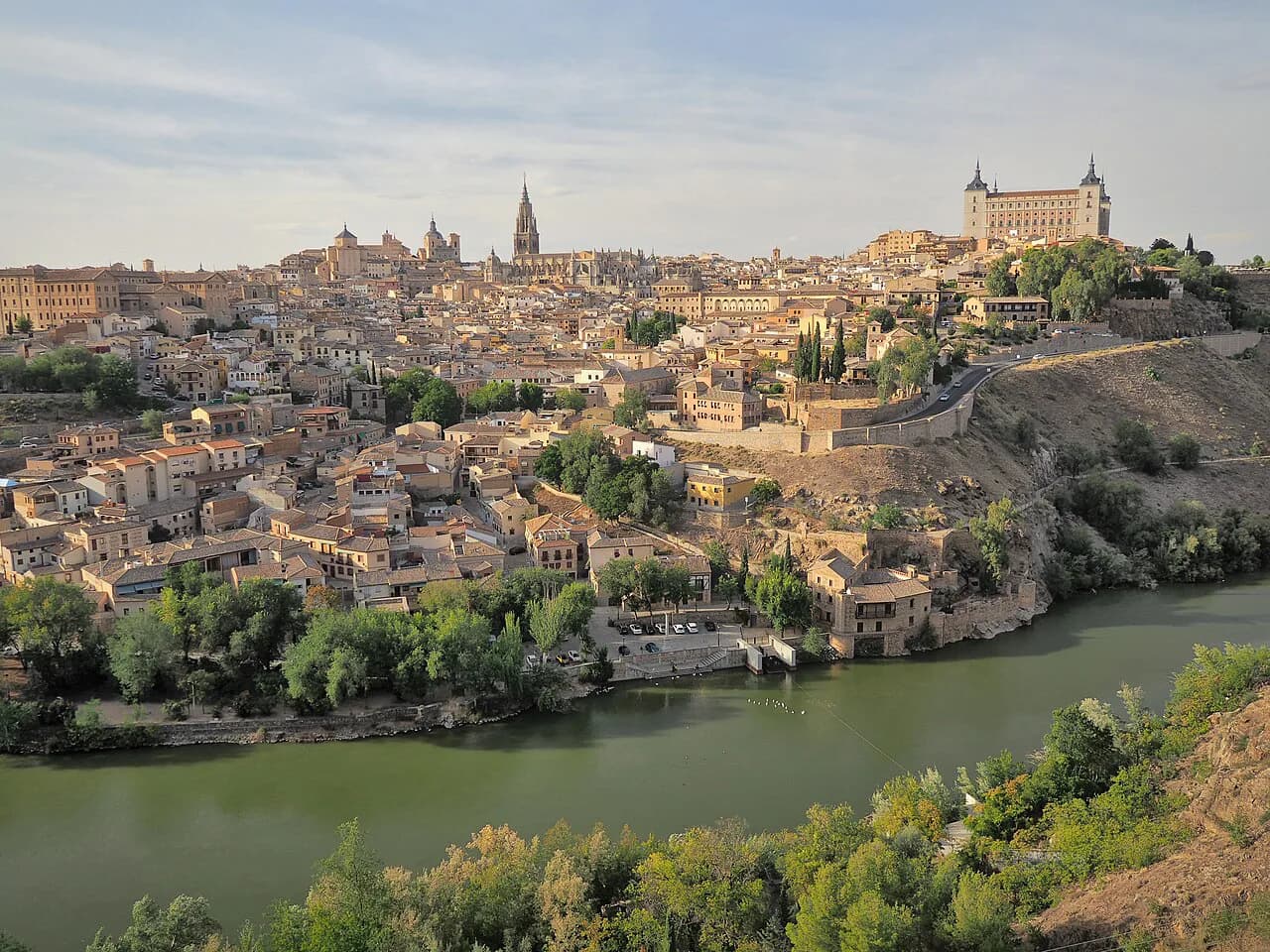
Toledo rewards the same approach, with its own ridge-top old town, cathedral and river gorge, so plan it with the same walking logic you use for Cuenca. The things to do in Toledo cover the comparable set of plazas, churches and viewpoints to weigh against your days.
Book Cuenca as an overnight, not a dash
Cuenca rewards a night rather than a dash: the ridge, the two gorges and the cathedral interiors need more than a couple of hours between trains. Sleep in the historic centre, start at the castle, and let the walk run downhill along Calle Alfonso VIII to the Hanging Houses and the Puente de San Pablo.
If you are pairing it with Toledo, give each town its own day and confirm the current train times and cathedral visiting hours before you commit. The trade-off is simple: more time in Cuenca means fewer stops elsewhere, but the gorge views and the near-empty early lanes are what you would otherwise miss.
Explore more Toledo guides
Frequently Asked Questions
Is Cuenca, Spain worth visiting?
Yes, if you want a compact historic centre with a dramatic setting rather than another flat city. Cuenca's UNESCO-listed old town sits on a ridge between two gorges, so the Casas Colgadas, the cathedral, Plaza Mayor and the castle viewpoint all fall within one walkable circuit. The cost is gradient: you will climb and descend repeatedly, so allow for that in how you plan the day.
Can you visit Cuenca as a day trip from Madrid?
It is possible, but the old town's slopes and the gorge crossings reward an overnight stay. A day trip leaves little room for the cathedral interiors, the Puente de San Pablo and the castle viewpoint without rushing. Check current train times before deciding, and if you go for the day, arrive early and start at the castle end of the ridge.
How many days do you need in Cuenca?
One full day covers the main monuments and viewpoints on the ridge. Two days let you add the museums and the landscapes of the Serranía de Cuenca outside the city. Much of the pleasure is in the lanes themselves, so build in slack rather than filling every hour.
Sources
Notes for your next Spanish town break
Optional updates to our guides.
You might also like
Continue reading
More guides you'll find useful