Toledo Old Town: Streets, Squares and Monuments to Walk
A walker's guide to Toledo's old town: its gates, plazas, lanes and monuments, the tourist bracelet covering seven sights, and how to enter on foot.
On this page
Toledo's old town is best walked as a loop rather than a checklist: enter through the Puerta Nueva de Bisagra, follow the lanes uphill to the Plaza de Zocodover, then work west and south through the cathedral and Jewish quarters before dropping to the Puente de San Martín. Give it a full day on foot and expect slopes, cobbles and heat to slow you down. This guide sets out how the quarter is laid out, which gates and plazas anchor it, and the practical detail behind the bracelet ticket and the hillside approach.
Everything here stays inside the walled historic quarter, which the city's tourism guide describes as a UNESCO World Heritage site. Individual sights have their own pages, so this one concentrates on the shape of the place: how the streets connect, where you enter and exit, and where the steep bits fall.
What the old town is and where it sits above the Tajo
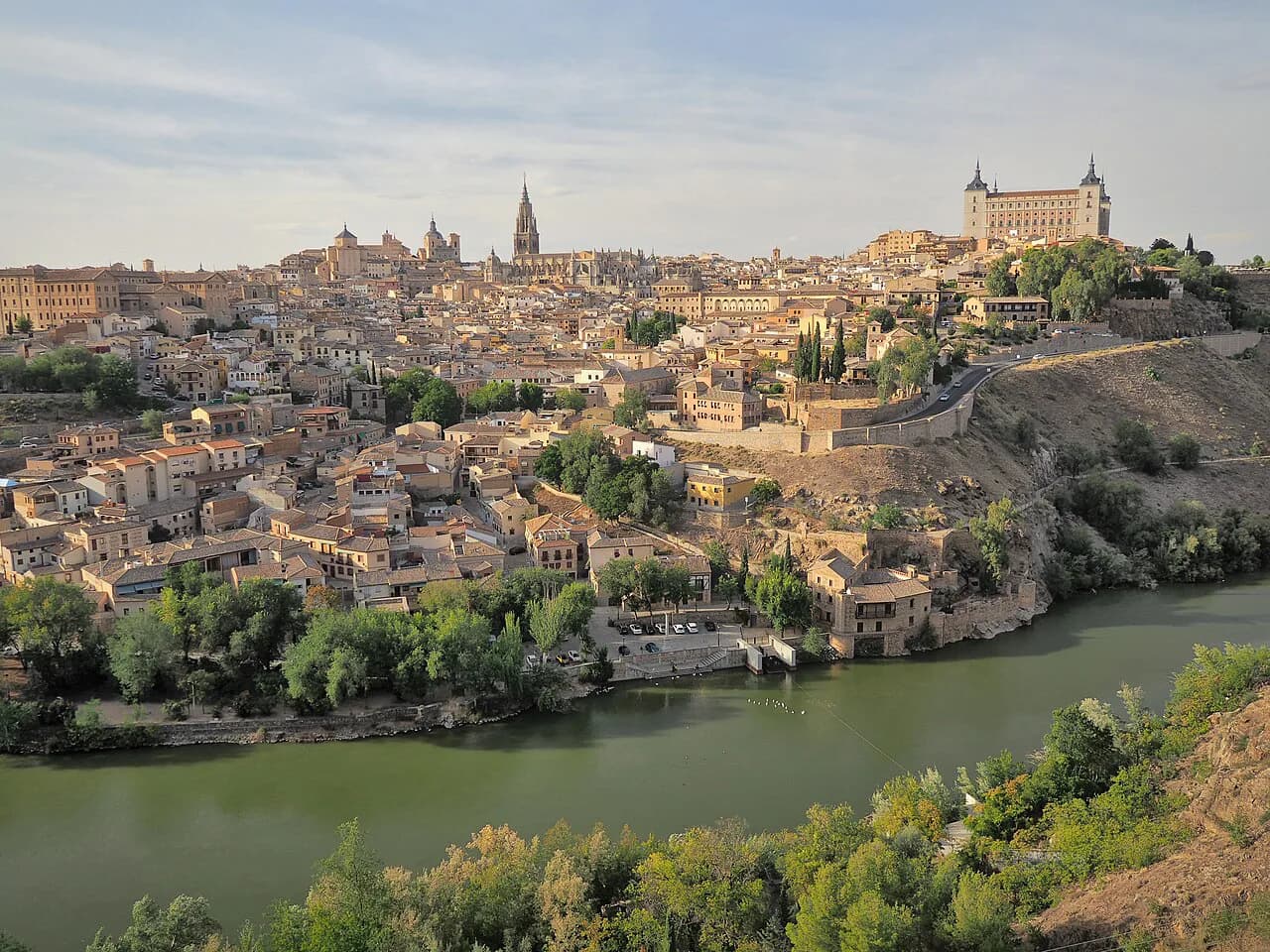
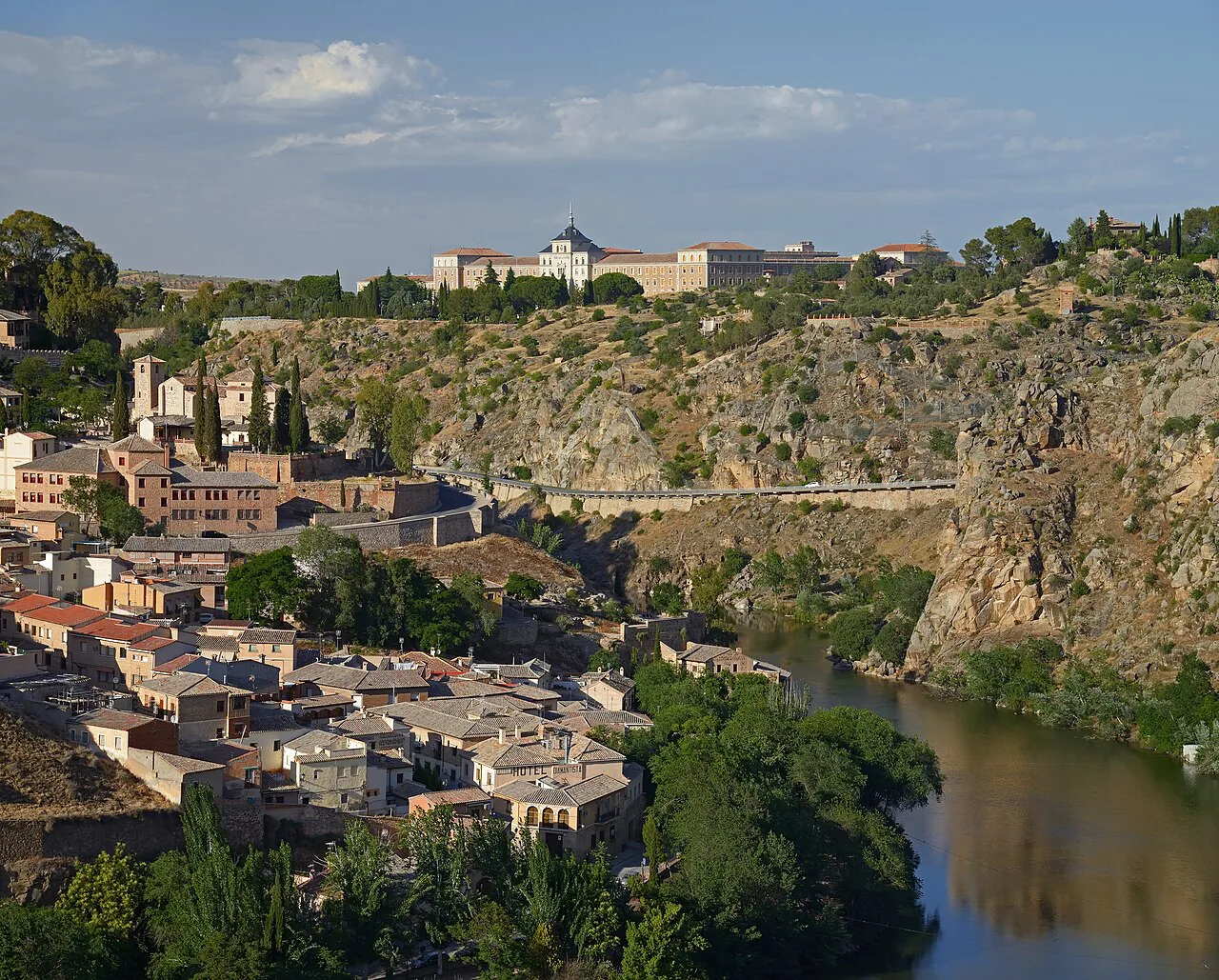
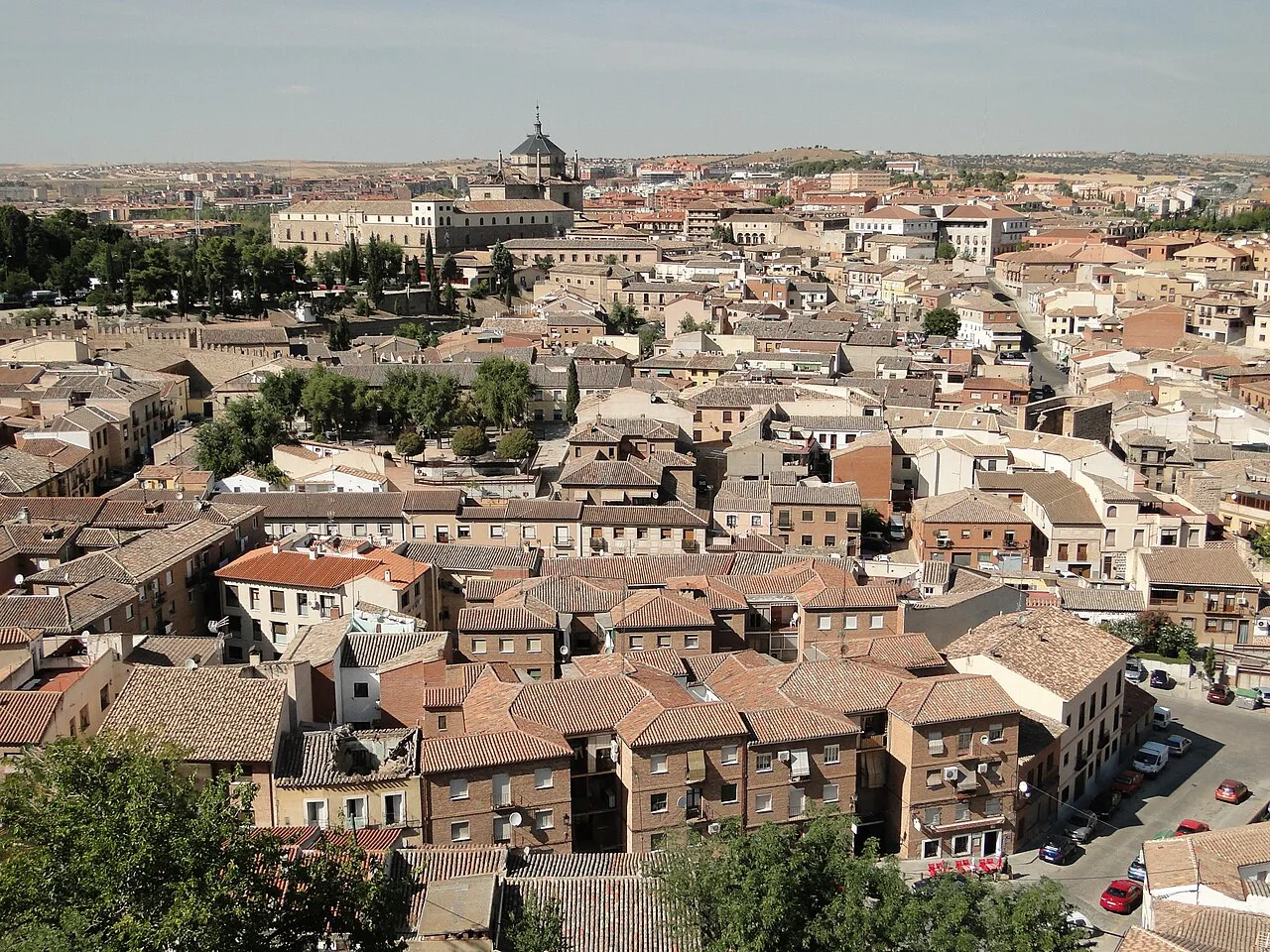
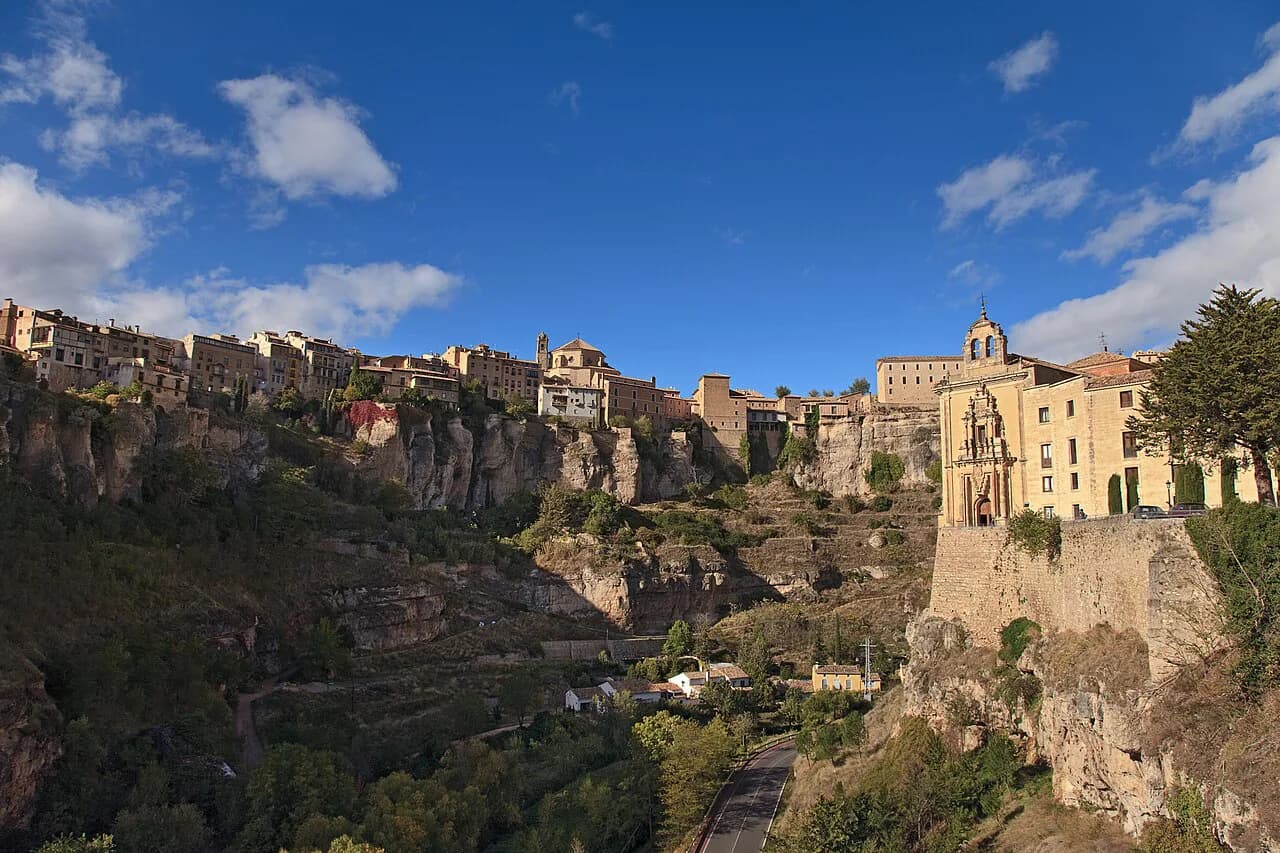
The historic quarter occupies a rocky promontory that the Río Tajo wraps around, which is why the long views of the city show water below the walls. Inside the walls the street plan is medieval and irregular: short lanes, sudden flights of steps and blind corners rather than a grid. That shape is the reason the town rewards slow walking and punishes anyone trying to cover it by car.
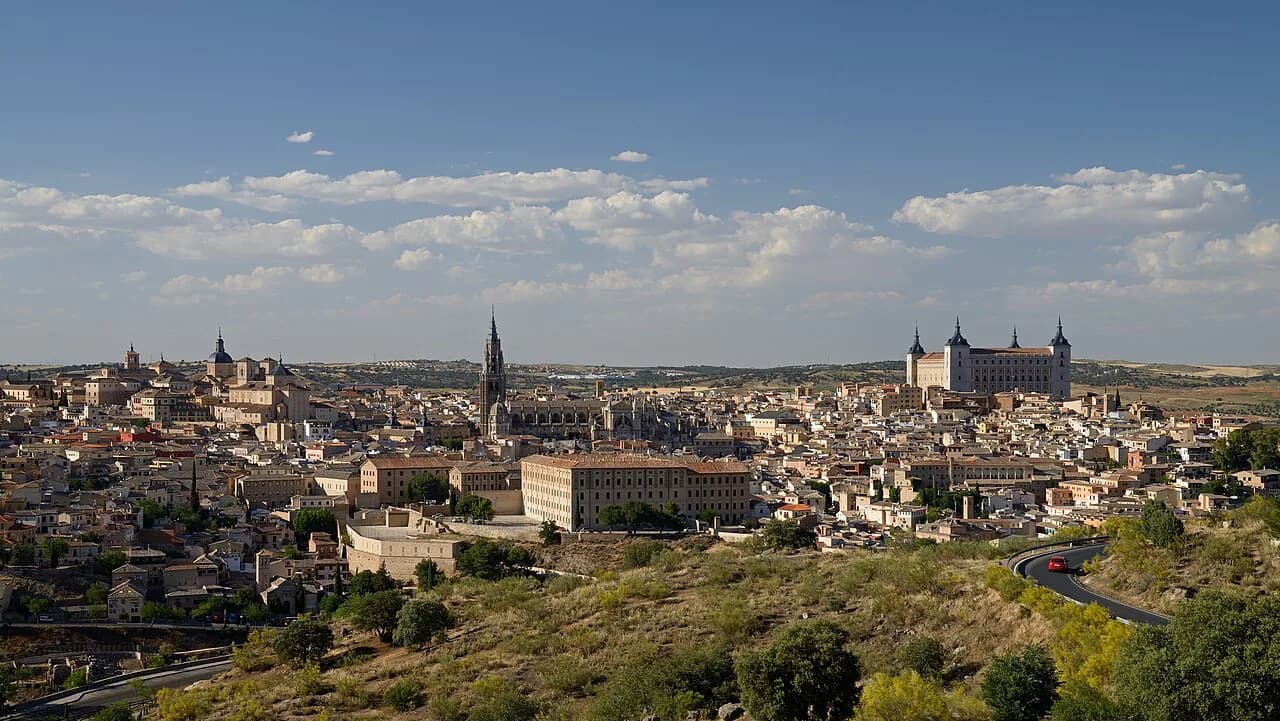
Treat the Alcázar as the high point on the skyline and orient yourself by it all day: from the Mirador del Valle it stands above every other building, and from the lanes below it the tower keeps appearing between roofs. If you want a proper map before you set off, the Toledo map page is a useful place to start rather than relying on phone signal in the narrow streets.
Entering through the Puerta Nueva de Bisagra and the Puerta del Sol
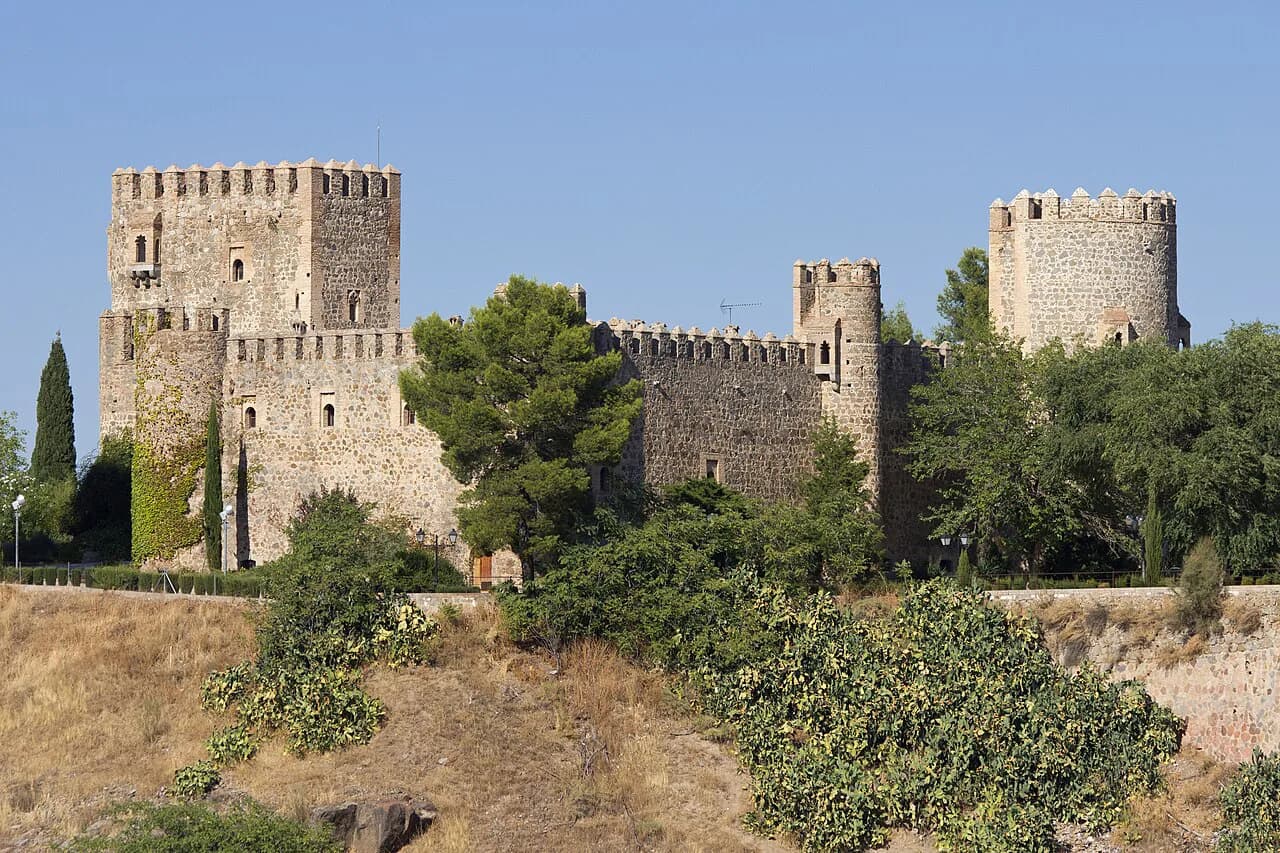
The Puerta Nueva de Bisagra is the natural first entry to the quarter: a monumental gate with a wide approach that makes an obvious start to a day's walk. From there the route runs towards the Puerta de Valmardón and the Mezquita del Cristo de la Luz, one of the oldest buildings in the city and a good example of its Andalusian past. A short way beyond stands the Puerta del Sol, another medieval gateway worth pausing at. If you want more single sights to slot into the walk, see Things to Do in Toledo.
Both gates sit on the same northern approach, so you can take them in one sweep before the climb to the centre. For anyone who wants the city's deeper background before walking it, the Toledo history page fills in the layers these walls belong to.
The lanes between the gates: cobbles, slopes and the city's maze layout
Between the gates the old town is a genuine labyrinth, and the guidebooks warn about slopes, cobbles and narrow streets that twist without warning. Wear closed, comfortable shoes; the local advice is explicit that the paving is uneven and slippery in places. The local joke about Toledans and their scraped wing mirrors is a fair warning about trying to drive these lanes.
The practical answer is to accept that you will backtrack: pick a rough line through the quarter and let the lanes carry you sideways. A guided Toledo walking tour is one way to have the route decided for you when the maze feels like too much on a short break.
Plaza de Zocodover as the centre of the old town
The Plaza de Zocodover is the heart of the historic quarter and the obvious place to pause, sit on a bench and watch the city go past. It is also the practical hub of the old town: the L71 bus to the Mirador del Valle leaves from here, which makes the square a useful anchor at the start or end of a walk.
Because Zocodover sits near the top of the climb, it works better as a mid-morning or late-afternoon stop than as a first destination straight off the bus. The square is also where organised Toledo tours tend to gather, so it is worth knowing as a meeting point even if you walk independently.
The Alcázar: what it is, its position over the city, and the free views from the library cafeteria
The Alcázar is the fortress that dominates the skyline and now houses the Museo del Ejército, so it pulls double duty as a landmark and a museum. Its position at the top of the old town explains why it appears from so many lanes below.
For a view without a ticket, the cafeteria of the Biblioteca Regional de Castilla-La Mancha in the Alcázar tower is free to enter and gives wide views over the city. Treat it as a viewpoint stop rather than a museum visit, and check its opening times before climbing up.
The Mezquita del Cristo de la Luz and Toledo's Andalusian remains
The Mezquita del Cristo de la Luz is the pick of the old town's Andalusian remains and sits close to the northern gates, which makes it an easy early stop. It is one of the seven monuments covered by the tourist bracelet, so the band is the easiest way to enter it along with the others rather than paying each separately. For more of the city's collections and historic interiors, see Museums in Toledo.
Pair it with the Puerta del Sol a short walk away and you have covered the northern edge of the quarter before the main climb begins. Churches in Toledo are scattered through the same lanes, so it is easy to add one or two more without deviating far.
The cathedral quarter and the Primate Cathedral of Spain
The Catedral Primada de España is the centrepiece of the western old town and one of the most impressive cathedrals in Europe, with chapels, retablos and stained glass that reward a slow visit. It is not part of the tourist bracelet, so budget for a separate ticket and check the cathedral's own published hours before you go.
The cathedral quarter around it is the densest part of the walk, and the streets here are where you are most likely to lose your bearings. Plan the cathedral as a fixed slot in the day rather than something you stumble into, and build the lanes around it.
The Jewish quarter: Santo Tomé and El Greco's Entierro del Señor de Orgaz, the Sinagogas del Tránsito and Santa María la Blanca
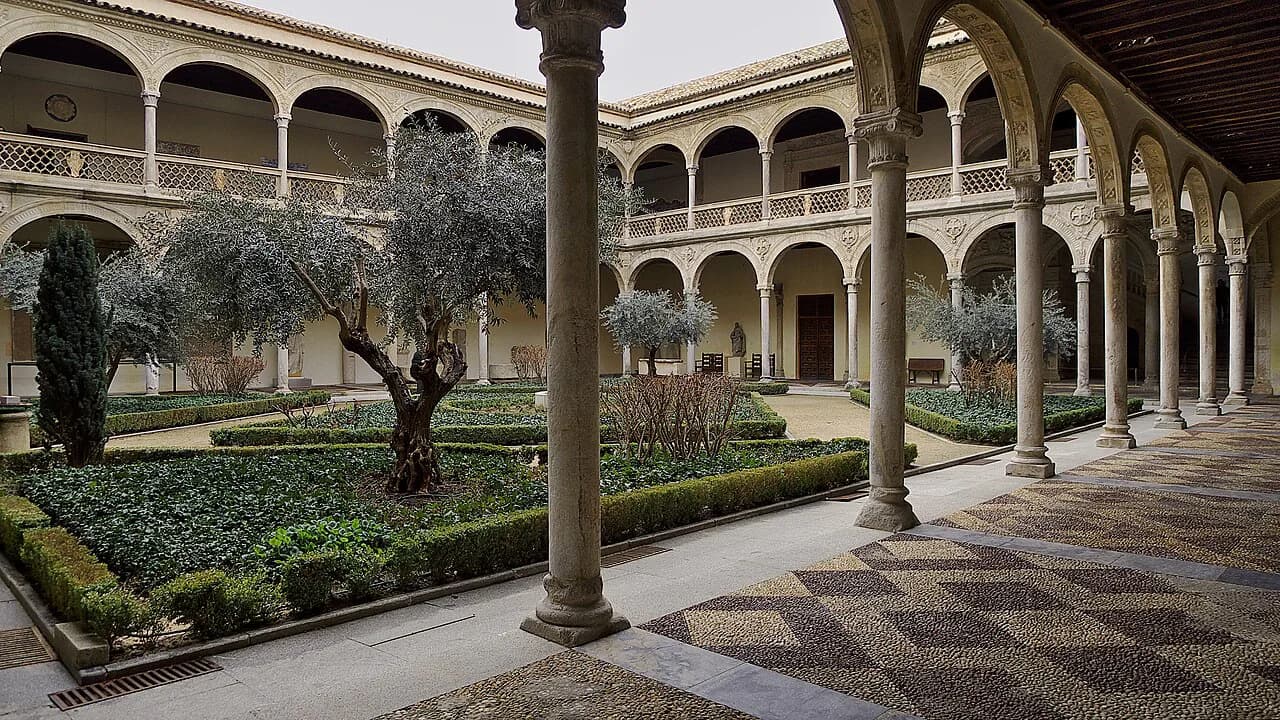
The Barrio Judío is the quieter, calmer counterpart to the cathedral quarter and holds several of the old town's key sights within a short radius. The Iglesia de Santo Tomé keeps El Greco's El Entierro del Señor de Orgaz, and both the Sinagoga del Tránsito and the Sinagoga de Santa María la Blanca stand nearby as symbols of the city's mixed heritage.
Santo Tomé and Santa María la Blanca both sit inside the tourist bracelet, which is the strongest argument for buying one if the Jewish quarter is on your route. The Sinagoga del Tránsito, now the Museo Sefardí, is a separate visit and deserves its own slot.
Monasterio de San Juan de los Reyes and the Puente de San Martín over the Tajo
The Monasterio de San Juan de los Reyes is impressive inside and out and sits at the western edge of the walk, close to where the old town begins to fall towards the river. It is included in the bracelet, so it is worth timing your loop to finish here rather than doubling back for it.
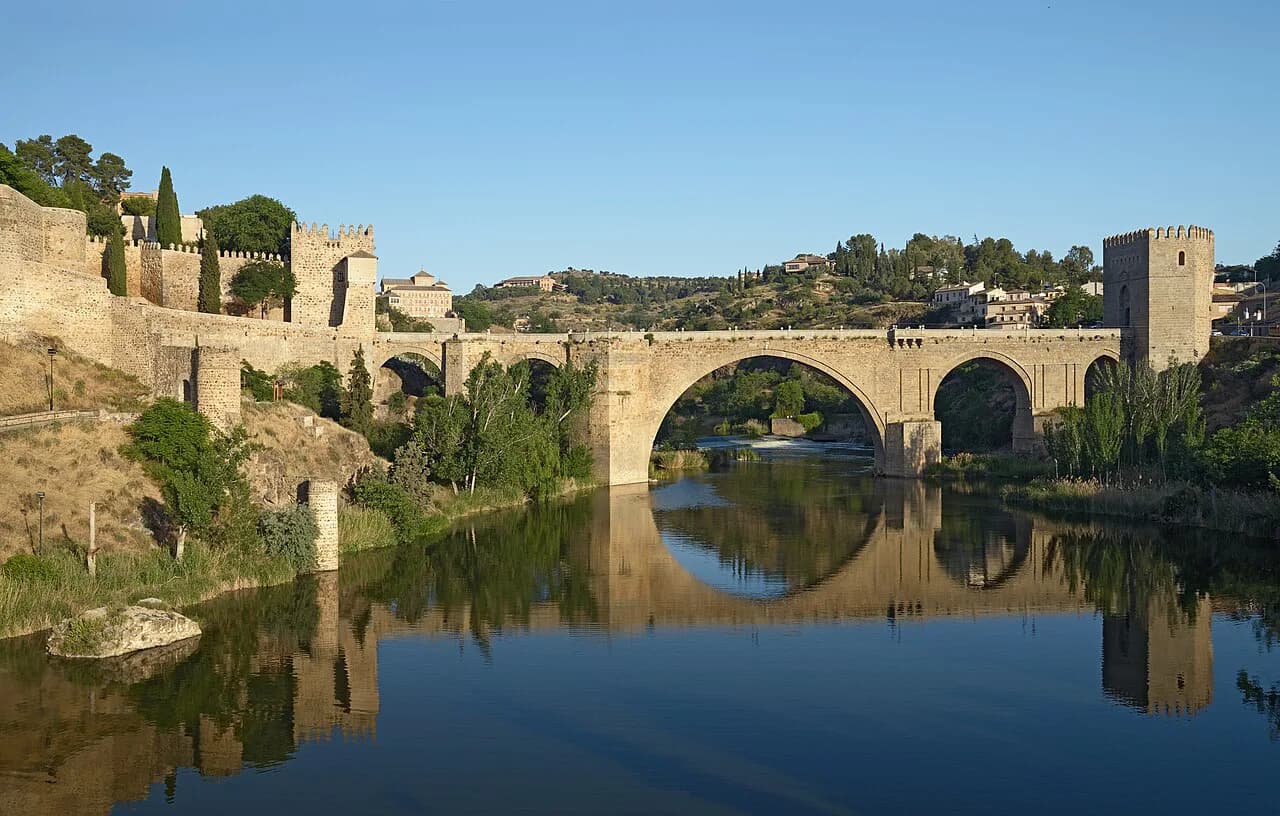
From the monastery, a short walk down to the Puente de San Martín gives you the classic view back at the city over the Tajo, and it makes a natural end to a day on foot. The Puente de Alcántara does the same job on the eastern side of the quarter if your route runs the other way.
The tourist bracelet: what it covers and why it pays off if you enter several sights
The Pulsera Turística covers seven monuments — the Real Colegio de Doncellas Nobles, the Iglesia de los Jesuitas, San Juan de los Reyes, the Mezquita del Cristo de la Luz, Santo Tomé, the Iglesia del Salvador and Santa María la Blanca — for 10 €. Entry is free for under-11s and Toledo residents, and the band does not expire, so a second day on the same wrist is covered.
The maths is straightforward: at four monuments the bracelet should already save you money against paying individually, and if you plan to see the Mezquita, Santo Tomé, San Juan de los Reyes and Santa María la Blanca you will clear that comfortably. Buy it online with free cancellation or at any of the included monuments, and check the current price before you travel rather than relying on these figures.
Mirador del Valle and getting there by the L71 bus from Zocodover
The Mirador del Valle is the postcard view of Toledo, with the Tajo curling around the city and the Alcázar standing above the roofs. Take the L71 bus from the Plaza de Zocodover and get off at the stop beside the mirador, which is the simplest way up without a car.
Do this first thing in the morning if you want the cleanest light and the fewest people, then ride back into the old town and start the walk from the gates. The route up to the viewpoint is a rewarding walk in its own right for anyone with the legs for it.
Parking at Safont and the escalators up into the old town
Driving into the historic quarter is genuinely difficult, so leave the car at the large free Safont car park by the park of the same name, opposite the bus station and close to the Puerta de Bisagra. From there you can walk up into the old town or take the escalators, which are the easier return at the end of a long day. The car park is not guarded, so it suits a day visit better than an overnight stay.
If you are staying overnight inside the walls, a paid car park nearer the centre is the safer choice than leaving the car unattended at Safont. Either way, arriving by train from Madrid and walking up avoids the parking question entirely.
Heat, hills and timings: how to pace a day on foot
Summer heat is the biggest constraint on a one-day walk: the local advice is to do the main monuments in the morning and leave the gentler strolls and interiors for the afternoon. Carry water, a hat and sun protection, and expect the slopes and cobbles to add time to every leg of the route.
Build the day around three fixed points — the Mirador del Valle in the morning, the cathedral and Jewish quarter in the middle, and San Juan de los Reyes and the bridge at the end — and let the lanes fill in the gaps. That structure keeps you moving without turning the walk into a forced march.
Where to start your walk in Toledo's old town
Start at the Puerta Nueva de Bisagra, take in the Mezquita del Cristo de la Luz and the Puerta del Sol on the way up, and use Zocodover as your hinge for the rest of the day. Buy the bracelet if you plan on four or more of its monuments, park at Safont if you are driving, and ride the L71 to the Mirador del Valle before the crowds arrive.
Explore more Toledo guides
Frequently Asked Questions
What is the historic centre of Toledo like to walk?
Toledo's historic centre is a walled medieval maze on a rocky hill above the Tajo, with steep cobbles, short lanes and sudden steps rather than a grid. It holds Roman, Moorish, Jewish and Christian monuments within a compact area, and the tourist bracelet makes entering several of them cheaper than paying individually. Expect slopes, summer heat and a layout that rewards a plan over improvisation.
How do you get into Toledo's old town without a car?
Enter on foot through the Puerta Nueva de Bisagra, which is close to the Safont car park and the bus station, and use the escalators if you want to save the climb. From the Plaza de Zocodover, the L71 bus runs to the Mirador del Valle. Trains from Madrid arrive at Toledo station below the old town; check current timetables before you travel.
What does the Toledo tourist bracelet include?
Seven monuments: the Real Colegio de Doncellas Nobles, the Iglesia de los Jesuitas, San Juan de los Reyes, the Mezquita del Cristo de la Luz, Santo Tomé, the Iglesia del Salvador and Santa María la Blanca. It does not include the cathedral. Check the current price and inclusions before you buy.
Sources
Notes for your next Spanish town break
Optional updates to our guides.
You might also like
Continue reading
More guides you'll find useful