
Museo del Greco, Toledo: Paintings, House and Visitor Basics

The Museo del Greco is the one museum in Spain devoted to Doménico Theotocópuli, and it pairs a small but concentrated group of his late paintings with the house and garden assembled around them in Toledo. An hour to ninety minutes covers it comfortably, which makes it an easy fit between the cathedral and the Judería rather than a half-day commitment. This guide sets out where the museum stands, how to walk to it, what hangs inside, how tickets work, and which nearby sights slot in either side of the visit, alongside the broader set of Toledo Attractions: 6 Visitor Guides.
What the Museo del Greco is and why it matters for El Greco in Toledo
El Greco settled in Toledo and painted his most personal work there, so a museum built around that period makes sense in this city rather than anywhere else. The collection concentrates on his later Spanish output, tracing how patronage and a local clientele shaped the way his figures stretch, pale and burn with light. Luis Tristán, his follower, is represented alongside him, which helps show what was distinctive about the master rather than simply asserting it.
The museum also tells the story of the man who founded it, the Marqués de la Vega-Inclán, a collector who was among the pioneers of making historic Spanish houses visitable. A dedicated room introduces him and his collecting, so you are not left wondering why a museum of paintings sits inside a domestic building with a patio and a garden. Treat the house as the frame and the paintings as the reason to come.

Where it is: Paseo del Tránsito in the Judería, and how to reach it on foot
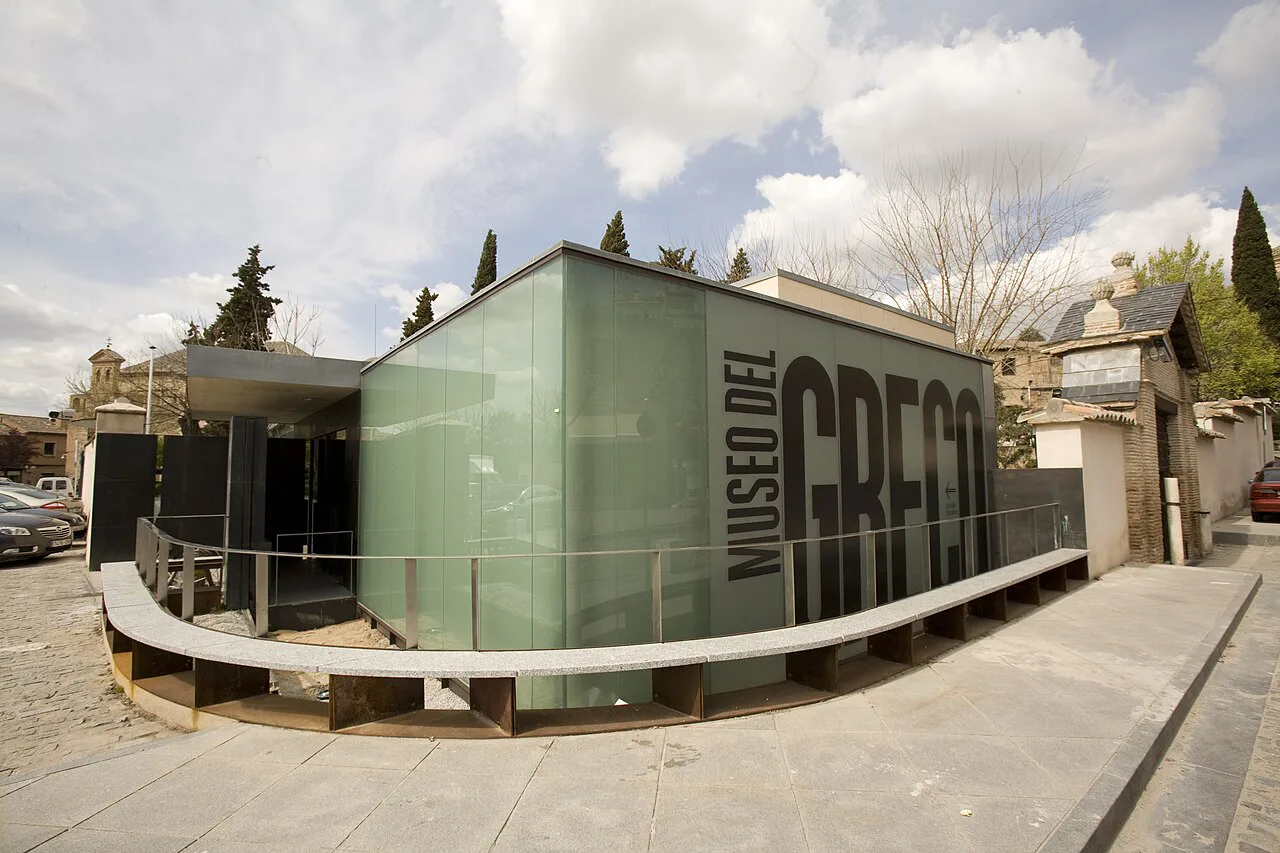
The museum address is Paseo del Tránsito, s/n, 45002 Toledo, in the old Judería below the cathedral quarter, and the entrance sits on a pedestrian street rather than a traffic artery. From the Plaza de Zocodover, the city's central square, the walk is short but uphill through narrow lanes; allow ten to fifteen minutes at an unhurried pace with a map open. Buses 5, 6.1, 6.2, 11 and 12 serve the centre and the railway station, which matters if you are arriving by train and heading straight for the Judería.
By car, the practical answer is to leave it outside the walls: the public car parks at Santo Tomé on Calle Santa Úrsula, Recaredo on Paseo Recaredo, Miradero on Calle Gerardo Lobo and Corralillo on Cuesta de los Capuchinos are the nearest signed options. Inside the historic centre, streets are tight, pedestrianised in stretches and often one-way, so driving to the door is not worth attempting. Walk in from wherever you park and keep the museum as a stop on a Judería loop.

Opening hours by season, closing days and the pattern of the week
Opening times shift with the seasons. From November to February the museum opens Tuesday to Saturday from 9:30 to 18:00, while from March to October the closing time moves to 19:30; Sundays and public holidays run 10:00 to 15:00 all year. Plan a winter visit for the middle of the day and a summer visit for late afternoon, when the extended hours give you room after the worst heat.
Mondays close the museum every week of the year, which is the single most common wasted trip in Toledo. The fixed annual closures also include 1 and 6 January, 1 May and 24, 25 and 31 December, and the museum also closes on one local holiday each year. Check the day you intend to go before setting out.
Tickets: general and reduced prices, online versus the desk
A general ticket costs 3 euros; the reduced rate is 1,50 euros. Only the full-price general ticket can be bought online, so anyone hoping for a reduced or free entry has to queue at the museum's own ticket desk on the day rather than reserve ahead. If you qualify for a concession, budget time for the desk and bring whatever proof of status the museum asks for.
Booking online suits a tight schedule in high season, when you would rather not lose twenty minutes of a short break to a ticket window. Off season, the sums are small enough that turning up is rarely a disaster, and the desk is the only route to the cheaper rates. The museum's ticket page sets out the current prices and conditions before you commit.
Free entry: which days and times, and who qualifies
Entry is free on Saturdays from 14:00, on Sundays and public holidays, and on 18 April, 18 May, 12 October and 6 December. Under-18s and over-65s, students up to 25, people with disabilities, the unemployed and pensioners also enter without charge, with further reduced and free categories set out under the museum's rules. Free admissions are issued at the ticket desk, not online.
A Saturday afternoon costs nothing at the desk and slots neatly after a morning at the cathedral, since from March to October the museum stays open until 19:30 on Saturdays. Sundays are free too but close at 15:00, which squeezes the visit into the morning. Weigh the saving against the narrower window and decide which suits your day.
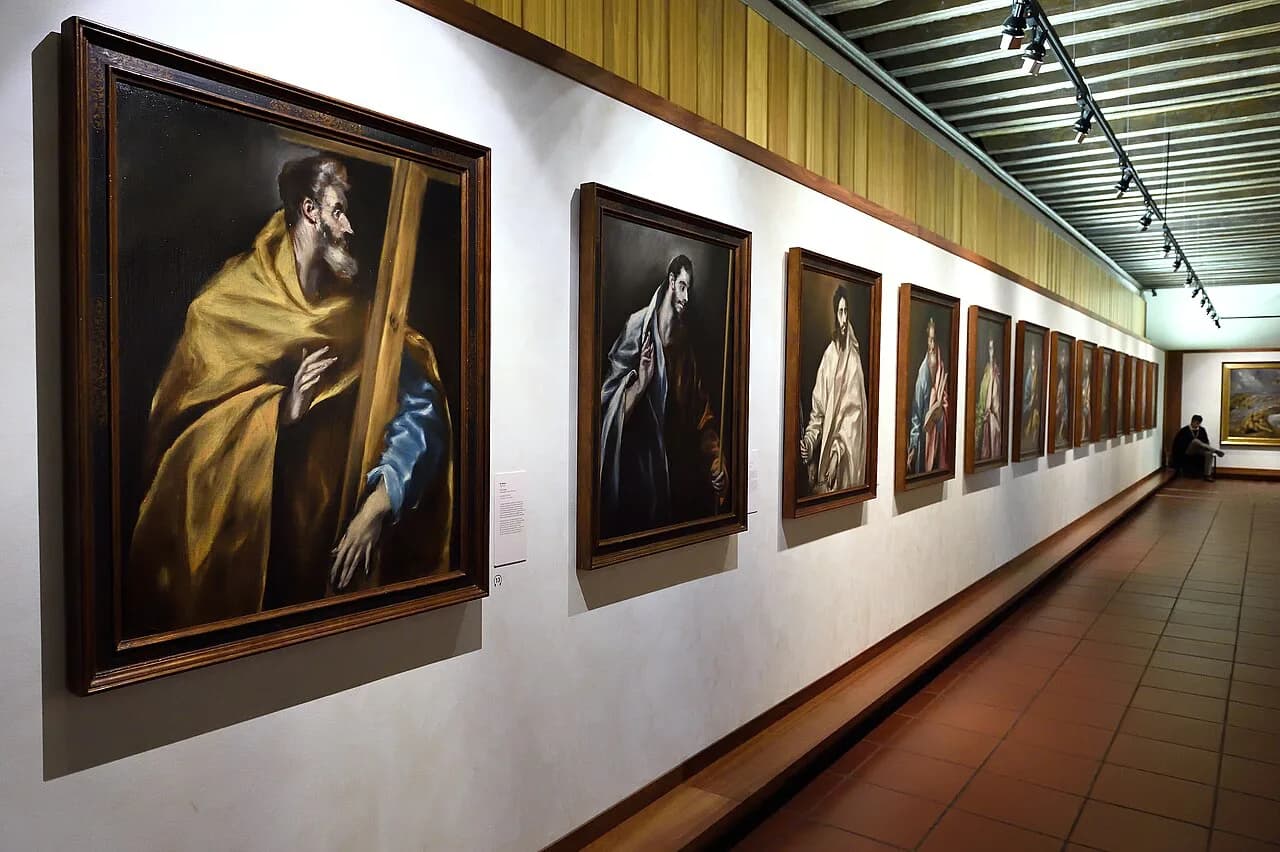
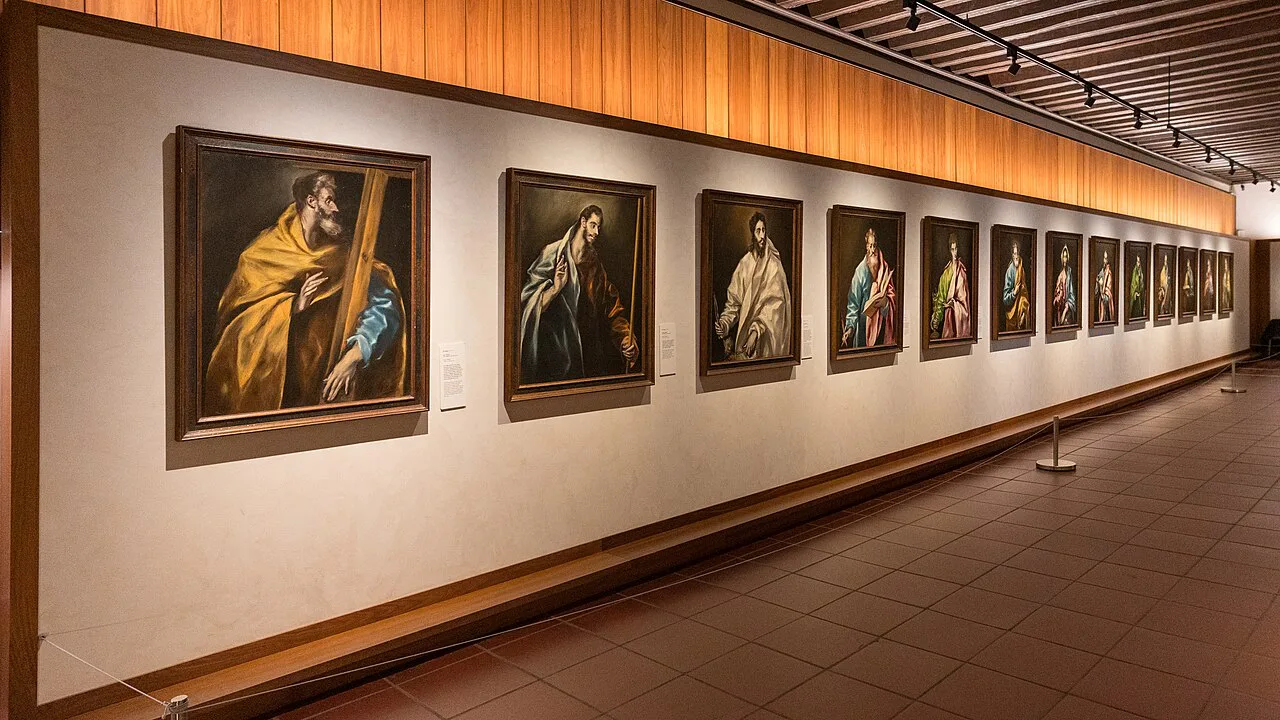
What to see: the Apostolado, the Retablo de San Bernardino and the Vista y plano de Toledo
Three works anchor the visit. The Apostolado is the series of apostles, each face given its own temperament and attribute; the Retablo de San Bernardino is the altarpiece that shows El Greco working at full devotional scale; and the Vista y plano de Toledo sets the city itself beneath a stormy sky, with a plan of the streets held up for the viewer. Look for the Vista near the end of your circuit, when the rooftops you have just walked through are fresh in mind.
Beyond those three, the collection includes further El Greco canvases and sculpture, plus pieces by Luis Tristán and other followers that let you test the difference between the master's hand and a pupil's. The museum's own selection lists works such as the Crucifixion, the Pentecostés and portraits of the Covarrubias family, so a focused route through the rooms is easy to plan in advance.
The house itself: the Marqués de la Vega-Inclán's collection, the patio and the caves
The building is a house museum, and the domestic scale is part of the experience: rooms arranged around a patio, with furniture, ceramics, metalwork and books from the founder's collection filling the spaces that paintings would otherwise occupy alone. Move slowly through the smaller rooms, where a single canvas on a whitewashed wall reads very differently from the same picture in a large gallery.
Below the house are the caves, a separate feature of the site that the museum treats as part of its history rather than a curiosity tacked on. The museum's own material covers the caves and the gardens, upper and lower, so check what is open on the day you visit and whether the garden route is included. Add ten minutes if you want both the patio and the outdoor spaces.
How long to allow, and the best time of day to fit it around Toledo
Ninety minutes is a generous allocation; sixty is enough for the paintings, the patio and a quick look at the caves. Toledo's inland summer heat makes midday walking unpleasant, so use the museum as your air-conditioned pause between outdoor stops rather than trying to see it in the morning and the Judería in the afternoon sun. In winter, the short Sunday window and the 18:00 weekday close mean an earlier start.
If you are building a day around El Greco, note that the Toledo Cathedral holds major works of his as well, and its own ticket rules and tourist hours differ from the museum's. The Alcázar of Toledo sits on the high ground above Zocodover, and a loop of museum, cathedral and Alcázar is a long but coherent day on foot. Toledo Attractions: 6 Visitor Guides sets out the wider map if you want to compare before committing.
Nearby: the Sinagoga del Tránsito and the rest of the Judería
The Sinagoga del Tránsito stands on the same street as the museum, so the two are naturally visited together; check its separate ticket arrangements rather than assuming the Museo del Greco's prices or free slots apply. Santo Tomé, with its own tower and painting, is a few minutes away and rounds out a Judería circuit that needs no bus or taxi.
Across the river, the Mirador del Valle gives the classic view back over the city, best reached by taxi or on foot if you have the time for the climb. San Juan de los Reyes, the late Gothic monastery founded by the Catholic Monarchs, sits north of the Judería and fits a westward walk back towards Zocodover. Pick two of these to accompany the museum rather than attempting all of them.
Is the Museo del Greco worth fitting into your Toledo day?
Yes, if you want El Greco in the city where he worked rather than in a survey of Spanish painting. The visit is small, central and inexpensive on a Saturday afternoon, and it combines paintings with a house and garden that no large gallery can reproduce. If your day is tight, the full-price ticket can be bought online; otherwise come when entry is free and accept the desk queue.
Avoid Monday above all, and check the current hours and free-entry conditions a day or two before you travel, since the seasonal pattern and holiday closures are the details most likely to undo an otherwise well-planned stop.
Explore more Toledo guides
Frequently Asked Questions
Do I need to book the Museo del Greco in advance?
Not usually. General admission can be bought online and is the only ticket sold that way, so reserve ahead if your day is tightly scheduled or you are visiting in a busy period. Reduced and free tickets are issued at the museum's own ticket desk and cannot be reserved in advance, so anyone claiming a concession should allow for a queue on arrival.
Is the Museo del Greco the house where El Greco lived?
Treat it as a house museum founded by the Marqués de la Vega-Inclán around the painter's work and period, not as a verified personal residence. The visit is organised around the collection, the patio, the gardens and the caves, with a room devoted to the founder himself, so what you are seeing is a constructed setting for El Greco's late work in Toledo.
Can I see El Greco paintings elsewhere in Toledo on the same day?
Yes. The Toledo Cathedral holds works by El Greco and runs its own visiting arrangements, which differ from the museum's, so check its tourist hours separately. Santo Tomé and the Sinagoga del Tránsito are within a short walk of the museum in the Judería and each has its own ticket rules.
What should I do if I only have an hour in Toledo for art?
Choose the Museo del Greco, since an hour covers its main paintings, the patio and the caves without rushing. Arrive at opening time or in the late afternoon, when the galleries tend to be calmer. Saturday afternoon entry is free, but the museum is still open into the evening from March to October, so check the closing time on the day.