Things to Do in Segovia: Aqueduct, Cathedral and Alcázar
Plan a short break in Segovia with the Roman aqueduct, the Gothic cathedral and the Alcázar, plus Romanesque churches, the old Jewish Quarter and guided walks.
On this page
Three sights anchor a visit to Segovia: the Roman aqueduct, the cathedral and the Alcázar, and all three sit inside the walled old town within walking distance of each other. A single morning run in one direction from the aqueduct to the castle covers them without doubling back. This guide sets out what to see, how the old town is laid out, where the viewpoints are, what a guided walk covers and what things cost in euros.
The city is recognised for its historic centre and aqueduct, which hold UNESCO World Heritage status as a pair, and the surrounding landscape runs up into the foothills of the Sierra de Guadarrama. That mix means the day can combine monuments with a walk along the walls or out to the rivers below the Alcázar. Use the Segovia map to fix the route before you arrive, because the old town's streets bend and climb more than they appear to.
What to see in Segovia: the three sights that anchor a visit
Start with the aqueduct: it stands at the foot of the old town and needs no ticket, and the cathedral and the Alcázar both sit uphill from it, so the natural order is aqueduct, then cathedral, then castle. Anything else you add — the Romanesque churches, the Jewish Quarter, the walls — fits around those three.
Treat the cathedral and the Alcázar as ticketed interiors rather than sights you can absorb from the doorway. The cathedral has its own entrance ticket and a queue at the door is common, so pre-booking matters when your time in the city is short.
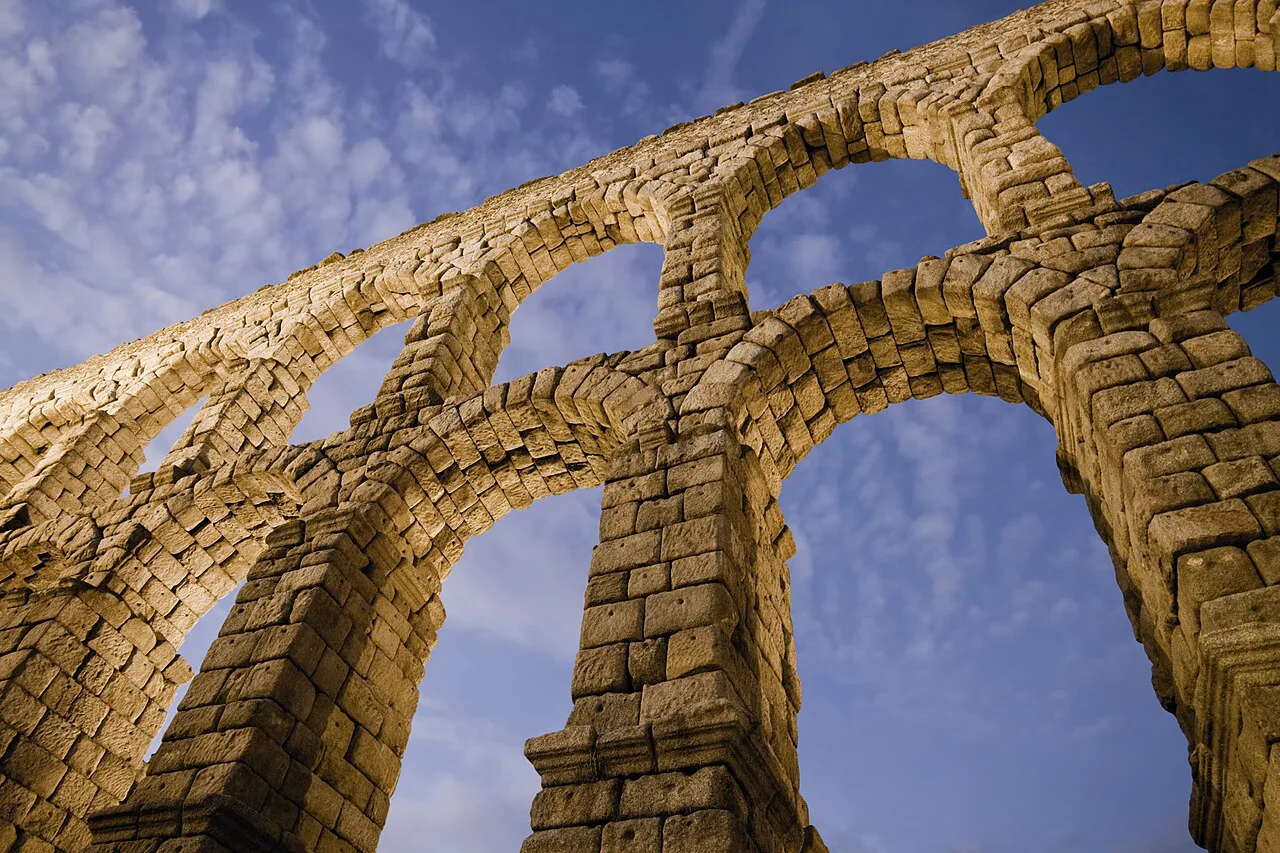
Roman Aqueduct: where to stand and how long it takes
The best-known view is from Plaza del Azoguejo, the square directly in front of the tallest section, where the arches rise in two tiers above the street. Walk a little way up Calle Real afterwards and look back for a second angle with the old town behind it. The structure is unmortared granite and more than two thousand years old, and the shadows falling across the blocks are half the reason to linger.
Fifteen to twenty minutes covers the square itself, but the aqueduct is also the natural starting point for the walk uphill, so most visitors see it twice: once head-on and once in passing. It carries the local nickname Puente de Diablo, from a legend about the devil building it overnight and losing a wager by a single brick. The story is worth knowing because it explains the small holes dotted across the granite that locals point out as the devil's fingerprints.
Segovia Cathedral: the Gothic cathedral on Plaza Mayor
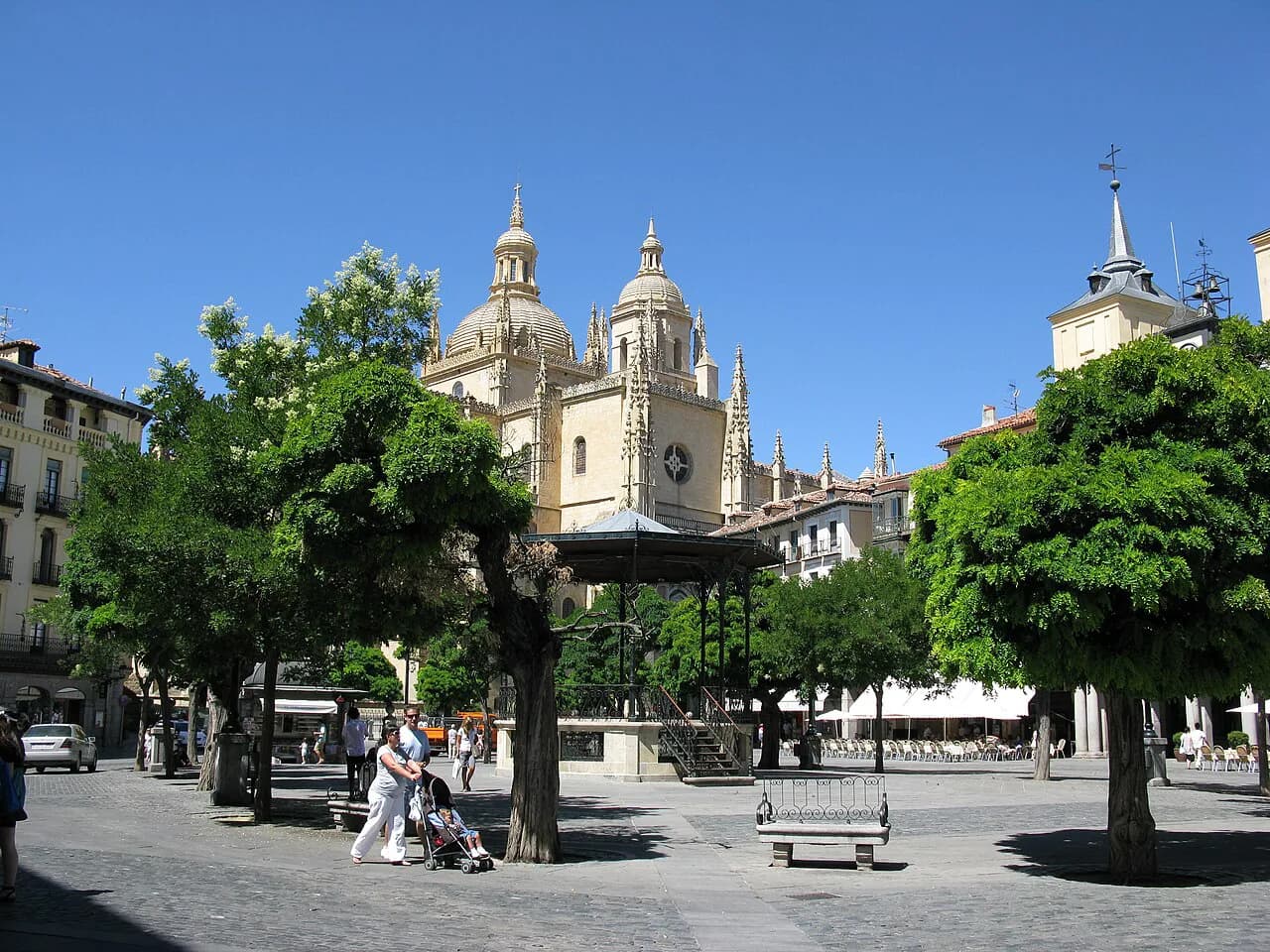
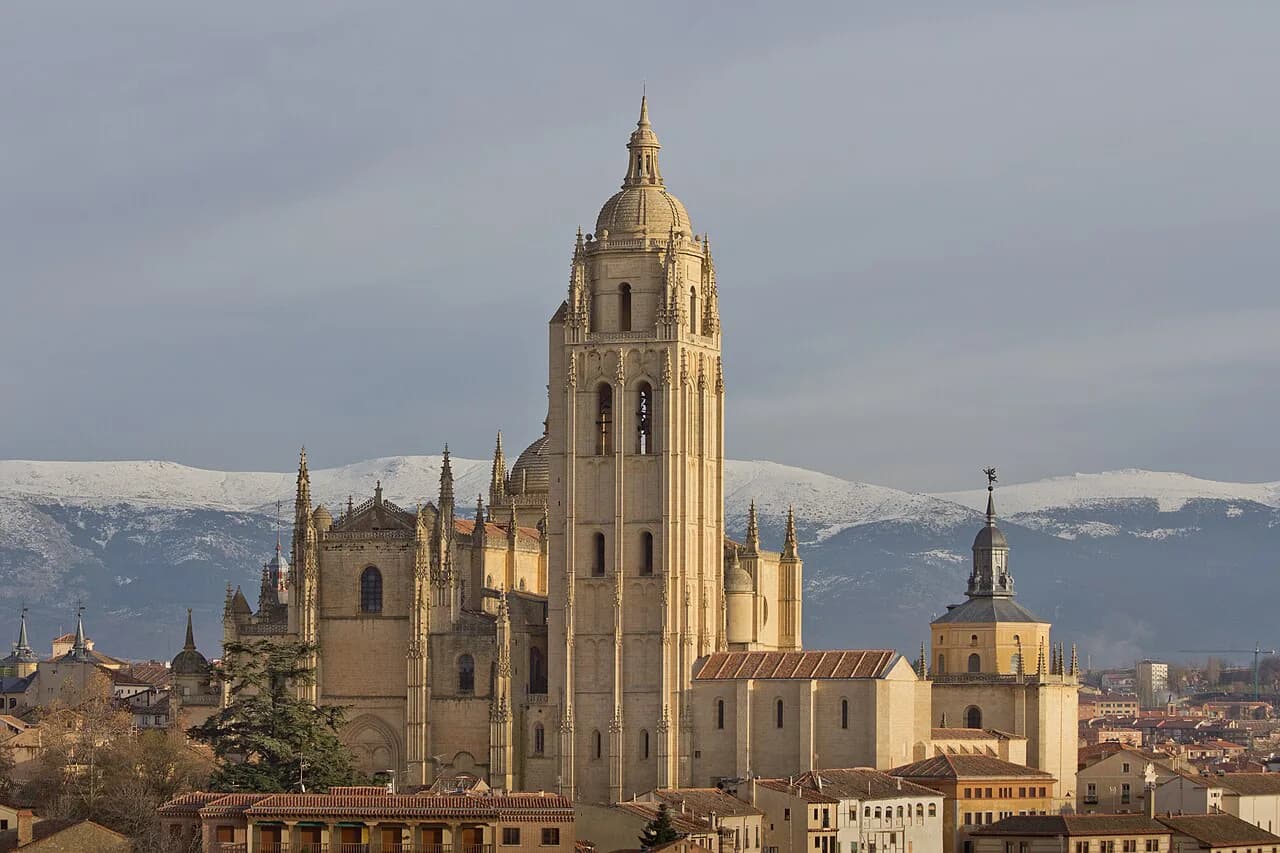
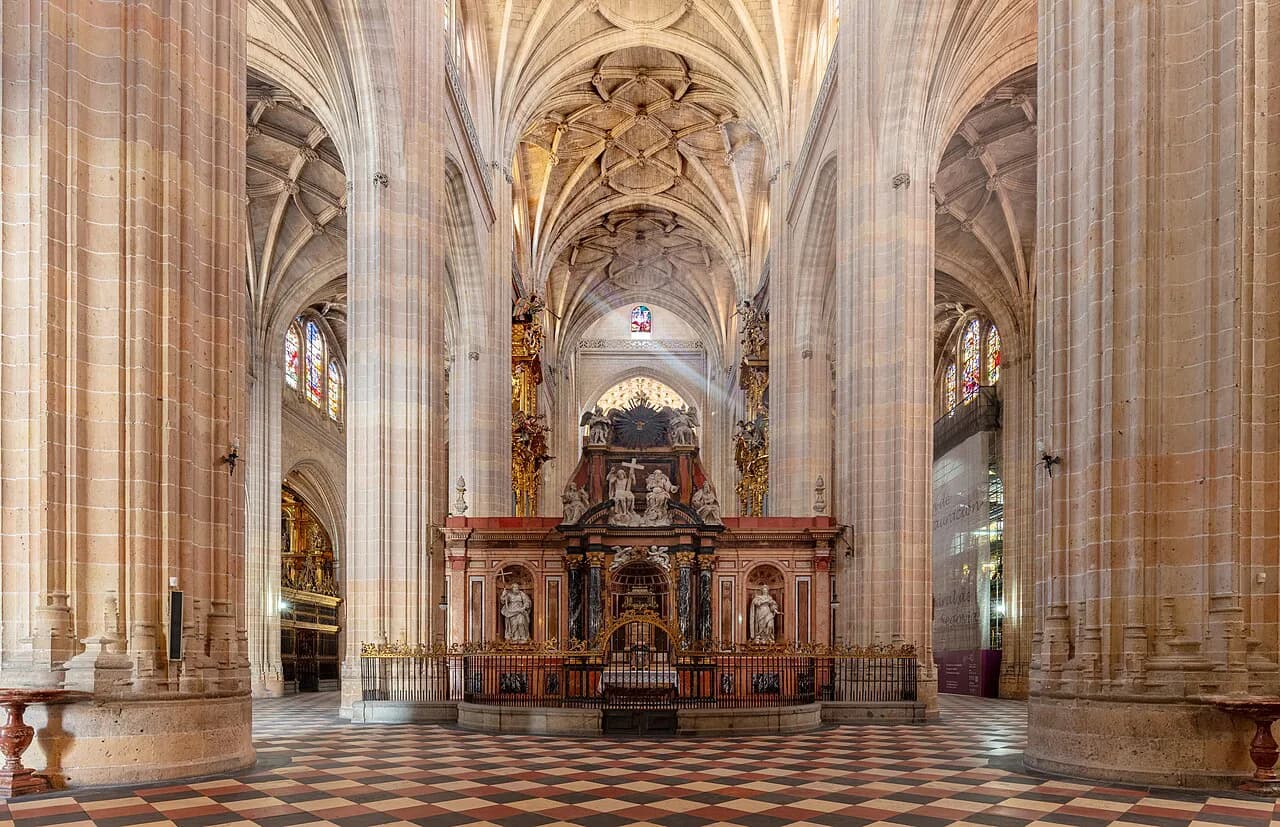
The cathedral stands on Plaza Mayor and is called the Dama de las Catedrales. It was built during the sixteenth century and is regarded as one of the finest late Gothic works anywhere, often described as Spain's first Gothic cathedral. Inside, the appeal is in the detail: stonework, ironwork and carving repay a slow circuit rather than a quick look down the nave.
Entry requires a ticket, so decide before you arrive whether the cathedral interior is a priority or whether your time is better spent elsewhere. If it is, pre-reserving removes the risk of standing in a queue that eats your morning, which is what catches out day-trippers who arrive without a plan.
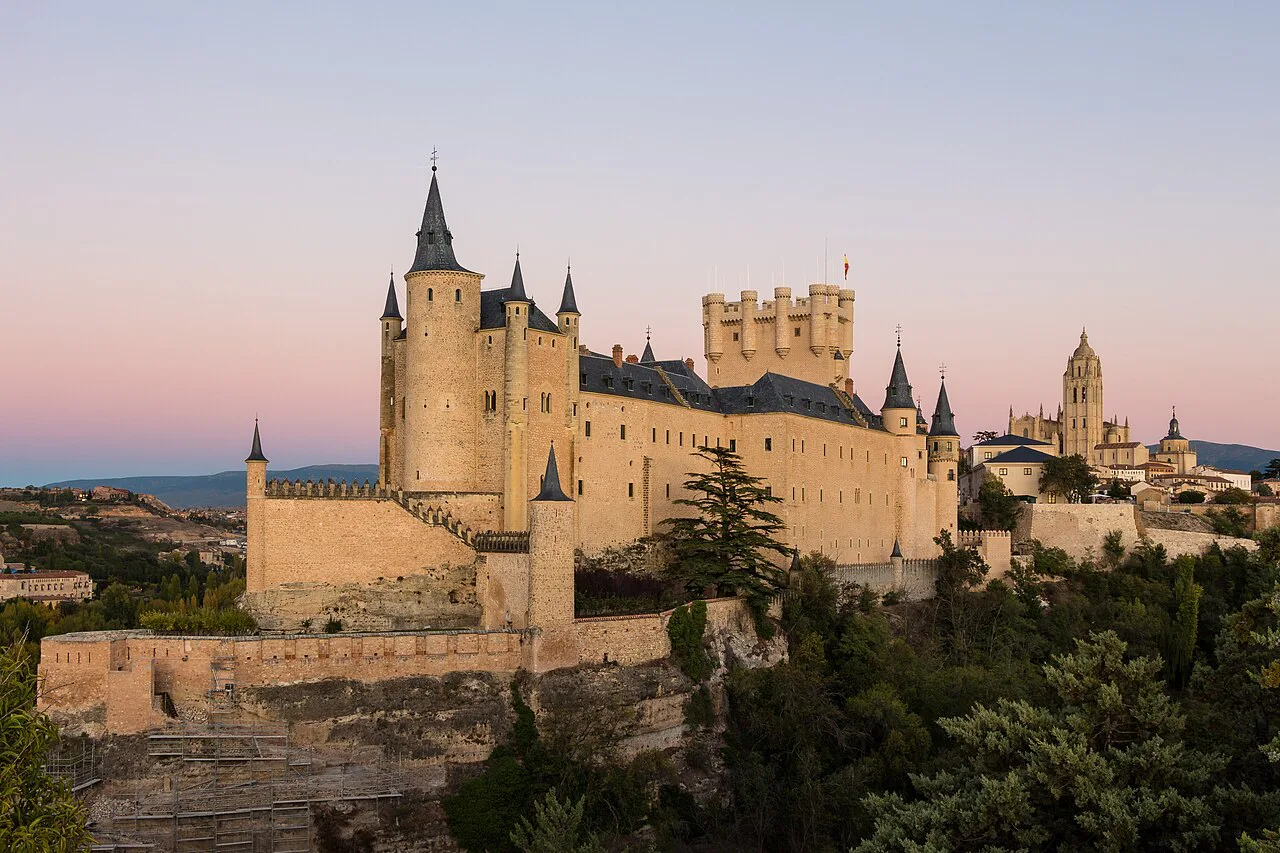
The Alcázar: the castle above the meeting of the rivers
The Alcázar sits at the far end of the old town on a rocky spur above the meeting of two rivers, and it is the sight most visitors picture when they think of Segovia. Its silhouette, with towers and a steep slate roof, is what many people say inspired the Disney castle, though that is a popular claim rather than a confirmed fact. Walk round to the far side and the building reads as a fortress first and a palace second.
The interior is ticketed and takes you through the rooms of the former royal palace, which is the part worth paying for if you have any interest in the court that once ran from here. The story told on site is that the original castle burned in the sixteenth century and that the nineteenth-century rebuild created much of the fantasy you see today. If you are on the guided walk, it finishes inside the Alcázar and you can stay on longer.
Old town layout: Calle Real, Plaza Mayor and Plaza Medina del Campo
Calle Real is the spine of the old town and the street every Segovian means when they say the main street of the centre. Walk it from the aqueduct and you pass mansions with family crests, the exterior of Romanesque churches such as San Millán, and the Casa de los Picos, a facade studded with stone points. The route also passes the Mirador de la Canaleja, a viewpoint that gives you the rooftops before you reach the religious core.
Plaza Medina del Campo is one of the prettiest squares in the city and holds the Romanesque church of San Martín at its edge, which makes it a good pause between the aqueduct and the cathedral. Beyond it, Plaza Mayor opens up with the cathedral on one side; this is where the old town's streets converge. From there, the lanes of the Barrio de las Canonjías, where the cathedral's canons lived from the twelfth century, lead towards the Alcázar and Plaza de la Reina Victoria Eugenia.
The Romanesque churches: San Millán, San Martín and the rest
Segovia holds an important collection of Romanesque churches, built in both stone and brick, and the group includes San Esteban, San Millán, San Martín, La Santísima Trinidad, San Andrés, San Clemente, Santos Justo y Pastor, La Vera Cruz and San Salvador. You cannot do them all in a morning without skipping the big three. Prioritise San Millán and San Martín, which sit on the natural walking line and can be seen from outside without breaking your route.
San Millán and San Martín also anchor the two squares on the guided route, so the group's exteriors come free with the walk between the aqueduct and the cathedral. La Vera Cruz, outside the old core, is a different proposition and a detour if your day is tight.
The Jewish Quarter and its old synagogue
Jewish communities were established in Segovia from the thirteenth century, and the district now known as the Jewish Quarter thrived as a self-governing community until the Inquisition. After that, only converts to Catholicism were allowed to remain. The old main synagogue survives as a church, so you are looking at a converted building rather than a preserved one, and that changes how you read it.
The quarter sits inside the walled city, close enough to the cathedral and Alcázar to fold into the same walk without adding a separate trip. Because much of the fabric has been repurposed, the interest lies in the street pattern and in knowing what you are looking at. Combine it with the stretch of wall and the city gate that mark the edge of the old town.
City walls, gates and viewpoints
The walled portion of the city holds the cathedral, the Alcázar and the aqueduct, and the city gate is the ceremonial way into it. The buildings sit within an ancient Roman wall, and the viewpoints along Calle Real and above the rivers below the Alcázar are where the photographs happen.
If you want a longer walk, the landscape around Segovia climbs into the Sierra de Guadarrama, with the passes and peaks of Navacerrada, Siete Picos and Peñalara within reach of the city. These are separate half-days, not add-ons to a monument morning, and the heat and altitude make early starts sensible in summer. Keep them as an option for a second day rather than squeezing them in.
A morning route from the aqueduct to the Alcázar
Begin at Plaza del Azoguejo in front of the aqueduct, then climb Calle Real past the Casa de los Picos and the Mirador de la Canaleja. Drop into Plaza Medina del Campo for San Martín, continue to Plaza Mayor for the cathedral, then take the Canonjías lanes to Plaza de la Reina Victoria Eugenia and the Alcázar. The order matters because you finish at the castle end of the old town, so you can stay inside the Alcázar as long as you like instead of retracing the climb.
If you have booked the cathedral interior, take it in the middle of the morning and keep the castle for the end; if you have not, look at the exterior and spend the time on the churches and the Jewish Quarter instead. Either way, wear shoes for cobbles and slopes, because the route climbs steadily from the aqueduct and the stone is uneven. The old town rewards a slower pace than the distance suggests.
Guided walks that include cathedral and Alcázar entry
Segovia Imperdible runs a guided walk called Patrimonio y Leyendas that combines the old town with entry to both the cathedral and the Alcázar, starting at Plaza del Azoguejo beside the post box in front of the aqueduct. The adult and child rate is 27 € per person, with children up to five free, and it includes the guided walk in Spanish, a qualified guide, and entry to both monuments, with VAT included and an audio receiver provided. The walk lasts two and a half hours and runs at 10.30 on Mondays and Saturdays, with a minimum of six participants.
The tour is in Spanish only, which is the main trade-off for a British visitor: you get the guide and the monument entry bundled, but the commentary is not in English. Towers at the cathedral and the Alcázar are not included, and neither is hotel pick-up. Free cancellation runs up to 24 hours before, booking and payment are needed at least two hours ahead, and the walk does not run on 24, 25 and 31 December or 1, 5 and 6 January.
How much time Segovia needs on a short break
A morning gets you the aqueduct, the cathedral exterior, the main squares and the Alcázar interior if you move steadily. Add the cathedral interior and one or two Romanesque churches and you are into the afternoon. The city is compact enough that you will not spend time in transit between sights, but the climb from the aqueduct to the castle is real, and the cobbles slow you down more than the map suggests.
A full day lets you take the cathedral properly, follow the Jewish Quarter and walk the old town without watching the clock. If you are basing yourself in Madrid, Segovia works as a long day out, about an hour's drive northwest, though the train is the easier option if you are not driving. Staying overnight changes the city completely, because the day-trippers leave and the squares empty.
Getting there from Madrid and onward connections
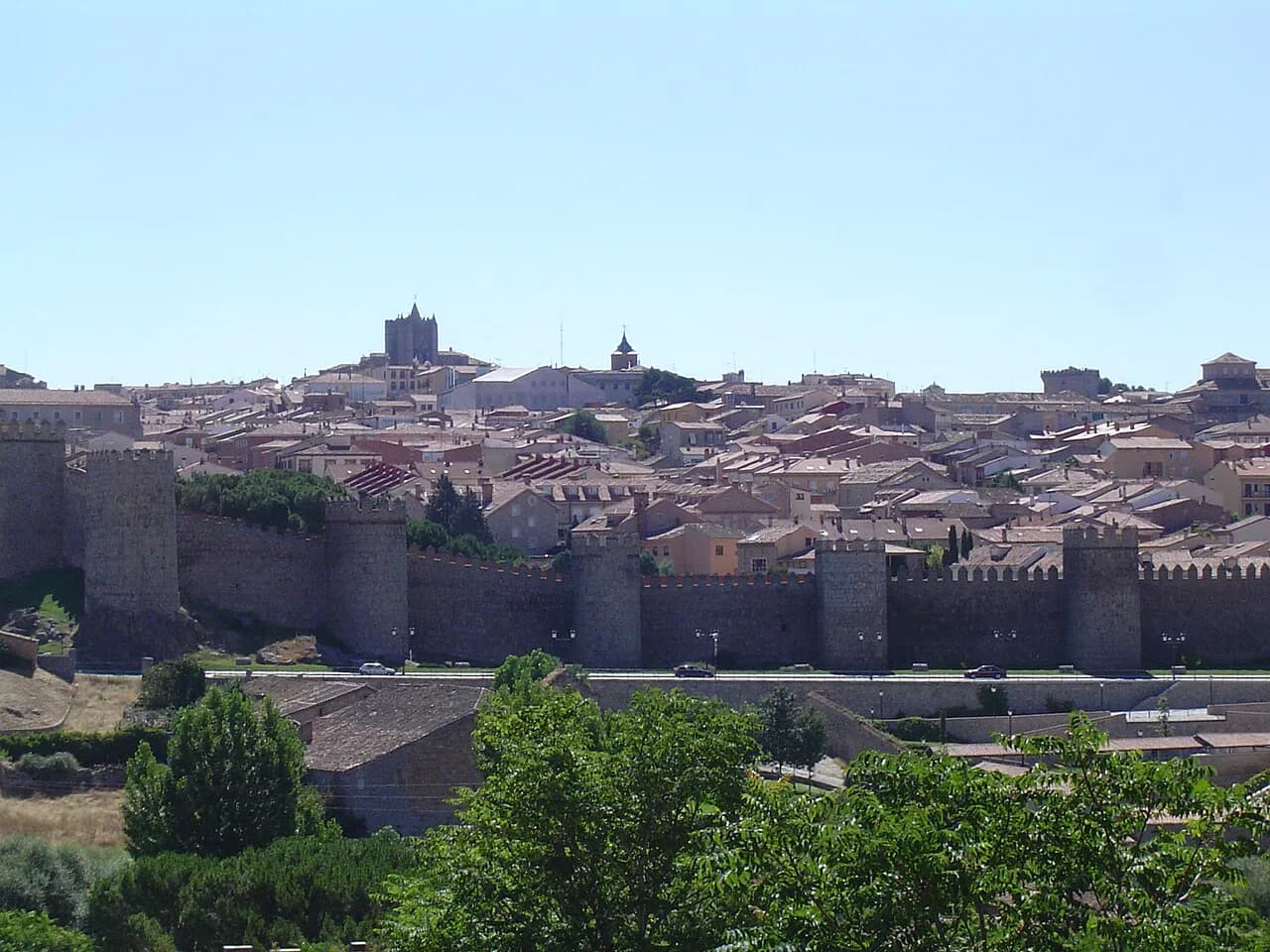
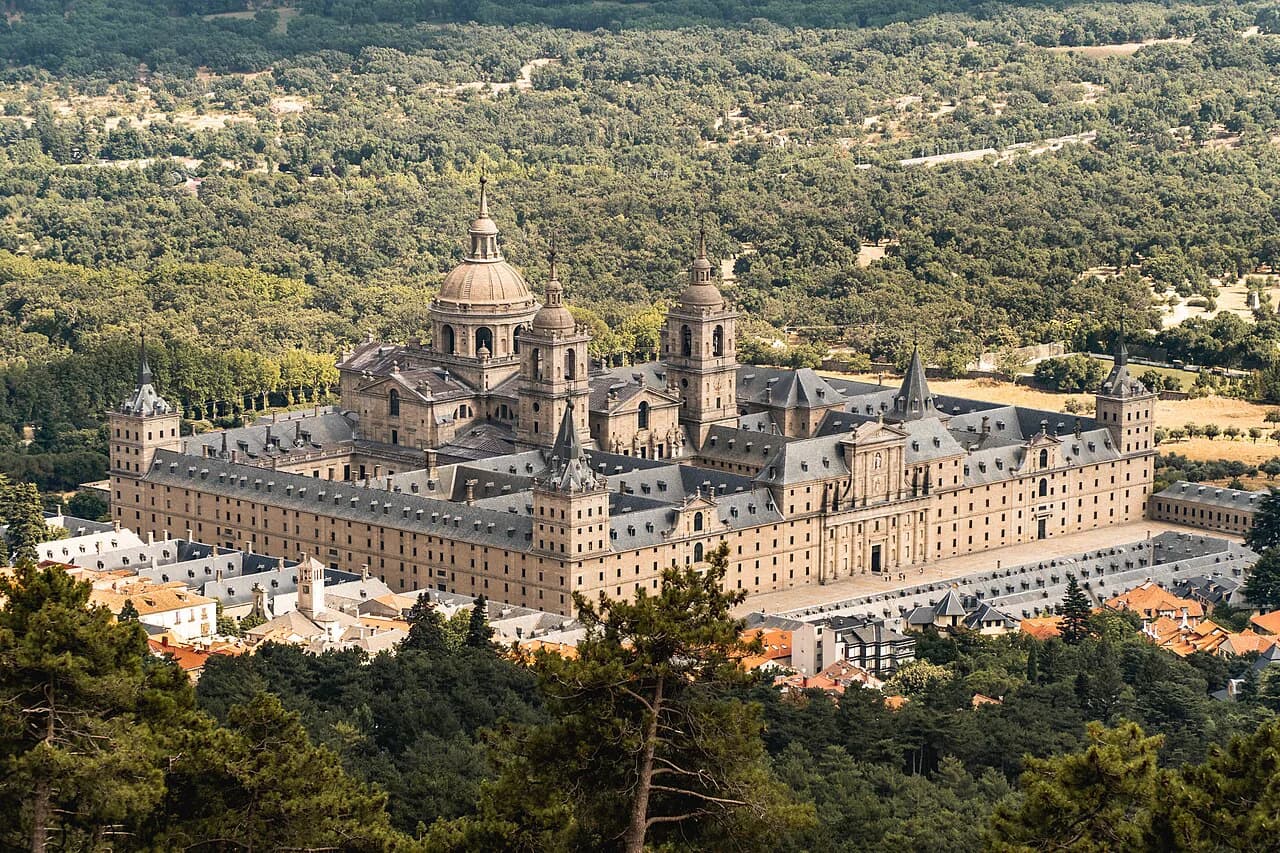
Madrid is the obvious gateway for a Segovia short break, and the drive takes about an hour; trains and buses also connect the two, but confirm times with the operator before you build a day around them. If you are driving, park outside the walls and walk in, because the old town's streets are narrow and climbing. From Segovia you can continue to the El Escorial monastery at San Lorenzo de El Escorial, or head west for the walls of Ávila.
The city also works as one stop on a Castile itinerary rather than a standalone trip: the province holds Pedraza, Sepúlveda, Coca and the royal palace at La Granja de San Ildefonso. Each is a half-day in its own right, reached by road, and worth planning as a separate outing rather than bolting onto your Segovia morning. For a sense of how Segovia's sights compare with other Spanish towns on the same pattern, see the other things to do guides, including things to do in A Coruña and things to do in Alcúdia.
What things cost in euros
The squares, the churches seen from outside and the streets of the old town cost nothing to walk. The cathedral and the Alcázar interiors both require a ticket. Cathedral and Alcázar towers are not included in the guided walk, so if you want to climb them you pay extra beyond the tour price. Check the monuments' own ticket pages for current prices and for any reduced rates before you set a budget.
Guided walks bundle entry into the price: the Patrimonio y Leyendas tour is 27 € per adult and includes the cathedral and the Alcázar, which makes it worth comparing against buying the two tickets separately, especially if you value the commentary. Children up to five go free, and the rate covers VAT and the audio receiver. For everything else, the cost of a Segovia day is mostly what you spend on the train or the car park.
Book the cathedral or see it from outside?
Pre-book the cathedral if the interior matters to you and your time is short, because the queue is the one thing that reliably derails a Segovia morning. If you would rather not commit, treat the cathedral as an exterior and put the saved hour into the Romanesque churches, the Jewish Quarter and the walk along the wall. Either way, save the Alcázar interior for the end so the day finishes at the castle rather than back at the arches.
Before you go, check the cathedral and Alcázar ticket pages for current prices, opening hours and tower availability, and confirm guided-walk dates with the operator. Those are the details that change, and they are the ones that decide whether you buy two tickets or one combined walk.
Explore more Segovia guides
Frequently Asked Questions
Why is Segovia famous?
Segovia is known for its Roman aqueduct, its late Gothic cathedral and the Alcázar, all inside a walled old town that holds UNESCO World Heritage status for the historic centre and aqueduct together. The city also has a notable group of Romanesque churches and a former Jewish Quarter.
Did the Alcázar inspire the Disney castle?
The Alcázar's towers and slate roof are widely said to have inspired the Disney castle, though that is a popular claim rather than a confirmed fact. The aqueduct, cathedral and castle are the reason most visitors come to Segovia.
Sources
Notes for your next Spanish town break
Optional updates to our guides.
You might also like
Continue reading
More guides you'll find useful