Things to Do in Ávila: Walls, Cathedral and Teresa's City
Plan a short break in Ávila with the medieval walls, cathedral, Plaza del Mercado Chico and the Teresa of Ávila sites, plus a walking order for the old town.
On this page
Ávila rewards a compact loop rather than a checklist: climb the medieval wall, step into the cathedral that was built into it, then cross the arcaded Plaza del Mercado Chico and follow the Teresa of Ávila trail through the old town. The centre is small enough to walk, and one well-ordered circuit covers the monuments that matter. This guide sets out that order, what each stop involves, and how the city fits alongside Segovia and the rest of Castilla y León.
Ávila sits at 1,130 metres above sea level, which makes it the highest city in Spain and gives even a short walk a different feel from the Castilian plains below. The old town inside the walls is a UNESCO World Heritage Site and has been since 1985, so the density of medieval palaces, churches and gates comes with real protection rather than pastiche. Plan on dry, bright, thin air and a pace that slows on the uphill stretches.
What to see in Ávila in a short break
Three things anchor a first visit: the Muralla de Ávila, the Catedral de Ávila and the Teresa of Ávila sites clustered around the Basílica y Casa Natal de Santa Teresa de Jesús. Add the Basílica de San Vicente and the churches outside the walls, and the Palacio de los Verdugo among the medieval palaces, and you have the full old-town set. The Mirador de los Cuatro Postes is the one stop that sits away from the walls, and its purpose is the view back.
Build the day around the wall and the cathedral together, because the two physically touch and the connection is easiest to read on the ground. The cathedral is partly built into the city wall and served as a fortress as well as a church, with Gothic architecture blended into solid defensive lines. Doing them back to back makes that engineering obvious in a way that visiting them hours apart does not.
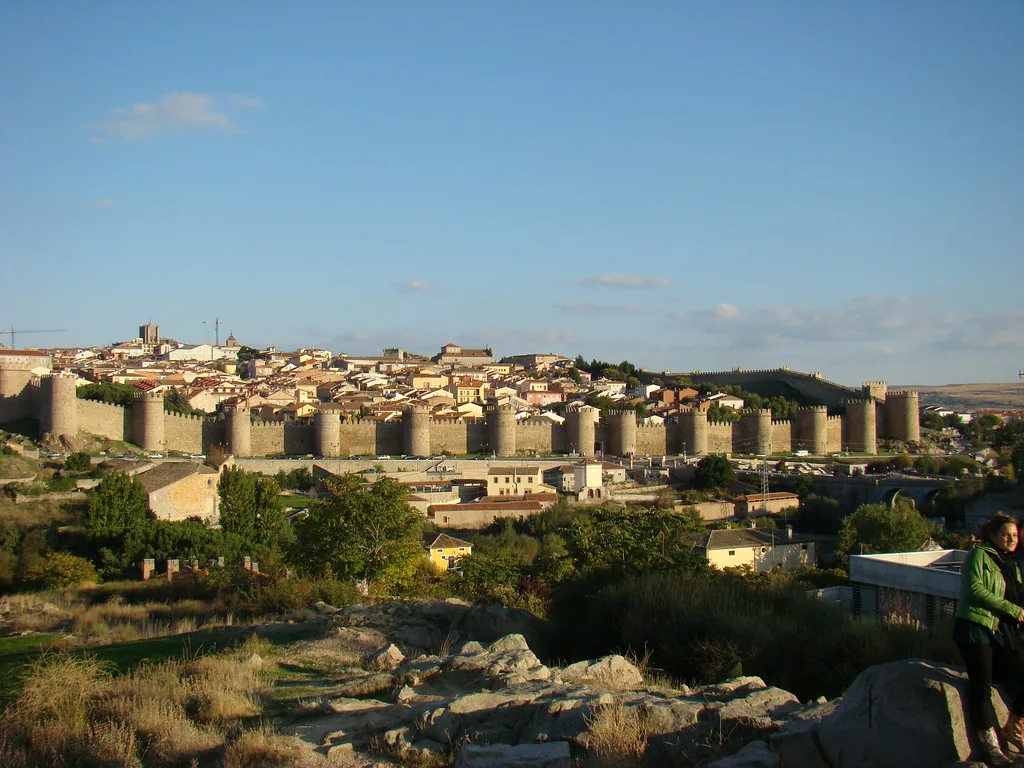
Walking the Muralla de Ávila
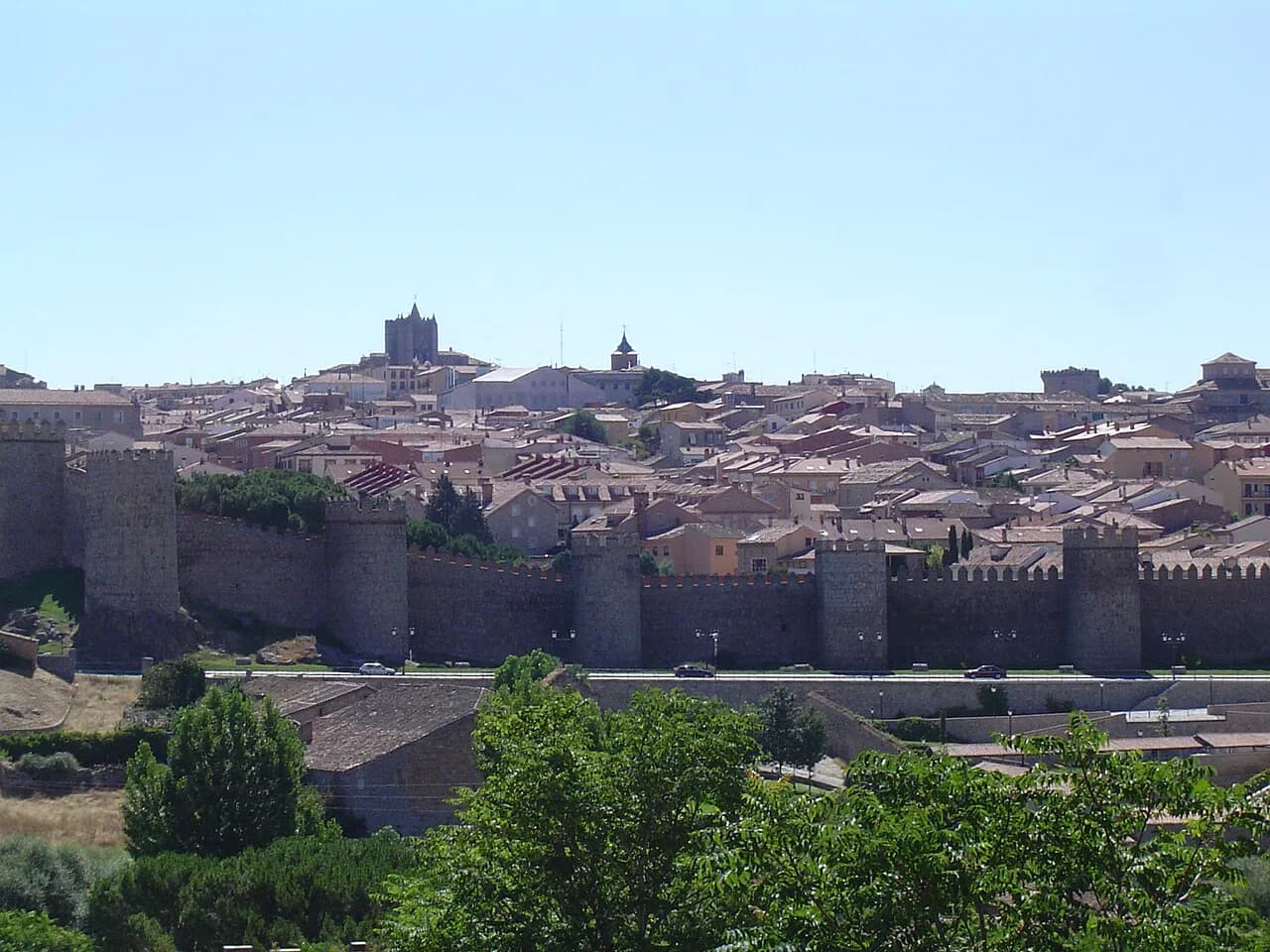
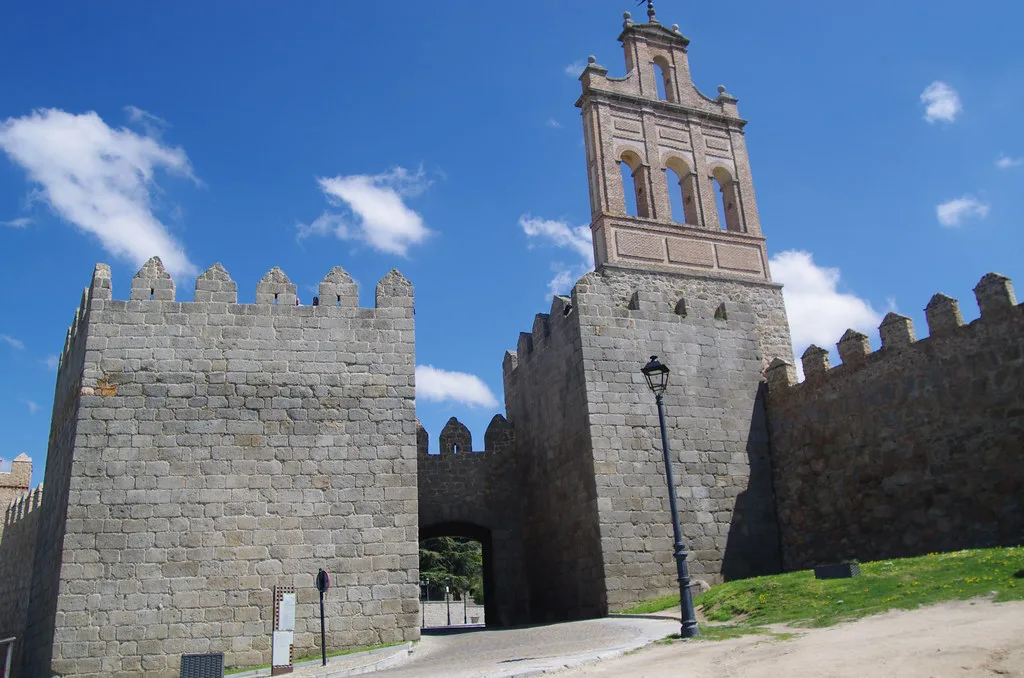
The walls were built around the year 1100 and run for almost 2,500 metres, punctuated by 87 towers and 9 gates. Roughly 1,600 metres of the parapet can be walked, and there are several points where you climb up. From the top the views take in the city roofs, the cathedral and the landscape beyond the walls.
The wall entrance was quoted at 8 euros on the guide this article draws on, with opening hours that vary by month and by which entrance you use. Treat both as indicative and confirm the current price and hours before you climb. The stretch you walk is exposed, so on a bright Castilian afternoon the parapet is hot work with little shade.
The walls themselves are described as Romanesque in style and preserved along their full length, which is why they dominate the approach from the west. The historic centre is compact and easy to explore on foot.
The Catedral de Ávila
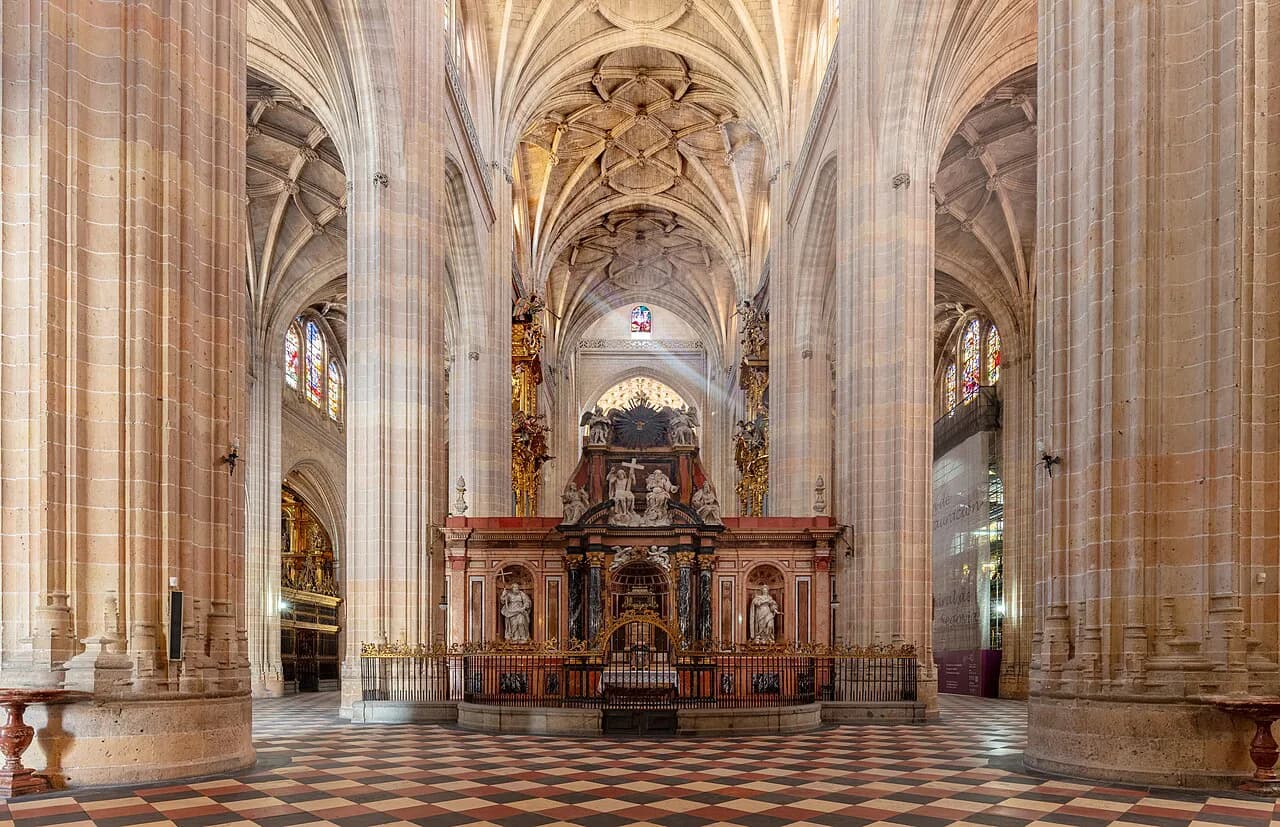
The Catedral de Ávila is the oldest Gothic building in Spain, and its oddity is that it doubles as part of the town's defences. Inside, the stained glass holds much of the attention; some panes were lost in the Lisbon earthquake of 1755, but the surviving detail and the mix of Gothic and fortress massing carry the visit. Walk the wall first and the cathedral's placement makes sense immediately.
Pilgrims on the Camino de Santiago can collect an official stamp at the cathedral, which is one practical reason to carry the credential even on a short city stop. The cathedral is a working church, so sightseeing yields to services at mass times. Book the cathedral into the middle of the loop rather than the end, so a closed door does not strand the rest of the plan.
Plaza del Mercado Chico and the arcaded heart
Plaza del Mercado Chico has been the city's centre since Roman times, when the forum stood on the same ground. Today the square is framed by arcades and historic buildings including the city hall, and terraces fill the middle for much of the day. It is the natural midpoint of any walk through the old town, and the place to sit rather than pass through.
A Friday morning market has been described on the square, with fresh produce such as fruit and vegetables, which turns a five-minute crossing into a slower browse. If your visit falls on another day, expect the same arcades and terraces without the stalls. Either way, the square repays a proper pause rather than a photograph from the corner.
Teresa of Ávila and her Carmelite legacy
Teresa de Ávila was a sixteenth-century nun who challenged the church of her day, wrote extensively, reformed the Carmelite order and founded seventeen convents. Her footprint is not one museum but a thread of buildings across the old town, and the Basílica y Casa Natal de Santa Teresa de Jesús stands on the site of her birth. Visit it as a place rather than a plaque, and the scale of her influence lands.
Nearby, the Padres Carmelitas keep a relic of Teresa, a finger displayed with a ring, which is the kind of detail that divides visitors between fascination and unease. The Ruta Teresiana ties the Teresa sites into a walkable sequence for anyone who wants the theme treated seriously. For most short-break visitors, the basilica plus one or two associated stops is enough.
Basílica de San Vicente and the churches outside the walls
The Basílica de San Vicente sits outside the walls and belongs on the same walk as the western gates, not on a separate trip across town. The churches of extramuros, the extra-mural churches, were declared World Heritage by UNESCO in 2007, and they are remarkable constructions in their own right rather than satellites of the walled centre. Group them together and the detour costs little time.
The Palacio de los Verdugo and the medieval palaces
Inside the walls, Ávila is dense with medieval palaces, and the Palacio de los Verdugo is the one most often singled out for a visit. These are the buildings that explain the city's Golden Age prosperity, when noble families built in stone within the safety of the defences. Look up at the crests and doorways as you move between the wall and the plaza; the palaces are part of the streetscape, not separate attractions.
The city's later decline, when plague and the departure of nobles for Madrid pulled money and status away, is written into the same streets. That history is why so much of the medieval fabric survives intact rather than being rebuilt in later styles. A slow walk between the cathedral and the plaza covers most of it.
Mirador de los Cuatro Postes
The Mirador de los Cuatro Postes is the viewpoint to save for the end, when you want the whole walled silhouette in one frame rather than another interior. It sits outside the walls, so build in the walk out and back instead of trying to slot it between monuments. Late in the day the low light picks out the towers along the perimeter most clearly.
The Paseo del Rastro gives another edge-of-town walk if you want to stretch the circuit rather than return straight through the gates. It is a useful stop when a monument is closed for the afternoon, and the Mirador remains the main reason to leave the walls at all.
Yemas de Teresa and La Flor de Castilla
Ávila's signature sweet is the yema de Teresa, also called the yema de Ávila, made from egg yolks and a generous amount of sugar. The place most associated with them is La Flor de Castilla, a shop trading since 1860, where they are best eaten fresh rather than carried home. A small box makes the sensible purchase: they are rich, and they do not improve with age.
The Ávila Card: when the pass pays off
The Ávila Card gives 48 hours of access to the main monuments including the cathedral and the city walls, and was quoted at 15 euros for individuals and 29 euros for families, free for children under 12. Treat those as historical figures and check the current rate before you buy. The arithmetic is simple: add up the individual entries you genuinely intend to use across two days and compare. If you plan to climb the wall, enter the cathedral and add one or two more sites, the pass tends to make sense; if you are in town for an afternoon, it usually does not.
How the town is laid out and a walking order
Start at the wall, climb the walkable stretch, and come down close to the cathedral so the fortress-wall relationship is fresh. From the cathedral, head into the old town for the Teresa sites and the medieval palaces, then rest at Plaza del Mercado Chico before looping out to the Basílica de San Vicente and the extra-mural churches. Finish with the Mirador de los Cuatro Postes for the view back.
This order avoids the common mistake of climbing the wall in the middle of the day and then facing the cathedral on tired legs. It also keeps the Teresa stops together, which matters because they are spread across several buildings rather than concentrated on one street. The whole circuit sits inside a compact, walkable centre.
Height, heat and pace at 1,130 metres
At 1,130 metres, Ávila is the highest city in Spain, and the altitude is the practical reason a midday summer walk feels harder than the distance suggests. The wall walk is fully exposed, so schedule it for the morning or later afternoon and keep the shaded arcades of the plaza for the middle of the day. Inland Castile can be cold outside summer, so carry a layer even if the sun is out when you set off.
How Ávila fits a trip with Segovia
Ávila and Segovia sit close enough in Castilla y León that travellers often pair them, and the contrast is the point: Ávila's medieval walls and Teresa's convents against Segovia's Roman aqueduct and Alcázar. If you are basing yourself in Segovia, our guide to things to do in Segovia covers the aqueduct, the Alcázar and the old town in the same walking-order format.
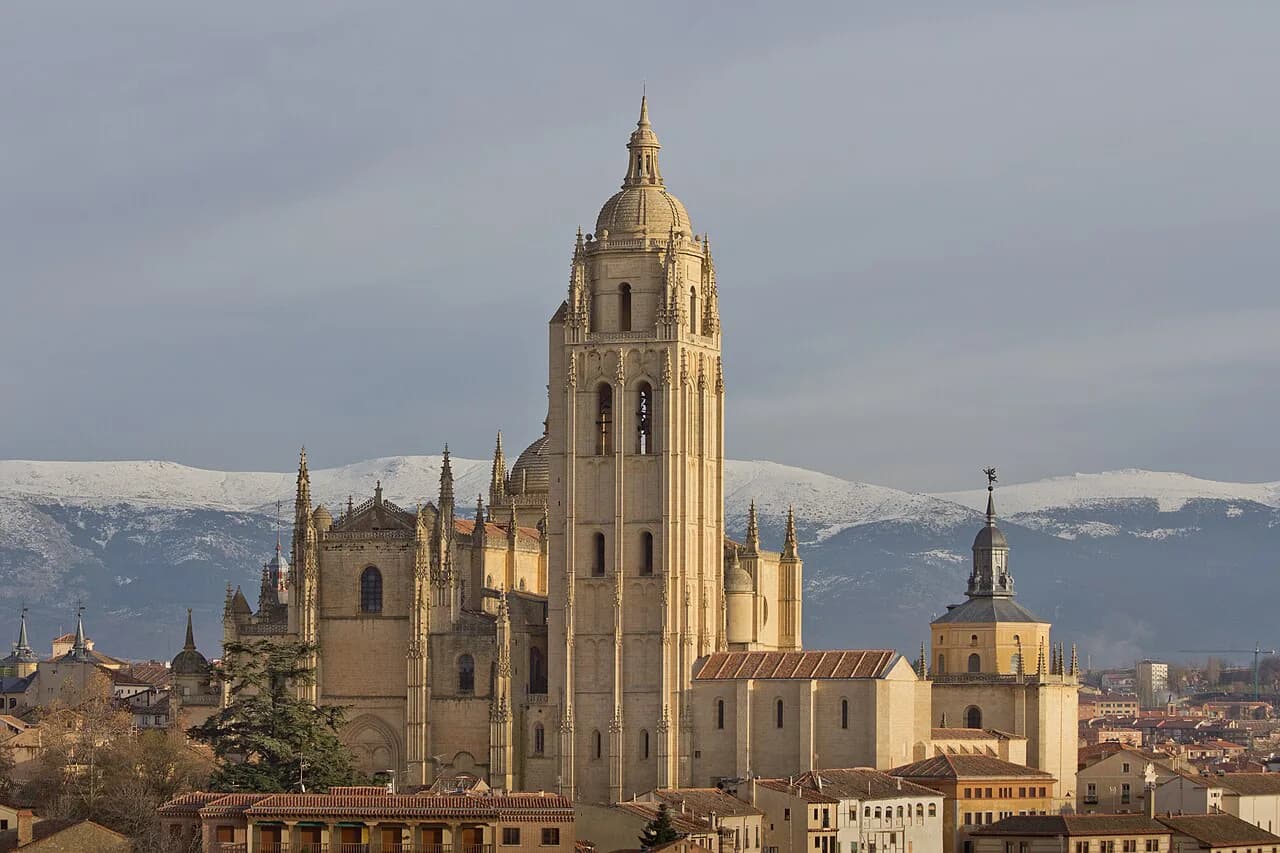
Segovia's compact old town is easy to pair with a half-day in Ávila if you accept that one of the two gets the shorter visit. Our Segovia Old Town guide covers the streets between the aqueduct and the cathedral, which is the part most worth protecting from a rushed schedule. Decide which town gets the full day before you book anything.
Which order should you book Ávila into?
Give Ávila a full morning and early afternoon: wall first, cathedral second, then the Teresa thread, the plaza and the viewpoint as time allows. That order protects the two headline monuments from the midday heat and from service closures, and leaves the flexible stops for the end.
If Ávila is sharing the trip with Segovia, decide on the day which town gets the longer visit, then plan the other around a shorter loop. The wall climb at 1,130 metres is the one element worth scheduling deliberately rather than fitting in around everything else.
Explore more Segovia guides
Frequently Asked Questions
Is Ávila worth visiting?
Yes, if you want a compact medieval city you can cover on foot. The wall is walkable along part of its length, the cathedral is built into it, and the Teresa of Ávila sites give the old town a theme beyond its architecture. It suits a morning or a full day rather than a flying stop.
What food is Ávila famous for?
The yema de Teresa, a sweet made from egg yolks and sugar and named after the city's most famous nun. La Flor de Castilla, a shop trading since 1860, is the established place to buy them, and they are best eaten fresh.
How does Ávila fit a trip with Segovia?
Ávila and Segovia both sit in Castilla y León and pair naturally, with different things to see in each. Decide which of the two towns gets the longer stop, because a half-day in one means the shorter visit for the other.
Sources
Notes for your next Spanish town break
Optional updates to our guides.
You might also like
Continue reading
More guides you'll find useful