El Escorial Monastery: What to See Inside San Lorenzo de El Escorial
Plan a visit to the El Escorial monastery near Madrid: the rooms inside, opening hours by season, the Monday closure and the free afternoon slots.
On this page
El Escorial monastery is worth the trip from Madrid if you give it half a day and arrive before the ticket office stops admitting visitors. The complex is a walled royal site rather than a single church, so the visit runs through palaces, a basilica, a library and the royal burial vaults in one continuous route. This guide sets out what the ticket covers, how opening hours change with the seasons, and how the journey by train or bus actually works.
What the El Escorial complex contains
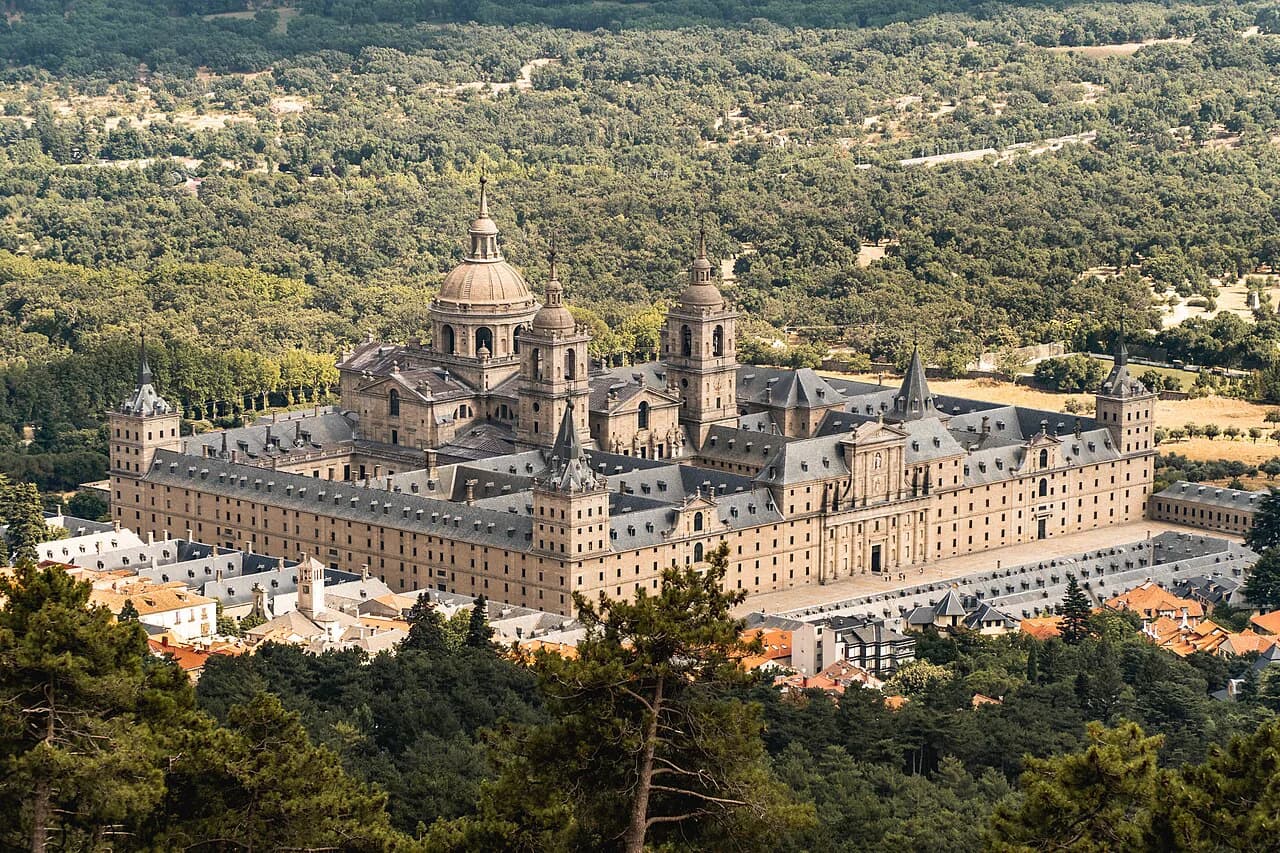
The site sits in San Lorenzo de El Escorial, a town in the Sierra de Guadarrama roughly 50 km from Madrid, and the walled precinct holds a royal palace, a basilica, a library, a college and the monastery itself. Felipe II ordered it built between 1563 and 1584 to mark the victory over the French at the Battle of San Quintín in 1557, and it has served since as the royal pantheon. UNESCO recognition followed in 1984, which helps explain why a single ticket opens so many separate rooms.
Because the monastery, palace and basilica share one enclosure, the visit is a long indoor circuit rather than a series of separate admissions. Budget your energy accordingly: the rooms follow one after another, and the route rewards anyone who slows down in the library and the pantheon instead of hurrying to the basilica. The practical consequence is that a late arrival eats into a fixed block of time rather than an open-ended afternoon.
The rooms worth your time inside
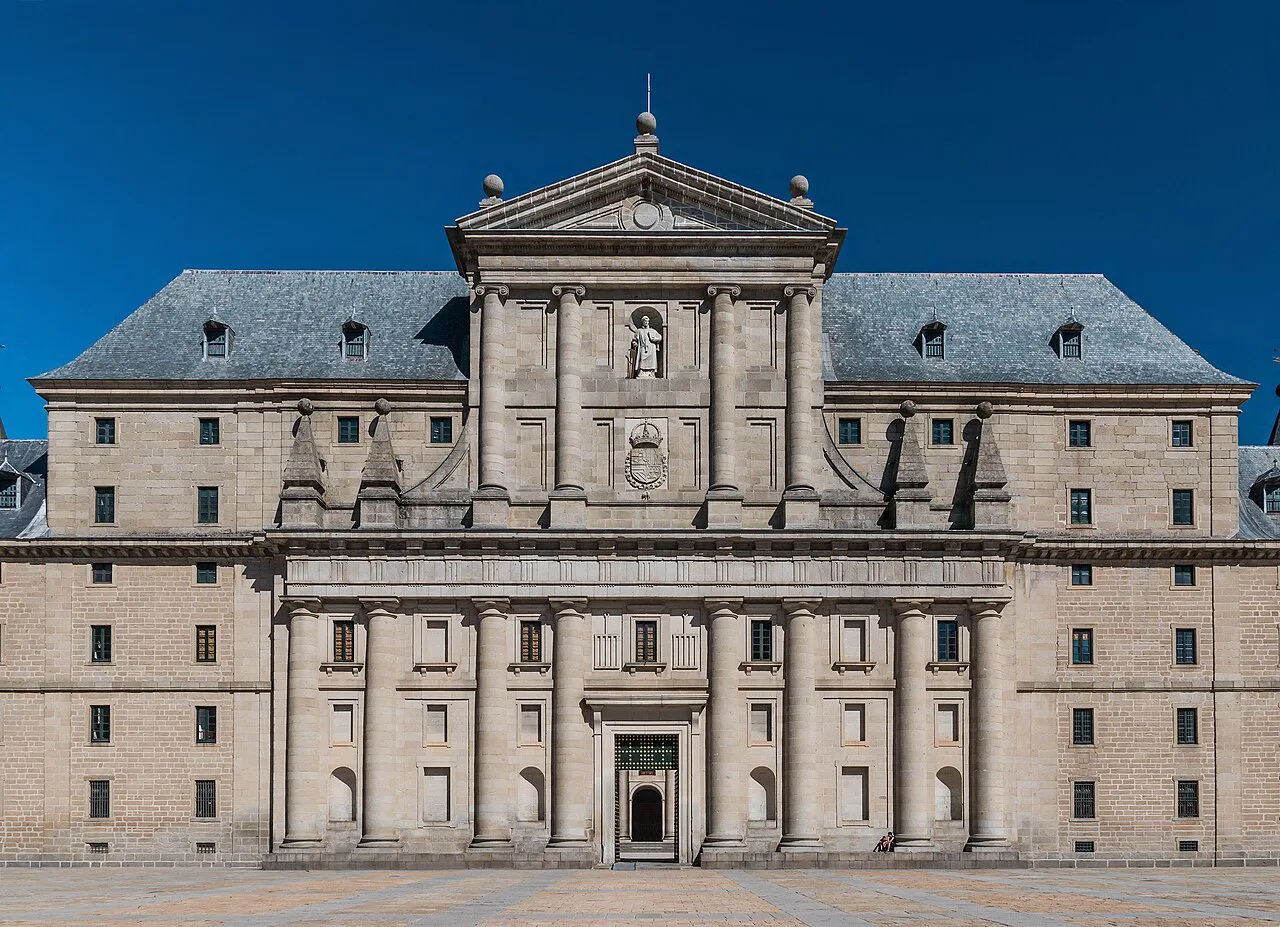
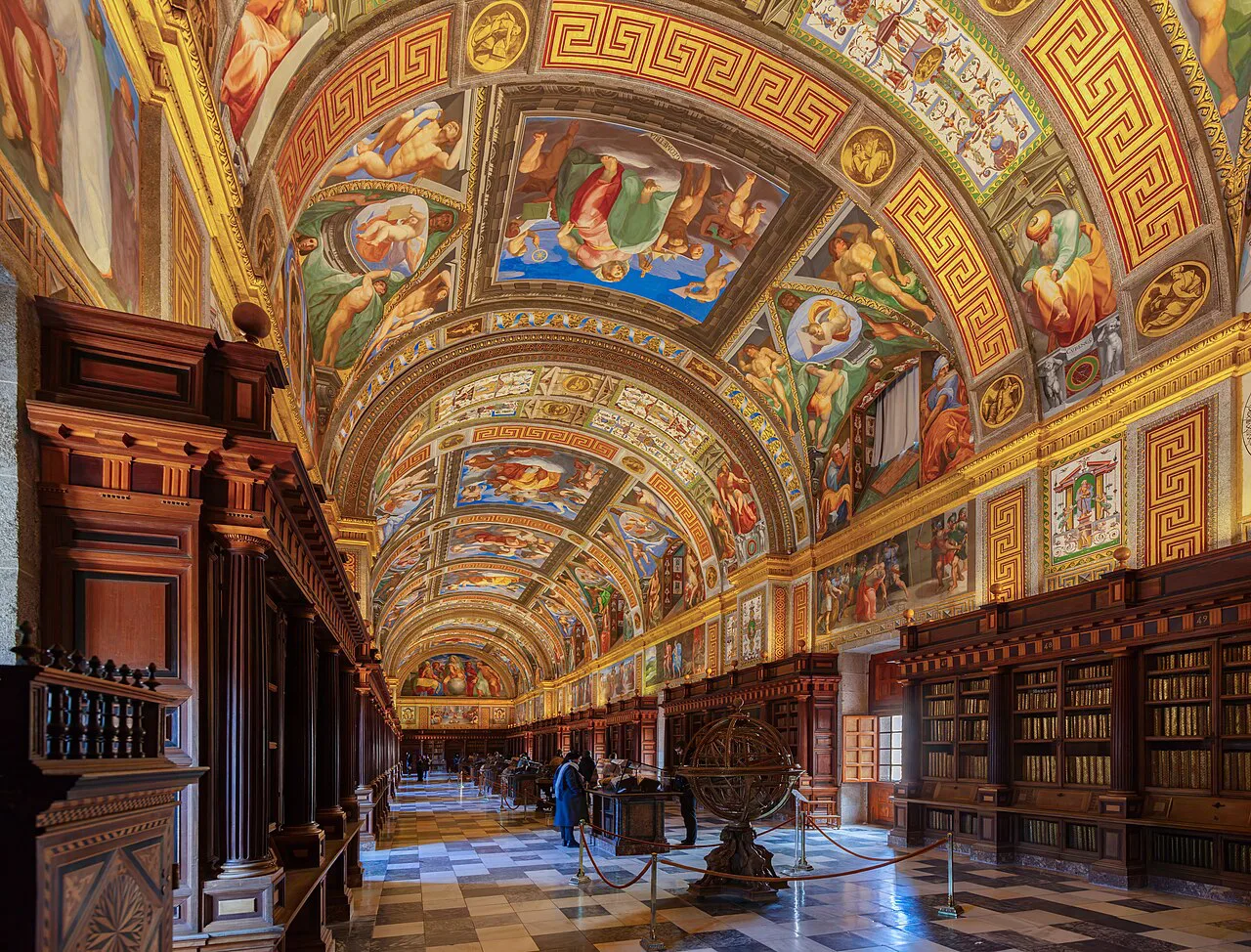
The Real Biblioteca is the first room that stops most visitors, a long hall whose painted vaults and shelving are the reason to look up as well as along the shelves. Beyond it, the Palacio de Felipe II is the austere suite of rooms the king built for himself, and it reads very differently from the ceremonial spaces that follow. Neither room allows you to linger indefinitely, but both are worth a proper look rather than a pass-through.
The Antesacristía and Sacristía, the Palacio de los Borbones and the Sala de las Batallas widen the visit into Bourbon court taste and dynastic battle scenes. The Sala de las Batallas in particular covers a large wall surface with painted victories, so treat it as the point where the circuit changes from private rooms to imperial display. If your time is tight, these are the rooms to move through briskly so you keep room for the basilica.
The Real Basílica de San Lorenzo is the domed centrepiece, and it is the one space where you should expect to share the nave with other groups. The official Patrimonio Nacional page is where current hours and any access conditions around religious services are set out before you travel.
The Pantheon of the Kings and the chapter rooms
The Panteón de los Reyes, or royal crypt, is the room most visitors come for, a gilded vaulted chamber where the Spanish monarchs are buried. The Salas Capitulares sit alongside it, with their own painted ceilings and the chapter rooms of the monastic community that once governed the house. Together these are the parts of the route that justify the journey in their own right.
The main staircase of the Claustro Mayor carries frescoes that cover the walls and ceiling as you climb, and it is easily missed by anyone following the crowd toward the exit. Slow down here, because the stairwell is one of the few places in the circuit where the decoration surrounds you on every side.
The museum, the Sala de los Secretos and the Jardín de los Frailes
The Museo de Arquitectura y Pintura holds architecture and painting, the part of the circuit that shifts attention from rooms to the building itself. The Sala de los Secretos is a small room with an acoustic curiosity worth testing aloud, and the Jardín de los Frailes gives you an outdoor pause with views back over the monastery walls.
These three are the rooms most visitors skip, and they are also the reason to allow more time than the basilica and pantheon alone would need. If you have only a short window, choose between the museum and the garden rather than trying to fit both before the ticket office cuts off entry.
Opening hours by season and the Monday closure
Hours change with the season: from October to March the monastery opens to visitors from Tuesday to Sunday between 10:00 and 18:00, with ticket sales and admission until 17:00. From April to September the day runs from 10:00 to 20:00, with the last admission at 19:00. Arriving within the final hour leaves too little time for the full circuit, so treat the cut-off as the real closing time.
The monastery closes on Mondays throughout the year, which is the single most expensive detail for a short break: a Monday in San Lorenzo de El Escorial is a day for the town, the surrounding woods or somewhere else entirely. Build the trip around Tuesday to Sunday and you avoid losing the main reason for coming.
Ticket prices, concessions and free entry
Standard admission is 12€ for adults, with a reduced 6€ rate for students, children aged 5 to 16 and visitors over 65, and under-fives entering free. Entry is also free on Wednesdays and Sundays between 15:00 and 18:00, which sounds generous until you weigh it against the crowd it attracts and the reduced time left before closing. On a short break the paid morning slot is usually the better trade.
Buying online in advance is the sensible move for weekend and public-holiday visits, because the ticket office queue is the least predictable part of the day. Booking through Patrimonio Nacional, the body that runs the royal sites, keeps you clear of resale mark-ups.
The Casita del Príncipe and the town around the monastery
The Casita del Príncipe sits on the royal site at San Lorenzo de El Escorial, a small royal pavilion with gardens that makes a natural second stop once the monastery circuit is done. Check its separate opening arrangements before you make it your afternoon, since it is a distinct visit from the main building.
The town itself climbs the hillside around the monastery, so the walk between the station and the historic centre is uphill and takes roughly 20 to 25 minutes on foot. That climb is the argument for the local bus if you are carrying bags or arriving in the middle of a hot afternoon.
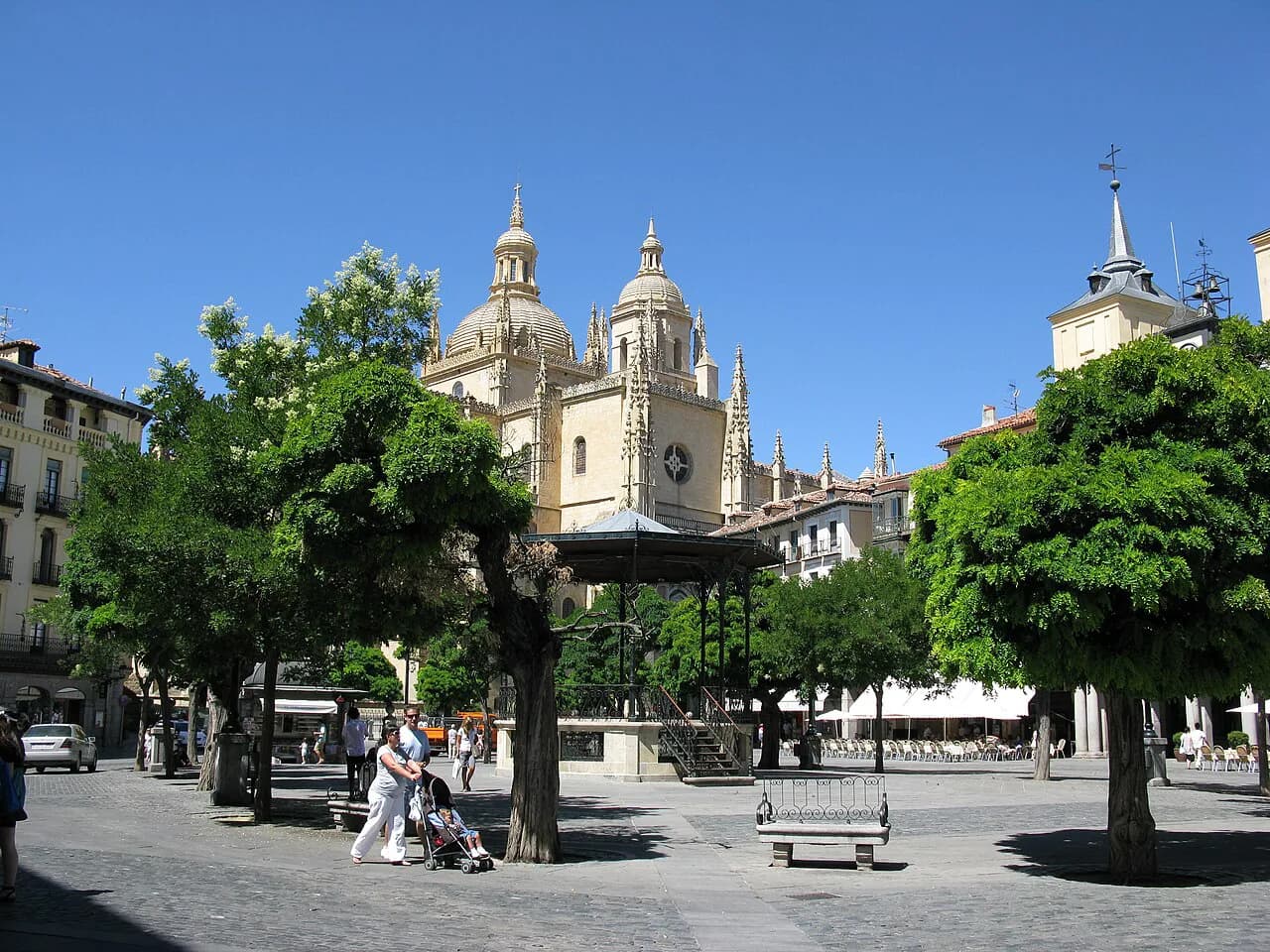
If you are extending the trip into Castile, the walled towns west of Madrid pair naturally with this one, and our guide to things to do in Segovia covers the Roman aqueduct and the old town in the same style.
Getting there from Madrid by train and bus
Cercanías line C-8 runs from Atocha to El Escorial station, and line C-3 links Sol with the same station. From there, urban bus line 1 covers the stretch up to the monastery, and the walk takes about 20 to 25 minutes if you prefer it. The bus from Moncloa, lines 661 and 664, takes around 50 minutes and drops you closer to the town centre.
Train plus local bus is the simplest combination for a day trip from Madrid, because it avoids the drive out through Las Rozas and the M-505. Check the current Cercanías timetable before you commit, since the return train sets the real end of your day.
How long to allow and the trade-offs to plan around
Allow at least half a day inside the monastery and a full day if you want the Casita del Príncipe and a walk in the surrounding woods as well. The circuit is long, much of it indoors and on hard floors, and the last admission is a hard stop rather than a suggestion. Morning entry leaves the afternoon free for the town and the gardens.
The real trade-offs are the Monday closure, the last-admission hour and the weekend queue, and all three are manageable if you book ahead and pick a Tuesday to Friday slot. Free Wednesday and Sunday afternoons save money but cost you time and elbow room.
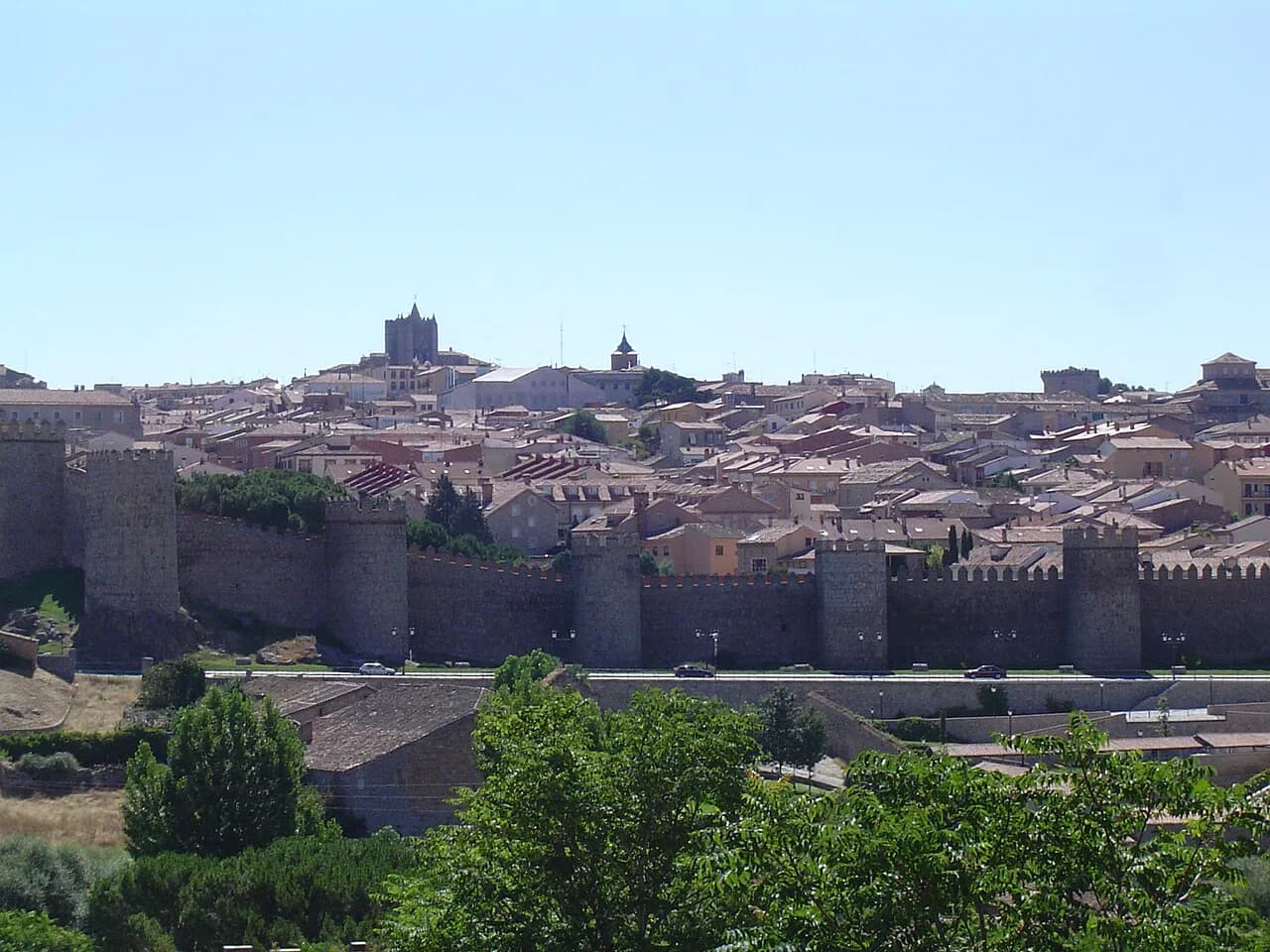
Travellers combining this with a longer Castilian loop often add Ávila, where the walls and cathedral make a compact contrast to the Escorial's interior circuit.
Which day should you book for El Escorial?
Book a Tuesday to Saturday morning, arrive on the first admission, and give the monastery four hours before you think about the Casita del Príncipe or the town. That sequence keeps you ahead of the coach groups and clear of the last-admission cut-off.
If the budget matters more than the crowd, take the free Wednesday or Sunday afternoon window and accept a shorter, busier visit. Either way, the Monday closure rules out the start of the week entirely, so plan the rest of the break around that.
Explore more Segovia guides
Frequently Asked Questions
Why is El Escorial famous?
It is the royal monastery-palace Felipe II built between 1563 and 1584 to commemorate the victory at San Quintín, and it has served as the Spanish royal pantheon. The complex combines a palace, basilica, library, college and monastery inside one walled site, and it has been UNESCO-listed since 1984.
Who is buried in El Escorial?
The Panteón de los Reyes is the royal crypt where Spanish monarchs are buried, and it is the room most visitors head for first. It sits within the monastery circuit, so your ticket covers it along with the basilica and the palace rooms.
What does El Escorial mean in English?
The name refers to the town of San Lorenzo de El Escorial and to the royal monastery-palace that dominates it. In English it is usually written as El Escorial monastery or the Royal Monastery of San Lorenzo de El Escorial, after the saint to whom it is dedicated.
Sources
Notes for your next Spanish town break
Optional updates to our guides.
You might also like
Continue reading
More guides you'll find useful