Deià, Mallorca: A Practical Guide to the Hill Village
Plan a visit to Deià in Mallorca: the stone village centre, Robert Graves's house, Cala Deià and how the village fits a Sóller or west-coast break.
On this page
Deià needs two hours for the village itself and roughly half a day if you also walk down to Cala Deià. The village is a tight knot of cobbled lanes and stone houses on the west coast of Mallorca, sitting between Sóller and Valldemossa in the Serra de Tramuntana, and it works best as a stop on a west-coast road trip rather than a base in its own right. This guide covers the centre, the Robert Graves connection, the church and cemetery viewpoint, the two coves below the village and the time each one costs. It also sits within a wider set of things to do in Sóller, the natural base for this stretch of coast.
Where Deià sits and how it fits a break
Deià lies on the MA-10 road that threads the Serra de Tramuntana, the mountain chain running along Mallorca's north-west coast. The village sits roughly 30 km from Palma, with Sóller to the east and Valldemossa to the west, so it slots naturally into a day that already includes either town. Approach it as a half-day add-on to a Sóller break rather than a destination you build a trip around, using Sóller Old Town as your base and a Sóller map to plan the mountain road.
If you are staying in Sóller, Deià is close enough to reach by road in the morning and leave before the afternoon heat builds. That matters in summer, when the stone lanes hold warmth and the car park fills early. A Sóller base also gives you the tram and the port for the rest of the day, which makes Deià a low-risk excursion.
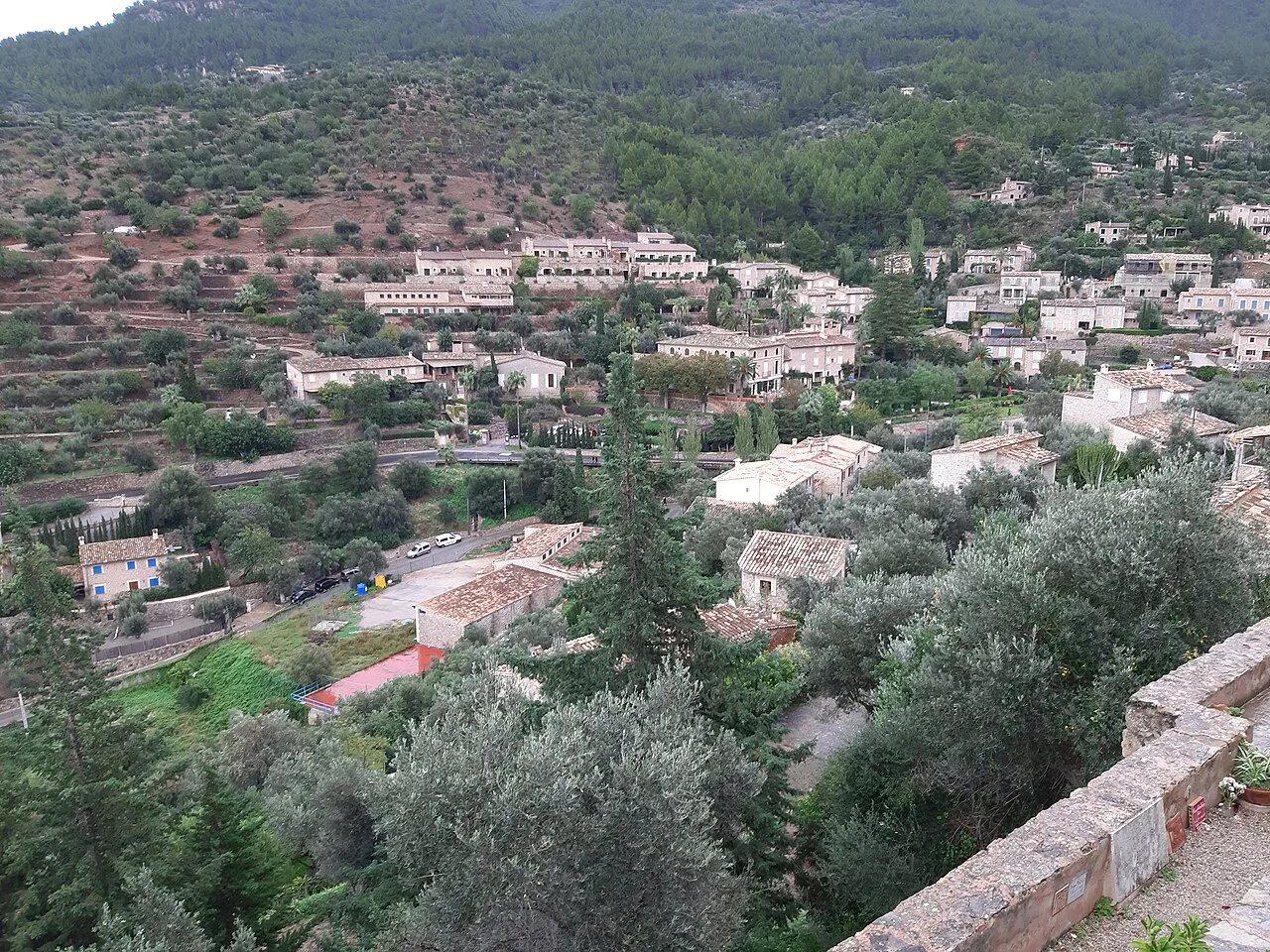
The village centre: cobbled streets and stone houses
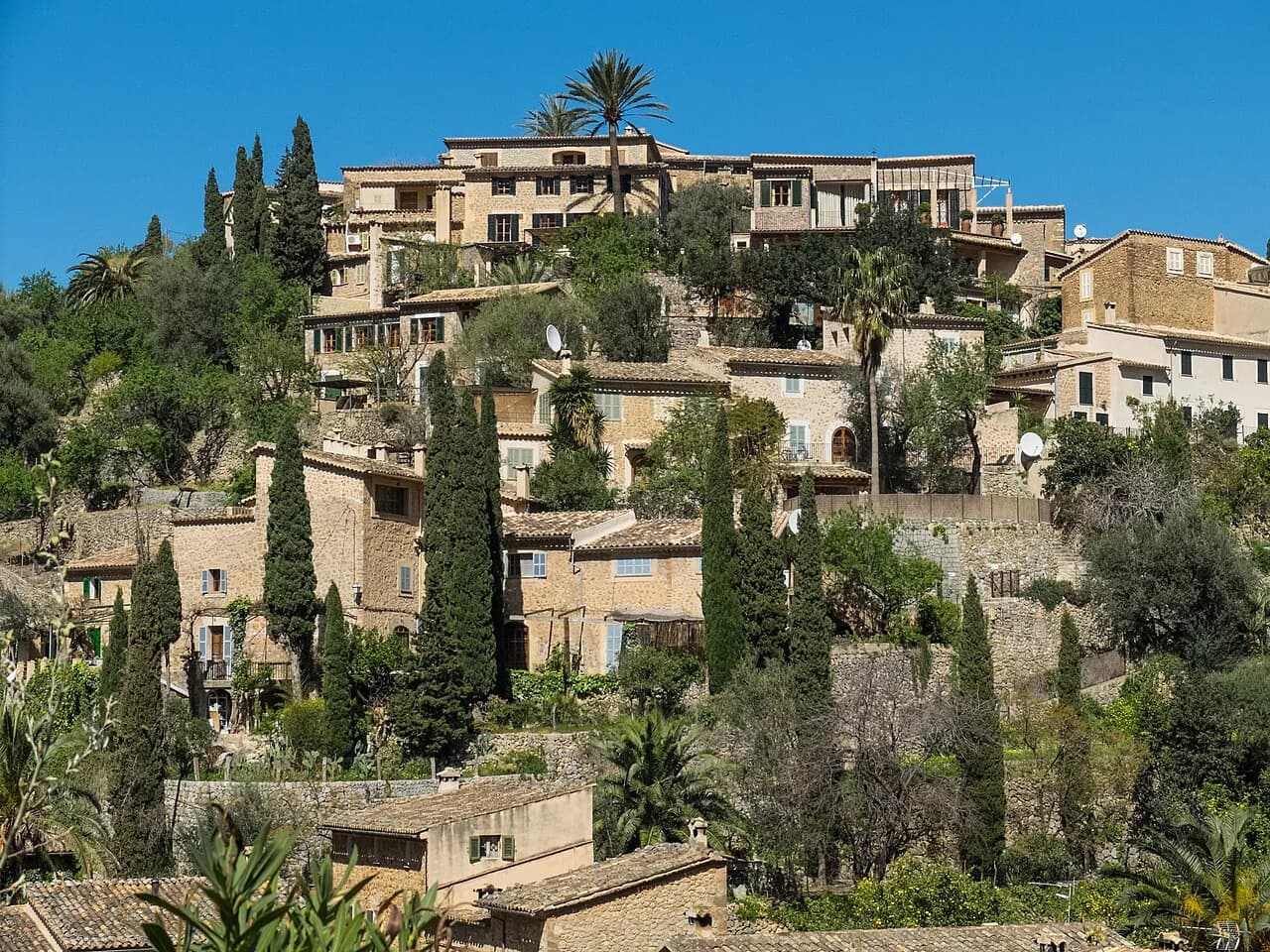
The centre is small and steep, a web of cobbled streets and stone houses that shifts shape as you climb, with the mountains and the sea reframing at every turn. This is a village for wandering rather than ticking off sights: galleries, small boutiques and cafés sit in the old stone buildings, and the slopes mean you are always either going up or coming down. Wear shoes that cope with uneven stone.
Allow an hour to walk the core without rushing, more if you stop for coffee or browse the galleries. The village rewards slow movement because so much of its character is in the detail of doorways, dry-stone walls and terraced gardens rather than a single headline monument. If you are short of time, the centre plus the church viewpoint is the essential circuit.
Robert Graves and the village's artist history
Deià's reputation as an artists' village rests largely on Robert Graves, the writer who lived here for many years and whose legacy still shapes the local creative community. The Fundación Robert Graves is the one specific sight in the village dedicated to that story, and it is the place to go if you want the writer's life and work rather than another stretch of cobbles. Confirm the foundation's opening days before you build the day around it.
Beyond the foundation, the artistic thread shows up in the galleries and studios scattered through the village, which you can visit without a ticket. Treat these as browsing rather than a formal circuit, since opening days vary by business. The church of Sant Joan Baptista and the cemetery also carry cultural weight, and the cemetery in particular is worth the climb for its position above the sea.
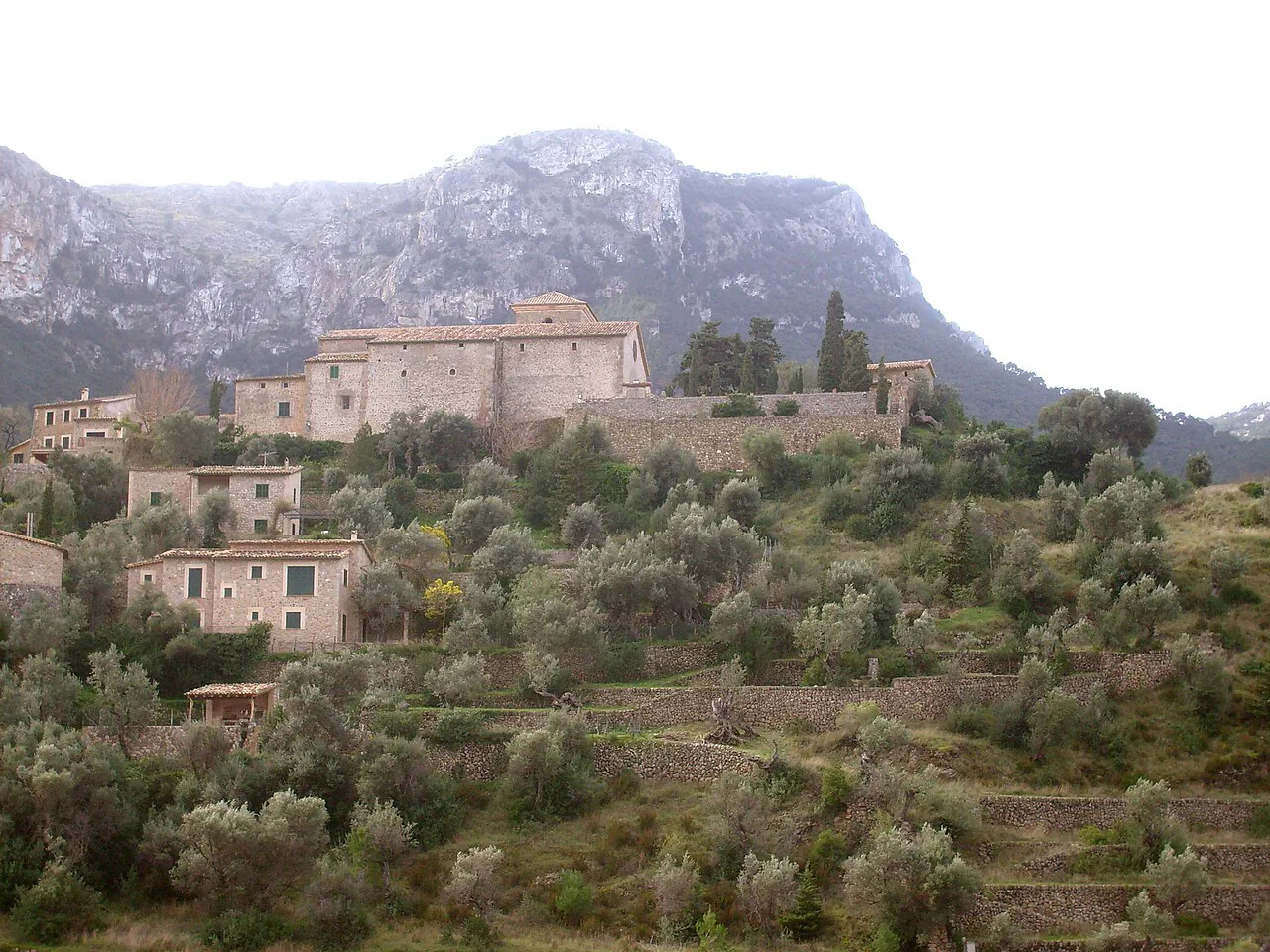
Sant Joan Baptista and the cemetery viewpoint
The church of Sant Joan Baptista anchors the upper village, and the cemetery beside it is set high enough to give a wide view over the surrounding mountains and out to the coast. The climb is short but steep, and it is the best free outlook in Deià if you are not walking down to the water. Churches on the island close to tourists during services, so time your visit around mass rather than assuming the doors are open.
Pair the church with the village centre rather than treating it as a separate outing, since the two sit within a few minutes of each other on foot. The cemetery's position makes it a natural end point for a short walking loop: centre first, then up to the church, then back down through the lanes. Allow 20 to 30 minutes for this section.
Cala Deià: the shingle cove below the village
Cala Deià is a small shingle cove of about 70 metres at the foot of the village, reached on foot by a winding path that takes roughly 25 minutes from Deià. The descent is the easy part; the climb back up is the real constraint, particularly in summer heat. Treat the walk as a half-day commitment rather than a quick dip.
The cove has rocky ground, clear water and basic facilities including toilets, showers and restaurants, but no rental shops on the beach, so bring your own snorkelling kit if you want to explore the rocky bottom. The transparent green-blue water is calmest early in the morning or towards evening, when visibility is better and the cove is quieter. In summer the small car park fills quickly, so walkers have an advantage over drivers.
The coastal path onwards towards Lluc Alcari has sections that demand care, especially when the ground is wet or if you are uneasy with heights. The rewards are views of hidden coves, but this is not a route to attempt in flip-flops or with tired legs after the climb back up.
Es Canyaret (Cala Llucalcari): the second cove
Es Canyaret, also called Cala Llucalcari, is a second cove within reach of Deià, about 5 minutes by car and a short walk from the road. It sits among cliffs and dense vegetation, which gives it a wilder feel than Cala Deià and fewer facilities. Walking times from the village to either cove are broadly similar in length, roughly 40 minutes on the paths down.
Choose between the two coves on facilities versus solitude: Cala Deià has toilets, showers and restaurants, while Es Canyaret is the quieter, more natural option with none of that on the beach. Neither is a sand beach, so plan for pebbles and rock underfoot. If you have only one cove in you, Cala Deià is the easier introduction because the path is more established.
Getting to Deià from Sóller and Palma
By road, Deià sits on the MA-10 between Sóller and Valldemossa, which is the practical route whether you drive from Palma or from a Sóller base. The mountain road is slow and winding, so allow more time than the distance suggests, particularly in summer traffic. Parking in the village itself is limited, and the cove car park is smaller still.
Public transport and organised excursions exist, but timetables vary by season, so confirm times with the operator before you set out. The same applies to any bus you plan to catch back from the coast road, since a missed service leaves you with a long walk. A car or a taxi gives you far more control over the timing of a west-coast day.
How long Deià needs
Two hours covers the village centre, the church and the cemetery viewpoint at a comfortable pace, which is the right amount if Deià is one stop on a west-coast drive. Add three to four hours if you walk down to Cala Deià and want time in the water, and factor in the climb back up before you commit. A half-day is the realistic block for the village plus one cove.
If you are combining Deià with Sóller, do Deià first and leave the afternoon for the town and the port, where the tram connects the centre to the water. Trying to fit both coves and both towns into one day leaves you rushing the best parts. Pick one cove and one town centre and the day works.
Practical points: crowds, heat and closing days
Summer brings the heaviest crowds to Deià, and the narrow lanes and small car parks feel it first. Arriving early gives you the village before the coaches and the cove before the midday sun. Inland Mallorca gets genuinely hot at midday in July and August, so plan the climb back from Cala Deià for the morning or late afternoon rather than the hottest hours.
Opening days for the Fundación Robert Graves and the church are not fixed across the year, and churches on the island close to visitors during services. Check the foundation's site and the parish notice before you build a day around either. Shops and cafés in the village keep their own hours, with some closing in the afternoon.
Village only, or village and cove?
The decision comes down to time and legs. With two hours, stay in the village: the centre, Sant Joan Baptista and the cemetery viewpoint give you Deià's character without the descent. With half a day, add Cala Deià and accept that the walk back up is the price of the swim.
Either way, Deià works best as a stop on the mountain road between Sóller and Valldemossa rather than a day in itself. Build it into a west-Mallorca itinerary that already includes one of those towns, and the village's steep lanes and stone houses become a highlight rather than a detour.
Explore more Sóller guides
Frequently Asked Questions
Is Deià worth visiting?
Yes, if you are already in west Mallorca. The village centre, the church and the cemetery viewpoint fill two hours comfortably, and Cala Deià adds a half-day if you walk down. It is less compelling as a standalone destination reached from Palma purely for its own sake.
Why is Deià so expensive?
Deià's setting in the Serra de Tramuntana, its reputation as an artists' village and its small size all push prices up relative to inland towns. No current prices for the village's sights are given here, so check the Fundación Robert Graves site and local listings directly.
How long is the walk from Deià down to Cala Deià?
Roughly 25 minutes on foot by the winding path, with the climb back up taking longer. Bring water and avoid the midday heat in summer.
Sources
Notes for your next Spanish town break
Optional updates to our guides.
You might also like
Continue reading
More guides you'll find useful