Valldemossa: What to See in Half a Day, Step by Step
Walk Valldemossa in half a day: the Cartuja and Chopin's winter, the Miranda des Lledoners viewpoint, Sant Bartomeu and the quiet stone lanes.
On this page
Valldemossa rewards two to three hours on foot, and the route below strings the Cartuja, the Miranda des Lledoners viewpoint and the church of Sant Bartomeu into one walk through the lanes. The village sits in the Serra de Tramuntana above Palma, wrapped around a royal palace that became a Carthusian monastery. This guide gives the walking order, says which sights deserve your time and which you can pass in minutes, and treats the lanes themselves as the reason to come.
Why Valldemossa draws a half-day
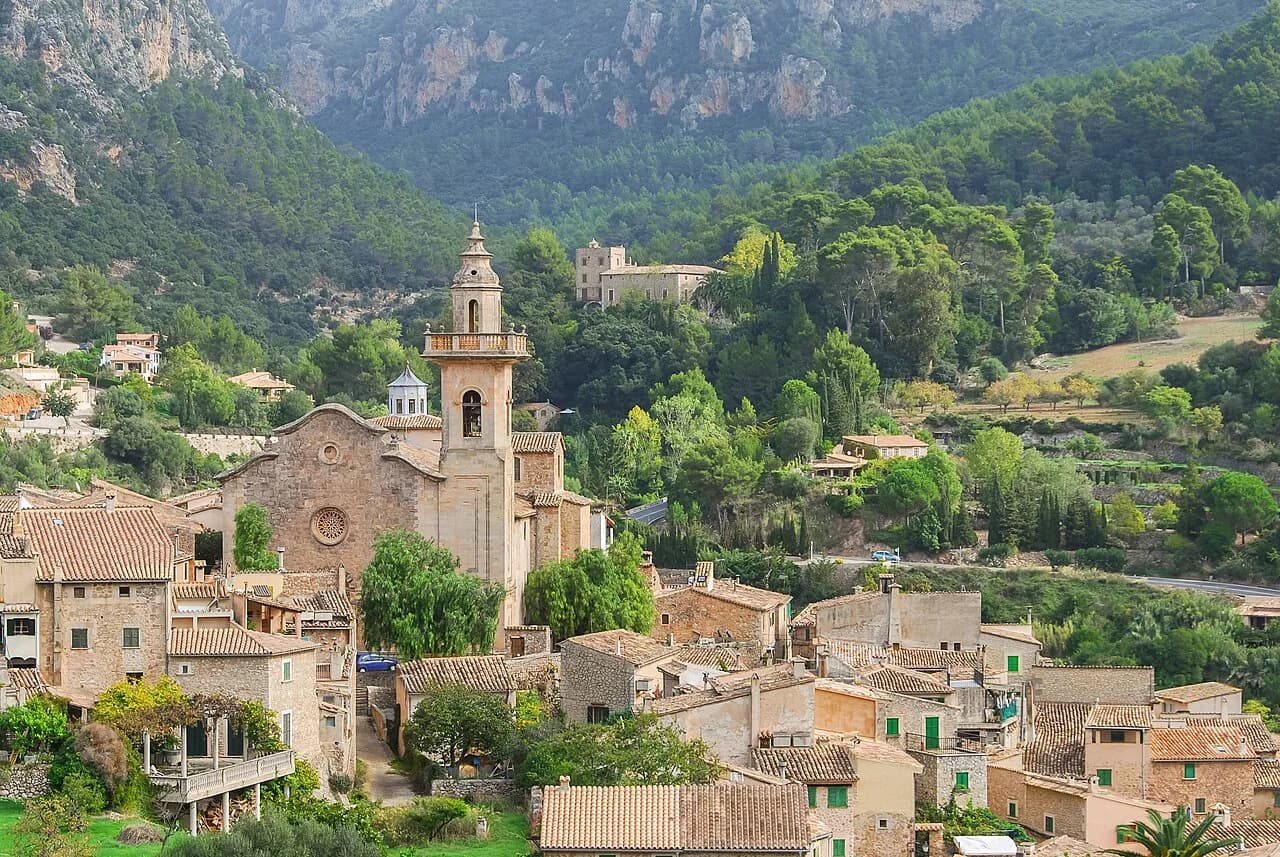
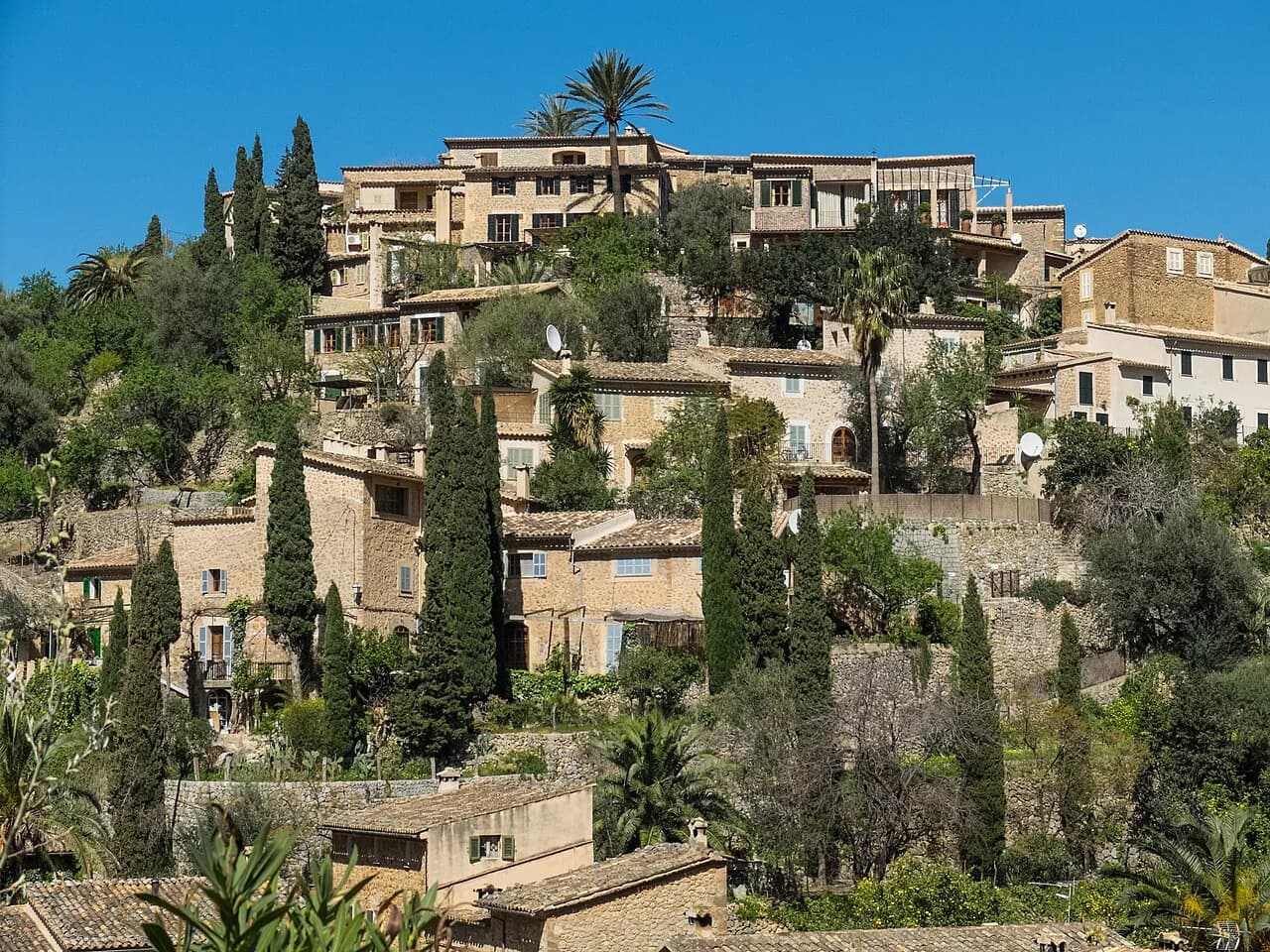
Valldemossa is a mountain village of stone houses and flower-hung alleys built around the Cartuja, and that monastery is the anchor of any visit. The composer Frederic Chopin and the writer George Sand spent the winter of 1838-39 there, and the monastery's fame rests on that stay. The Tramuntana setting matters as much as the monuments: this is inland Mallorca, not the coast, and the village climbs a hillside in tight terraces.
Treat it as one stop rather than a whole day. From Palma or from the Vall de Sóller it works as a half-day, with the Cartuja and the mirador as the fixed points and the lanes filling the gaps between them. The place is compact enough that you rarely walk more than ten minutes between sights, which is what makes the half-day shape realistic.
How the town is laid out
The old centre has restricted vehicle access, and the limited parking near it is paid and time-limited. Most visitors leave the car on the edge of the historic centre and walk in, a matter of under ten minutes to reach the start of the pedestrian streets. Build that approach into your timing rather than expecting to park beside the Cartuja.
Inside, the village is a knot of pedestrian lanes and small squares, with Plaça Ramon Llull acting as the hinge you pass through more than once. The Cartuja stands off one side of it, Carrer Jovellanos leads to the viewpoint, and Carrer de la Constitució carries you down to the church. Once you understand that loop, Valldemossa stops feeling like a maze.
Start on the Via de Blanquerna
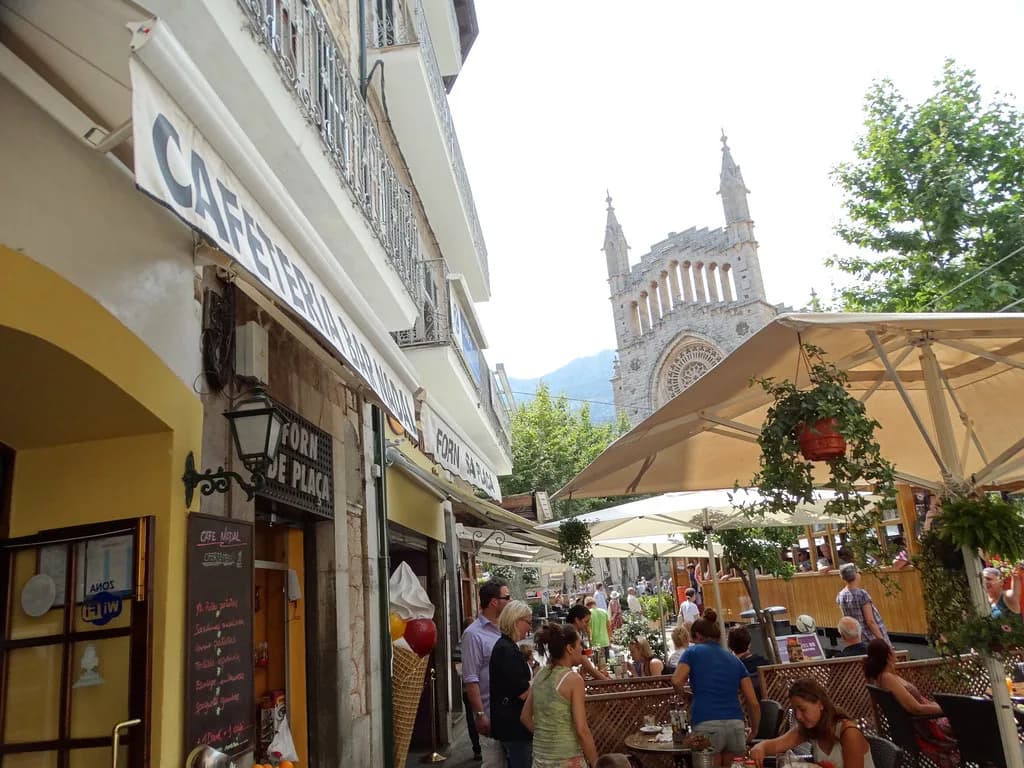
Begin on the Via de Blanquerna, the pedestrian street that brings you into the centre. It is known for its pastry shops, and the local speciality is the coca de patata, a soft potato bun that has made the street's bakers a fixture of a Valldemossa morning. Buy one on the way in and enjoy it as you walk.
The street runs up to Plaça Ramon Llull, where you turn right for the Cartuja. Keep the square in mind as your compass: every leg of the walk returns to it, so you can reorder the route if a sight is busy or shut.
La Cartuja de Valldemossa and the Chopin connection
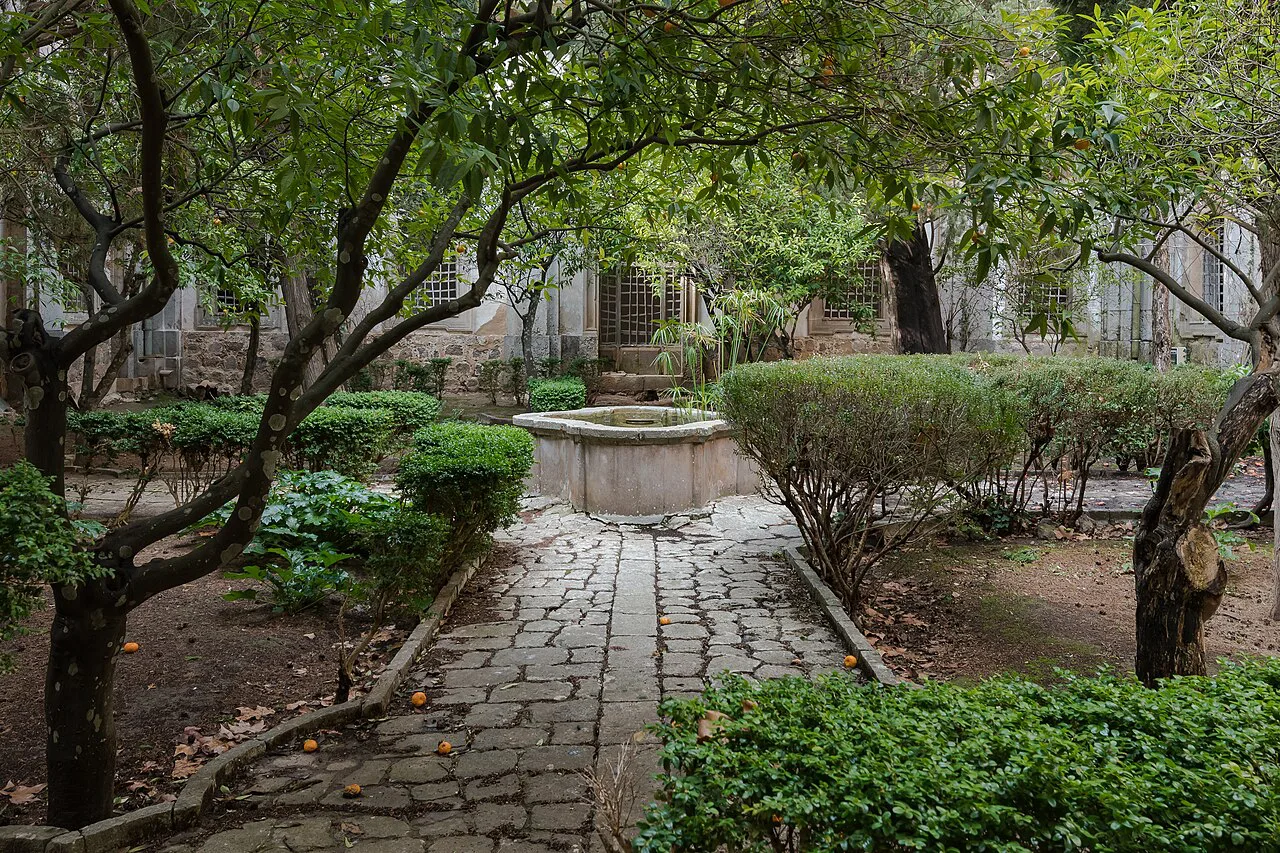
The Cartuja began as a royal palace, commissioned by King Jaume II for his son Sancho, and only later passed to Carthusian monks, who lived there until the monastic confiscations of the nineteenth century. That double identity shows in the building: it has a beautiful blue tower, and the church was built in the eighteenth century. Chopin and George Sand wintered here in 1838-39, which is what brings many visitors.
For the best view of the church front, step into the Rey Juan Carlos gardens, a small green space with a bronze head in memory of Chopin. Opening hours, closing days and ticket prices for the Cartuja are not fixed in this guide; confirm the day's times at the entrance or on the monastery's own published information before you rely on a morning slot.
The Miranda des Lledoners viewpoint
From Plaça Ramon Llull, take Carrer Jovellanos to the Miranda des Lledoners, the viewpoint that gives the finest outlook over Valldemossa. You look across the surrounding terraced fields, the clustered roofs of the village and the church of Sant Bartomeu rising opposite. It is the single best place to understand how the village is built into its hillside.
The viewpoint is a popular spot, and on a sunny Sunday it fills up quickly. Come early in the day if you want the outlook without the crowd, and remember that the sun on this exposed ledge is strong in summer. Then retrace your steps to the square to continue the loop.
The church of Sant Bartomeu
From the square, follow the cobbled pedestrian Carrer Uetam downhill to Carrer de la Constitució, where the church of Sant Bartomeu stands. Its origins are thirteenth-century, when it was dedicated to the Virgin Mary, and it was enlarged and renamed for the village's patron saint in the fourteenth century. The exterior is the more rewarding half: the interior is austere, and the building is best appreciated from the mirador you have just left.
As at any parish church, tourist visits can give way to services, so time your stop around mass rather than assuming the doors are open all day.
Santa Catalina Thomas and the tiled panels
Leaving the church, take Carrer Rectoria on your right to the birthplace of Santa Catalina Thomas, who was born in Valldemossa in 1531. Walking the village you will notice glazed tiles at many doorways telling her story, a local devotion that gives the lanes a thread to follow. The house itself is small, with little more than a modest altar inside.
Pass it quickly and spend the time on the street instead, which is among the prettiest in the village. This is the honest trade-off: the birthplace is a two-minute stop, while the lane around it deserves ten.
The prettiest lanes
At the end of Carrer Rectoria turn right into Carrer de l'Amargura, one of the loveliest streets in Valldemossa and usually quiet enough to have largely to yourself. Follow it back to the main door of Sant Bartomeu, then take Carrer Rectoria again and turn left into Carrer de na Búger, another pedestrian alley of stone and shutters. At its end a small square opens onto Carrer de ses Filoses, which closes the loop.
These lanes are the reason to give Valldemossa more than a photo stop, and they cost nothing. Walk them slowly in the morning light, when the stone facades are at their best and the day-trippers have not yet filled the narrowest passages. If you are basing yourself nearby, the old town is a natural companion walk in the Vall de Sóller.
How long Valldemossa needs
The walking circuit takes two to three hours, including the viewpoint and the church, and the Cartuja needs extra time on top of that. Add the ten-minute walk in from the parking and you have a comfortable half-day. If you are short of time, the Cartuja and the mirador are the two stops worth protecting; the birthplace and some of the lanes can be trimmed.
Parking pressure and the restricted centre mean an early arrival pays off, especially in summer. Plan the Cartuja for the middle of the walk, when the lanes are busiest, so you are inside while the crowds are in the street.
Fitting Valldemossa into a break from Sóller or Palma
Valldemossa slots neatly into a day built around the Tramuntana. Coming from Palma it makes an easy half-day; coming from Sóller it pairs well with Deià, which sits nearby in the same range. If you are planning a Sóller base, our guide to things to do in Sóller covers how the surrounding villages fit together, and Deià, Mallorca is the obvious companion stop on the same road.
Bus and train times between Palma, Sóller and Valldemossa should be taken from the operator's current timetable rather than a printed schedule. With your own car, the drive through the Serra de Tramuntana is part of the day, and the Sóller map is useful for planning the rest of the loop.
Heat, crowds and the Sunday trade-off
Valldemossa sits inland and uphill, and summer midday heat in the lanes is real. The stone streets offer little shade at noon, so start early, carry water and keep the Cartuja for the hottest hour. Sundays bring local day-trippers as well as visitors, and the viewpoint terraces are the first place to feel it.
Small shops often close around the siesta hour, so a late-afternoon second pass through the lanes can be quieter than the morning. Build slack into the plan rather than racing between sights.
Port de Valldemossa below the village
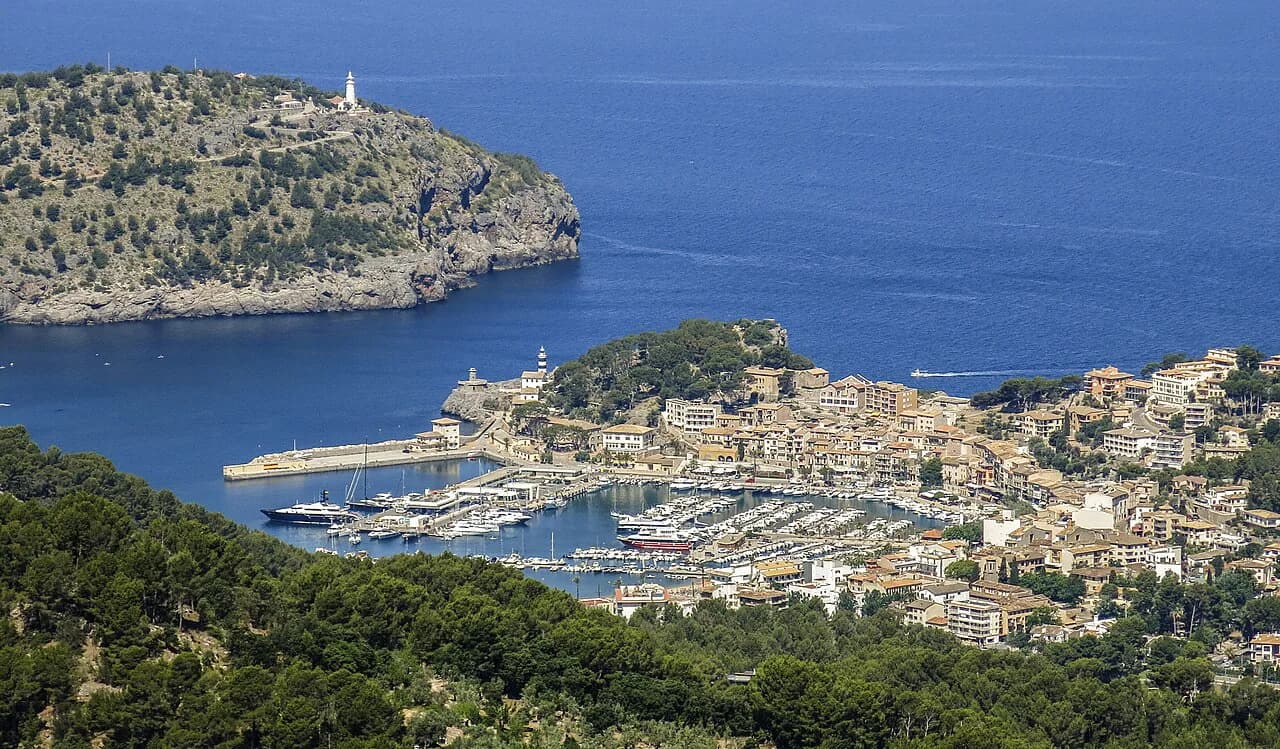
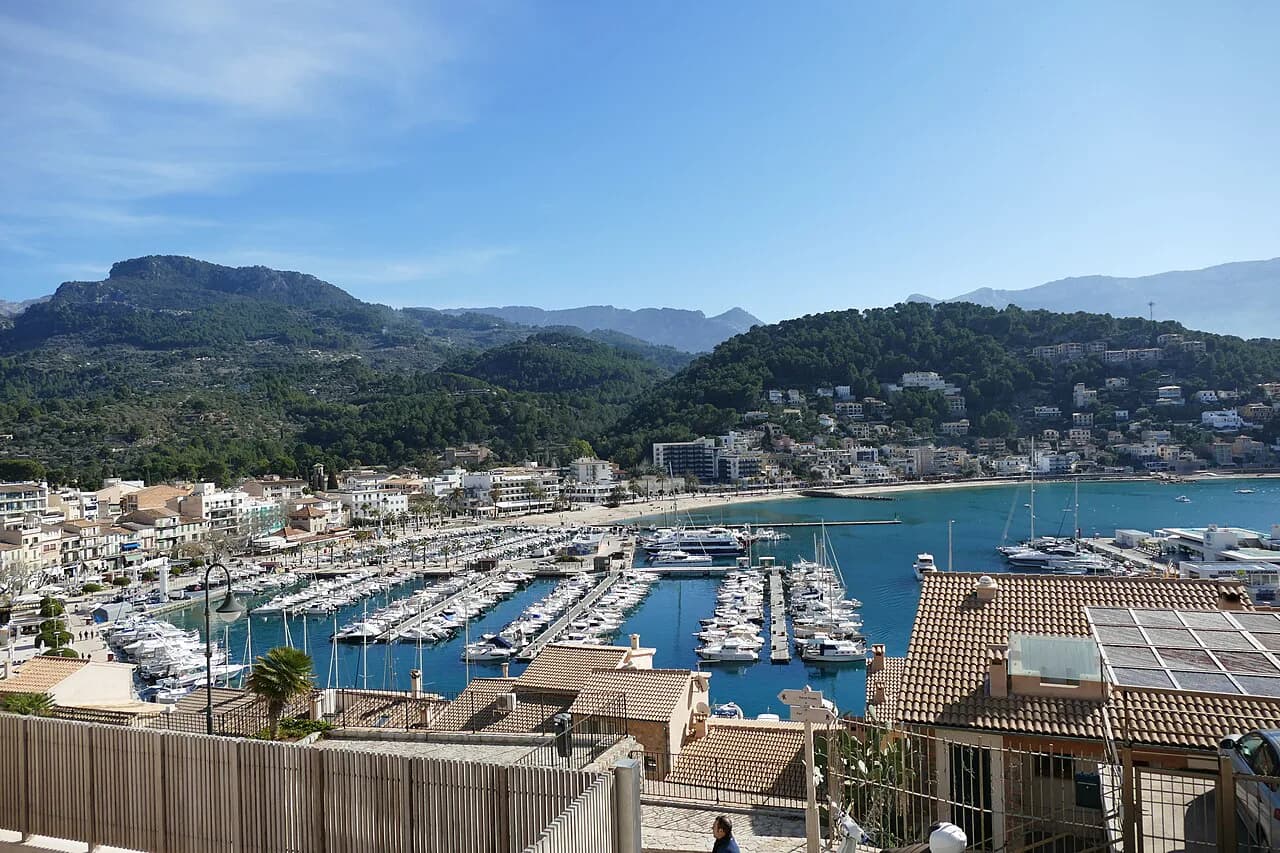
Below the village, at the end of a steep road, lies Port de Valldemossa, a small cove on the coast. It is a place to note rather than a required stop on a half-day, since the detour costs time and the village itself fills the morning. If your day is built around the sea instead, the Sóller Boat Trips from Port de Sóller are a more practical use of a coastal afternoon.
Which order to walk Valldemossa
Walk it in one direction: Via de Blanquerna, Plaça Ramon Llull, the Cartuja, Carrer Jovellanos to the mirador, Carrer Uetam down to Sant Bartomeu, Carrer Rectoria for the birthplace, then Carrer de l'Amargura, Carrer de na Búger and Carrer de ses Filoses, which brings you back to the church. That order keeps you moving downhill through the lanes instead of zig-zagging back up the hill.
Book your Cartuja slot around the middle of that loop, arrive early enough to park outside the centre without stress, and leave the last hour for the lanes, which are the part of Valldemossa most visitors underrate. If the rest of your break centres on Sóller, the Sóller Attractions: 5 Visitor Guides hub shows how the neighbouring sights fit together.
Frequently Asked Questions
Is Valldemossa worth visiting?
Yes, if you want the Tramuntana village experience rather than another coastal stop. The Cartuja, with its Chopin and George Sand connection and its blue-tiled church tower, is the main sight, and the Miranda des Lledoners viewpoint gives the best outlook over the village and the church of Sant Bartomeu. Two to three hours on foot covers the centre comfortably.
What is the prettiest part of Valldemossa?
The lanes themselves are the highlight, particularly Carrer de l'Amargura and Carrer de na Búger, which are quiet, pedestrian and full of stone detail. The Miranda des Lledoners viewpoint gives the finest single view, looking across the roofs to Sant Bartomeu and the surrounding fields.
Do I need to book the Cartuja in advance?
The day's opening hours, closing days and ticket prices are best confirmed at the entrance or on the monastery's own published information before you go. Visitor access can be affected by religious use of the church, so confirm before building your morning around it.
Sources
Notes for your next Spanish town break
Optional updates to our guides.
You might also like
Continue reading
More guides you'll find useful