Cádiz, Spain: Old Town Quarters, Cathedral and City Walls
Plan a short break in Cádiz, Spain: the El Pópulo, La Viña and Santa María quarters, the cathedral, Torre Tavira, the sea walls and La Caleta's two castles.
On this page
Cádiz needs a full day for the historic core and two if you want the museums and the waterfront without rushing. Founded around three thousand years ago by the Phoenicians, it is described as the oldest city in the West, and the old town sits on a narrow Atlantic peninsula where everything worth seeing is walkable.
This guide works through the peninsula quarter by quarter: El Pópulo behind the town hall, the cathedral facing the Campo del Sur, the watchtower rooftops, La Viña and Santa María, and the walls and castles at La Caleta. It also sets out where to start, what to drop when time is short, and which Cádiz-province towns are worth adding.
Where Cádiz sits, and why you enter through Puerta Tierra
Cádiz occupies a peninsula on the Atlantic Costa de la Luz, the stretch of coast shared by the provinces of Huelva and Cádiz. Puerta Tierra is the historic landward entrance and the dividing line between the modern city of wide avenues and sports facilities and the older town of narrow streets behind the walls.
The gate itself was rebuilt and adapted in the early twentieth century, and its interior holds exhibitions, with a walkway on the upper level. On a single day in the city it is the first thing to drop: it sits at the edge of the old town and eats time you would rather spend inside the walls.
Treat Puerta Tierra as orientation rather than a sight. Cross it, note the two marble columns representing the city's patron saints, San Servando and San Germán, and keep walking towards the harbour.
How the old town is laid out
Inside the walls the city breaks into distinct quarters. El Pópulo, behind the town hall, was walled in the medieval era and is one of the oldest quarters in Europe; La Viña is the fishing quarter; Santa María is the flamenco quarter; and around them run the commercial streets and squares of the centre.
The old town's appeal is less any single monument than the consistency of its streets: different personalities, from the medieval core to the fishermen's quarter, held together by a unified style of housing. Walk it as a loop rather than darting between addresses.
If you want a deeper dive into the medieval core before setting off, the Cádiz old town guide covers the lanes and squares in more detail. For planning purposes, remember the three quarters sit within a compact peninsula: you can cross the whole historic centre on foot in the course of a day.
Start at Plaza de San Juan de Dios
Begin at Plaza de San Juan de Dios, which has served as royal square, parade ground and market, partly on land reclaimed from the sea. Facing the nearby harbour stands the neoclassical Ayuntamiento, the city hall, with the tourist office close by.
The square is also the practical place to fix your bearings: the statue of the nineteenth-century politician Moret stands here, and Calle Plocia leads off it as one of the busiest streets in the area. Pick up a map at the tourist office before heading into the lanes behind the town hall.
El Pópulo: the medieval core
Behind the Ayuntamiento lies El Pópulo, the walled medieval nucleus. Its main sight is the Roman theatre from the first century BC, which is free to visit, and nearby stands the Iglesia de Santa Cruz, the city's old cathedral.
The Roman theatre sits close to the cathedral quarter, so the two fit naturally into the same stretch of walking. Allow time to look at the excavated remains rather than passing through, since much of the structure still lies beneath the modern city.
The Barrio del Pópulo repays slow wandering: paved lanes, whitewashed houses and small squares rather than grand set pieces. It is the best introduction to how the old town is put together before you reach the larger monuments.
The Catedral de Cádiz and the Campo del Sur
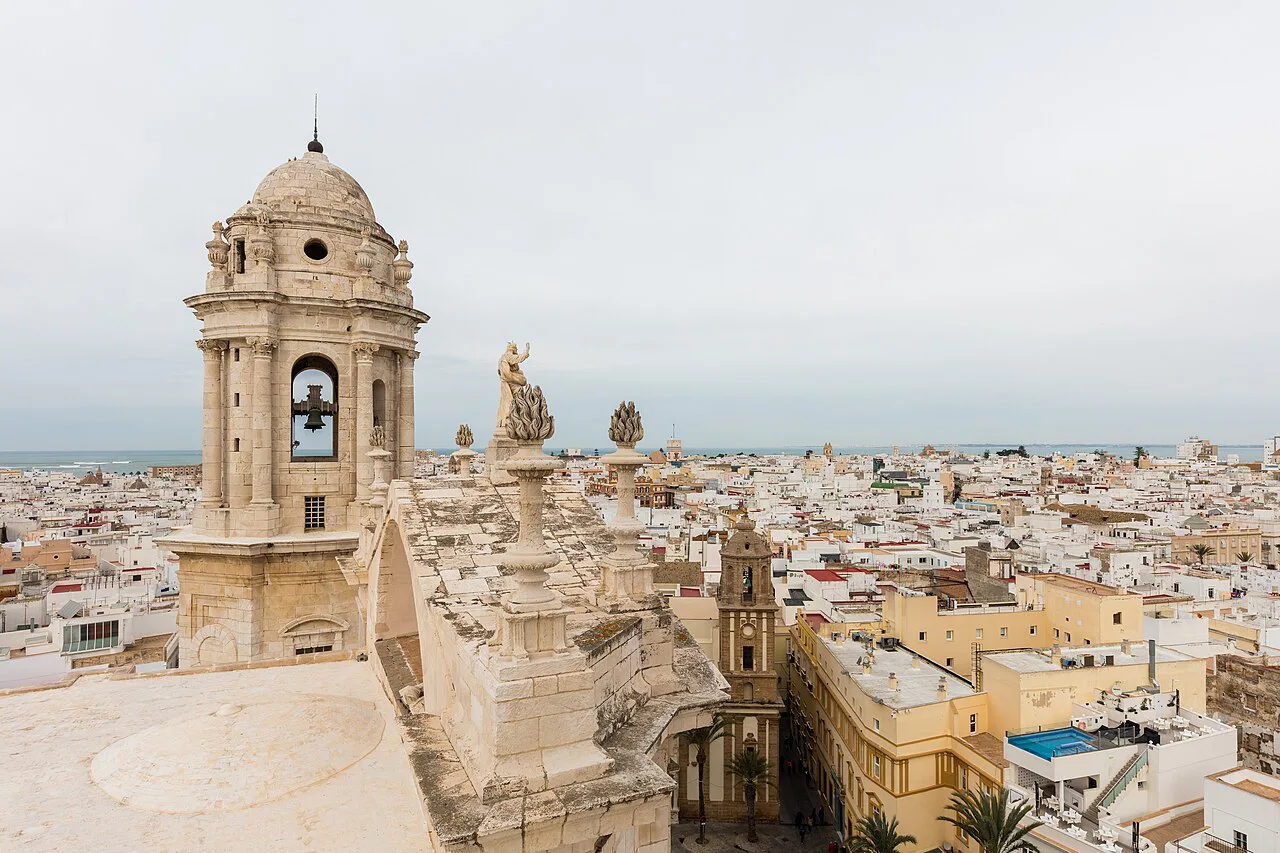
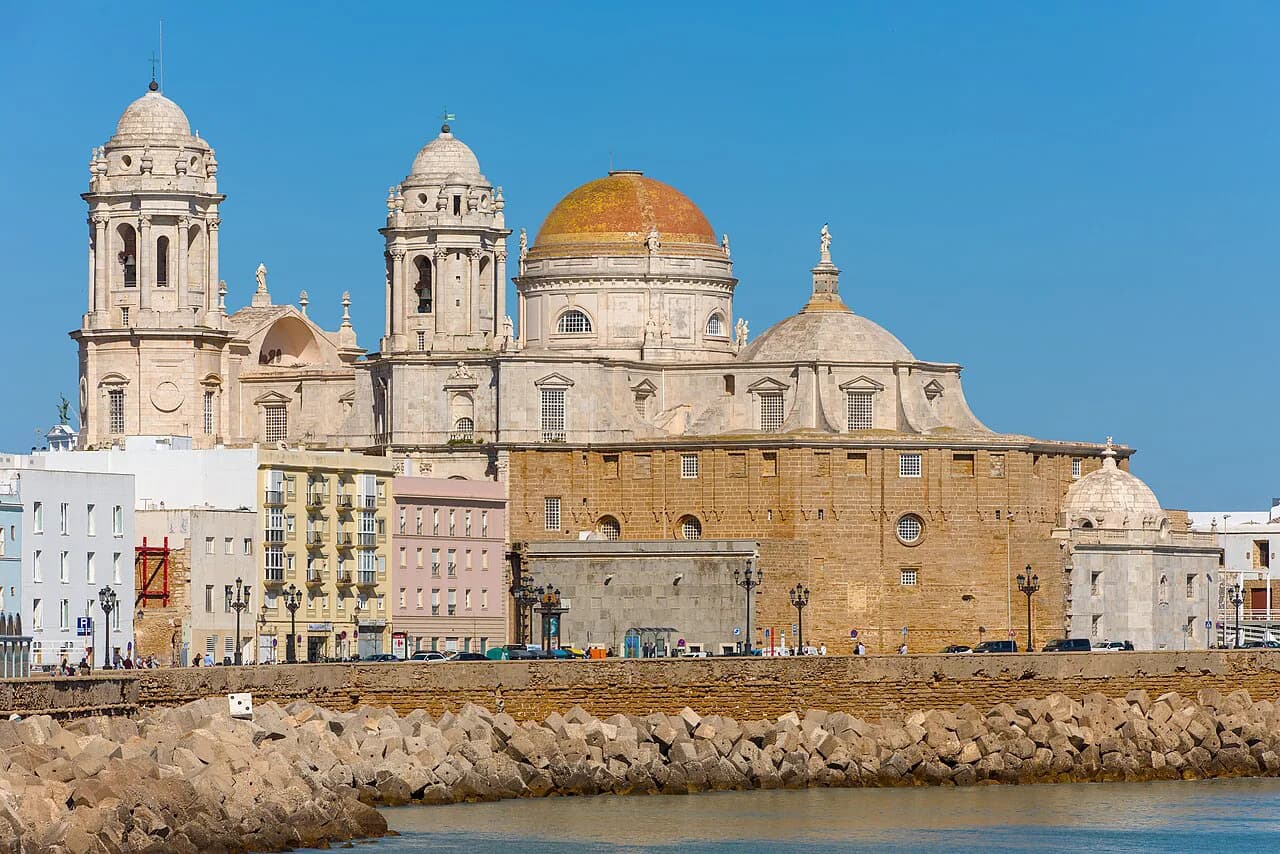
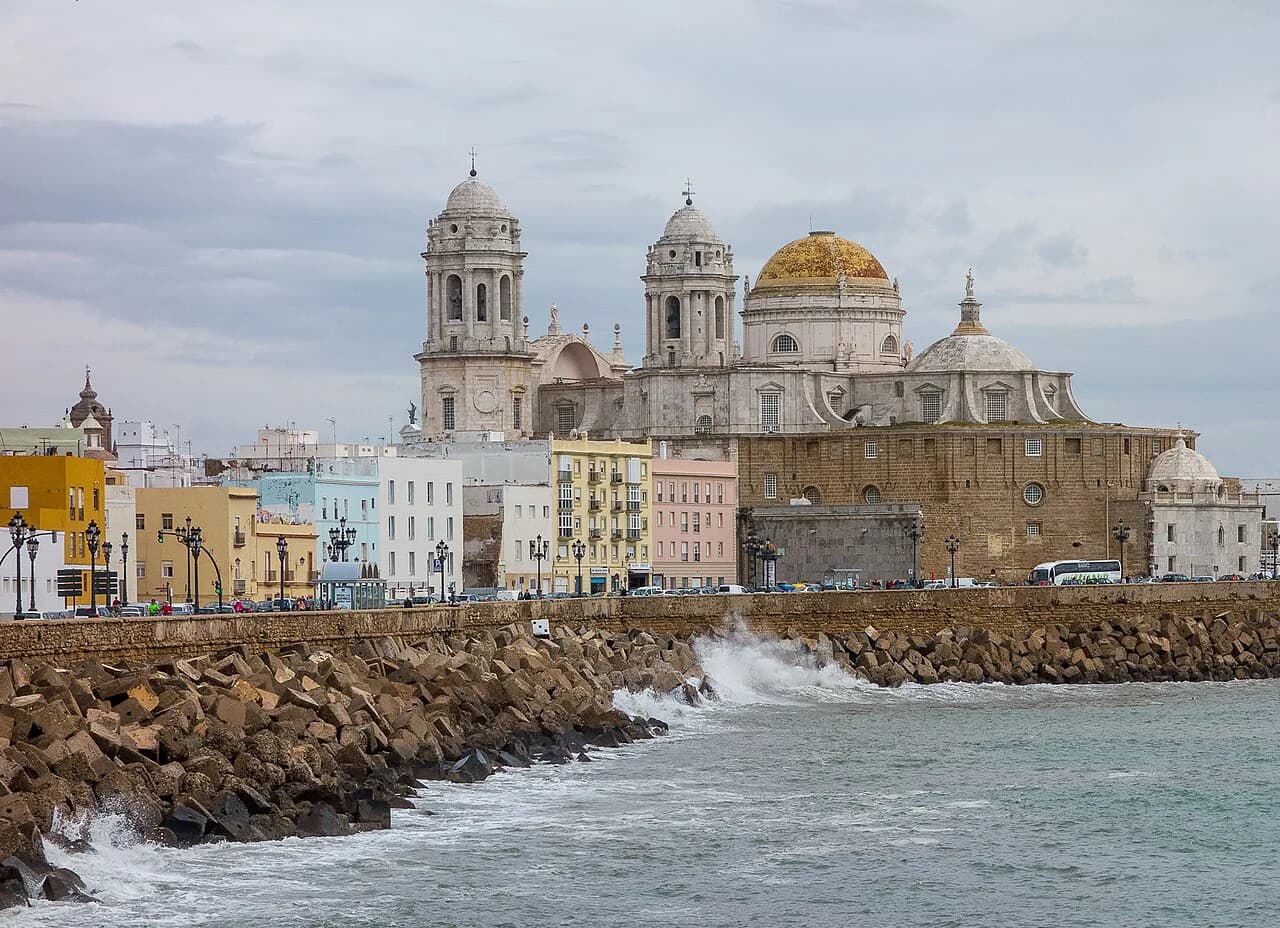
The cathedral is the city's landmark, Baroque and neoclassical in style, with a yellow-tiled dome that faces the Campo del Sur on the Atlantic side. Its crypt holds the remains of the composer Manuel de Falla, and the old cathedral and the Roman theatre stand beside it.
The cathedral's tiled dome dominates the skyline, and the Torre del Poniente offers panoramic views; some travel writing also uses the nickname 'Santa Cueva'. The Cádiz Cathedral guide covers the visit and how it fits into a day in the old town.
Walk the Campo del Sur afterwards, along the seaward flank of the old town. Its long Atlantic exposure makes it the breeziest stretch of the peninsula and a natural pause between the cathedral and the watchtowers.
Torre Tavira and the watchtower rooftops
Cádiz's rooftops are lined with watchtowers because the city's seventeenth-century monopoly of overseas trade brought pirate attacks, prompting fortifications, castles and lookouts, with towers on many rooftops. Torre Tavira is one of the most emblematic towers.
Climb Torre Tavira for the view over the old town, which makes it a useful orientation exercise as well as a viewpoint. Go early in your visit rather than at the end, while the street pattern is still unfamiliar.
Once you have seen the city from above, the scattered towers stop looking like decoration and start reading as a trading city's defence system. That context makes the rest of the old-town walk more legible, particularly the walls and castles further west.
Plaza de las Flores and the Mercado Central
Plaza de las Flores is the hinge of the commercial centre, with the Mercado Central beside it and the city's main shopping streets radiating out from the square. It is the busiest crossing point of the old town rather than a sight in itself, and useful for orienting yourself between the cathedral quarter and the central squares.
Pass through rather than linger, and use the square as a reference point when doubling back through the lanes. The market building is a landmark for navigation even if you are not shopping.
Plaza de Mina and the Museo de Cádiz
The tree-lined Plaza de Mina holds the Museo de Cádiz, the city's archaeological and fine arts museum, with Phoenician pieces among the collections. It is the single museum stop worth protecting in a short break, since it explains the city's origins in one visit.
The same square holds the Iglesia de San Francisco. Slot the museum between the cathedral and the waterfront rather than leaving it to the end of the day, when tiredness tends to make it the first casualty of the schedule.
Plaza de España and the 1812 Constitution
By the south harbour, the Plaza de España holds the palace of the Diputación Provincial and the Monumento a las Cortes Liberales, commemorating the 1812 Constitution. The square pairs civic architecture with a reminder that Cádiz briefly became the political centre of Spain.
The setting is open and exposed, so it works better as a crossing point on the way to the waterfront than as a long stop. Read the monument, look back at the Diputación facade and keep moving west.
The waterfront walk: Alameda Apodaca and Parque Genovés
From the Plaza de España area the walk continues along the Alameda Apodaca and through the Parque Genovés towards the Gran Teatro Falla. This stretch follows the city's Atlantic edge and delivers the long sea views that define Cádiz as much as any monument.
The park gives shade and a bench at the point where the walk turns, which matters in a city where much of the old town offers little cover. Use it to break the route rather than pushing straight on to La Caleta.
La Caleta and the two castles
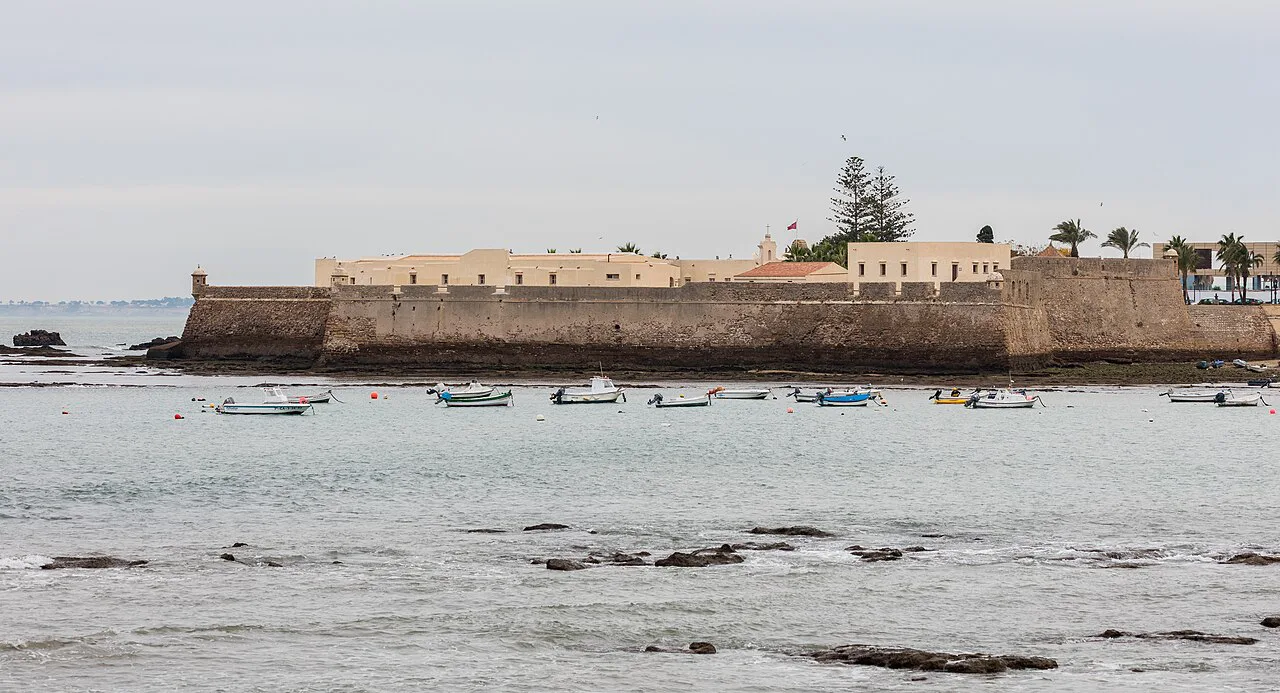
La Caleta is flanked by two castles, Santa Catalina and San Sebastián, and is best reached for the change of light at the end of the day. Time your arrival so the return walk through the old town happens before dark if you are unfamiliar with the lanes.
La Caleta is a landmark for orientation rather than a beach recommendation, and the castles anchor the western end of the peninsula walk. Beyond them the city runs out and the route naturally turns back.
La Viña and Santa María: fishing and flamenco
La Viña is the fishing quarter and the home of the city's ironic carnival songs, with the Plaza del Tío de la Tiza as its central axis. Santa María, around its church and the Convento de Santo Domingo, is the flamenco quarter, and the parish church of La Palma sits between the two.
These are working quarters rather than museum streets, and they give the old town its everyday texture after the monuments. Walk them without a checklist and let the church towers do the navigating.
How long Cádiz needs
A day covers the cathedral, Torre Tavira, El Pópulo, the Roman theatre and the waterfront walk at a reasonable pace. Add a second day for the Museo de Cádiz and for the quarters of La Viña and Santa María without rushing, and consider dropping Puerta Tierra entirely on a one-day visit.
The route described here can be done on foot, and it can be shortened at will if time runs short. Aim to be at La Caleta for the end of the afternoon rather than planning a fixed schedule around the monuments.
Cádiz in the heat and wind
Cádiz is an Atlantic city, so the seafront is breezy while the lanes behind the walls trap heat at midday. Plan the cathedral, museum and Torre Tavira for the middle of the day, when shade and interiors are welcome, and keep the Campo del Sur and the Alameda for the cooler ends.
Build the day around two outdoor stretches rather than one long walk, and use the museum or the tower as the break between them when the midday heat arrives.
Towns nearby in Cádiz province
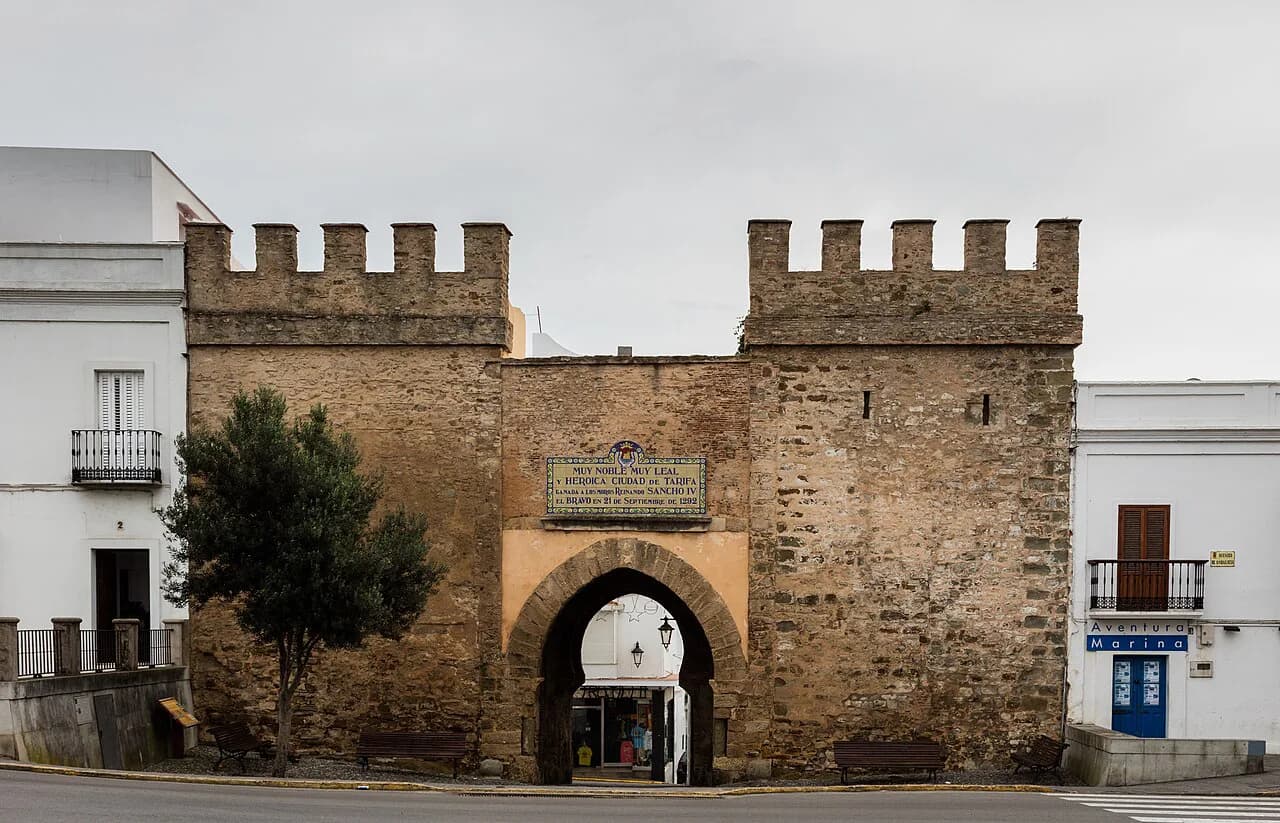
Cádiz works as a base for the white towns and the windsurfing coast further south. Vejer de la Frontera, with its hilltop Plaza de España, and Tarifa, where things to do in Tarifa cluster around the Puerta de Jerez and Calle Sancho IV el Bravo, are the obvious add-ons for a longer trip.
Treat these as separate outings with their own transport arrangements rather than as a day-trip circuit bolted onto Cádiz itself. If you are weighing other Spanish port cities for a later trip, the A Coruña and Alicante attraction guides follow the same quarter-by-quarter approach, and the Alicante attractions guide shows how to plan a castle, cloister and museums in a single day. For a comparable old-town quarter to Cádiz's El Pópulo, see our Alicante guide on the Barrio de Santa Cruz.
Which Cádiz walk to do first
Start at Plaza de San Juan de Dios, take in Torre Tavira early, then work west through the cathedral and the Campo del Sur to La Caleta. If you only have one day, cut Puerta Tierra and the beaches outside the walls, and protect the Roman theatre, the cathedral and the rooftop view from the tower.
For a longer stay, add the Museo de Cádiz and a slow afternoon in La Viña and Santa María, then look south to Vejer and Tarifa. Cádiz rewards the quarter-by-quarter approach far more than a flat list of monuments.
Explore more Cádiz guides
Frequently Asked Questions
Which airport do you fly into for Cádiz?
Cádiz sits on the Atlantic Costa de la Luz in Andalusia, and the practical arrival is through the airports serving western Andalusia, with Málaga the common entry point for UK travellers heading into the region. From there the onward leg is by train or bus, so check current timetables for the route you intend to use before fixing your dates.
Is Cádiz an expensive city?
The main costs to budget for are monument entries, the cathedral and Torre Tavira in particular, plus the Roman theatre, which is described as free to visit. Cádiz is a compact city where the old town is walkable, so transport costs inside the centre are minimal. Check each monument's own ticket page for current prices and any free slots before you travel.
Is Cádiz worth visiting?
Yes, if you want a historic Atlantic port city rather than a resort. Cádiz claims around three thousand years of history, with a medieval core at El Pópulo, a Baroque and neoclassical cathedral, watchtowers built on overseas trade, and two castles at La Caleta. A day covers the essentials, and two let you add the Museo de Cádiz and the flamenco quarter of Santa María.
Sources
Notes for your next Spanish town break
Optional updates to our guides.
You might also like
Continue reading
More guides you'll find useful