Alicante Old Town: What to See in the Barrio de Santa Cruz
Alicante's old town climbs the hillside below Santa Bárbara castle. Here are the streets, viewpoints and monuments to see, and how to route them on foot.
On this page
Alicante's old town is worth visiting, and it takes about half a day to walk properly. The quarter is called the Barrio de Santa Cruz, or Barri Vell Santa Creu in Valencian, and it climbs the hillside directly beneath the Castillo de Santa Bárbara, so expect stairs rather than a flat grid of streets. This guide sets out what is in the quarter, how the parts connect on foot, and where the climb pays off.
The plan is simple: enter near Porta Ferrisa, loop through the stepped lanes of Santa Cruz, look into the Basílica de Santa María and the contemporary art museum, then take the Parque de la Ereta path uphill for the view. Each part is short; together they fill a morning or an afternoon without rushing. Individual sights have their own visitor pages, so this page concentrates on routing.
What the Barrio de Santa Cruz is and where it sits
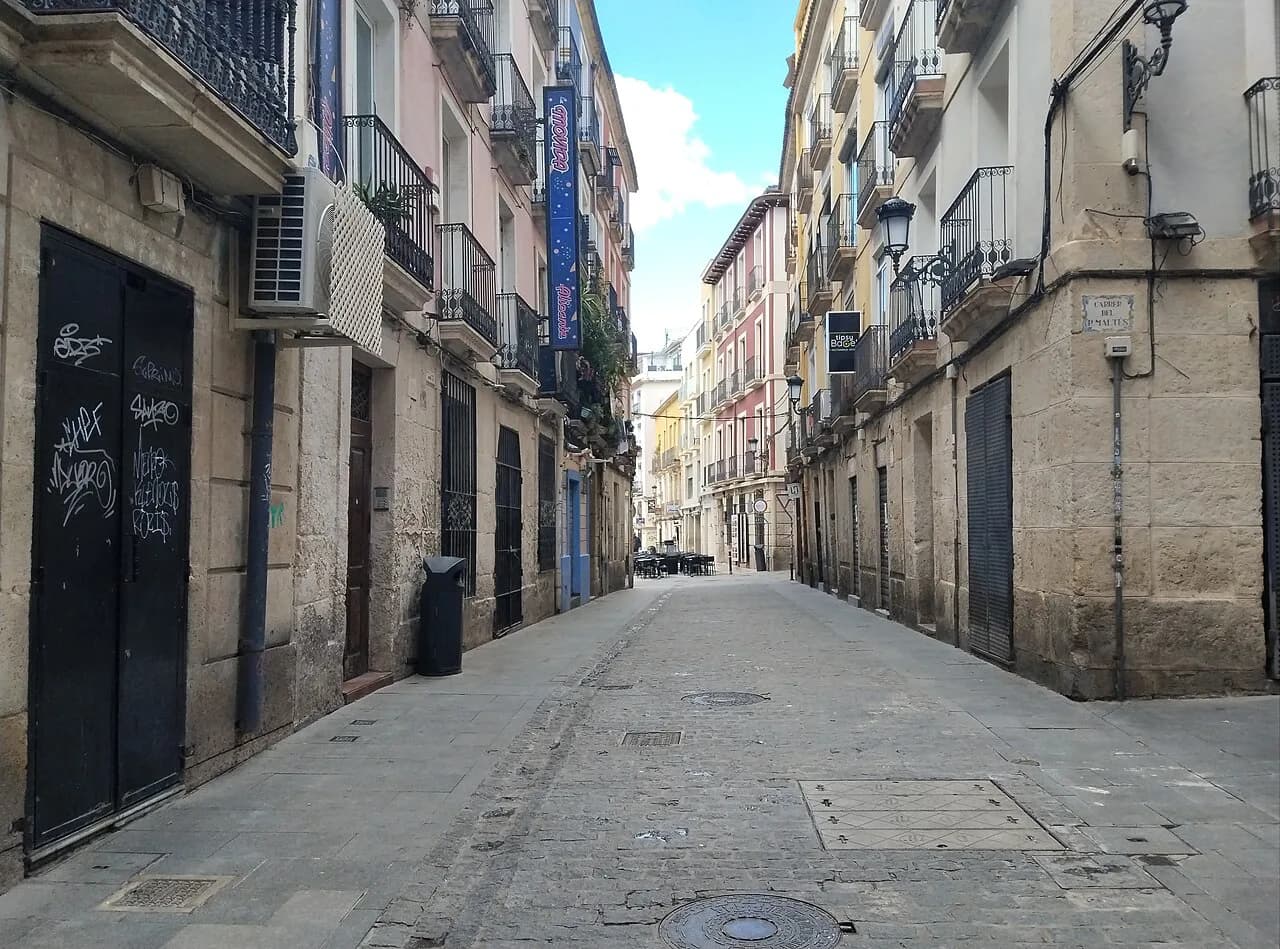
Santa Cruz is the historic heart of Alicante, a neighbourhood stacked on the slope below the castle. Its narrow, winding lanes show a Moorish influence in their layout, and the houses are small, whitewashed and hung with flowers, painted tiles and iron balconies. This is residential Alicante as much as tourist Alicante: washing still hangs between windows and neighbours greet each other across alleys barely wide enough for two people.
The quarter sits at the top of the city centre, a short walk inland from the seafront, so you can combine it with a morning in the modern town without any transport. Because it is built into a hill, the streets work vertically: you are always either climbing or descending, and the lanes curl back on themselves often enough that a rough sense of uphill and downhill matters more than a street-by-street route. Allow for that when planning the rest of your day.
How the old town is laid out: stepped lanes and miradors
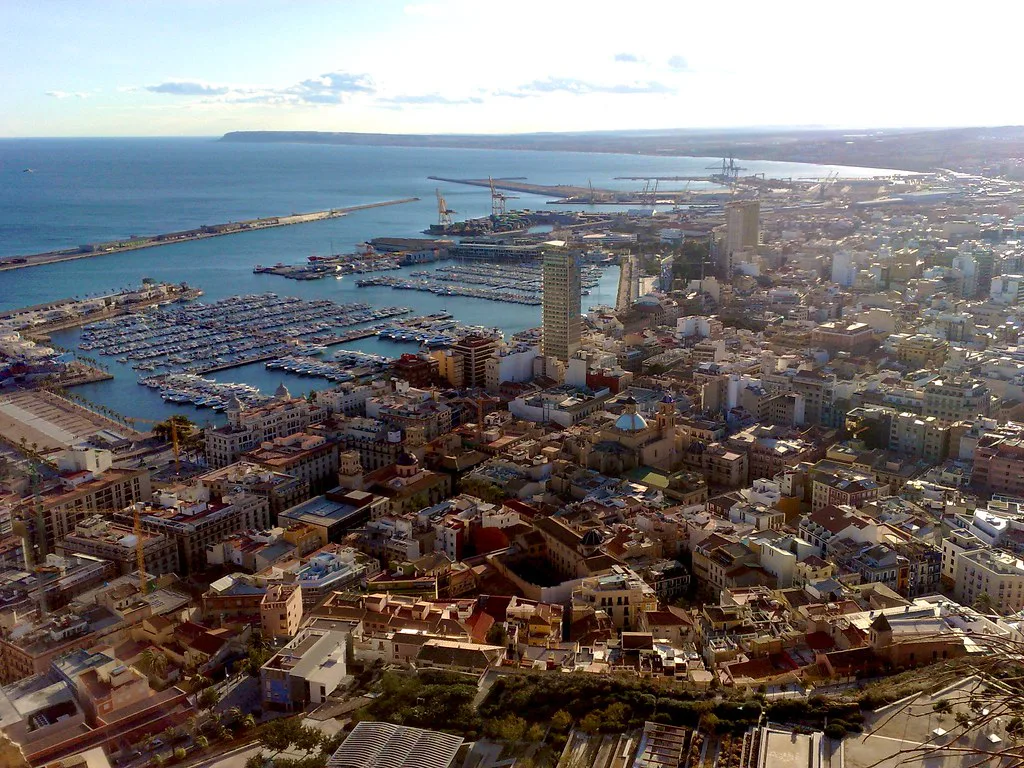
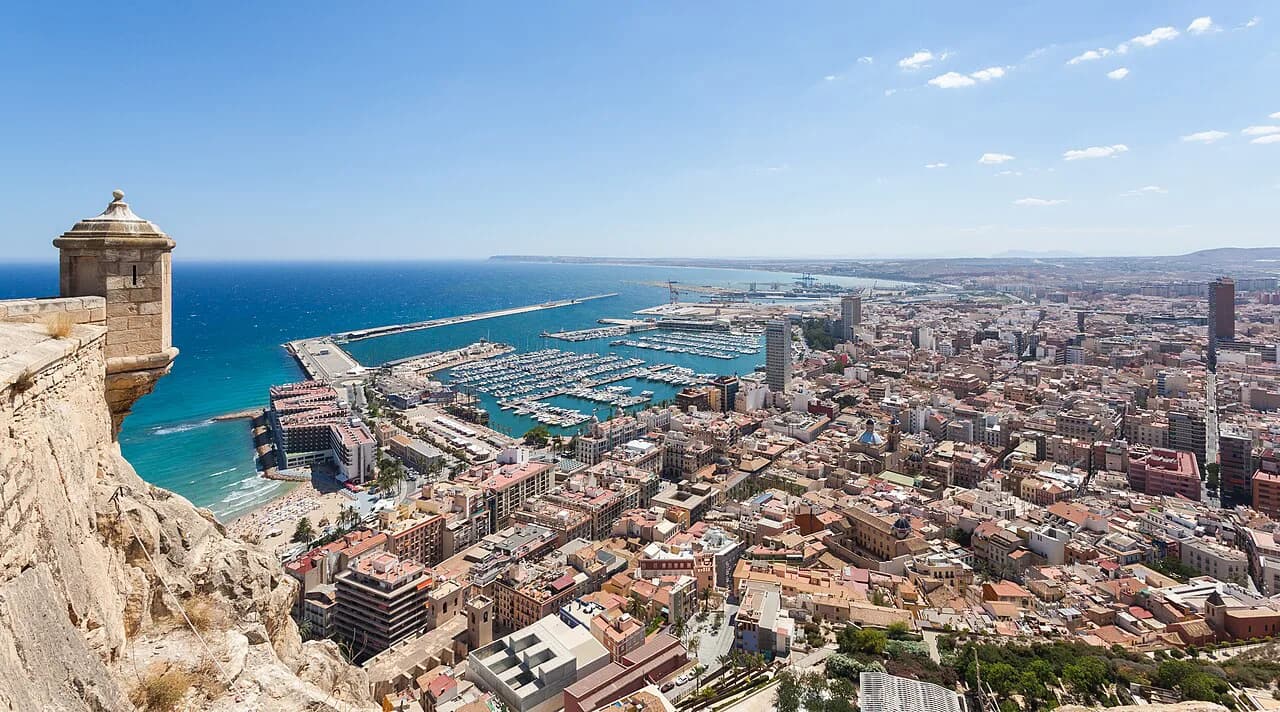
Think of the old town as a cascade rather than a plan. Instead of pavements and crossroads you get staircases between houses, tiny landings, and viewpoints, or miradors, appearing where the slope drops away. The reward for the climb is a spread of tiled rooftops with the Mediterranean beyond, and the higher lanes give the broadest panoramas.
Walk it without a fixed script and it works best: pick a staircase that climbs, follow it, and take whichever turn looks interesting. That is the character of the neighbourhood, a place to wander rather than tick off, and the lanes are short enough that a wrong turn costs you a minute. The one rule is to keep heading up until you reach the castle park level, then descend by a different stair.
Basílica de Santa María: the anchor of the quarter
The Basílica de Santa María is the monument that gives the quarter its shape. It began as a mosque and was later rebuilt as a church, and its towers still carry that layered past. Standing on the Plaza de Santa María, with the castle silhouette above and bells ringing across the rooftops, is the defining image of old Alicante.
Treat the basilica as a working church first. It holds services, and access for visitors is limited while mass is under way, so build your loop so the church is a stop rather than a fixed appointment. Other religious buildings in the city each keep their own visiting arrangements, and the churches of Alicante guide gathers them if churches are a theme of your trip.
Porta Ferrisa: the old line between two cities
Porta Ferrisa marks the historic boundary between the Arab and Christian city. The line is traced on the ground, a quiet detail that most passers-by miss, and it sits roughly a hundred metres from the surrounding hotels and museum cluster. Look down rather than up when you cross it: the marker is in the pavement, not on a wall.
It makes a sensible place to start or end a walk, because it sits at the edge of the quarter where the old town meets the commercial centre. Arriving from the seafront, you pass through the modern streets first and then step into the lanes, which gives the climb a natural beginning. From there, head uphill and let the staircases take you towards the basilica.
MACA and the museums inside the quarter
The Museo de Arte Contemporáneo de Alicante, known as MACA, sits within a hundred metres of the basilica, alongside the Museo de Gravina, which is devoted to painting, and the Museo del Agua at the entrance to the Parque de la Ereta. That concentration means you can add one museum to a walking loop without crossing town.
Decide before you go how many interiors you want. Two museums plus the basilica is a full old-town day; one museum plus the lanes and the castle park is a comfortable half day. The wider city scene is set out in Museums in Alicante, so use that to choose rather than trying to fit everything into the same afternoon.
Parque de la Ereta and the path up to the castle
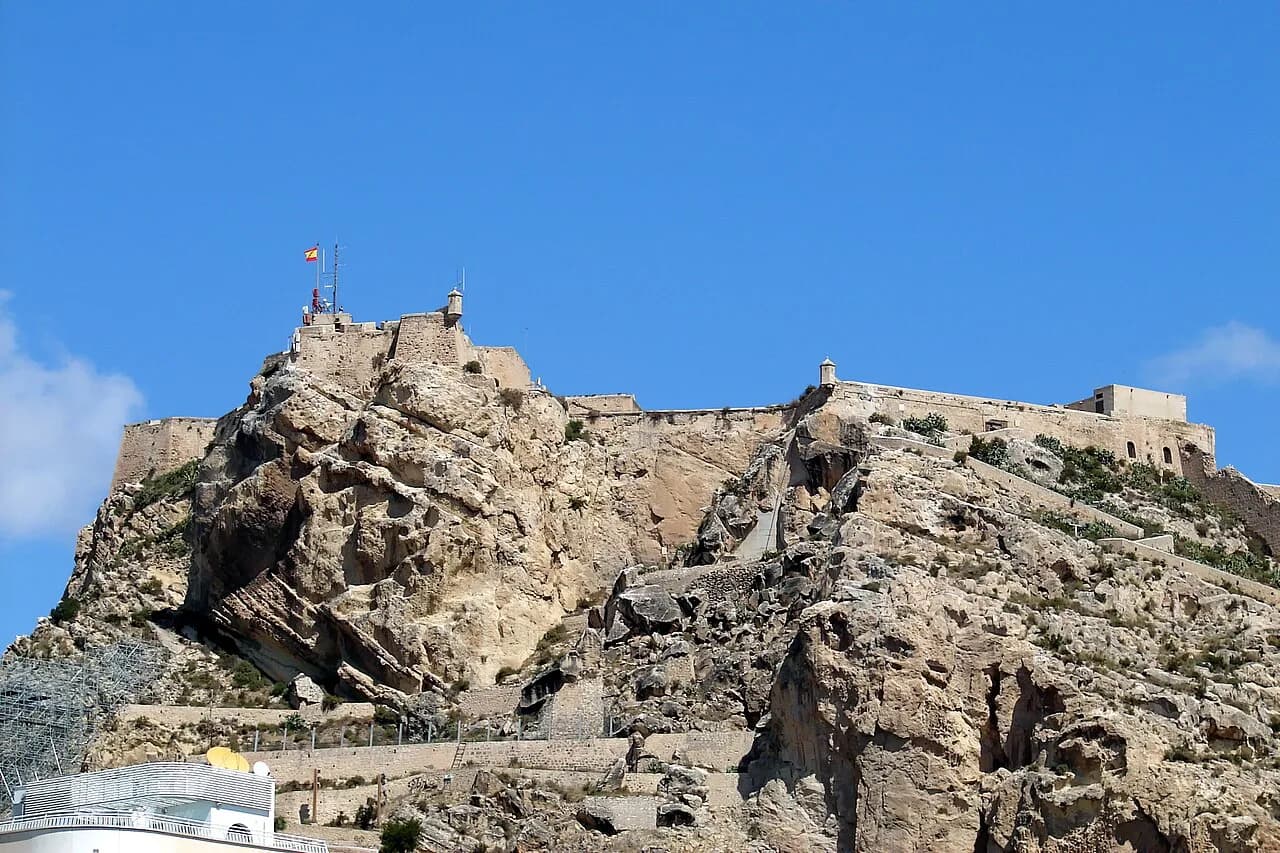
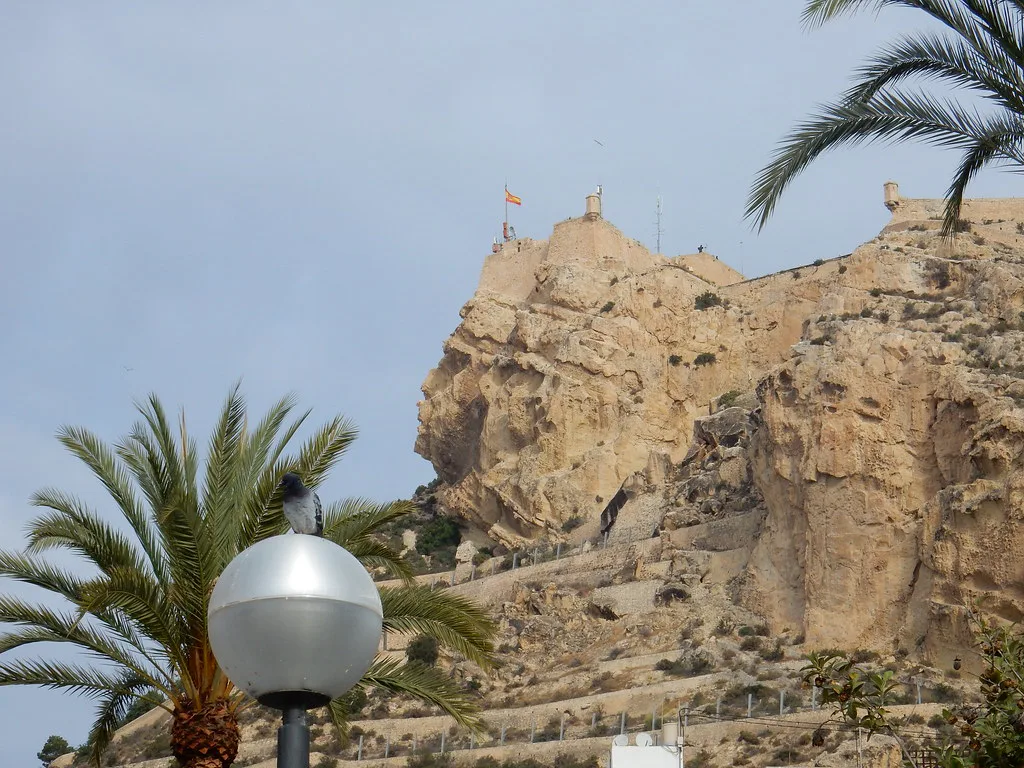
The Parque de la Ereta provides the walking route from the old town up towards the Castillo de Santa Bárbara. The climb is steep, and the park's terraces and corners give you places to pause and look back over the city and the sea. Take it slowly: the path is the point, not an obstacle between you and the top.
The castle itself deserves its own visit rather than a hurried look on the way past. Its approaches, lifts and viewpoints are set out on the dedicated pages, so treat the park path as the scenic approach and the fortress as a separate stop.
The viewpoints: where the climb pays off
The miradors scattered through the upper lanes are the reason to keep going. From them you look over the rooftops of Alicante with the Mediterranean shining behind, and the higher you climb the wider the spread. The best are not signposted as a single attraction; they are simply the places where the lanes open out, so keep an eye for gaps between houses.
Photographers should time the loop for the late afternoon, when low light catches the whitewashed facades and the sea behind the roofs. The lanes themselves become the picture, with bougainvillea spilling over balconies and hand-painted tiles on the walls. Carry water: there is little shade on the staircases at the height of the day.
What the old town is like to walk
This is not a quarter for rushing. The lanes are narrow and stepped, the passages are tight, and the climb is constant, so sturdy shoes matter more than a tidy outfit. Walk it in short bursts, stop at a viewpoint or a bench in the park, and let the neighbourhood set the pace; the point is the texture of the place, not distance covered.
Because it is a lived-in neighbourhood, keep the noise down and give way on the stairs. Locals still dry washing between the windows and leave doors open, and the atmosphere depends on that continuing. A walk that respects the lanes is a better walk than one that treats them as a stage.
Santa Cruz in May: the flower displays
In May, during the local fiestas, residents dress the streets with elaborate floral compositions, filling the neighbourhood with symbols of devotion and community creativity. The tradition has been passed down through generations, and it turns the lanes into something closer to an open-air installation for a few days. If flowers are your reason for coming, time the visit to that period rather than a random spring week.
Expect the quarter to be busier during those days, and plan your loop for early morning if you want the lanes to yourself. Outside May, the flower displays are not there, but the balconies and hanging pots still give the streets their colour. Either way, the neighbourhood is the attraction, not a single date.
How long the old town needs and how to fit it into a short break
Budget half a day for the quarter: a slow loop through the lanes, a stop at the basilica, one museum and the climb towards the castle park. If you add a second museum and linger at the viewpoints, it becomes a full day. The quarter is compact, so the length of your visit depends on how often you stop, not on distance.
On a short break, slot the old town into the morning or the late afternoon and keep the middle of the day for something indoors. That is also the pattern that best suits the summer heat. A wider plan for the city, including how the old town sits with the castle and the seafront, is set out in the guide to things to do in Alicante.
Practical trade-offs: heat, services and crowds
In summer, the climb is punishing at midday: the whitewashed walls throw back the sun and the staircases offer little shade. Walk early or late and treat the middle hours as museum time. The same advice applies to the wider region's inland towns, but in Alicante the sea breeze helps only once you are high enough to feel it.
Churches close to tourists around services, and the basilica is no exception, so build flexibility into the loop. The lanes also get crowded as the day goes on, especially in the flower season, and the narrowest passages become one-way in practice. Go early, take the climb slowly, and the old town gives you its best.
Which part of the old town should you start with?
Start at Porta Ferrisa, walk up through the stepped lanes of Santa Cruz, stop at the Basílica de Santa María and pick one museum, then finish with the Parque de la Ereta climb for the view. That order keeps the climbing gradual and leaves the castle for a separate visit.
If you have only an hour, cut the museum and do the lanes plus one mirador; if you have a morning, add MACA and the basilica. Either way, wear shoes that handle stairs, carry water, and let the neighbourhood set the pace.
Explore more Alicante guides
Frequently Asked Questions
How far is Alicante old town from the beach?
The old town sits directly inland from the seafront in the city centre, so it is a short walk from the beach and promenade rather than a trip out of town. Because it climbs the hillside below the castle, the walk in is flat but the lanes themselves are stepped.
What is the old town of Alicante called?
It is called the Barrio de Santa Cruz, or Barri Vell Santa Creu in Valencian. It is the historic heart of the city, stacked on the slope beneath the Castillo de Santa Bárbara.
Do you need a ticket for the old town?
The lanes and viewpoints are public streets, so walking the quarter costs nothing. Individual monuments and museums, including the Basílica de Santa María and MACA, set their own entry arrangements, so check each one's own visitor page before you go.
Sources
Notes for your next Spanish town break
Optional updates to our guides.
You might also like

Continue reading
More guides you'll find useful