Alicante Gardens and Parks: Where to Find Shade and Views
Alicante's green spaces, from the palm-lined Explanada to El Palmeral and the terraced Parque de la Ereta below Santa Bárbara, and what each one is like.
On this page
For a short break, the two green spaces that repay the time are the Explanada de España along the seafront and the Parque de la Ereta on the slope below the Castillo de Santa Bárbara; everything else is a bonus. The Explanada costs nothing and sits on the natural route between the harbour and the old town, while La Ereta trades a climb for the best terraced views in the city centre. This guide sorts Alicante's gardens and parks by what they actually give you, then flags the ones that need a deliberate trip. For a wider shortlist alongside these, see Things to Do in Alicante.
The city's green spaces divide neatly. At sea level there are the palm-lined promenades and the central squares; above them, terraced gardens climb the hillside under the castle; and to the south, past the Avenida de Elche, sits a large palm park that is a taxi or bus ride rather than a stroll. Knowing which group suits your afternoon saves a lot of walking in the heat.
What Alicante's gardens and parks are actually like
Alicante is a compact, sea-facing city, and its greenery is spread thin across the centre rather than concentrated in one big park. The official tourism board groups its green spaces into emblematic squares and promenades, historic parks, and nature areas, and each has a distinct character. That means you plan around a route rather than around a single destination.
The official page treats the centre's green spaces as a mix: palms and fountains on the paved promenades and squares, terraced gardens and wooded slopes on the hillsides. For real shade at midday you want the terraced gardens under the castle or a palm grove, not an open square. Plan the squares and the Explanada for the morning or late afternoon, and save the hillside for the hottest hours.
The Explanada de España: palms, marble waves and the seafront walk
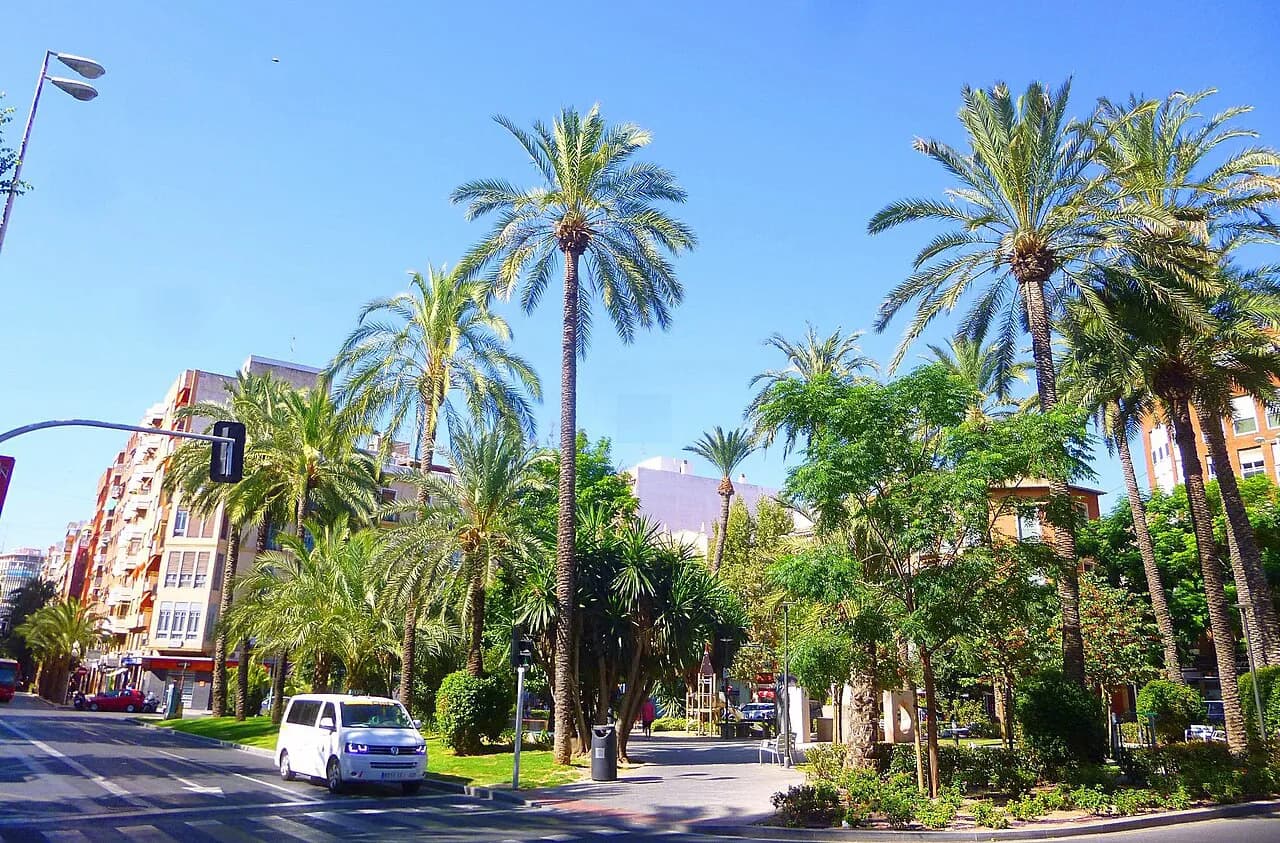
The Explanada de España is Alicante's most recognisable promenade, lined with tall palms and wooden chairs, its paving set with more than six million marble tiles arranged in a wave pattern that echoes the sea. It runs along the seafront and is free to walk, which makes it the easiest green space to fold into a day.
Treat it as a route rather than a stop. Walk it once in the morning when the light is low and the heat has not built, then use it again in the evening when the palms and the sea breeze make it the most pleasant stretch in the city. The wooden chairs are there to be sat in, and the parade of people is half the point.
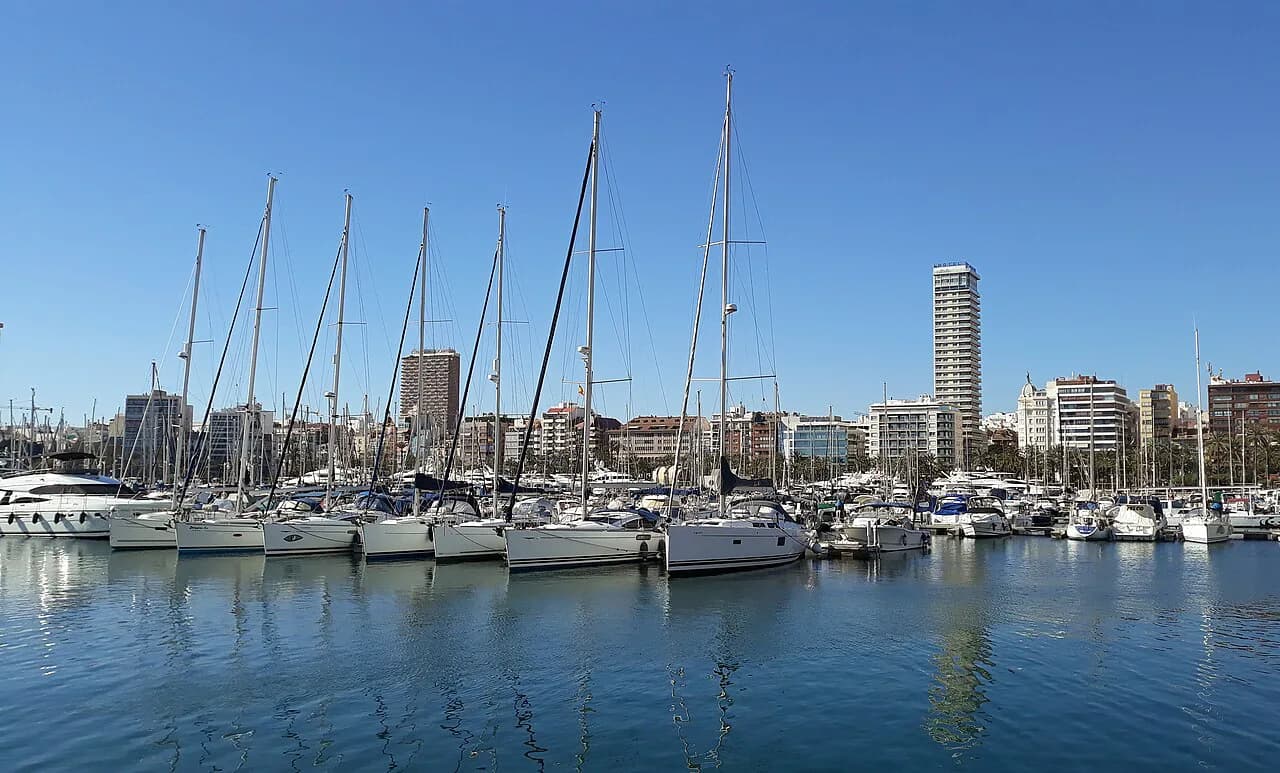
Parallel to the Explanada, the Paseo de los Mártires de la Libertad runs along the Francisco Tomás y Valiente quay with benches facing the marina, a quieter alternative when the promenade is busy. Further out on the Levante quay, the Paseo Volado is an elevated 350-metre walkway with canopies modelled on albatross wings and wide views back over the city and bay.
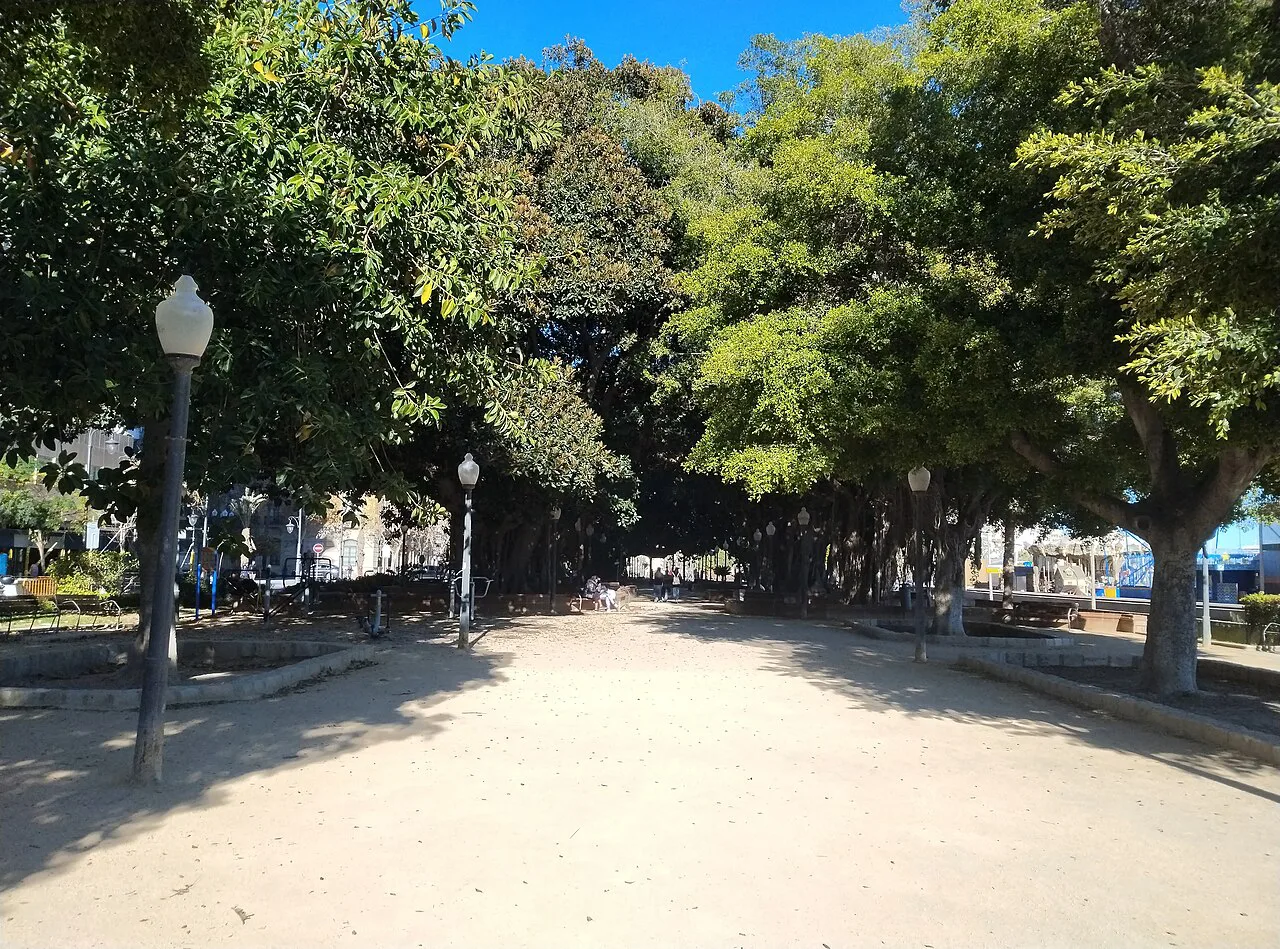
Parque de la Ereta: terraces and views under the Castillo de Santa Bárbara
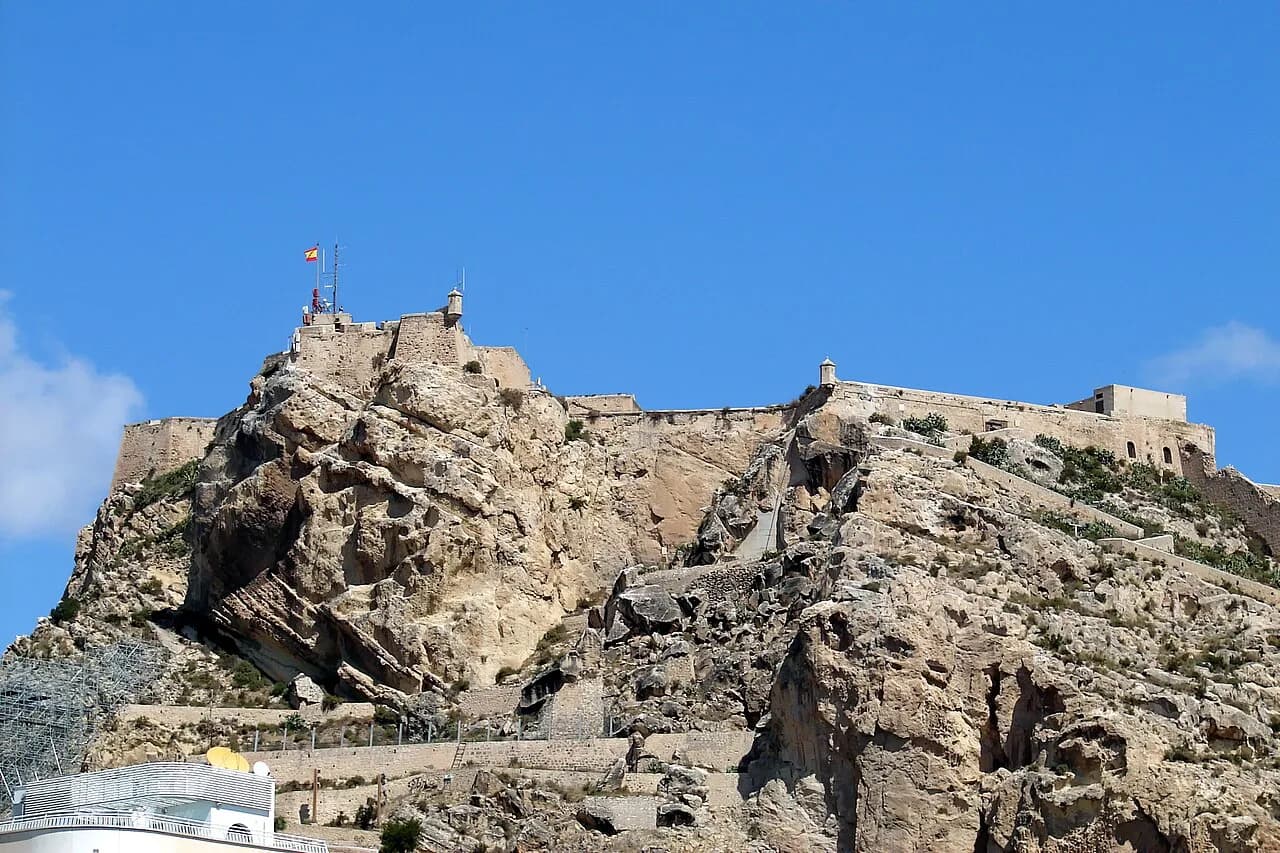
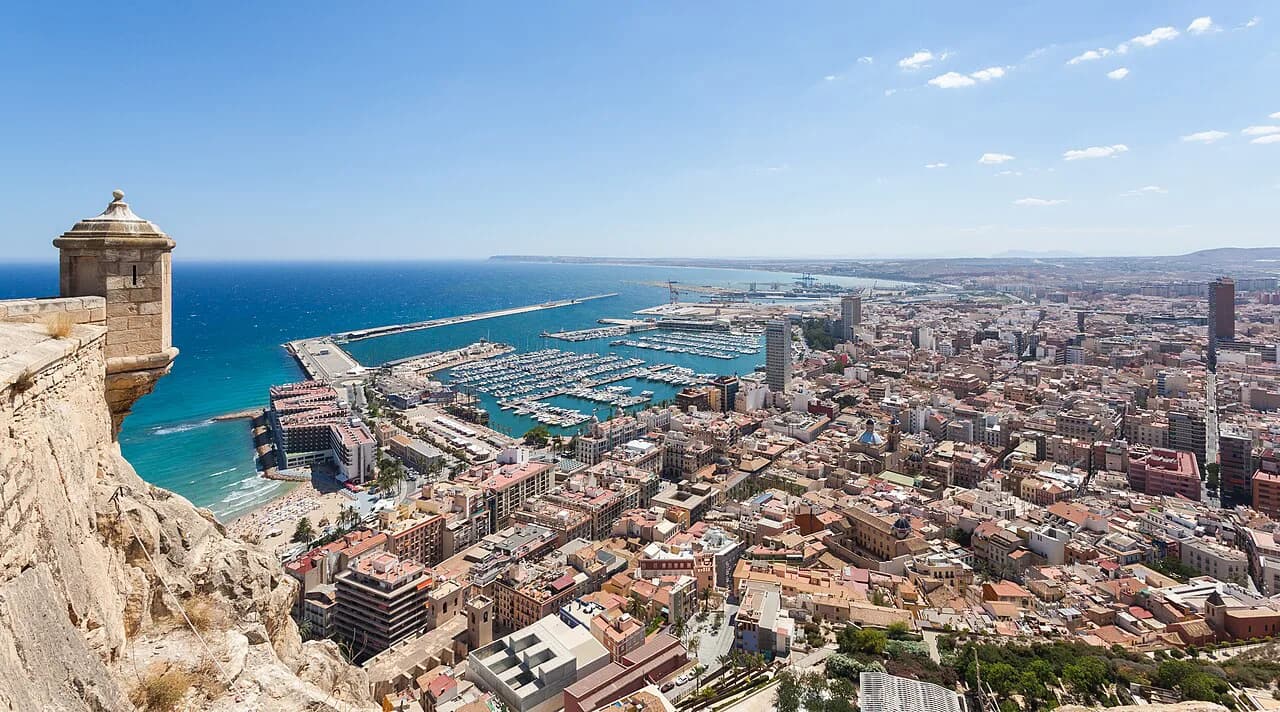
The Parque de la Ereta occupies the slope directly beneath the Castillo de Santa Bárbara, laid out in terraces and zigzagging paths that open onto views over the rooftops, the harbour and the Mediterranean. It is much smaller than the city's big palm park but makes up for it with position: nowhere else in the centre combines planting, the castle silhouette and a full panorama of the bay in so little space.
The trade-off is the climb. The paths gain height quickly, so this is not a flat stroll, and in summer you will want to do it early or late rather than at midday. The reward is that the terraces give real shade and a place to sit with a view, and the park connects naturally to the walk up to the castle itself.
Because the park sits at the edge of the old town, it slots into a morning that starts in the Barrio de Santa Cruz and finishes at the castle. Come down through the lanes afterwards rather than retracing the terraces, and you end up back near the centre without doubling the climb.
Parque El Palmeral: thousands of palms south of the centre
El Palmeral is the city's signature palm park, home to more than 7,000 palms including date palms that can reach 20 metres, spread over roughly 72,000 square metres and opened in 1997. It sits at the southern edge of Alicante beside the Avenida de Elche, close to the sea, and is built across several levels on sloping ground, with wooden bridges over an artificial lake, paths between beds and a small waterfall.
This is a deliberate trip rather than a walk from the old town, so budget for getting there and back rather than treating it as a detour. The compensation is space and quiet: its position away from the centre keeps it calmer than the seafront, and the facilities include boat hire, a BMX track, an outdoor gym, play areas and a cafeteria.
Go if you want a long, shaded wander under palms rather than a quick photo stop. Some of the installations would benefit from renewal, but the size and the layered layout give it a depth that a flat urban garden cannot match.
Parque de Canalejas and the small central squares
The Parque de Canalejas is one of Alicante's historic parks and keeps a classic air that sets it apart from the newer green spaces. It is a small stop rather than a destination, best used as a pause between the harbour and the old town.
The central squares do the same job in paved form. The Plaza del Ayuntamiento is the city's administrative heart, presided over by the town hall and used for major events including the Cremà of the Hogueras de San Juan, while the Plaza de Los Luceros sits in the centre and hosts the mascletàs during the same festivities.
Fold these into a walking route between the seafront and the old town rather than seeking them out. The Alicante old town lanes, the churches and the cathedral square sit within a few minutes of both, so a single loop can take in the squares, a church or two and the Explanada without any backtracking.
If you want the walk mapped out in advance with the main monuments in order, an Alicante walking tour is the simplest way to see the squares and the seafront in one stretch. Pair it with the old town lanes and you cover the paved green space of the centre without wasting steps.
La Marjal floodable park and Monte Tossal
The Parque Inundable La Marjal is an unusual piece of green infrastructure: a park designed to prevent flooding in the Playa de San Juan area, combining a green landscape, paths and leisure areas with engineering that has won awards. It is worth knowing about if you are staying out towards the beaches rather than in the centre.
Monte Tossal is a green hill within the city that holds the Castillo de San Fernando, with nature and sporting use sharing the slopes. Both are local parks rather than sights, so treat them as options for a slower day or a repeat visit.
Which garden fits a short break, and when to go
On a two- or three-day break, give the Explanada a morning walk and La Ereta a late-afternoon climb, and you have covered the two green spaces that define Alicante. Add El Palmeral only if you have a spare half-day and want a long shaded wander; skip it if your time is tight. That leaves the central squares and Canalejas to be picked up in passing.
Timing matters more than selection. Mediterranean summers in Alicante make midday harsh on open paving, so the palm promenade belongs to the morning and the terraced hillside to the hours when the sun is lower. Whatever you choose, carry water with you.
Opening times and free entry: what to check before you set out
The promenades and most of the parks are public open spaces rather than ticketed attractions. El Palmeral's entry is listed as free and it stays open until well into the evening depending on the time of year, so a late-afternoon visit is realistic.
The castle above La Ereta is a separate proposition with its own ticket arrangements, so if you plan to combine the two, check the castle's current visitor details before setting out. The parks and promenades themselves are open public spaces.
For the castle, the old town and the rest of the city's sights to slot around these green spaces, start with Things to Do in Alicante and cross-check anything with an entrance fee or seasonal timetable before you build it into your day.
Which green space earns your afternoon?
Default to the Explanada and La Ereta. They are free, central, and between them give you the city's two best green experiences without a taxi ride. Use the squares and Canalejas as connectors on the way between them.
Save El Palmeral for a trip with time to spare, and go late in the day when the heat has dropped and the palms give real shade. That is the trade-off: distance from the centre in exchange for space and quiet.
Explore more Alicante guides
Sources
Notes for your next Spanish town break
Optional updates to our guides.
You might also like
Continue reading
More guides you'll find useful