Alicante History: Roman, Moorish and Medieval Sites You Can Still See
Alicante's history traced through places still standing: Roman Lucentum, Islamic Al-Laqant and the medieval city beneath Monte Benacantil.
On this page
Alicante's history comes down to one move: a Roman town by the Albufereta was gradually abandoned and settlement shifted beneath Monte Benacantil, where the medieval and modern city grew. Everything you can still see follows from that shift, from the Islamic remains near the Ayuntamiento to the harbour that made the place wealthy. This guide walks through the periods in order and points to the ground each one left behind.
The dates are few but they matter: Roman presence from 201 BC, Islamic rule from 718, a Castilian capture on 4 December 1248 and an Aragonese conquest on 22 April 1296. Each one explains a layer of the city rather than standing alone as a fact. Trace them in sequence and the shape of the centre stops looking accidental.
What Alicante's history comes down to
Alicante is a port city with more than three thousand years of history, and the visible record is unusually compressed. Iberian groups were established by the third century BC, Rome arrived in 201 BC, and more than five centuries of Islamic rule began in 718. The Christian conquest took decades of treaties and fighting, and the city only received its title as a city in 1490. Almost all of that is read through archaeology and street layout rather than through one great monument, which is why the historic centre rewards a little preparation.
Lucentum and the Roman beginnings at Tossal de Manises
The first Roman city here was Lucentum, with a harbour on the Albufereta, and its remains sit at Tossal de Manises rather than in the modern centre. That distinction is the single most useful thing to grasp: if you go looking for Roman Alicante in the old town, you will find the wrong layer. The site is the place to start the story, and it also explains why the Roman town is not where visitors expect it.
In the later Roman period the population drifted inland and down towards Monte Benacantil, beginning the urban core that still exists. Read that as a slow contraction, not a dramatic founding, and the gap between the Albufereta and the old town becomes easy to picture. When you stand in the centre, the Roman phase is behind you in more than one sense.
Why the city moved to Monte Benacantil
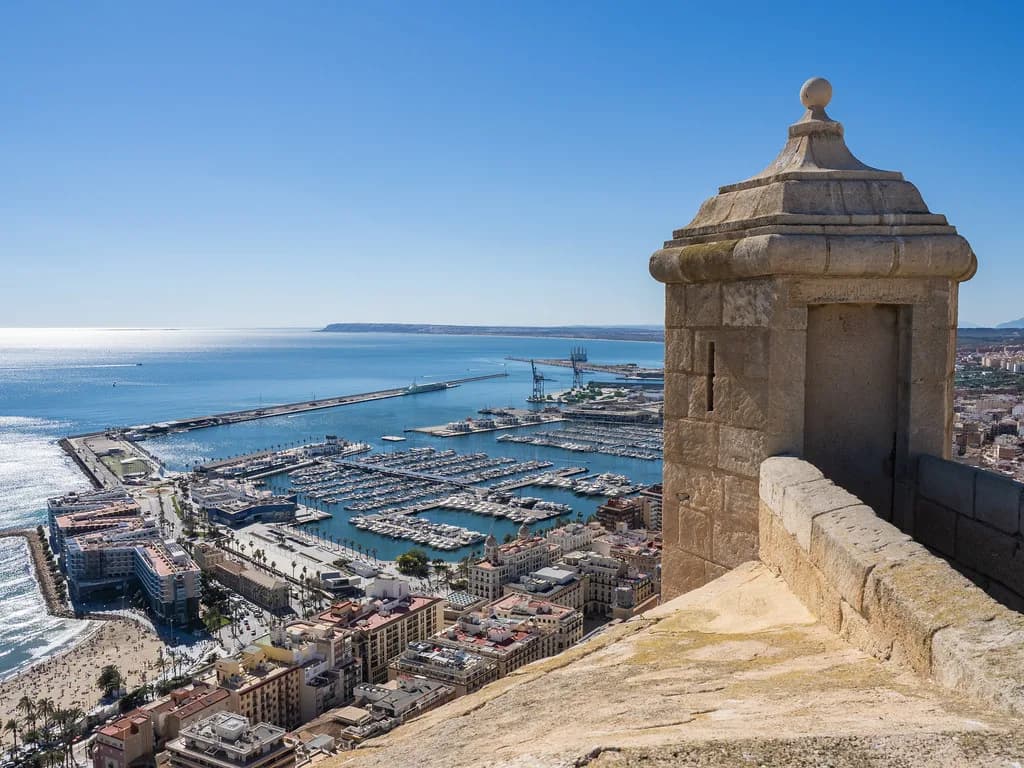
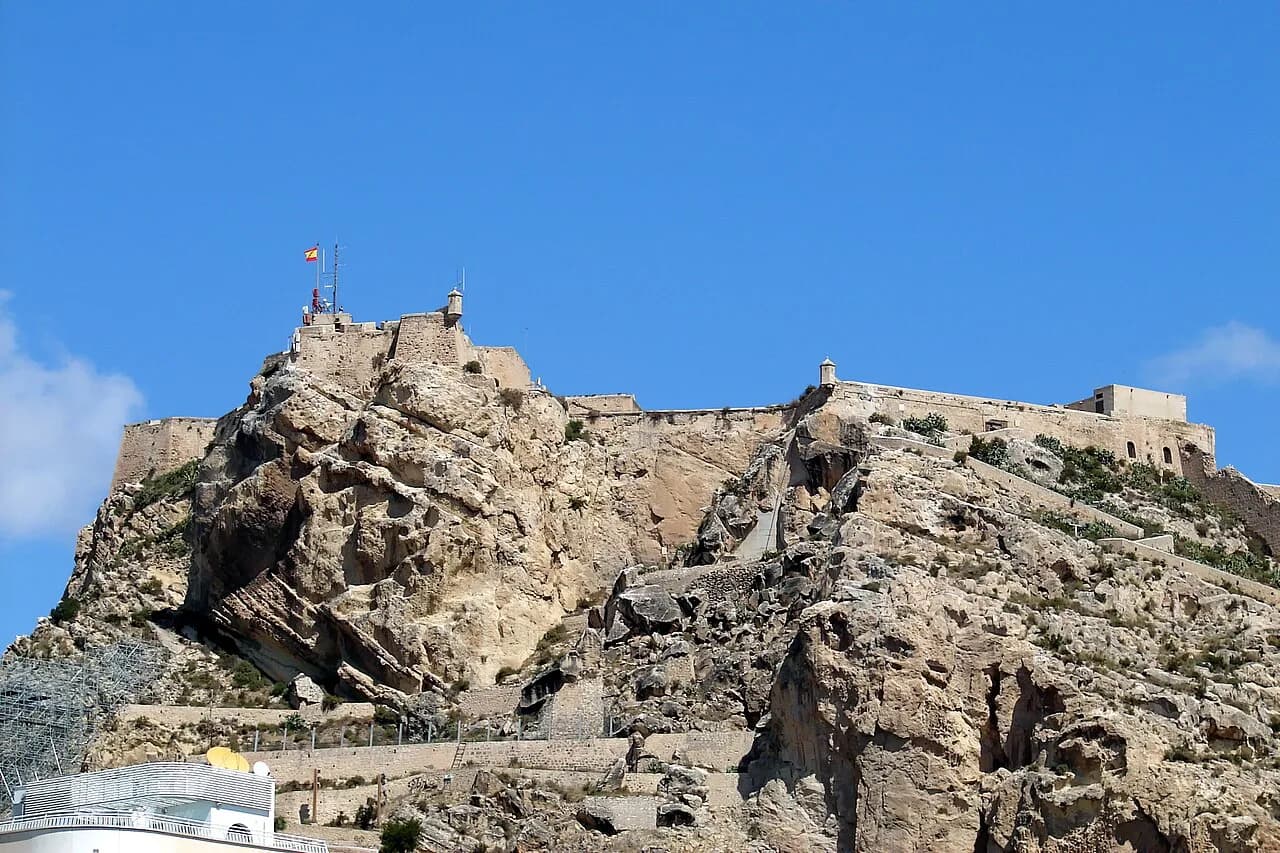
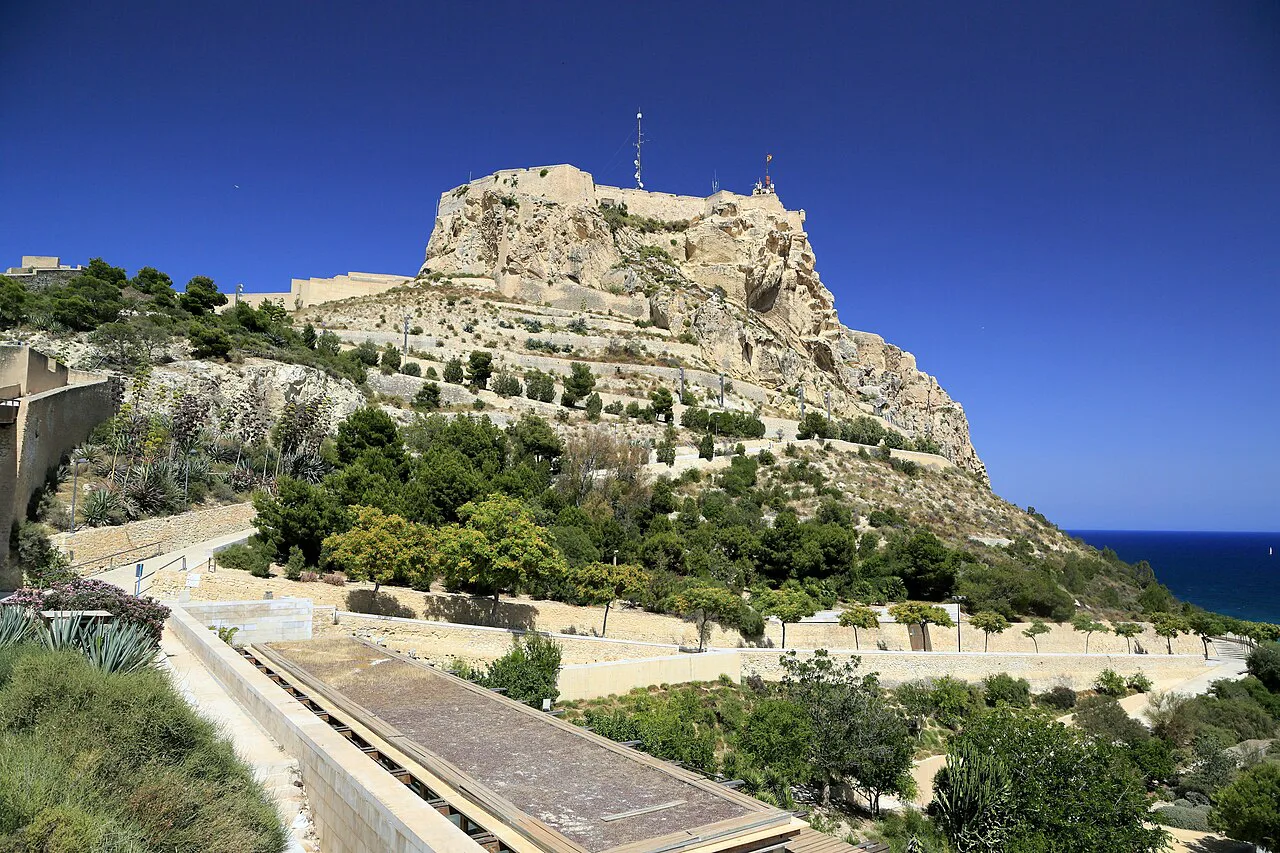
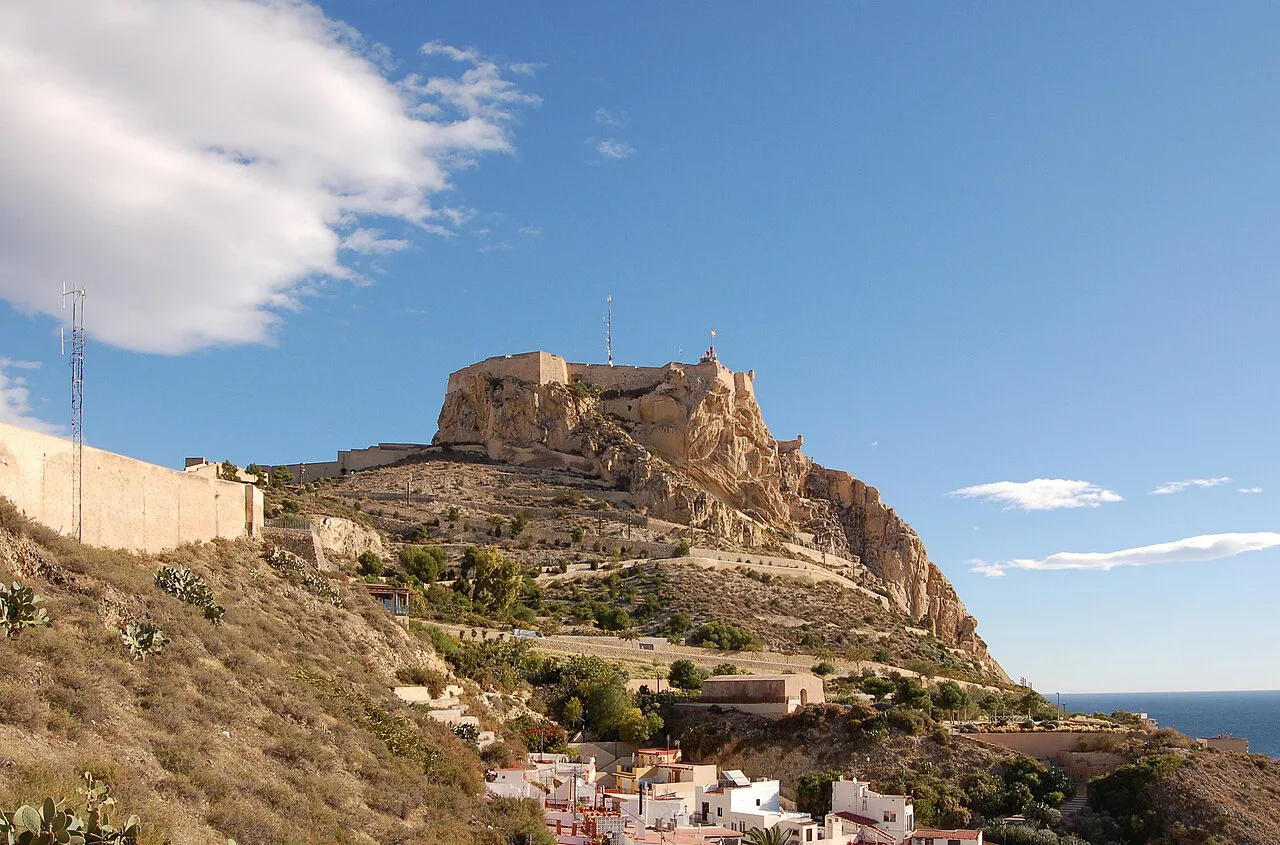
Monte Benacantil offered height, a lookout over the bay and a defensible position, which is exactly what a coastal settlement needs when the sea becomes a threat rather than a living. The move inland and uphill was gradual, and the modern street pattern grew out of it. This is the layout question visitors ask without realising it: why the centre sits where it does, and why the hill is the reference point for everything else.
Walking the centre with that in mind, the hill reads as the anchor and the streets below as the approach to it. Let the orientation settle before heading up, because the views explain the choice faster than any description. An Alicante map is worth opening at this point to see how tightly the historic core wraps the base of the hill.
Al-Laqant: the Islamic centuries and the remains near the Ayuntamiento
Islamic rule began in 718 and lasted more than five centuries, and the city took the name Medina Laqant, also written Al-Laqant. Archaeological remains have been found beside the Ayuntamiento, which puts a period most visitors associate with distant monuments right under the modern civic centre. Look at the ground in that area with a different eye: the Islamic city is not a separate stop but a layer beneath buildings you will pass anyway.
The Christian conquest that ended this period was not a single battle but a process lasting 48 years, carried through treaties such as Cazola and Almizra before troops took the city militarily on 4 December 1248. That drawn-out sequence explains why the medieval city developed with mixed populations and a port at its centre. It also means 1248 is a turning point, not a clean break.
The 1248 conquest and the Castilian period
Between 1248 and 1296 the Crown of Castile held the city, and Alfonso X granted privileges to Christian settlers to encourage them to stay and trade. The process was slow and expensive, and a Muslim revolt in 1264 and 1266 was suppressed with help from Jaime I of Aragón. The Castilian decades are continuity rather than a break: the port and its royal patronage kept developing through them.
The Castilian decades left few individual markers on the ground, so treat them as context for what followed. The weight of the surviving medieval fabric belongs to the next period, when a different crown took over and encouraged new settlers. Keep the sequence straight and the old town's churches and squares sit in a clearer order.
1296 and the Crown of Aragon: how the medieval city took shape
On 22 April 1296 Jaime II of Aragón took the city and it passed to the Crown of Aragon, after which Catalans and Aragonese settled it quickly. Growth was then cut back at the start of the fourteenth century by the War of the Union, the Black Death and the War of the Two Pedros, which halved the population. Recovery came in the fifteenth century and the city began expanding again.
This is the stretch where the old town repays slow walking. Its lanes belong to the medieval and early modern growth of the city rather than to any single architect's plan. Set aside an hour to drift without a route, then return to the specific buildings that interest you in Alicante Old Town.
1490: Alicante becomes a city
In 1490 Fernando el Católico granted Alicante the title of city, following a fifteenth-century recovery that had already made it a significant port. By 1510 it was considered the fifth city of the Kingdom of Valencia, with maritime trade driving its growth. That run of prosperity is the reason the historic centre feels more substantial than its size suggests.
The early modern centuries were not peaceful, with conflict in the War of Succession and the War of Independence leaving marks on the city. Those events are easier to follow in the civic and religious buildings scattered through the centre than in any open-air site. If you want to see the period through interiors, the city's museums make the better stop.
The modern port, the 1858 railway and the 19th-century growth
The nineteenth century brought cholera epidemics through the port, one of which killed the civil governor Trino González de Quijano after he spent 24 days helping the sick. Recovery came through infrastructure: the railway arrived in 1858, the harbour was enlarged and industry followed. That combination pushed the city into sustained demographic growth and gave it the cosmopolitan character it carries today.
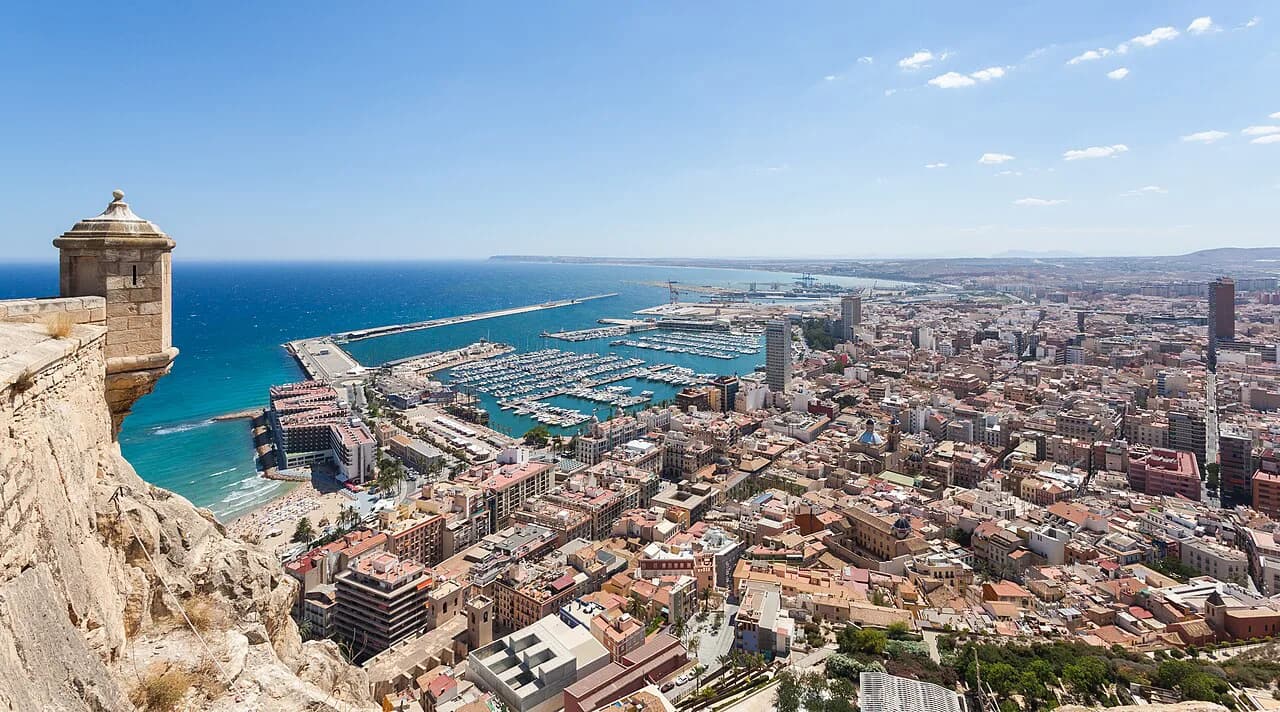
For a visitor, this is the period that explains the city beyond the old town, from the port frontage to the wider streets outside the medieval core. Walk the harbour edge after the historic centre and the two halves of Alicante connect. It is also the point where the city becomes a working port rather than a walled town.
The 20th century: the Civil War and the bombing of Alicante
The twentieth century brought the Spanish Civil War, with Alicante on the Republican side and the execution of José Antonio Primo de Rivera linked to a wave of bombardments, including the one known as the bombing of the eight hours. In total 71 bombardments hit the city. Keep this in proportion: the Civil War period is a short, sharp chapter rather than the main thread of the city's history.
Where to see the layers of Alicante's history in the old town
Start with the Islamic remains beside the Ayuntamiento, then take the medieval lanes of the old town and finish on Monte Benacantil, where height, harbour and old town are all visible at once. Put the hill last rather than first: the walk below makes more sense once you have the chronology in hand.
The churches and civic buildings near the centre carry the early modern and later phases, and they are the natural place to pause in the middle of the day. Try the churches in Alicante beyond the cathedral if you want to spread the interiors across more than one visit. It is a sensible order for anyone working with a single afternoon.
Outside the centre, Tossal de Manises holds the Roman chapter and is best paired with a relaxed day rather than squeezed into a walking route. The Albufereta area and the coast beyond it belong to the same excursion. If you are short of time, choose between the Roman site and a harbour walk rather than attempting both.
How long the historic sights need on a short break
Allow two to three hours for the old town's medieval and early modern layers on foot, with the Ayuntamiento area, the lanes and one church interior. Add time for Monte Benacantil and its views, and treat Tossal de Manises as a separate half-day because it sits away from the centre. That split keeps a short break from turning into a forced march through every period.
If you would rather have the chronology explained on the ground, a guided walk compresses the medieval and modern material into something you can follow without notes. A self-guided version works just as well with these dates in hand. Either way, leave the Roman site for a day when you are not also covering the hill and the harbour.
Beyond the centre, the coast adds a different layer, with the Isla de Tabarca a reminder of the maritime economy that built the city. These are modern pleasures resting on an old port. Take one boat trip only if the history walk has not already filled your time.
Which layer of Alicante should you chase first?
If you have one free afternoon, take the old town and the hill: the Islamic remains near the Ayuntamiento, the medieval lanes and Monte Benacantil give you the city's core story in a single loop. The Roman site at Tossal de Manises is the richer reward for anyone with a second day, because it explains why the city sits where it does. Decide between the two rather than trying to compress both into one route.
Check opening times and any entry charges with the sites themselves before setting out, as these change through the year. The dates and sequence above are enough to make sense of what you see, even when a building is shut.
Explore more Alicante guides
Frequently Asked Questions
Is Alicante an English-speaking city?
Alicante is a Spanish city and Spanish is the everyday language, with Valencian also official in the region. Visitors will find English spoken in many tourist-facing businesses, but it is not the local language. Learning a few basic phrases helps in smaller shops and in the historic centre outside peak hours.
When did Alicante become a city?
Fernando el Católico granted Alicante the title of city in 1490, after a fifteenth-century recovery. By 1510 it was considered the fifth city of the Kingdom of Valencia, with maritime trade driving its growth.
Sources
Notes for your next Spanish town break
Optional updates to our guides.
You might also like
Continue reading
More guides you'll find useful