Alicante Tours: Guided Walks, Castle Visits and What to Book
Alicante tours range from accredited guided walks of the old town to castle and Civil War shelter visits. Here is what each covers and how to choose one.
On this page
Book an accredited official guide if you want the old town, the Castillo de Santa Bárbara and Alicante's history explained in one coherent walk; pick an independent operator if you would rather have legends, ghosts or a night tour. The city's own tourism board keeps a list of guides accredited by Turisme Comunitat Valenciana, and independent companies sell themed walks alongside them. This guide separates the two, sets out which sights come up on scheduled visits, and explains what the published prices cover.
Two sights shape the decision. The Castillo de Santa Bárbara sits above the city and the Roman site of Lucentum lies outside the centre, and both appear on the tourism board's scheduled guided visits rather than being self-guided stops on every walk. If you are still assembling a short break, our Things to Do in Alicante guide puts these alongside the rest of the old town.
What Alicante tours cover: the old town, Castillo de Santa Bárbara, Lucentum and the Civil War air-raid shelters
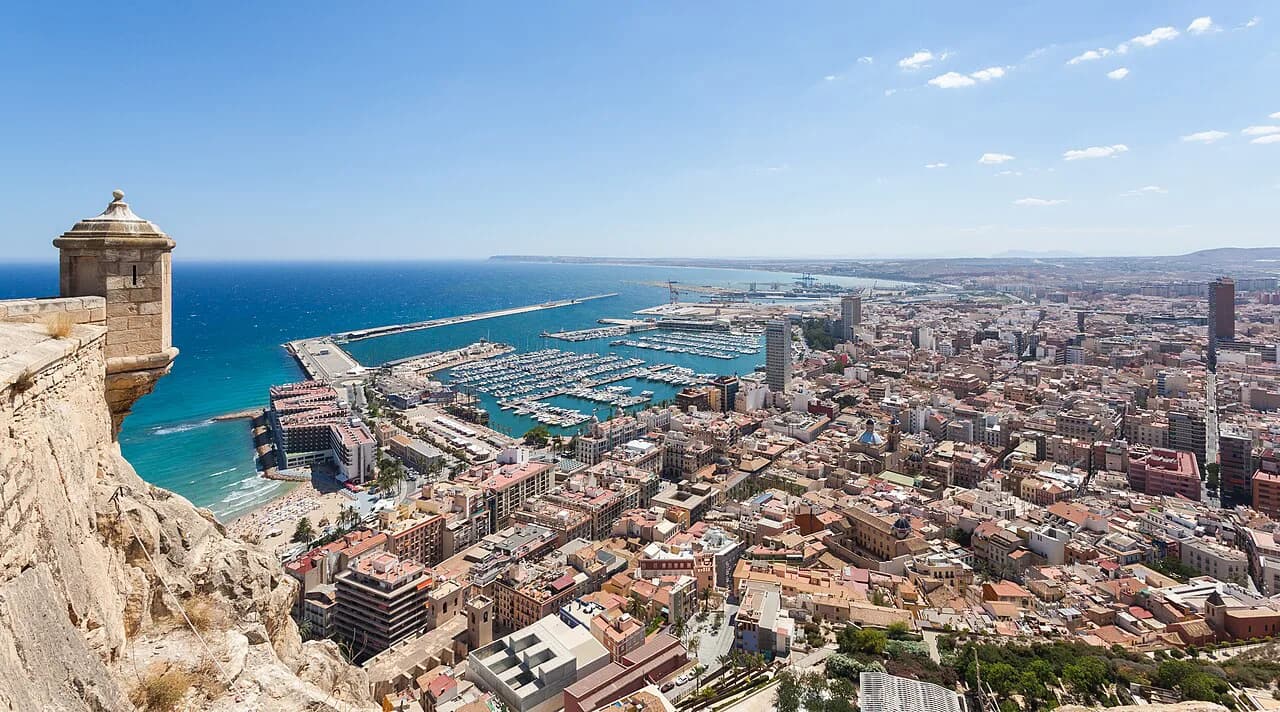
A general walking tour in Alicante concentrates on the historic centre: the streets below the castle, the cathedral quarter and the sea front around Puerta del Mar. The old town climbs towards the Barrio de Santa Cruz, and the gradient is what makes a guided route useful on a first morning, because you learn the shape of the place before wandering it alone. Our Alicante Old Town page maps those streets in more detail.
Beyond the centre, the tourism board's scheduled visits name three specific targets: the Castillo de Santa Bárbara, the Roman archaeological site of Lucentum at Tossal de Manises, and the Civil War air-raid shelters with their interpretation centre. These are the visits worth planning a day around, because they sit outside the ordinary walking circuit and deal with very different periods, from Roman Alicante to the 1930s. Our Alicante history page covers the background if you want context before you book.
Official guides versus independent operators: what accreditation means
The city tourism board lists guides accredited by Turisme Comunitat Valenciana, the regional tourism agency, and singles out several companies holding that accreditation, among them AGUITUR and Alacant Circuit. Accreditation is the clearest quality signal available to a visitor choosing blind, since it ties the guide to a regional standard rather than a self-description. The same page groups other services, such as cycling, Segway and nature routes, separately from the accredited guides.
Independent operators work outside that list and sell themed products instead, including free walking tours and paid experiences. Choose between them on content rather than prestige: an accredited guide is the better bet for a first orientation walk with historical depth, while an independent operator is the natural choice for a ghosts, pirates or Civil War night theme. Check the language of the tour before booking.
Themed walking tours: history and legends, ghosts, pirates and the Civil War night tour
Themed walks are where independent operators specialise. Tours Urbanos Alicante runs a history-and-legends walk, a ghosts and legends walk, a pirates and sea monsters walk and a Civil War night tour, all in the old town or the castle grounds. The same company also lists seasonal products such as a Halloween witch tour and a Christmas tour, which come and go with the calendar rather than running all year. If a theme is the reason you are booking, confirm it is running for your dates rather than assuming it is a permanent fixture.
Guided visits to the Castillo de Santa Bárbara and the archaeological site of Lucentum
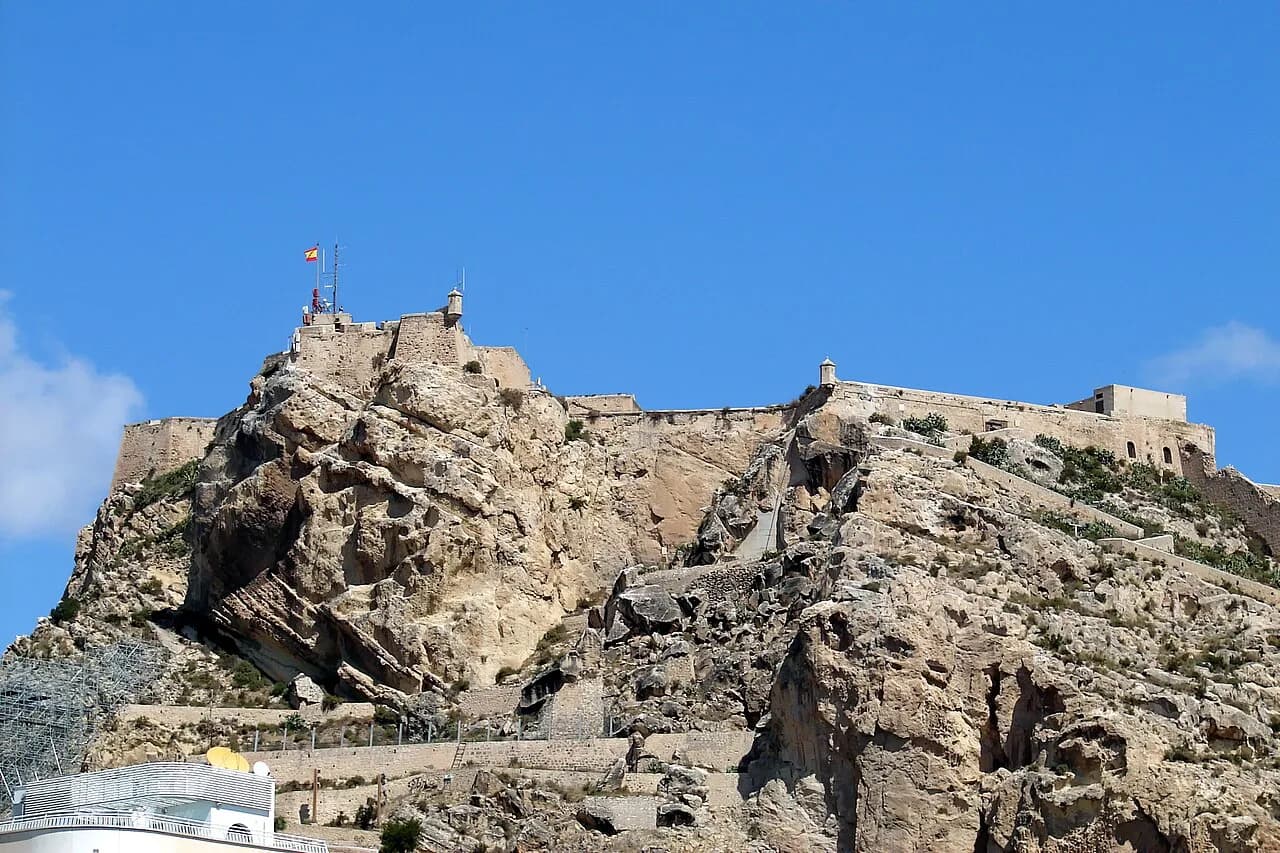
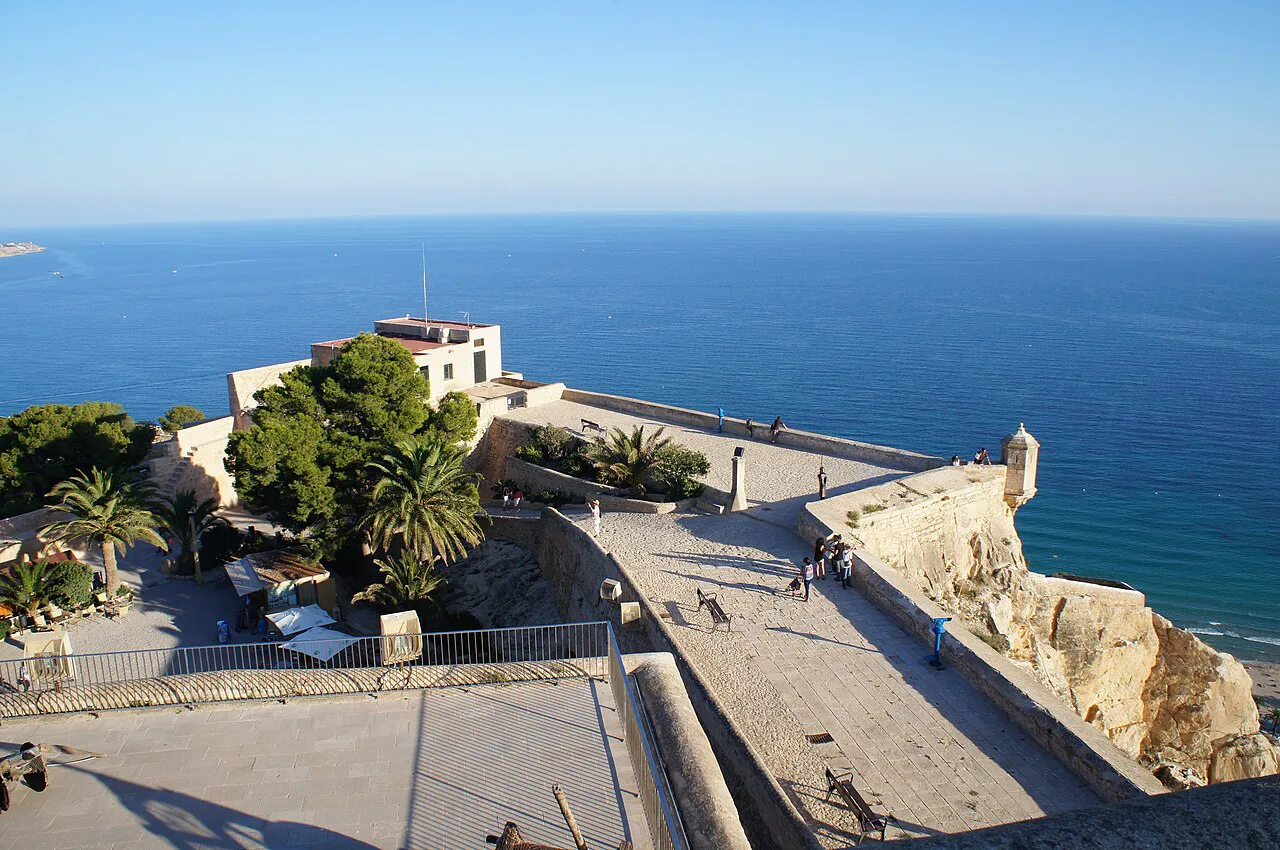
The Castillo de Santa Bárbara appears on the tourism board's scheduled guided visits as its own entry, which makes a guided castle visit a distinct booking from a general city walk. The fortress is the city's defining monument and the reason many visitors come, so it earns a slot in any short break. Our Castillo de Santa Bárbara guide covers the layout and what to see once you are through the gates.
Lucentum, the Roman city at Tossal de Manises, also appears as a scheduled guided visit at the archaeological site itself. This is the one stop on the list where a guide does real work, because Roman urban remains reward explanation more than ruins that speak for themselves. Pair it with the city's museums if you want the finds in context, since the museums in Alicante hold material that ties back to the site.
Air-raid shelter and Civil War interpretation centre guided visits
The Civil War air-raid shelters and the Centro de Interpretación de la Guerra Civil are visited under the tourism board's scheduled programme, listed as a combined guided visit. These are underground spaces with a story attached, and the interpretation centre exists precisely to explain what you are standing in, so the guided format suits them better than an open door would. Anyone with an interest in twentieth-century Spain should treat this as the most distinctive visit on the list.
The same operator-side theme appears in the night tour offered by Tours Urbanos Alicante, which approaches the Civil War after dark. Pick the daytime shelter visit if you want the physical site and the interpretation centre, and the night walk if you want storytelling across the city streets. They overlap in subject but not in what you actually see.
Private tours and tours in languages other than Spanish
Private tours are available from the independent operators, and Tours Urbanos Alicante prices its private tour at the same rate for adults and children. For a couple or a small group, that removes the awkwardness of a public departure and lets you set the pace. The tourism board's accredited-guide list includes companies working in English, French, Italian, German and Valencian as well as Spanish, so a private tour in your own language is realistic rather than aspirational.
If you need a language other than Spanish, say so at the booking stage rather than at the meeting point. The accredited operators publish their language coverage on the tourism board's listing, which makes it easy to shortlist before you contact anyone.
What a walking tour costs and how to book
Published prices give a useful anchor. Tours Urbanos Alicante lists 10 € for adults and 5 € for children on its history-and-legends, ghosts and legends and castle walks, and 12 € for adults on its pirates walk. Treat these as that operator's rates rather than a city-wide benchmark.
Free walking tours work on a different model, where you tip the guide at the end rather than paying upfront. That suits a first orientation morning when you have not yet decided how much guiding you want. Booking direct through the operator's site is the simplest route, and the accredited guides can be contacted through the details on the tourism board's guide page. Our Alicante walking tour page sets out a self-guided version if you would rather not book at all.
Matching a tour to a short break: mornings, heat and castle timing
Put the walking tour in the morning and the castle later, or the other way round, but do not stack both into the midday hours in summer. Alicante's old town climbs, the castle sits above it, and the exposed sections have little shade, so an early start is worth more here than in a flatter city. A guided walk first also gives you the street pattern you need to find the castle entrance without a detour.
For a two- or three-night break, one general walk plus one site-specific visit is a sensible load. Choose the castle if this is your first time in the city, the Lucentum visit if you have already done the centre, and the air-raid shelters if you want something you will not find elsewhere in the region. Our Alicante itinerary puts these into a day-by-day shape if you need the sequence fixed.
Which Alicante tour should you book first?
Book the accredited official guided walk first. It gives you the old town, the castle and the city's history in one go, and it is the easiest booking to justify on a short break. Add the Lucentum or air-raid shelter visit only if you have a second slot to fill, and pick a themed night tour rather than a second daytime walk if you want variety.
Book direct with the operator or accredited guide, confirm the language and the meeting arrangements when you book, and keep the themed seasonal products out of your plan unless they are confirmed for your dates.
Explore more Alicante guides
Frequently Asked Questions
Do I need a guided tour to visit the Castillo de Santa Bárbara?
No. The castle is a monument you can visit on your own, and guided visits to it appear as a separate item on the tourism board's scheduled programme. Take the guided version if you want the fortress explained; walk up independently if you mainly want the views over the city and the sea.
Are Alicante's free walking tours really free?
Free walking tours usually work on a pay-what-you-want basis, with the guide paid at the end rather than a ticket bought in advance. Paid themed walks from the same kind of operator carry a fixed price per adult and per child. The two models sit side by side in Alicante, so read what you are booking.
Can I take an Alicante tour in English?
Accredited guides on the tourism board's list state English among their working languages, alongside Spanish and others such as French, German and Valencian. If English matters to you, confirm it when you book rather than at the meeting point.
Sources
Notes for your next Spanish town break
Optional updates to our guides.
You might also like

Continue reading
More guides you'll find useful