Museums in Alicante: Which Ones Are Worth Your Time
From Roman Lucentum to the MACA's contemporary collection, here is what each Alicante museum holds, how long it needs and which ones cost nothing.
On this page
Alicante needs three museums from most visitors: the MACA for contemporary art, the MARQ for archaeology and the MUSA inside the Castillo de Santa Bárbara for the city's own story. The rest are small, central and often free, so they slot into an hour between other stops rather than claiming a morning. This guide covers what each one holds, where it sits and how much time it deserves, and it sits alongside the wider Things to Do in Alicante guide to the city.
The museums are unusually compact. The MACA stands in the old town within minutes of the cathedral, and several collections sit inside or beside the castle above the port; Lucentum, the Roman site, lies outside the centre at the Tossal de Manises. If you are still shaping a wider plan, the full set of things to do in Alicante gives the surrounding monuments and viewpoints their proper weight.
The quick answer: which museums to prioritise
Pick the MACA for art, the MARQ for history and the MUSA inside the castle for how Alicante grew from Roman town into port. Add one small free museum that matches your interests, such as the Museo de Aguas or the Museo de Hogueras, and you have a solid cultural half-day without museum fatigue.
The city tourist board gathers the museums on one page, and its free-entry labels are the quickest way to sort what costs nothing from what is ticketed. Use that listing to confirm which institutions are municipal before you build a route.
Allow about 90 minutes for the MACA and a similar stretch for the MARQ, and under 45 minutes for the smaller collections. That is our own planning estimate from collection size rather than a published figure, so adjust for how long you linger.
The MACA: Picasso, Dalí, Miró and Chillida in a 17th-century building
The Museo de Arte Contemporáneo de Alicante occupies the oldest surviving civil building in the city, a 17th-century structure at Plaza de Santa María 3 wrapped around a modern gallery. Picasso, Dalí, Miró and Chillida are among the names represented, and the tourist board ranks the collection among Spain's strongest in contemporary art.
It is not one undifferentiated mass of modern work. Five named holdings make up the museum: the Colección Eusebio Sempere with 874 works, the Colección Michael Jenkins-Javier Romero with 515, the Colección Fundación Mediterráneo with 213, the Colección Arte Siglo XX with 177 and the Colección Juana Francés with 134.
Sempere, the Spanish geometric and kinetic artist, is the anchor, so anyone drawn to optical abstraction should head for his rooms first. With an hour, follow the collections rather than the temporary shows. The museum also publishes its own visitor information, including a visit-planning section and accessibility details, if you want to prepare in advance.
The MACA fits naturally into an Alicante walking tour of the old town as a mid-morning stop a few minutes from the cathedral square. It is also the obvious indoor refuge when the sun is at its fiercest.
Opening hours and closing day at the MACA
The MACA publishes a clear timetable: Tuesday to Friday 10.00–20.00, Saturday 11.00–20.00, and Sunday and public holidays 10.00–14.00, with Mondays closed. Sunday is a short morning-only window, so treat a Sunday visit as a focused stop rather than a relaxed afternoon.
Monday is the day to build around in Alicante: the MACA shuts, so plan the old town and castle for that day and hold the museums for the rest of the week. Saturday opens an hour later than weekdays, which suits a slow start and a long afternoon.
The MARQ: archaeology from prehistory to the modern age
The Museo Arqueológico Provincial de Alicante takes an explicitly modern approach to display rather than rows of labelled pots. Its permanent galleries run from prehistory to the contemporary era, tying local finds to wider Mediterranean archaeology, and its temporary exhibitions bring in material from abroad. The city's museum network describes it as a museum in motion that changes how visitors see archaeology.
The MARQ is the one Alicante museum where the presentation is part of the appeal, so give it a proper slot rather than an hour at the end of the day. Opening times and any admission charge are set by the institution, so check the museum's own page before you commit a morning to it.
If your interest is specifically Roman, pair the MARQ with Lucentum outside the centre: the museum makes sense of the ruins and the ruins give the objects a place.
The Museo de Bellas Artes in the Palacio Gravina
The Museo de Bellas Artes occupies the 18th-century Palacio Gravina in the old town. Its permanent display, El siglo XIX. La colección a la Luz, gathers more than eighty works by nineteenth-century Valencian and Alicante masters including Antonio Gisbert, Joaquín Agrasot and Emilio Sala, giving a concentrated view of the period's painting in the city.
The tourist board lists the Bellas Artes as free to enter, which makes it an easy addition to a morning around the cathedral and the lanes of the old town. It also mounts temporary exhibitions. Allow around an hour.
Because entry costs nothing, this is the museum to try if you are unsure about nineteenth-century Spanish painting and do not want to commit money to finding out. The palace setting alone justifies the detour.
Lucentum at the Tossal de Manises: Alicante's Roman city
Lucentum, on the Tossal de Manises, preserves the street plan, walls, forum and baths of the Roman city that preceded modern Alicante, and it later served as an Islamic necropolis. It lies about 3 km from the centre and is protected as a Monumento Histórico-Artístico. Seeing the original grid on the ground is a different experience from looking at finds in a case.
The distance is the deciding factor. Three kilometres is manageable but eats a chunk of a short break, so weigh it against time in the centre and treat the visit as a half-morning with travel. Opening days and whether a guided entry is required are managed separately from the city centre museums, so confirm them before setting out.
The Castillo de Santa Bárbara and the MUSA
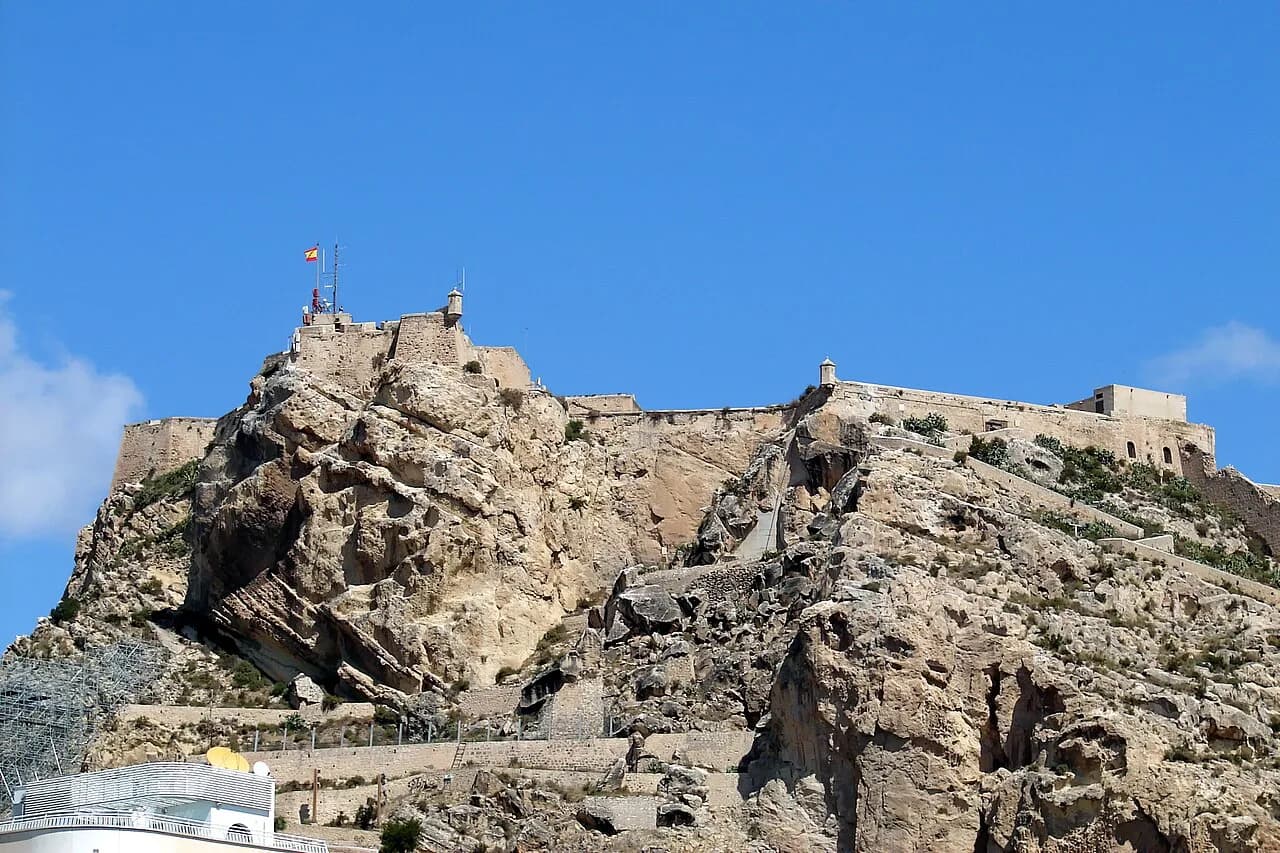
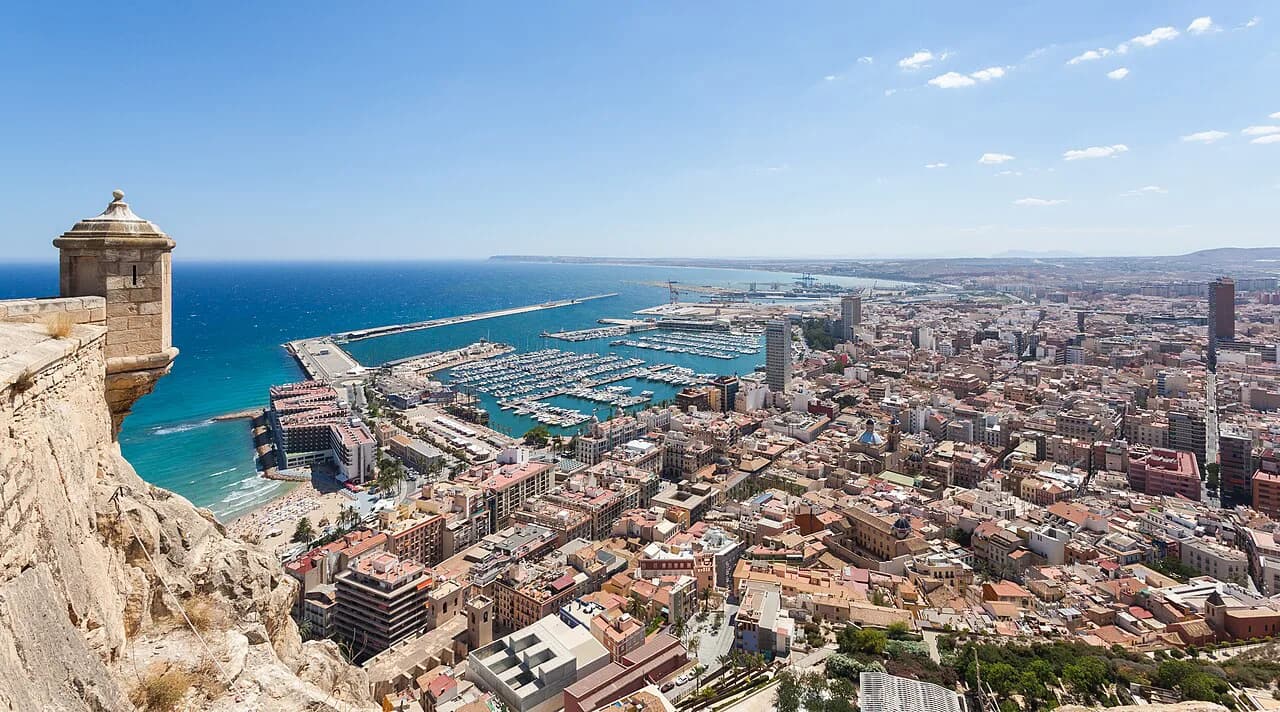
The Castillo de Santa Bárbara dominates the city from the hill above the port, and the Museo de la Ciudad de Alicante sits inside it across five rooms. The displays use archaeological objects and models to trace the city from its origins, which makes the castle more than a viewpoint. The tourist board lists the MUSA as free to enter.
Combining the two is efficient: the walk up and the terraces take time in their own right, and the museum gives the panorama some context. For the ramparts and how to reach them, the Castillo de Santa Bárbara guide covers the practical detail.
Go early. The climb and the exposed terraces are punishing at midday in summer, and the castle is the one Alicante sight where heat genuinely shapes the schedule.
The Museo The Ocean Race and the city's sailing history
The Museo The Ocean Race is the only museum in the world devoted to the round-the-world sailing race, and Alicante's long connection to the event is why it is here. It is an interactive space covering more than fifty years of race history, with a focus on nautical technology and ocean sustainability. For anyone who follows offshore sailing, it is the most distinctive museum in the city.
It works as an add-on to a port-side wander rather than a reason to cross town. Check current opening times and any admission charge with the museum before you go. Allow under an hour unless you read every panel.
Smaller collections: Aguas, Hogueras and the Museo Taurino
Three small museums reward an idle hour each. The Museo de Aguas de Alicante, with the historic Pozos de Garrigós, explains how the city has captured and stored water over the centuries, and the surviving wells are themselves part of the exhibit. The Museo de Hogueras covers the Fogueres de Sant Joan, an internationally recognised fiesta since 1983, through the ninots saved from the flames, costume and documents.
The Museo Taurino, at the Plaza de Toros, holds the trajes de luces, capes and historic objects of Alicante's bullfighting tradition. All three are listed as free to enter by the tourist board, so the cost of trying one is a little time. Pick by curiosity: water engineering, festival craft or bullfighting.
Free museums in Alicante and what 'acceso gratuito' covers
The tourist board marks several institutions as acceso gratuito, meaning no admission charge: the MACA, the Museo de Bellas Artes, the Museo de Aguas, the Museo de Hogueras, the MUSA, the Museo Taurino and the Las Cigarreras cultural centre. That is an unusually generous free tier for a Spanish provincial capital, and it makes a culture-heavy break cheaper than you might expect.
Free entry is not the same as open all day. The MACA's Monday closure and short Sunday hours are the clearest example, and the smaller museums keep their own timetables. Confirm each venue's hours before relying on a free visit, particularly at weekends and on public holidays.
Not every museum in the city is in the free tier: the MARQ and the Museo The Ocean Race are not labelled free by the tourist board. Look at each museum's own site for current opening times and any charge rather than assuming a figure from a guidebook.
Las Cigarreras and the Lonja del Pescado: cultural centres rather than museums
Las Cigarreras occupies the old tobacco factory, for more than two centuries an industrial and social anchor for Alicante, now a contemporary creation centre for exhibitions, performing arts, music, film and residencies. It is free to enter and hosts festivals and workshops rather than a fixed collection, so go for what is on rather than for a permanent display.
The Lonja del Pescado, by the port, is a similar case: a historic fish market turned exhibition venue where old fabric and new programming sit together. Both are worth a look if your interests run to architecture and contemporary culture, but neither should displace the MACA or the MARQ on a first visit.
Fitting museums around the old town, the port and a short break
A sensible shape for a two-day break is the MACA, the Bellas Artes and the castle with the MUSA on one day, and the MARQ plus a port-side museum on the other, leaving Lucentum for a longer stay. That keeps walking distances short and leaves evenings free.
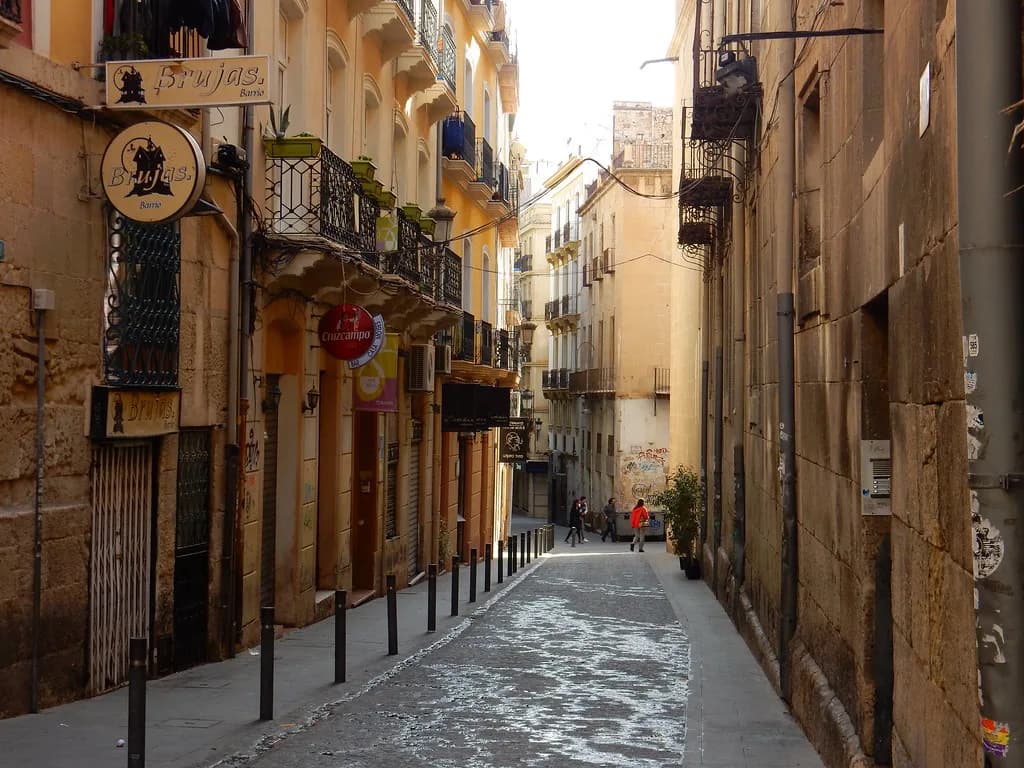
The old town cluster around the cathedral, Plaza de Santa María and the Barrio de Santa Cruz holds the MACA and the Bellas Artes within a few minutes of each other, with the castle above. The port end holds The Ocean Race museum and the Lonja del Pescado, and the MARQ sits within reasonable walking distance of both.
Two practical points. Several small venues keep their own timetables, so a mid-afternoon museum slot is safer than a church visit if you are mixing the two. And inland Alicante heat at midday is serious in summer, which is another argument for the indoor hours between roughly 13.00 and 17.00.
Which Alicante museum should you book first?
Make the MARQ your anchor if you want a substantial archaeological museum, and build the free MACA, Bellas Artes and castle museums around it. If your taste is art, reverse that: make the MACA the anchor, mind its Monday closure, and treat the rest as short, free additions.
Confirm opening days and any admission charge on each museum's own page before you travel, then let the old town's compact geography do the rest of the planning.
Explore more Alicante guides
Frequently Asked Questions
Which Alicante museums are free to enter?
The MACA, the Museo de Bellas Artes, the Museo de Aguas, the Museo de Hogueras, the MUSA inside the castle, the Museo Taurino and the Las Cigarreras cultural centre are all listed as free entry by the city's tourist board. The MARQ and the Museo The Ocean Race are not in that free list, so check their own sites for current admission details.
Is the MACA open on Mondays?
No. The MACA closes on Mondays and publishes hours of Tuesday to Friday 10.00–20.00, Saturday 11.00–20.00, and Sunday and public holidays 10.00–14.00. Plan the old town and castle for Monday and keep the museum for another day.
Where is Lucentum and how does it fit a short break?
Lucentum sits on the Tossal de Manises about 3 km from the centre, outside the old town, so it is best treated as a half-morning with travel rather than a stop tacked onto an old town wander. Opening arrangements are handled separately from the city centre museums, so check them before setting out.
Sources
Notes for your next Spanish town break
Optional updates to our guides.
You might also like
Continue reading
More guides you'll find useful