Alicante Walking Tour: The Old Town Route, Stop by Stop
Follow Alicante's old town on foot from Puerta del Mar to the Basílica de Santa María, with the stops in order, the 2 km route and when a guided tour pays off.
On this page
Alicante's old town is a single continuous walk of about 2 km, starting at the seafront Puerta del Mar and finishing at the Museo de Bellas Artes MUBAG after the Basílica de Santa María, and it fits comfortably into half a day. The city tourist board sets out the route from Puerta del Mar, taking in the Ayuntamiento, the Concatedral de San Nicolás, Calle Labradores, the Barrio de Santa Cruz and the museums at the top, and ending at MUBAG. This guide gives the stops in order, what each one adds, where the climb bites and how the guided alternative compares.
What the old town route covers
The official city route runs from Puerta del Mar to the Museo de Bellas Artes MUBAG in one line: the Ayuntamiento, the Concatedral de San Nicolás, Calle Labradores, the Barrio de Santa Cruz and the Ermita de Santa Cruz, the Ermita de San Roque, the Museo de Aguas de Alicante, the Basílica de Santa María and finally MUBAG. Treat that order as the spine of the walk rather than a checklist to tick off at speed.
What makes it more than a sight-to-sight trudge is the layers underneath. The same lanes carry you through the medina of Muslim Alicante, into the streets of the Christian Vila-nova and out along the avenues and gardens laid over the demolished walls, which is why the architecture changes character two or three times in a couple of kilometres. Read the street names as you go and the walk becomes a short course in how the town grew.
The old town route is distinct from the castle route to the Castillo de Santa Bárbara and from the boat crossing to the Isla de Tabarca, and it is worth keeping them separate rather than cramming all three into one day. The old town needs your legs and attention on cobbles; the others need a lift, a ferry timetable or both.
Start at Plaza Puerta del Mar and the Ayuntamiento
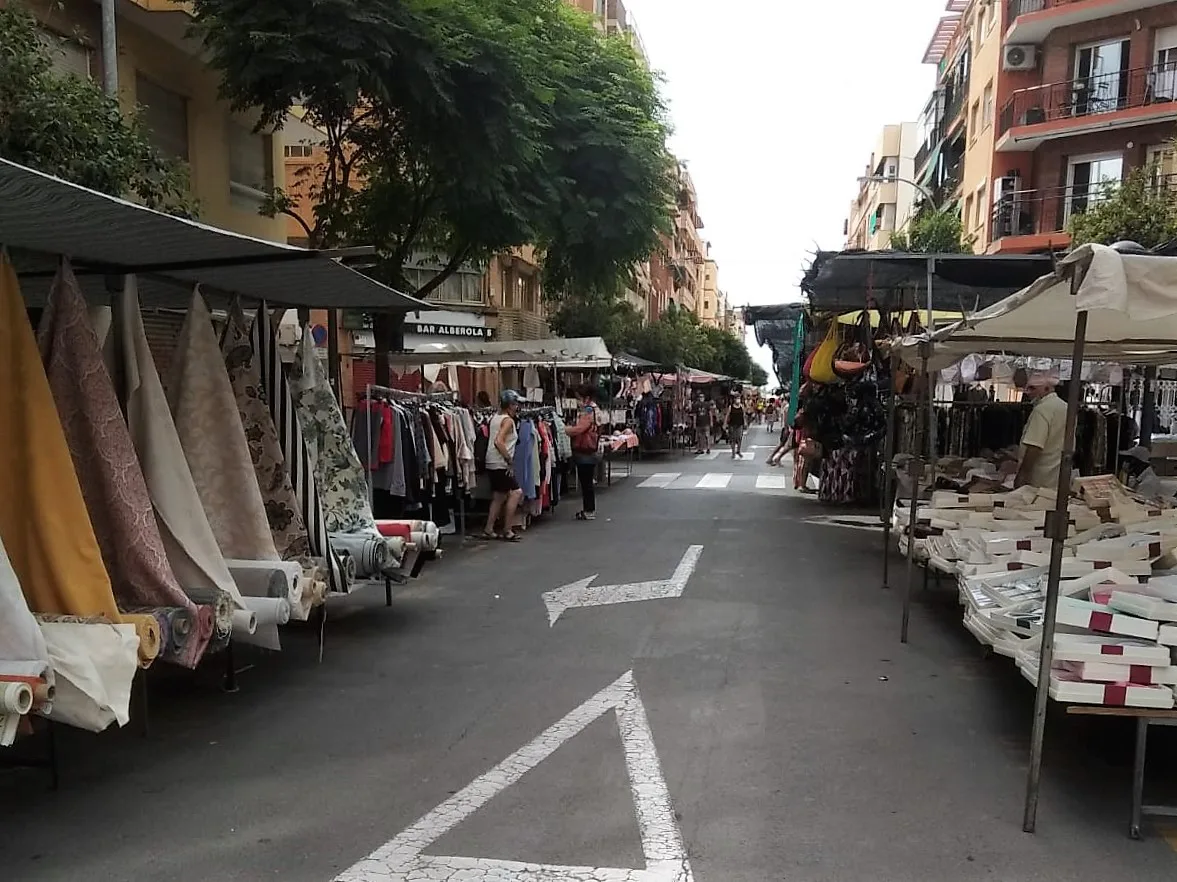
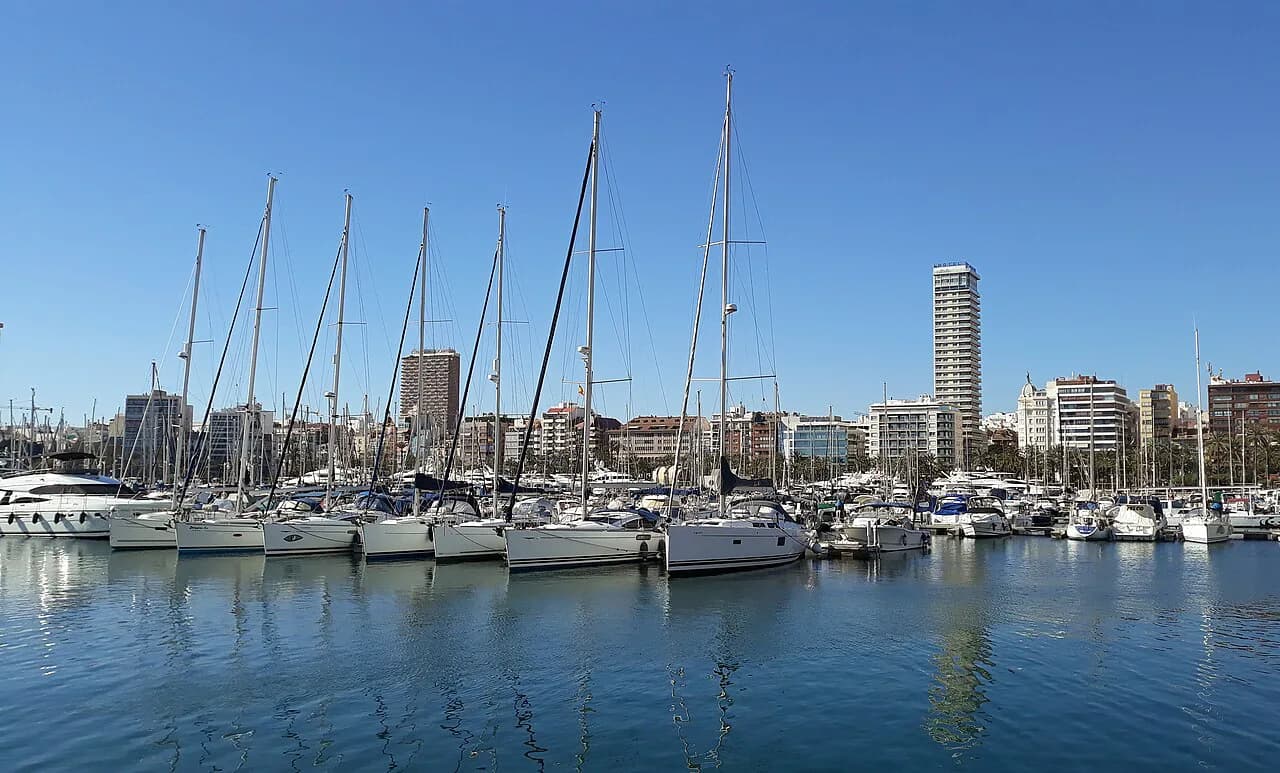
Begin at the Plaza Puerta del Mar, where the tourist office sits by the marina, because the seafront is the natural threshold between the modern city and the old one. From there the Ayuntamiento is the first set piece: look at the building's facade before you turn inland, since the square in front of it is the hinge between the port and the historic centre.
Starting here also solves the practical problem of orientation. The sea gives you a fixed reference point for the rest of the walk, so when the lanes above twist back on themselves you still know which way is downhill. If you only have an afternoon, arriving early at this end leaves the climb for when you are freshest.
Guías Oficiales CV, whose guides are accredited by the Valencian tourism agency, runs a two-hour historical centre tour that uses the same starting point, meeting at the Plaza Puerta del Mar tourist office by the marina, which makes it a simple swap if you decide on the day to walk with a guide rather than alone.
From the Ayuntamiento to the Concatedral de San Nicolás
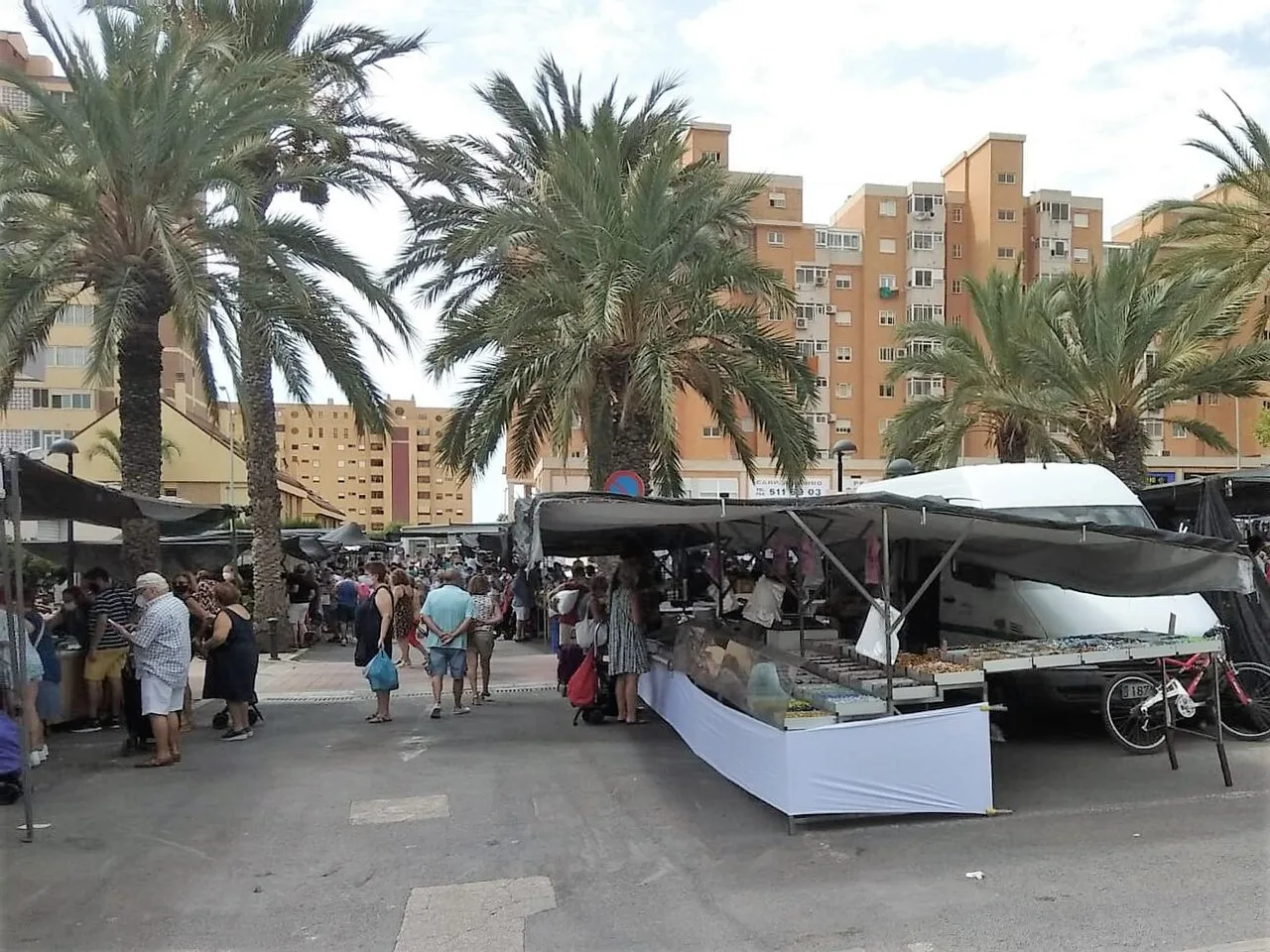
The stretch inland from the Ayuntamiento takes you into the arcaded square and on to the Concatedral de San Nicolás, whose twin domes are the landmark to steer by in the lower old town. The official route passes the city's interpretation displays and the Museo de Belenes on the way, so you can treat the approach as a slow introduction rather than a corridor to hurry through.
The concatedral rewards a proper stop rather than a photo from the square. Step inside if the doors are open to visitors, and if they are not, note the time and come back later rather than waiting on the step: churches in Spanish towns commonly close to tourists around services and reopen afterwards, and that pattern is the single most common reason a visitor misses a church interior. Outside, walk the surrounding lanes for a few minutes to see how the streets bend around the building.
If your interests lean towards collections rather than churches, this lower stretch is the moment to check what is open. The city's museums in Alicante keep their own timetables, so confirm the day before you build a museum stop into the walk.
Calle Labradores and the climb through the Barrio de Santa Cruz
Calle Labradores marks the start of the climb, and the Barrio de Santa Cruz above it is the most photographed part of the walk: whitewashed lanes, flowers on the walls and steps that keep going up. Take it slowly. This is a genuine uphill pull on cobbles, not a gentle slope, and it is the section where summer heat and a rushed pace combine badly. If you want the neighbourhood on its own terms, our Alicante Old Town guide goes into it street by street.
The Ermita de Santa Cruz sits at the top of the neighbourhood and is the natural place to stop, both for the rest and for the view back over the rooftops towards the sea. Look at how the lane is built as much as at the chapel: the whitewash, the pots and the tight turns are the reason this quarter looks the way it does.
A word on timing that applies to the whole climb: the Mediterranean pattern of a long midday pause still shapes when shops and smaller religious buildings open their doors, so a walk begun at noon in high summer will find more closed doors and more heat than the same walk at either end of the day.
The Ermita de San Roque and the Museo de Aguas de Alicante
Past Santa Cruz the route turns and brings in the Ermita de San Roque and the Museo de Aguas de Alicante. The hermitage is a small, quick stop; the water museum is the more substantial of the two and explains how the city has supplied itself with water, which makes more sense of the landscape around Alicante than you might expect.
Decide here whether you are walking the route as a promenade or as a museum visit. Going into every interior stretches the walk well beyond the time the 2 km distance suggests, so if you want the Basílica de Santa María and MUBAG as well, pick one of the two mid-route stops and save the other for a return.
Basílica de Santa María and MUBAG: finishing the walk
The Basílica de Santa María is the walk's architectural climax, the oldest church in the city and the one most visitors remember, so leave time for it rather than arriving at closing. Its position next to the Plaza de Santa María puts you in the heart of the upper old town with the castle looming above, which is a good place to sit and decide what comes next.
MUBAG, the Museo de Bellas Artes Gravina, is the official route's final stop and a sensible note to end on: a fine arts collection in a historic building, and a chance to sit down indoors after the climb. Check its opening day before you commit, because a museum that anchors the end of your walk is worth confirming rather than assuming.
How long the route takes and how to pace it
The route is 2 km, but distance is a poor guide to time here. The climb through Santa Cruz, the stops and the heat mean the walk takes considerably longer than a flat 2 km stroll, and that is before you add any interiors. Budget for a half day if you want the concatedral, the basilica and one museum, and a couple of hours if you are content to walk the streets and look.
Pace it by treating the two climbs as the hard work and everything between them as recovery. Walk the lower stretch briskly, slow right down in Santa Cruz, and plan a seated stop at the top rather than pushing straight on to the basilica. In summer, start at opening time or in the late afternoon and avoid the middle of the day on the exposed steps.
Practicalities: church hours, mass and Monday closures
The main practical risk on this route is arriving at a church during mass, when tourists are commonly asked to stay out or keep to the back until the service ends. Plan your church stops around the published times rather than against them, and treat a closed door as a scheduling matter, not a snub. Smaller hermitages along the way keep their own limited hours.
Museums carry a second risk: closing days, which in Spain often fall on a Monday, and reduced hours at weekends and in low season. The city tourist board publishes route information and maintains a list of accredited guides, but each monument and museum keeps its own timetable, which is where you confirm the day's details before setting out.
Guided options: the official historical centre tour and free walking tours
The guided alternative is the historical centre tour run by accredited guides at Guías Oficiales CV, starting at 10:30 and 18:30, priced at 12 € per person with a tasting at the end, booked by phone or email through the operator. Those are the operator's published details rather than a timetable for every date, so confirm the slot you want when you book.
The city tourist board also lists free walking tour operators among its accredited guides, alongside private guiding companies working in English and other languages. Compare what each tour covers rather than treating the free option as a straight substitute for the 12 € walk.
For a route this compact, a guide earns the fee mainly through interpretation: the medina-to-Vila-nova story, the water museum's place in the city, and which door to use at a church. If you want the walk as a physical experience with a map in hand, self-guided is perfectly workable.
Self-guided or guided for a short break
On a two- or three-night break, the case for a guide is time: two hours with someone who knows the route compresses the orientation and the history into one block, leaving the rest of the day free. The case for self-guided is control: you can linger at the concatedral, skip the water museum and sit in the Plaza de Santa María as long as you like, which is the point of a city break.
If you take the guided tour, do the walk again on your own the next morning at a different pace; the official route is short enough that a second pass costs little and shows you the parts the group moved past.
Where the walk fits in an Alicante short break
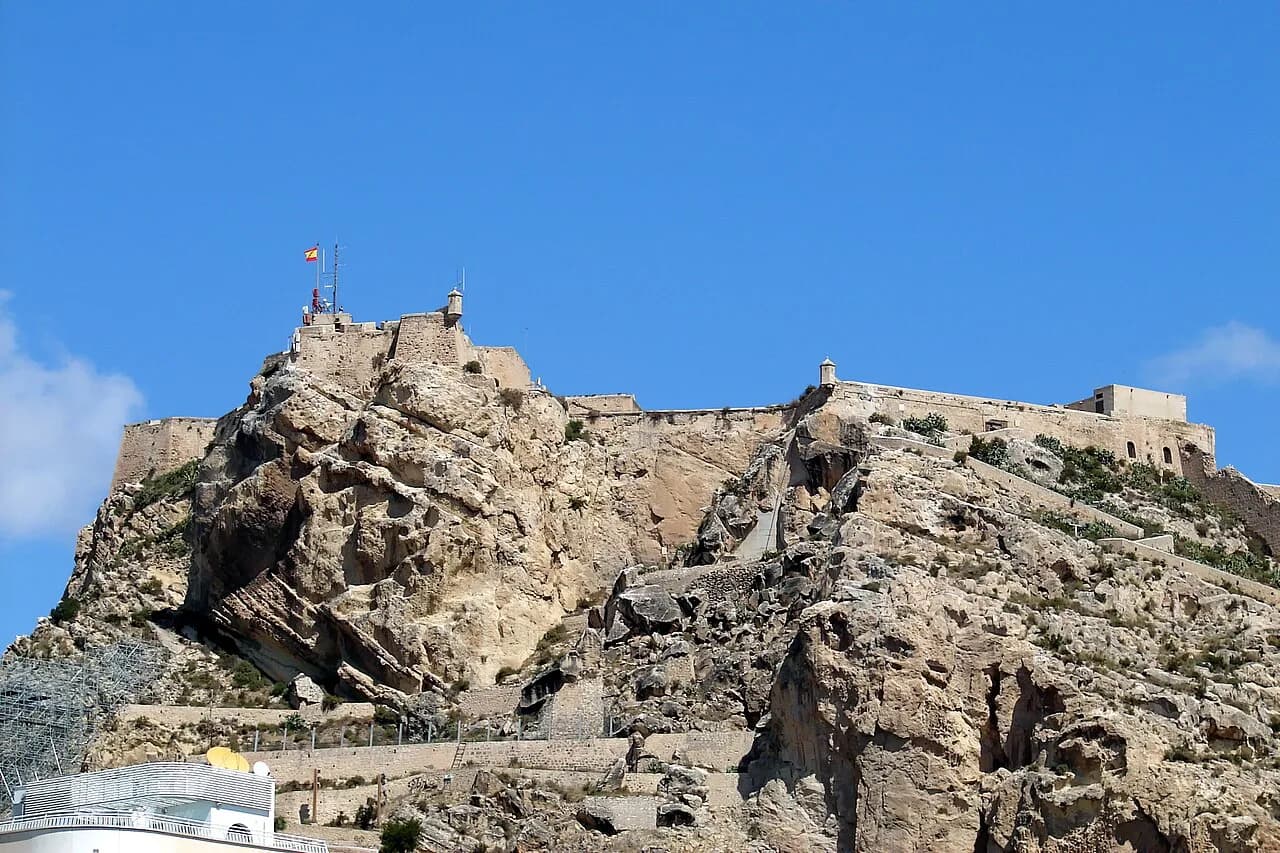
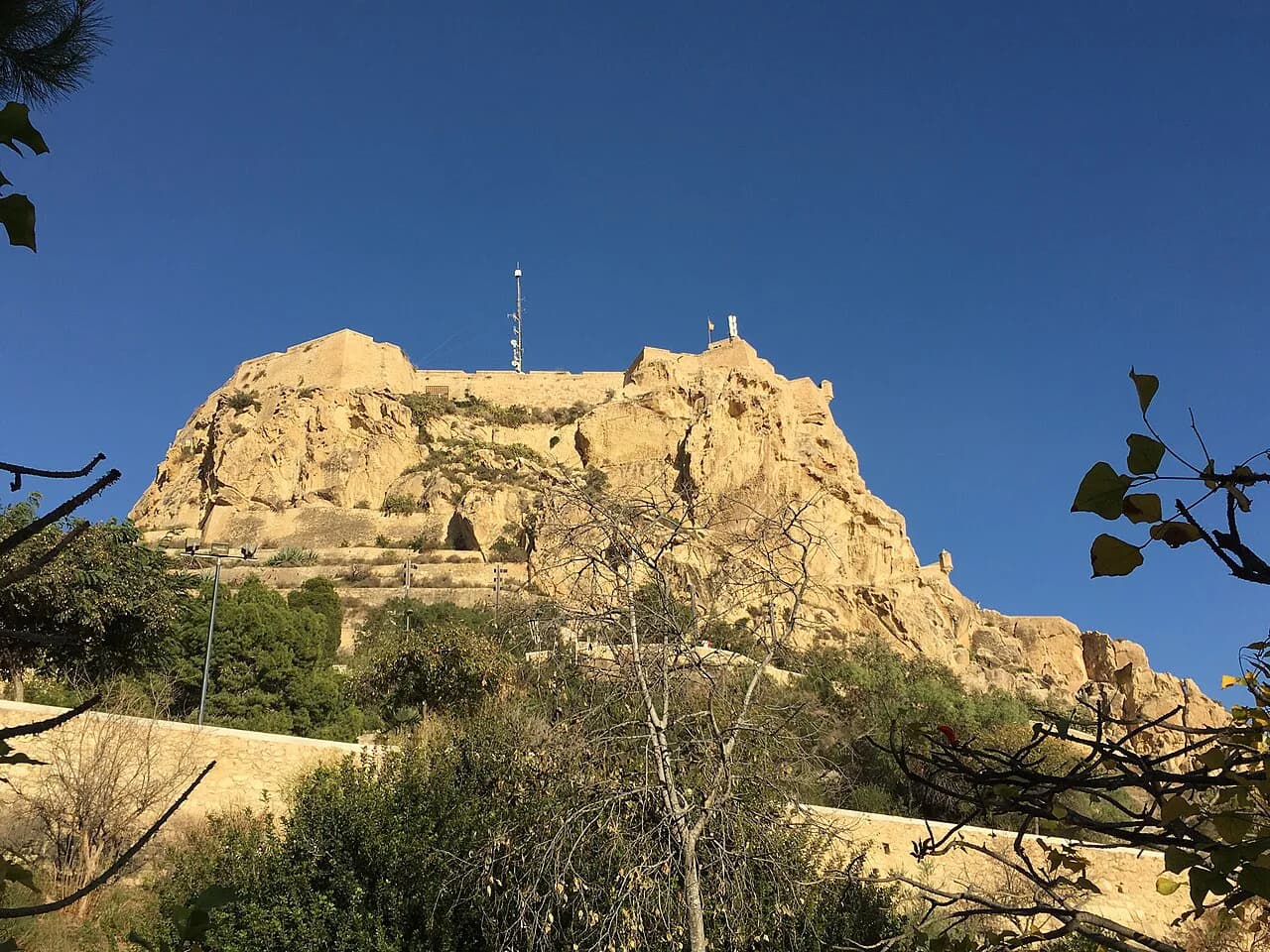
Keep the old town walk and the Castillo de Santa Bárbara on separate half-days. The castle sits above the route, and trying to combine the climb through Santa Cruz with the ascent to the fortress makes for a punishing day; the old town is better paired with a slow morning and the castle with a clear one. If you want to build the rest of the break around the old town, see Things to Do in Alicante.
For a change of scene on another day, the Isla de Tabarca is reached by boat from the port below the old town, which is a neat way to bookend the walk: history on foot one day, a crossing the next.
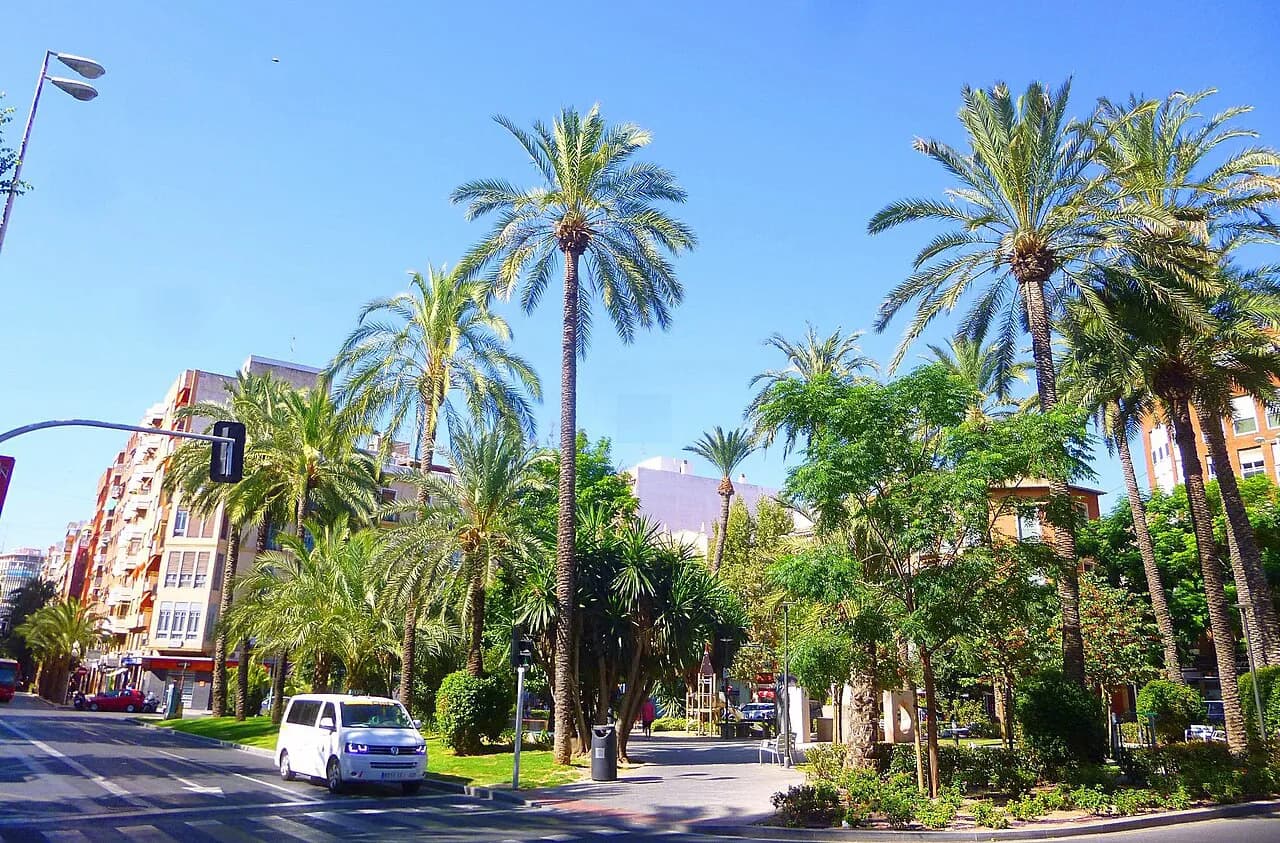
The city's gardens and parks give you a flat, green counterpart to the cobbles and steps of the old town, and make a sensible rest day between walking days.
Walk it yourself, or pay for the shortcut
The old town route is the best free introduction to Alicante: about 2 km from Puerta del Mar to MUBAG, through the medina streets, up into Santa Cruz, on to the Basílica de Santa María and out at MUBAG. Walk it in a morning or an evening, keep the church doors in mind around mass and the museums in mind around closing days, and it will repay the effort.
If you want the history explained rather than read from a plaque, the accredited two-hour tour starting at the Plaza Puerta del Mar, run by Guías Oficiales CV, is the straightforward upgrade. Either way, the walk is done in an afternoon and left in your memory far longer.
Explore more Alicante guides
Frequently Asked Questions
Where does the Alicante old town walking route start and finish?
The city route begins at the Puerta del Mar by the marina and ends at the Museo de Bellas Artes MUBAG, taking in the Ayuntamiento, the Concatedral de San Nicolás, Calle Labradores, the Barrio de Santa Cruz, the Ermita de San Roque, the Museo de Aguas de Alicante and the Basílica de Santa María along the way.
Is the route hilly?
Yes, in the middle. The lower town from Puerta del Mar to the concatedral is fairly level, but the climb through the Barrio de Santa Cruz and up to the Ermita de Santa Cruz is a real uphill stretch on cobbles. Pace it and take a rest at the top before continuing towards the basilica.
Do I need a guide for the Alicante old town?
No, the route is short and easy to follow, and the city publishes it stop by stop. A guide adds the history and saves orientation time, while self-guiding lets you spend longer at the concatedral, the basilica or MUBAG. Decide based on whether you want interpretation or freedom over the pace.
Sources
Notes for your next Spanish town break
Optional updates to our guides.
You might also like
Continue reading
More guides you'll find useful