Almería History: The Timeline You Can Walk Through
Almería's history as a short timeline tied to the Alcazaba, cathedral, Calle Almedina and the Coloraos monument, the places where each period is still visible.
On this page
Almería's history is best understood as a story told by buildings within a short walk of each other: the Alcazaba on its hill, the cathedral square below, the medina lanes between them and a church standing on the site of the main mosque. A single afternoon in the old town covers the main periods, from the port city of al-Andalus to the nineteenth-century liberals remembered in the Plaza de la Constitución. This guide works through that timeline in order, naming the streets, squares and monuments where each stage is still visible.
The layout makes this easy to plan. Start at the Alcazaba, drop down through the Almedina and Calle Real, cross the Plaza de la Catedral and finish in the Plaza de la Constitución, which is also the natural point to break for a coffee.
What Almería was called and why: al-Mariyyat al-Bayana, the 'mirror of the sea'
During the Islamic period the city was known as al-Mariyyat al-Bayana, which the Fundación El legado andalusí renders as the 'mirror of the sea'. The name reflects a port town whose economy and outlook faced the Mediterranean, not the Atlantic interior that later absorbed so much of Spain's attention. Keeping that image in mind helps when you reach the Alcazaba: you are looking at a maritime city's fortress, not an inland castle.
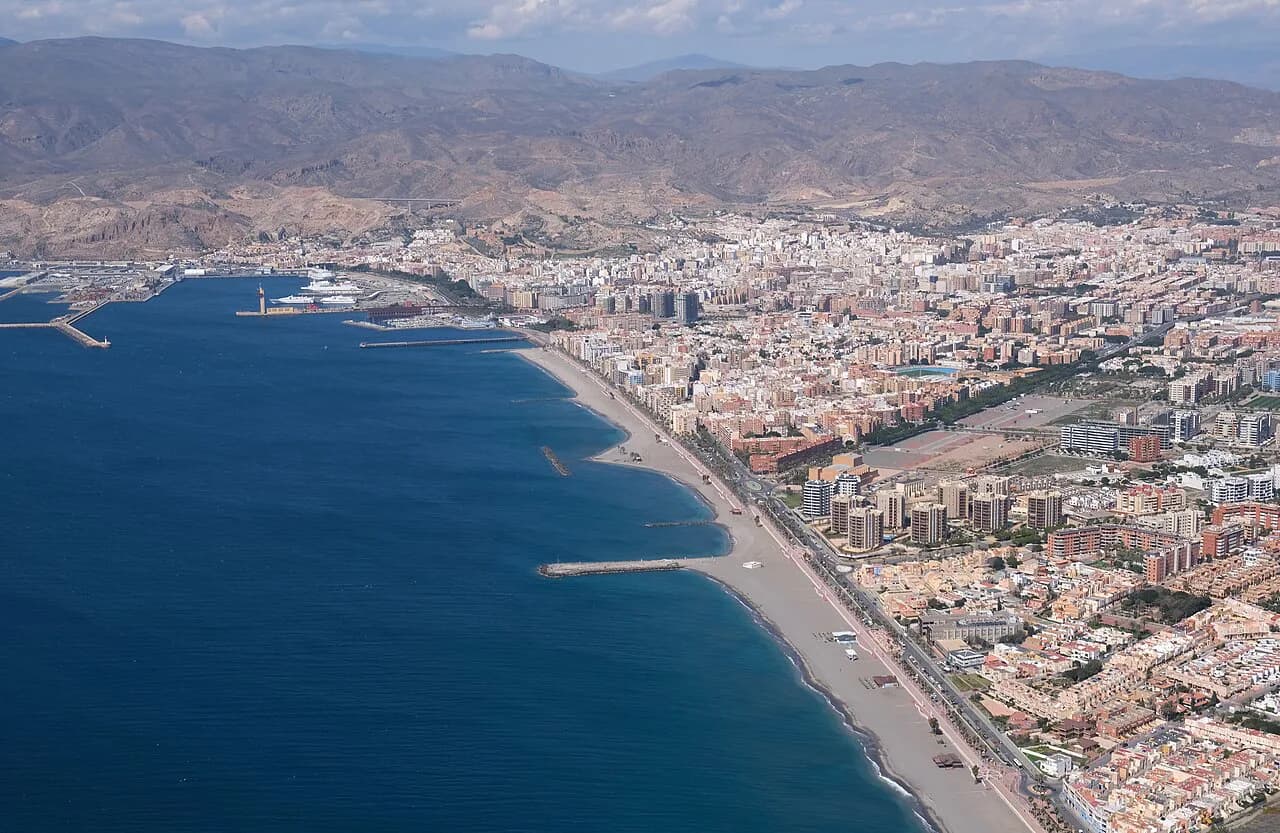
The Fundación El legado andalusí describes Almería as a free city before Dubrovnik, and as remaining faithful to the Mediterranean after the rest of Spain turned towards the Atlantic. The old town's tight lanes and shaded squares were shaped by sea trade, wind and the ramblas coming down from the mountains.
Why the Alcazaba is the starting point for any Almería timeline
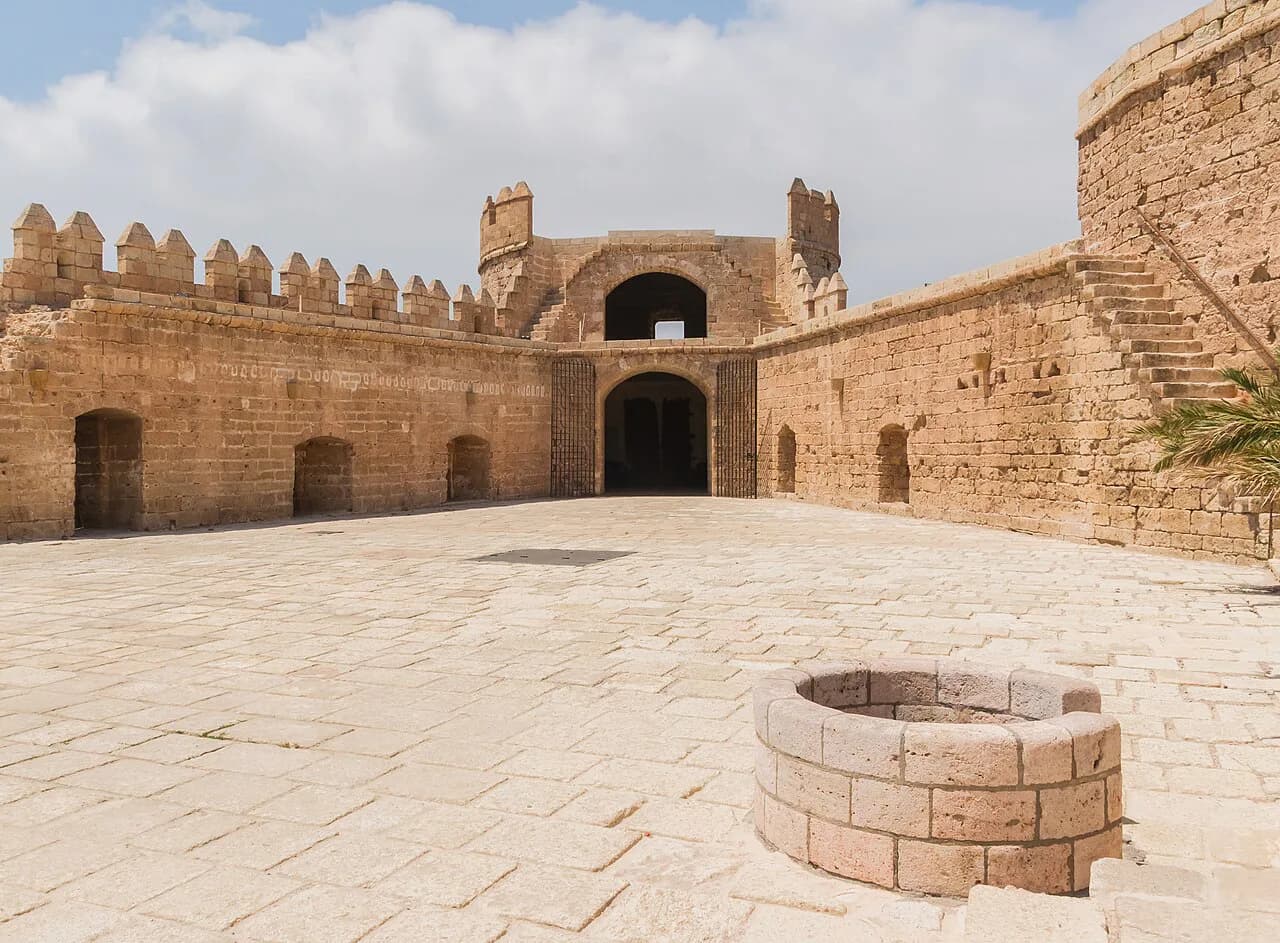
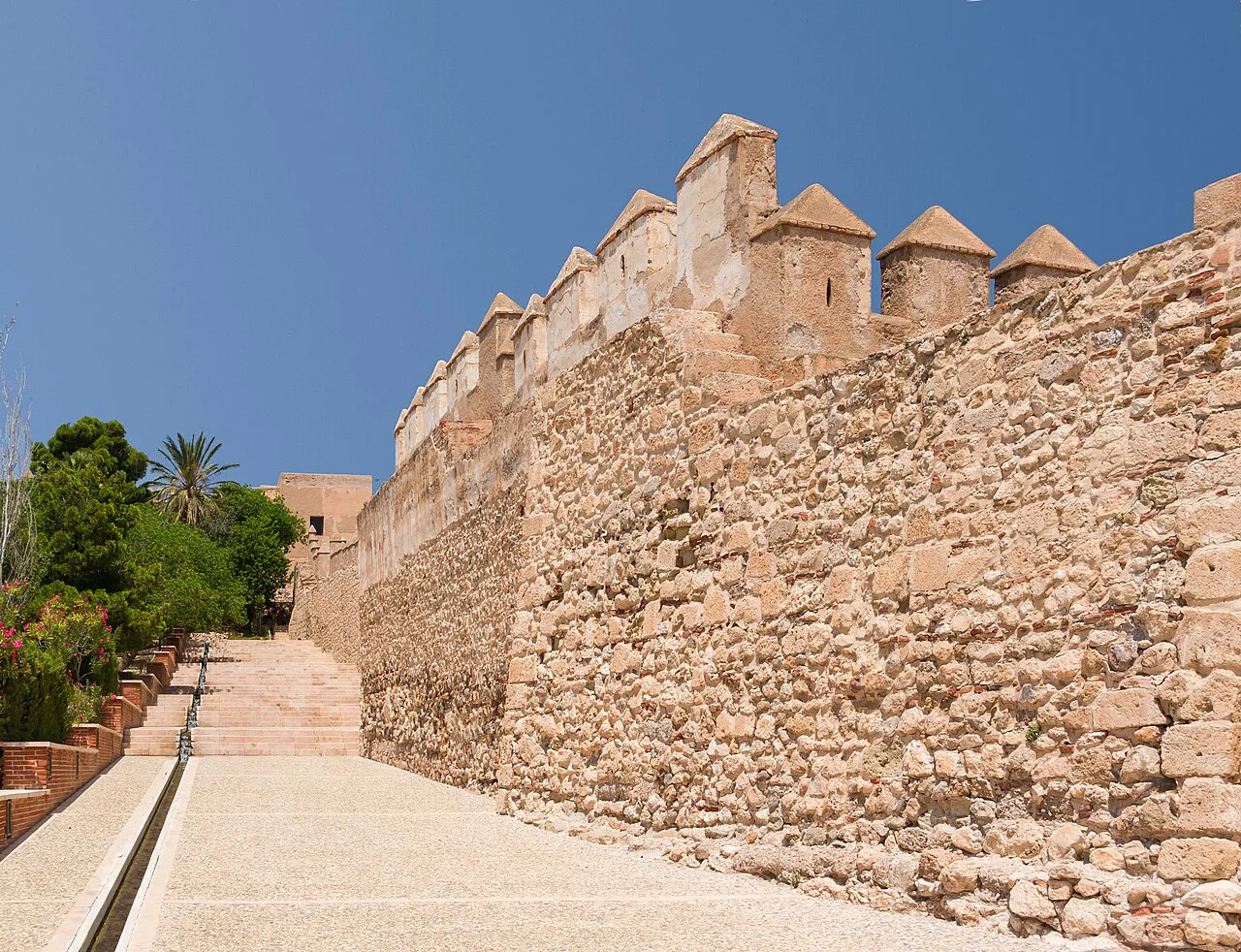
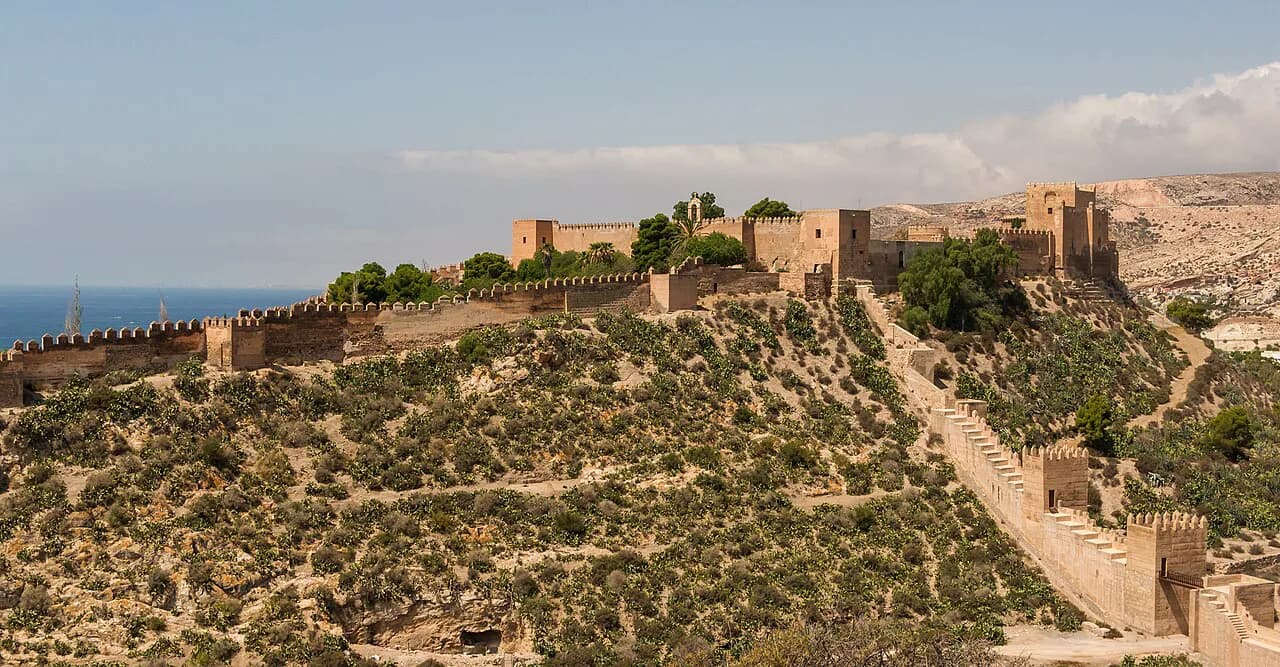
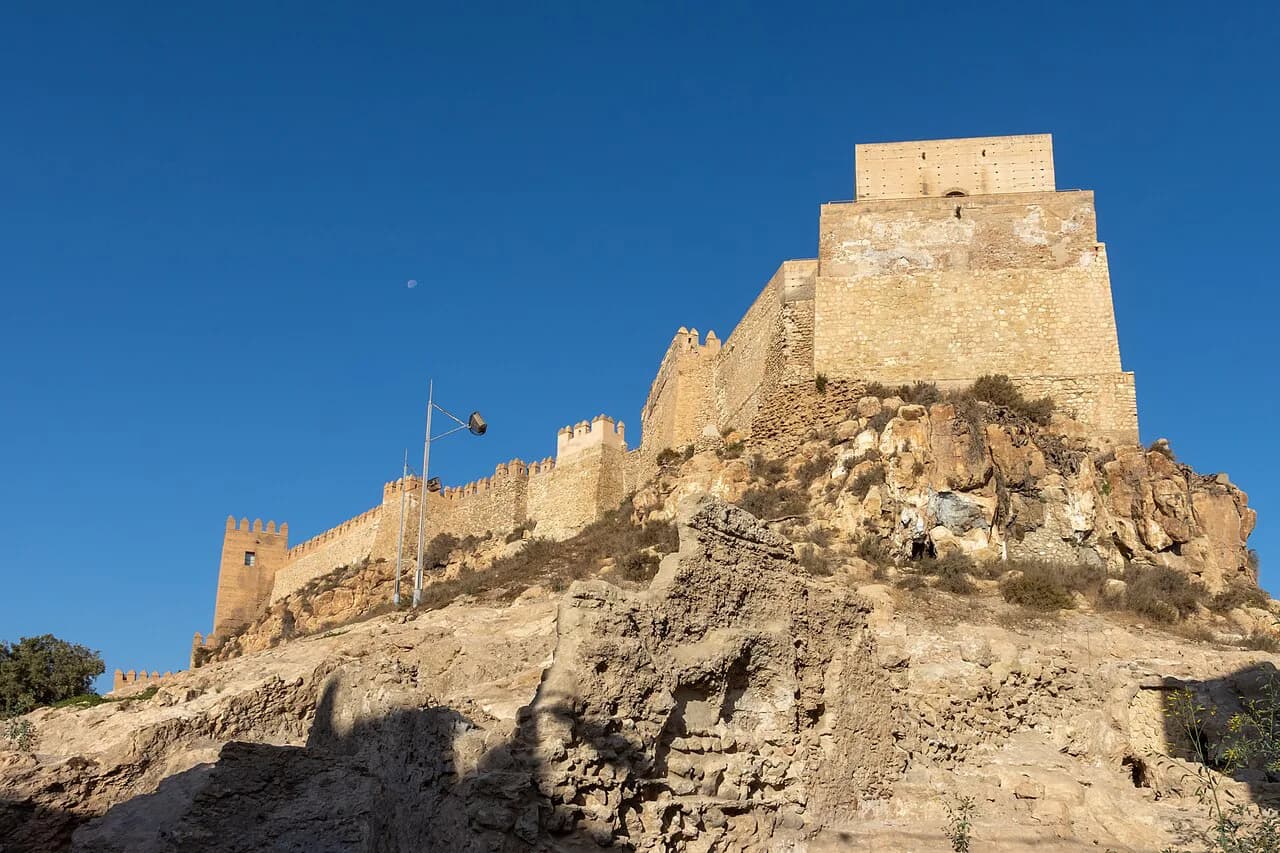
Abd al-Rahman III conceived the Alcazaba as a palace-fortress rather than a purely defensive wall, and the Fundación El legado andalusí describes the result as the most colossal building of its kind in Europe. Come here first: the scale of the walls explains why the city below developed the way it did, and the position gives you the layout of the old town in one view.
Allow real time on the hill rather than treating the fortress as a photo stop. Its gardens, water channels and restored rooms are part of the visit, and the walk down towards the Almedina afterwards puts you straight into the medieval street plan.
Al-Andalus and the poet-king Almotacín: the court on the hill
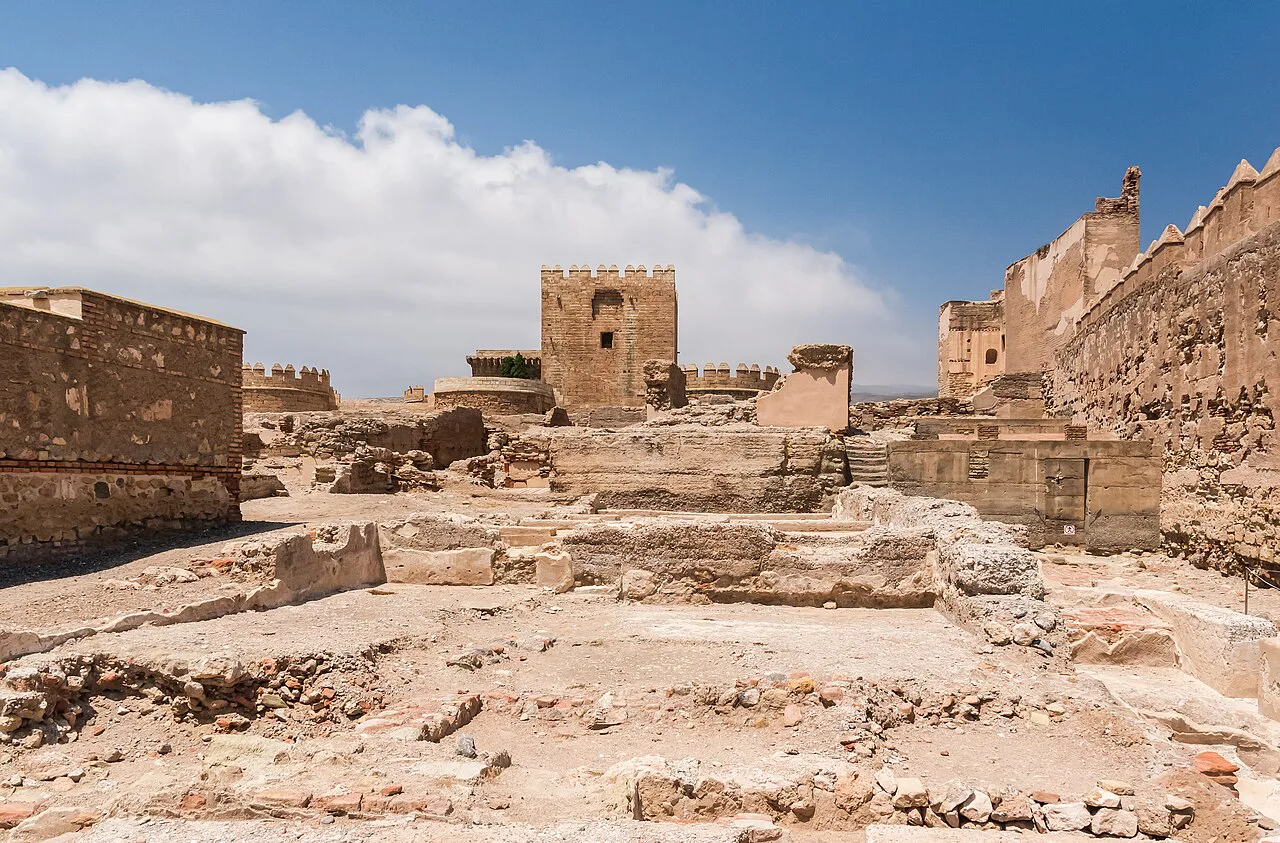
Almotacín, the eleventh-century king associated with Almería, was also a poet, and the Fundación El legado andalusí quotes his verses describing a green banner and a white dawn over the city. That court culture sat on the same hill as the fortress: poetry, gardens and water channels belonged together. The planted terraces you walk through are the modern restoration of that idea, not a dry military ruin.
The Fundación El legado andalusí records that for centuries the Alcazaba's walls were separated from the historic centre in sentiment as well as in practice, and that work on its architecture, plants and water channels began in 1992. That date is a useful marker: much of what looks ancient in the gardens is late twentieth-century conservation.
The port and the sea: how Almería's fortune was made
The Fundación El legado andalusí calls Almería the most important port of al-Andalus during the Ruta de las Alpujarras, which explains both the city's wealth and the extraordinary defences above it. A port of that standing needed protecting from the sea, so the Alcazaba's towers were built to be seen from the water. Walk along the Pescadería side and look up: the fortress reads as a seaward watchtower as much as a palace.
The mountains and ramblas behind the city shaped daily life as much as the sea did, sheltering the town while occasionally sending sudden floods down through it. That combination of shelter and risk is why the historic centre sits squeezed between the hills and the harbour.
The cathedral as a fortress: the Plaza de la Catedral and its walls
The cathedral was built with powerful walls and a watchtower, effectively as a fortress to protect the population from pirate raids during the centuries when the coast was exposed. Approach it up Calle Real, past the last surviving arch of the medina, and the fortified look makes immediate sense. The Plaza de la Catedral is one of the two largest squares in the historic centre, the other being the square by the town hall.
Pair the cathedral square with the convent attached to it, then move on towards the town hall square; the Fundación El legado andalusí notes that each of the two main squares has a convent alongside it. The pleasure is in the sequence rather than a checklist: fortress wall, square, convent, then the civic centre of the old city.
The old medina on foot: Calle Almedina, Calle Real and the Arquillo
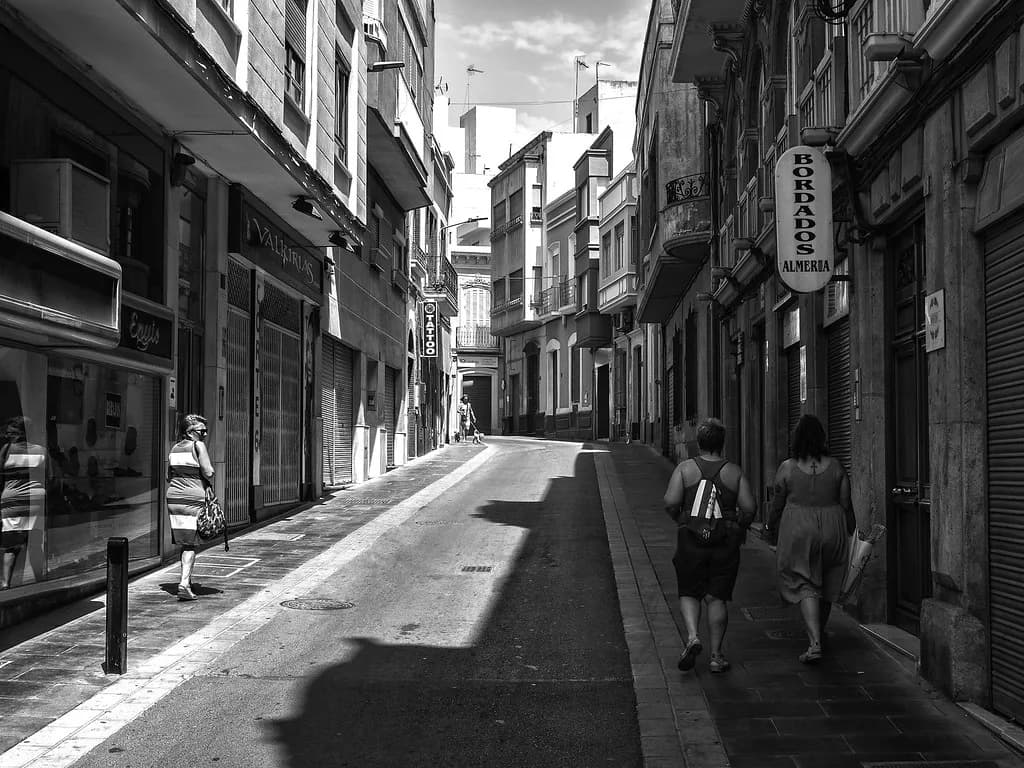
Calle Almedina follows the line of the Roman decumano, the main axis of the ancient city, and its narrow course still defines how you move through the centre. Perpendicular to it runs Calle de San Juan, with the church of the same name. Reading the street plan this way turns a wander into a lesson: the Roman grid, the Islamic medina and the Christian city are layered in the same few hundred metres.
Calle Real climbs towards the cathedral and passes the Arquillo, the only one of the medina's many arches still standing. Use the lanes for shade in the middle of the day and keep an eye out for the small hidden squares.
San Juan and the mosque beneath it: the mihrab you can still see
The church of San Juan was built over Almería's main mosque, and a large section of the mihrab survived hidden inside the Christian building; the Legado Andalusí describes its arabesques as evidence of the original oratory's magnificence. Look for it when you visit the church rather than passing the facade. It is the clearest proof that the Islamic city is still physically present beneath the later one.
This part of the centre is also where the narrow lanes open into small squares, and the Legado Andalusí notes that it was the Almería of Federico García Lorca's childhood. Treat the area as a slow zone: it rewards looking up at doorways and balconies more than following a checklist.
The Plaza de la Constitución and the Coloraos monument
The Plaza de la Constitución, with the town hall and its surrounding arcade, functions as a miniature Plaza Mayor linking the Alcazaba with the modern city. In the centre stands the monument to the Coloraos, the constitutionalists who rose against the absolutism of Fernando VII and paid with their lives; the Legado Andalusí notes that the figure in the square today is a copy, and that the original stood at Puerta de Purchena. Knowing that changes how you read the square.
The Amigos de la Alcazaba recall the same events by comparing Almería with Málaga, where a monument to the executed liberals has presided over the Plaza de la Merced since soon after the fusilamientos; they also record that Almería's monument was destroyed in 1943 ahead of a visit by Franco. The association uses the comparison to argue for keeping the city's nineteenth-century squares tree-lined and legible.
The Alcazaba's long decline and its restoration from 1992
The Legado Andalusí is candid about the Alcazaba's modern history: the walls that once held gardens and fountains were emotionally cut off from the historic centre, and the complex decayed along with the neighbourhoods around it. Restoration of the architecture, the planting and the water channels began in 1992 and has since changed how the hill reads from the city. Go expecting a place in recovery rather than a pristine monument, and the mix of old stone and new planting makes more sense.
The neighbourhood below, Pescadería, was once known for houses whitewashed in bright colours, a tradition the Legado Andalusí says has largely disappeared. Look for surviving examples as you climb towards the fortress; the painted facades are as much a part of the city's history as the walls above them.
Where Almería's past shows up in the modern city
The old town sits within a working city, so the past and present overlap in ordinary ways: the arcaded square by the town hall connects the Alcazaba with the modern streets, and the old lanes open onto a shopping quarter that most visitors use without noticing the transition. Plan the walk so that history comes first and the centre afterwards.
The Legado Andalusí also notes that Almería has stood in for Istanbul, Cairo, Messina, Palermo and a Californian city on film, a reminder that the city's light and architecture have long been borrowed by others. That is a passing curiosity rather than the reason to come, but it explains why parts of the coast and old town may look familiar.
What to see if you only have an afternoon
With one afternoon, begin at the Alcazaba, walk down through the Almedina and Calle Real to the Plaza de la Catedral, look for the mihrab in San Juan, and finish with the Coloraos monument in the Plaza de la Constitución. That route covers every period in this timeline and keeps you inside the old town, where the distances are short. Take a map before you set out, because the lanes are deliberately irregular and the small squares are easy to miss.
If you want to see the fortress properly rather than glance at it, give the Alcazaba its own visit and treat the walk below as a separate outing. The view from the hill down over Pescadería and the rooftops is the best orientation the city offers.
Which part of Almería's past should you see first?
Start with the Alcazaba. It is the building that explains the rest of the timeline: the port, the defences, the palace court and the medieval street plan below. From there the cathedral square, the medina lanes and the Plaza de la Constitución follow naturally, with the San Juan mihrab and the Coloraos monument as the two details most visitors miss.
Build the day around the old town rather than the wider city, and leave the shopping streets for after the history. If your time is short, the afternoon route above covers each period on foot.
Explore more Almería guides
Frequently Asked Questions
Was Almería ever the most important port in al-Andalus?
The Fundación El legado andalusí describes Almería as the most important port of al-Andalus during the Ruta de las Alpujarras, which explains why its defences above the harbour were built on such an extraordinary scale under Abd al-Rahman III. That maritime wealth is the reason the Alcazaba was conceived as a palace-fortress as well as a stronghold.
Where can you see Moorish remains in Almería's old town?
The Alcazaba is the main surviving complex, with restored gardens, water channels and rooms on the hill. Below it, the church of San Juan was built over the main mosque and preserves a large section of the mihrab, and the street layout of Calle Almedina and the surviving Arquillo arch still follow the medieval medina.
Why is the Coloraos monument in the Plaza de la Constitución a copy?
The Fundación El legado andalusí records that the original monument stood at Puerta de Purchena and that the figure in the square today is a copy. The Amigos de la Alcazaba add that Almería's monument was destroyed in 1943 ahead of Franco's visit to the city.
What is Almería famous for?
Its Alcazaba, conceived as a palace-fortress under Abd al-Rahman III, is the best-known monument, and the Fundación El legado andalusí also stresses the city's long Mediterranean orientation and its port heritage. Almería has served as a filming location for cities such as Istanbul, Cairo and Palermo, though that is a curiosity rather than the main draw.
Sources
Notes for your next Spanish town break
Optional updates to our guides.
You might also like
Continue reading
More guides you'll find useful