Almería Old Town: A Walking Guide to the Historic Quarter
Walk Almería's old town from Plaza Vieja up to the Alcazaba, down through the Almedina to the fortress cathedral, with routing, hills and summer heat advice.
On this page
Almería's old town is best walked as one loop: start at Plaza Vieja, climb to the Alcazaba, come back down through the Almedina quarter and finish at the fortress cathedral. Allow half a day plus your time inside the fortress, and plan the climb for early morning in summer, when the hill is still in shade and the heat has not built.
This guide follows the streets in the order you actually walk them and explains what changes at each stage, from the old zoco to the palm-lined cathedral square. It also flags the practical constraint that shapes every visit here: the hills and stairs, which make comfortable shoes more important than a packed schedule. Individual monuments have their own pages, so opening times and ticket checks sit there rather than here.
What Almería's old town covers
The historic quarter gathers in the space between the port and the hill of the Alcazaba. Plaza Vieja, formally Plaza de la Constitución, sits at its heart and once held the city's Arab bazaar, while the Almedina is described as the oldest neighbourhood in the city, spreading below the fortress. The Catedral de la Encarnación and its palm-planted square close the loop on the eastern side. For the full picture of the city's monuments, see Things to Do in Almería.
Two elevated points bracket the quarter: the Alcazaba itself, and the Cerro de San Cristóbal above it, where the castle and walls of the monumental complex continue. The quarter has no single gate to enter through; it frays into the modern grid around Puerta de Purchena and Calle Jovellanos, which is where most visitors first walk in without noticing.
How the old town is laid out and how long a walk needs
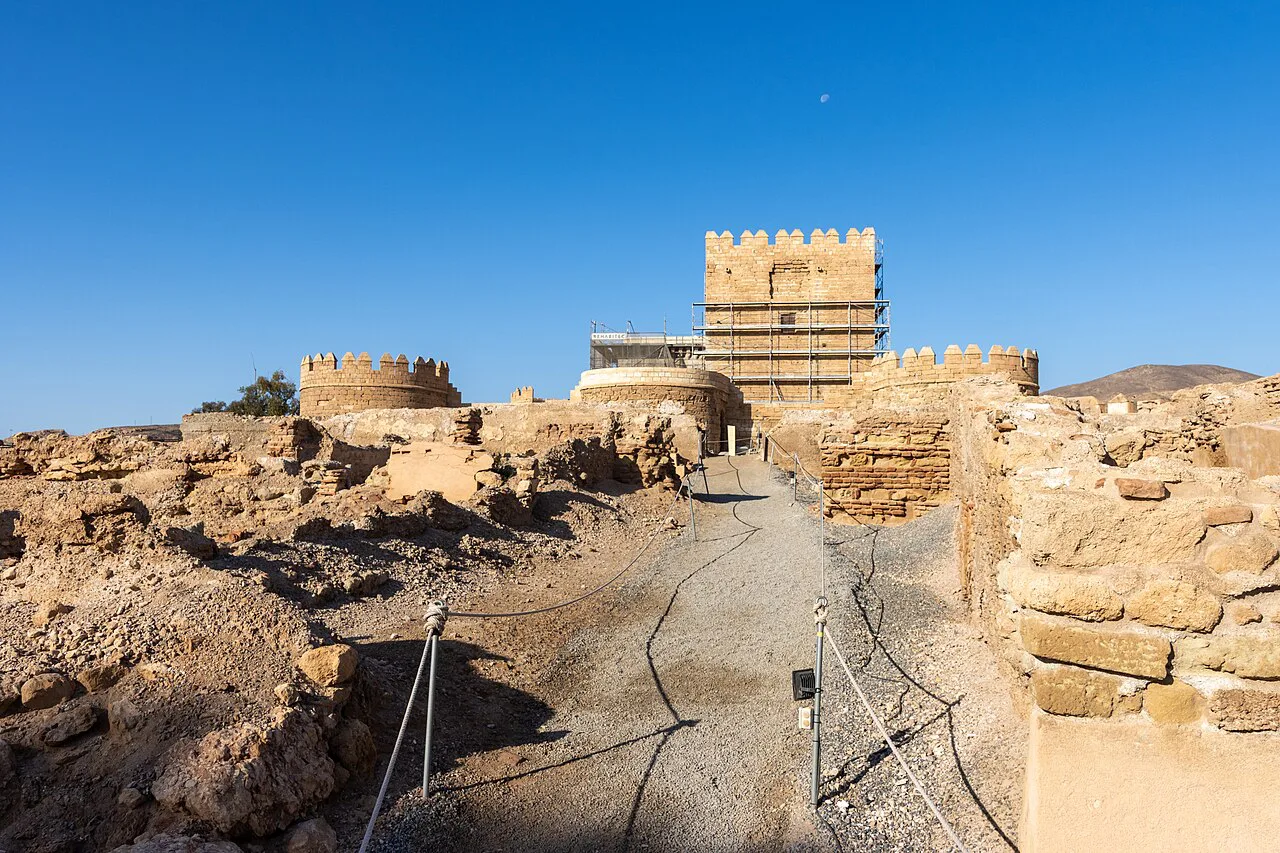
Treat the quarter as three tiers. The lowest is Plaza Vieja and the shopping streets around it; the middle is the Almedina, a knot of lanes climbing the slope; the top is the Alcazaba ridge, reached by a long ramp rather than a single set of steps. Walking between tiers is what takes the time, not the distances, which are short.
A sensible shape is half a day for the streets plus the cathedral, with the fortress visit added on top rather than squeezed in. If you have only an afternoon, do Plaza Vieja, the Almedina and the cathedral and leave the climb for another trip; the reverse order, fortress first and streets second, tends to run out of daylight and energy. The background on how the city grew around this hill, from the caliphate foundation to the Christian town, is worth reading before you set the order.
Start at Plaza Vieja (Plaza de la Constitución)
Begin at Plaza Vieja, which is also Plaza de la Constitución, the busy square that was the city's Arab zoco and today holds the Ayuntamiento and the tourist information office. It works as a start point because everything else in the quarter radiates from it and because you can pick up a paper map before the lanes begin to bend. The square's Martyrs of Liberty monument and the Centro de Interpretación Patrimonial, which is free to enter, give context on the city's past before you climb.
Use the tourist office on the plaza for the practical side of the day: the office publishes its current hours, and the Centro de Interpretación Patrimonial next to it is the free stop that explains what you are about to see uphill. Allow twenty minutes for both, then head for the slope.
Climb to the Alcazaba
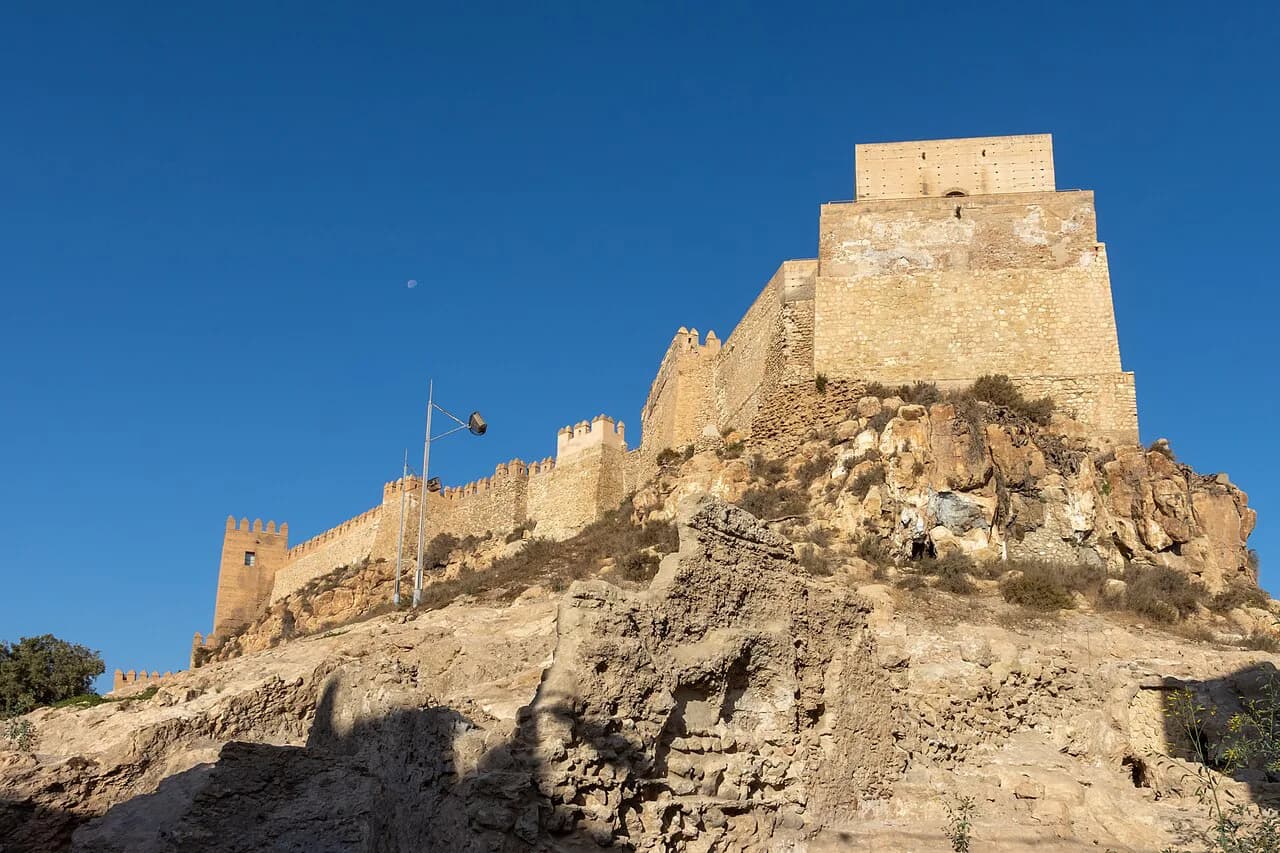
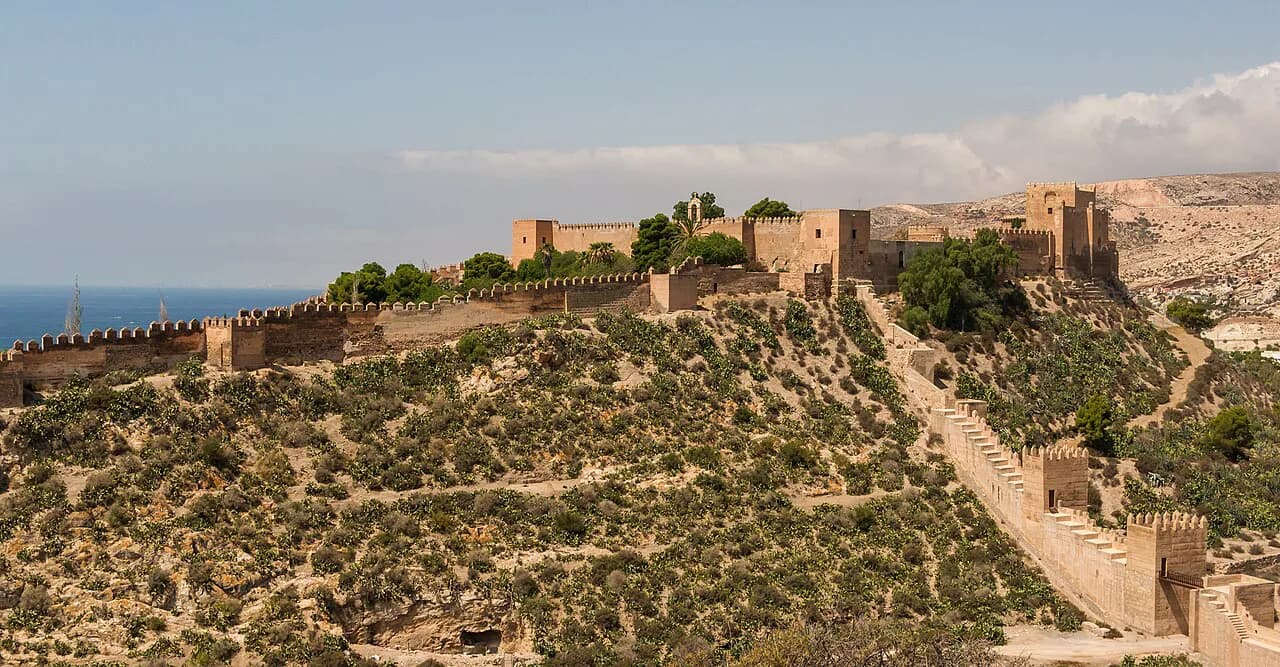
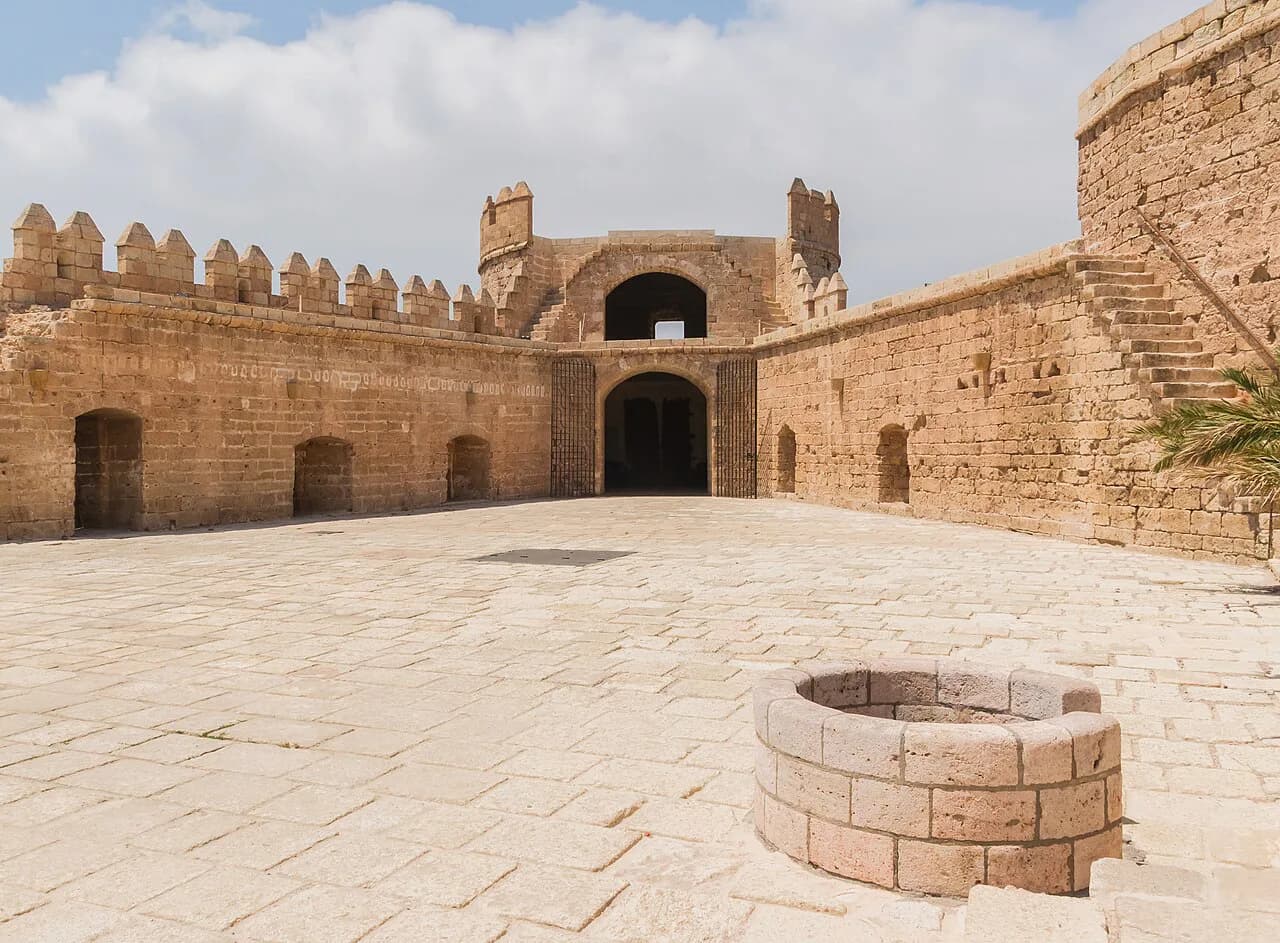
The Alcazaba is the reason to walk this quarter first and everything else second: a tenth-century fortress begun under Abderramán III, the founder of the city, with more than 1,400 metres of walls and a monumental complex that also takes in the castle and walls of the Cerro de San Cristóbal. It ranks among the most important survivals of the Al-Ándalus period.
The climb is the day's main effort, so give it the morning in summer, when the source notes it is still possible to walk up without the worst of the heat. The walls, gardens and towers take time to cross on foot, and the reward is the view back over the city, the port and the Mediterranean. Sunset from the Cerro de San Cristóbal above is the other end of the day if you would rather split the visit.
Take the descent through the Parque de la Olla and the Cerro de San Cristóbal for the classic view of the city below, then re-enter the lanes of the Almedina. The route back up takes in the old water cisterns of Jayrán, so the way down is sightseeing rather than dead time.
The Almedina quarter
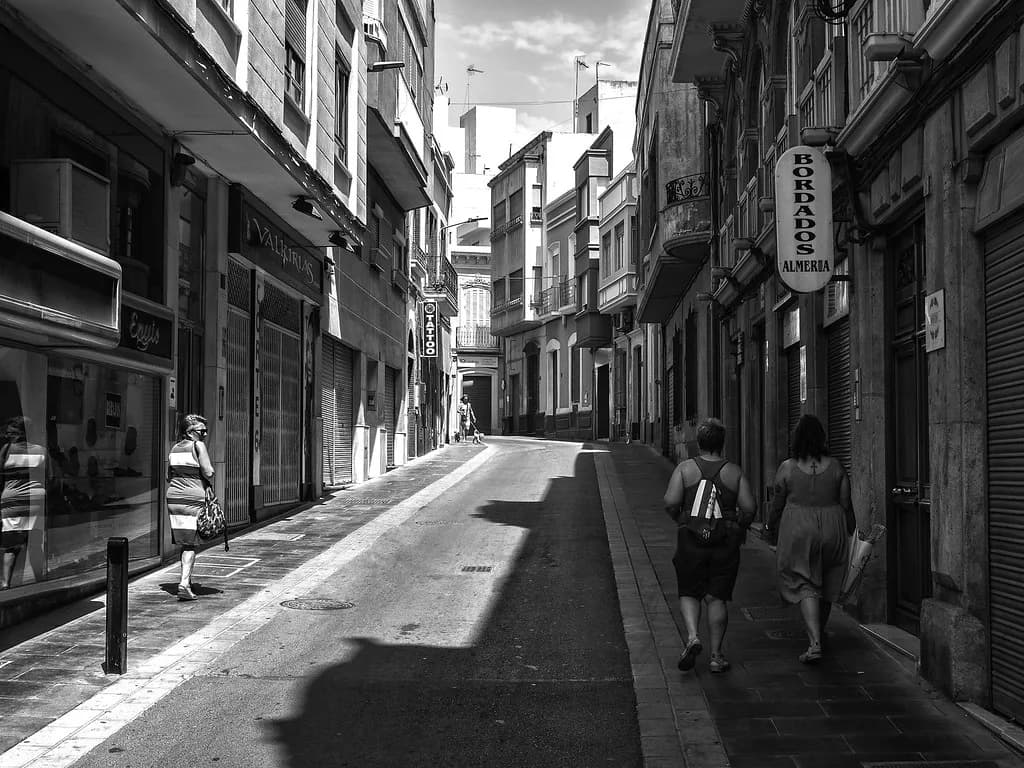
Below the fortress, the Almedina is the oldest part of the city and the most rewarding stretch for walking slowly: narrow lanes, white walls and sudden openings onto the plain below. It is a residential quarter as well as a historic one, so keep the pace down and expect the odd dead end.
The lanes connect the Alcazaba ridge back to the cathedral square without dropping you into modern traffic, which is the point of routing the walk this way. If you are short of time, this is the section to compress; if you are not, it is the section to linger in. Read up on Almería History before you walk these lanes, and the uphill siting of the quarter becomes easier to read.
Almería Cathedral: the fortress-church on its palm-lined square
The Catedral de la Encarnación is the quarter's second landmark, built from the sixteenth century and unusual for the defensive fortress form it took to guard against attack from the sea. It sits in a wide square planted with palms, and the contrast between the heavy exterior and the open square is the thing to notice before you go in.
Architecturally, the cathedral shows the passage from late Gothic to Renaissance, with Baroque and Neoclassical elements added later, so the interior is worth reading as a layered building rather than a single style. Look for the defensive towers and thick walls outside and the Renaissance handling inside. Entry arrangements and any guided visiting times are published by the cathedral itself; this guide does not quote them.
Where the old town meets the modern city
Puerta de Purchena and Calle Jovellanos mark the edge of the historic centre, where the lanes open into the busiest streets of the modern city. Walk through them in either direction and you can feel the change in scale: the old quarter is low and winding, the new one straight and commercial. They are also the easiest landmarks to navigate back to if the lanes confuse you.
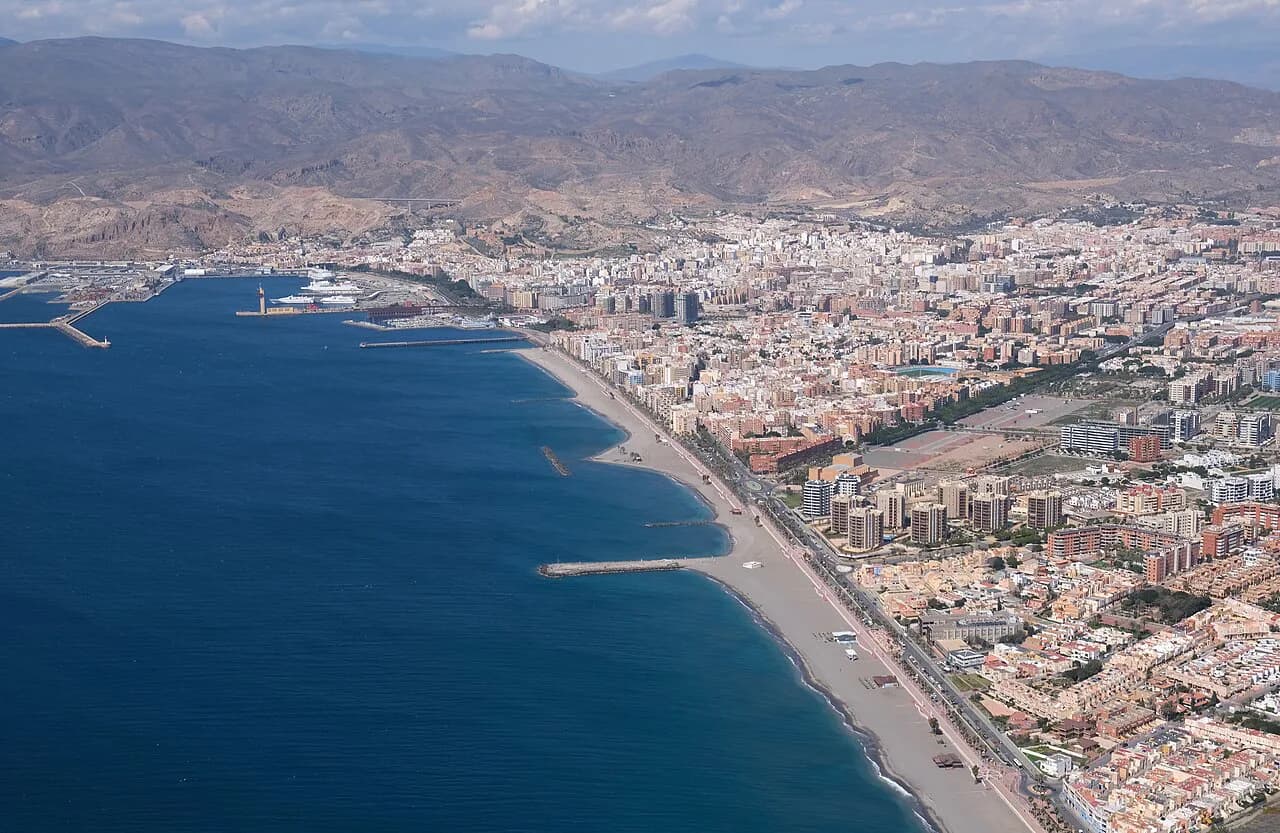
Continue downhill and the historic centre meets the port at the Cable Inglés, the mineral-loading structure on the waterfront, and the Paseo Marítimo beyond it. This is the natural end of a walking loop: you finish at sea level with the whole quarter behind you.
Heat, hills and comfortable shoes
Summer heat is the practical constraint on this walk, not distance. The Alcazaba hill is best done early, when the climb is still bearable, and the Almedina lanes give shade in the middle of the day. Inland Andalusian temperatures at midday are not the time to start the fortress.
The old quarter is hilly and stepped in places, so wear shoes that cope with slopes and uneven paving rather than sandals for a short stroll. Carry water for the climb and treat the descent as part of the walk rather than a rest.
Add-ons beyond the quarter
Two sights outside the historic core deserve their own slot. The Civil War refugios are underground tunnels built during the Civil War to shelter the population from the frequent bombing, more than four kilometres long with capacity for 40,000 people and even an operating theatre, and they sit near the centre rather than within the old lanes. The Museo de Almería holds the city's archaeological collection and is a separate visit, not a stop on the walk.
Both are best planned as a second half-day, especially if you have already climbed to the Alcazaba. The refugios visit is guided and runs on a limited capacity, so reserve ahead before setting out.
Which half of the day to give the fortress
Give the Alcazaba the morning and the streets the afternoon. The climb is the fixed point of the day, the heat decides how comfortable it is, and the reward is the quarter laid out below you before the lanes fill.
If you only have an afternoon, walk Plaza Vieja, the Almedina and the cathedral, and save the fortress for a return visit. That version of the old town is shorter, flatter and still shows you why the quarter repays a slow walk.
Explore more Almería guides
Sources
Notes for your next Spanish town break
Optional updates to our guides.
You might also like
Continue reading
More guides you'll find useful