Things to Do in Almería: Alcazaba, Cathedral and City Sights
The best things to do in Almería, from the Alcazaba and fortress cathedral to the Civil War shelters and old-town plazas, with realistic timings.
On this page
Almería rewards a short break with two clusters of sights within walking distance: the Alcazaba on its hill with the Muralla de Jayrán, and the old town around the Cathedral-Fortress of the Encarnación. The Alcazaba is described as the largest Arab fortress in Spain after the Alhambra, and it alone justifies the climb. This guide orders the sights by area, gives per-sight visit times, flags the free-entry conditions and separates the city from the province trips that need a car.
Plan on one full day for the city core and a second morning for museums or the waterfront, then decide whether a half-day in Cabo de Gata or the Desierto de Tabernas fits your flight home. Summer midday heat on the climb to the Alcazaba is real, so start early and keep the museums for the afternoon.
What to see in Almería first: the Alcazaba and its walls
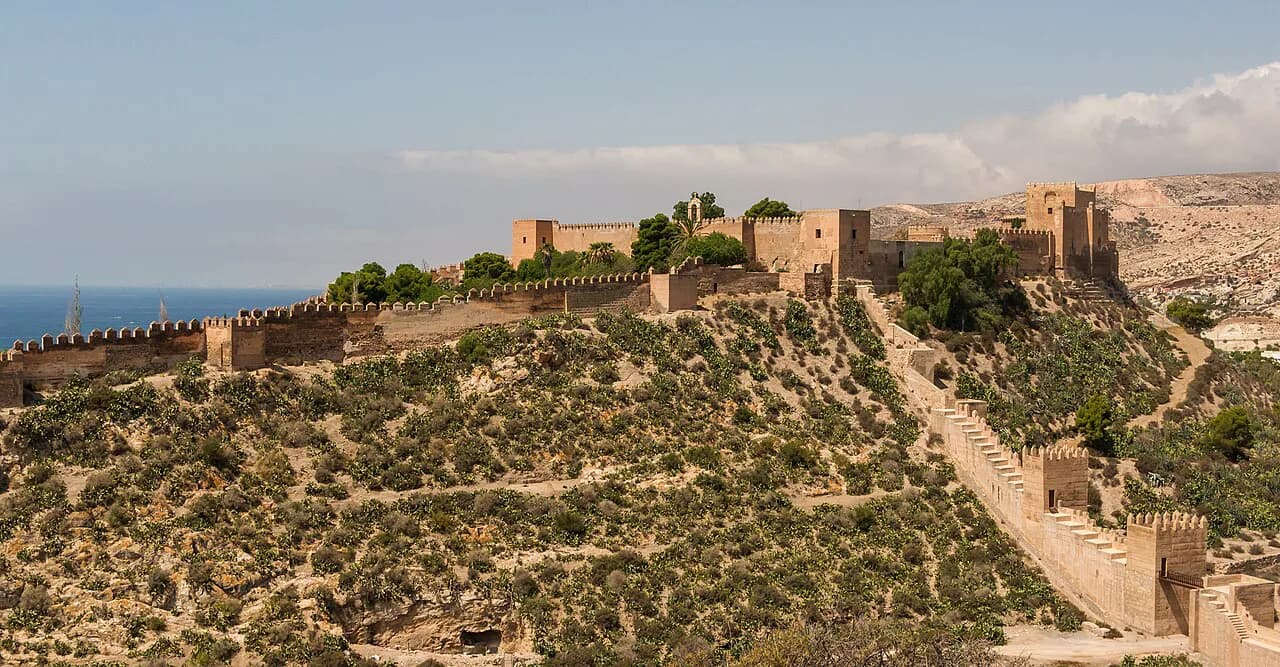
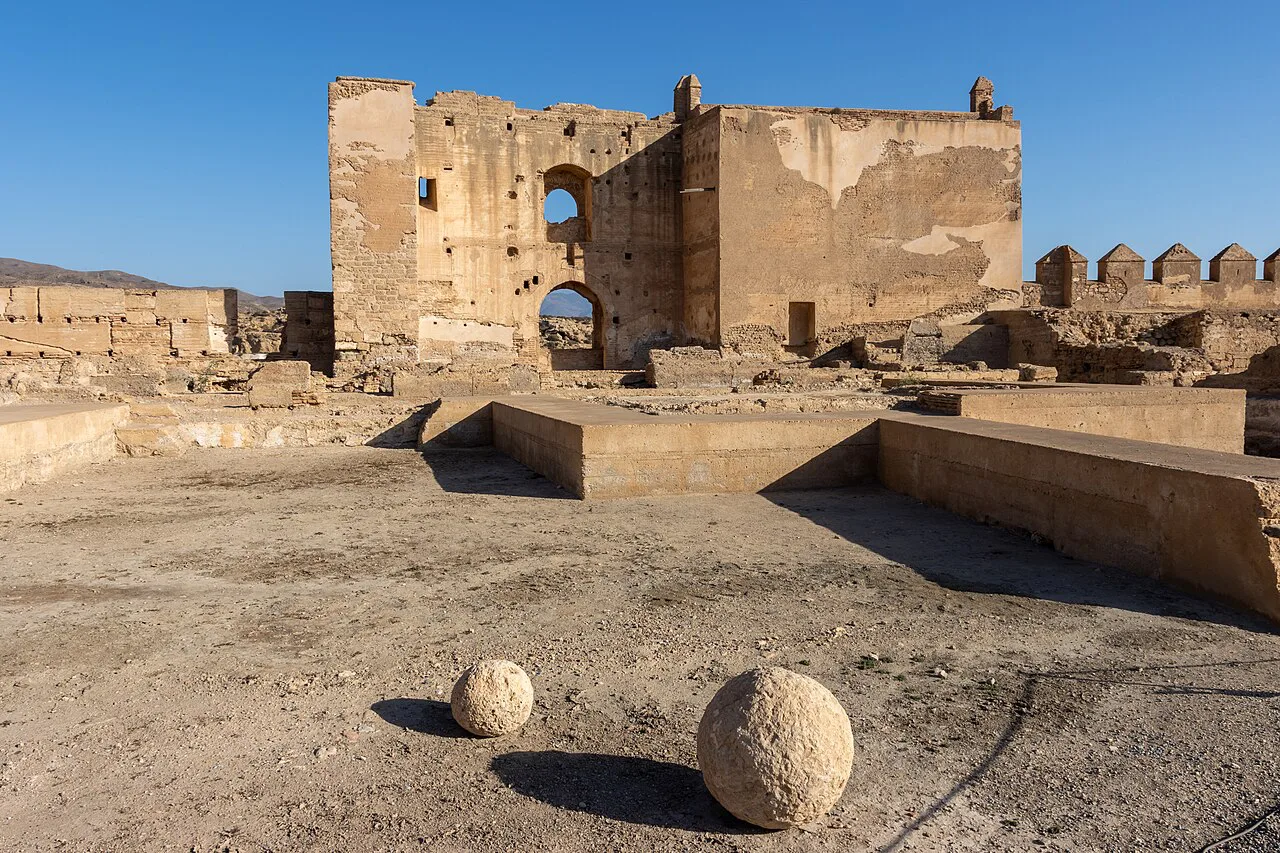
Start at the Alcazaba, a tenth-century caliphal fortress with three walled enclosures, gardens and fountains, looking out over the port and the sea. Allow around an hour and a half for the climb and the walk through the enclosures. Entry is free for EU citizens, which makes it the best-value sight in the city and the obvious first stop.
The Muralla de Jayrán, an eleventh-century defensive wall, begins inside the Alcazaba and is one of the most impressive stretches of rampart in southern Spain. Walk it as part of the fortress visit rather than as a separate outing, and wear shoes that cope with uneven stone.
The climb is steep and exposed, so go in the morning in summer and carry water. Combine the fortress with the old town below rather than returning to a hotel between the two.
The Cathedral-Fortress of the Encarnación
Almería's cathedral was built as a fortress to defend against Berber pirate raids, which is why it has buttresses, a solid exterior and a mix of Gothic, Baroque and Neoclassical work inside. It is the only cathedral-fortress of its kind in Spain and takes about forty-five minutes to see properly.
Entry costs 6 EUR. The cathedral is an active place of worship, so tourist visits are not possible during mass; check the day's schedule before you go rather than arriving mid-service.
The old town: Puerta de Purchena, Paseo de Almería, Rambla de Belén and Plaza de la Constitución
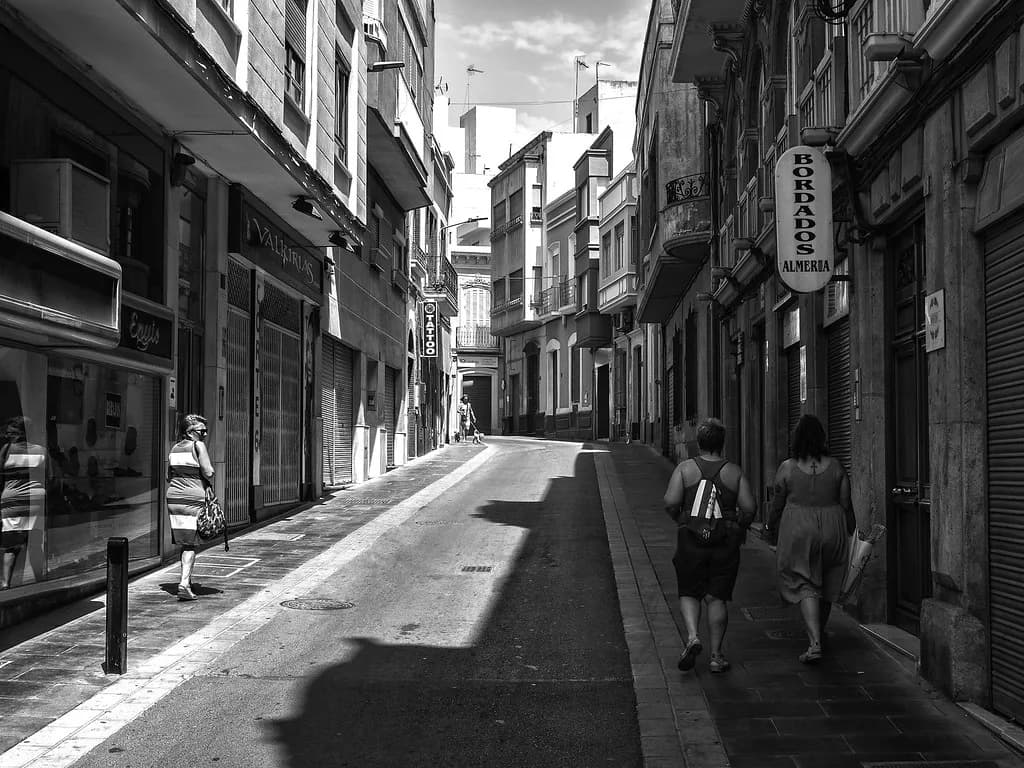
Puerta de Purchena is the city's central square, ringed by the Fuente de Cañillo, the statue of Nicolás Salmerón and the Casa de las Mariposas. From there the Paseo de Almería and the Rambla de Belén form the main commercial spine, useful for orienting yourself on the first morning.
Plaza de la Constitución stands on the site of the old Arab souk and is the natural pause between the cathedral and the shopping streets. The Almería Old Town around these squares is compact enough to cross in twenty minutes, so treat the plazas as waypoints on a walking loop rather than destinations in themselves.
The Civil War air-raid shelters under the city
Beneath the streets run 4.5 kilometres of Civil War tunnels that sheltered up to 40,000 people during bombing raids. Guided visits take about forty-five minutes and cost 3 EUR, and they are the most atmospheric counterpoint to the sunny plazas above.
The shelters are cool and dark, which makes them a sensible midday stop in summer. Book or check the day's slots before you set out, since access is by guided visit only.
Museums: the Museo de Almería archaeological collection and the Museo de la Guitarra
The Museo de Almería holds an archaeological collection that traces the province from prehistory through to al-Mariyyat al-Bayana, the Moorish city whose name the modern town carries; for the wider story see Almería History. Entry is free for EU citizens, so it costs nothing to add an hour of context before or after the Alcazaba. The Museo de la Guitarra is the city's other distinctive museum and a good wet-day or hot-afternoon alternative. If you're weighing a second Andalusian city break, the things to do in A Coruña make a useful comparison for pacing a compact old town.
The Cable Inglés and the Puerto Viejo waterfront
The Cable Inglés is the iron ore-loading structure on the old port, a striking piece of industrial heritage that now frames the waterfront walk. Pair it with the Puerto Viejo and the harbour edge, where the city turns from stone to sea.
This is an easy, flat hour at the end of the day, and it connects naturally to the Paseo Marítimo and Playa del Zapillo if you want a longer walk.
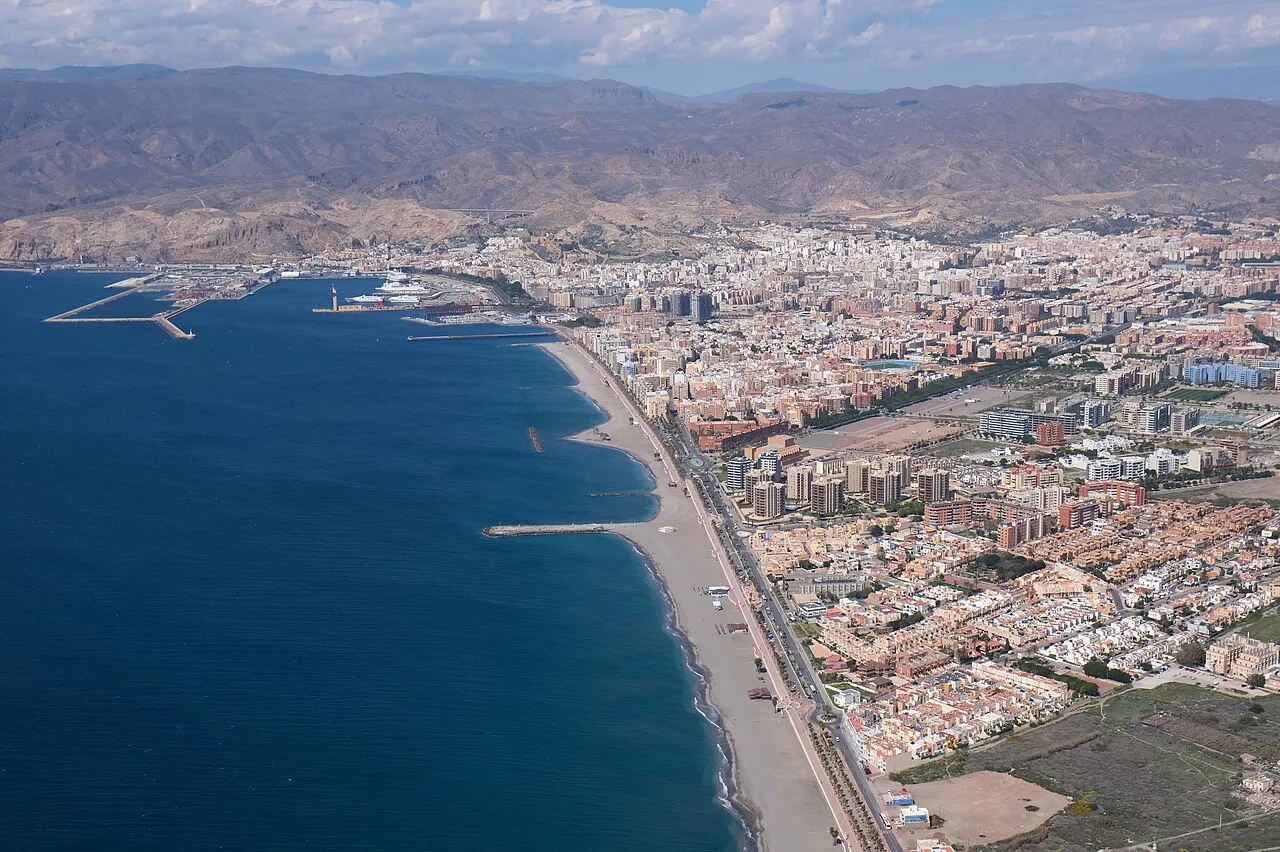
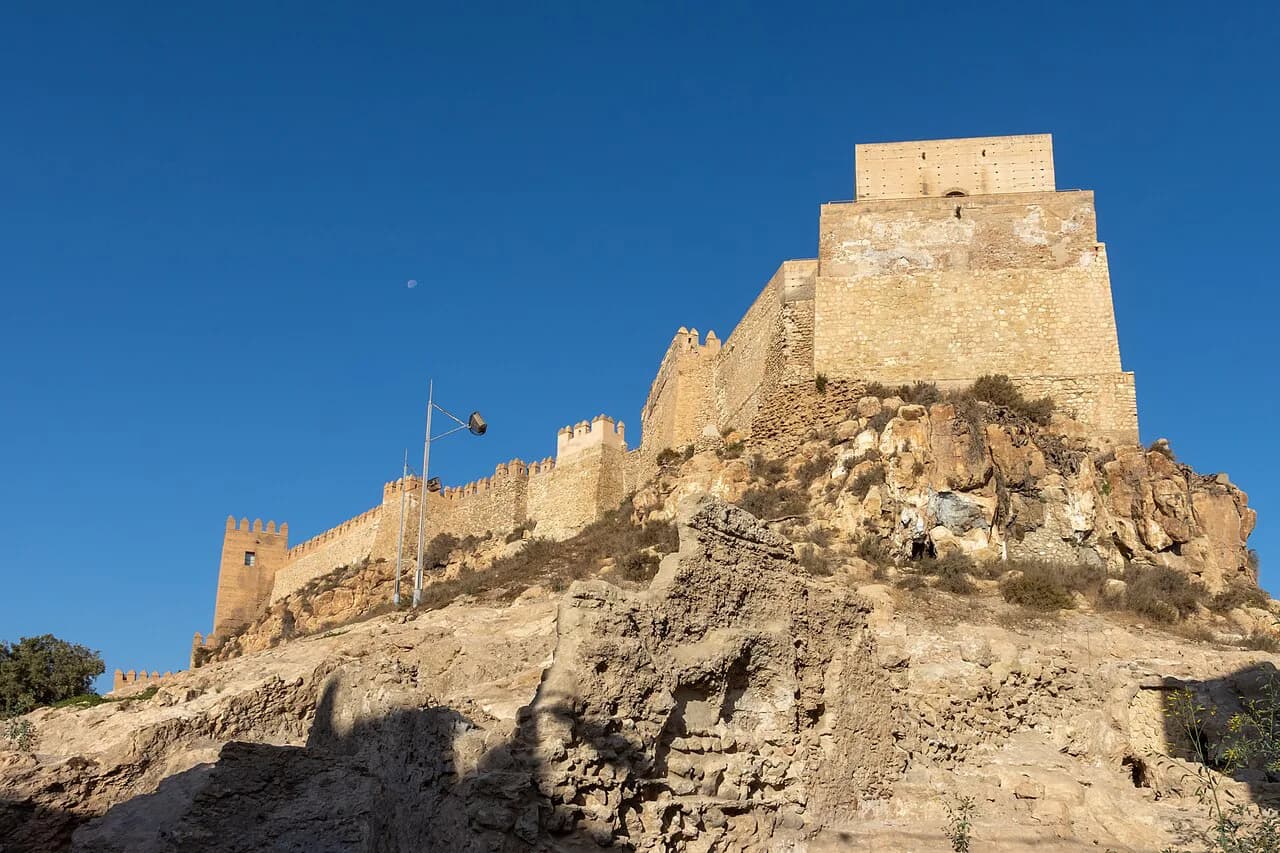
The Alcazaba defences seen from the city below
Seen from the city below, the fortress, the eleventh-century Muralla de Jayrán and the sea read together as a single defensive system. The hilltop position explains why the Alcazaba dominated the port and the approaches to the old town.
Treat the defences as part of the Alcazaba visit rather than a separate climb, and keep the walking order: hill first, old town second, waterfront last.
The Paseo Marítimo and Playa del Zapillo
The city's urban beach, Playa del Zapillo, runs along a palm-lined paseo marítimo with chiringuitos. An hour here is enough to see the seafront and rest your legs after the hill.
The waterfront is the natural end of a walking day: flat, open and close to the centre. It also gives you a reason to return in the evening rather than squeezing everything into daylight.
Free things to do in Almería
The Alcazaba and the Museo de Almería are free for EU citizens, which covers the two headline sights at no cost. The city's beaches and the Cabo de Gata park are free to visit as well.
The trade-off is the paid pair: the cathedral at 6 EUR and the Civil War shelters at 3 EUR cost little but are the two sights most likely to be missed by travellers counting only the free stops. Budget for both and build the day around them.
Getting around the city on foot: how the sights fit together
The city core is walkable: the Alcazaba hill, Puerta de Purchena, the cathedral and Plaza de la Constitución sit within a compact loop, with the waterfront a short walk beyond. An Almería Map for Visitors shows how the hill, the old town and the port line up, which helps you avoid doubling back up the slope.
The train and bus stations and the airport, under ten kilometres from the capital, put the city within easy reach for a short break. Almería also works as a base for the province, but the city sights themselves need no car.
A sample day in Almería
Begin at the Alcazaba when it opens, spend around ninety minutes on the fortress and walls, then walk down through the old town past Puerta de Purchena to the cathedral. Take the forty-five-minute cathedral visit before lunch, then use the hottest hours for the Museo de Almería or the cool tunnels of the Civil War shelters.
Finish with the Cable Inglés and the Puerto Viejo, then the Paseo Marítimo towards Playa del Zapillo. The order matters more than the pace: hill first, old town second, waterfront last.
How long Almería needs and how it fits a short break
One full day covers the Alcazaba, the cathedral and the old town comfortably; a second morning adds the museums, the shelters and the waterfront without rushing. That makes Almería a natural two-night city break, with the province as the optional third day.
If your flight lands at Málaga or Alicante, the transfer eats into a short break, so keep the city day intact and treat any province trip as a bonus rather than the point of the visit.
Beyond the city: Cabo de Gata, the Desierto de Tabernas and Mojácar
The Parque Natural del Cabo de Gata-Níjar, with the Playa de los Genoveses, Mónsul and the Arrecife de las Sirenas, deserves half a day and a car. The Desierto de Tabernas, Europe's only desert and the setting for countless westerns, also takes half a day; the Oasys and MiniHollywood parks charge admission, so check current ticket prices before you go.
Mojácar, the white hill town on the coast, is the easiest add-on by car and pairs naturally with Cabo de Gata. All three need a vehicle and a half-day each, so pick one rather than trying to fit the province around a single city day.
Which Almería sights to book first
Prioritise the Alcazaba and the Civil War shelters, add the cathedral and budget for its admission fee, and leave the museums as the flexible slot. That order locks in the two sights that define the city and keeps the walking day compact.
If you have a second day, choose between Cabo de Gata and the Desierto de Tabernas rather than attempting both, and hire a car for whichever you pick. Either way, start early to beat the inland heat on the climb.
Explore more Almería guides
Frequently Asked Questions
Is Almería worth visiting?
Yes, if you want a compact Andalusian city with a major fortress, a cathedral built as a stronghold and a walkable old town. The Alcazaba, the largest Arab fortress in Spain after the Alhambra, and the Cathedral-Fortress of the Encarnación are the two sights that justify the trip on their own, and the city core fits into a single full day.
What is the nicest part of Almería?
The old town around Puerta de Purchena, Plaza de la Constitución and the cathedral is the most rewarding area to walk, with the Alcazaba hill directly above it. The waterfront around the Cable Inglés and the Puerto Viejo is the best place to end the day.
What should not be missed in Almería?
The Alcazaba and its walls, the Cathedral-Fortress and the Civil War air-raid shelters are the three sights to prioritise. The Museo de Almería is the best add-on for context, and the Paseo Marítimo gives you the city's seaward side.
Is Almería full of Brits?
The guides describe Almería as a Spanish city first, with the Alcazaba, the old town and the Andalusian plazas at its centre. They do not characterise the city by any one visitor nationality.
Sources
Notes for your next Spanish town break
Optional updates to our guides.
You might also like
Continue reading
More guides you'll find useful