Things to Do in A Coruña: Old Town, Marina and the Torre de Hércules
Plan a short break in A Coruña with a circular walk from the glass galleries of La Marina to Plaza María Pita, San Antón castle and the Torre de Hércules.
On this page
A Coruña fits into one focused day: a circular walk of roughly three hours through the Marina and the old town behind it, then a separate leg along the seafront to the Torre de Hércules. The city splits neatly into those two halves, and treating them as two outings rather than one long march makes a short break far easier to plan. This guide gives a stopping order with named streets and squares, the facade details worth slowing for, and the practical limits of heat and rain.
The walk begins and ends at La Marina, so you can break off for rain or a late start without stranding yourself at the far end of the peninsula. Everything in the old-town loop sits within a compact area of a few hundred metres, while the lighthouse sits out along the coast and is best saved for clearer weather.
How A Coruña is laid out
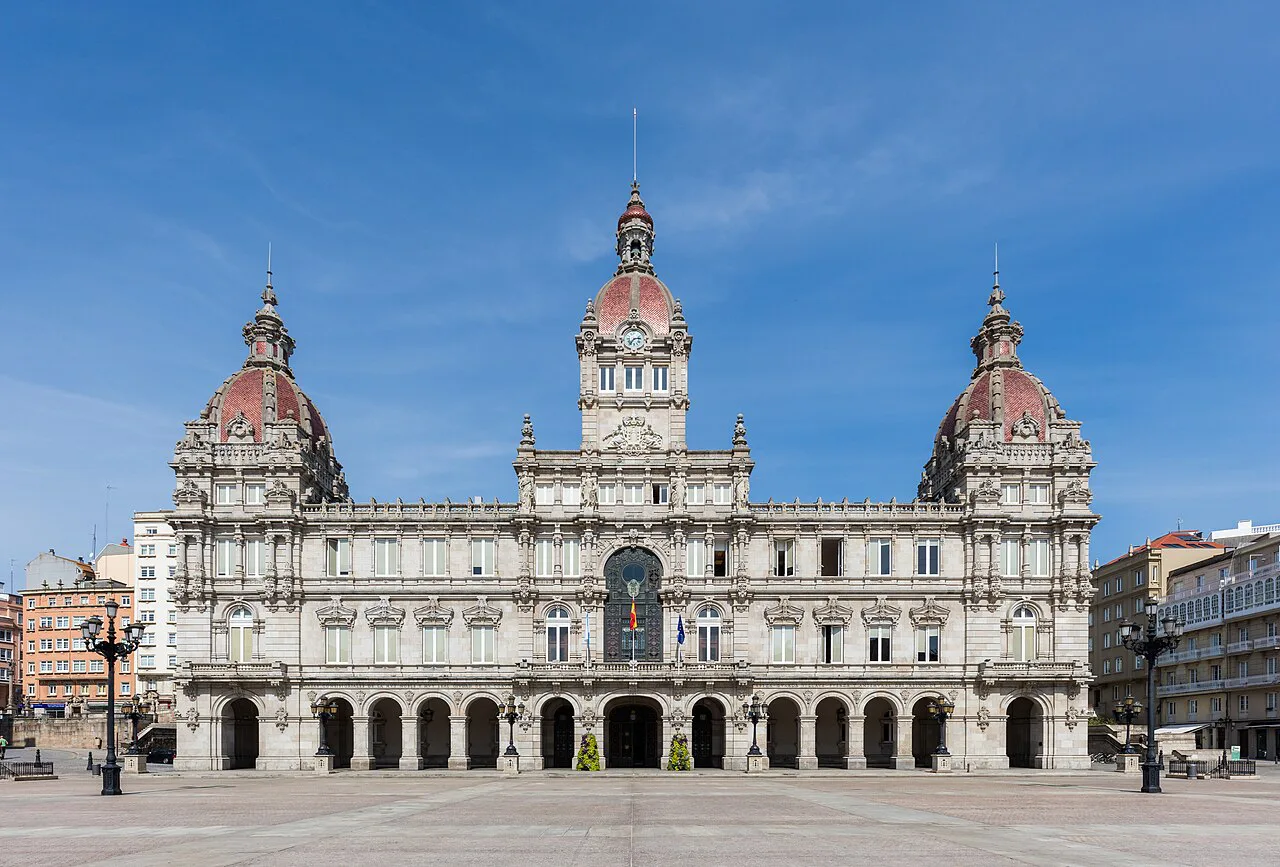
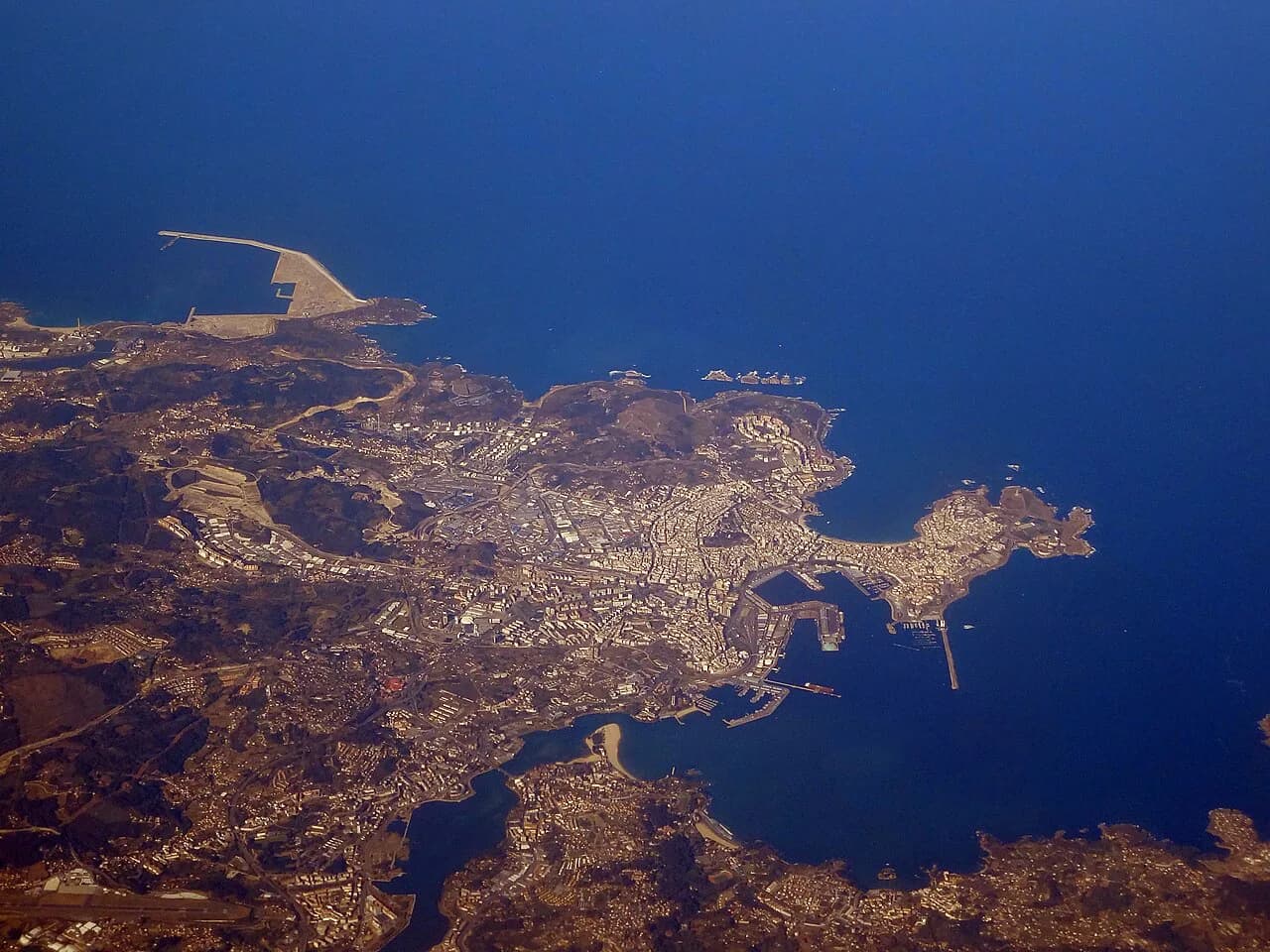
A Coruña occupies a peninsula, and the port side is where visitors naturally start. The long waterfront of La Marina runs along the harbour, the arcaded Plaza María Pita opens just behind it, and the streets of the old town climb away from the water in a tight knot of churches and small squares. Everything here is walkable, and the tourist board's own city pages are the place to confirm seasonal opening times before you set out.
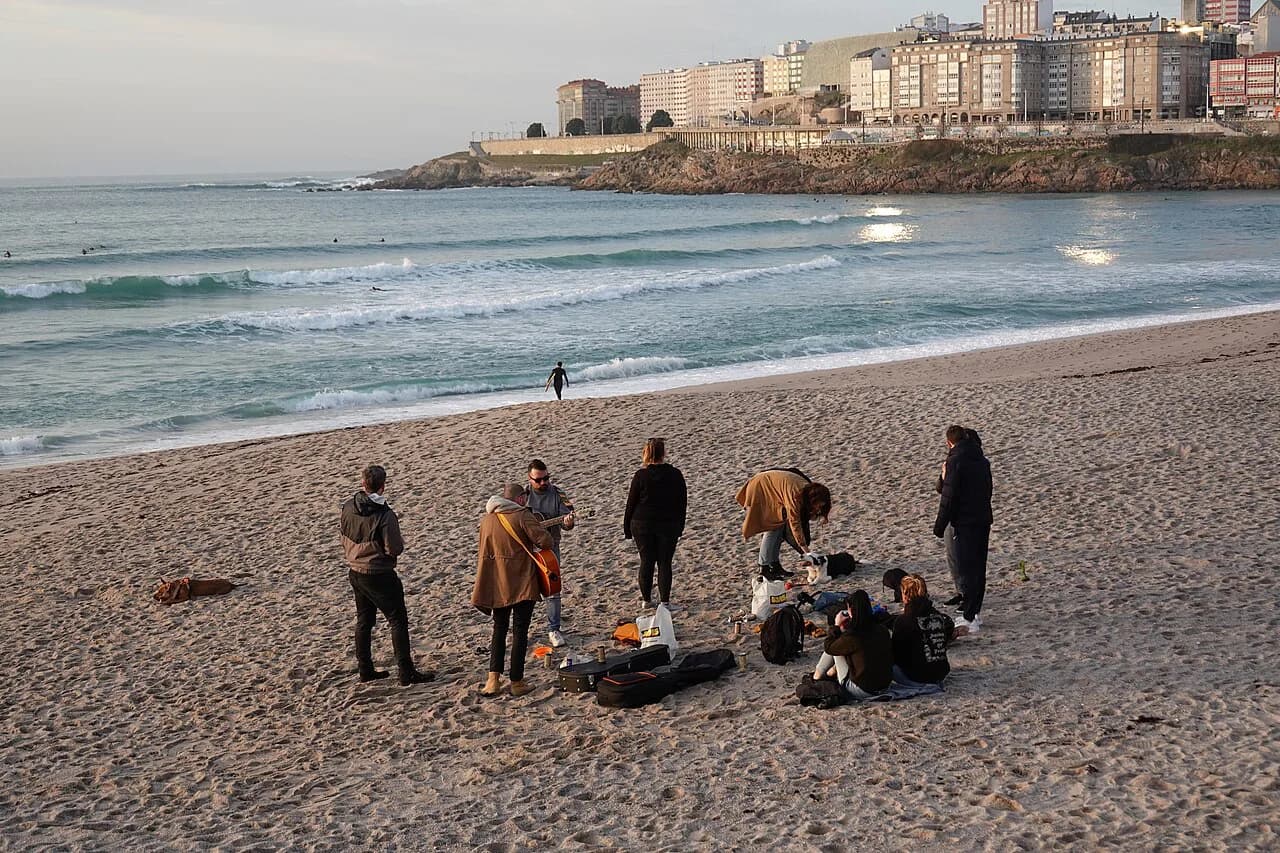
The second half of the city faces open ocean. The Riazor and Orzán beaches curve along the western edge, and beyond them a seafront promenade leads out to the Torre de Hércules on its headland. Because the two halves are separated by the old town, it pays to look at the A Coruña map before deciding which end to tackle first on a short trip.
Start at La Marina: the white glass galleries
La Marina is the image most travellers carry home: a continuous run of white-painted wooden galleries with large glass windows, stacked above the harbour front. The uniformity is not accidental. A nineteenth-century alignment and expansion plan harmonised galleries that had been going up since the mid-eighteenth century, which is why the facades read as one long wall rather than a row of separate buildings.
Walk the length of the harbour front rather than cutting inland straight away, because the best details sit above eye level. Look for the deliberate exceptions to the white run, then turn into the old town through the narrow streets that lead off the Marina.
The Diente de Oro, Casa Molina and Casa Rey
Three modernist buildings break up the white galleries and reward a slower pass. The Diente de Oro, or golden tooth, is a 1927 block with five floors, each carrying different ornament, and its yellow-gold colour makes it easy to spot among the balconies. At the eastern end of the harbour, Casa Molina dates from 1915 and is decorated with garlands.
Casa Rey, a 1919 building on a corner, sits where the galleries end near a passage into Plaza María Pita; its ironwork and facade ornament are the reason to stop before you step into the square.
Plaza María Pita: the town hall and the arcades
Plaza María Pita is the city's main square, with the modernist town hall of 1927 on one side and three sides of arcaded buildings around it. The ground-floor arcades give shelter on wet days, and the arrangement of the upper floors is a small lesson in building rules: these houses went up before 1873, when galleries were only allowed from the second floor upwards. In the centre stands the statue of María Pita, the heroine of 1589 who faced the English corsair Drake, and a steel line in the paving marks the meridian that crosses the city at that point.
From the square, return to the Marina and take the turning for Rúa Santiago; the church sits about 100 metres along it. If you want to see the old town in more depth, the churches and lanes behind the square are covered in the guide to the A Coruña old town.
Iglesia de Santiago: the Romanesque survivor
The Iglesia de Santiago is a twelfth-century Romanesque church now squeezed between later buildings, and it is the second-oldest monument in the city. Eight centuries of reworking have changed much of it, so look for the rose window and the carved doorway with its image of Saint James on horseback.
Churches in Spanish city centres frequently close to visitors around midday Mass and reopen later, and this one sits in a tight residential block, so plan it early in the walk rather than at the end.
Plaza de la Constitución and the Palacio de Capitanía
From the church, Calle Parrote leads to the square of the same name and on to Plaza de la Constitución, where a garden and the eighteenth-century neoclassical Palacio de Capitanía frame the view. Come for the square and its setting rather than an interior visit.
Continue along Rúa Príncipe past the palace frontage, then take Rúa Santo Domingo and the first right after about 50 metres to reach the gardens.
Jardines de San Carlos and the view to San Antón
The Jardines de San Carlos are reached by passing under the building of the Archivo del Reino de Galicia, which makes the entrance easy to miss. Inside, a small monument to Sir John Moore stands at the centre, but the real payoff is the outlook over the harbour to the Castillo de San Antón across the water.
This is a natural pause before the castle leg, and a good place to reassess the weather: if rain has set in, the garden view costs nothing and the castle can wait.
Castillo de San Antón and its archaeological museum
The Castillo de San Antón is a sixteenth-century Renaissance fortress on a small island connected to the shore, and it now houses the city's archaeological museum. Leave the gardens by the side gate and walk around to the entrance.
Allow more time than the exterior suggests, since a museum visit adds substantially to the stop. Opening hours and ticket prices vary, so confirm them with the city's tourist information before you go.
Santo Domingo, Santa Bárbara and Santa María do Campo
Back on the Marina side, the loop continues past the Iglesia de Santo Domingo and the Convento de Santa Bárbara before reaching the Colegiata de Santa María do Campo, one of the old town's principal churches. The walk also passes the Fuente del deseo, a small fountain that makes a convenient marker near the end of the circuit.
These stops are close together, so treat them as one short stretch rather than separate outings, and check each doorway as you pass instead of planning fixed times.
Riazor and Orzán, and the walk to the lighthouse
The Riazor and Orzán beaches lie outside the old-town circuit and form the start of the second leg, along the seafront towards the Torre de Hércules. Treat this as a separate outing: it is a longer, more exposed stretch, and on a wet or windy day it is the part of the plan to drop.
The city's promenade links the beaches with the lighthouse headland, so you can walk it in one direction and judge the return by how the weather holds.
The Torre de Hércules and its sculpture park
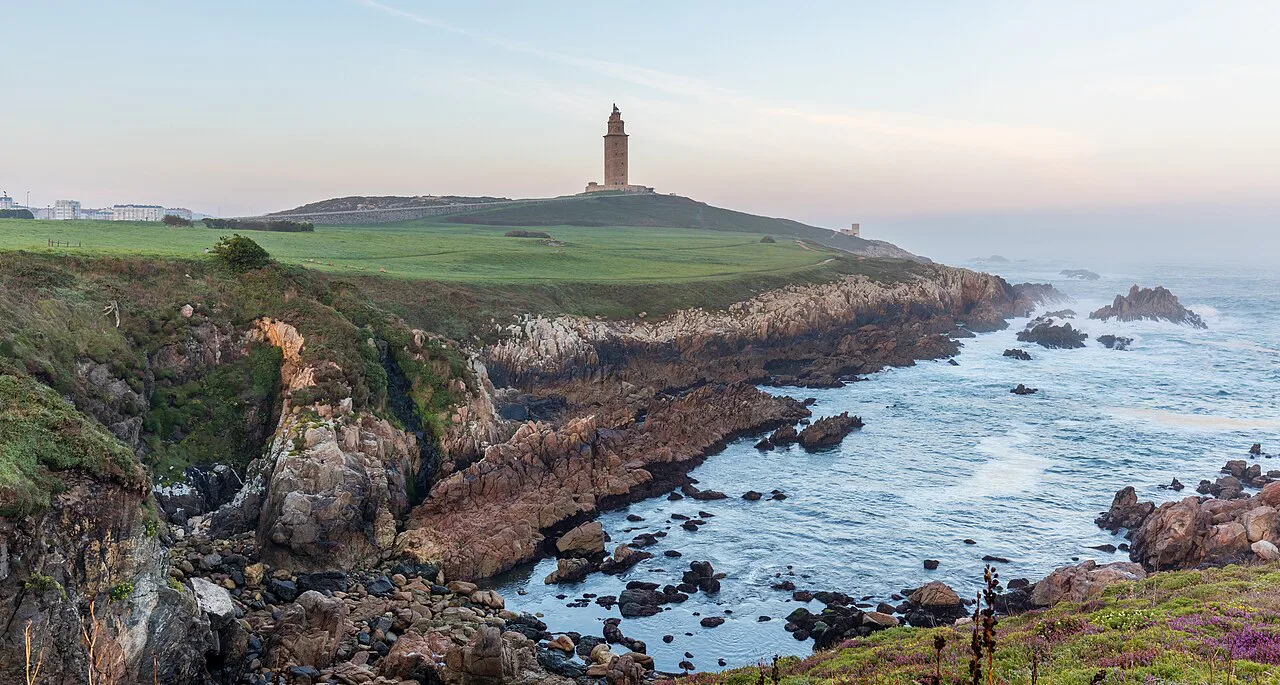
The Torre de Hércules is a Roman lighthouse built towards the end of the first century and still working today, which makes it the oldest functioning lighthouse in the world. UNESCO listed it as a World Heritage Site in 2009, and it stands on the city's own seafront rather than out in the countryside.
Around the tower, an open-air sculpture park displays works by twentieth-century artists, fifteen in all, including Francisco Leiro's Puertas, Manolo Paz's Menhires and Moncho Amigo's Caracola. Walking the headland takes you past them without any detour, and the exposed position means wind and rain decide how long you linger.
Access to the tower interior is managed separately from the headland walk, and the arrangements are published by the Torre de Hércules and the city; check with the tourist office before making the walk out if the climb is the point of going.
A sample half-day and full-day order
For a half day, keep to the Marina loop: start at La Marina with the galleries and the three modernist facades, cross into Plaza María Pita, take in the Iglesia de Santiago, then return via Plaza de la Constitución, the Jardines de San Carlos and the harbour front churches. That sequence keeps you close to the port and finishes where you began.
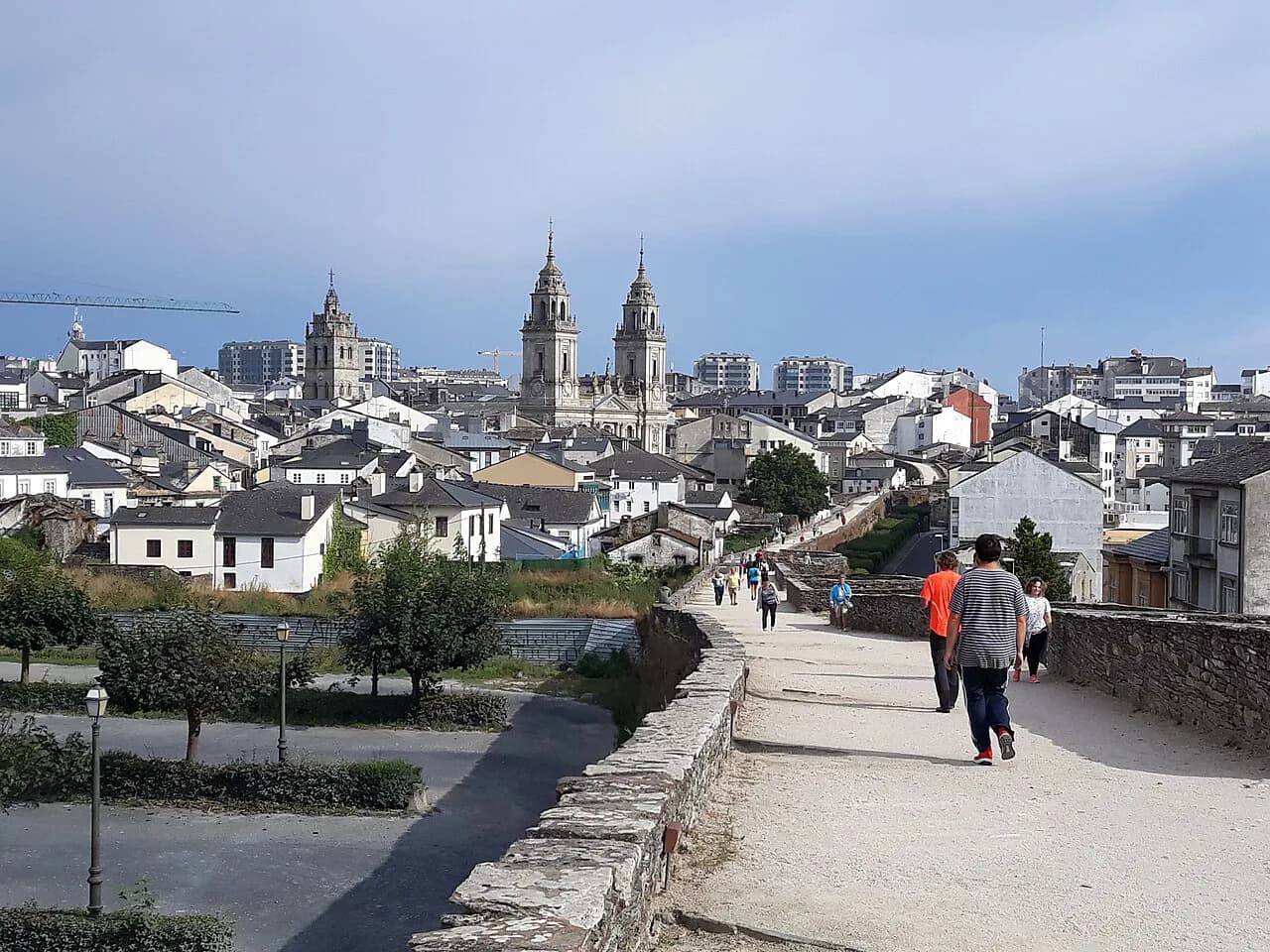
For a full day, run that loop in the morning, then take the seafront leg to the Torre de Hércules in the afternoon, when the light on the headland is better and the old town churches are likely to be shut anyway. The Roman walls at Lugo make a sensible second stop if you are touring Galicia by car, and the UNESCO World Heritage listing there is the reason many travellers add it.
Midday heat, Galician rain and other practical points
A Coruña is Atlantic rather than Mediterranean, so rain arrives without much warning and the seafront leg has little shelter. Build the day so the Marina and the arcades of Plaza María Pita come first, and hold the lighthouse for the clearest hours.
Summer midday heat is milder here than in inland Andalusia, but the walk out to the tower is unsheltered, so start it in the late afternoon rather than at one o'clock. Church visiting hours often pause around midday, which is another argument for putting the old town early.
Where A Coruña fits a short break
A Coruña works as a two-night city break on its own, or as one stop on a Galician tour alongside Santiago de Compostela. The city's tourist office publishes its own guidance on getting around and getting here, which is the reliable place to plan the arrival leg.
If you are comparing Atlantic cities, Vigo offers a different harbour city experience with its own old town, and the Casco Vello there is a compact contrast to A Coruña's Marina. If you would rather trade the Atlantic for the Mediterranean, the things to do in Alcúdia cover an old town and coast in the same one-day format. For the full set of monument guides in this city, start with A Coruña Attractions: 6 Visitor Guides.
Should you do the lighthouse leg?
Do the tower leg if you have a full day and decent weather, because the Roman lighthouse and the sculpture park around it are the city's strongest single sight. Skip it on a wet afternoon and spend the time on the arcaded square and the old-town churches instead; the Marina loop alone fills a satisfying half day.
Explore more A Coruña guides
Frequently Asked Questions
What's in Port La Coruña for a visitor arriving by ship?
The cruise berths sit close to La Marina, so the glass galleries, Plaza María Pita and the old town behind them are all within a short walk of the ship. The Torre de Hércules is further out along the seafront and needs a separate leg, so decide on arrival whether you have time for both.
Is A Coruña good for shopping?
The streets around Plaza María Pita and the Marina hold the central shopping streets, and the arcades give cover on wet days. Boutique and department-store opening hours vary by season and by individual shop, so check locally rather than relying on a fixed schedule.
Sources
Notes for your next Spanish town break
Optional updates to our guides.
You might also like
Continue reading
More guides you'll find useful