Things to Do in Santiago de Compostela: Plazas, Cathedral and Museums
Plan a Santiago de Compostela break with the cathedral, Obradoiro, old town streets, Mercado de Abastos, museums and viewpoints, grouped by area.
On this page
Santiago de Compostela's essentials sit within a compact old town: the cathedral and the four squares around it, a handful of granite lanes, the Mercado de Abastos, two museums and a park with the classic rooftop view. Two days covers the centre at an unhurried pace, and one full day is enough if you skip the museums and the outlying hills. This guide groups the sights by area, flags the trade-offs and marks which ones sit outside the centre.
The city is the capital of Galicia and the end point of the Camino de Santiago, which shapes how the centre feels: pilgrims arrive in the Obradoiro at all hours, and the cathedral is a working church rather than a monument with a turnstile. Plan around that rhythm instead of against it. The city's attractions are listed together if you want to pick individual monuments first.
What there is to do in Santiago de Compostela, in one answer
The core is the cathedral and the four squares that flank it, wrapped by a medieval old town of granite streets. Add the Mercado de Abastos, the Monasterio de San Martiño Pinario, the Museo do Pobo Galego and the Fundación Eugenio Granell, then the Alameda and Bonaval parks for views, and you have covered the centre. The outlying sights — Monte Pedroso, Monte do Gozo and the Cidade da Cultura — each need a separate decision and a trip out of the old town.
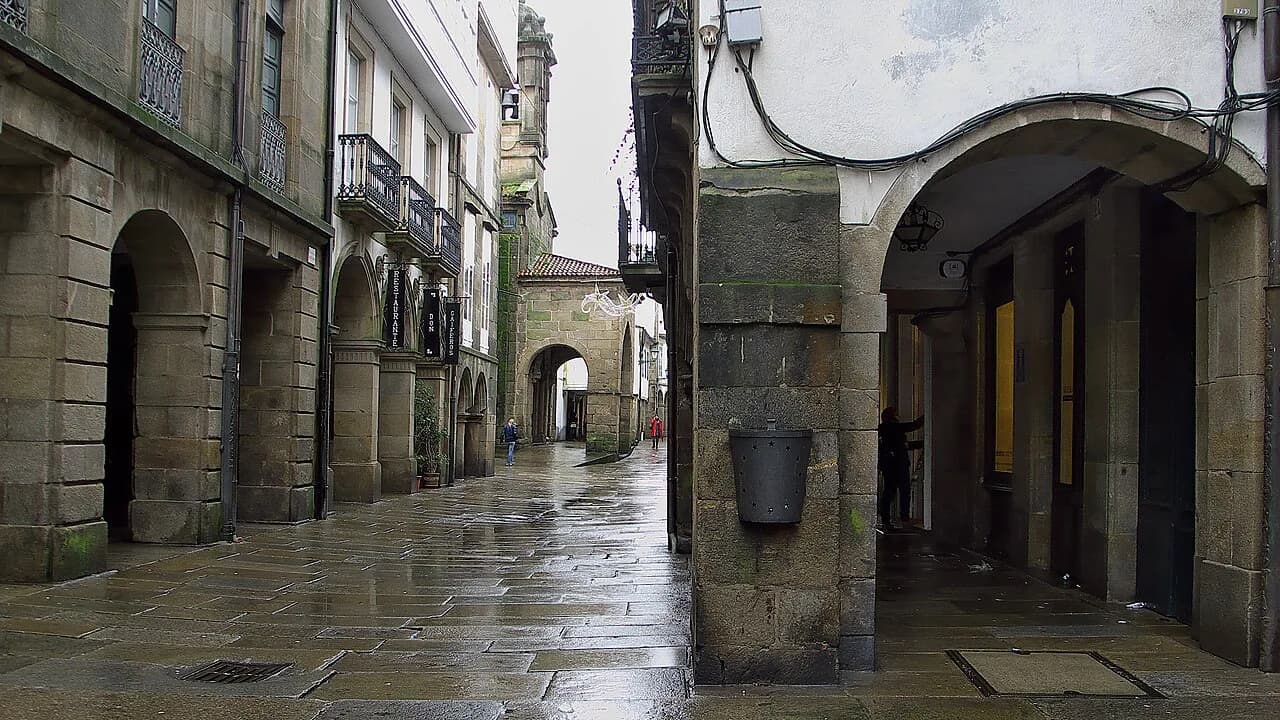
The old town is a UNESCO World Heritage site, and its scale is the point: stone arcades, small squares and passages that turn without warning. That compactness is what makes a short break work, because you spend time looking rather than moving between sights.
The Cathedral of Santiago and the Pórtico de la Gloria
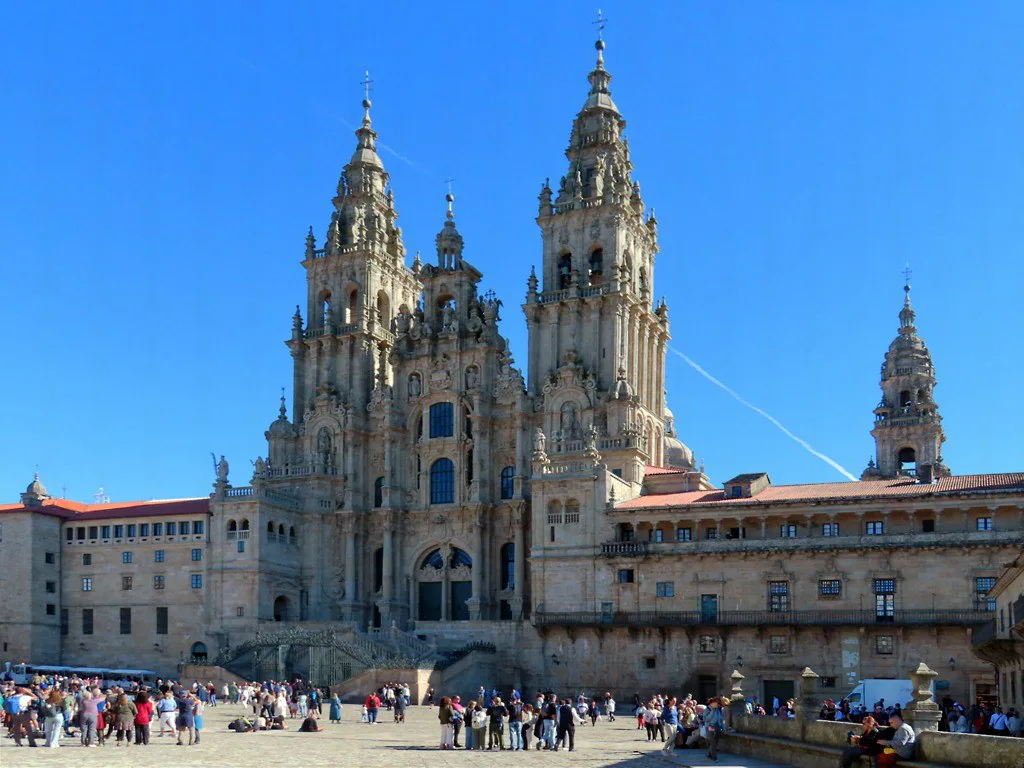
The cathedral is the reason the city exists, and its baroque facade on the Obradoiro is the image every visitor carries away. Inside, the Pórtico de la Gloria is the masterpiece: Romanesque sculpture carved by the Maestro Mateo in the twelfth century, sitting at the west end of the nave. The apostle's crypt and the high altar are the other fixed points of a visit.
The Botafumeiro, the giant censer, is swung through the nave on occasion rather than on a published daily schedule, so treat it as a bonus rather than the reason for timing your day. The wider history of the shrine and the Camino is worth reading before you arrive, because the building makes far more sense once you know what you are looking at.
The practical trade-off is that this is an active place of worship: sightseeing gives way during services, and the pilgrim mass draws a crowd. Visit early or accept that you will be sharing the nave and the queues with groups.
The four squares around the cathedral: Obradoiro, Platerías, Quintana and Cervantes
Each side of the cathedral opens onto a different square, and knowing which facade you are facing saves a lot of circling. The Plaza del Obradoiro is the grand one, framed by the Hostal de los Reyes Católicos, the Colegio de San Xerome and the Pazo de Raxoi, and it is where pilgrims arrive. It is a square for sitting and watching rather than rushing through.
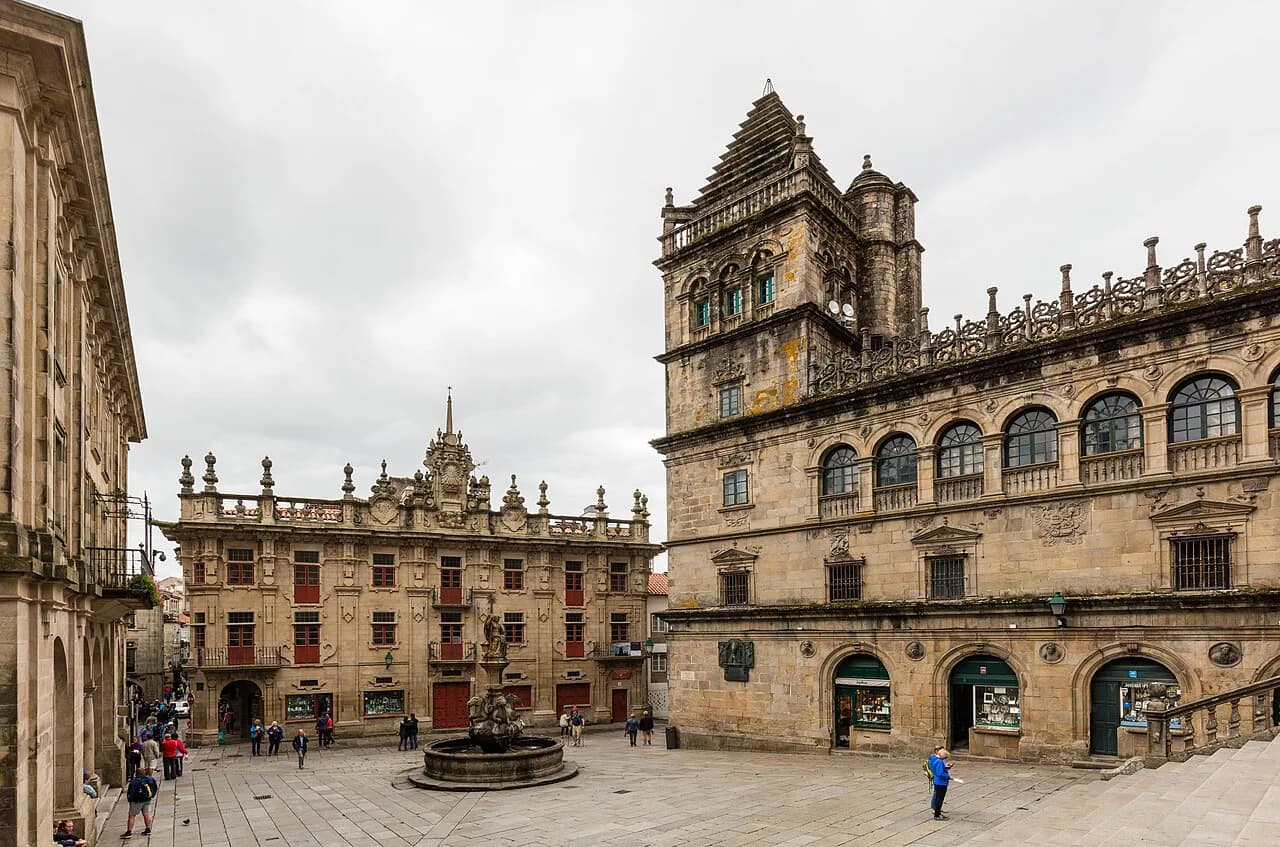
The Plaza de Platerías holds the cathedral's Romanesque south facade and takes its name from the silversmiths who once traded under the arcades; the Fountain of the Horses stands in the middle. The Plaza de Quintana is presided over by the Holy Door of the cathedral. The small Plaza de Cervantes, with its statue of the writer, is the quietest of the group and a natural pause between the cathedral and the lanes.
The old town streets: Rúa do Vilar and Rúa do Franco
Two streets carry most of the old town's life. Rúa do Vilar runs from near the cathedral towards the centre with arcades and stone facades, while Rúa do Franco is busier and more commercial. Both are short, and the pleasure is in the wandering between them rather than in ticking off a route.
Beyond these two, the old town is a maze of granite passages and small squares that reward aimless walking. Allow time to get mildly lost; the cathedral towers give you a bearing from almost anywhere.
Mercado de Abastos and buying seafood cooked to order
The Mercado de Abastos is a working food market, not a heritage exhibit: stalls sell seafood, fish, cheeses, cured meats and bread from the region. The local way to use it is to buy your fish or shellfish and hand it to one of the stalls that cooks it on the spot, which turns a market visit into a meal.
Treat the market as a sight with a purpose rather than a museum piece, and go earlier in the day when the stalls are at their fullest. It sits just outside the oldest lanes, so it slots neatly into a walk between the cathedral and the Alameda.
Monasterio de San Martiño Pinario
The Benedictine Monasterio de San Martiño Pinario is one of Spain's largest religious buildings and a strong example of Galician baroque. Its church and facade are the obvious draws, but the cloisters, the old monastic pharmacy and the baroque staircase are what make the interior worth the time.
It stands directly behind the cathedral, which makes it the easiest major sight to add to a cathedral visit. The monastery also runs a guest house, so parts of the complex operate as a working institution rather than a pure monument.
Museums: Museo do Pobo Galego and Fundación Eugenio Granell
The Museo do Pobo Galego, in the former convent of Santo Domingo de Bonaval, covers Galician culture and sits beside the Bonaval park. The Fundación Eugenio Granell is the counterweight: a smaller, focused collection devoted to the surrealist artist, useful when you want something contemporary after a morning of granite and baroque.
Both are indoor sights, which matters in Galicia, where rain can reshape a day at short notice. Neither needs a half-day; an hour or two each is realistic, leaving the rest of the day for the squares and streets.
City viewpoints: Parque de la Alameda, Parque de Bonaval and Monte Pedroso
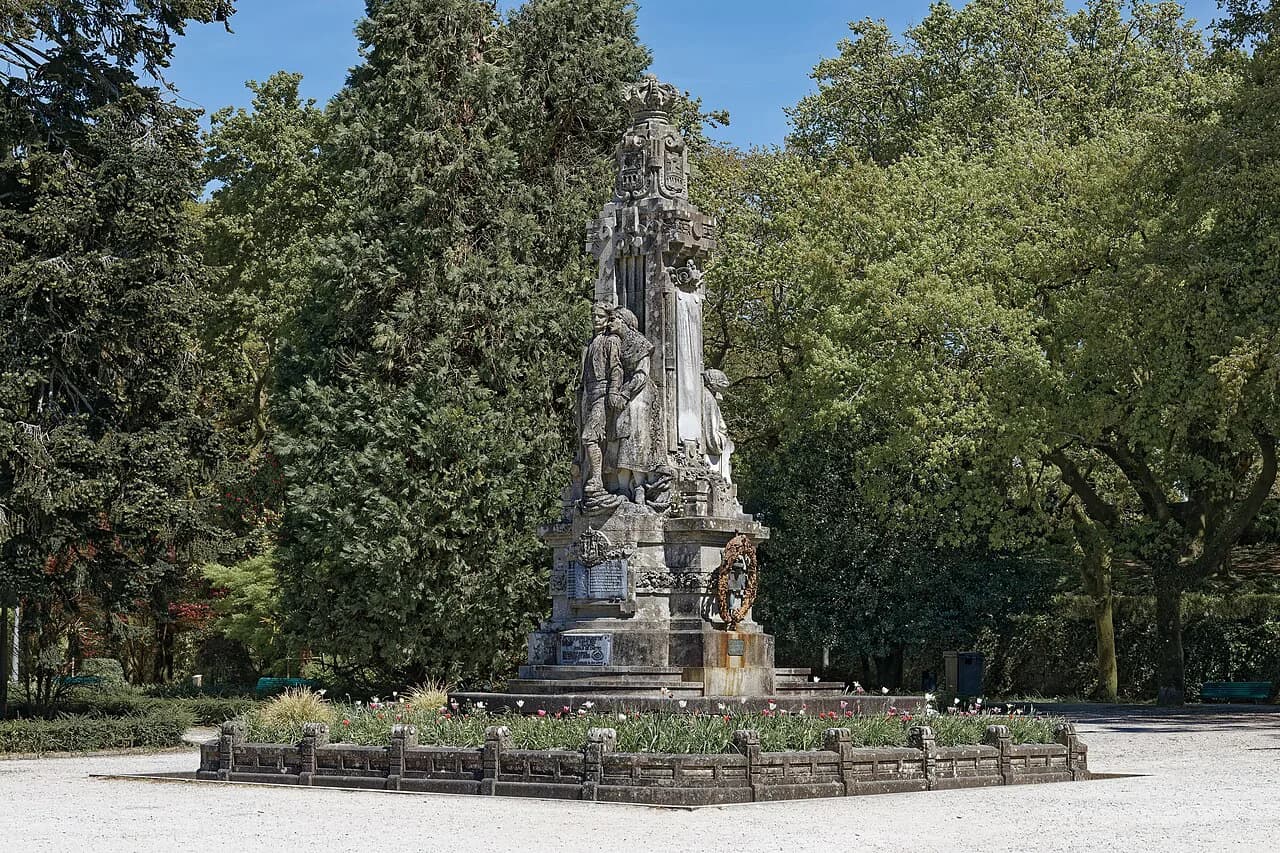
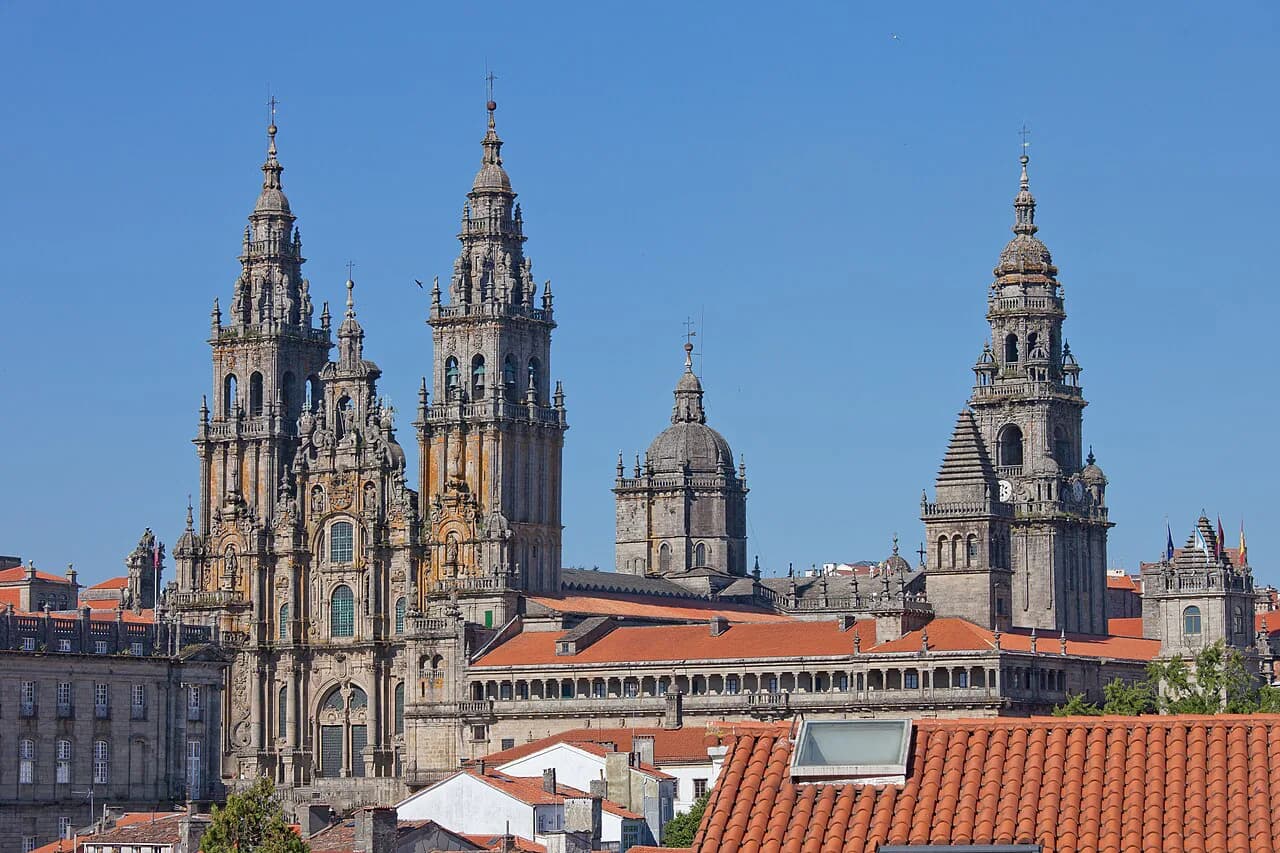
The Parque de la Alameda gives the classic view of the cathedral's towers above the rooftops, and it is the easiest viewpoint in the city: a park on the edge of the centre with mature oaks and chestnuts. Look for the statue of Las Dos Marías, the two sisters remembered for walking the city in brightly coloured dresses.
The Parque de Santo Domingo de Bonaval, next to the Museo do Pobo Galego, offers a quieter green pause with its own views over the old town. Monte Pedroso is the opposite proposition: a hill outside the centre, reached on foot, with the broadest panorama of the city. It costs you time, so it is the one to drop if your break is short.
Monte do Gozo and the end of the Camino Francés
Monte do Gozo is the last high point on the Camino Francés before Santiago, and the place where pilgrims first see the cathedral towers. The monument there commemorates Pope John Paul II's 1989 visit for the World Youth Day gathering. Walking down from the hill into the Obradoiro is the way to understand what the Camino means to the city.
It lies outside the centre, so it is not a sight you pass on a morning's wander. Decide deliberately: go for the pilgrim perspective, or spend the time in the old town instead. Santiago de Compostela's other city guides are a useful check on how the pieces fit together.
Cidade da Cultura de Galicia
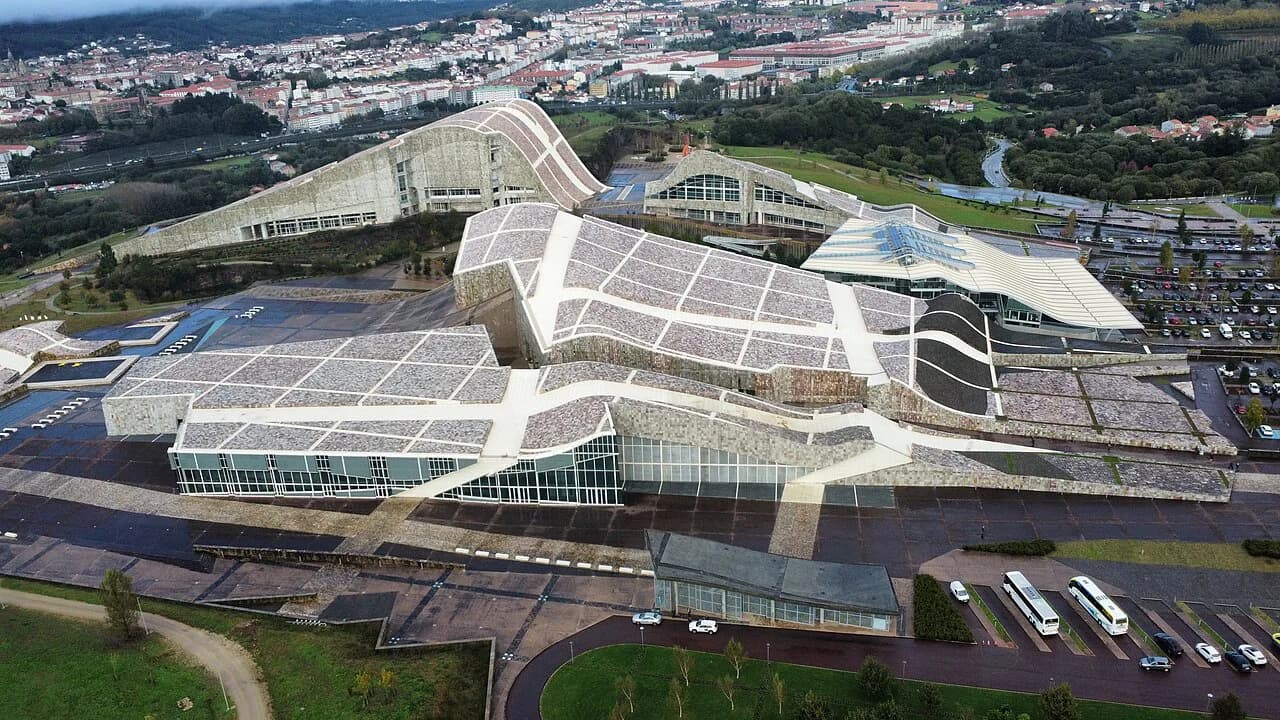
The Cidade da Cultura is a modern architectural complex on a hill outside the historic centre, a deliberate contrast to the granite old town. It is a half-day excursion rather than a stop on a walking route, so it suits travellers who have already covered the centre.
If your break is two days or less, this is the sight most easily sacrificed for time in the squares. If you have a third day, it gives the trip a different register.
A sample day on foot in the old town
Start at the Plaza de Platerías and work around the cathedral: Platerías, then Quintana, then the Obradoiro for the facade and the arrival of pilgrims. Step into the cathedral for the Pórtico de la Gloria and the crypt if services allow, then take Rúa do Vilar and Rúa do Franco through the old town.
After lunch, add the Monasterio de San Martiño Pinario or one museum, then finish in the Alameda as the light softens on the towers. That sequence keeps you within the old town and avoids criss-crossing the city.
How the city is laid out and how long it needs
Everything in the centre radiates from the cathedral, and the four squares are the compass points. Once you know which facade faces which square, the old town becomes legible, and most walks between sights take only a few minutes. The market, the monastery and the Alameda all sit within a short walk of the cathedral.
Two days is a comfortable allowance for the centre, including one museum and a park, and many visitors stretch to more. One day is workable if you confine yourself to the cathedral, the squares, the lanes and the market. Monte do Gozo, Monte Pedroso and the Cidade da Cultura are the sights that push the trip beyond two days.
Getting around: walking times and day-to-day practicalities
This is a walking city. The old town is pedestrianised and the distances between the cathedral, the market and the Alameda are short, so plan on foot and leave the car outside the centre. Cobbled, uneven granite is the norm, which is worth noting for anyone with mobility concerns.
Galicia's rain is the main planning variable: keep one indoor option in reserve each day, and treat the museums as the fallback rather than a fixed appointment. Booking any guided walk ahead is sensible in busy periods, and a Santiago de Compostela Walking Tour gives you a structured way to see the centre on foot.
What to drop if you only have a day
With a single day, keep the cathedral, the four squares, the old town lanes and the market, and drop Monte do Gozo, Monte Pedroso and the Cidade da Cultura. With two days, add the Monasterio de San Martiño Pinario, one museum and the Alameda at dusk. That order respects the city's layout and avoids spending your break in transit.
If Galicia is part of a longer trip, A Coruña is the natural second city, and the same approach works there: a compact centre best seen on foot. It is worth comparing notes on things to do in a Coruña before you commit the days.
Explore more Santiago de Compostela guides
Frequently Asked Questions
Is Santiago de Compostela worth visiting?
Yes, if you want a compact historic city rather than a checklist of museums. The cathedral, the Pórtico de la Gloria and the four squares around them form one of Spain's strongest old towns, and the market and lanes give it everyday life as well as monuments. If you have only a passing interest in religious architecture, one day is enough.
Does the Botafumeiro swing every day?
The giant censer is swung on occasion rather than to a daily timetable, so do not build your day around it. Treat it as something you may be lucky enough to see during a service and plan the cathedral visit around the building itself.
How long does the old town take on foot?
The old town is small enough to cross in minutes, so the cathedral, the four squares, Rúa do Vilar and Rúa do Franco fit into a morning at an easy pace. Add the market and one museum and you have a full day without leaving the centre.
Sources
Notes for your next Spanish town break
Optional updates to our guides.
You might also like
Continue reading
More guides you'll find useful