
Parque de Bonaval: Santiago's Hillside Park and Old Cemetery

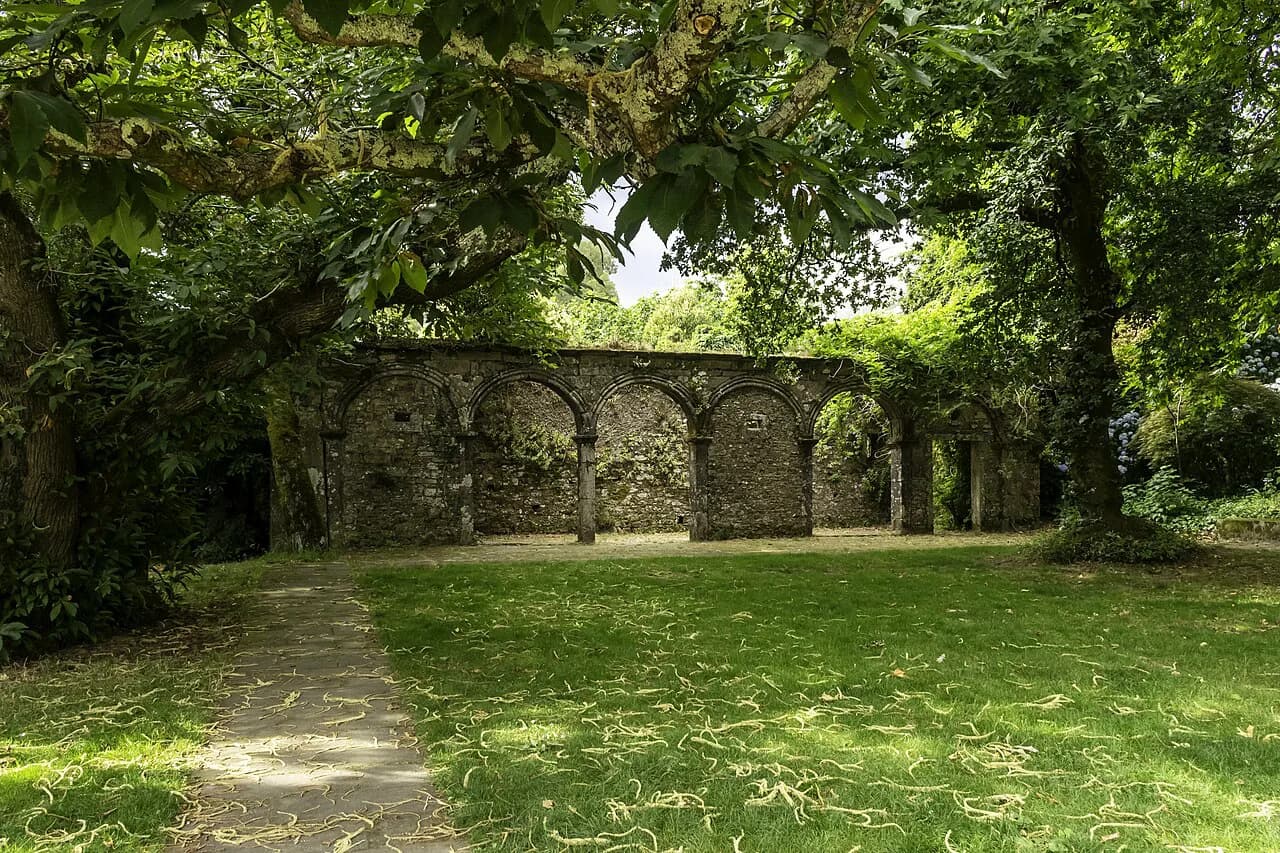
Parque de Bonaval is Santiago de Compostela's hillside park, laid out on the grounds of the old Dominican convent and its cemetery and divided into three distinct zones by the Portuguese architect Álvaro Siza. It covers some 35,000 square metres, so it reads as a proper park rather than a square with benches, and the church and burial ground that preceded it still shape the ground you walk over. This page covers where the park sits, how it is arranged, what remains of the cemetery and the church of San Domingos de Bonaval, how long to allow and which museums sit at its edge.
Where Parque de Bonaval sits in Santiago
The park fills the slope between two museums, the Museo do Pobo Galego and the CGAC (Centro Galego de Arte Contemporánea), on the eastern side of the old town. That position makes it a natural bridge between the historic centre and the modern city: you come up from the streets around the cathedral and exit towards the contemporary art centre, or the other way round. Treat it as a hinge in a half-day rather than a destination you cross town for.

What Parque de Bonaval is
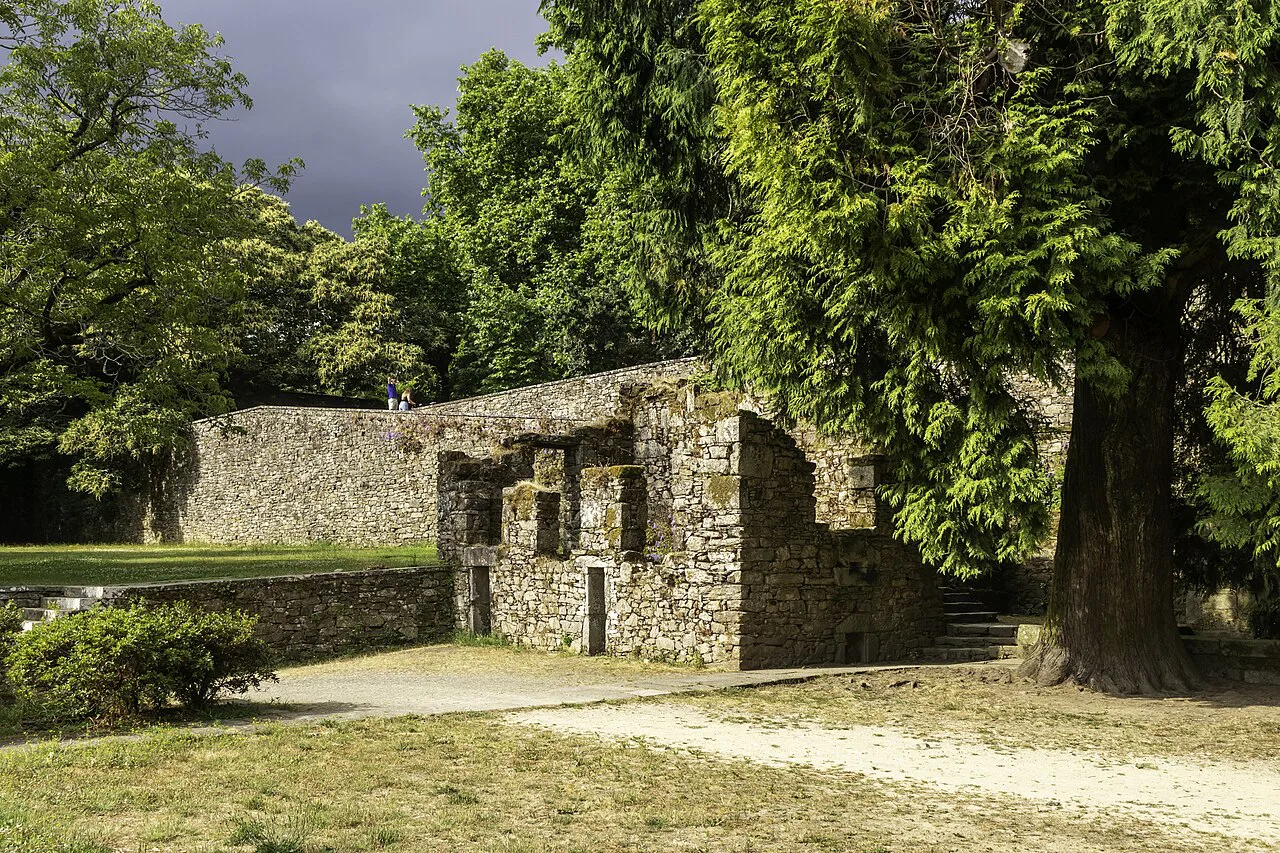
The park occupies land that belonged to the Dominican convent and to the cemetery attached to it, so the greenery sits on top of several layers of the city's history rather than replacing them. Its 35,000 square metres are split into three clearly differentiated zones, which is why the park feels like more than one place as you move through it. The convent buildings themselves survive at the edge of the grounds, now housing the museum of Galician culture.
Design credit matters here: Álvaro Siza's plan works with the slope and the surviving structures rather than flattening them, which is why the park reads as a sequence of terraces, paths and open lawns. Walk it slowly and the three zones make sense as stages of a descent or climb, not as one undifferentiated green space.

How the park is laid out
Expect a park of levels rather than a single flat lawn. The design separates the grounds into three zones, each with its own character, and the change between them comes from the hillside setting and the surviving convent and church structures rather than from gates or walls. That arrangement rewards a loop rather than a straight line through the middle.
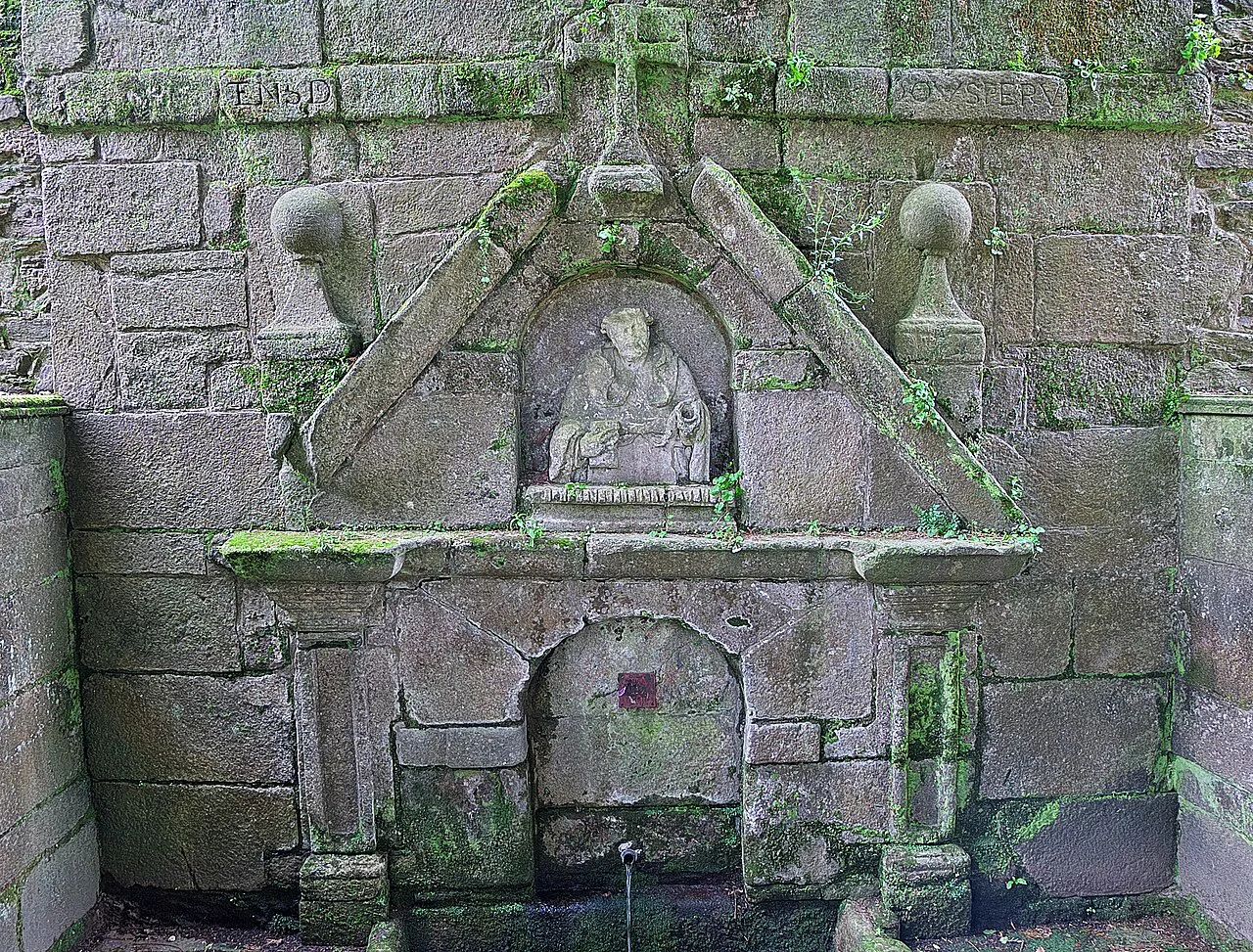
Because the park is built over a working cemetery and cloister site, some of what you see is architectural fabric rather than landscaping: walls, closure walls and the church's rear end anchor the open areas. Look for where the planting stops and stonework begins, since that seam is where the convent past becomes visible.
The old cemetery and its niches
The burial ground that gives the park much of its character was a wall cemetery, with niches set into a stone and rubble wall rather than graves laid out in rows. On 12 February 2026 part of that wall collapsed, and the municipal architecture staff linked the fall to water collecting in the higher ground, which added weight and pressure before the niches came down. Access to the area around the church apse, the cemetery space and the adjoining part of the park was closed while the site was made safe.
The city reopened the park in March 2026 after roughly three weeks of closure, once a safety fence had been installed around the section affected by the collapse. Read that as history rather than a description of conditions today: fencing, access and which stretches of the cemetery wall you can approach are maintenance matters that change, so check the city's own notice for the park before making it the centrepiece of a morning.
The church of San Domingos de Bonaval
The church of San Domingos de Bonaval, the Castilian form of the Galician name, stands at the park's edge and its apse and cloister remains frame the grounds rather than sitting inside them. The apse end is the piece to look at from the park side, where the church's mass meets the terraces and planting. The monastic complex around it is what gives the site its name and its layering.
The cloister and convent buildings now belong to the Museo do Pobo Galego, so a visit to the church fabric and a visit to the museum are two different things with two different sets of opening times. If the church interior is your priority, confirm access with the museum, since churches in Galicia commonly close to visitors around services.
Time to allow and when to go
Allow 30 to 45 minutes for a loop of the park with stops at the cemetery wall, the apse and one of the lawns; allow closer to an hour if you plan to sit or to read the layers properly. It is a short stop that earns its place because of the convent and cemetery story, not a park that fills an afternoon on its own.
The trade-off is the climb. Coming up from the cathedral side means a steady ascent through the old town, and in inland Galicia's summer the slope plus open lawns can feel hotter than the shaded streets below. Morning is the easier slot, both for the gradient and for light on the apse.
Nothing in the park's own interpretation is essential to buy in advance, and it is a public green space rather than a ticketed monument. Conditions around the cemetery wall are a live maintenance question rather than a fixed feature, so check the city's notice for the park before a special trip.
Getting there from the old town
The simplest approach is on foot from the cathedral quarter: from the Praza do Obradoiro, head east and downhill through the lanes towards the Museo do Pobo Galego, and the park opens out beside it. The walk is short in distance and steady in climb on the way back, which is worth planning if you are finishing a day of sightseeing.
If you are coming from the newer city, approach from the CGAC side, where the gradient is gentler and the park arrives as a green edge to the contemporary art centre. Either way, the park works as a link between the cathedral area and the museums rather than as a separate excursion.
Nearby: two museums at the park's edge
The Museo do Pobo Galego occupies the former Dominican convent beside the park and is the natural companion to the cemetery and church remains, since the buildings you see from the lawns are the ones it uses. Pair the two if you want the full story of the site rather than the park alone.
At the other edge, the CGAC, the Centro Galego de Arte Contemporánea, gives the park a second anchor and a reason to approach from the modern city. Its exhibitions change, so check what is on rather than assuming a particular show.
For the rest of the old town within a few minutes, the Praza da Quintana sits just below the cathedral's east end and makes a sensible next stop after the descent from the park.
Should Bonaval be on your Santiago route?
Yes, if you are already visiting the Museo do Pobo Galego or the CGAC: the park adds 30 to 45 minutes of convent, cemetery and city history to either museum visit for the cost of a short climb. It is a weaker stand-alone target, since the appeal lies in the layering rather than in the lawns themselves.
Build it into a half-day with the cathedral quarter by walking up from the Praza do Obradoiro, looping the park, and dropping back through the old town. Check the city's notice for the park and the museum's own opening times before you set out, since access around the cemetery wall and church have both been maintenance-dependent.
Explore more Santiago de Compostela guides
Frequently Asked Questions
Is Parque de Bonaval free to enter?
The park is a public green space rather than a ticketed monument, and the city treats it as an ordinary municipal park. The neighbouring Museo do Pobo Galego and the CGAC are separate institutions with their own tickets and opening times, and those are the things to check before you go.
Why is the park associated with a cemetery?
The grounds were the burial ground of the Dominican convent of San Domingos de Bonaval, with niches set into a stone wall rather than graves in rows. Part of that wall collapsed in February 2026 after water collected in the higher ground, and the city reopened the park in March 2026 with a safety fence around the affected stretch. That is the background to the cemetery remains you see today.
How long does a visit to Parque de Bonaval take?
Plan 30 to 45 minutes for a loop covering the cemetery wall, the church apse and one of the open lawns, or up to an hour if you want to sit and take in the layers of the site. Adding the Museo do Pobo Galego turns it into a half-day rather than a quick stop.