
Museo do Pobo Galego: Visiting Santiago's Galician Culture Museum

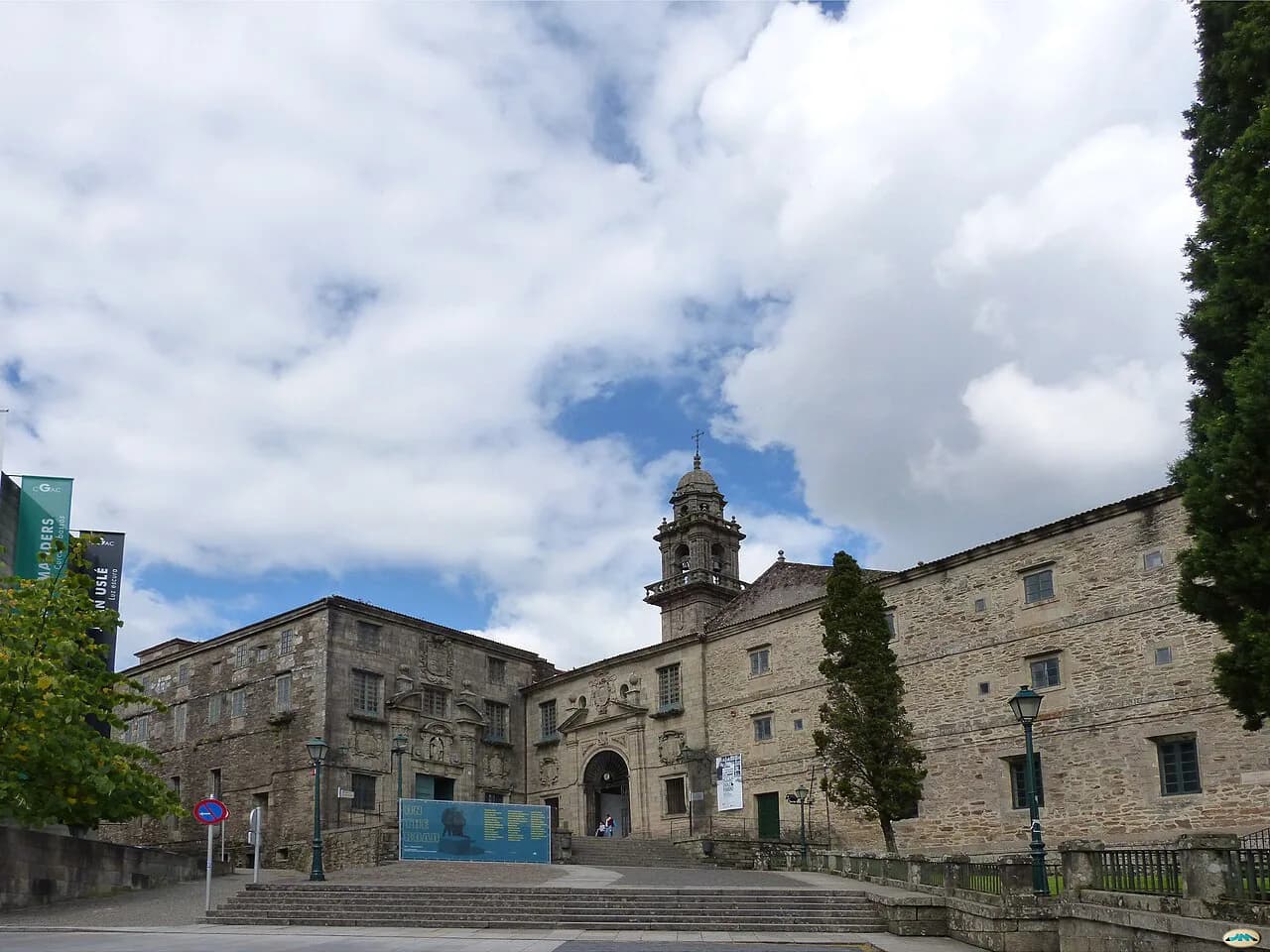
The Museo do Pobo Galego is Santiago de Compostela's museum of Galician culture, housed in the seventeenth- and eighteenth-century convent of Santo Domingo de Bonaval just outside the old town walls. It is the right stop if you want to understand rural and coastal Galicia rather than another set of religious treasures, and it needs around an hour and a half. This guide covers what the rooms hold, the hours and prices that decide which day you go, and how to combine it with the old town on foot.
What the Museo do Pobo Galego is and who it suits
This is an anthropology museum with art and archaeology folded in, not a fine-art gallery. Its collections grew out of a mission to research and promote Galician culture in all its forms, and the first rooms opened in 1977; the museum now occupies the whole convent complex.
Independent travellers with a spare half-day get the most from it, especially on a wet morning when the cathedral square is running with water. Visitors with a tight timetable should weigh it against the old town's plazas and churches, because it sits a ten-minute walk from the cathedral rather than on the main circuit.

Where it is: San Domingos de Bonaval, near the Porta do Camiño
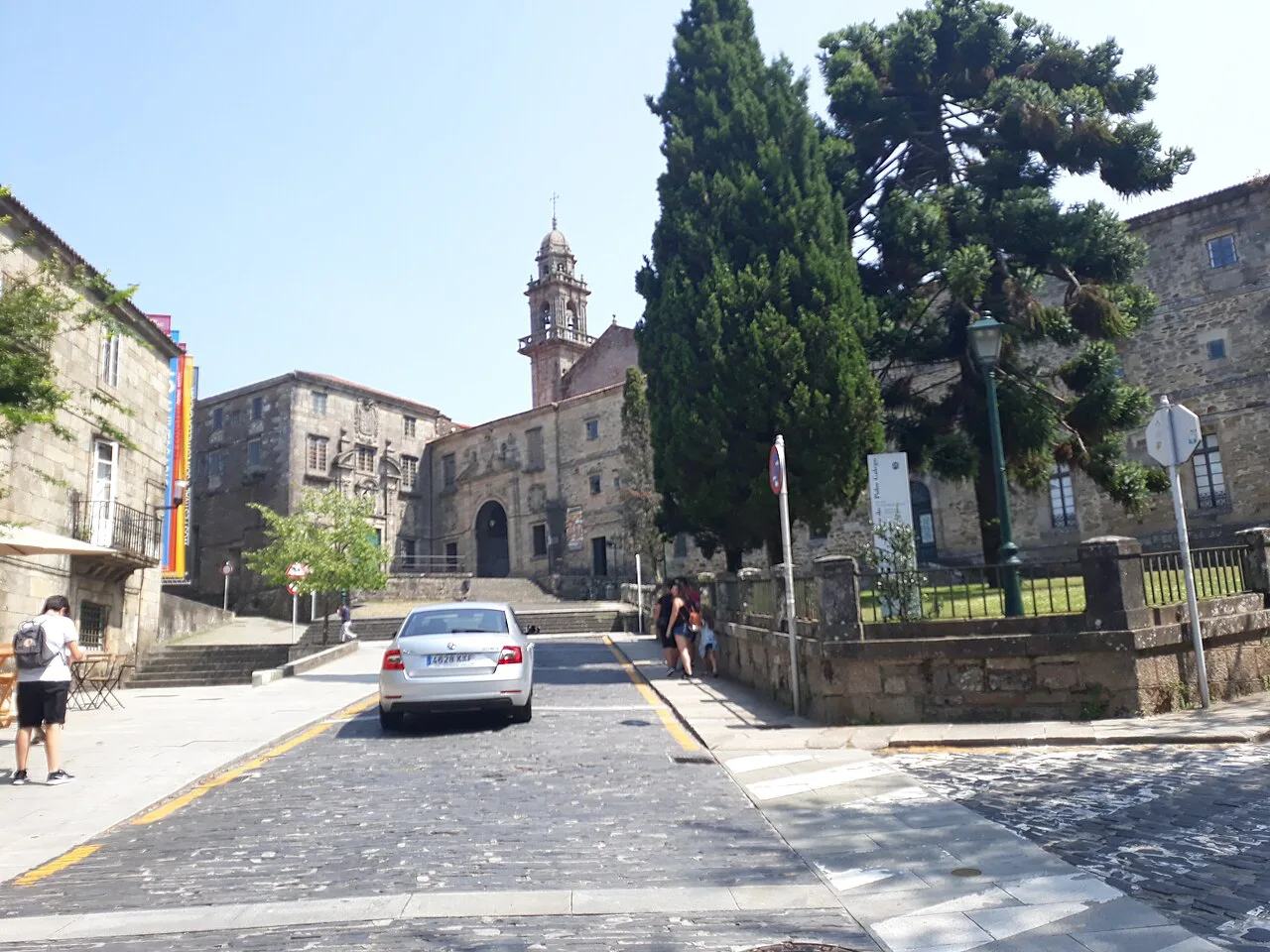
The museum stands on Costa de San Domingos in the Bonaval area, up the slope from the Porta do Camiño gate where pilgrims on the French route first enter the city. The building is the former Mosteiro de San Domingos de Bonaval, a baroque shell of the seventeenth and early eighteenth centuries wrapped around a Gothic and Renaissance church; the architect Domingo Antonio de Andrade is associated with the building alongside the patron fray Antonio Monroy.
Coming from the Praza do Obradoiro, walk north through the old town and out through the Porta do Camiño; the convent appears above you. Coming from the bus or train station, the walk up is longer and steady, so many visitors take a taxi for the last stretch.

Opening hours, closing days and holidays
The museum opens Tuesday to Saturday from 11:00 to 18:00 and on Sundays and public holidays from 11:00 to 14:00 only. It is closed on Mondays, 1 January and 25 December. On 24 and 31 December and 5 January it opens 11:00 to 14:00.
Two things follow from that timetable. A Monday in Santiago loses this museum entirely, so put it on a Tuesday-to-Saturday slot or a Sunday morning. Sunday visitors should arrive shortly after opening, because a 14:00 close leaves no room to drift through the rooms slowly.
Ticket prices in euros and free-entry days
Standard admission is €5, with a reduced ticket of €2 for visitors over 65 and students over 18, and group entry at €3.50 per person for parties of eight or more. Members of the museum, students under 18 and visitors who are unemployed enter free, and the Panteón de Gallegos Ilustres in the church is part of the same building.
Entry is free on Sundays and on 18 May, 25 July and 29 October, the museum's anniversary. Temporary exhibitions cost nothing on top of admission. Guided tours sold by outside operators start at €15 and include admission, though that particular tour is currently shown as unavailable, so check before planning around it.
What to see: sea, countryside and trades
The permanent galleries are grouped by the working life of Galicia. The strongest holdings cover the sea and the land: fishing boats and gear, agricultural tools, and rooms on habitat, architecture, trades and printing. Objects are displayed alongside their original use, so a net or a plough reads as a piece of a livelihood rather than a decorative antique.
A separate archaeology section, plus rooms on the press and printing, break up the ethnographic run and suit anyone travelling with a teenager who prefers history with dates attached. The collection runs to more than 9,000 registered objects and is still growing, so treat the route as a selection rather than a complete inventory.
Traditional dress, lace and musical instruments
The costume and lace collection is the museum's calling card for many visitors, with a strong showing of traditional dress and lacework. The music room holds Galician instruments including the gaita, and the displays explain the making as well as the playing. Look for the lacework of the palilleiras of Camariñas, one of the pieces that give the collection its coastal character.
Take this gallery slowly. The textiles reward close looking, and the instruments carry labels that connect them to specific regions and occasions, which gives context to things you will hear and see in towns across Galicia.
The baroque triple helical staircase
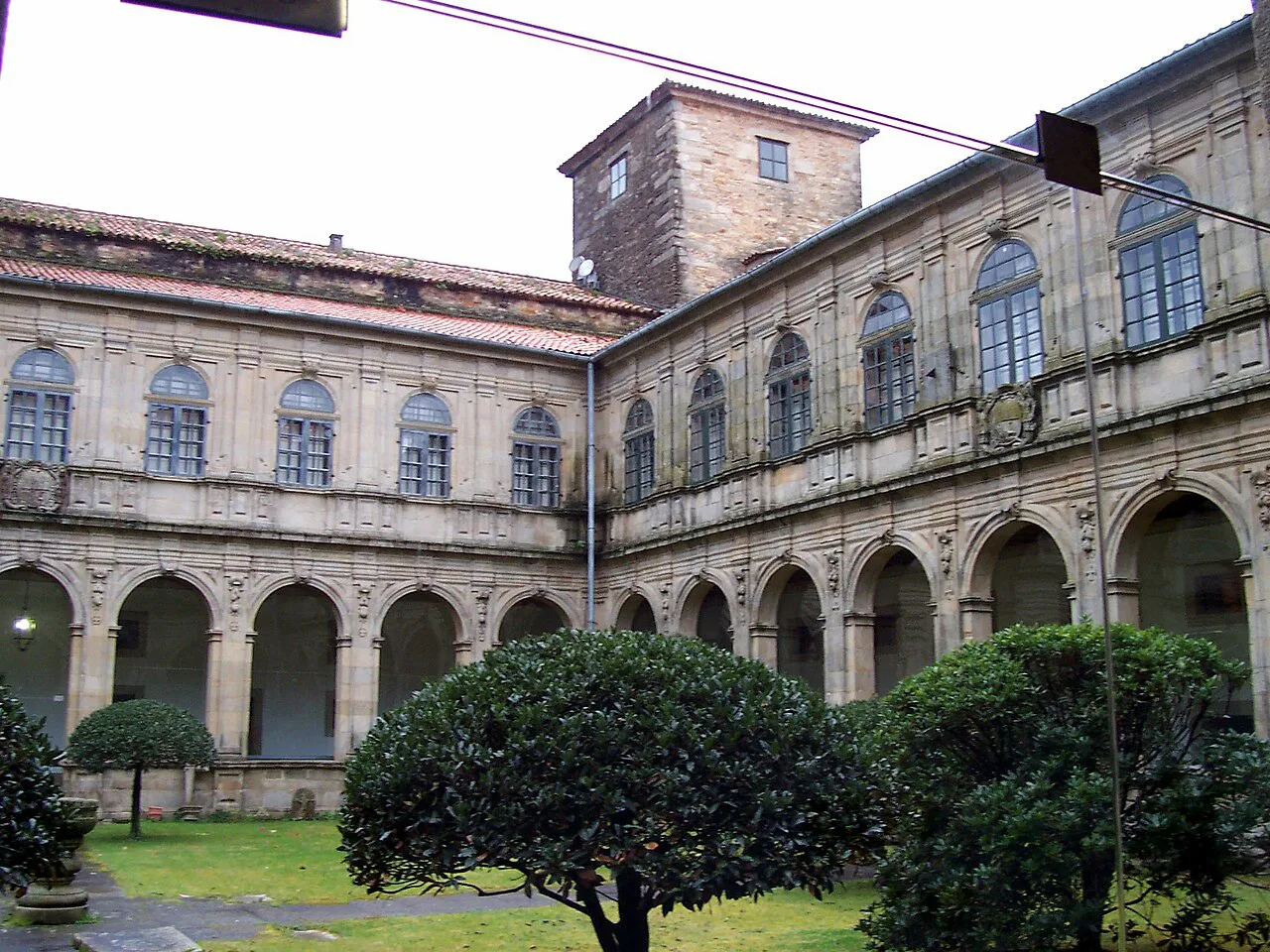
The convent's triple helical staircase is the architectural set piece of the visit, spiralling through the building to link the floors with the cloister. It belongs to the convent rather than to the museum's collections, so it is the one part of the route worth pausing at on purely visual grounds. Come upon it on the way between galleries; it is not a separate ticket.
The church of Bonaval and the Panteón de Gallegos Ilustres
The church of Bonaval, dating from the thirteenth to sixteenth centuries, is part of the visit and holds the Panteón de Gallegos Ilustres, the pantheon of distinguished Galicians. It is no longer a place of worship, and it doubles as a space for temporary exhibitions alongside its memorial role. Figures remembered there include Rosalía de Castro, Ramón Cabanillas and Castelao.
Many visitors treat the church as an afterthought and then find it the most atmospheric part of the building. Go through the galleries first, then into the church at the end of the visit while you still have attention for it.
How long to allow and a sensible order for the rooms
Allow around 1.5 to 2 hours. Start with the ethnographic galleries, move through dress, lace and music at a slower pace, stop at the staircase, and finish in the church and pantheon. Two hours is a comfortable full visit; anyone short of time should take the costume, music and church sections and leave the printing rooms.
Getting there on foot and accessibility
The museum is walkable from the Santiago de Compostela cathedral in roughly ten to fifteen minutes, uphill much of the way. Most of the museum's areas are accessible to visitors with reduced mobility, though not every part of the old convent building is level.
Groups of eight or more need to arrange their visit with the museum in advance, which also secures the group rate. Independent visitors can simply turn up during opening hours.
Nearby: Bonaval park and the Porta do Camiño
The convent sits beside the Parque de Bonaval, a green slope on the edge of the old town with views back over the rooftops. It makes a natural pairing with the museum: galleries first, then a slow loop through the park and down to the Porta do Camiño.
From the gate, walk up into the old town past the Praza da Quintana, with the cathedral's east end above you. The Catedral de Santiago de Compostela and its squares fill the rest of a short break, so plan the museum for a morning and walk the granite streets afterwards.
Which day should you give the Museo do Pobo Galego?
Pick a Tuesday to Saturday if you want the full 11:00 to 18:00 run, or a Sunday morning if a free ticket outweighs the 14:00 close. Monday is out, and so is Christmas Day and New Year's Day.
Go for the costume, lace, music and the triple staircase, and stay for the church and pantheon. At €5 standard, it is a low-cost, rain-proof couple of hours that explains the region you are travelling through.
Explore more Santiago de Compostela guides
Frequently Asked Questions
Is the Museo do Pobo Galego free on Sundays?
Yes. Entry is free on Sundays, and the museum is open that day from 11:00 to 14:00 only. The same free entry applies on 18 May, 25 July and 29 October.
Does the ticket include the church and the Panteón de Gallegos Ilustres?
Yes. The church of Bonaval and the Panteón de Gallegos Ilustres form part of the museum building and the visit, so no separate ticket is needed for them.