
Santiago de Compostela Cathedral: A Visitor's Guide to the Catedral

Santiago de Compostela Cathedral stands on the Praza do Obradoiro at the end of the Camino, and you need a half-day in the city to see it properly: the baroque west front, the Romanesque interior, the Apostle's tomb, the Pórtico de la Gloria and the cathedral museum do not come as one ticket or one time slot. This guide sets out how the building is laid out, which parts you reserve before travelling and how the liturgy reshapes a morning or afternoon inside.
Two practical points catch people out. Pilgrim Masses are currently being held in the church of San Agustín during works at the cathedral, so the nave is not always the gathering point travellers expect, and the Pórtico de la Gloria is visited on its own booked entry rather than as part of a general look round.
Santiago de Compostela Cathedral at a glance
The cathedral faces the Praza do Obradoiro, the long sloping square that also holds the Pazo de Raxoi and the Hostal dos Reis Católicos, and everything in the old town radiates from it. Arriving on foot from the Rúa do Franco, you meet the west façade first, and that approach is the best introduction to the building's scale.
Treat the cathedral as one address with three separate experiences: the church interior, the Pórtico de la Gloria and the cathedral museum, each with its own arrangements. The official cathedral site lists visits, guided tours, audio guides and reservations in one place, and that is where you confirm what is running before you commit a morning to it.
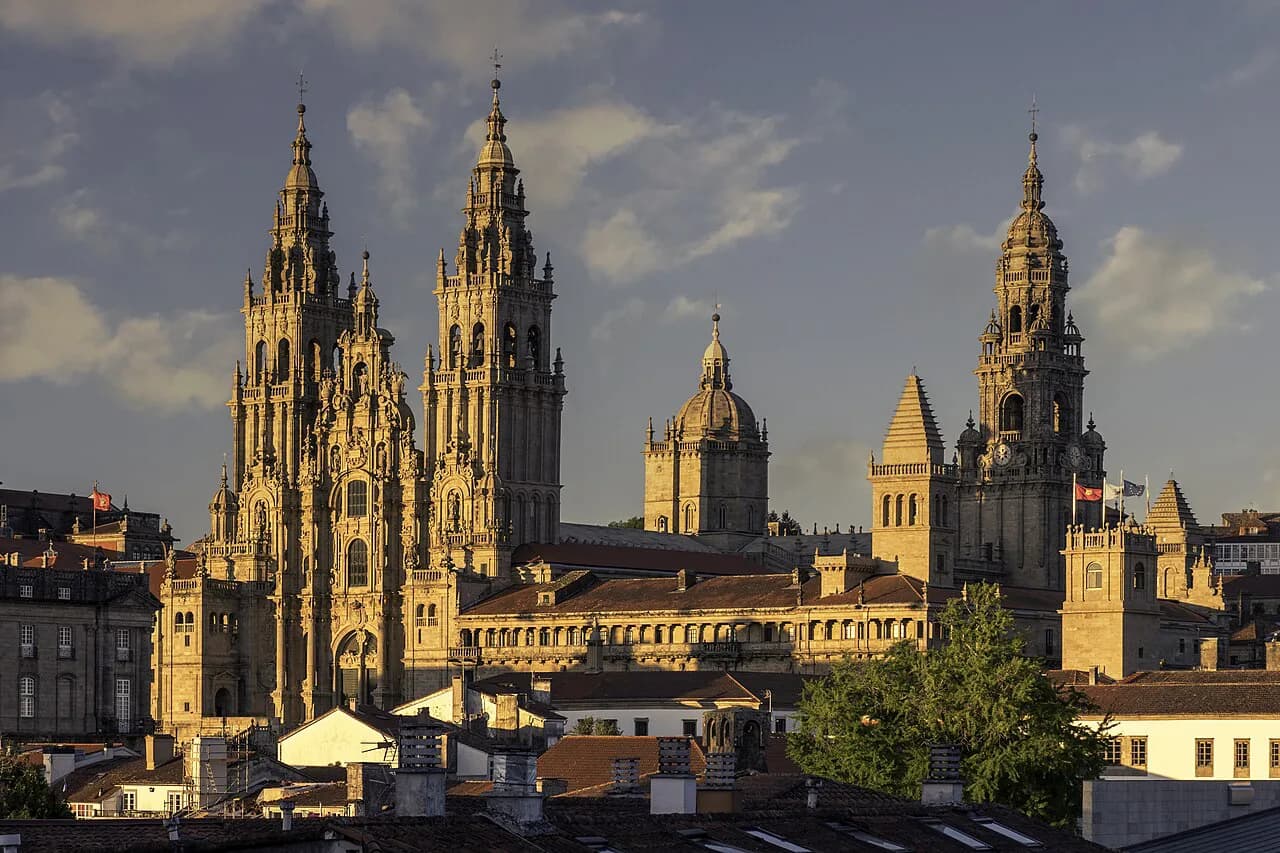
The building is Romanesque in structure with later Gothic, Renaissance and baroque layers, and the baroque west front and towers are what most visitors photograph. Inside, the plan is a classic pilgrim church: a long nave, side aisles, a transept and an ambulatory behind the high altar that lets a stream of people pass the tomb.

Getting there: arriving on foot and from the station
Most people arrive on foot through the old town, either finishing a stage of the Camino or walking down from the bus and train stations on the edge of the city. Once inside the old town everything is on foot, with the cathedral's towers as the fixed point for orientation.
If you are finishing a pilgrimage, the practical sequence matters: collect your stamps along the way, then take the Compostela certificate at the Oficina del Peregrino, because the two are separate processes in separate places. The office issues the document only in person and only to the pilgrim who walked, rode or sailed the qualifying distance.
The certificate is not a souvenir for a general city visit: the requirements are 100 km on foot or horseback, 200 km by bicycle along the same route, or 100 nautical miles by sail with the rest completed on foot, all on recognised Camino routes and evidenced by a stamped credencial. Reading the rules before you travel saves an argument at the desk, particularly if you walked only the final stretch into the city.

The Obradoiro façade and Praza do Obradoiro
The Praza do Obradoiro is the city's civic as well as religious front room, framed by the cathedral, the Pazo de Raxoi and the Hostal dos Reis Católicos, and it fills with pilgrims, students and coach groups through the day. Come early or in the evening for the façade without a crowd across it.
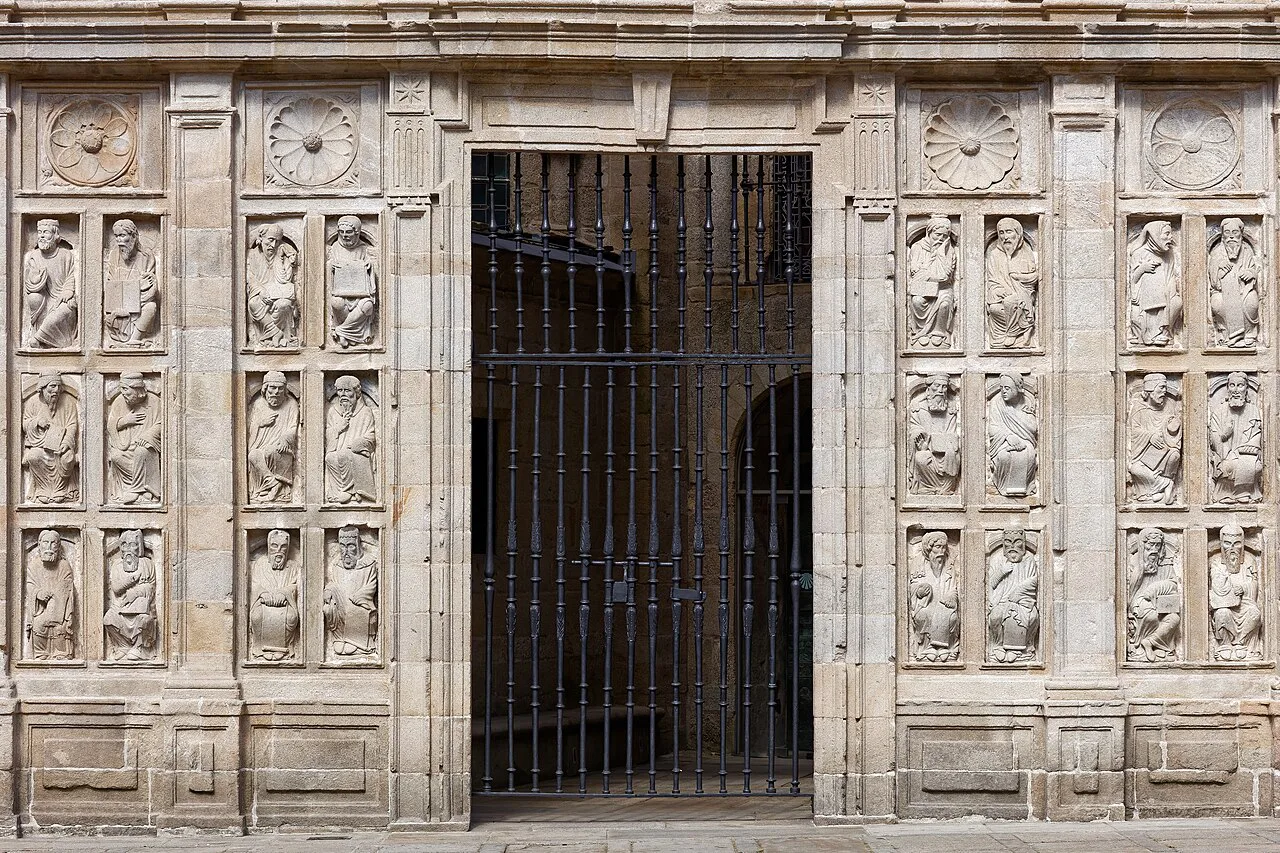
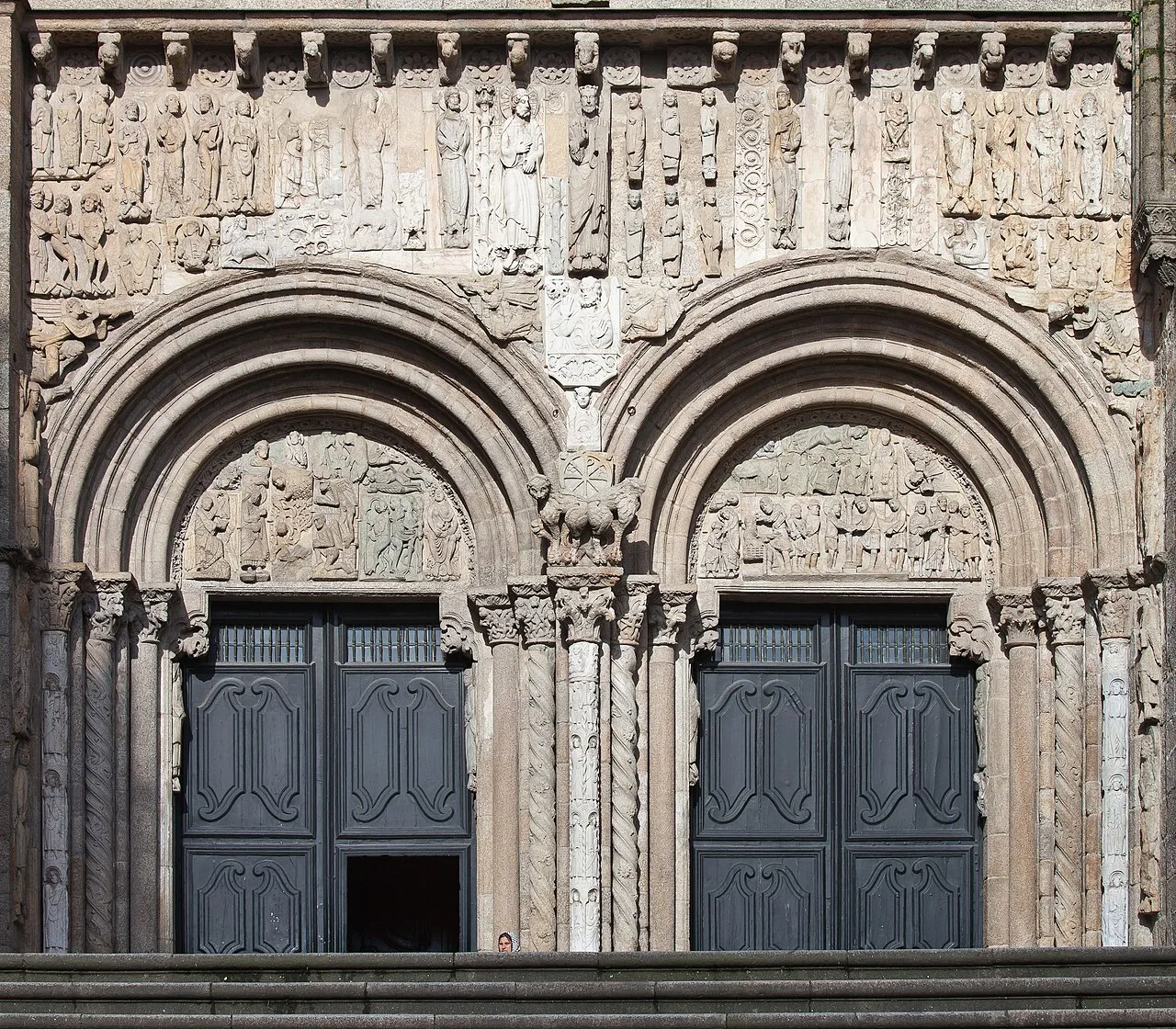
The west front you face is an eighteenth-century baroque skin over a much older church, with twin towers and the Apostle framed above the doorway, and the stone changes colour completely between sun and rain. Walk round to the Quintana side to see the apse and the Romanesque fabric, which explains the shape of the interior far better than the baroque front does.
Inside the cathedral: nave, tomb and pilgrim rites
Inside, the scale is intimate by Gothic standards, and the high point for most visitors is the crypt beneath the high altar, where the tomb of the Apostle is venerated. The ambulatory lets you walk behind the altar and look back down the nave, and the Romanesque capitals reward a slow ten minutes rather than a hurried circuit.
Pilgrims traditionally hug the statue of the Apostle above the high altar and visit the crypt, though access to the upper level follows the cathedral's own visitor arrangements on the day. Because the building is a working church, sections may be cordoned off for services, and the notices on the official site take precedence over what a guidebook says.
Allow at least an hour for the church alone if you want the nave, the transept, the ambulatory and the tomb without rushing. Quiet is expected around the crypt and in the chapels whatever else is going on in the building.
The Pórtico de la Gloria and the cathedral museum
The Pórtico de la Gloria is the carved Romanesque sculpture behind the west façade, with the Apostle in the central column and musicians and elders across the archivolts, and the cathedral presents it as a separate booked entry with its own time slot and visitor limits. Book that slot through the official site before you travel if it is the reason for your visit, because turning up on the day rarely works in busy periods.
The cathedral museum holds the cloister, the chapter house and a collection that includes tapestries and liturgical pieces, and it is bought and entered separately from the church itself. It makes a sensible alternative when the church is closed for a service, and it gives you a close view of sculpture that the crowded nave does not.
Ticket prices, concession rates and any free or reduced slots for the Pórtico and the museum are published by the cathedral's own booking pages, and they change with the season and with restoration work. Check the price and the cancellation terms when you reserve rather than budgeting from an old blog post.
Pilgrim Masses and the Botafumeiro
The Pilgrim Mass is the daily liturgy for arriving walkers, and the cathedral has announced that these Masses are temporarily moving to the church of San Agustín while intervention and remodelling work takes place at the cathedral. If you are timing your arrival for a Mass, plan around San Agustín and confirm the current time and place on the cathedral's liturgy pages close to the date.
The Botafumeiro, the great silver thurible swung across the transept, is not a scheduled show for tourists: the cathedral controls when it is used, and the official site carries its own information page for it. Treat it as a bonus if it swings during your visit rather than the centrepiece of the trip.
For anyone walking the Camino, the pilgrim welcome at the Centro de Acogida al Peregrino sits alongside the certificate process rather than replacing it. The order that works is to register and collect the Compostela, then attend a Mass if the timing suits, and only then go back for a proper look at the church when the liturgy is over.
Tickets, guided visits and audio guides
The cathedral sells guided visits, audio guides, plans and reservations through its official site, and these cover different combinations of the church, the Pórtico and the museum, so read what a given option includes before paying. A guided visit is worth it if you want the sculpture explained, while an audio guide suits anyone who prefers to move at their own pace.
Entry to the cathedral as a place of worship and entry to the separately managed visits are not the same thing, so do not assume a museum ticket gets you into the Pórtico or that a Pórtico slot includes the museum. Reserve the pieces you actually want, check the meeting point on the confirmation, and arrive early because the old town streets are slow with crowds.
Opening hours and closures to confirm before you travel
Opening hours change with the season and with the liturgical calendar, and the cathedral publishes separate schedules for worship, tourist visits, the museum and confessions on its official site. Check the day before you travel and again on the morning of your visit, and keep a fallback such as the museum if the church is closed for a service.
The building is a working cathedral, so closures for Mass, funerals and restoration work happen at short notice and can affect the Pórtico and the museum differently from the church. A plan that puts the church early and the museum later copes with that better than a tightly booked day.
How long to allow, and what shapes the visit
A realistic allowance is half a day for the cathedral, the Pórtico and the museum together, or about an hour and a half if you see only the church and the square. Add time for the Oficina del Peregrino queue if you are collecting a Compostela, and remember that the old town is hilly, with cobbles that slow you down in rain.
The Pórtico's timed slots fill first in summer, so reserve those ahead, and Galicia's rain is a bigger planning factor than heat here, so a waterproof layer and indoor options matter more than a sun hat.
If you are in the city on a match day, the SD Compostela publishes its fixture list and ticket information on its own site. That is a minor consideration next to the liturgy, and it should not shape a short break unless you are going to the match.
Nearby: Quintana, the market and the old-town streets
The Praza da Quintana sits on the east side of the cathedral and is the quieter counterpart to the Obradoiro, split by a grand stair and used for events, with the apse rising above it. It is the best place to see the Romanesque exterior from outside, and it connects through to the streets running north.
Beyond the immediate squares, the Museo do Pobo Galego occupies the former Mosteiro de San Domingos de Bonaval and covers Galician culture and history, with a famous triple helical staircase, and the adjoining Parque de Bonaval gives you trees, paths and views back over the rooftops. Both make a good second stop after the cathedral, and both are within easy walking distance of the Quintana.
The old-town streets between the Obradoiro and the Quintana, and the arcaded Rúa do Vilar and Rúa Nova, are worth an unhurried wander once the cathedral is done, with the Hostal dos Reis Católicos closing the view on the Obradoiro side. The full set of Santiago de Compostela Attractions: 6 Visitor Guides is a sensible next read if you are building a short break around the cathedral.
What to book before you reach the Obradoiro
Book the Pórtico de la Gloria slot and the museum entry first if the sculpture and the collection matter to you, and leave the church itself flexible so a service or a closure does not wreck the day. If you are arriving as a pilgrim, sort the Compostela at the Oficina del Peregrino in person and check the current Pilgrim Mass location at San Agustín before you plan your arrival time.
Everything else, including hours, prices and what is open on the day, comes from the cathedral's own pages, and the Obradoiro is the fixed point from which the rest of Santiago de Compostela is easy to walk.
Frequently Asked Questions
Do I need to book the Pórtico de la Gloria in advance?
It is a separate timed entry from the cathedral and the museum, and slots are limited, so reserve it through the cathedral's official booking pages before you travel if it is a priority. The same pages state what each ticket includes and the current terms.
Where is the Pilgrim Mass held at the moment?
The cathedral has announced that Pilgrim Masses are temporarily moved to the church of San Agustín during remodelling work. Confirm the current time and place on the cathedral's liturgy pages shortly before you go, as the arrangement can change.
Can someone collect the Compostela certificate for me?
No. The Oficina del Peregrino issues it only in person to the pilgrim who completed the qualifying distance, with the stamped credencial, and it cannot be arranged by phone or online on your behalf.