
Praza do Obradoiro: Santiago de Compostela's Cathedral Square

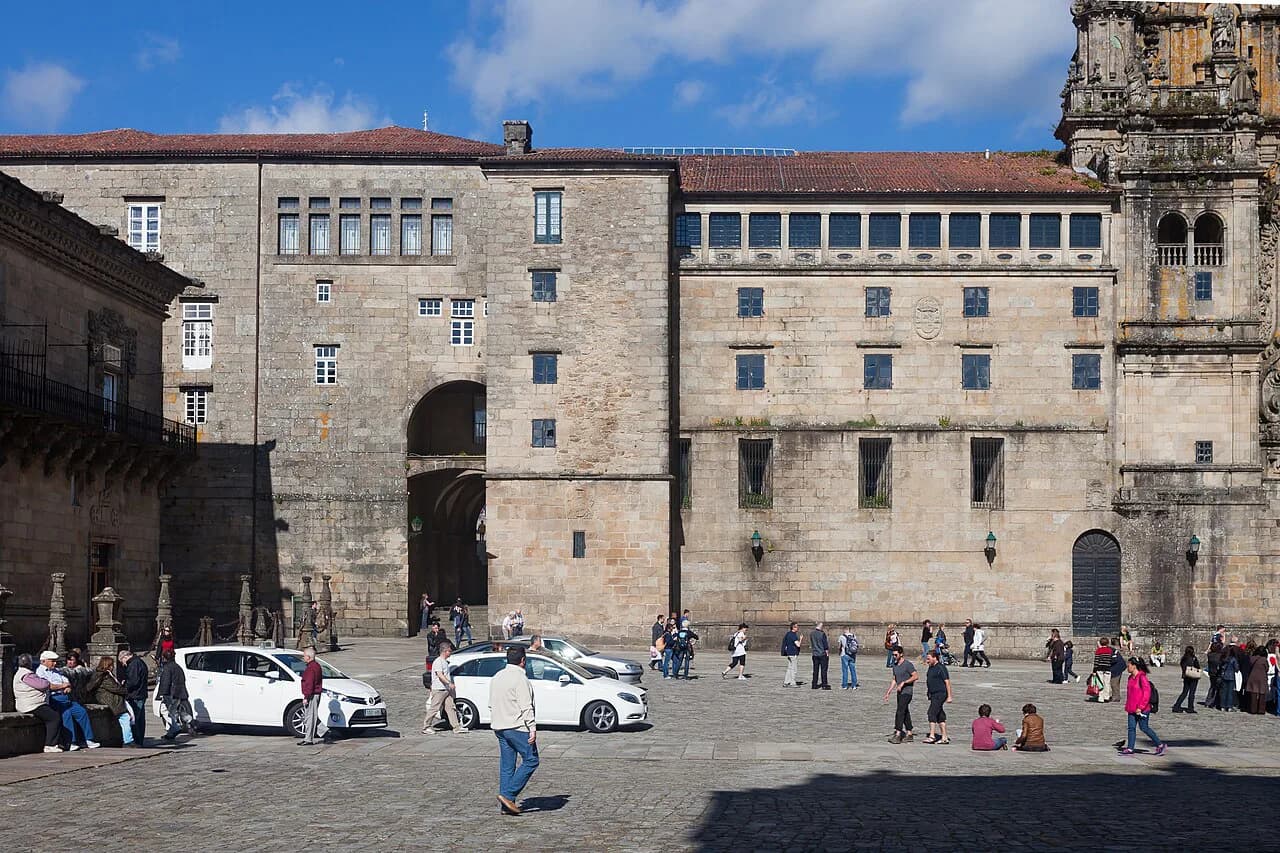
Praza do Obradoiro is the great ceremonial square of Santiago de Compostela, and it is the cathedral's main facade, not its visitor entrance, that closes its eastern side. Plan on 20 to 30 minutes to read the four sides, then walk round to the Praza das Praterías for the free way into the basilica. This guide covers the square's layout, the entrance and security rules, what the ticket desk sells, and what is within a short walk; for the wider set of sights, see Santiago de Compostela Attractions: 6 Visitor Guides.
The city's old town is compact and granite-built, and the Obradoiro sits at its centre, so most of the historic centre is reachable on foot from here. Two practical rules shape a visit: the basilica bars backpacks, and the Pórtico de la Gloria is not part of the free entry.
Where the square is and how the old town fits around it
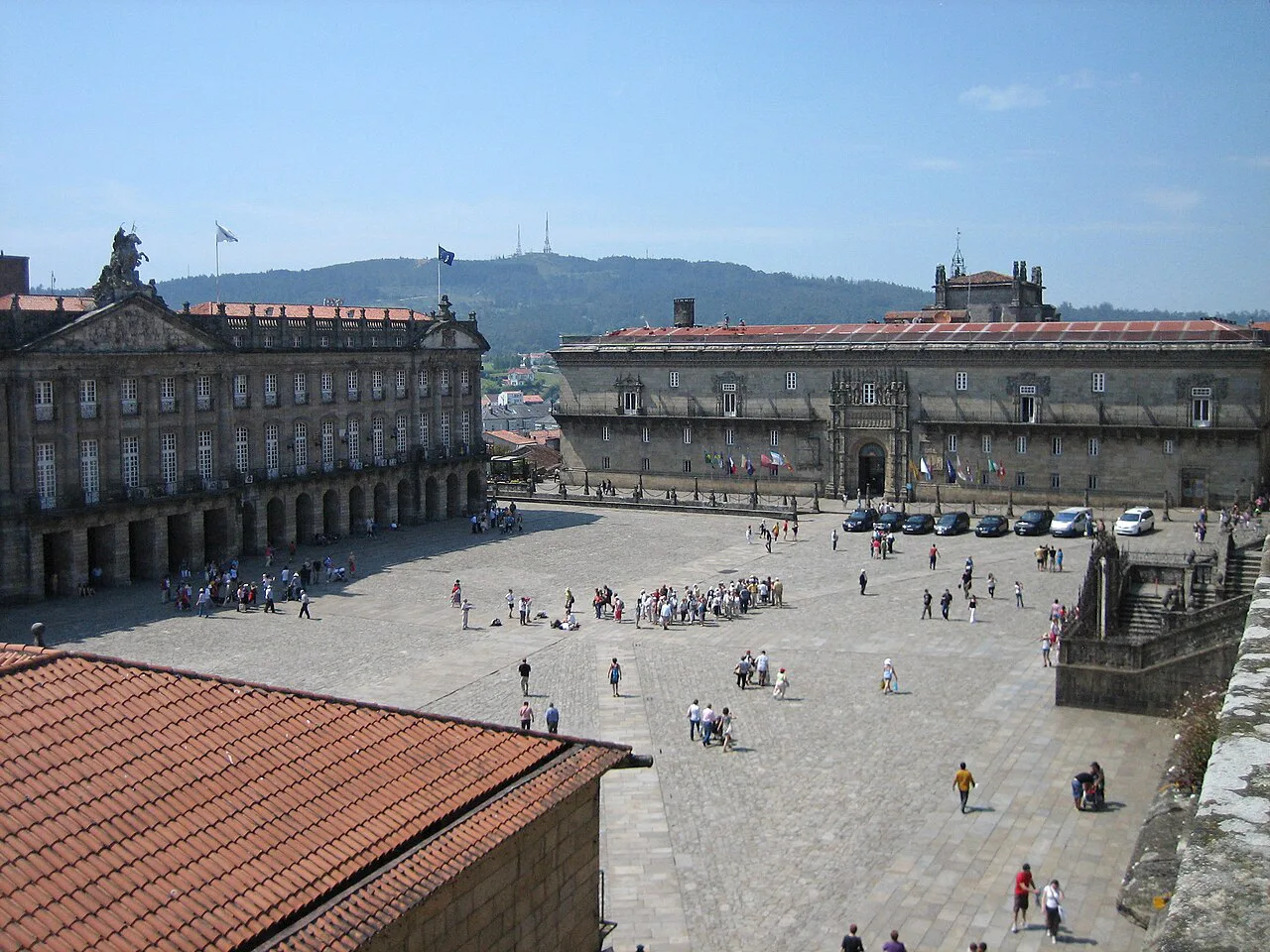
The square opens off the top of the old town, with the cathedral's Baroque west facade filling one side and the long, arcaded Pazo de Raxoi closing another. Behind and below it, lanes drop towards the Praza da Quintana and the cathedral's south side, which is where you walk to find the Puerta de Platerías. Because everything is within a few minutes of the Obradoiro, treat the square as the fixed point of an old-town walk rather than a stop in itself.
Pilgrims on the Camino finish by walking in from the surrounding streets, and the square doubles as the meeting point and the photo stop. It is paved rather than green, with no shade to speak of, so in strong sun you cross it quickly and linger under the arcades instead.

The cathedral's main facade and the square's four sides
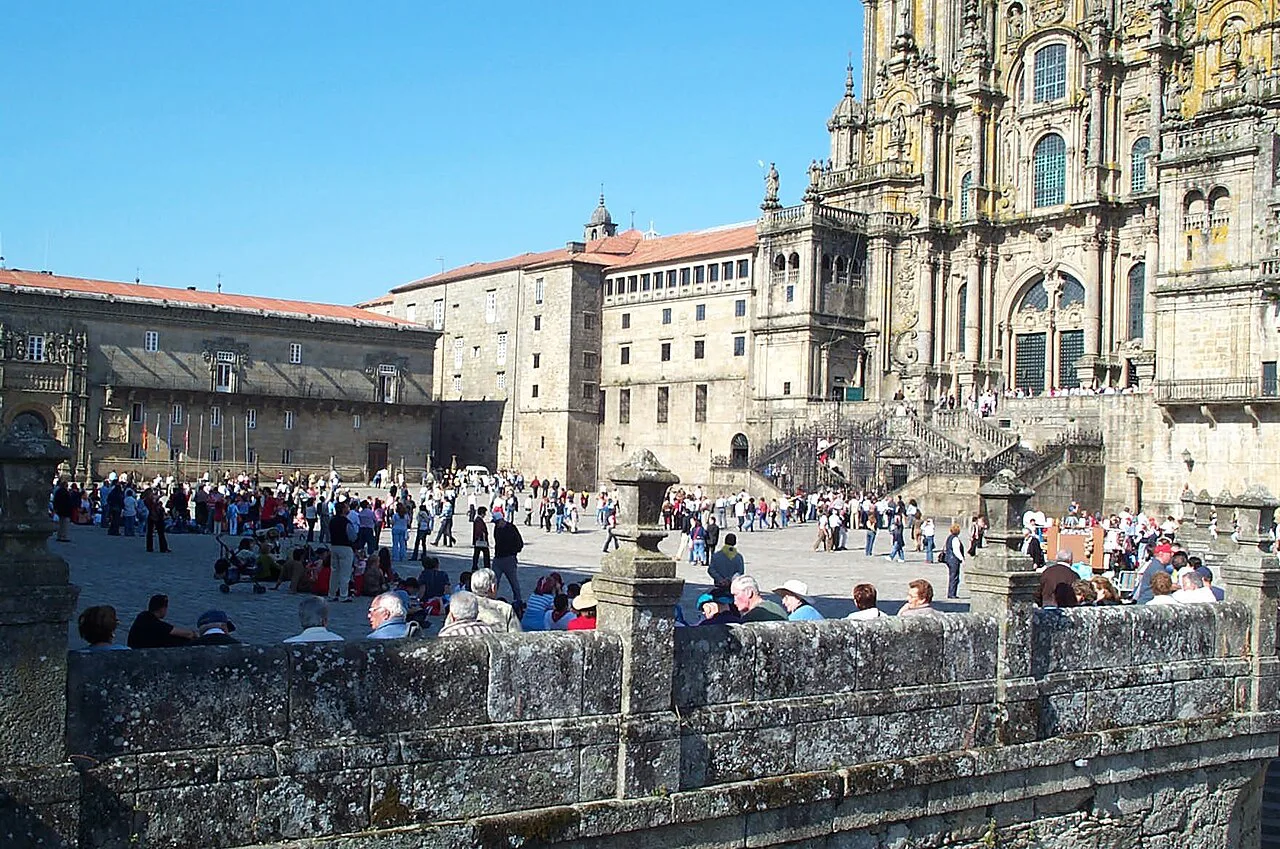
The west front you face from the Obradoiro is the ceremonial one, and it is what most travellers picture when they picture the city. The visitor entrance is elsewhere: access to the basilica is through the Puerta de Platerías on the south side, so you cross to the Praza das Praterías rather than queue under the west towers.
Walk the perimeter and the square reads as four distinct pieces of city: the cathedral front, the town hall range, the Hostal dos Reis Católicos side and the college facade opposite. Look up at the towers before you go round to the south door, because from the Praterías side you cannot see the west front at all.
Getting in: the Puerta de Platerías entrance rather than the Obradoiro front
For a first visit, the important correction is that the Obradoiro front is the facade to look at, while entry is by the Puerta de Platerías, the south door of the transept. Walking round takes a couple of minutes along the cathedral's southern flank, past the Praterías square with its fountain and steps. The Santiago de Compostela Cathedral guide covers the building in more depth.
Inside, the free basilica visit gives you the nave, the aisles and the tomb of the apostle under the main altar. The Pórtico de la Gloria is not visible on that free entry, which surprises travellers who expect the west door to be an interior highlight.
The free access window and the no-backpack rule
Access to the cathedral is free every day, from 07:00 to 21:00, with entry by the Puerta de Platerías; in summer the Saturday closing is 20:30 so the vigil with pilgrims can be held. Visits are not possible during services, which is why the published mass times matter if you are timing a look at the altar rather than the building.
Backpacks are not allowed in the basilica for security reasons, so arriving straight off the Camino with a full pack means leaving it behind before you go in. Bags over 40 x 40 cm are refused in the museum spaces as well, which rules out a day pack as a workaround.
What the ticket desk in the square covers: the cathedral museum
The museum's ticket desks are in the Praza do Obradoiro itself, and the museum opens daily from 10:00 to 20:00. Its collections sit in the Pazo de Xelmírez on one side of the main facade and under the cloister on the other, so the square is the natural place to start and finish a museum visit.
Admission is charged, and the cathedral publishes reduced rates for students, accredited pilgrims, unemployed visitors, the over-65s, disabled visitors and large families. Rates are set by the cathedral, so check the current tariff on the official visit page before you join the queue.

The Pórtico de la Gloria and other bookable visits
The Pórtico de la Gloria is booked as a separate visit through the official reservation system, either on its own or combined with the museum and other spaces. Other options cover the roofs and the Torre de la Carraca with the museum, and a night visit.
Book ahead if the Pórtico is the reason for your trip, since these are timed entries rather than a walk-up queue. Guided versions combining the cathedral, museum and Pórtico are sold by operators as well, which suits travellers who want the sculpture explained rather than simply seen.
How long the square needs and when it is quietest
Give the Obradoiro half an hour at a normal pace: long enough to see the facade, the Pazo de Raxoi and the pilgrim traffic, and short enough that it stays a stop rather than an afternoon. Early morning is calmest, and the light on the west front is better then than at midday.
Late morning brings the arriving pilgrim groups, and the square fills again in the evening when coach parties come back through. If you want the empty-square photograph, combine it with the early free entry to the basilica and cross the Obradoiro before the museum opens at 10:00.
What else is within a short walk
The Alameda park is a short uphill walk from the old town and gives you the classic view back to the cathedral towers across the treetops; entry to the park is free. The Mercado de Abastos is a few minutes' walk away for a look at the produce halls rather than a meal.
For a different side of the city's history, the Museo do Pobo Galego occupies the former convent of San Domingos de Bonaval, a short walk beyond the old town edge, with the Parque de Bonaval alongside it. The Praza da Quintana sits immediately behind the cathedral and is the natural next stop if you are walking the old town in one loop.
Which part of the square do you actually need?
Treat the Obradoiro as the ceremonial heart of the visit and the Praterías door as the practical one: see the west front from the square, then walk round for free entry to the basilica. Leave the backpack behind and book the Pórtico de la Gloria separately if it matters to you.
Frequently Asked Questions
Is Praza do Obradoiro free to visit?
Yes. The square is public ground and costs nothing, and the cathedral itself is free to enter through the Puerta de Platerías. The museum and the bookable visits such as the Pórtico de la Gloria are charged separately.
Do you enter the cathedral from the Obradoiro?
No. The Obradoiro facade is the one you admire from the square, but the visitor entrance is the Puerta de Platerías on the south side, a couple of minutes' walk round the building.
How long should I spend in the square?
Around half an hour covers the four sides and the views of the facade. Add more time if you are going into the basilica or the museum, since the museum alone runs to a full visit.