Santiago de Compostela Old Town: Streets, Squares and a Walking Route
Walk Santiago de Compostela's old town: the Arco de Mazarelos, Praza do Obradoiro, the cathedral and Bonaval, with a route and honest trade-offs.
On this page
Santiago de Compostela's old town needs half a day for the cathedral core and a full day if you add museums, Bonaval and the Alameda. The historic quarter, the Casco Antigo, is a UNESCO World Heritage site wrapped around the cathedral where pilgrims finish the Camino de Santiago, and it is small enough to cross on foot. This guide sets out the layout, a walking order from Rúa do Vilar to the Arco de Mazarelos and Praza do Obradoiro, and the quieter edges at Bonaval and Costa Vella.
Two things shape any plan. First, the quarter is pedestrian and built of granite, so you walk it rather than ride it, and the pavements turn slick in Galician rain. Second, its sights cluster: the cathedral squares sit minutes from each other, while the Mercado de Abastos and Bonaval pull you north-east and south-east respectively. Read the route as a loop rather than a checklist, and leave slack for the small prazas that interrupt it.
What the old town is and where it sits
The Casco Antigo is the historic core of Santiago de Compostela, and its status as a UNESCO World Heritage site reflects a monumental ensemble of cathedral, squares, convents and stone streets. Pilgrims arriving along the Camino de Santiago converge on the cathedral, which gives the quarter a working function beyond tourism. That mix is why the streets feel lived-in rather than staged, with university buildings and ordinary shops sharing the granite.
For orientation, treat the cathedral as the centre and everything else as rings around it. The great square, Praza do Obradoiro, opens to the west, Platerías to the south, and the streets of the north-east lead down towards the market. Beyond the old town proper, parks and viewpoints give you the skyline back. The Santiago de Compostela history page covers how the pilgrim route shaped the town, which helps make sense of the street pattern.
How the old town is laid out
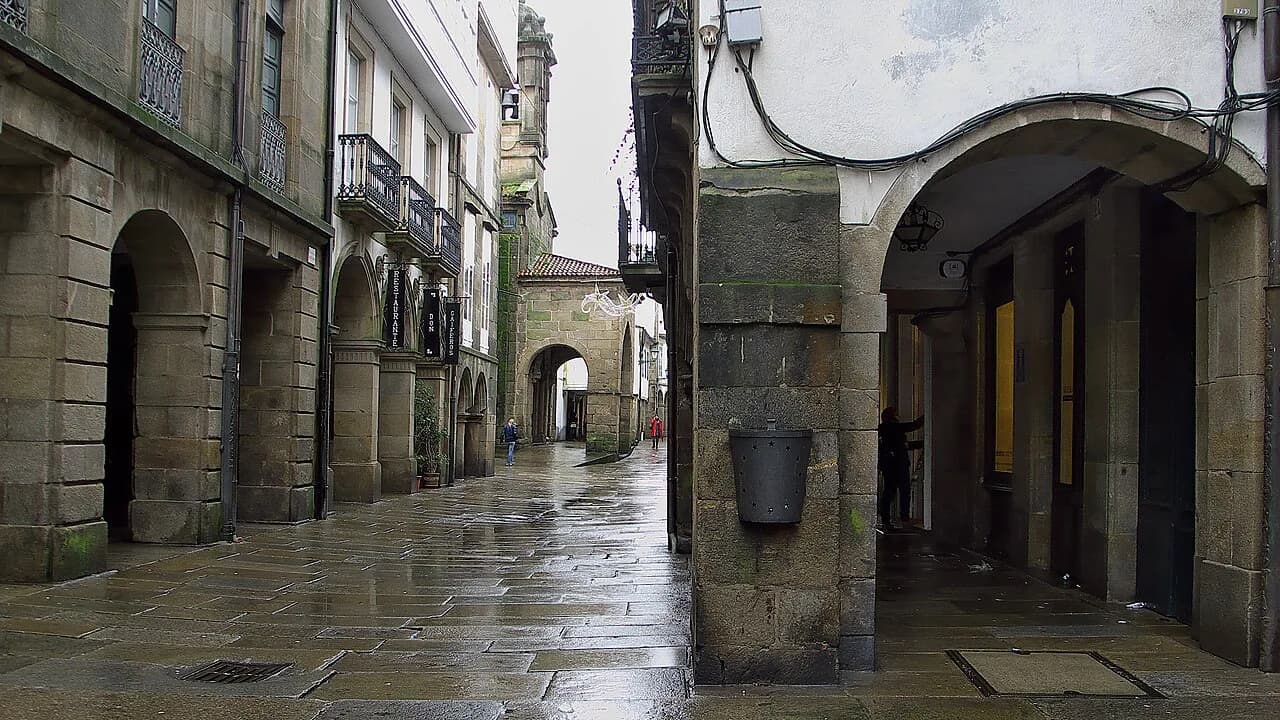
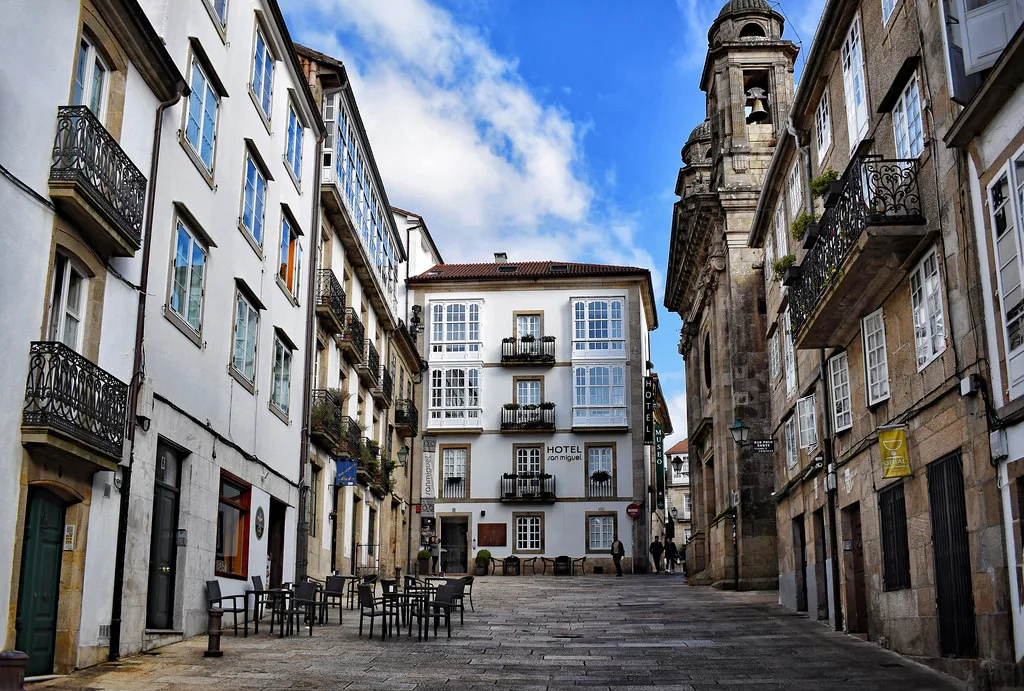
Streets are narrow, cobbled and mostly free of traffic, and they open without warning onto small prazas with a fountain, a cross or a café terrace. The medieval walls are almost entirely gone, but one gate survives: the Arco de Mazarelos, the last remaining entrance of the old walled city. It stands on Praza de Mazarelos, surrounded by the university's geography and history faculty and a statue of Eugenio Montero Ríos, and it reads as a doorway between the modern town and the historic one.
Because the quarter is compact, distances mislead. A walk of a few hundred metres can pass three squares and two churches, and the same walk takes longer when you stop, which you will. Plan the day around clusters rather than pinning sights to the map one by one. A Santiago de Compostela map helps you see how Rúa do Vilar, Cantón do Toural and Rúa Nova connect before you set off.
A walking route: Rúa do Vilar to Praza de Cervantes
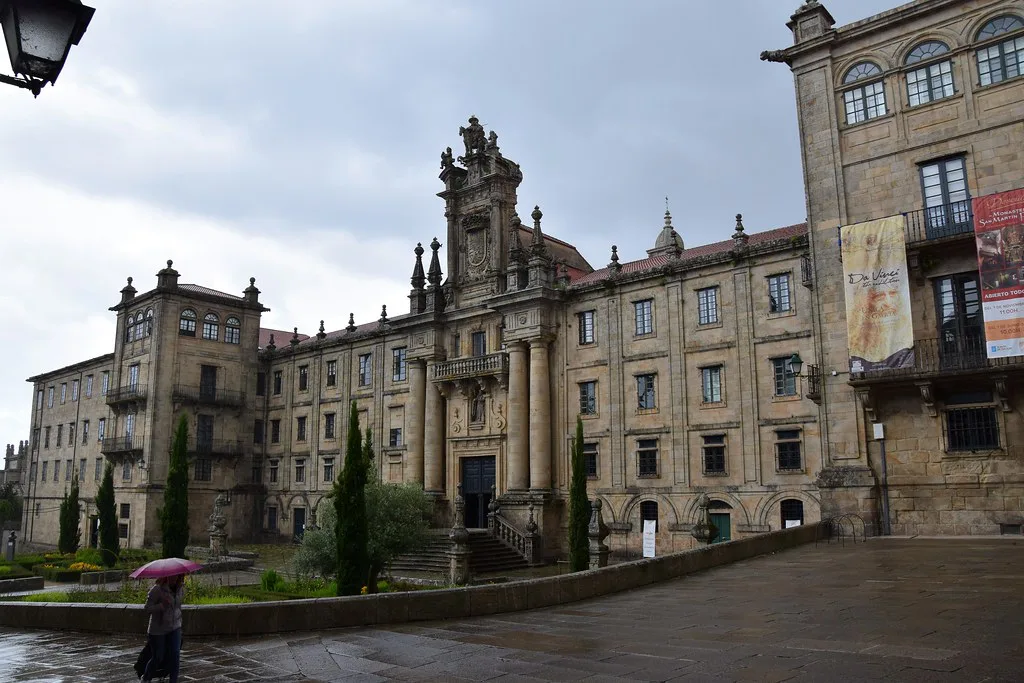
Start on Rúa do Vilar, where the city tourist office gives out free maps and practical advice, then walk up to Cantón do Toural. From there, follow Rúa do Cardeal Payá to Praza de Mazarelos and cross under the Arco de Mazarelos, which puts you in front of the Convento de las Mercedarias Descalzas, a baroque and neoclassical building founded by Archbishop Antonio Girón. This is the natural gateway into the historic quarter and the clearest surviving marker of its medieval boundary.
Continue north by Rúa da Ensinanza to Praza San Félix and the Igrexa de San Fiz de Solovio, a Romanesque church with a claim to being one of the city's oldest sites. From there the streets lead on towards Praza de Cervantes and the Igrexa de San Agustín, a natural pause before the cathedral squares. The published version of this walk covers roughly 2.6 km, which is short in distance but generous in time once you account for stops.
Praza do Obradoiro and the cathedral
Praza do Obradoiro is the heart of the quarter and the first view most pilgrims get of the cathedral. The square is framed by the Palacio de Rajoy and the Hostal de los Reyes Católicos, whose facades span Gothic to baroque, and it works as a meeting point, a stage for events and the place where the city shows itself. Arrive early or late to see it without the flow of arriving walkers.
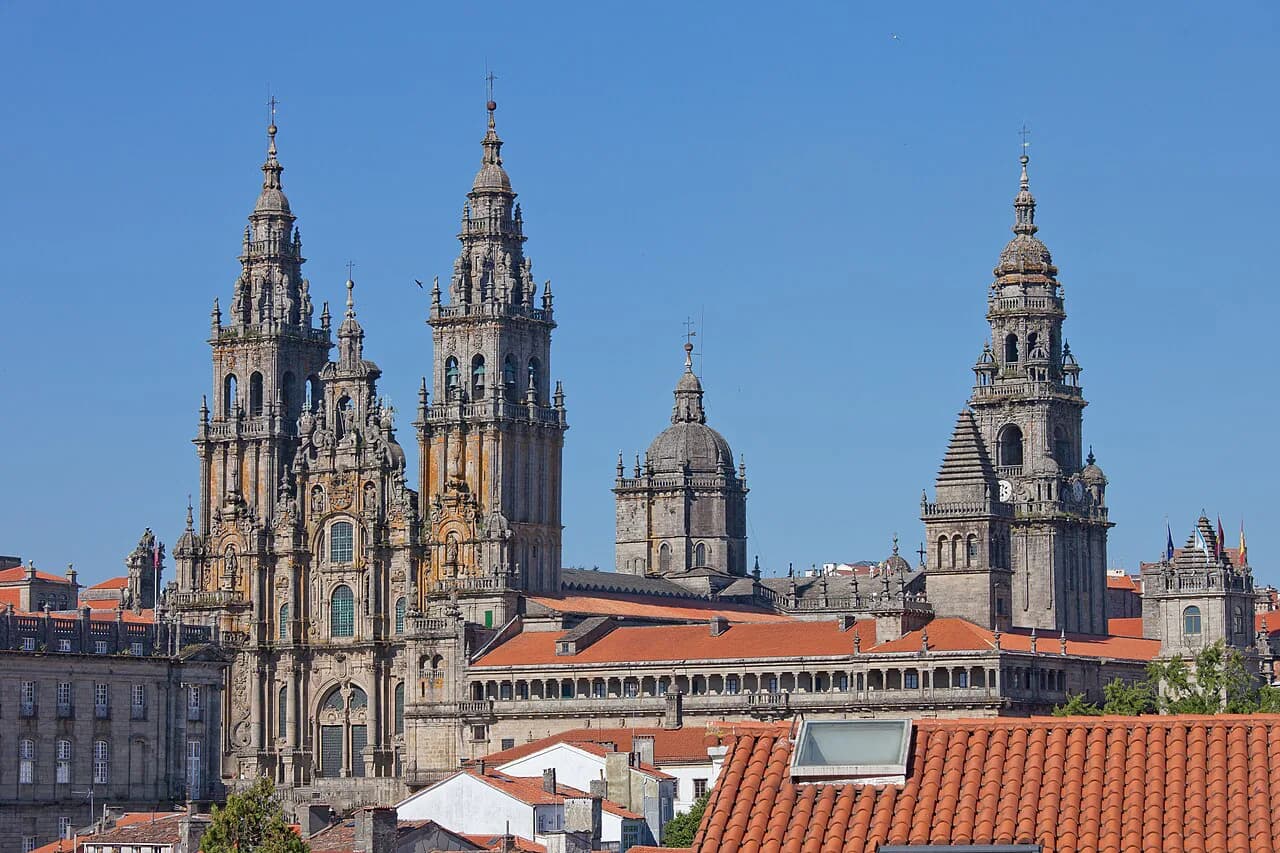
The Cathedral of Santiago de Compostela anchors the whole quarter, with the Pórtico de la Gloria counted among the masterpieces of Romanesque sculpture and the Botafumeiro, the great censer, associated with services inside. The cathedral is a place of worship first, so tourist visits pause for Mass and you should plan around that rather than against it. The cathedral publishes its own visitor arrangements, and the Catedral de Santiago de Compostela guide covers what to look for inside.
Whether the Botafumeiro swings on your visit depends on the liturgical calendar rather than on a fixed daily slot, so it is worth asking at the cathedral rather than timing a trip around internet claims. Treat it as a bonus. If it matters to you, check the cathedral's own schedule before booking travel.
Praza de Platerías and the south side
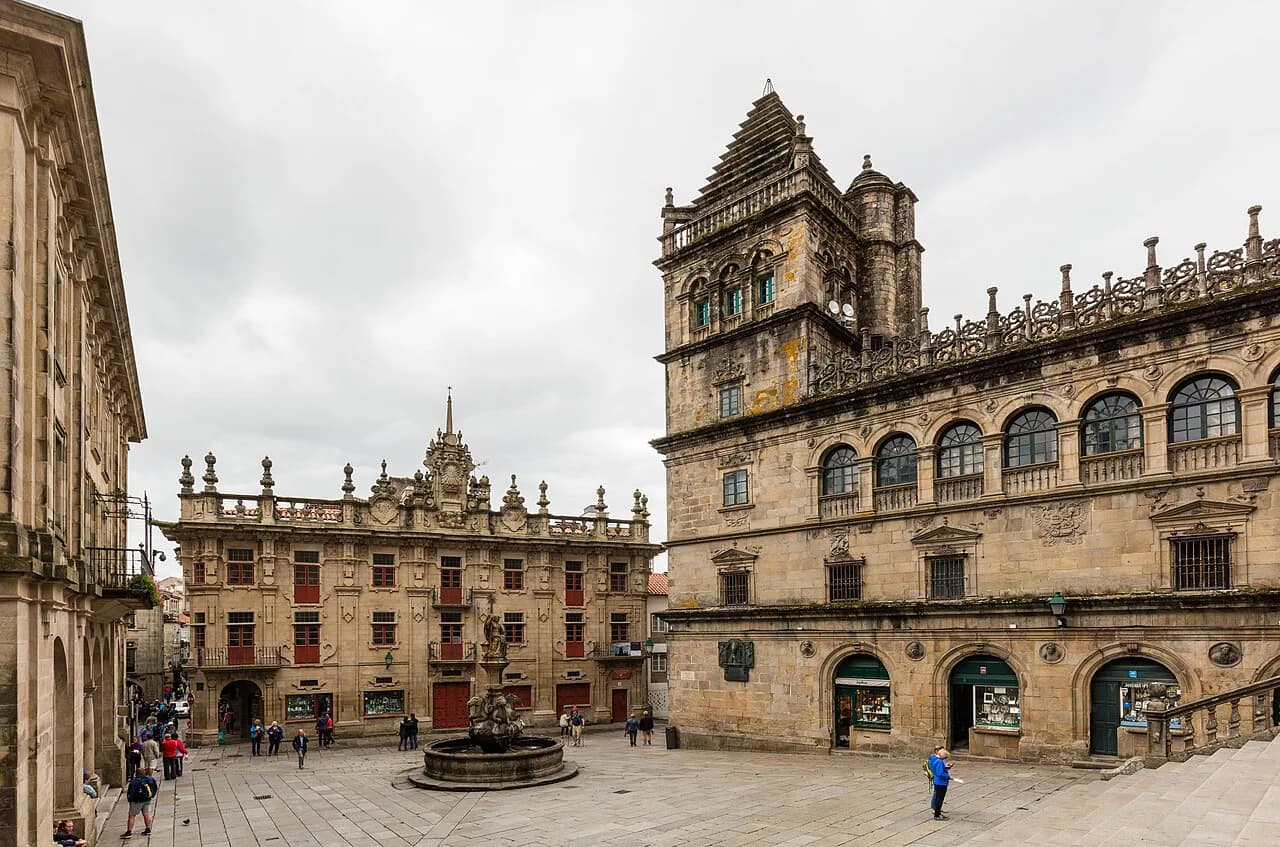
The south door of the cathedral opens onto Praza de Platerías, a smaller, busier square named for the silversmiths who once worked around it. It gives you a close view of the Romanesque façade and the fountain in the middle, and it connects quickly to the streets running down towards the market. If Obradoiro is the ceremonial face of the cathedral, Platerías is the working one.
From Platerías the lanes fan out in several directions, so pick your next stop deliberately. Heading north-east takes you towards San Fiz and the market, while heading south-east leads towards Bonaval. Doing Platerías straight after Obradoiro keeps the cathedral cluster together and frees the rest of the day for the quieter edges.
The quieter north-east: Mercado de Abastos and San Fiz
The Mercado de Abastos sits on the north-east edge of the historic quarter, and it is one of the places where the old town still functions as a market rather than a monument. Around it, the streets are calmer than the cathedral approach and the stone feels less polished. This is the part of the walk to slow down in, especially if the squares around the cathedral are crowded.
Igrexa de San Fiz de Solovio, near Praza San Félix, is a Romanesque church tied to the city's earliest traditions and a short step from the university library. Pair it with the market and the surrounding lanes rather than treating it as a separate trip. Together they give a half-hour of the walk that feels removed from the pilgrim traffic.
Bonaval and the edge of the old town
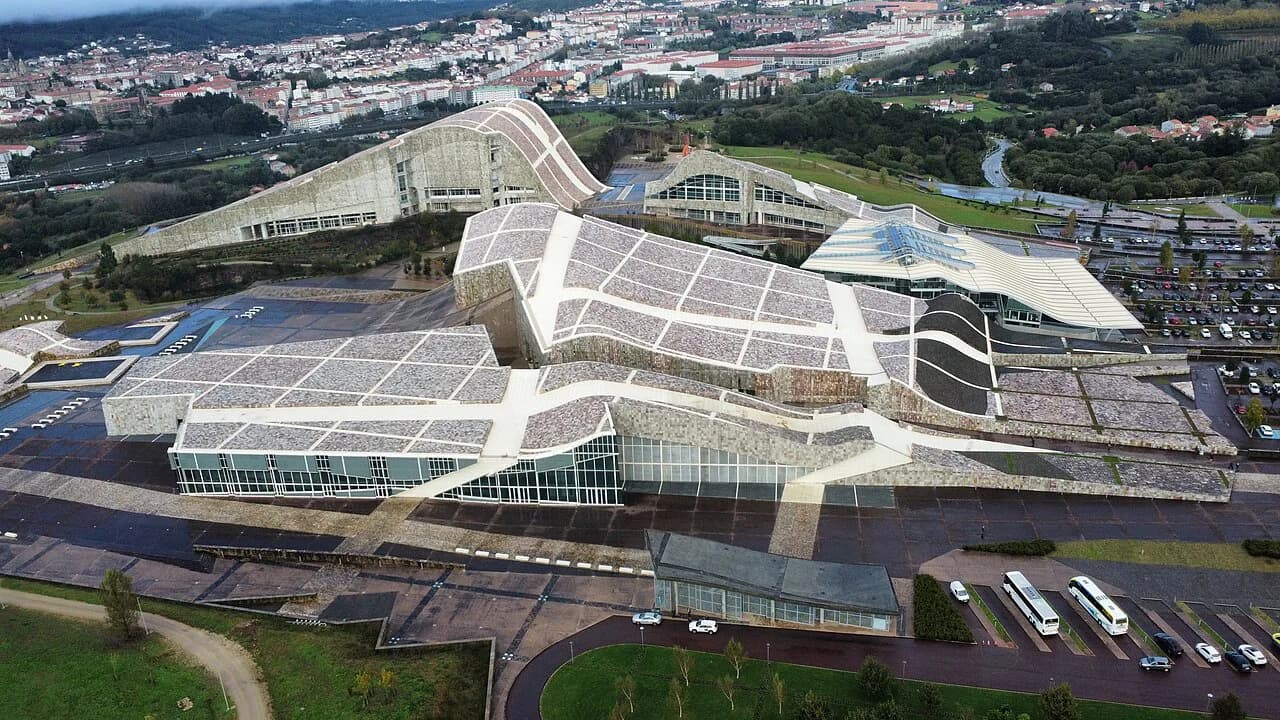
South-east of the cathedral, the Convento de San Domingo de Bonaval and the Centro Galego de Arte Contemporánea sit together on the slope down from the old town, pairing a religious complex with a contemporary gallery. The Capela de Ánimas is nearby, and the combination makes this the strongest museum stop inside the historic quarter. It is also a natural place to pause rather than push on.
The Centro Galego de Arte Contemporánea shows changing exhibitions, so the reason to go depends on what is on rather than on a permanent collection you can plan around months ahead. The Capela de Ánimas is a small chapel with its own character. Treat Bonaval as a flexible block of an hour or two and let the current programme decide how long you stay.
Mirador de Costa Vella and Convento de San Francisco
The Mirador de Costa Vella is one of the points where the old town opens out, giving a view back over rooftops and towers rather than a view from them. Nearby, the Convento de San Francisco is a large religious complex on the western edge whose scale is best appreciated from outside before you decide whether to go in. This stretch is where the walking route stops feeling enclosed.
Come here late in the day if you can. The light suits the granite, the streets are quieter than the cathedral squares, and the walk back into the centre is short. It also gives you a reason to loop rather than retrace your morning route, which makes a one-day visit feel less linear.
Parque da Alameda and Monte Pedroso
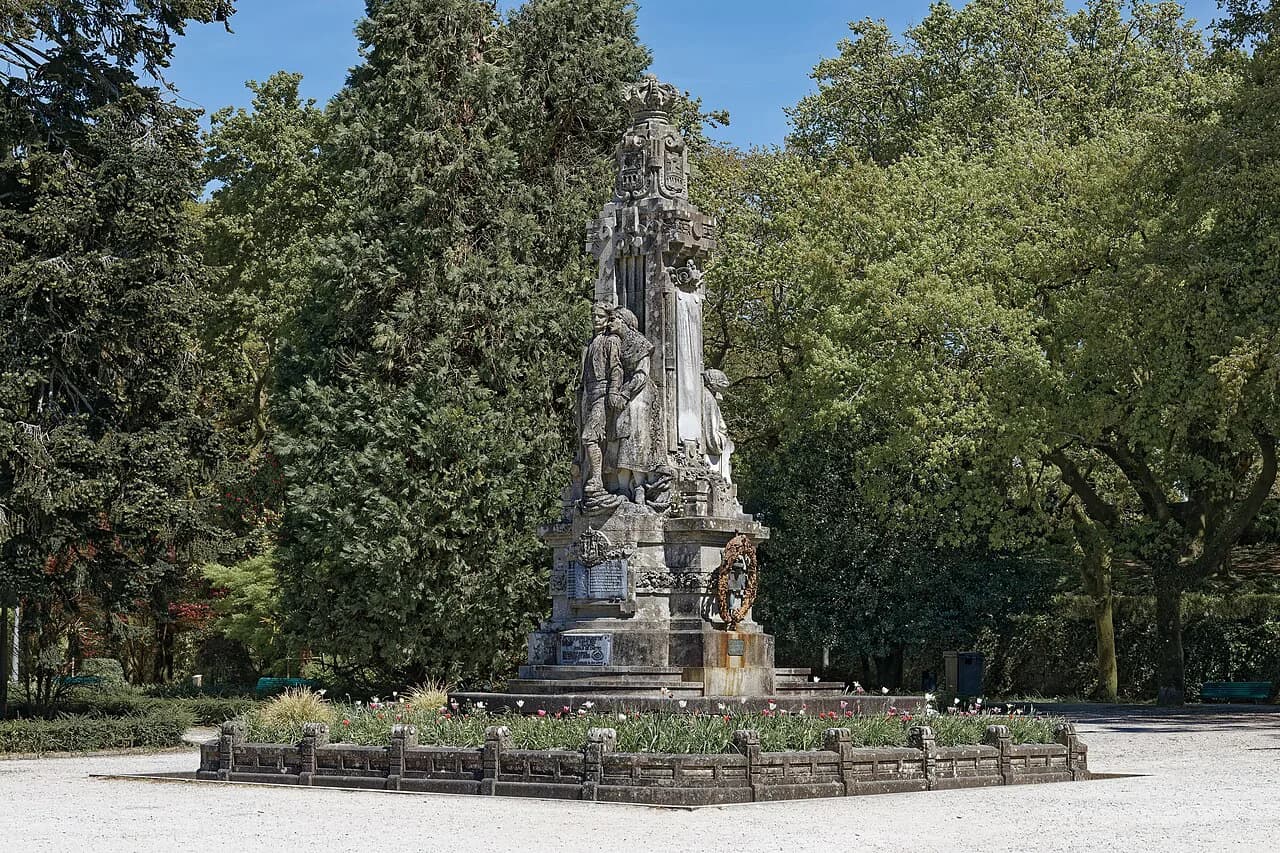
Parque da Alameda is the city's classic green space and its main viewpoint over the old town, a short walk from the historic centre and a good place to end a day of walking. In the other direction, Monte Pedroso rises above the city and gives a wider panorama of Santiago and the surrounding countryside. One is a ten-minute stroll, the other a proper climb.
Choose between them by the time and energy you have left. The Alameda suits an hour before dinner; Monte Pedroso needs a clear afternoon and a willingness to walk uphill. Neither is required to understand the old town, so treat them as add-ons rather than obligations.
How long the old town needs
A half-day covers the core: Rúa do Vilar, the Arco de Mazarelos, the cathedral squares and the streets around the market. A full day lets you add Bonaval, the Centro Galego de Arte Contemporánea, the Mirador de Costa Vella and the Alameda without rushing. Two days would let you take in the cathedral properly plus a museum and still have time for the quieter streets.
The main variable is not distance but interruption: Mass at the cathedral, a long lunch, or a shower passing through. Build in slack and the walk stays enjoyable. If your time is tight, the Santiago de Compostela Walking Tour page sets out a shorter version of the same ground.
Practical trade-offs
Three constraints shape a walking plan. Cathedral visits pause for Mass, so tourist entry and worship overlap rather than run in parallel, and you should time your crossing of the nave accordingly. Summer midday in this granite city is hot, even in Galicia, so walking the cathedral squares early and saving Bonaval or the Alameda for later works better.
Monday can thin out what is open: some museums and galleries close at the start of the week, so check the specific institution rather than assume. Crowds build when a wave of pilgrims arrives at the cathedral, and the squares clear again within the hour. Planning around the pilgrim flow rather than against it is the simplest fix.
The Things to Do in Santiago de Compostela guide covers individual sights in more depth than this route can, including the cathedral and its museum. Use it for detail and this page for the order of walking. Together they should let you plan a short break without guesswork.
How to Fit the Old Town Into a Short Break
Base your plan on a half-day loop from Rúa do Vilar through the Arco de Mazarelos to Praza do Obradoiro, then add Bonaval and the Mirador de Costa Vella if you have a full day. That order keeps the cathedral cluster together and saves the quieter edges for when the squares are busy. It also makes the walk a loop rather than a there-and-back.
Book flights or trains into Santiago first and build the walking day around your arrival and departure times, leaving the cathedral visit flexible so a Mass does not derail it. If you want the streets explained as you go, the Santiago de Compostela Walking Tour is the shortest way in. Above all, allow time to stand in the squares rather than tick them off.
Explore more Santiago de Compostela guides
Frequently Asked Questions
Who is Santiago de Compostela named after?
The city is named after the Apostle James, Santiago in Spanish, whose shrine in the cathedral made it one of the great pilgrimage destinations of medieval Europe. The Camino de Santiago takes its name from the same figure, and pilgrims arriving in Praza do Obradoiro are completing a route that has drawn travellers for centuries.
Does the Botafumeiro swing every day?
No fixed daily swing can be relied on. The great censer is used on particular liturgical occasions rather than at every service, and the cathedral's own calendar decides when. Ask at the cathedral when you arrive or check its published schedule before you plan your day around it.
Where does the Camino de Santiago begin and end?
Pilgrims walk to Santiago de Compostela from many starting points across Spain, Portugal and France, so there is no single beginning. The routes converge on the cathedral, and the old town around Praza do Obradoiro is where they finish. Which route you take determines the distance and the terrain, not the destination.
Sources
Notes for your next Spanish town break
Optional updates to our guides.
You might also like

Continue reading
More guides you'll find useful