Botafumeiro: when it swings and how to see it
What the Botafumeiro is, which solemnities it flies on, how the tiraboleiros swing it through the cathedral and how to catch it during the Pilgrim's Mass.
On this page
The Botafumeiro swings on a fixed list of solemnities and on some 12:00 Pilgrim's Masses, not at every daily mass, so you should plan around the calendar rather than the clock. It is the giant censer that crosses the transept of the Cathedral of Santiago de Compostela on a pulley rope, and understanding when it flies is the difference between seeing it and missing it.
This guide covers where the censer hangs, how the Pilgrim's Mass works, the solemnities on which it is scheduled, the private-request route and the mechanics behind the swing. Figures for height, weight, speed and speed of arrival come from the Camino de Santiago's own pages and from published accounts, and each claim is attributed where it appears.
What the Botafumeiro is and where it hangs in the cathedral
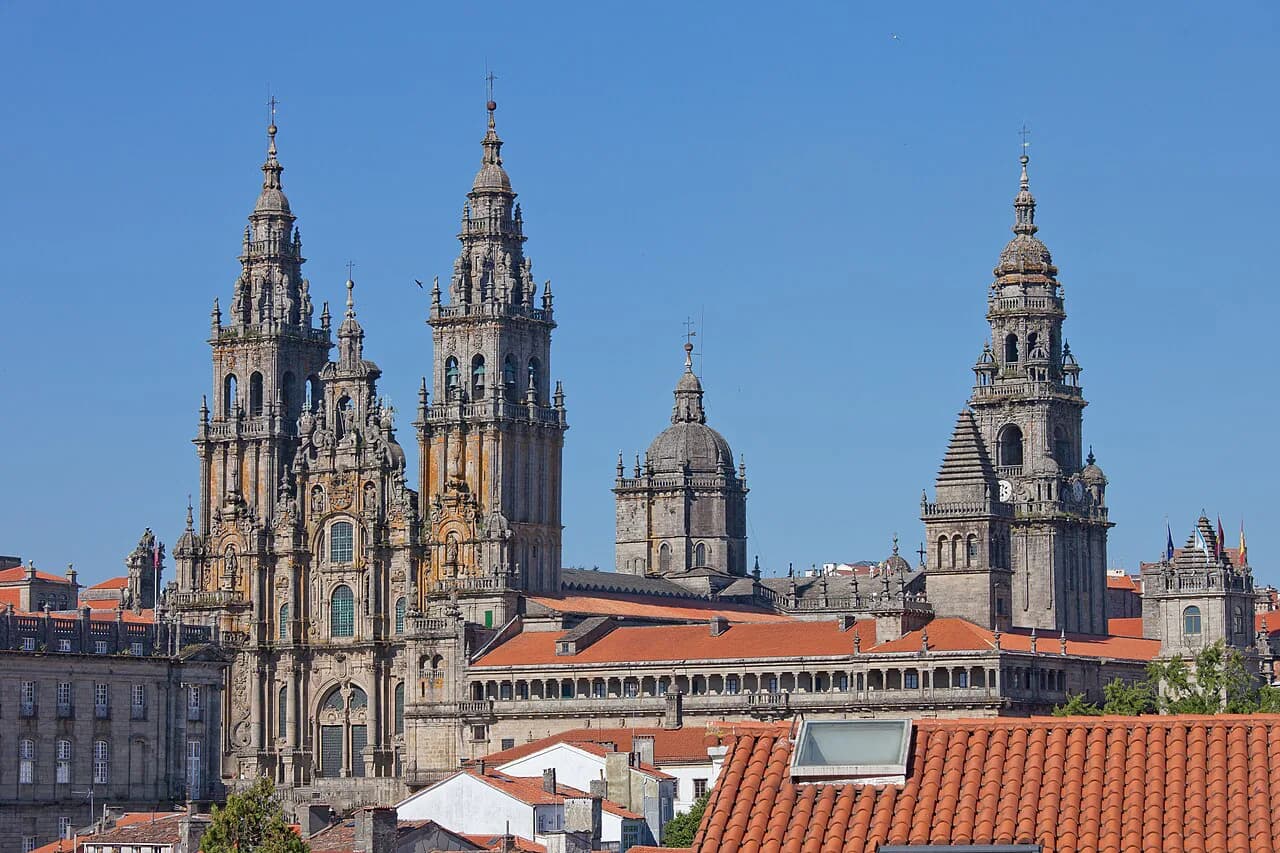
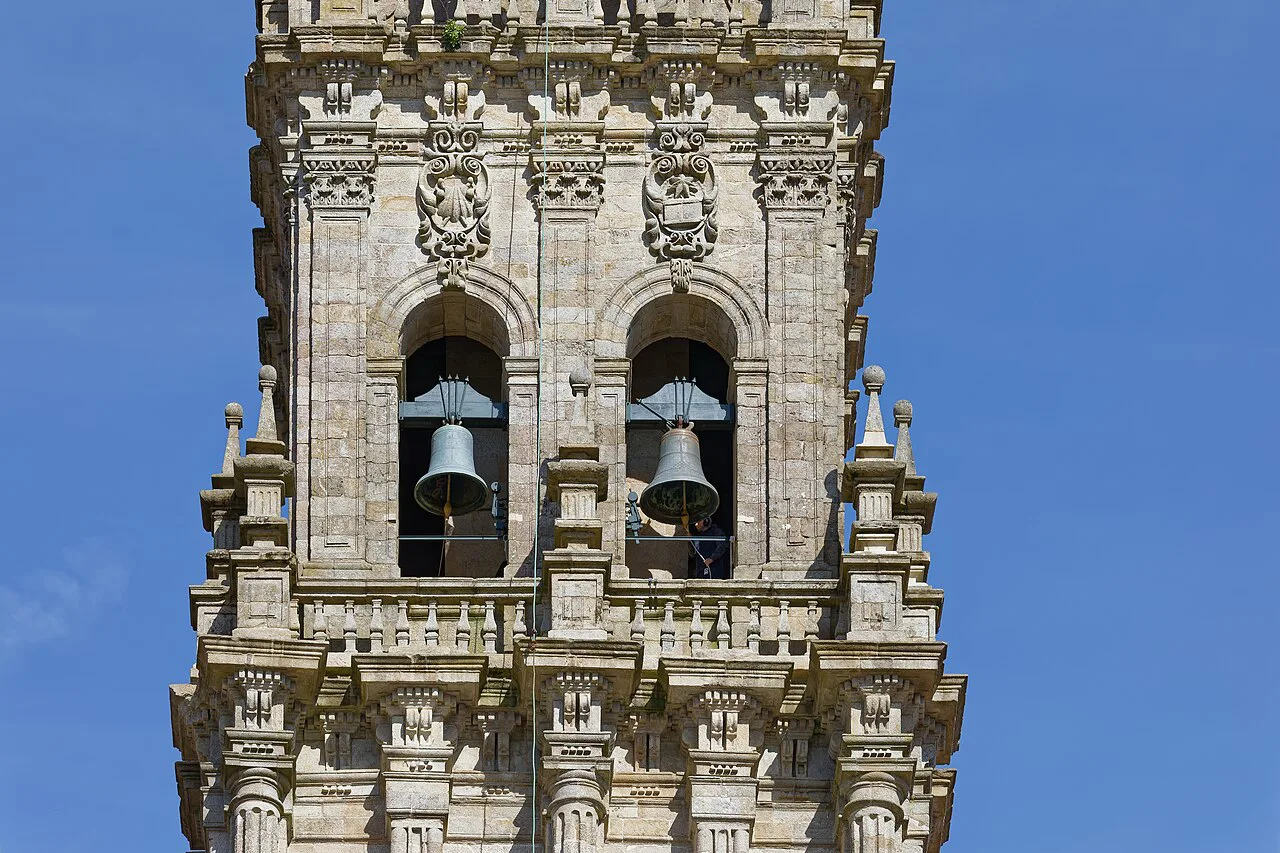
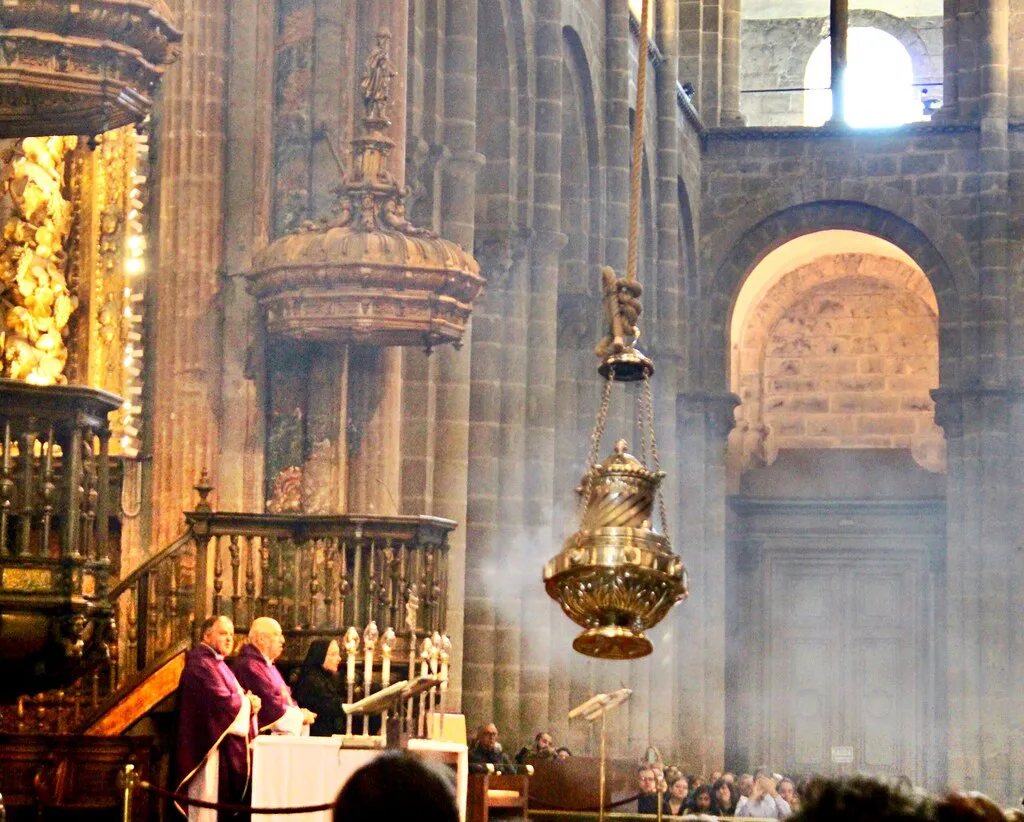
The Botafumeiro is a large thurible, a metal vessel loaded with charcoal and incense, suspended from the central cupola of the cathedral and swung by rope through the transept. The Camino de Santiago's official page describes it as perhaps the largest censer in the world, hanging 20 metres above the floor and travelling from the central cupola towards the side aisles.
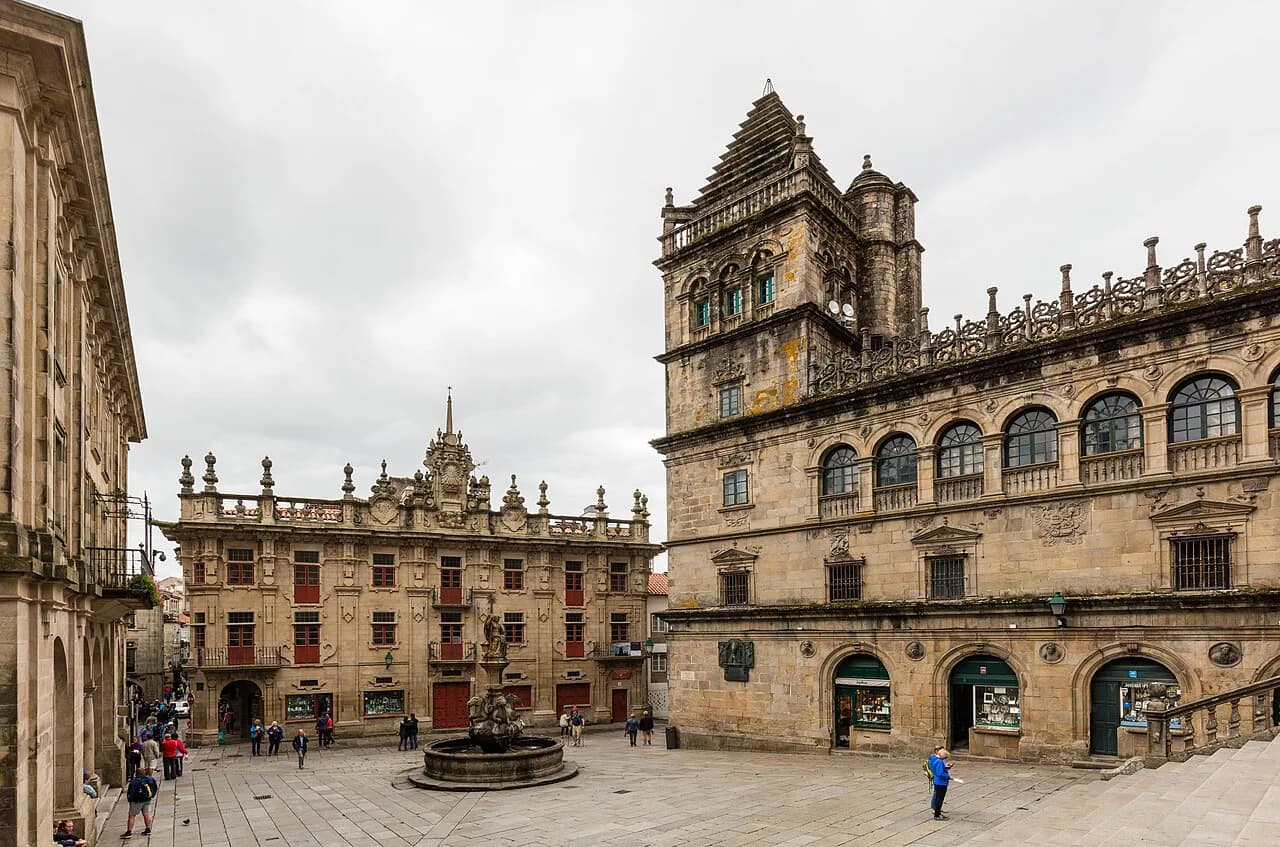
Its swing runs along the longitudinal axis of the transept, between the Plaza de la Azabachería and the Plaza de Platerías, which is why the sightlines change depending on where you stand in the nave. The censer's first documentary mention appears in a fourteenth-century marginal note in the Códice Calixtino, where it is called the Turibulum magnum.
The smoke has a symbolic meaning tied to prayer and purification, drawn from the line in Psalm 141 comparing prayer to an offering of incense. In practical terms, the flight is a short, theatrical moment inside a working cathedral, not a separate show with its own ticket.
How to see the Botafumeiro during the Pilgrim's Mass
The Pilgrim's Mass is celebrated at the main altar every day, and in Holy Years the number of Pilgrim's Masses increases because of the volume of arrivals. The official page is explicit that you need to arrive well in advance, because the nave fills up and latecomers end up standing at the back or outside the doors.
At the start of the mass, a list of pilgrims who have arrived in Santiago in the previous 24 hours is read out, naming their starting points and nationalities or provinces. That reading is part of why the 12:00 mass draws a crowd, and it is the same mass at which the censer sometimes flies.
Do not assume the Botafumeiro swings at every midday mass. Published accounts note that it operates on many 12:00 Pilgrim's Masses but not on all of them, so a feast day or a private booking is the reliable way to see it.
The solemnities and fixed dates when the Botafumeiro is scheduled to fly
The censer is scheduled for a set of liturgical solemnities: Epiphany on 6 January, Easter Sunday, the Ascension, the Battle of Clavijo on 23 May, the feast of Santiago Apóstol on 25 July, the Assumption on 15 August, All Saints on 1 November, Christ the King, the Immaculate Conception on 8 December, Christmas Eve and the Transfer of the Apostle on 30 December in Holy Years. A Mass marking the opening of a Holy Year on 31 December is also on the list.
A second published account lists the same fixed dates and adds Pentecost, plus Christmas Day on 25 December, which is worth checking against the cathedral's own calendar before you build a trip around it. The dates are tied to the liturgical calendar, so Easter Sunday, the Ascension and Pentecost move each year while the fixed feasts do not.
One regular slot that travellers once relied on has gone: until 2016 the censer also swung at the Friday 19:30 mass, a tradition promoted by the Santiago chamber of commerce. Do not plan a Friday evening around that schedule.
The cathedral's own page links to a list of the solemnities on which the censer operates, which is the page to check against your dates. That list, rather than a blog's summary, is the reference to trust when a feast day falls on a weekday you can actually travel on.
Can you see it on any other day? Private requests and what they involve
Outside the solemnities, a group, a pilgrimage organiser or a family can request a flight for a special celebration, such as the end of a Camino, and the request carries a cost. Published accounts point to the Oficina de Acogida de Peregrinos as the office to approach with the request, and arrangements need to be made in advance rather than on the morning.
The fee is set by the cathedral and is not published as a fixed figure in these sources, so ask the office directly for the current amount before committing a group. Treat this as a realistic option if your dates miss every solemnity and the censer is the reason for the trip.
The mechanics: tiraboleiros, ropes, height and speed
Eight men, the tiraboleiros, pull the ropes that drive the censer on its pulley system from the central dome towards the side aisles. The official page gives a suspension height of 20 metres and a top speed of around 68 km/h at the lowest point of the arc.
The physics is a pendulum on a thick rope with three knots, and the tiraboleiros pump the swing at the bottom of each arc to build it up. The spectacle comes from the timing: the censer passes close to the vault before dropping through the transept, and the smell of incense reaches the aisles afterwards.
The mechanism has not always run perfectly: the pilgrim Diego de Guzmán wrote in 1610 of the censer striking the high vaults, and on rare occasions it has come loose from its fittings. Those incidents are history, but they explain why the flight is treated as a serious operation rather than a stunt.
Size, weight and the two censers kept in the cathedral library
The official Camino page gives the working censer as 53 kg and 1.50 m, and states that two are kept in the cathedral library, with the second used when the first is being repaired. A hotel-booking site's 2020 travel piece gives different figures — 62 kg and 1.60 m for a brass censer plated in silver — so treat weight and size as approximate rather than exact.
A replica donated by the Alféreces Provisionales in 1971 is the second censer, kept for when the main one is out of service. Knowing this matters for planning: the flight is not cancelled just because one censer is being repaired.
Historically the cathedral has had four censers, one of which was taken by French troops in 1809, and another paid for by Louis XI of France. That lineage explains why the object you see is not the medieval original.
Why the censer was introduced, and what it means now
The censer was introduced to mask the smell of pilgrims who slept inside the cathedral after finishing their route, in an era when the same clothes were worn for the whole journey. Incense burned on charcoal was the practical answer to a crowded nave.
Today its purpose is ceremonial: it gives solemnity to religious celebrations, and it remains one of the cathedral's defining symbols for visitors. The shift from hygiene to ceremony is the reason the censer is now tied to the liturgical calendar rather than to the arrival of travellers.
What to expect in the nave: crowds, sightlines and arrival time
On a solemnity the nave fills early, and the official advice to arrive well ahead applies most strongly on 25 July, at Easter and on 15 August. Sightlines are best from the transept arms and the centre of the nave, where the censer's arc passes overhead rather than behind pillars.
Outside the flight dates, the cathedral is a working place of worship and the visit fits naturally into a morning in the Santiago de Compostela old town, with the Plaza de la Azabachería and the Plaza de Platerías marking the two ends of the censer's run. Allow time to walk the surrounding streets rather than treating the cathedral as a quick stop.
If your dates miss every solemnity, the realistic options are a private request through the pilgrim office or accepting a Pilgrim's Mass where the censer may not fly. A Santiago de Compostela walking tour can put the cathedral and the surrounding squares in context, but it will not change the flight calendar.
Which date should you build the trip around?
Build the trip around a solemnity if seeing the Botafumeiro swing is the point of going: 25 July, Easter Sunday, 15 August and 8 December are the dates most travellers can plan around, with the fixed minor feasts as back-up. If your dates cannot move, ask the pilgrim office about a private request before booking anything else.
Either way, arrive early and stand in the transept rather than the pews, and treat the Pilgrim's Mass as a religious service that happens to include a spectacle. The things to do in Santiago de Compostela page covers the rest of the cathedral and the squares around it.
Explore more Santiago de Compostela guides
Frequently Asked Questions
Does the Botafumeiro swing at every 12:00 Pilgrim's Mass?
No. It is scheduled for the listed solemnities and swings at many midday Pilgrim's Masses but not all of them, so a feast day or a private request is the reliable way to see it.
Can I book a private Botafumeiro flight?
Groups, pilgrimage organisers and families can request a flight for a special celebration such as the end of a Camino, and the request carries a cost set by the cathedral. Approach the Oficina de Acogida de Peregrinos in advance and ask for the current fee rather than assuming a figure.
Sources
Notes for your next Spanish town break
Optional updates to our guides.
You might also like

Continue reading
More guides you'll find useful