Best Towns in Tenerife: Garachico, La Orotava, La Laguna and More
The best towns in Tenerife for old streets and plazas: Garachico, La Orotava, Icod de los Vinos, Masca and La Laguna, with what each one takes to see.
On this page
The strongest town picks in Tenerife are Garachico, La Orotava, Icod de los Vinos, Masca and La Laguna, and all but La Laguna fit comfortably into a half-day each. They share a compact historic centre you can cross on foot, with a plaza, a church and one monument that justifies the detour. This guide sets out what each town takes to see, which bus line reaches it and how to group them by coast, so you can plan a short break around three or four rather than racing around the island.
Most of the best-preserved old centres sit in the north and west, in the Isla Baja and the Orotava valley, while La Laguna in the north-east is a UNESCO-listed city in its own right rather than a village stop. The Anaga hills and the southern outliers are separate routing decisions with their own trade-offs. Start with the towns of the north and build outwards rather than treating the island as a single loop.
What the best towns in Tenerife have in common
The towns worth your time have a recognisable historic core that works on foot, with something to see beyond the plaza and the church, and reasonable road access. That rules out a lot of coastal sprawl and points you towards former ports and market villas that grew up before the tourist economy. The practical unit is one to three hours on the ground per town, plus travel.
Route them by coast rather than by list. Garachico, Icod de los Vinos, Buenavista del Norte and Los Silos sit along the northern TF-5 corridor and the TF-42, so they combine naturally. Masca hangs off the TF-436 above Santiago del Teide on the western side, and Taganana sits up in Anaga on the TF-12 and TF-134.
Garachico: the lava-buried port
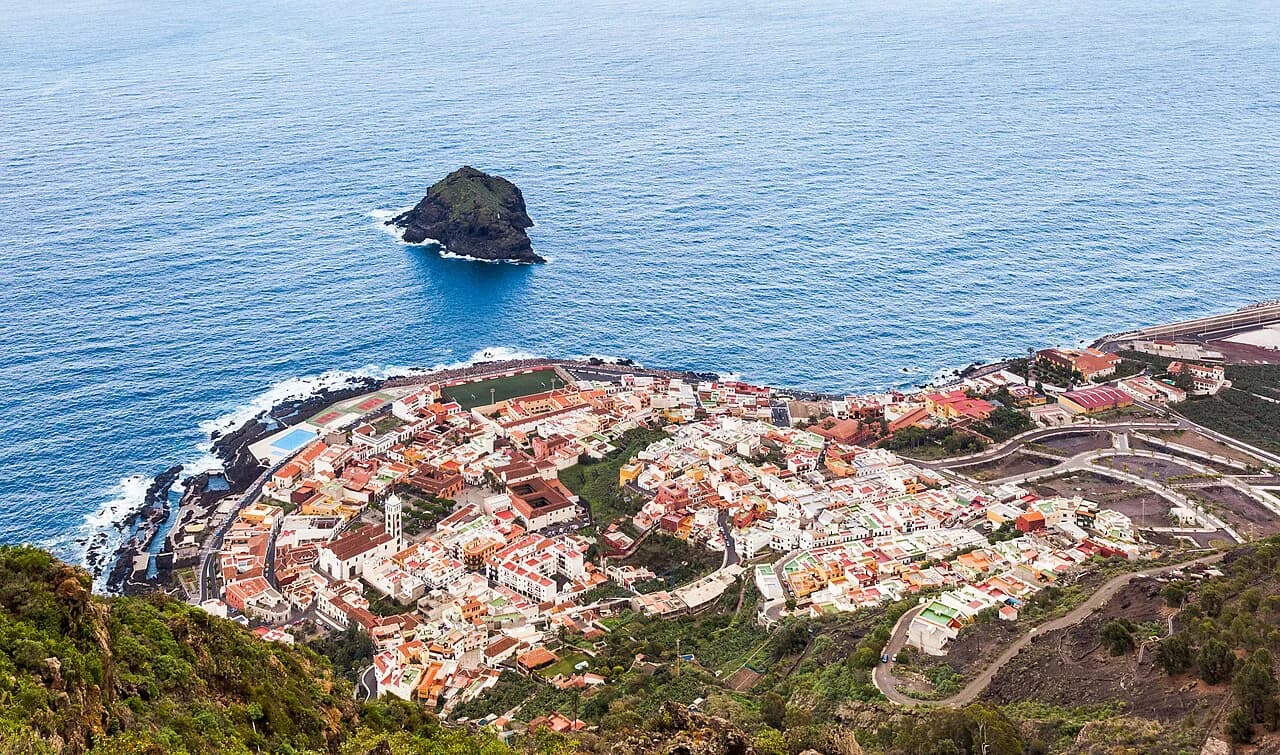
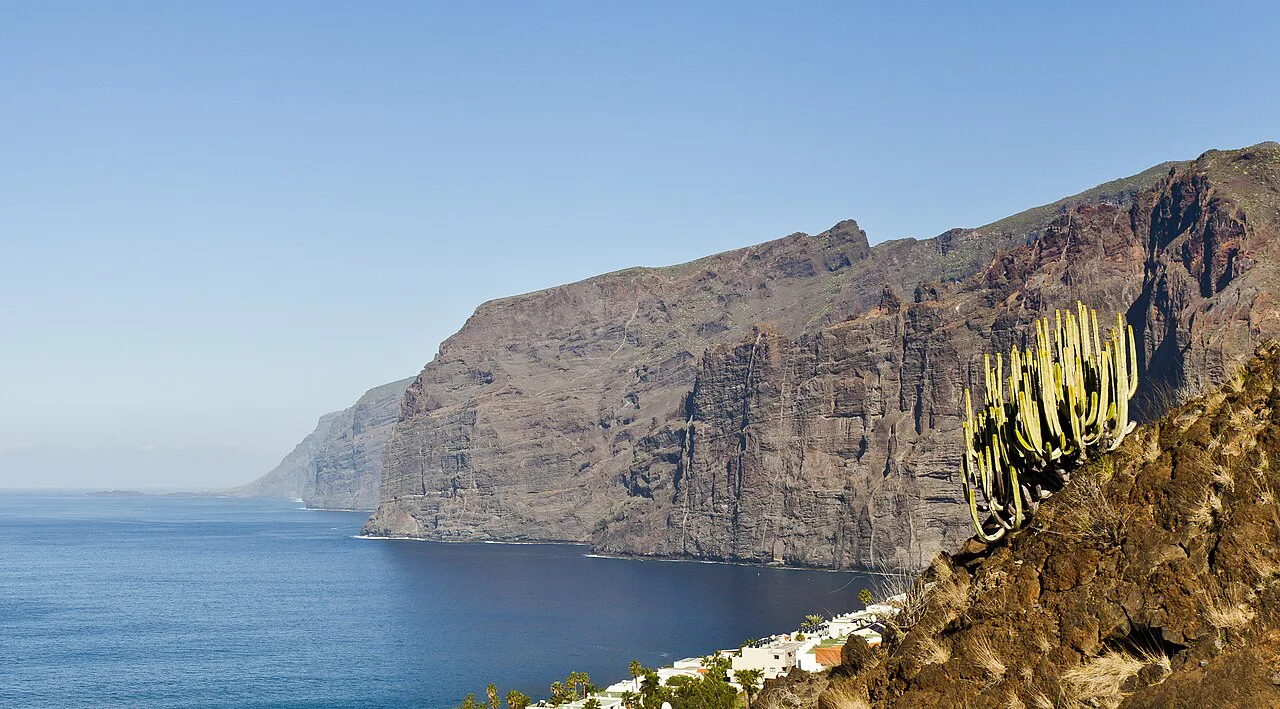
Garachico was the main port of the island until the Trevejo volcano buried the harbour and much of the town on 5 May 1706. What was rebuilt on top is a protected historic complex of cobbled streets, mansions and convents, listed as a Bien de Interés Cultural since 1994. The lava flow that destroyed the port also left the rock pools at El Caletón, now the town's swimming spot. Two hours covers the core comfortably.
Work through the Castillo de San Miguel, a fortress of 1575 beside El Caletón, then the plaza de la Libertad with the old convent of San Francisco, now a library and museums. The church of Santa Ana and the surviving façade of the convent of Santo Domingo, which the lava stopped short of, complete the circuit, with the Parque de la Puerta de Tierra at the edge. Arrive on the TF-5 to Icod and then the TF-42, or take guagua 363 between Puerto de la Cruz and Buenavista via Icod. The seafront car park fills by midday at weekends.
La Orotava: balconied houses facing Teide
La Orotava is the stately villa of the island, with the best single concentration of Canarian architecture, carved wooden balconies and a street plan that climbs towards Teide. Give it two to three hours and expect steps. The Casa de los Balcones, from around 1670, and the Casa Lercaro are the set-piece houses, with the church of the Concepción and the Jardines del Marquesado de la Quinta Roja filling out the walk.
It sits about 30 kilometres from Santa Cruz on the TF-5, with several TITSA lines from Puerto de la Cruz and Santa Cruz, and the 348 to Teide from Puerto de la Cruz passes through the town. Parking in the old centre is difficult, so use the public car parks in the lower part of town and walk up. In practice La Orotava pairs well with Puerto de la Cruz and the Humboldt viewpoint, or works as the start of the climb to Teide on the TF-21.
Icod de los Vinos: the Drago Milenario
Icod de los Vinos is built around the Drago Milenario, a dragon tree declared a national monument in 1917 and estimated at 500 to 600 years old. The Parque del Drago surrounds it, and the town centre of plazas and mansions sits above the Cueva del Viento, the longest volcanic tube in Europe, which is booked online. Plan one to two hours for the park, the church of San Marcos with its baroque altarpiece, the plaza de la Pila with its fan-shaped palm and the black-sand bay of San Marcos.
Reach it on the TF-5, around 50 minutes from Santa Cruz, on guagua 363 from Puerto de la Cruz or on several lines from Santa Cruz. Parking beside the Parque del Drago is charged, so budget for it rather than hunting the back streets. The town stacks neatly with Garachico on the same northern run.
Masca: the hamlet in the Teno barranco
Masca is a cluster of houses wedged into the Parque Rural de Teno at the head of a ravine that drops to the sea, and the drive is as much of the experience as the village. Give the hamlet itself an hour: the eighteenth-century church, the viewpoint over the barranco and the terraces. Anyone planning to walk the ravine down to the beach needs more: roughly 5 kilometres from about 750 metres of altitude, on a regulated trail with a reservation through the official Camino del Barranco de Masca site, boat-only exit and a fee for non-residents.
The TF-436 from Santiago del Teide is narrow and full of tight bends, and guagua 355 links Buenavista, Masca and Santiago del Teide. Parking is minimal, and walkers must leave the car at the cemetery car park in Santiago del Teide and take the 355 up. Go on a weekday and early, because cloud pushes in during the afternoon in winter.
La Laguna: a UNESCO city, not a village stop
San Cristóbal de La Laguna is a UNESCO World Heritage Site listed in 1999, a grid-plan city that became the model for colonial towns in the Americas. Its long history survives in the traditional buildings, and the Museo de la Historia de Tenerife, in a sixteenth-century mansion, is the most rewarding single museum. Treat it as a day of its own rather than a village stop, and combine it with the capital rather than bolting it onto a northern loop.
La Laguna sits just inland from Santa Cruz, which makes it the natural pairing for a city day: the old town and Plaza de España in the capital in the morning, La Laguna in the afternoon. Several TITSA lines connect the two, and the tram links them as well. That is also the reason to base yourself in the capital if you want both without changing rooms.
Taganana and the Anaga coast
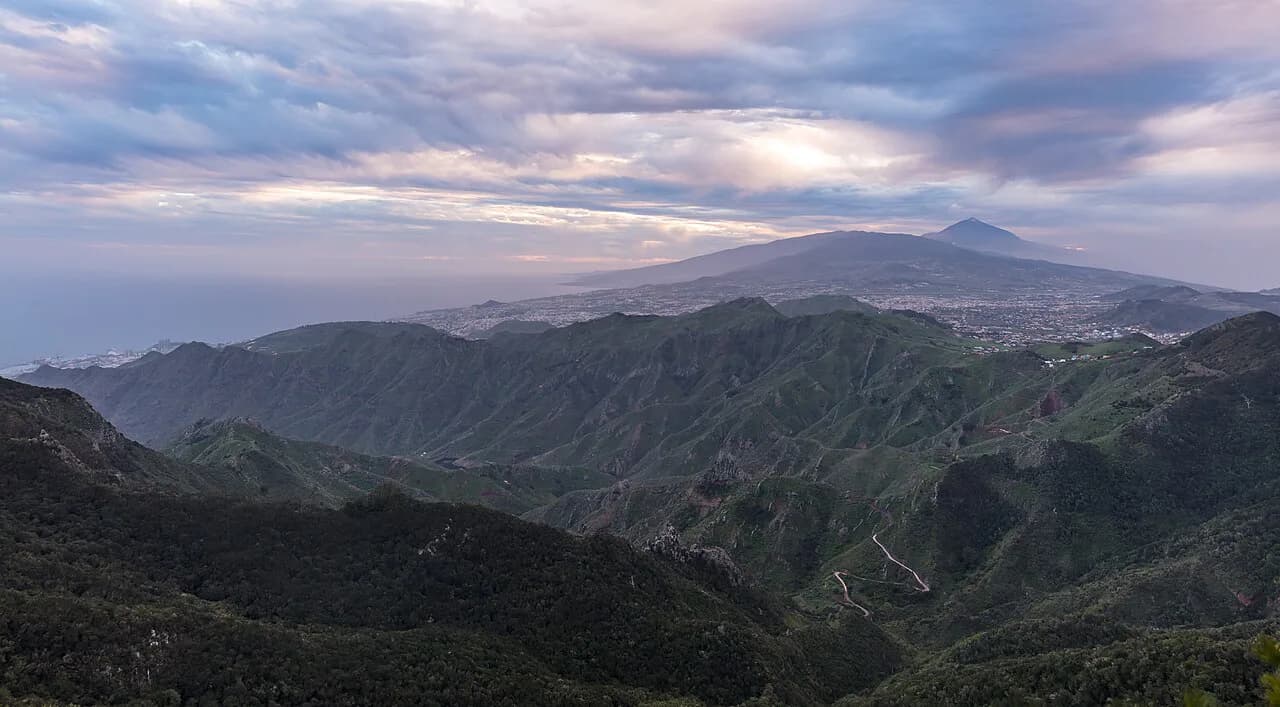
Taganana is the oldest village in Anaga, founded in 1501, set among volcanic peaks, terraced vines and laurel forest at 112 metres above black-sand coves. One to two hours covers the church of Nuestra Señora de las Nieves, a Bien de Interés Cultural with a sixteenth-century triptych, the chapel of Santa Catalina and the steep lanes. The beaches below are part of the same run: Roque de las Bodegas is the family option with fewer than fifty parking spaces, and Almáciga draws surfers.
The road is the TF-12 to El Bailadero and then the TF-134 in curves, around 30 minutes from Santa Cruz, with guagua 946 running Santa Cruz to San Andrés, Taganana and Almáciga. Parking is scarce, so at weekends aim to arrive before 11:00. The wider Anaga Rural Park deserves its own time if you want more than the village and the coast road.
Buenavista del Norte, Los Silos and the Isla Baja
The Isla Baja at the north-western tip is the quieter half-day, with Buenavista del Norte and Los Silos sitting west of Garachico on the same TF-42 corridor and the same guagua 363. It suits a slow afternoon after Garachico rather than a separate expedition, and the low, green country here feels far removed from the southern resorts.
If you are driving the northern coast, treat the Isla Baja as the western end of the day: Garachico first, then Los Silos and Buenavista, then back along the TF-5. That keeps the driving short and avoids doubling back through Icod in the evening.
Vilaflor de Chasna, Adeje old town, Candelaria and Arico in the south and east
The south and east are worth a stop when you are already there rather than a dedicated run from the north. Vilaflor de Chasna, the old town of Adeje and Candelaria are the southern options, and Arico on the east side is the eastern one. Each is a short visit, and together they show a side of the island far from the coastal strip.
Arico Nuevo is white walls and narrow streets far from the tourist hotspots, good for an afternoon's walk. It is not a reason to cross the island on its own, so slot it into a day when you are already heading east.
Chinamada and the cave-house hamlets
Chinamada, in the Anaga hills, is a different kind of stop: a hamlet where people still live in cave houses. It is not a monument to tick off but a working settlement, so keep the visit short and quiet and do not expect visitor facilities. Combine it with Taganana and the Anaga coast road rather than making a separate trip.
The road up into Anaga is narrow and slow, so build the hamlet into the same circuit as El Bailadero and the coast. That way you climb once and use the rest of the day for the villages rather than retracing the same bends.
Getting between the towns
The road framework is simple: the TF-5 and TF-42 for the north and the Isla Baja, the TF-436 for Masca and the TF-12 and TF-134 for Anaga. The bus network is the guagua, run by TITSA, and the specific lines for each town are the 363, 348, 355 and 946 set out below. Check current timetables before you drop the car, because the rural lines are infrequent and you cannot improvise around them.
Without a car, the northern route works best: guagua 363 links Puerto de la Cruz, Icod and Buenavista past Garachico, and the 348 from Puerto de la Cruz climbs to Teide through La Orotava. The 355 serves Masca from Buenavista and Santiago del Teide, and the 946 covers Santa Cruz, San Andrés, Taganana and Almáciga. Plan one cluster per day, because connections between clusters are slow.
Chaining the towns into a short break
Three routing decisions cover the island. The north-west cluster is Garachico, Icod, La Orotava, Buenavista and Los Silos, which fills a full day by car and more by bus. The Anaga cluster is La Laguna, Taganana, Chinamada and the coast, best done as one loop. The southern and eastern outliers are a third, lighter day.
For a short break, pick two clusters and leave the rest. Base yourself in the capital for La Laguna and the city's own old town, then take one long day on the TF-5 to Garachico and Icod with La Orotava on the way back. Leave Masca for a separate western day or skip it if the bends and the parking do not appeal. That shape gives you the best-preserved centres without a day spent entirely behind the wheel.
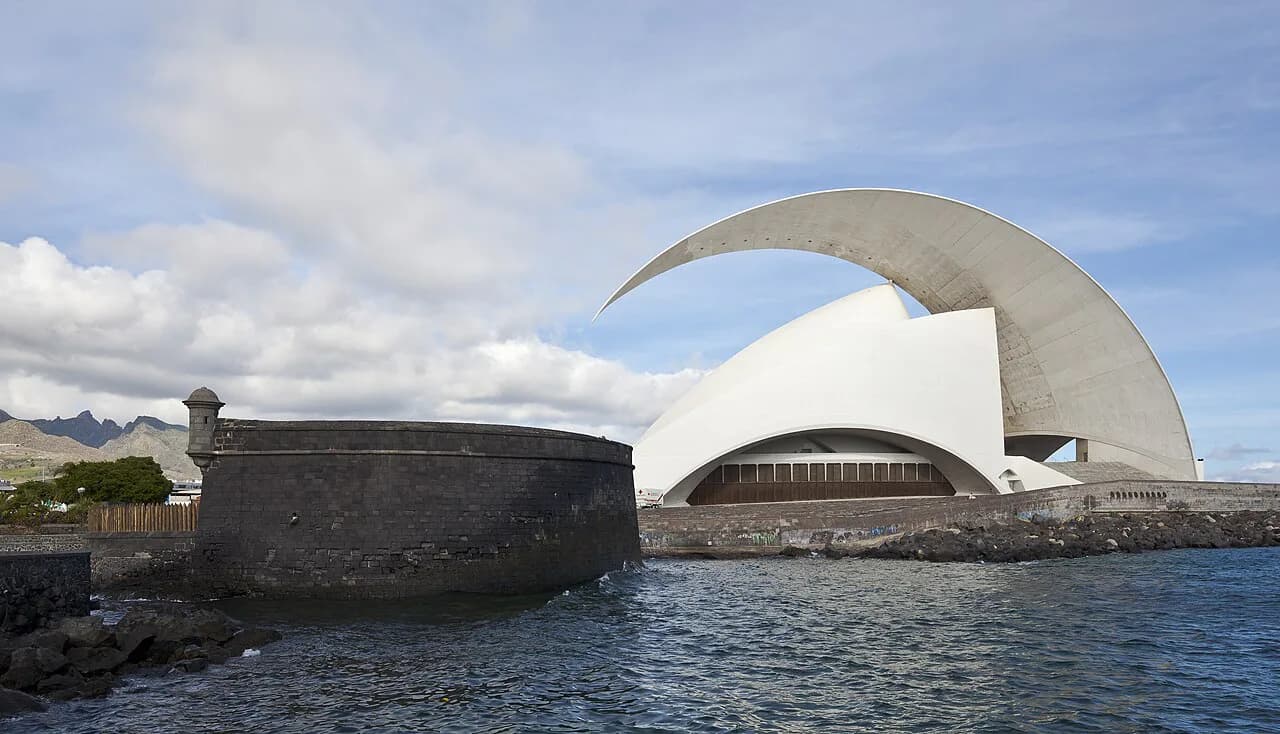
The city itself has enough for an afternoon of its own, from the old town to the auditorium, and the wider things to do in Santa Cruz de Tenerife list helps you decide what to keep. Pairing it with the northern towns gives you a short break with both urban and village days.
Parking and timing
Parking shapes the day more than distance does. Garachico's seafront car park fills by midday at weekends, La Orotava's old centre is best avoided in favour of the lower public car parks, and the car park beside the Parque del Drago in Icod is charged. Taganana has very little space and Masca has almost none, which is why walkers use the Santiago del Teide cemetery car park.
Start early and take the towns in the order that puts the tightest parking first. Weekdays beat weekends everywhere on this list, and winter afternoons bring cloud into Masca and the Anaga hills. None of these towns needs a full day except La Laguna, so two well-ordered stops plus a scenic drive is a realistic day.
Which town to build your short break around
Build the trip around the north-west: Garachico and La Orotava are the two strongest picks, with Icod de los Vinos between them and Masca as an optional western extension if you are happy on narrow roads. Add La Laguna and Santa Cruz as a separate city day rather than squeezing them into the same drive. Three or four towns, grouped by coast, is the honest shape of a short break on Tenerife.
Decide first whether you are driving or using the guagua, because that choice fixes which clusters are realistic. If you are driving, start early and put the tightest parking first; if you are not, pick the 363 and 348 corridor and let the rural lines set your pace. Either way, keep the southern and eastern stops for a day when you are already on that side of the island.
Explore more Santa Cruz de Tenerife guides
Sources
Notes for your next Spanish town break
Optional updates to our guides.
You might also like

Continue reading
More guides you'll find useful