Santiago de Compostela History: What to See and Why It Matters
Santiago de Compostela grew around a tomb said to hold Saint James. Trace that claim through the cathedral, the old town and the pilgrim road.
On this page
Santiago de Compostela exists because of a tomb. Tradition holds that the Apostle James the Greater, one of the twelve disciples, is buried beneath the cathedral, and the city grew up around the shrine that marks the spot. This guide follows that story in order and pins each stage to a place you can actually look at, from the Roman settlement under the centre to the Romanesque cathedral begun in 1075 and the Baroque streets around it.
The narrative runs from a Galilean fishing family to a ninth-century discovery in a Galician wood, then through a medieval pilgrim boom, the hiding of the relics and the city's later role as the capital of Galicia. Where the details are debated, the guide says so rather than smoothing them over.
The claim behind the city
James the Greater, son of Zebedeo and brother of John, was a fisherman on the Sea of Galilee before he joined the group of twelve; he is recorded as present at the Transfiguration and in the garden of Gethsemane. Tradition has him preach in the north-west of the Iberian peninsula, and it places his execution in Jerusalem by order of Herod Agripa in AD 44. The sword-shaped cross of Santiago is often read as a nod to his death by decapitation.
The link between the apostle and Galicia rests on tradition rather than on documentation, and the Church holds the relics in the cathedral to be his. That is why the shrine is best understood as a matter of faith and pilgrimage rather than a settled archaeological finding. Knowing this up front helps you read the cathedral differently: the building is an argument made in stone as much as a museum of certainties.
The Roman and late-Roman setting
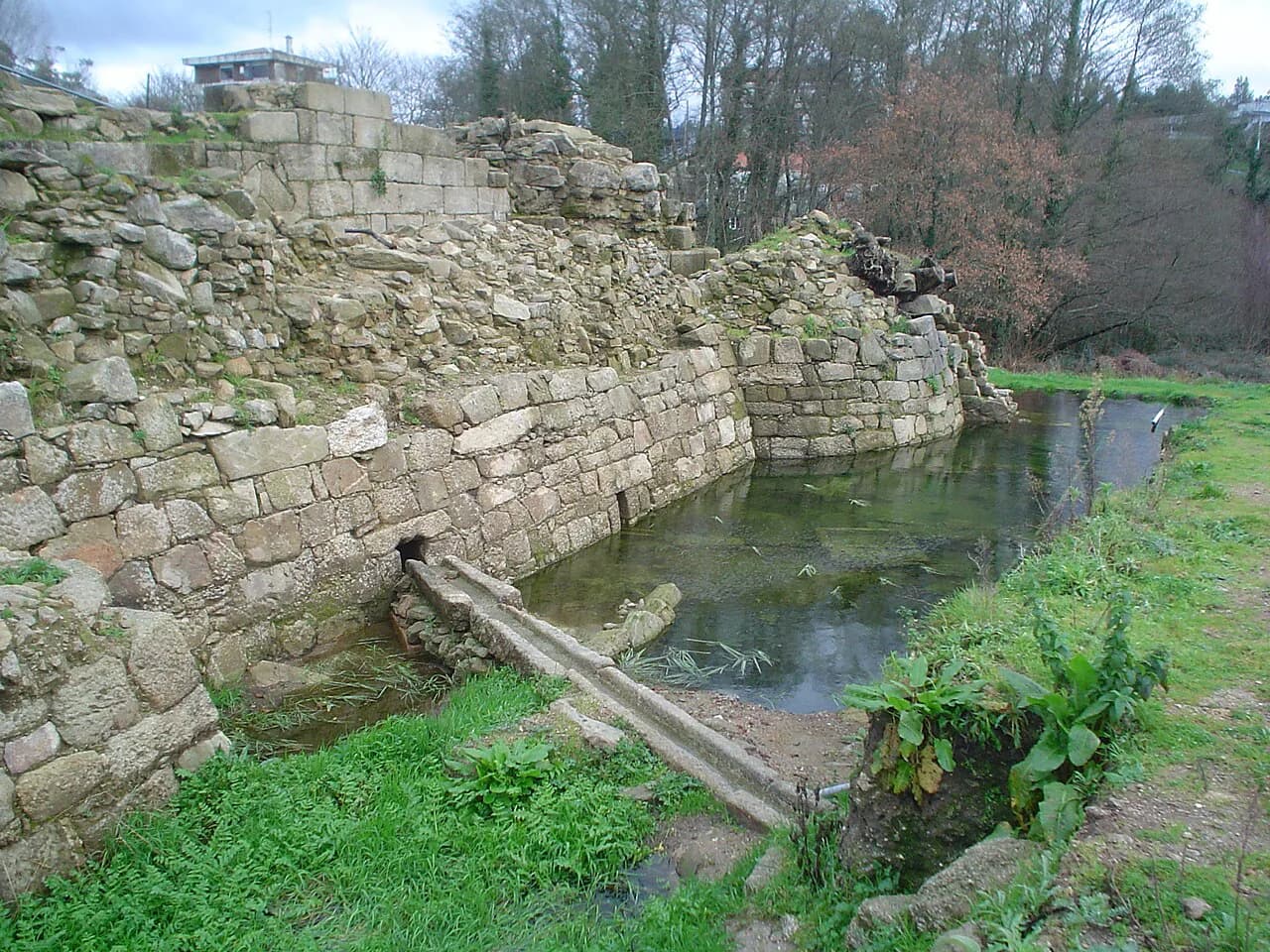
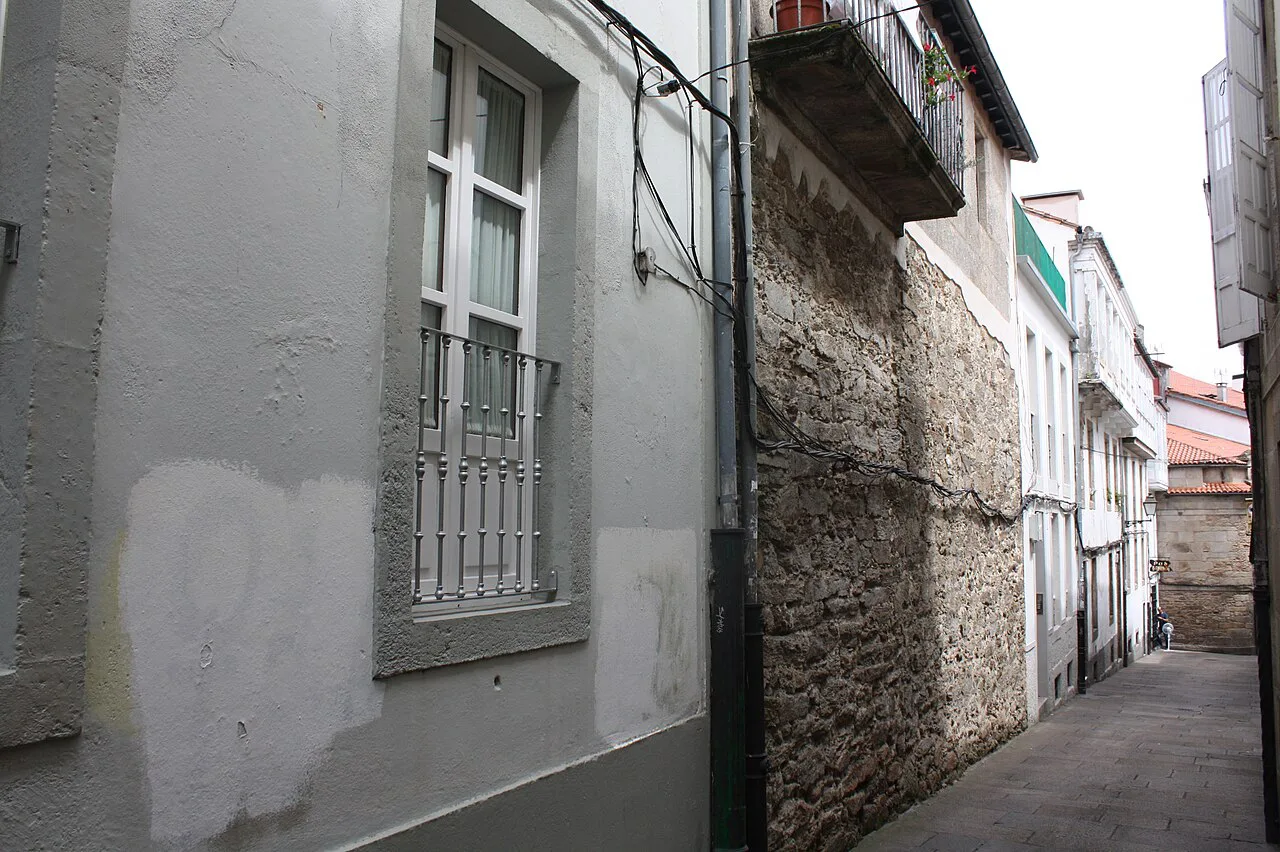
Before the shrine there was a Roman settlement. The city is described as having risen over an old Roman site identified as the mansio of Assegonia, which places Santiago within the road network of Roman Gallaecia rather than in empty countryside. When you walk the granite centre, the Roman layer is mostly below you, so the visible stones are later work built on earlier ground.
Iria Flavia, near Padrón on the road south, belongs to the same late-Roman world and appears in the tradition as the place where the apostle's body was first taken. It is a useful name to hold on to, because it explains why the sacred geography of this corner of Galicia reaches beyond the city walls. Nothing of that earliest stage survives to view as a monument, but the geography still structures the story.
The ninth-century discovery
The city's origin is placed between 820 and 835, when a hermit named Pelayo is said to have followed moving stars into a wood and found a marble tomb with a small altar. He reported it, the bishop Teodomiro took it up, and King Alfonso II of Asturias travelled from Oviedo to confirm the find. Alfonso is accordingly remembered as the first pilgrim, and a great temple was ordered on the spot.
Whether the tomb genuinely held James is a separate question from whether the discovery happened, and the tradition itself has long been debated. Accounts note that written documents place the apostle outside Judea around the time of his death and that the identification has been questioned. Treat the ninth-century episode as the founding story of the city: it is the moment a shrine became a destination.
Why the name Compostela is linked to campus stellae
The name Compostela is often explained through the Latin campus stellae, field of the star, a nod to the star that guided Pelayo to the tomb. That etymology fits the legend neatly and tells you how the city wanted its own origins remembered: a place revealed rather than merely founded. It also links the name to the burial ground, so the word itself carries the claim.
Other explanations of the name exist, so treat campus stellae as the story rather than as a settled derivation. The practical point for a visitor is that the legend is embedded in the city's most basic vocabulary, and you will meet it again at the cathedral and along the approach routes into the centre.
The Romanesque cathedral begun in 1075
As pilgrimage grew, Bishop Diego Peláez commissioned a Romanesque cathedral in 1075, the building that established the scale of the shrine you see today. The cathedral is the single most useful place to read the city's history, because the Romanesque core, the later Baroque shell and the pilgrim fittings sit in the same structure. Give it the largest share of a history-focused visit rather than treating it as one stop among many.
The Pórtico de la Gloria is the interior element to plan around, and it rewards a slower look than a walk-through allows. Sculpture of this density is where the medieval programme becomes legible even without a guidebook, so arriving knowing the broad chronology pays off inside.
The pilgrim road and the Order of Santiago
From Alfonso II onwards, pilgrims followed old Roman roads across Europe to reach the shrine, and the routes hardened into the Camino de Santiago. The scale of the traffic shaped the city: a sanctuary needs lodging, clergy, craftsmen and protection, and Santiago grew because people kept arriving. The pilgrim economy is not a modern revival but the city's original business.
The Order of Santiago was founded in the apostle's name, with a mission that included guarding pilgrims on the road against robbery and other dangers. That detail is worth knowing when you look at the medieval bridges and hospital buildings on the approaches: the infrastructure of the Camino was a security arrangement as much as a religious one.
Where the relics have been
The tomb did not sit undisturbed. When pirates under Francis Drake threatened the coast at A Coruña, the relics were moved and hidden in a chamber behind the high altar to keep them from profanation. They remained concealed for years before being rediscovered in the nineteenth century.
That episode explains why the crypt and the high altar are the climax of a historical visit rather than an afterthought. It also shows how a shrine's survival depended on the politics of the coast, with A Coruña's harbour and Santiago's tomb linked by threat.
Baroque Santiago and the capital of Galicia
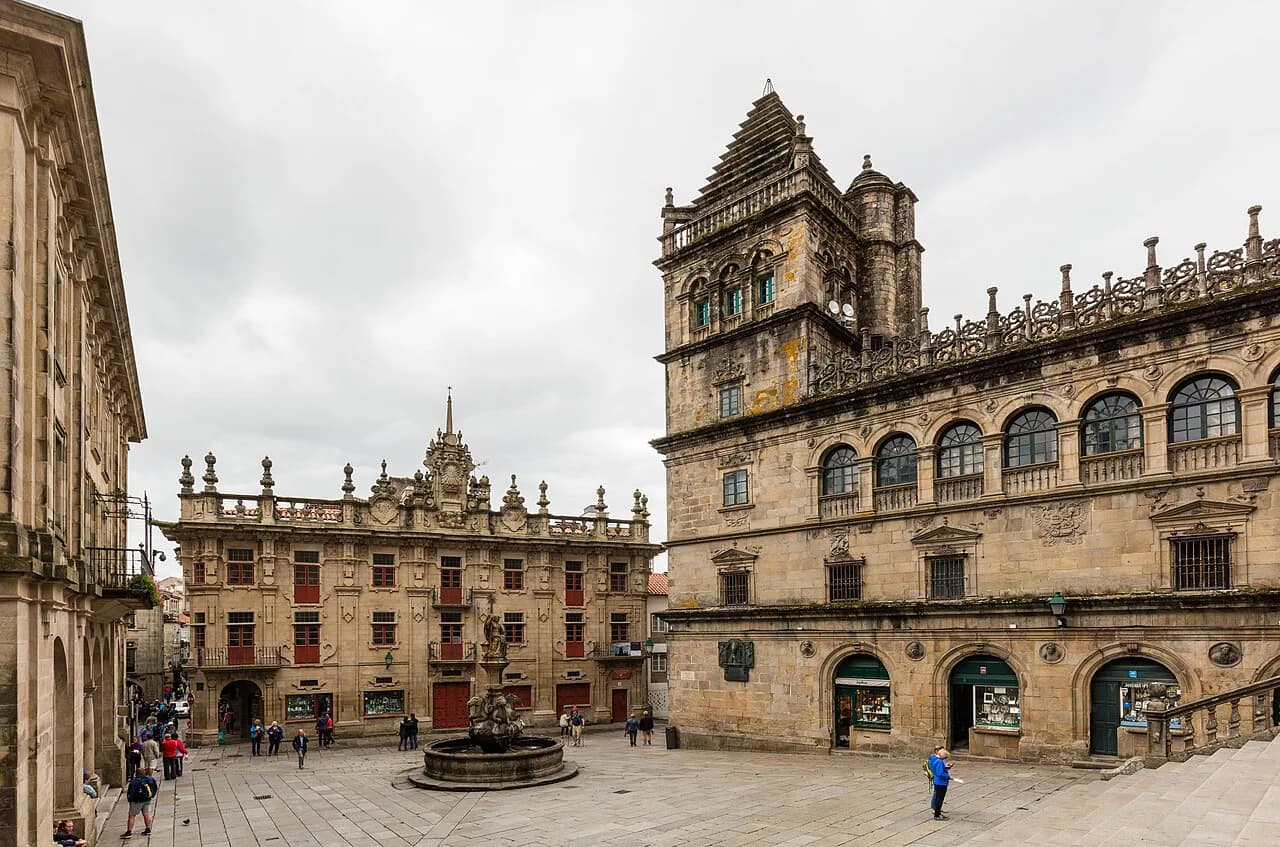
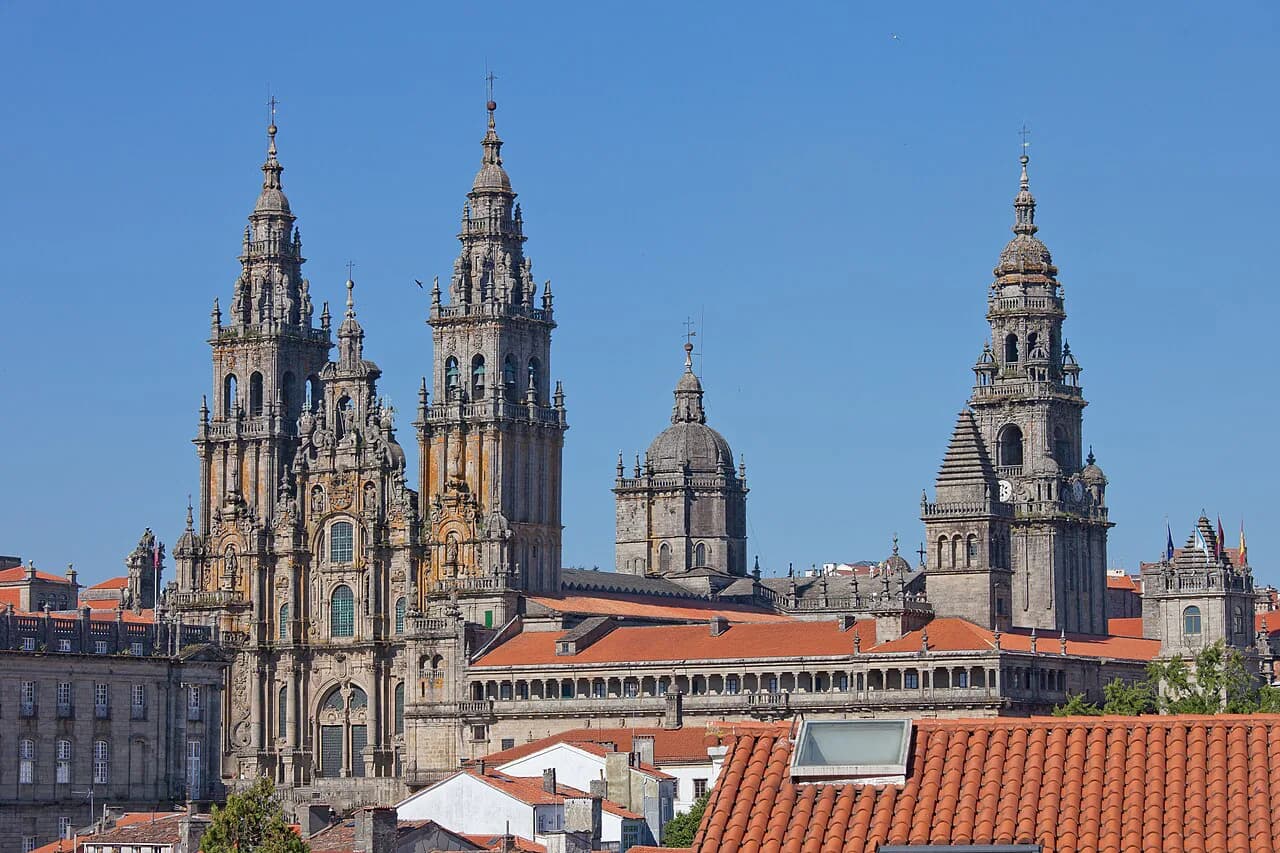
The city's period of splendour came in the Baroque era, when the cathedral and the monasteries built in its orbit were remodelled and enlarged; the west front and the towers belong to this layer. When you stand in the square facing the cathedral, you are looking at an early-modern wrapper around a medieval core.
In the modern period Santiago became the capital of Galicia under the autonomous system, a role that gave the city a second identity alongside the pilgrimage one. It is why you find regional government and a university beside the shrine, and why the city feels administrative as well as devotional.
What to look for on a walk through the old town
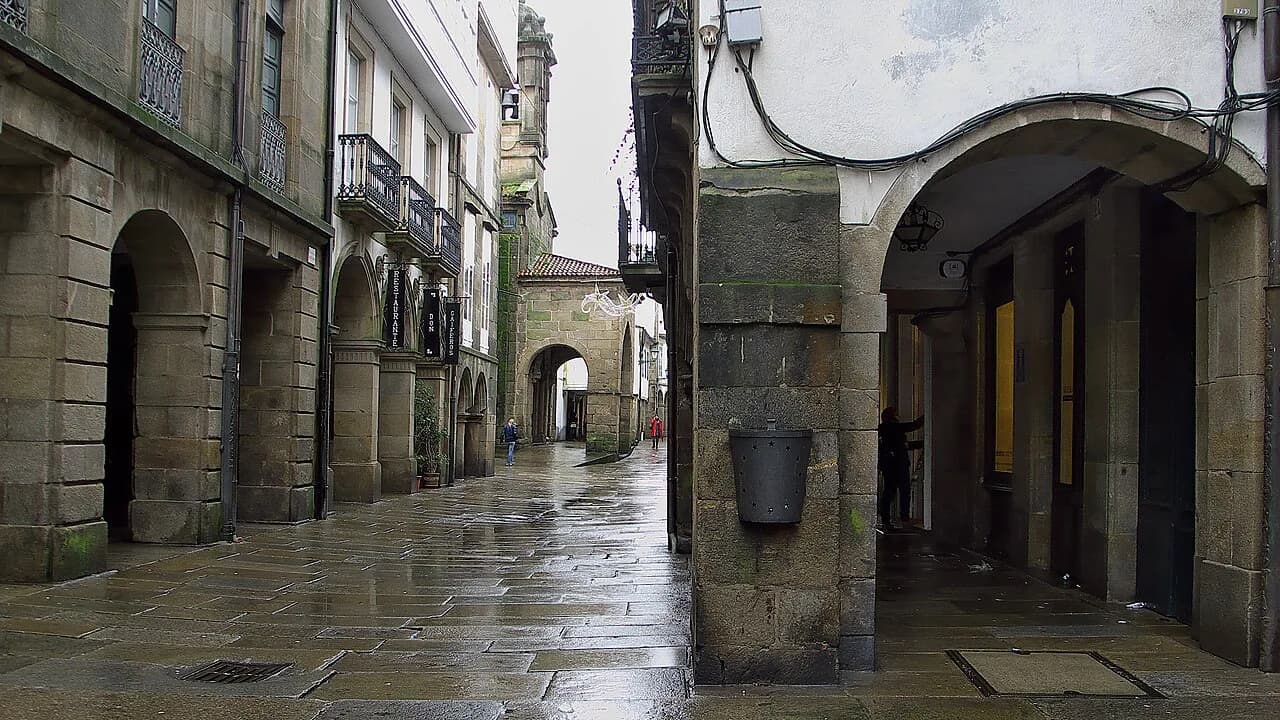
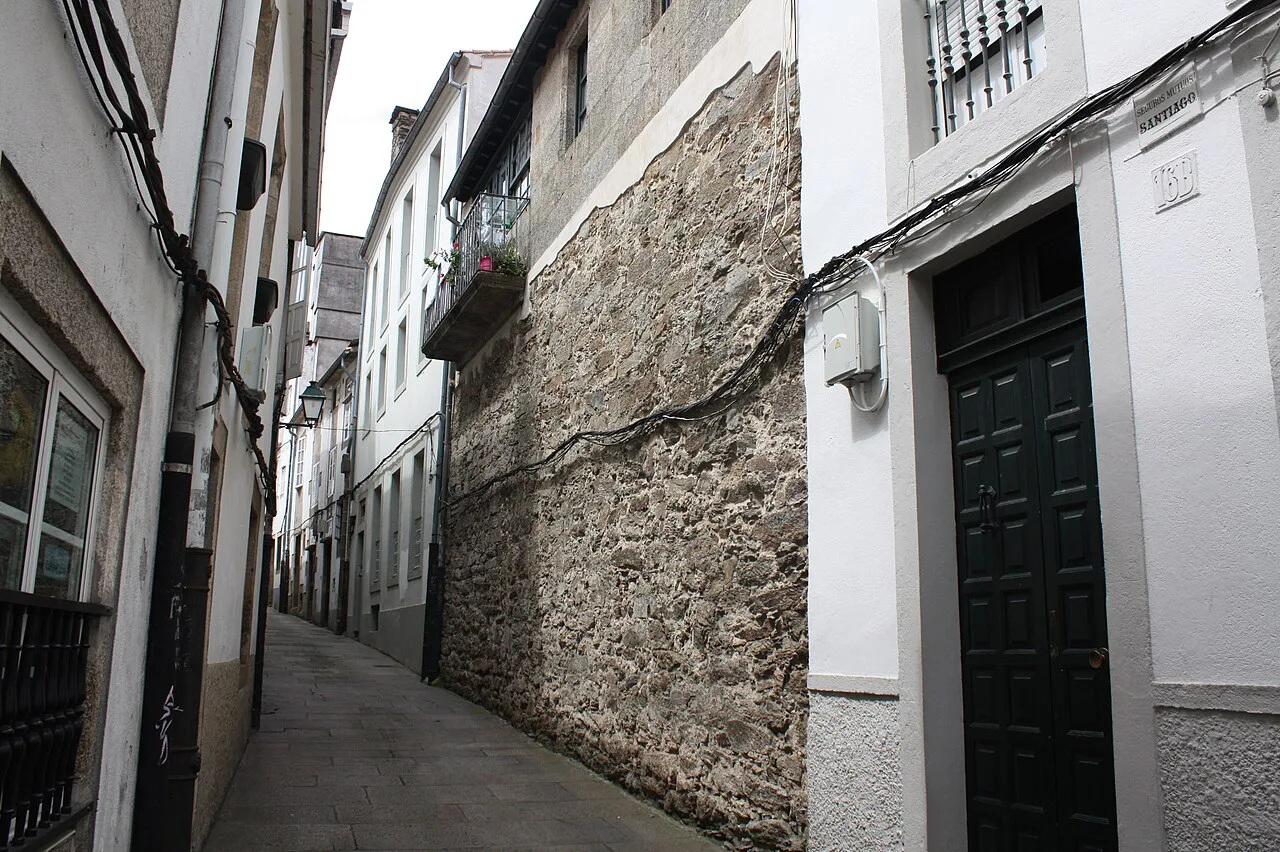
Walk the granite centre with the chronology in mind. The Santiago de Compostela old town is a compact Casco Antiguo of arcaded squares, churches and convents, and the pleasure is in noticing how the streets funnel towards the cathedral from every direction. Pilgrims still arrive on foot through these lanes, so the approach itself is part of the history.
A Santiago de Compostela walking tour is a sensible shortcut if you want the layers explained on site rather than pieced together from plaques. Book only what you will actually use, since a history-heavy visit leaves less time for tours than a general city break.
The cathedral interior as a history lesson
Inside, work from the Romanesque nave to the Baroque fittings and then to the pilgrim machinery, which includes the Botafumeiro, the great censer swung across the transept on its rope. The ceremony around it is a living piece of the pilgrimage tradition rather than a museum exhibit, and it draws a crowd when it takes place. Details of when it is used are worth confirming with the cathedral before you build a day around it.
Cathedrals here, as elsewhere in Spain, close parts of the building to tourists during services, so check the day's pattern before you travel if the interior is your priority. Plan the cathedral for the part of the day when you are freshest, and keep the surrounding streets for the hours around it.
How long a history-focused visit needs
Two full days covers the cathedral, the old town and one excursion to Iria Flavia or the coast without rushing, and a single day is enough only if you concentrate on the cathedral and the centre. The city is small enough to walk, which means the constraint is attention rather than transport. Build in slack, because the interiors reward lingering.
If you are coming from the UK, Santiago has its own airport and A Coruña is the other Galician gateway, with connections to Málaga, Alicante and Palma among the Spanish networks. The Santiago de Compostela map is the quickest way to see how the stations, the old town and the cathedral sit relative to each other.
Holy Year and the Compostela certificate
The Compostela is the certificate issued to pilgrims who complete the Camino, and it is the modern expression of a tradition that began with Alfonso II. It marks arrival rather than sightseeing, which is why the pilgrim office and the cathedral square feel different from the rest of the old town.
Holy Years, when the feast of Saint James falls on a Sunday, bring noticeably larger crowds and are announced in advance by the cathedral and the pilgrim office. The schedule for any coming Holy Year should come from those official channels rather than from a planning site. If quiet streets matter more than the ceremonial, choose an ordinary year.
Which parts of the story to see first
Start with the cathedral and the Pórtico de la Gloria, then walk the Casco Antiguo outward to the pilgrim approaches, and save the Baroque squares for the end of the day. That order follows the chronology and gives you the clearest sense of how a ninth-century claim turned into a city.
If the history is the point of the trip, read up on the discovery and the 1075 cathedral before you arrive, so the building is a confirmation rather than a puzzle. The rest of the city's sights fit around that spine without much effort.
Explore more Santiago de Compostela guides
Frequently Asked Questions
Who is Saint James of Compostela?
He is James the Greater, son of Zebedeo and brother of John, one of the twelve apostles and a fisherman from Galilee. Tradition holds that he preached in north-west Spain, was executed in Jerusalem in AD 44, and that his remains were brought to Galicia and later found at the site of the cathedral.
When is a Holy Year declared?
A Holy Year is declared when the feast of Saint James, 25 July, falls on a Sunday, which draws larger pilgrim numbers to the city. The cathedral and the pilgrim office publish the schedule for any given Holy Year, so confirm the details there before planning around it.
What is the history of the Camino de Santiago?
Pilgrimage to the shrine began after the ninth-century discovery, with King Alfonso II of Asturias remembered as the first pilgrim. Routes across Europe hardened into the Camino, the Order of Santiago was founded partly to protect travellers on the road, and the Compostela certificate now marks completion for walkers who arrive in the city.
Sources
Notes for your next Spanish town break
Optional updates to our guides.
You might also like

Continue reading
More guides you'll find useful