Santiago de Compostela Walking Tour: A Self-Guided Route
Walk Santiago de Compostela's old town in order, from Obradoiro to Alameda, with cathedral hours, the free Platerías entrance and museum times.
On this page
You do not need a guided tour to see Santiago de Compostela on foot: the historic centre is compact and the whole classic circuit, from Praza do Obradoiro to the Alameda, fits into a half day at an easy pace. This route strings those stops together in a sensible order, with the cathedral's published hours, the museum's separate ticket desk and the trade-offs that decide whether you walk it alone or pay for interpretation.
Everything here is on paved streets and granite steps in the middle of the city, so the walk suits ordinary shoes rather than boots. Allow roughly three hours of walking and looking, plus whatever time you give the cathedral and the museum, and treat my timings as estimates rather than measured distances.
Do you need a guided walking tour in Santiago de Compostela?
Entry to the cathedral is free, so a paid tour buys you explanation rather than access. The value lies in the Pórtico de la Gloria, the Romanesque carvings and the layers of rebuilding behind the baroque west front, which are far easier to read with someone pointing them out. If you mainly want the layout of the old town and the names of the plazas, this route does that job for nothing.
Guided options sold in the city are best compared on what they include: some cover the cathedral interior, others the roofs and towers or the museum, and those are separately ticketed experiences. Check what is inside the price before you book, and see which operators run which format in our round-up of Santiago de Compostela tours.
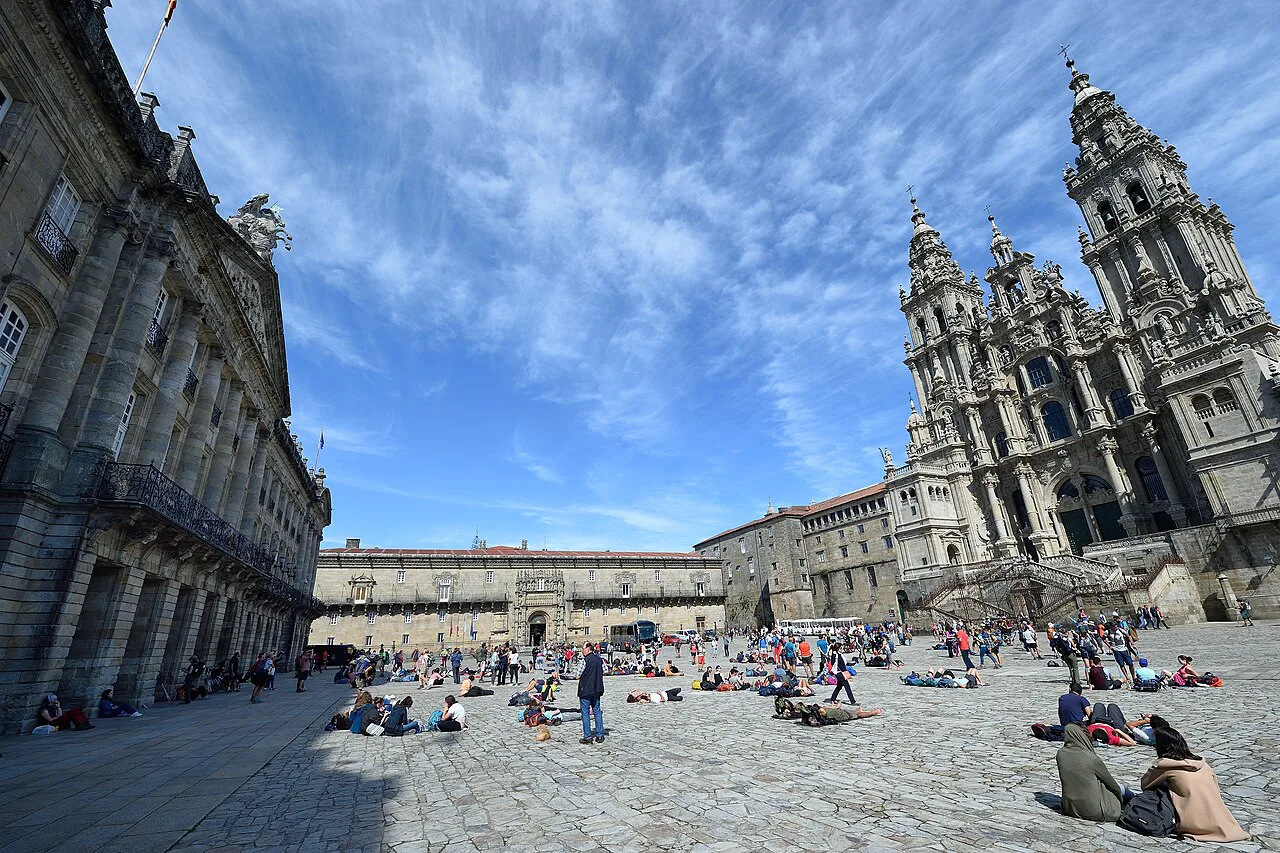
Where the walk starts: Praza do Obradoiro and the west front
Begin in Praza do Obradoiro, the long granite square on the cathedral's west side, where pilgrims arriving along the Camino finally see the façade they have been walking towards. Stand back towards the Palacio de Raxoi for the full width of the baroque west front and its two towers, then cross to the cathedral steps.
The square is also the practical hub of the visit: the Museo Catedral keeps its ticket desks here, so you can decide on the spot whether to add the museum and the Pórtico de la Gloria to your day. Get your bearings on the surrounding streets with our Santiago de Compostela map before you set off into the lanes.
Inside the cathedral: free entry, the Puerta de Platerías and mass times
The cathedral opens every day from 7:00 to 21:00, with a 20:30 close on summer Saturdays for the pilgrim vigil, and general access is free through the Puerta de Platerías on the south side. Backpacks are not allowed inside for security reasons, so leave luggage at your accommodation or plan around a bag-free visit. Visits pause during celebrations, which is worth remembering when you time your arrival.
Pilgrim Masses are listed at 7:30, 9:30, 12:00 and 19:30, and the cathedral's own site carries a notice about a temporary relocation of the Pilgrim Masses to the church of San Agustín. If the service is the reason for your stop, read that notice on the official page before you build the rest of the day around it, and check the separate page on the Botafumeiro if the swinging censer is what you came for.
The Pórtico de la Gloria and the Museo Catedral
The Museo Catedral opens daily from 10:00 to 20:00, and the ticket desks for the museum are on Praza do Obradoiro. The museum, the Pórtico de la Gloria and the Maestro Mateo space are separately ticketed visits that you book rather than assume are bundled, so treat the museum and the Pórtico as two decisions to make at the desk.
The Pórtico is the single most rewarding stop on the route: the twelfth-century sculpture by Maestro Mateo sits behind the west front, seen up close only on the separately booked visit rather than from the nave. If you want the background before you go, our guide to the Catedral de Santiago de Compostela covers what you are looking at.
Praza de Platerías and the horses' fountain
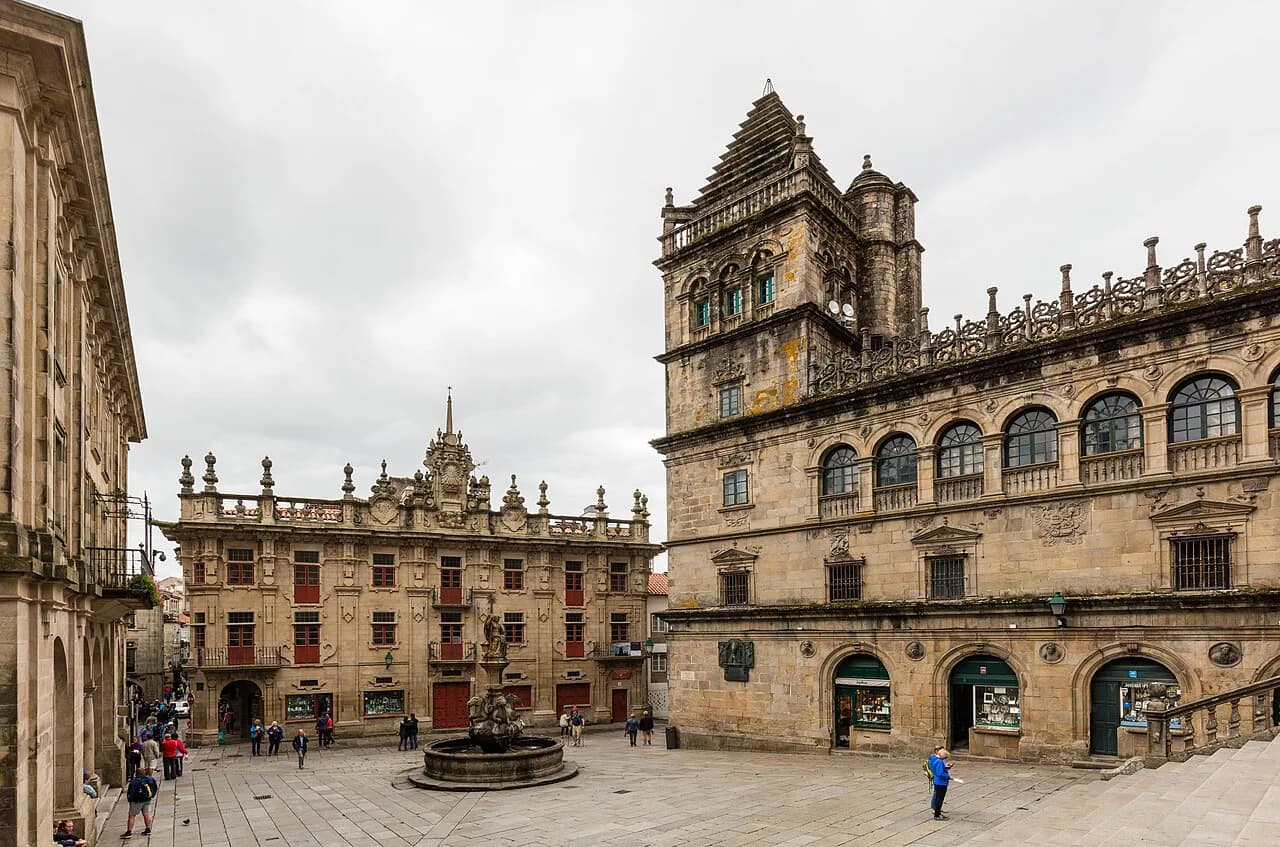
Come out onto Praza de Platerías, the smaller, busier square on the south flank, where the Romanesque south portal and its carved figures sit above the steps. The fountain with the four horses in the middle of the square is the local meeting point, and the surrounding arcades of silversmiths' shops give the plaza its name.
This is a natural place to pause: the square is small but always animated, and it feeds straight into the lanes of the Casco Antigo. If you want the architecture decoded, the Romanesque sculpture here is one reason a short guided segment pays off.
The old town lanes: Rúa do Franco and Rúa do Vilar
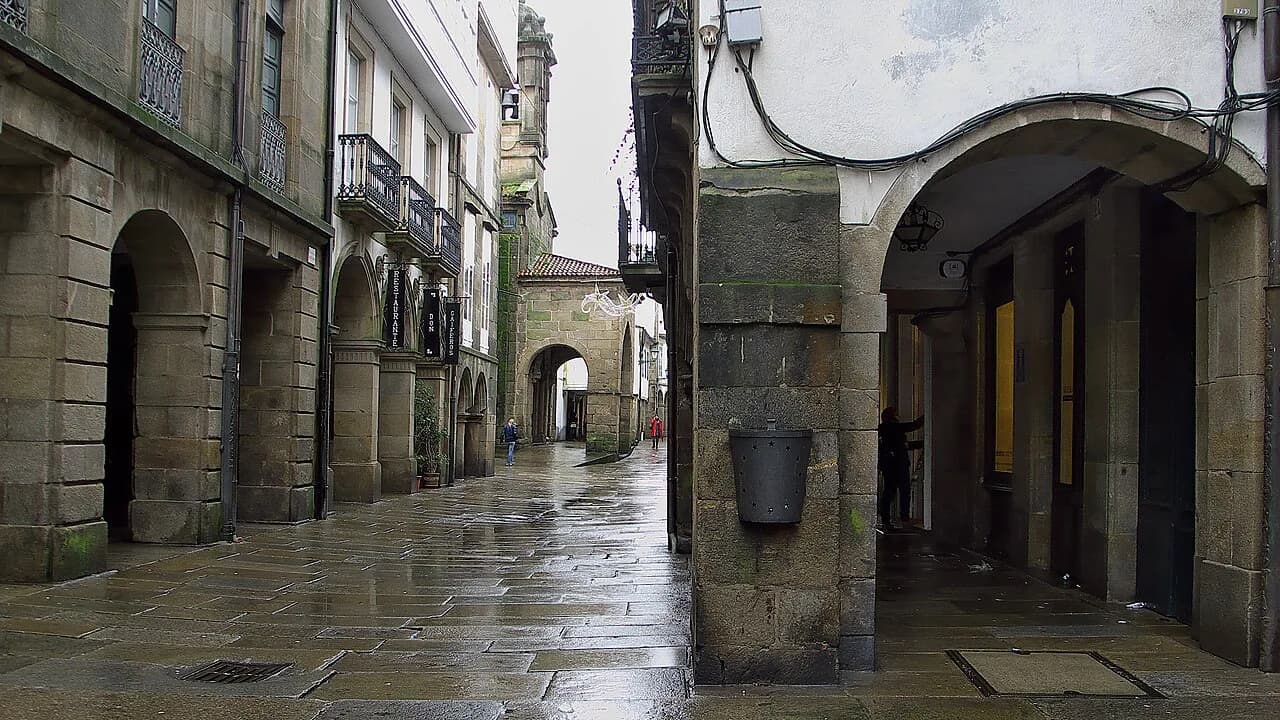
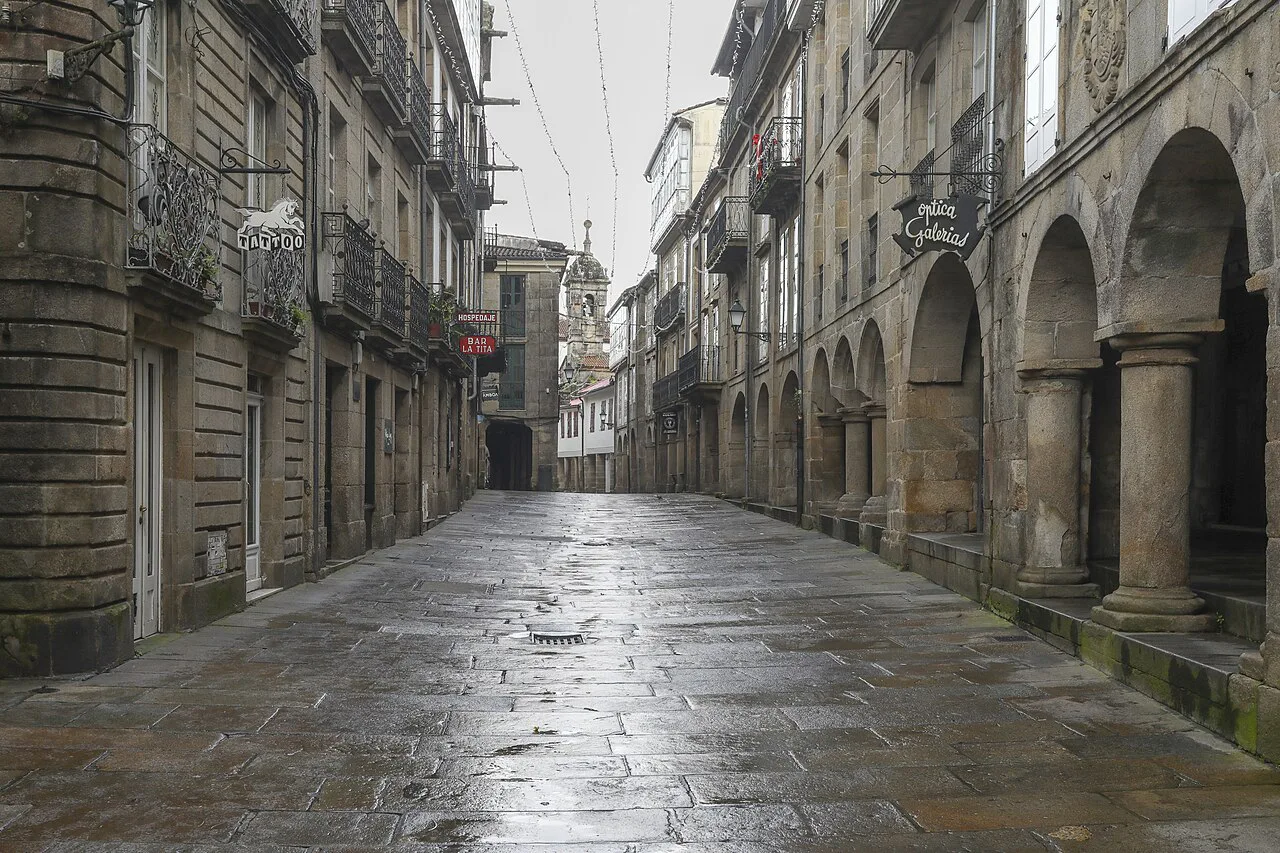
From Platerías, head north into the grid of granite streets, with Rúa do Franco and Rúa do Vilar as the two main arteries running parallel towards the centre. The arcaded pavements, stone houses and small squares are the substance of the Santiago de Compostela old town, and the pleasure is in wandering rather than ticking off façades.
Keep the lanes for the middle of the day, when shops and galleries are open, and expect the busiest stretches to be crowded with pilgrims and visitors at once. The old town is small enough that getting lost costs you minutes, not hours.
Praza da Quintana and the Puerta Santa
Praza da Quintana opens out behind the cathedral's east end, split into two levels by a broad staircase, with the Puerta Santa facing it across the upper terrace. The square is quieter than Obradoiro and makes a good place to stop and look back at the apse and the rooftops, especially in the late afternoon.
The Puerta Santa has a ceremonial role in Holy Years, and in ordinary years it is simply part of the east end you walk past; no visit inside should be assumed. Use the pause to work out the rest of your loop, since the market and the Alameda now lie to the north and east.
Monasterio de San Martiño Pinario
A short step from Quintana stands the Monasterio de San Martiño Pinario, one of the largest religious complexes in Spain and a stronghold of Galician baroque, with a monumental staircase and cloisters behind its façade. It is worth a look from the outside even if you do not go in, and it gives you a second grand set-piece after the cathedral.
Its scale is easy to underestimate from the street, so walk round to the façade facing the square before moving on. Treat the monastery as a ten-minute detour rather than a full visit and the morning stays on schedule.
Mercado de Abastos
The Mercado de Abastos sits on the northern edge of the historic centre and is the city's working food market, with stone stalls selling fish, shellfish, cheeses and produce. It is the second most visited place in Santiago after the cathedral, which tells you how much of the city's everyday life is on show there.
Go for the atmosphere and the produce rather than for a sit-down meal, and keep in mind that market activity is concentrated in the morning; by late afternoon many stalls will be shutting. It makes a sensible turning point before the climb to the park.
Parque da Alameda for the cathedral view
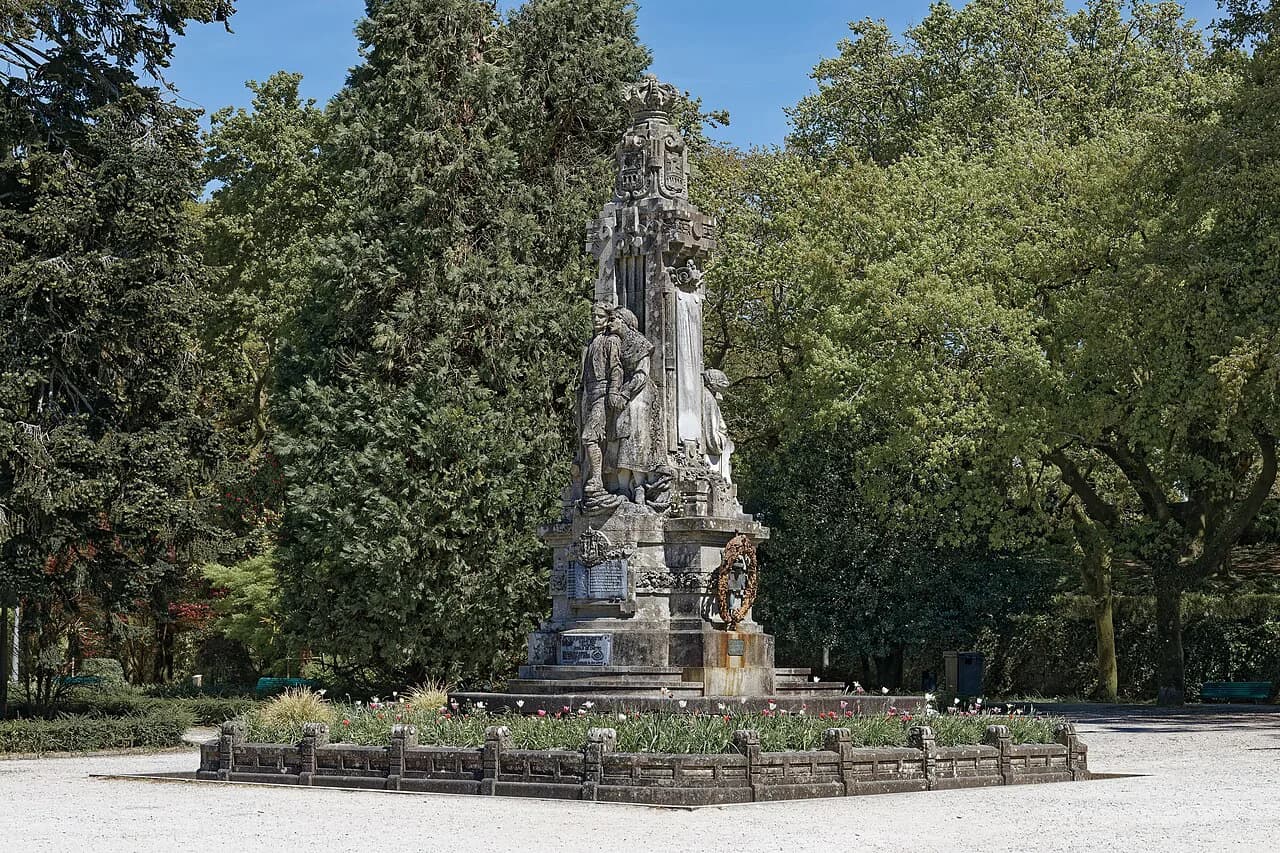
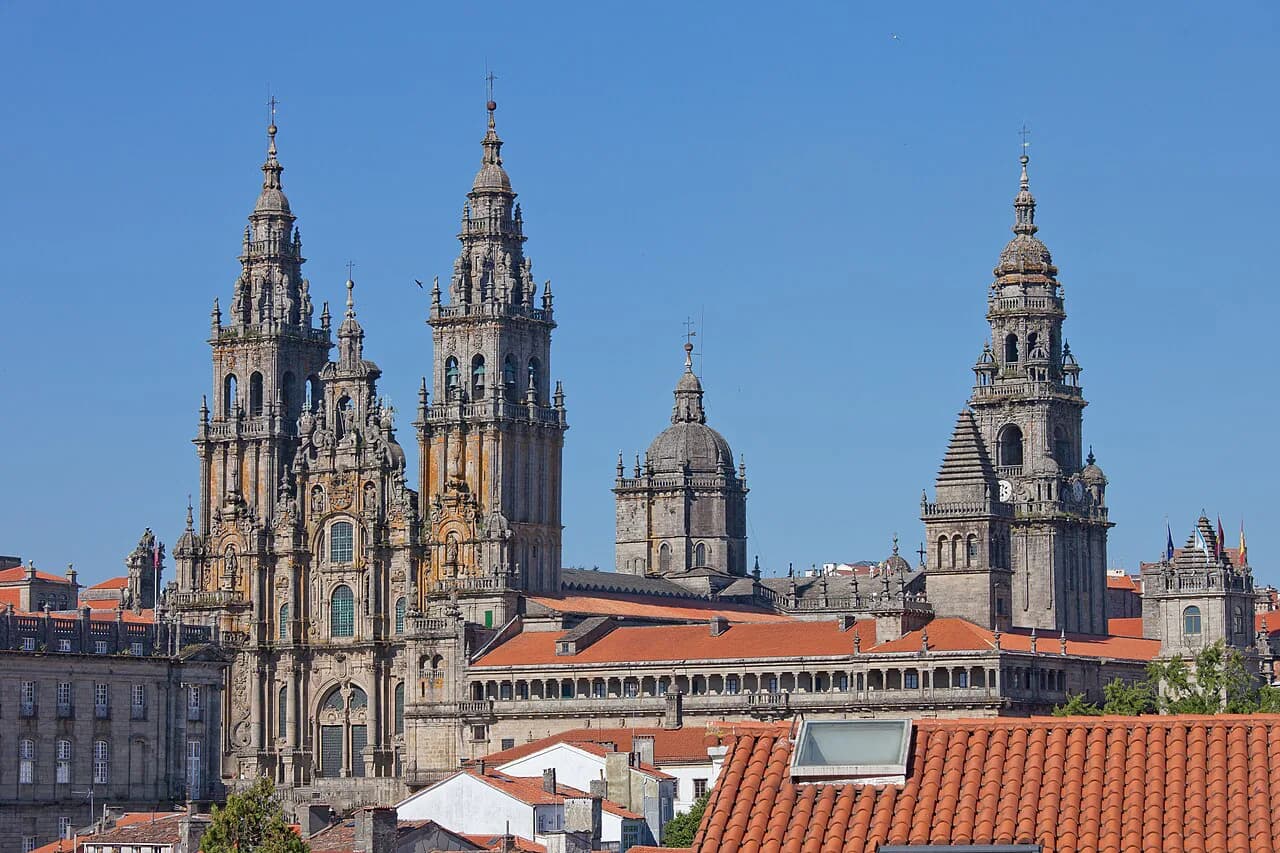
Finish the circuit by climbing to the Parque da Alameda, the tree-lined park south-east of the old town, where the classic view opens across the rooftops to the cathedral's towers. The park is planted with mature oaks and chestnuts, and the statue of Las Dos Marías recalls two sisters famous for promenading through the city in vivid dresses.
This is the best free panorama of the old town you will get without leaving the centre, so save it for the end of the walk when the light is softer. Sit on the grass slope, check the whole route against the view and decide whether the outlying stops are still worth your energy.
Optional extension: Cidade da Cultura or Monte do Gozo
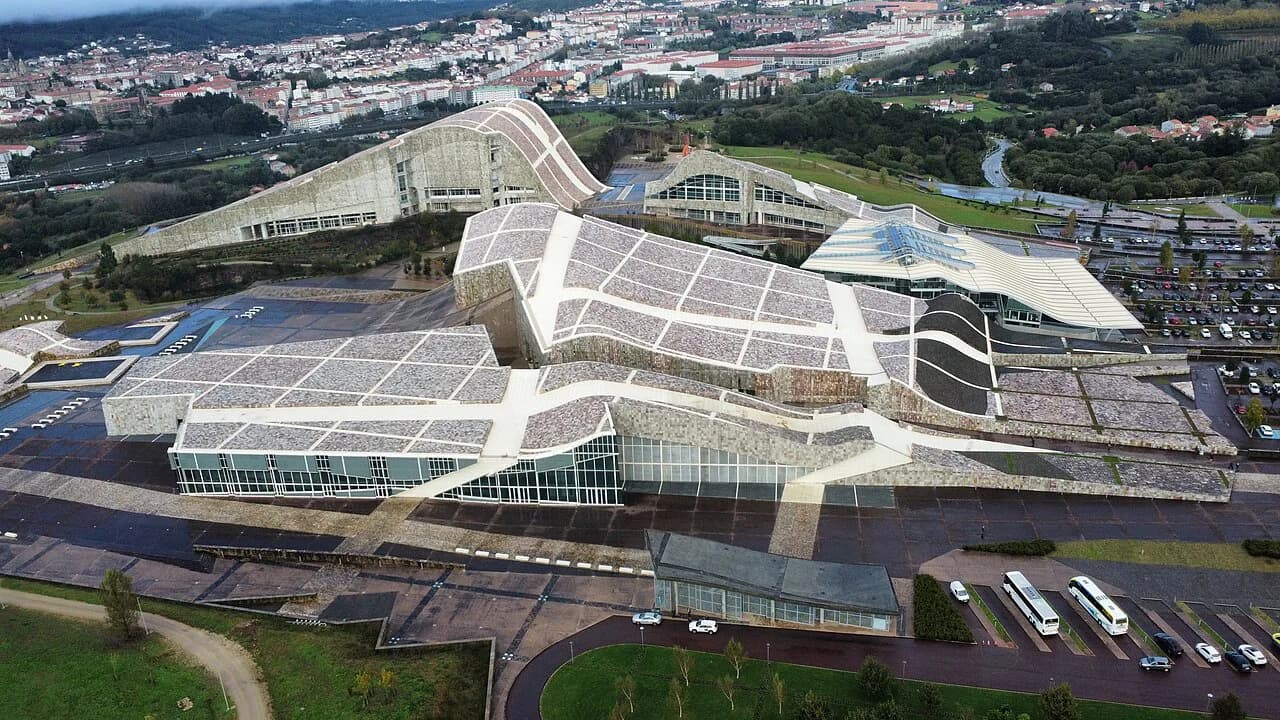
The Cidade da Cultura de Galicia, the hilltop cultural complex designed by Peter Eisenman, and Monte do Gozo, the rise on the Camino Francés where pilgrims first glimpse the cathedral, both lie outside the historic centre and need a bus, taxi or a much longer walk. Choose one, not both, and only if you have already covered the old town properly.
Monte do Gozo has a commemorative monument marking Pope John Paul II's 1989 visit and is the more evocative of the two if you have walked any part of the Camino; the Cidade da Cultura is the stronger draw for contemporary architecture. Either way, budget the rest of the afternoon rather than squeezing it into the morning.
Route length, walking times and where to break the walk
The core circuit from Obradoiro to the Alameda is short: roughly three to four kilometres of walking with the plazas, the lanes and the market in between, which most visitors cover comfortably in half a day with stops. My own estimate is about three hours at a gentle pace, and the only real climb is the gentle rise to the Alameda at the end.
Break the walk twice: once in the Platerías area mid-morning and once at the market or the Alameda, when your feet and the cathedral crowds both want a rest. Rain is common in Galicia, and granite setts get slippery, so save the outdoor stretch for a window between showers rather than committing to a fixed start time.
When a paid or free walking tour earns its place
Book a guided tour if you want the Pórtico de la Gloria, the cathedral interior and the old town explained in sequence, or if you are short on time and would rather be led than navigate. A two-hour walking tour can cover Obradoiro, the Alameda, the Mercado de Abastos and the cathedral, which is roughly this route compressed without the museum.
Skip the guide if your priority is the free cathedral entry and time in the plazas at your own rhythm, since no ticket is at stake and the route is easy to follow. If you do want a tour, compare what each format includes and confirm the start point and any tip expectation with the operator before you join.
Walk it yourself, then decide on the guide
Do this route unaided first: the plazas, the lanes and the free cathedral entrance will tell you within an hour whether you want more explanation. If you do, add the museum for the Pórtico de la Gloria or join a short guided walk, but do not pay for a tour to reach places you can walk to in half a day.
Start at Obradoiro in the morning, take the cathedral and Platerías before the midday crowds, use the lanes and the market as your middle stretch, and finish at the Alameda for the view. Confirm the cathedral hours and any change to the Pilgrim Masses on the day you go.
Frequently Asked Questions
Is the Santiago de Compostela walking tour free?
The old town route costs nothing: the cathedral is free to enter through the Puerta de Platerías, and the plazas, lanes, market and Alameda are public streets and parks. You pay only if you add the Museo Catedral or book a guided tour.
How long does the walking route through the old town take?
Allow around three hours at a gentle pace for the core circuit, plus extra for the cathedral interior and the museum. The route is a few kilometres of paved streets, with one gentle climb to the Alameda at the end.
Can I do the route without a guide?
Yes. The historic centre is compact and the stops follow one another logically, so a guide is optional and mainly adds interpretation of the Pórtico de la Gloria and the Romanesque sculpture. The cathedral's own free entry makes the self-guided version the cheaper choice.
Sources
- Horarios, tickets, audioguías | Catedral de Santiago
- Catedral de Santiago de Compostela
- ¿Qué ver en Santiago de Compostela? | 10 razones para visitar
- 8 Cosas que Debes Ver en Santiago de Compostela | Viatges Sant Andreu
- A Walking Tour of Santiago de Compostela via the Route ...
- Walking Tours in Santiago de Compostela
Notes for your next Spanish town break
Optional updates to our guides.
You might also like

Continue reading
More guides you'll find useful