Segovia Map: The Old Town Laid Out for a Short Break
A practical Segovia map guide: how the old town is laid out by area, what sits in each quarter and how to order the walk without doubling back.
On this page
Segovia's old town is small enough to walk end to end without transport, and the sensible way to plan it is by cluster rather than by a numbered list. The Acueducto sits at the low eastern edge, the Plaza Mayor and Catedral occupy the middle, and the Alcázar anchors the western tip, so a single line through the centre covers almost every sight. This guide lays out those areas in walking order, then explains which maps Turismo de Segovia publishes and how to use them on arrival.
Treat the street fabric as free wandering and the two big monuments as timed visits. The Judería, Calle Real, Casa de los Picos and the plazas cost nothing and reward slow walking, while the Catedral and the Alcázar eat an hour or more each once you are inside. Budget your map reading around that split and the day organises itself.
How Segovia's old town is laid out
Picture the centre as a ridge running roughly east to west. The Acueducto and Plaza del Azoguejo mark the low eastern entrance, Calle Real climbs from there through the commercial heart, and the Plaza Mayor and Catedral sit on the high ground before the street drops towards the Alcázar. Almost everything a short-break visitor wants lies inside that band, which is why a paper plan rarely needs to cover more than the walled core.
Two slopes define the walk: the gentle climb up Calle Real and the descent to the Alcázar end, with the Judería tucked into the streets below the cathedral ridge. Because the sights sit at different heights, plan the climb once and the descent once rather than shuttling between levels. Turismo de Segovia's page on plans and publications is the place to start for a paper plan of this layout.
Area 1: Plaza del Azoguejo and the Acueducto
Start at the Plaza del Azoguejo, the open square where the Acueducto de Segovia stands at its most photographed. Viewing the aqueduct from the square and circling it on foot suits the first half-hour of the day before any queues build at the ticketed sights. Standing under the arches at street level and again from the square's edges gives you two very different readings of the same structure.
For the elevated angle, climb to the Postigo del Consuelo, a viewpoint above the square that frames the arches against the old town. It is the natural first map reference on arrival, because from there the Judería, Calle Real and the cathedral ridge all read as one line heading west. Save the detail for the streets themselves and use the viewpoint to orientate.
Area 2: Calle Cervantes, the Judería and the Puerta de la Luna
From the aqueduct, the natural map line runs up Calle Cervantes into the Barrio Judío, the old Jewish quarter. The streets are narrow and often stepped, so this is slow walking rather than distance: allow more time than the metres suggest. The Judería's interest is in the fabric itself, the lanes, doorways and small squares that reward an unhurried route.
The Puerta de la Luna marks the edge of the quarter and opens onto the Paseo del Salón, which gives a wide panorama back towards the Alcázar. Carrying on through the Judería brings you to the Sinagoga Mayor, one of the few surviving medieval synagogues in Spain and a useful fixed point on the map when the lanes start to feel alike. Mark it as a waypoint rather than a destination and the quarter stays easy to navigate.
Area 3: Calle Real and the plazas in the middle
Calle Real is the spine of the walk, connecting the lower town to the Plaza Mayor and passing the Casa de los Picos, a facade studded with stone pyramids that is easy to miss if you are watching your feet. From Calle Real, step off to the Plaza de Medina del Campo and the adjoining Plazuela de San Martín, where the church of San Martín and the surrounding medieval and Renaissance buildings make one of the densest clusters in the centre.
This middle band is free to wander as public street space and connects everything else, so treat it as the hinge of the day. A short-break visitor who only has an afternoon can walk the streets around the Acueducto, this stretch of Calle Real and the Plaza Mayor without entering a ticketed interior, which makes it the safest plan for a late arrival.
Area 4: the Catedral and the Plaza Mayor
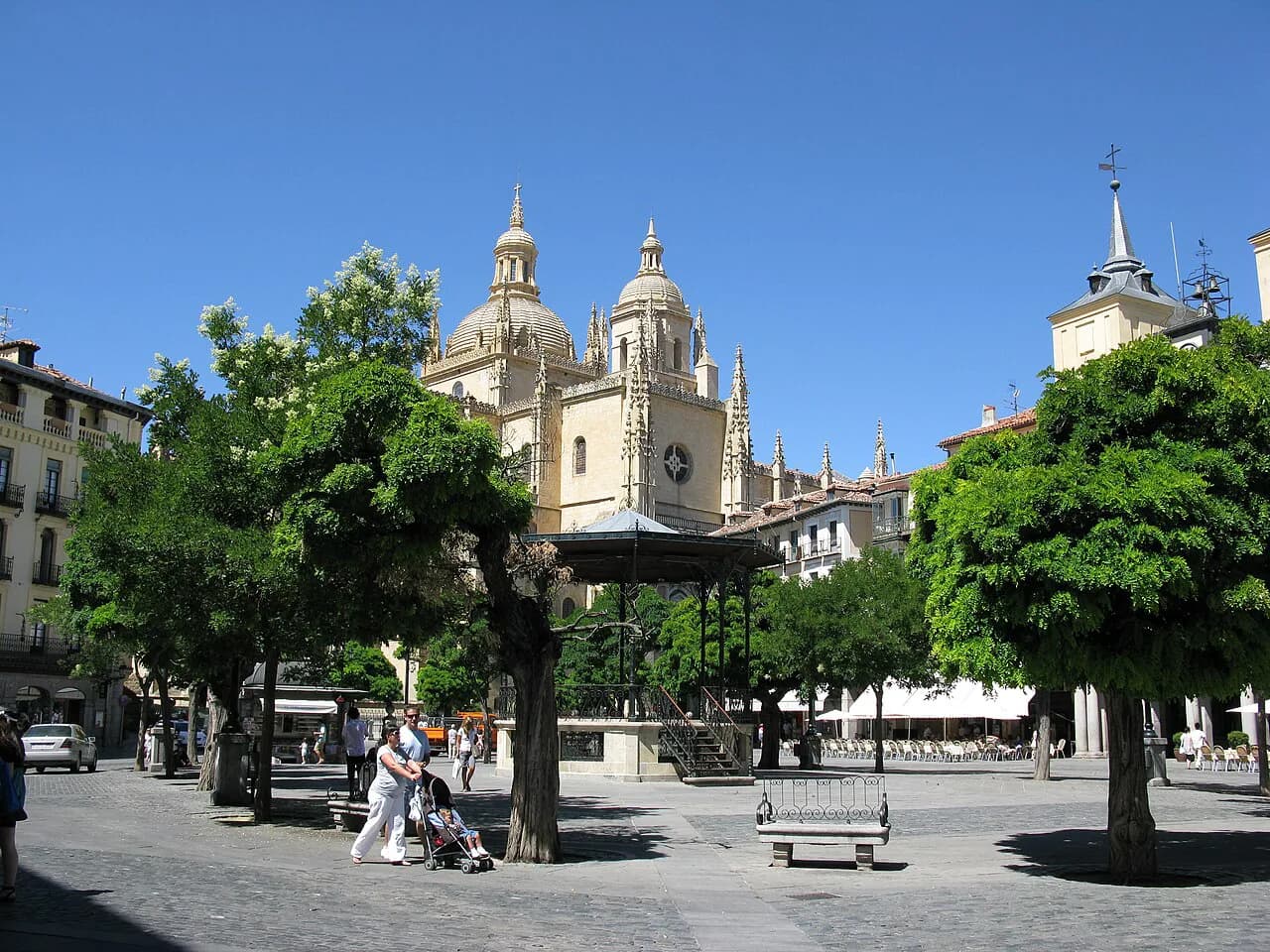
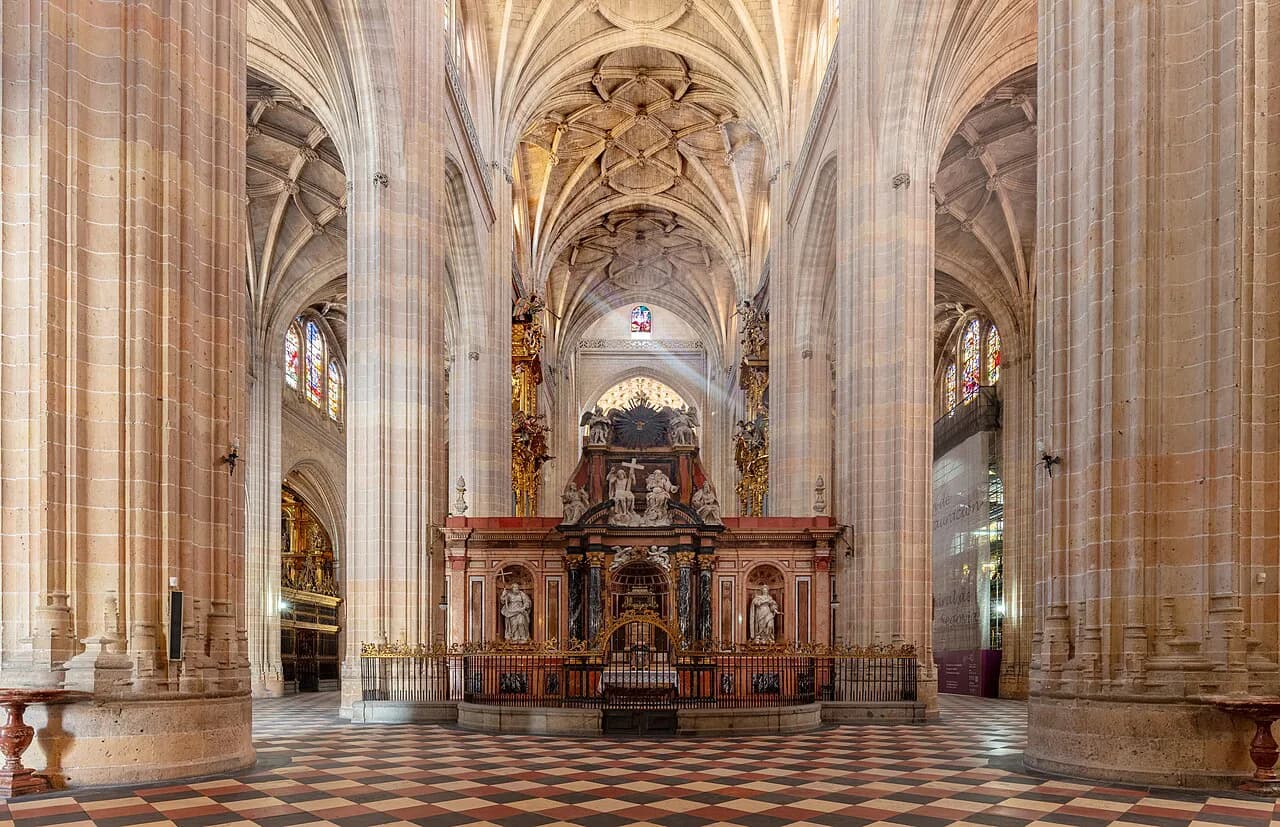
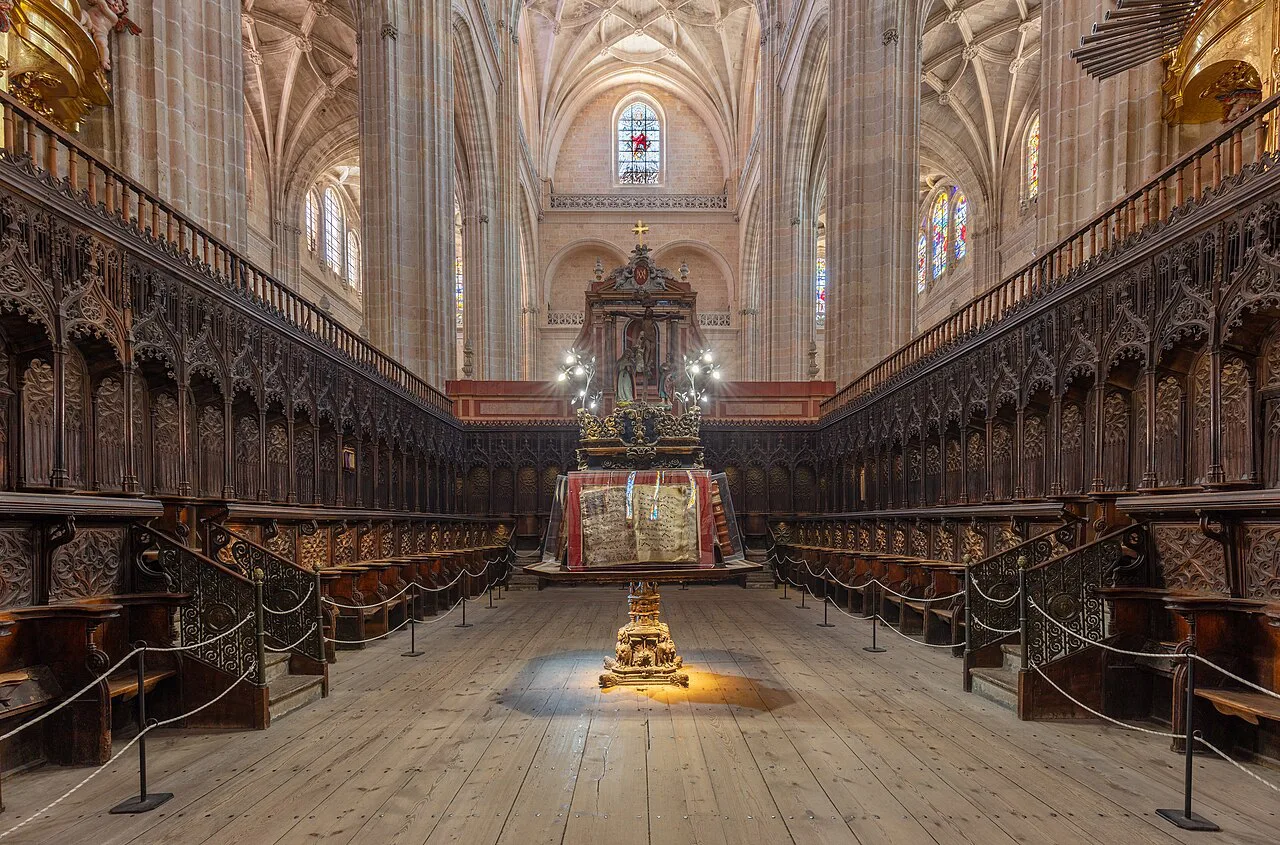
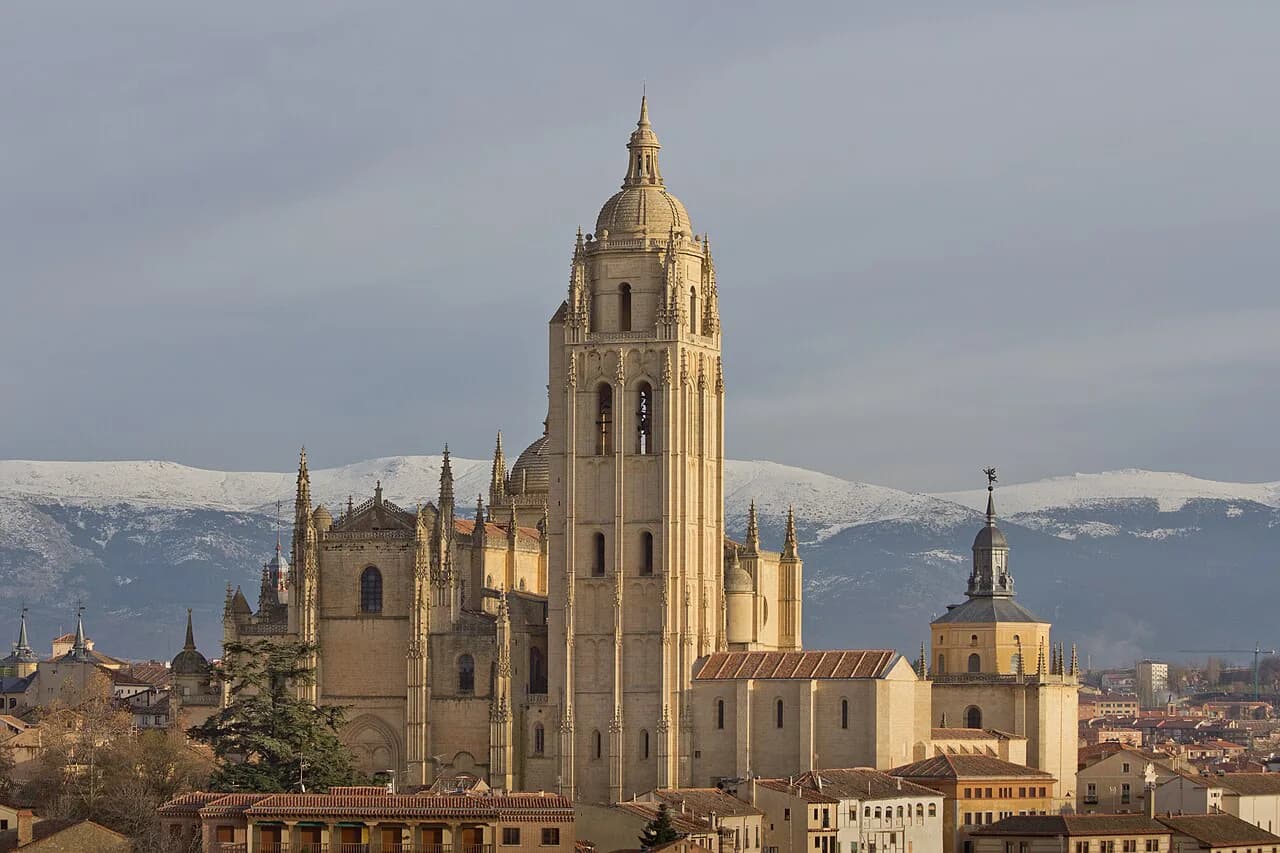
The Plaza Mayor is Segovia's civic centre and sits just below the Catedral, so the two belong to the same stop on the map. The cathedral, often called the dama de las Catedrales, is one of the two sights worth booking time inside rather than admiring from the square. Visiting hours and ticket prices are published by Turismo de Segovia on its monument pages and change with the season, so fix your slot before you set out.
Churches in the centre open around services, so the Iglesia de San Martín and similar parish churches are better treated as things you may catch open rather than fixed stops on a schedule. The Catedral is the exception and the one interior here that justifies planning your walk around it.
Area 5: the Alcázar end and the Paseo del Salón
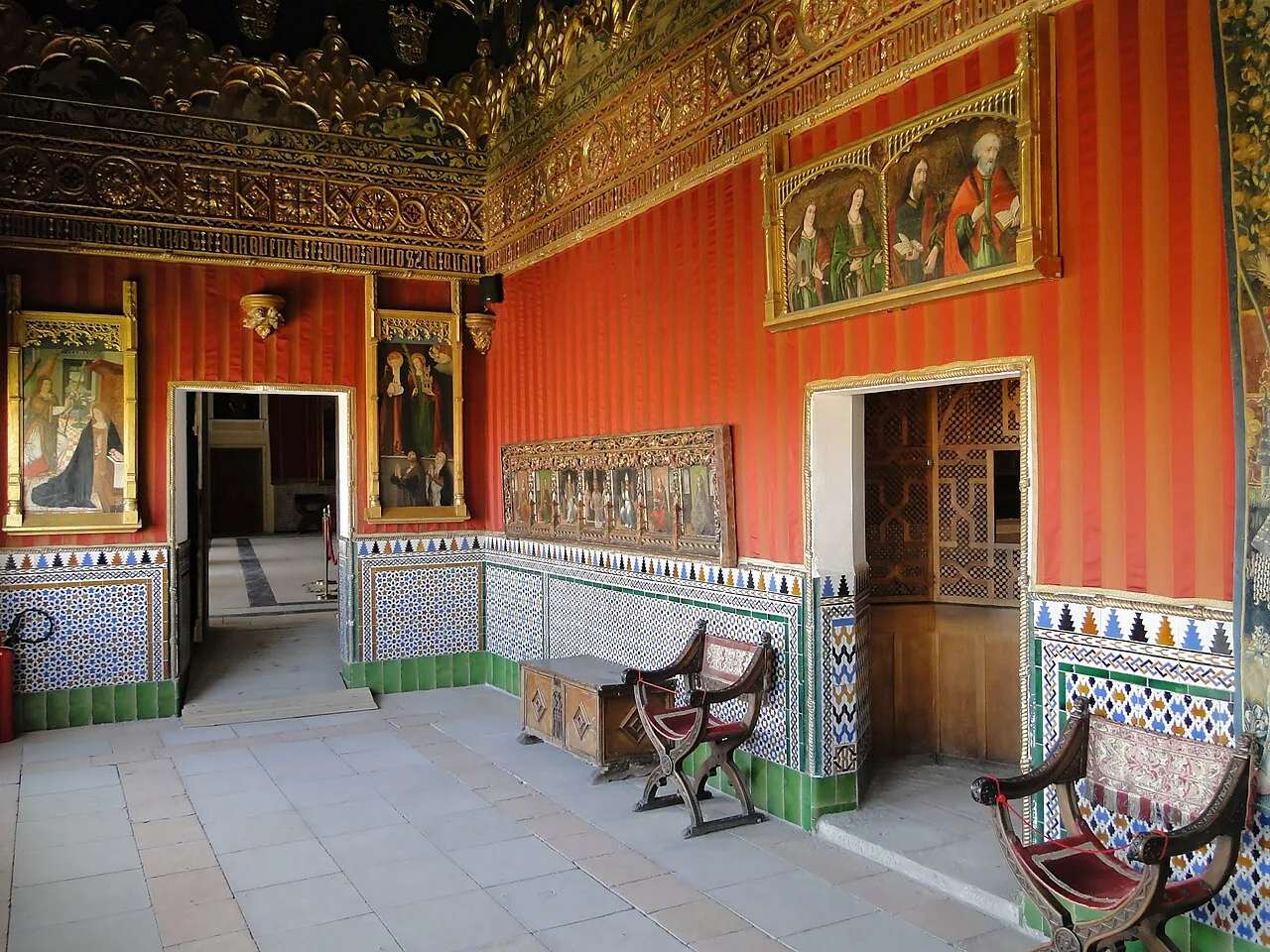
Beyond the Plaza Mayor the street drops west to the Real Alcázar de Segovia, the fortress on the rocky tip that closes the ridge. This is the second sight to plan time for: the interior, towers and views take real time, and fitting it around the cathedral on the same day needs deliberate ordering. Outside, the surrounding gardens and the Paseo del Salón de Isabel II give open views back over the old town and the cathedral.
The Iglesia de la Vera Cruz lies beyond the Alcázar, a short continuation if you still have energy. It is the kind of stop that only makes sense if you have planned for it; squeezing it in after both monuments usually means adding a detour off the ridge.
Walking order that avoids doubling back
The clean route runs from the Plaza del Azoguejo up through the Judería, along Calle Real to the Plaza Mayor and Catedral, then down to the Alcázar and, if time allows, the Vera Cruz. That follows the ridge in one direction and keeps the climb to a single stretch. Reversing it works too, but you will finish far from the aqueduct, which is the natural place to end a day.
Allow booked time inside the Catedral and the Alcázar, and leave the rest flexible. The two interiors are where a short break is most likely to run over, so fix those slots first and let the squares, the Judería and Calle Real fill the gaps. Everything outside them is open to the street and needs no schedule.
What Segovia's tourist office maps cover
Turismo de Segovia publishes a city plan plus a set of downloadable guides, including a general city reading, a heritage summary and individual leaflets on the main monuments. Its publications page lists these as separate files, which makes it easy to print only the sheet you need. For a short break, the city plan plus the Acueducto and Alcázar leaflets cover the two timed interiors without carrying the whole pack.
The same page includes themed walks, among them routes on the Judería, the Mudéjar architecture and Antonio Machado, which suit a second visit more than a first afternoon. There are also viewpoint and walking files if you want to extend beyond the centre. Turismo de Segovia's own monument pages are the place to fix opening hours and ticket prices when you set your visiting order.
Arriving by train or bus and finding the centre
Segovia's stations sit outside the historic core, so the last stretch of the trip is always on foot or by local transport rather than a straight walk from the platform to the aqueduct. Check the map before you arrive to see how the station connects to the Plaza del Azoguejo, which is the eastern gateway to the old town.
Once you reach the aqueduct, the map stops mattering much: the centre is compact, signposted and easy to follow by sight. From there, the Postigo del Consuelo gives the elevated fix on the layout and the ridge towards the Alcázar shows you the full length of the walk ahead.
Which map to carry for a short break
For a one-day visit, print the general city plan and the two monument leaflets from Turismo de Segovia and skip the themed walking routes. That set covers the area around the aqueduct, the Judería, Calle Real and the two interiors worth planning around, without the bulk of the full publications list.
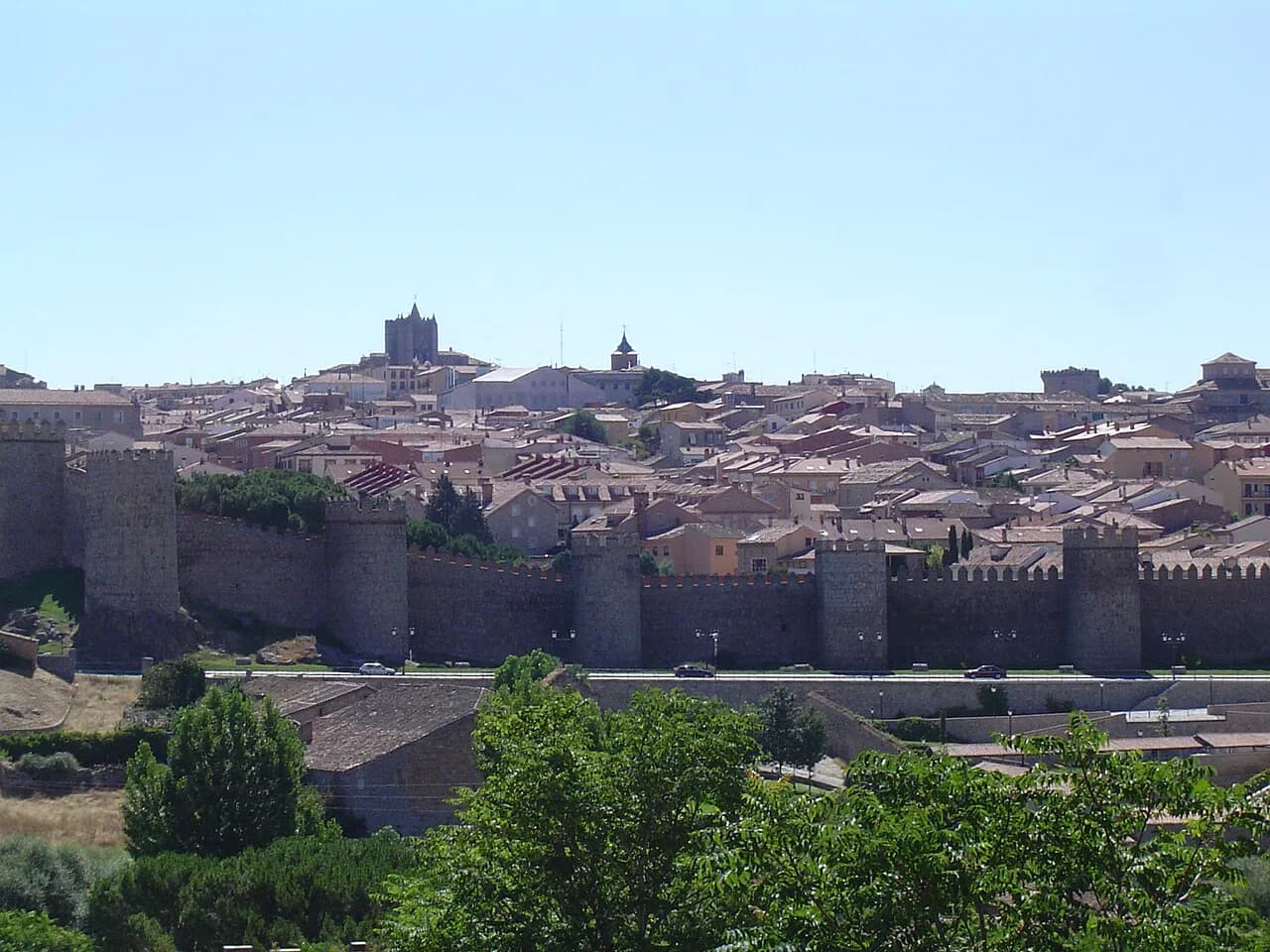
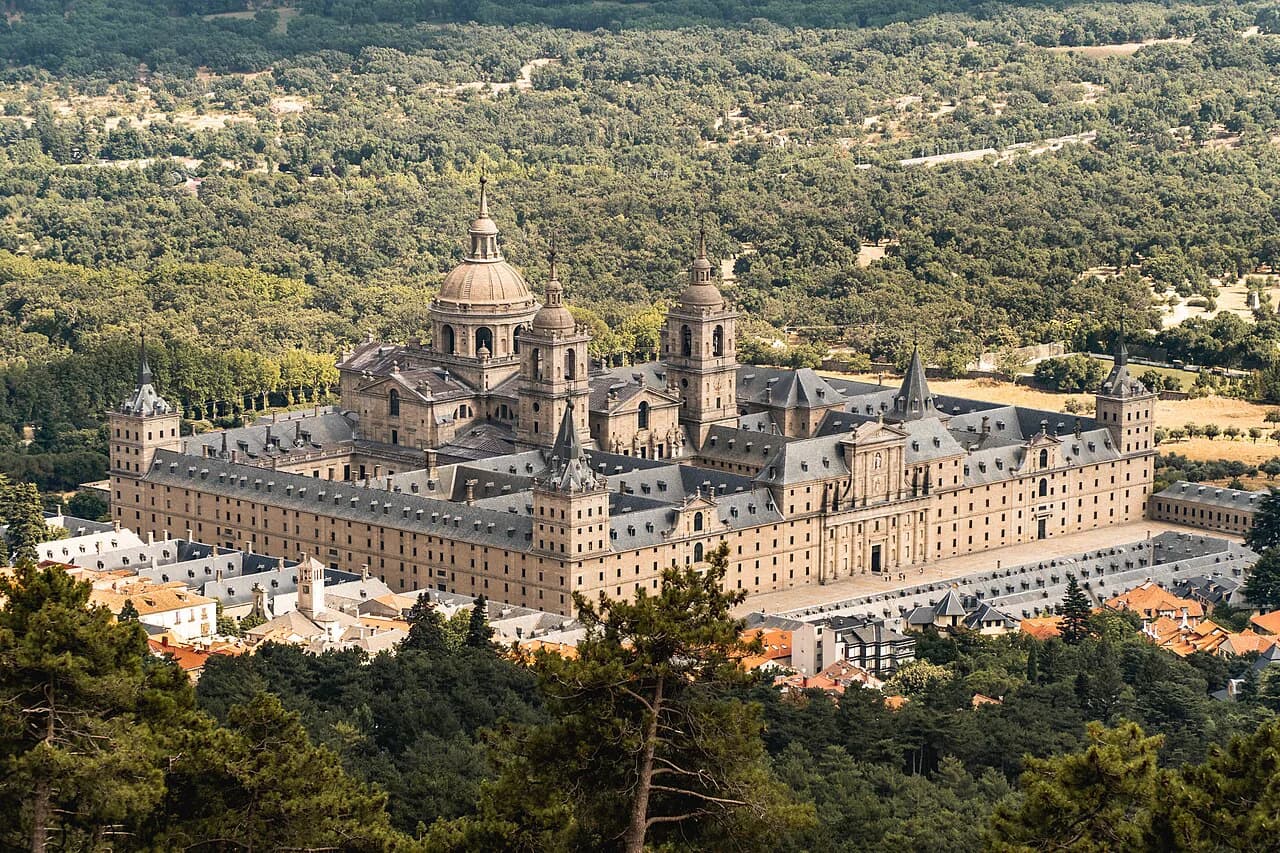
If you plan a second day in Castilla y León, the themed routes on the tourist office's publications page make more sense, and nearby towns are worth mapping separately. Ávila's walls and El Escorial are the obvious extensions on the same regional map, each a different kind of day out.
Frequently Asked Questions
Is Segovia's old town walkable from the station?
The historic centre is compact and entirely walkable once you reach the Plaza del Azoguejo, but the stations sit outside the core. Check a Segovia city plan to see how the station end connects to the aqueduct before you arrive.
Do I need to book the Catedral and the Alcázar in advance?
Both are timed interiors that take an hour or more, and they are the two sights most likely to disrupt a short-break schedule. Check the monuments' own published visiting hours and ticketing before fixing your walking order.
What can I see in Segovia without buying a ticket?
The streets and squares are public space: Calle Real, the Plaza Mayor, the Judería lanes and the Casa de los Picos facade can all be walked. The Acueducto, the Postigo del Consuelo viewpoint, the Catedral interior and the Alcázar interior are separate sights — check current access and any ticket before you go.
Sources
Notes for your next Spanish town break
Optional updates to our guides.
You might also like
Continue reading
More guides you'll find useful