Segovia Old Town: Plazas, Streets and Monuments to Walk
Segovia's old town packs the Aqueduct, Cathedral and Alcázar into one walkable quarter. Here are the streets, plazas and monuments that shape the route.
On this page
Segovia's old town is a compact World Heritage quarter that stacks the Aqueduct, the Cathedral and the Alcázar into a single climbable route, with the Aqueduct at one end and the fortress at the other. This guide sets out the squares, streets, gates and walls that hold that route together, then the museums and the second layer of the Jewish quarter and San Millán. Use it to plan an order that does not double back, and leave single-sight detail to the dedicated pages.
Treat the quarter as a sequence rather than a checklist: gateway, shopping street, social square, cathedral, castle, walls. Each stretch has a different character, and knowing which comes next makes the walking feel deliberate instead of improvised. If you prefer a printed layout on hand, a Segovia map helps you see how the streets fold around the hill.
Segovia Old Town at a Glance
Segovia is a World Heritage city whose draw is the combination of monuments, museums, gardens and viewpoints within a historic core, as the city's own tourism service describes. The headline set is the Aqueduct, the Cathedral and the Alcázar de Segovia, and the old town is the connective tissue between them.
The layout trade-off is simple. The quarter is small enough to cover on foot in one continuous push, but it rises, and the Alcázar sits at the far end from the Aqueduct, so the return leg is either a retrace or a loop. Decide at the start whether you want the climb first or the monuments first. Segovia Attractions: 6 Visitor Guides takes each individual sight further than this overview can.
Where the Old Town Begins: the Aqueduct and Plaza del Azoguejo
The Aqueduct is the natural gateway, and plaza del Azoguejo is where most arrivals first see it. Tours of the historic centre commonly start from this square, which says something useful about the geography: everything else in the old town radiates from here.
Stand under the arches before climbing into the streets, because the scale reads differently from below than from the steps above. The Acueducto de Segovia is the anchor of the old town and the natural start of the walk.
Calle Real and the Climb to Plaza Mayor
Calle Real is the spine of the old town, and the buildings along it are the reason to walk rather than cut through. Casa de los Picos is the most photographed facade on the street, its wall studded with angular stone points, and Palacio de Cascales follows as a quieter stop. The Iglesia de San Martín marks the transition from commercial street to the older religious core.
The street narrows and steepens as it goes, and each turn opens onto a small square rather than a grand vista. That rhythm is the appeal of the quarter: it reveals itself in pieces. Keep the map in your pocket for the first stretch and put it away once plaza Mayor appears.
Plaza Mayor and the Cathedral
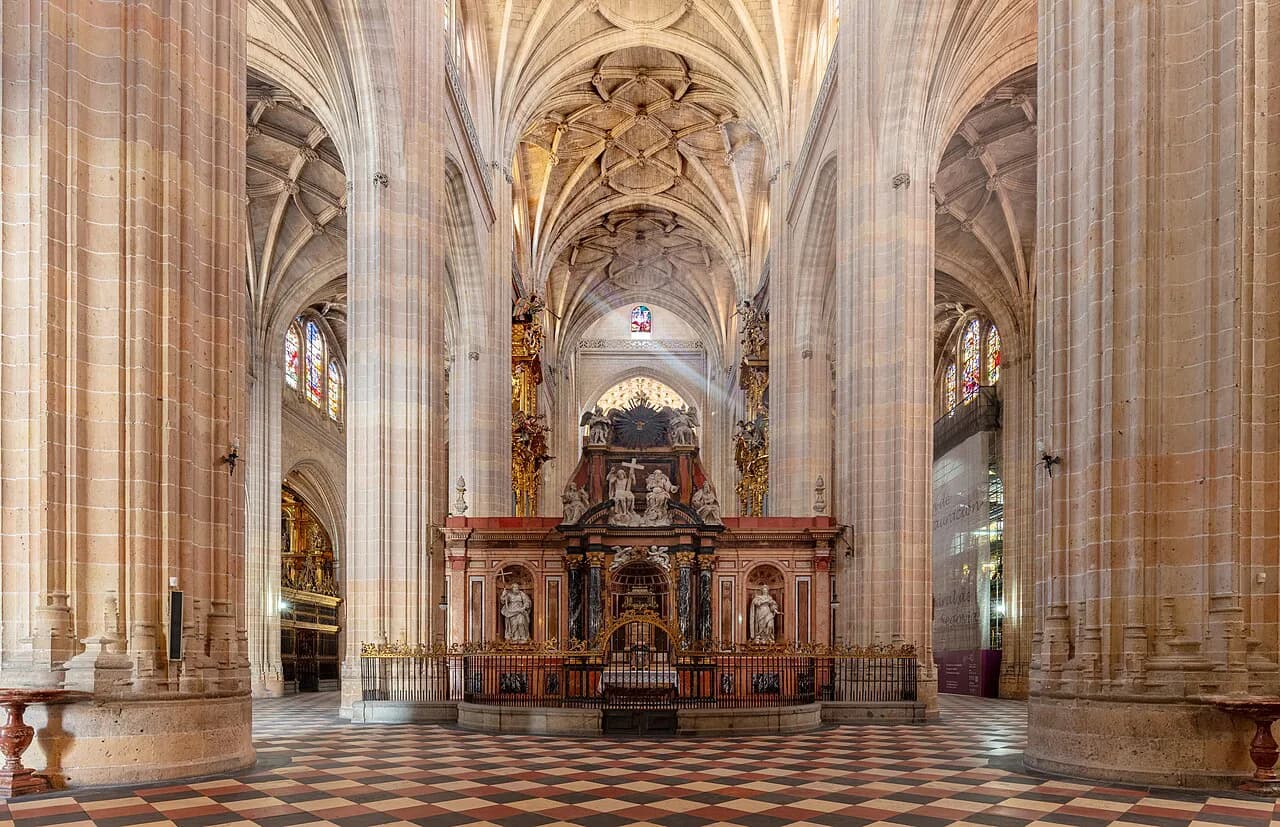
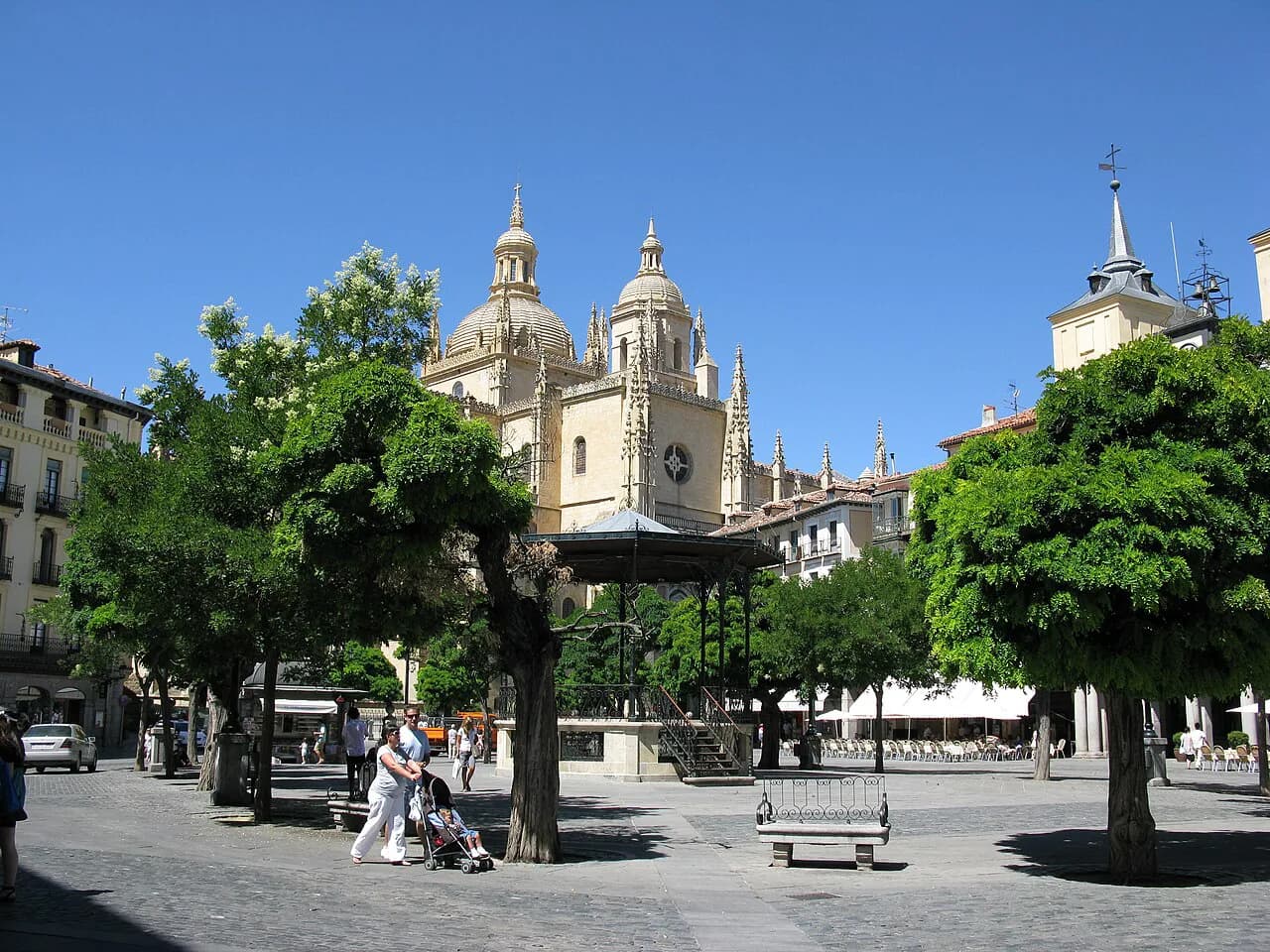
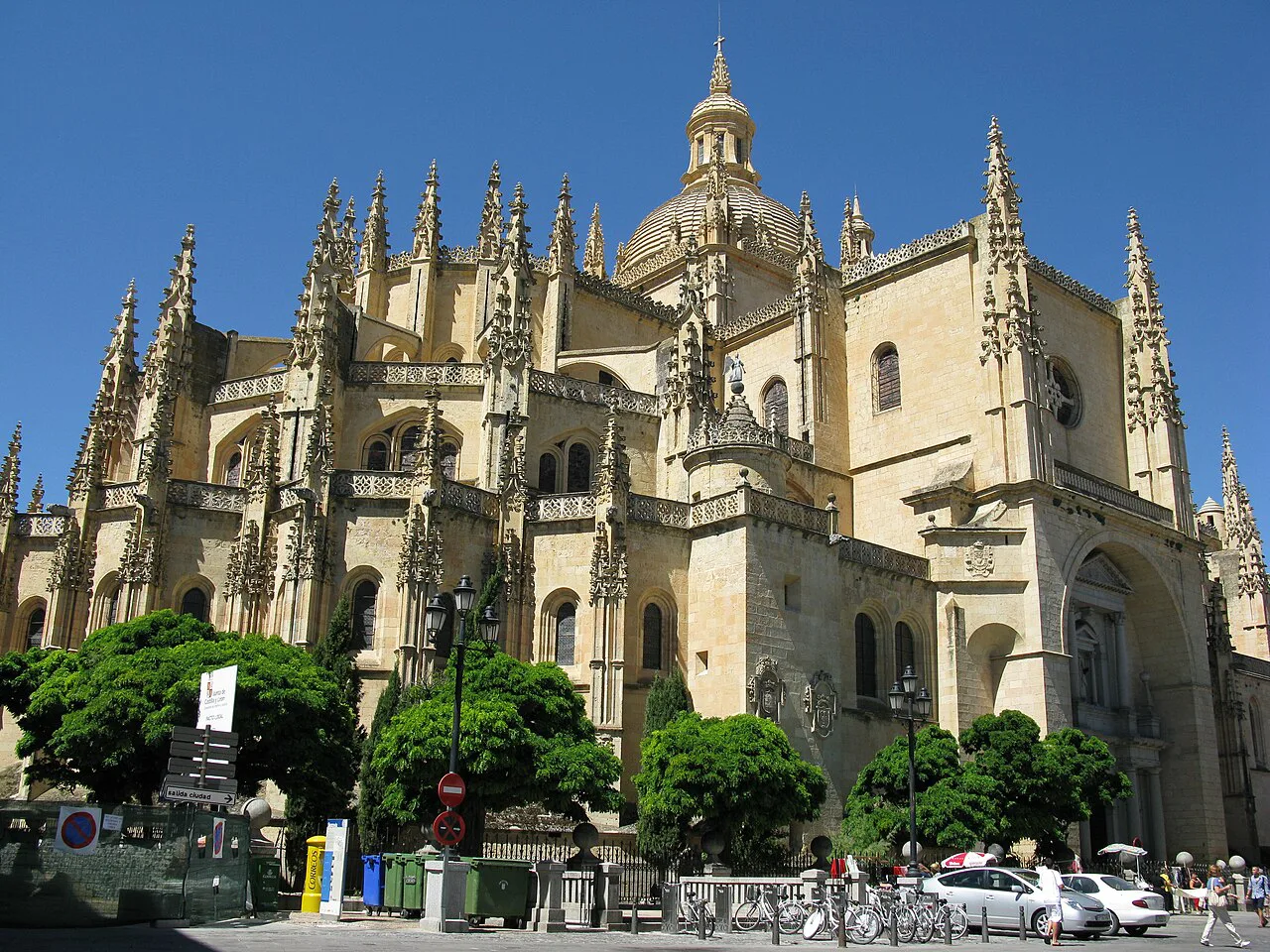
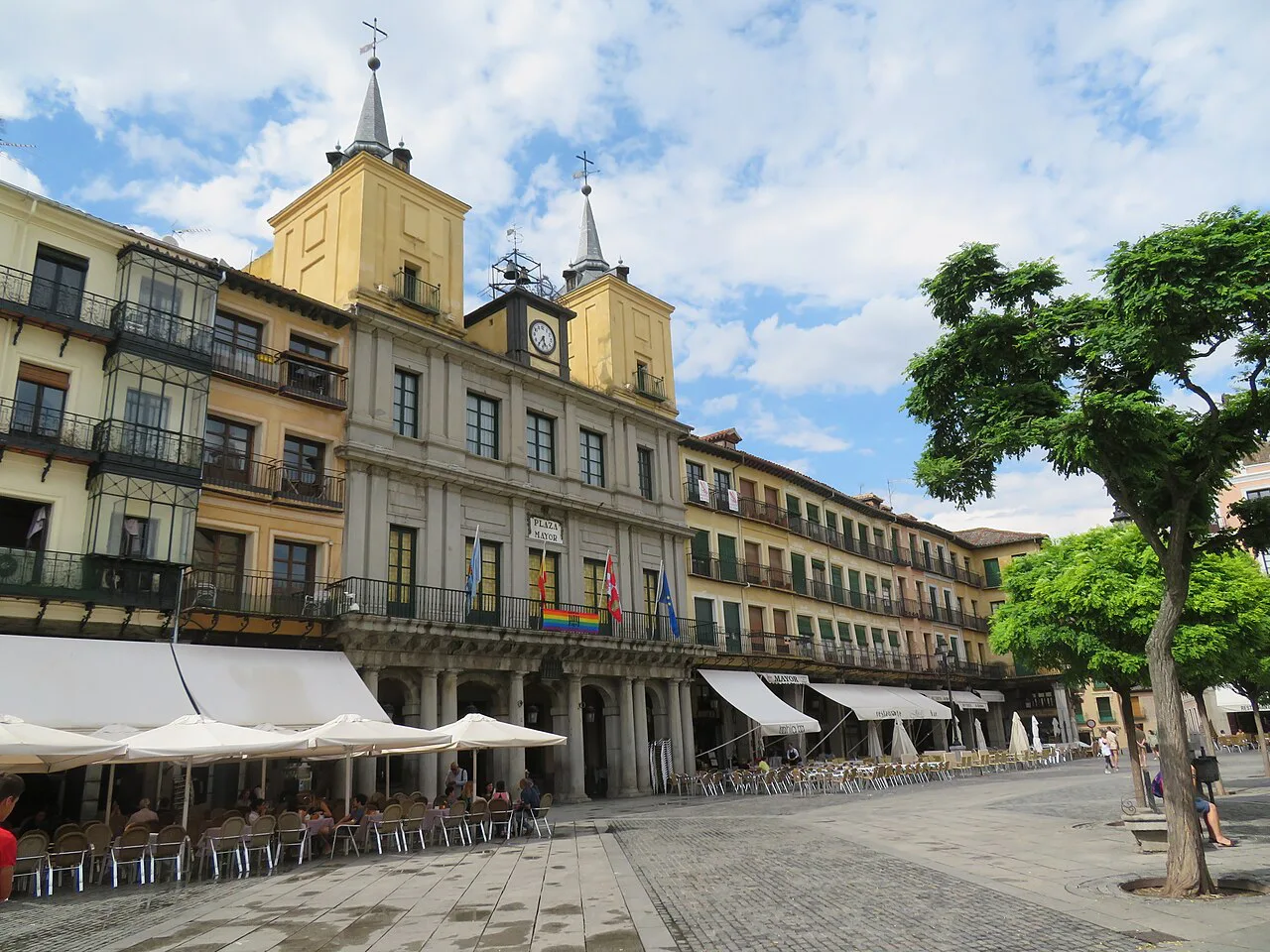
Plaza Mayor is the social centre of the old town, arcaded on some sides and open on others, with the Cathedral rising directly off it. The Catedral de Segovia is a Gothic cathedral and anchors the middle of any route through the quarter.
Treat the square as a pause rather than a destination in itself: it is where the walk splits between the cathedral interior and the lanes leading west to the Alcázar. Treat the cathedral as one of the interiors to book in advance if you want to go inside.
The Alcázar End and the Arco de la Claustra
West of plaza Mayor the streets tip downhill towards the Alcázar, and the Arco de la Claustra is the point where the old town visibly thins out. Passing through it is one of the small pleasures of the route, since the arch frames the approach to the fortress.
The Alcázar itself is the western bookend of the quarter, a castle silhouette that has become the city's emblem. Book any interior visit around your walking order rather than the other way round, so the fortress does not pull you back across the old town twice.
The Walls and Miradors: Where the Old Town Ends
The Recinto amurallado, the walled circuit, is listed as a stop in its own right and marks the edge of the historic core as it meets the modern city. The two-days guide includes it among the sights on the route.
Segovia's tourism service lists miradores alongside its monuments, museums and gardens, so viewpoints are treated as proper sights rather than afterthoughts. Fold one in at the edge of the walk, where the old town meets the valley, and save it for the point when you want to look back at the route rather than forward along it.
The Jewish Quarter and the Barrio de San Millán
Beyond the headline route lies a second layer. The Judería de Segovia, the old Jewish quarter, sits within the historic centre and rewards a slower pass through its lanes after the monuments. The barrio de San Millán, on the other side of the old town, is associated with the city's Moorish past and works as a contrasting walk.
These districts are where Segovia's multi-layered history is easiest to read, and they are quieter than the cathedral square. Treat them as stops on the way back rather than a separate outing.
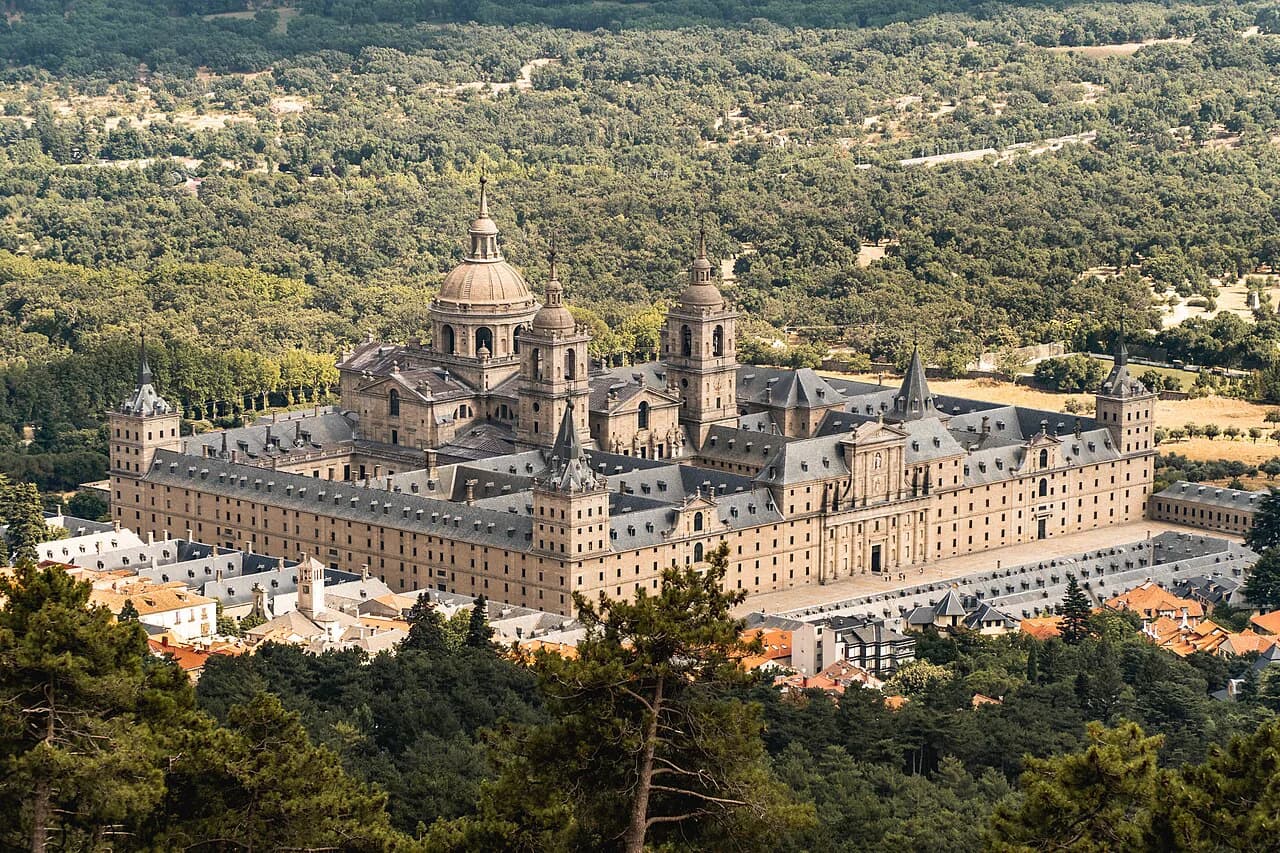
If Segovia is part of a longer Castilian trip, the walled circuit and cathedral of Ávila make a natural comparison, and El Escorial monastery sits within reach of the same region. Both reward planning in the same way: pick the order first, then the tickets.
Museums in the Old Town
The Casa-Museo Antonio Machado and the Centro de Interpretación del Acueducto are two smaller sights the city lists under its historic-core categories, one for the writer's rooms and one for the Aqueduct. Keep to what the city lists rather than assuming both are always open, and slot one in without breaking the route.
The city's official listing groups museums, monuments, exhibition halls, gardens, viewpoints and the incorporated neighbourhoods as separate categories, which is a useful reminder that Segovia's old town is more than its three famous buildings. Pick one museum for the day rather than trying to cover the list.
A Walking Order That Avoids Backtracking
Start at the Aqueduct on plaza del Azoguejo and climb Calle Real past Casa de los Picos, the Palacio de Cascales and the Iglesia de San Martín to plaza Mayor. Take the cathedral there, then continue west through the Arco de la Claustra to the Alcázar.
From the Alcázar, work back through the Jewish quarter and the edge of the walls rather than retracing Calle Real, and finish at a mirador or in San Millán. One museum fits comfortably into the middle of that loop, and two would mean choosing between the cathedral interior and the Alcázar.
If you are building a fuller Segovia itinerary around this walk, the Things to do in Segovia guide covers the wider set of sights beyond the quarter.
Practical Points for the Old Town
The city's tourism service carries menu entries for a monument and museum hours page, a Bono Museos pass and ticket purchase, so opening days and combined-ticket details are best taken from those pages rather than from a general guide.
For the layout, the official site also publishes a map and leaflets and notes how to move around the city, which is more reliable than a tourist sketch.
What the Old Town Does Not Cover
The quarter gives you the Aqueduct, the cathedral, the Alcázar, the walls and the two historic districts, but other Segovia sights sit outside it or need their own booking. The Real Casa de Moneda is listed separately by the city's tourism service, and the province adds towns such as Pedraza, with its single gate through the walls, and Cuéllar, with its castle-palace and mudéjar churches.
Segovia's three must-sees, the Alcázar, the Catedral and the Aqueduct, are frequently combined in a single guided visit, which suits travellers who want the context without planning each stop. Independent walkers get the same ground for the price of the cathedral and castle tickets alone.
Which End of the Old Town to Start From
Start at the Aqueduct if you want the quarter to unfold gradually and end at the Alcázar with the walls and viewpoints behind you. Start at the Alcázar if you want the fortress done first and the cathedral square as your reward at the top of the climb.
Either way, the walk is the point: the streets between the monuments carry as much of Segovia's character as the monuments themselves, and the Judería and San Millán ensure there is a layer to return to.
Explore more Segovia guides
Frequently Asked Questions
Why is Segovia so famous?
Its World Heritage historic centre combines a Roman Aqueduct, a Gothic cathedral and a castle-palace within one compact quarter. The city's own tourism service presents the Aqueduct, the Cathedral and the Alcázar as the essential three.
Is four hours enough for the old town?
Four hours covers the walk between the Aqueduct and the Alcázar with the streets and squares in between, plus one monument interior. Two interiors plus a museum need longer, so decide which you would rather see from inside.
Sources
Notes for your next Spanish town break
Optional updates to our guides.
You might also like
Continue reading
More guides you'll find useful