
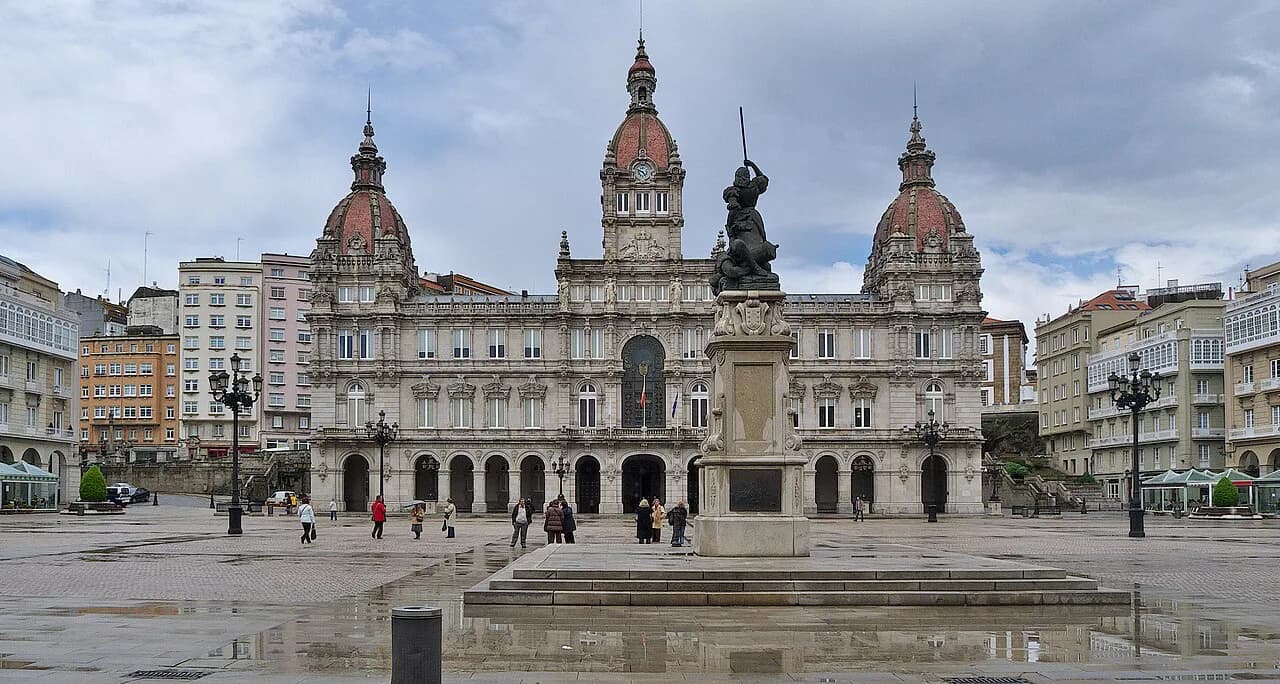
Plaza de María Pita: A Coruña's Main Square and Its Heroine

Plaza de María Pita is A Coruña's main square, and it needs less time than its size suggests: ten to fifteen minutes covers the statue, the town hall and the arcaded edges, so treat it as a waypoint rather than an afternoon out. The square earns its name from a local heroine who fought off the English in 1589, and that story is the reason the statue reads as something more than a photo stop. This guide covers where the square sits, how to walk to it, what surrounds it and how to pair it with a free museum a few streets away.
What Plaza de María Pita is and where it sits in A Coruña
Plaza de María Pita is a broad, paved civic square on the edge of the Ciudad Vieja, with the town hall on one flank and arcaded buildings enclosing the rest. It sits between the old town and the newer grid of streets, so you pass through it naturally on the way from the Ciudad Vieja towards the port and the Paseo Marítimo. The square is open and free to wander at any hour, with no gate, ticket desk or closing time.
The layout is simple: the statue stands towards the centre, the town hall dominates the north side, and the edges are lined with arcades that give shade along the ground floor. That means you can cross it in a couple of minutes, or stop at the statue and read the ensemble properly in ten. There is no ticket price for the plaza itself, because it is public street space, not a ticketed monument.

How to reach the square on foot from the old town and the port
If you start in the Ciudad Vieja, the square is a short downhill walk to the south and west, reached by coming out of the old town's lanes towards the town hall. From the port side and the waterfront promenade, come inland and uphill; the square opens out as soon as the arcades give way. A gentle stroll of a few minutes covers it either way, so it works as a link between the old town and the port rather than a separate trip.
Cruise passengers arriving at the port will find the square among the nearest sights to the terminal, so it is a sensible first or last stop before returning to the ship. Confirm your return time and the terminal gate you arrived at, because the promenade and the port area are large. Pair the square with the Ciudad Vieja lanes, which sit directly beside it and demand no transport at all.

The María Pita statue and the story of the 1589 English attack
María Pita is remembered for her part in resisting the English fleet under Francis Drake when it attacked A Coruña in 1589; the city was not taken, and her stand is the reason the square carries her name. The statue on its stone column is the visual anchor of the plaza, and knowing the date makes the figure legible rather than decorative. The city council's museum page sets out the attack and the wider Spanish-English conflict of the period.
The square became the setting for the city's August festivities, when free concerts are staged in front of the town hall. In 2026 the programme ran acts on the plaza through the first half of August, with performances listed at 22:00 on most nights and a children's show at 20:00 on one evening. Treat those 2026 dates as history now, and look to the city's own programme for what runs this year.
The buildings around the square, including the town hall
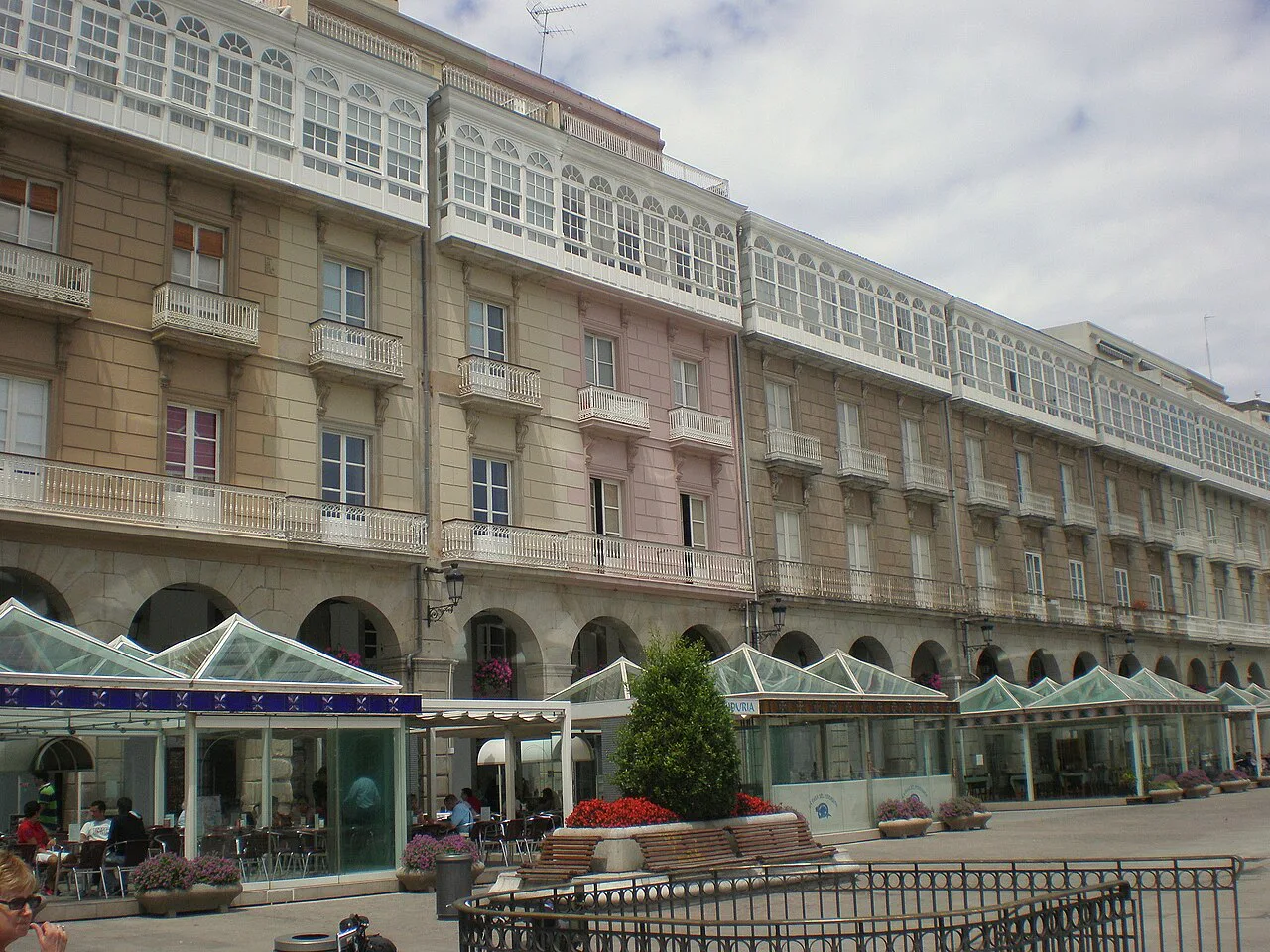
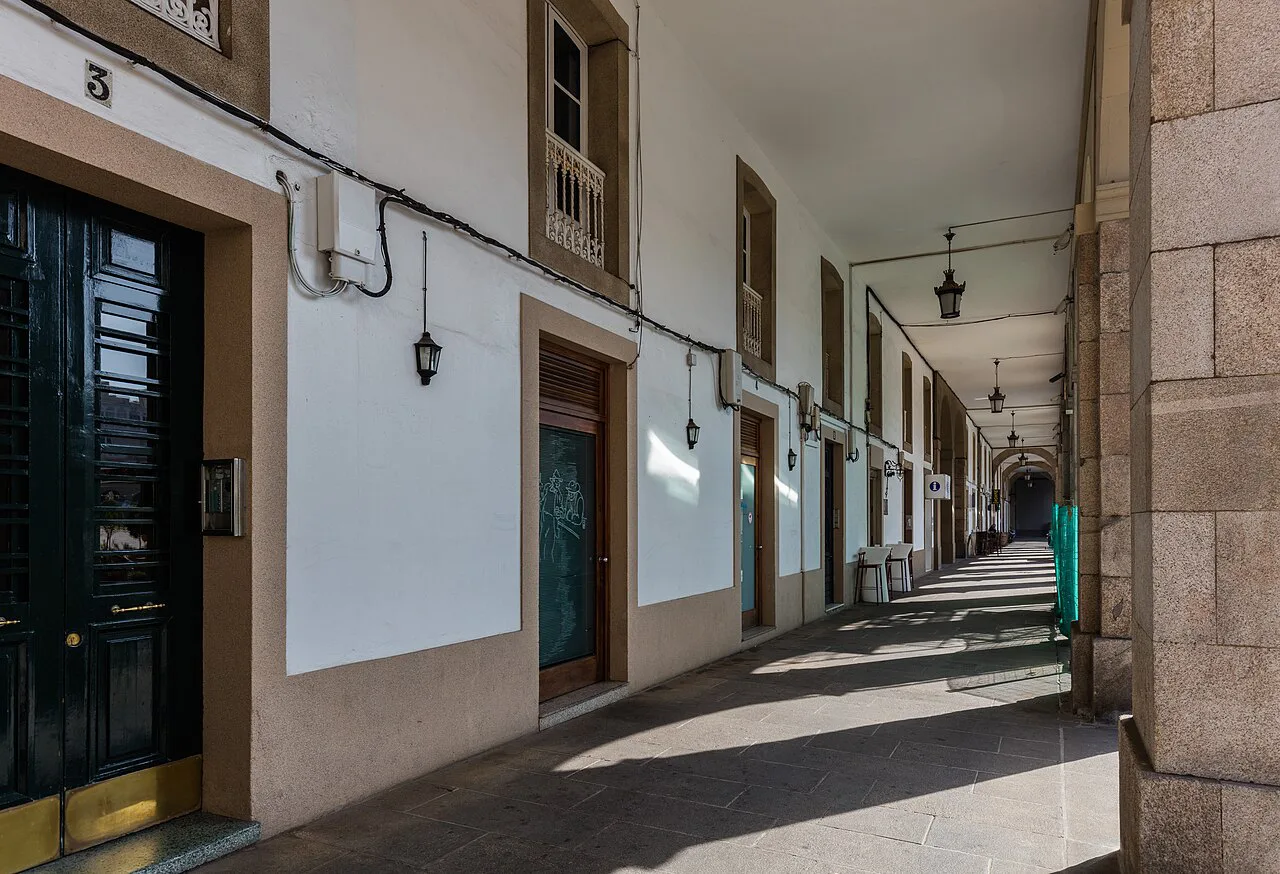
The town hall, the Concello da Coruña, forms the grandest facade, a long, arcaded building whose upper levels and windows face the open space. The arcades along the other sides shelter the pavement, and the surrounding blocks are ordinary city buildings rather than a museum set, which is why the square feels like a working civic space. Look up at the town hall's proportions and down at the paving to see how the plaza was designed to hold crowds.
Because the square is the city's focus, it hosts official events and public gatherings alongside the summer concerts, so on some days part of the space may be fenced or occupied by staging. If you want a clean photograph of the statue against the town hall, come early in the day before any set-up begins.
Casa Museo María Pita on Rúa Herrerías 28: free entry, hours and closures
The Casa Museo María Pita, at Rúa Herrerías 28, is a few minutes' walk from the square and is the place to take the heroine's story further. Entry is free, and the museum opens Tuesday to Saturday in two stretches, 10:00 to 13:00 and 17:00 to 20:00, closing on Sundays, Mondays and public holidays. A guided visit runs on the first Tuesday of each month at 19:00, with 25 places and free admission until the capacity is reached.
Inside, the ground floor reconstructs two rooms of her house, including a shop at street level and the main bedroom, and three further rooms set the city in its sixteenth- and seventeenth-century context. One room covers Galicia in those centuries, another the urban shape of A Coruña, and a third the Spanish-English confrontation behind the 1589 attack. Allow around half an hour to read it through.
The split hours matter for planning: a midday attempt will find the doors shut, so slot the museum either before lunch or in the late afternoon, and avoid Sunday and Monday entirely. Public holidays close it as well, so a Monday bank holiday costs you two possible days in one week.
How long to allow on the square and what to pair it with nearby
Budget ten to fifteen minutes for the square and half an hour for the house museum, giving a comfortable under-an-hour block if the two are done together. That makes the pair easy to bolt onto a walk through the Ciudad Vieja or a waterfront stroll rather than a half-day in itself. The museum's free entry keeps the cost of the whole stop at nothing.
West of the city centre, the Torre de Hércules is the obvious longer companion, and the Aquarium Finisterrae on the Paseo Marítimo works well for a slower afternoon with children. Both sit along the seafront rather than beside the square, so plan them as a separate leg of the day. On the headland above the port, Monte de San Pedro adds a viewpoint and a green space if the weather is clear.
Closer in, the Castillo de San Antón guards the harbour on its small island and the Domus sits on the waterfront with its interactive displays on the human body; either fits a half-day that starts at the plaza. Pick one rather than all three, because each has its own admission and its own time cost. The Ciudad Vieja's churches and squares lie immediately beside the plaza and cost nothing to look at from outside.
When crowds build up and what changes in August
For most of the year the square is busy but not crowded: locals cross it, groups photograph the statue, and there is usually room at the edges. August changes that, because the festivities bring evening concerts to the plaza and the space in front of the town hall fills ahead of the music. In 2026 the main concerts were listed at 22:00, with the crowds gathering well beforehand to secure a spot.
If you want a quiet look at the statue and the town hall, aim for a morning outside the festival weeks. If you are in the city during the celebrations, accept the noise and the crowd as the point: the concerts are free and open-air, staged in the square itself. Either way, the plaza remains a through-route, so expect people on every side.
Nearby: the Ciudad Vieja, the port and the streets around the square
The Ciudad Vieja begins immediately beside the plaza, and its network of lanes, small squares and churches is the natural next step on foot. Walk in without a fixed route and you will find the old town's scale for yourself, with cafés and shops along the way. The port lies on the other side of the square, and the waterfront promenade leads on towards the aquarium and the Torre de Hércules.
Between the plaza and the old town, the streets are compact and easy to wander, so keep the map in your pocket and let the lanes lead. This is the part of A Coruña where a short break in the city makes most sense on foot: square, old town and port sit within a few minutes of one another.
Should the plaza be your first stop in A Coruña?
Yes, as a first orientation point rather than a destination in itself: the square tells you where the old town ends, where the port begins and who the city's heroine was. Give it ten minutes, then walk into the Ciudad Vieja and finish at the free Casa Museo María Pita on Rúa Herrerías 28, checking the Tuesday-to-Saturday split hours before you set out.
Frequently Asked Questions
Do you need tickets for Plaza de María Pita?
No. The square is public street space with no gate or ticket desk, so you walk in and out freely at any hour. The statue and the town hall facade are the things to see, and both are viewed from the open plaza. The separate Casa Museo María Pita nearby is the one place to check for opening days.
Is the Casa Museo María Pita free?
Yes. Entry to the house museum on Rúa Herrerías 28 is free, and the monthly guided visit is also free, with admission until the 25 places are taken. Check the opening days before you go, since the museum closes on Sundays, Mondays and public holidays.
How far is the square from the cruise terminal?
The square is close to the port and the waterfront, so it is walkable from the terminal area without transport. Leave enough time to get back to the ship and note which gate you came through, because the port area is large and the return route is not always the same as the way in.
What happens in Plaza de María Pita in August?
The city's summer festivities bring free open-air concerts to the square, with crowds gathering in front of the town hall before the evening performances. Outside those weeks the plaza stays busy but not packed, so a morning visit gives you the clearest view of the statue.