
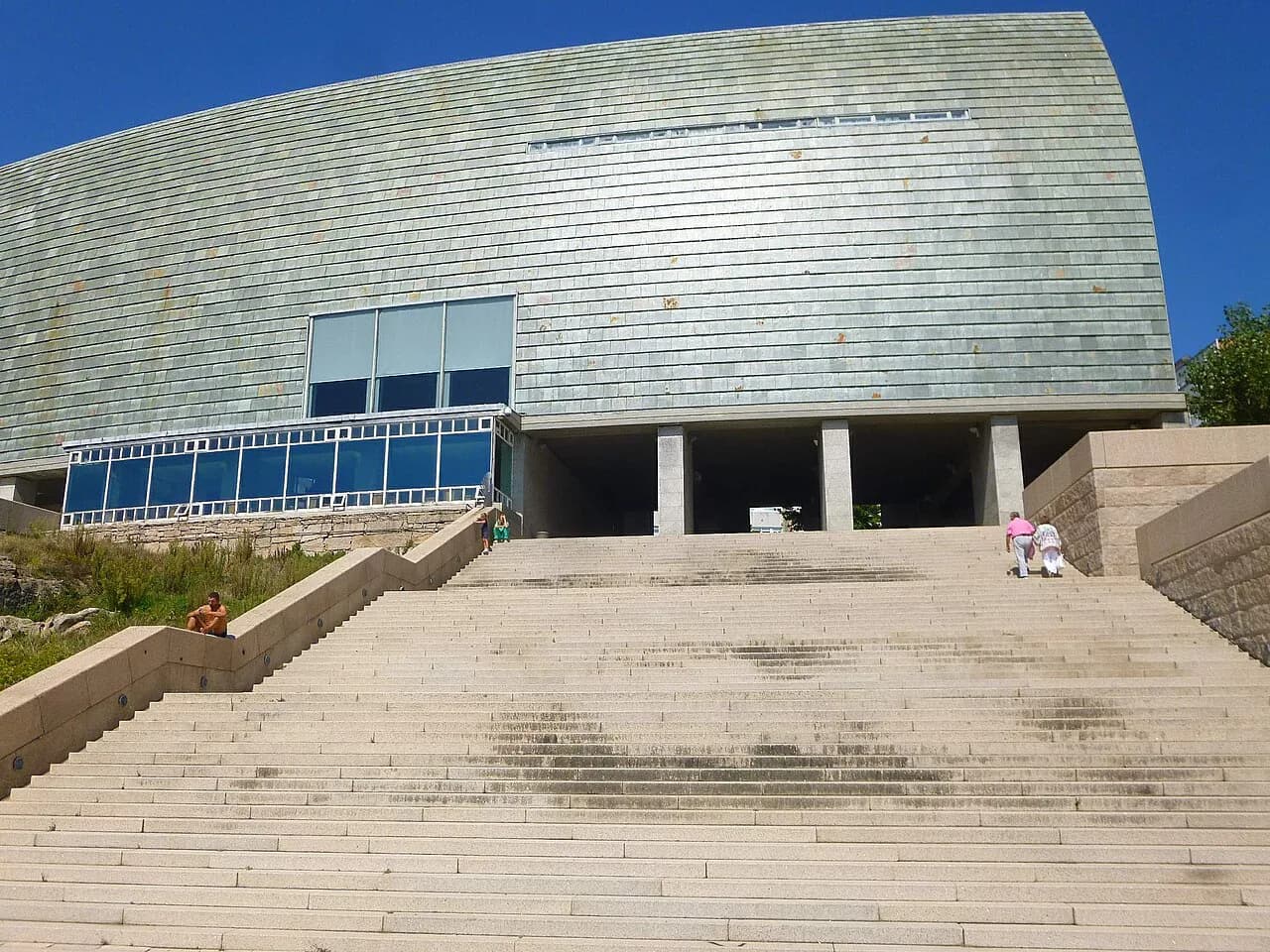
Domus, A Coruña: what to see at the Casa del Hombre

Domus is A Coruña's interactive museum about the human species, housed in an Arata Isozaki building on the Paseo Marítimo de Riazor, and an hour and a half covers it well. General admission is only a couple of euros, and the exhibits are built for pressing, measuring and testing rather than for reading labels. This guide sets out where the building sits, what the permanent exhibitions actually ask you to do, how MiniDomus works for younger children, and the hours and ticket categories that matter before you go.
What Domus is and where it sits on the Paseo Marítimo de Riazor
Domus was the first interactive museum in the world devoted entirely to the human being, and it is the second of the three Museos Científicos Coruñeses, the city council's science museums. The building is the work of the Japanese architect Arata Isozaki and contains more than 150 interactive modules. It stands at Rúa Ángel Rebollo 91 on the seafront promenade at Riazor, the long Atlantic beach that curves west of the centre.
The setting matters for planning: you reach the door from the promenade, not from the old town, so pair it with the seafront rather than with the squares and churches around María Pita. The building sits low behind its aluminium facade and is easy to walk past if you are looking for a monumental entrance.
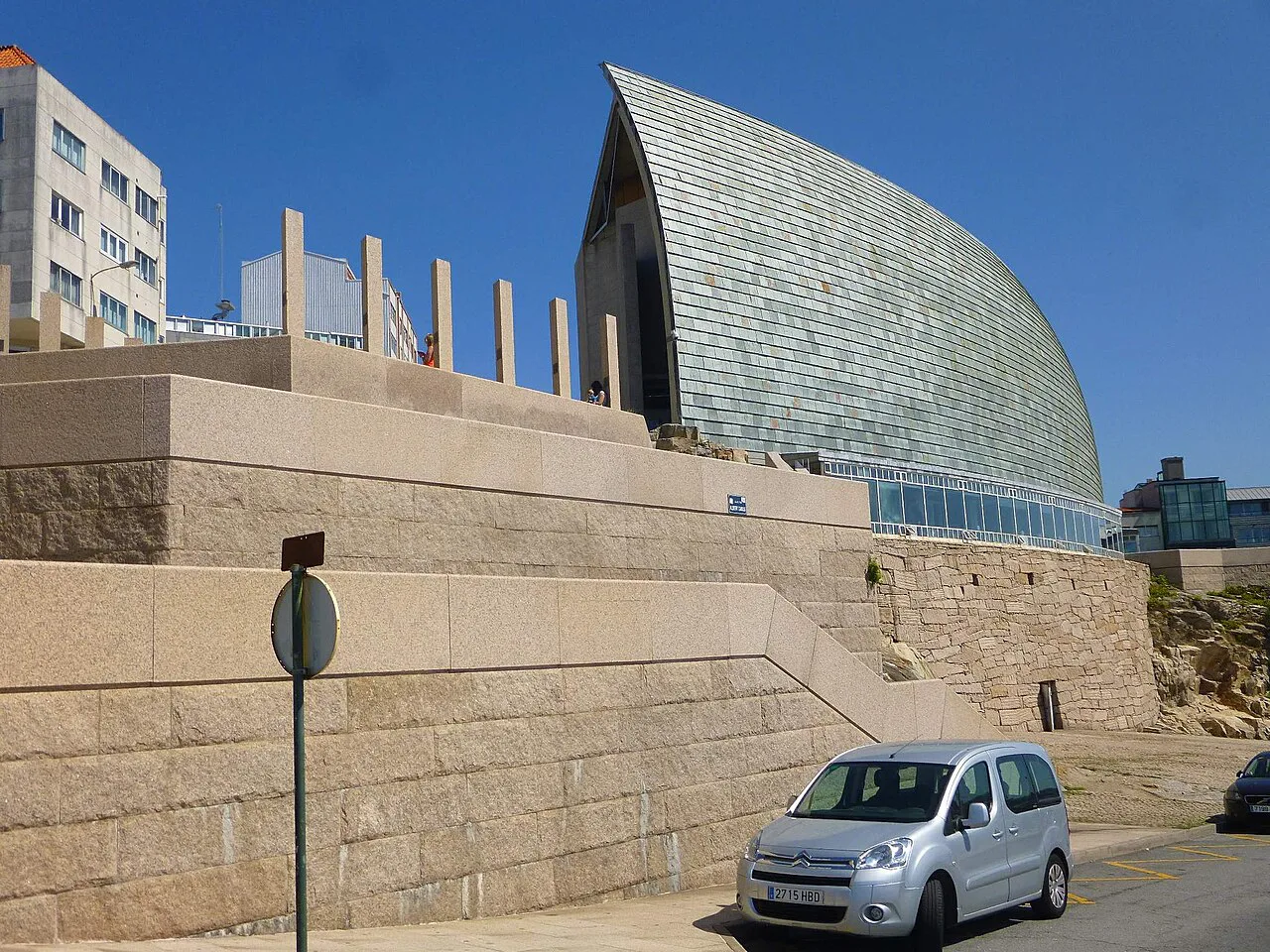

Getting to Domus: Rúa Ángel Rebollo and the seafront location
The address is Rúa Ángel Rebollo 91, 15002 A Coruña, and the museum's contact line is 981 189 840 if you need to confirm access arrangements. The simplest approach on foot is along the Paseo Marítimo from the centre, which brings you level with the building at the Riazor end of the promenade.
Travellers arriving for a short break usually come into A Coruña by train or bus and walk the city, since the museum sits within easy reach of the seafront rather than out in an industrial estate. If you are coming from further along the coast, combine the museum with the Torre de Hércules on the same seafront walk rather than crossing town twice.
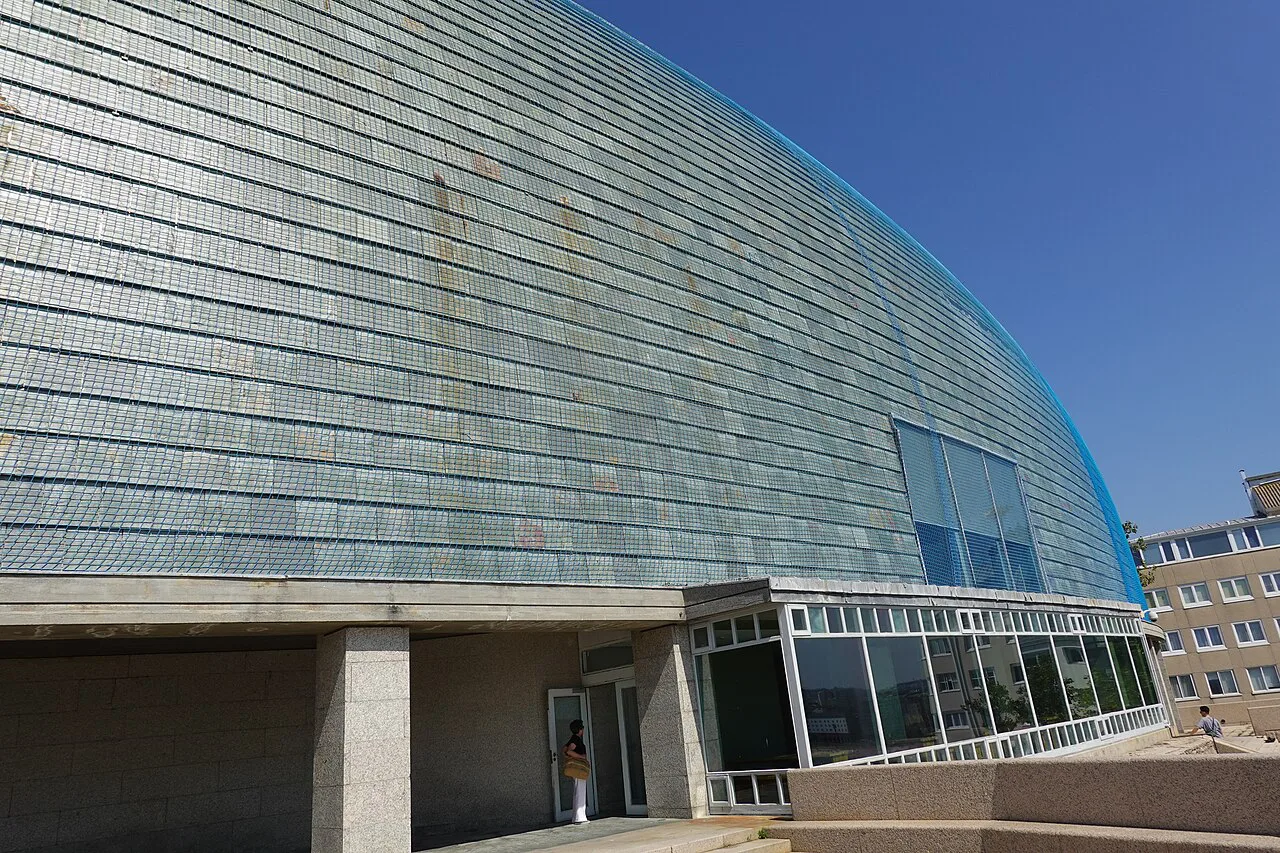

Inside the Arata Isozaki building: what you actually do
Expect to be busy rather than reverent. You test your reactions on a panel of buttons at different heights, try to relax enough to win a game that measures brain activity, draw to verbal instructions, and measure the speed of a penalty kick. There are shadows to experiment with, a family photograph with hominid ancestors, and images that are more direct than a traditional display case would allow.
That design shapes the visit: children move quickly, adults linger on a few modules, and the low ticket price makes it easy to treat Domus as a ninety-minute stop rather than a half-day. The museum is about the species, so there is no collection of local archaeology or maritime history here.
The permanent exhibitions: Bocados, Xogo de Neuronas, Xenética and Evolución
Bocados looks at nutrition and the UN Sustainable Development Goals, tying food to the push to end hunger and malnutrition by 2030. Xogo de Neuronas, or Game of Neurons, explores the anatomy and workings of the brain, and its emblematic piece is a colourful neural network built from neurons made largely by Galician schoolchildren. Xenética covers genetic engineering, why children resemble their parents, and transgenic products, with DNA models on the ground floor.
Evolución is the section to prioritise if you have limited time, because it addresses the questions most visitors actually carry in with them: when humans stopped being cannibals, whether Neanderthals could speak, and who the first European was. The displays were developed with researchers from Atapuerca and are presented as Homínidos e Homínidas, La familia fachendosa.
MiniDomus for under-sixes: capacity, supervision and the 60-minute limit
MiniDomus is a separate room for children up to six, built around play: launching cloths through air-pressure routes, light and colour, gears and pulleys, balance on angled surfaces, wheeled machines and large construction blocks. The rules are strict enough to plan around: a maximum of 30 people in the room, an adult supervising at all times, and a maximum stay of 60 minutes. Food and drink are not allowed, and materials should be put back before you leave.
On free-entry days MiniDomus requires a prior online reservation, opened from 09.00 the day before, so a family turning up on spec can be shut out of the room even though the museum itself is free. Reserve first and plan the rest of the visit around that slot.
The cinema in the Leonardo da Vinci room and what the ticket covers
The Leonardo da Vinci room screens science films on an 80 square metre screen with a digital sound system. Entry to a cinema session is free and included in the museum ticket, subject to space being available.
The 3D cinema is priced separately from general admission: the published rate for the 3D session is 4 euros, or 2 euros at the reduced rate. Treat that as a supplement on top of the two-euro museum entry rather than as part of it, and decide at the desk whether the session times fit your visit.
Tickets: general and reduced prices and who qualifies
General admission is 2 euros and the reduced rate is 1 euro. The reduced rate covers under-16s, over-65s, unemployed visitors with supporting documentation, Carné Xove holders, student card holders and members of large families, again with documentation. Tickets are bought at the Domus reception desk when you arrive, and advance online purchase currently covers the general rate only.
Reduced, free and multi-museum tickets, including the Bono 3 Casas and Tarxeta Vente cards, have to be bought at the museum reception rather than online. Entry is free for people with disabilities, children under four, accredited tourist guides working, accredited teachers, University of A Coruña students with a card, accredited journalists and members of the association of friends of the Casa das Ciencias.
Opening hours by season and the last-entry cut-off
Hours change with the season. In winter, meaning January and February, the museum opens Monday to Friday from 10.00 to 18.00 and at weekends and public holidays from 11.00 to 19.00. From March to June it opens daily from 10.00 to 19.00, in July and August from 10.00 to 20.00, and from September to December from 10.00 to 19.00.
Access closes 30 minutes before the museum does, which is the detail that catches late-afternoon visitors: arriving at 18.40 in spring gets you in for twenty minutes, not the full hour. The museum is closed on 1 and 6 January and on 25 December, and on 24 and 31 December it shuts at 14.00.
Free-entry days and the calendar to watch
The museum waives admission on A Coruña's local public holidays and during the Semana da Ciencia, which in 2026 ran from 7 to 15 November, and on the Día da Ciencia na Rúa on 9 May 2026. The 2026 municipal holidays listed for free entry were 17 February and 7 October. The city council publishes these dates year by year, so check the current calendar before planning around a free day, and remember the MiniDomus booking rule applies.
Because the museum is small and inexpensive, free days mostly matter to families heading for MiniDomus, where the 30-person capacity makes timing everything. Outside those dates, paying the standard admission is the least complicated option and saves queueing for a reservation.
How long to allow and when it is busiest
Allow around ninety minutes for the permanent exhibitions, longer if you add a cinema session, and add an hour if children are using MiniDomus. Weekday mornings in term time are the calmest stretch, while wet Atlantic afternoons and school holidays fill the interactive floors quickly because so much of the visit involves waiting for a turn at a module.
The low ticket price means there is little cost to splitting the visit: see two or three exhibitions, leave for the promenade, and come back another day if the city holds you longer. That flexibility is worth more than trying to complete every module in one push.
Nearby on the same stretch: the other science museums
Domus is one of three Museos Científicos Coruñeses run by the city council, alongside the Casa das Ciencias and the Aquarium Finisterrae. The Casa das Ciencias runs a planetarium and stages regular activities, and the Aquarium Finisterrae, the Casa de los Peixes, sits at the other end of the seafront near the Torre de Hércules.
Walking the promenade between Domus and the aquarium takes in Riazor and Orzán, and you can continue to the Monte de San Pedro park for the city's best-known viewpoint over the bay. Doing two of the three museums in a day is realistic given the low individual prices, but three is a stretch if you also want time on the beach side of the promenade.
Should Domus be on your A Coruña shortlist?
Yes, if you want an hour and a half of hands-on science at a very low price and you are already walking the Paseo Marítimo. The trade-off is that Domus is not a historic monument and has no old-town atmosphere; it is a modern, child-friendly museum that works best as part of a seafront morning.
Check the seasonal hours and the last-entry cut-off before setting out, buy general tickets at reception on the day, and reserve MiniDomus online in advance if you are visiting on a free-entry date.
Explore more A Coruña guides
Frequently Asked Questions
What does the word Domus mean?
Domus is Latin for house or home, and the museum's full name, Domus-Casa del Hombre, translates as House of Man. The name signals the subject: a museum devoted entirely to the human species rather than to art or local history.
Is there an old town in A Coruña?
Yes. The historic centre around the Plaza de María Pita and the streets behind the harbour is the old town, and it is a separate outing from Domus, which sits on the seafront at Riazor. Allow time to walk between the two rather than expecting them to be adjacent.
Why is A Coruña famous?
A Coruña is known for its Roman lighthouse, the Torre de Hércules, for its Atlantic promenade, and for its glass-fronted galerías facing the harbour. Domus belongs to the city's science museums rather than to that historic set, so treat it as an addition to a short break built around the old town and the seafront.