
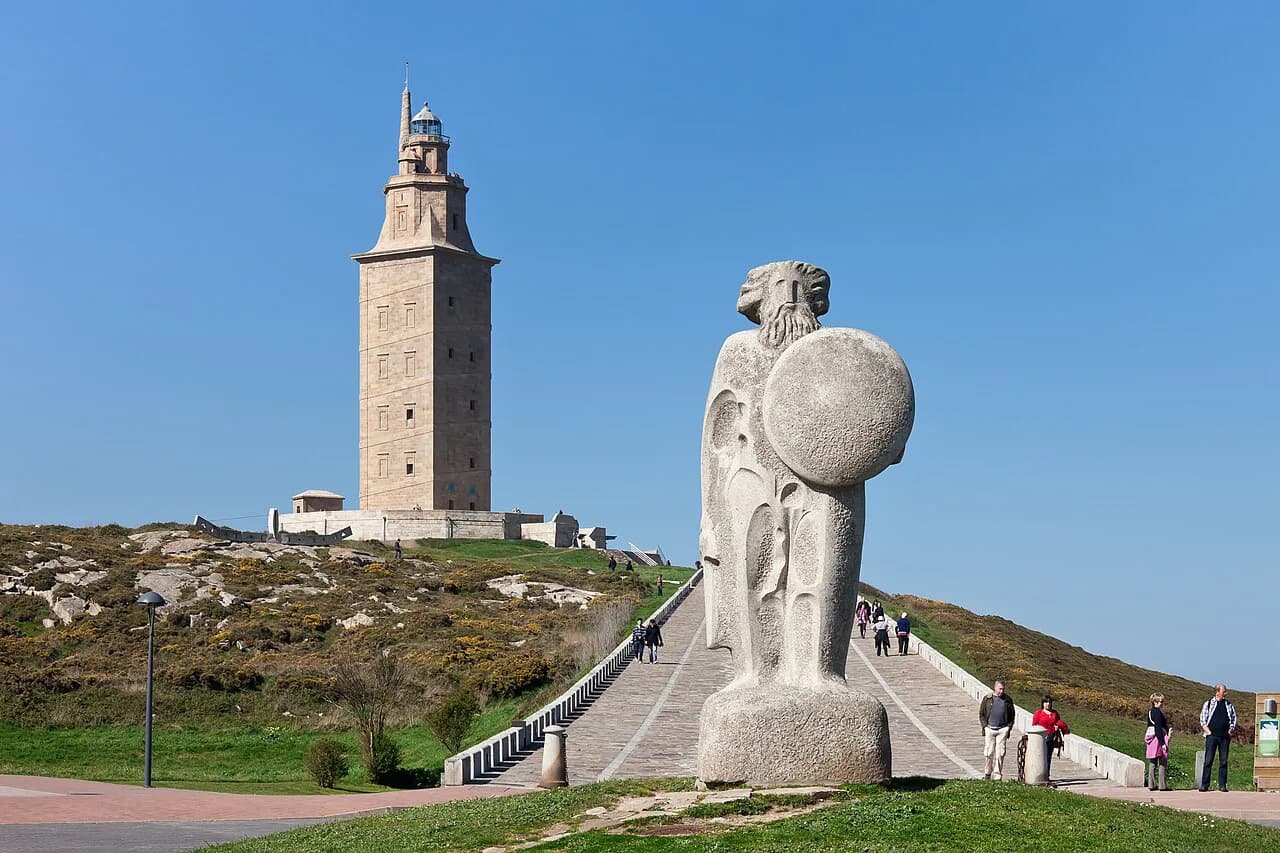
Torre de Hércules: the Roman lighthouse at A Coruña

The Torre de Hércules is the only Roman lighthouse in the world still standing and still operating, which is the reason the headland it occupies is worth a half-day of any break in A Coruña. The tower is a working maritime signal, not a ruin behind glass, and its outstanding universal value as a World Heritage site rests on that unbroken two-thousand-year record of light. This guide covers the climb when the interior is open, the sculpture park on the headland, the CIAV visitor centre, time needed and how the site fits the rest of the city.
What the Torre de Hércules is and why it matters
The lighthouse began as a Roman structure and has been altered, restored and re-lit across nearly two thousand years; the city council presents it as a model example of architectural intervention on an ancient monument rather than a frozen antique. It still flashes today as a maritime signal: a white light with a range of 23 nautical miles, on a 20-second cycle in a four-flash grouping. That combination of Roman origin and live navigational duty is what makes it unlike any other lighthouse in Spain.
The Hercules connection is legendary rather than archaeological. The name and the legends attached to the headland are the stuff of myth and map-making, not evidence of a temple on the spot. Treat the stories as atmosphere while you walk the headland, and put your attention on the masonry, the restoration history and the light mechanism inside.
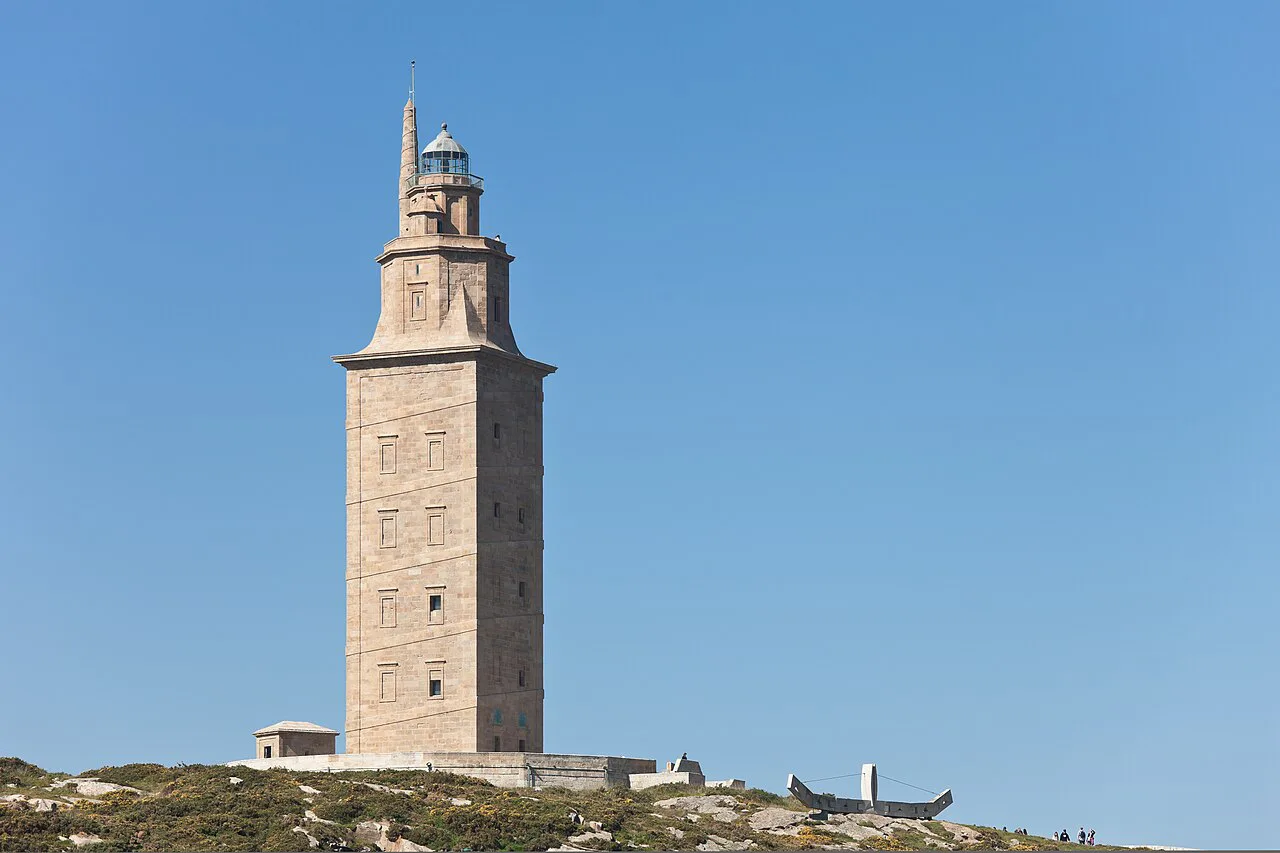

Where it stands in A Coruña and how to reach it
The tower sits on a headland north of the city centre, beyond the older town and out towards the Atlantic, with the sculpture park and coastal paths spread across the same promontory. It works as a walkable outing from the centre along the seafront rather than a trip to an isolated monument, and the final approach is exposed to wind and salt spray even on bright days. Wear shoes you can walk in and carry a layer you can pull on at the top.
Public buses run towards the tower and its surrounding park, and the city publishes routes and stops through its transport pages; check the current line and stop before setting out rather than relying on memory of a map. Taxis and the coastal promenade are the other practical options, and walking the seafront gives you the headland in stages. Once on site, everything except the tower interior is outside, so the visit is weather-dependent in a way that a museum is not.
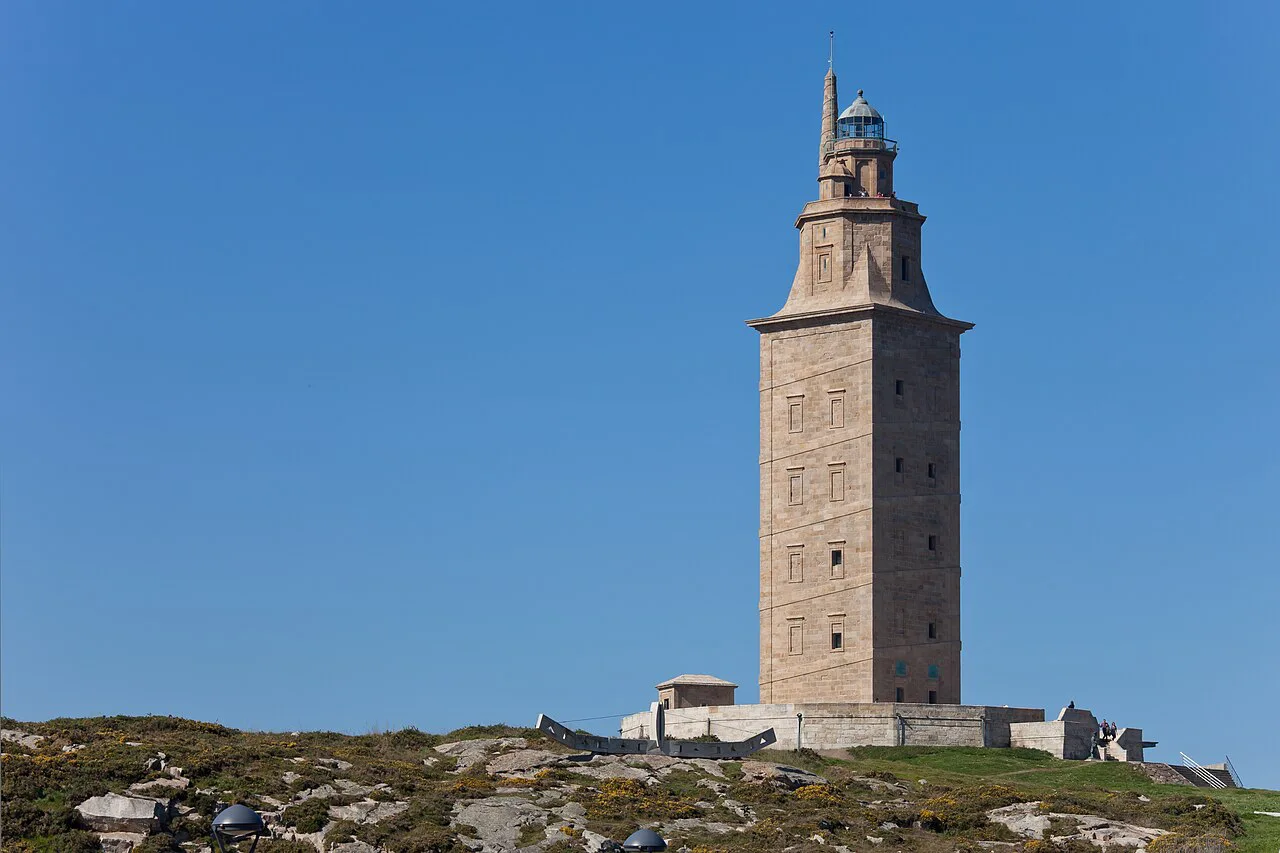

Climbing the tower: what is inside
When the interior is open, the visit is about the structure itself: the Roman core, the later casing and the staircase that lifts you through the building to the lantern and the view. The council outlines the interior and the restoration phases in its own account of the monument, which is the best preparation before you climb. Allow time at the top for the Atlantic view along the coast rather than treating the ascent as a box to tick.
Because the tower is a live light rather than a museum piece, access can be interrupted for works. The council posts closure notices on the monument's own site; one such notice closed the tower from 1 October to 15 November for improvements to the electrical installation, directing visitors to the CIAV for information. Check the council's news page in the days before you travel, especially if climbing the tower is the main reason for your stop.
The sculpture park around the tower
The headland around the tower holds a sculpture park, with named pieces set among the rocks and grass rather than gathered in a formal gallery. The council lists the individual works, including the Ara Solis, Breogán, the Compass Rose, the Stone Ship, the Hydra of Lerna and the Petroglyphs, so you can hunt them out as landmarks on the circuit. This is where much of a visit is spent, and where the Atlantic setting does most of the work.
Allow a proper loop of the park rather than a dash from the car park to the tower door; the pieces are spread out and the cliff paths give you different angles on the lighthouse. The most photographed sculptures, such as the Ara Solis and the Compass Rose, pull small crowds at peak times, so start at the far end and work back towards the tower. The wind is stronger than in the city centre, and the ground is uneven in places.
The visitor centre (CIAV) and what it covers
The Centro de Interpretación y Atención de Visitantes, known as the CIAV, is the interpretation and information point for the monument and its surroundings, and the council directs visitors there when the tower itself is closed. Use it first if you want context on the Roman construction, the legends and the restoration work before walking the headland. It also functions as the practical fallback when access to the tower is interrupted, which matters on a short break with limited slack.
The monument's own site includes sections on guided tours and a virtual visit, useful if you want a structured explanation or if the climb is not for you. Check that site for current arrangements before you build the day around a tour slot.
How long to allow and when to go
Two to three hours covers the tower climb when it is open, the visitor centre and a full circuit of the sculpture park without rushing; a quick photo stop at the tower door needs far less and misses the point of the headland. Mornings tend to be calmer, and the light is better for the coastline rather than shooting into it. The site is exposed, so an overcast or windy day is comfortable for walking but poor for the view from the lantern.
A Coruña's weather is Atlantic, not Mediterranean, so plan the headland for a dry slot and keep a museum or the old town as the fallback. The city's other attractions, from the aquarium Finisterrae to the old town and the castle, sit within the same short-break circuit and can absorb a wet afternoon. The city's attraction guides set out the options if you need to reshuffle.
Tickets, opening times and closures
Ticket prices, opening hours and free-entry days change, and the monument publishes them on its prices and opening times page together with online booking; check that page before you travel rather than relying on an old figure. The council also posts temporary closures and works on the same site, which is where the autumn shutdown appeared. The sculpture park and headland paths are outdoors and do not depend on the tower's opening.
Any free-entry days or reduced rates are set by the monument rather than fixed permanently, so treat a free slot as specific to the year and check the current position before you rely on it.
Nearby on the same outing
The Aquarium Finisterrae, the Casa de los Peixes, sits on the same coastal stretch and pairs naturally with the tower for a half-day outdoors and a half-day indoors. It is a good choice when the wind picks up or when travelling with people who want something other than masonry and cliffs.
Further round the bay, the Parque Municipal del Monte de San Pedro offers a contrasting viewpoint over the city and the Atlantic, with its own green space and lookout. It suits a slow afternoon after the tower rather than a same-morning add-on, since you want to spread the walking.
Back in the centre, the Plaza de María Pita anchors the old town and gives you a base for the castle and the shopping streets around it. The Castillo de San Antón, now a museum, is the other short-break must if you want a second historic site within walking distance of the centre.
If the tower is closed for works, the CIAV and the sculpture park still justify the walk, and the headland remains one of the standout outdoor hours in the city. A virtual visit listed on the monument's site can stand in for the climb when the interior is out of bounds.
Build the headland into your A Coruña day
Treat the Torre de Hércules as a half-day on the headland rather than a quick monument stop: climb the tower, walk the sculpture circuit and use the CIAV for context. Check the prices and opening times page and the council's news for works before you fix the day, then keep the aquarium or the old town as your weather fallback.
Explore more A Coruña guides
Frequently Asked Questions
What is the oldest lighthouse in the world still in use?
The Torre de Hércules in A Coruña is the only Roman lighthouse in the world still standing and still operating as a maritime signal. Its white light has a range of 23 nautical miles and runs on a 20-second cycle.
Where is the Temple of Hercules?
The Torre de Hércules carries the name through the legend and mythology attached to the headland rather than through an excavated temple on the site. Check the monument's own pages for how the legends relate to the tower.
Is the sculpture park at the tower free to visit?
The sculpture park and headland paths are outdoors, so walking the circuit does not depend on the tower's opening. Check the monument's prices and opening times page for the tower itself and for any temporary closure.
Is the tower always open to climb?
No. Because it is a live working light, access can be interrupted for works; the council has closed it for electrical improvements and directed visitors to the CIAV. Check the council's news page on the monument's site before travelling if the climb matters to you.
How do I get to the Torre de Hércules from A Coruña city centre?
The tower sits on a headland north of the centre and can be reached on foot along the seafront, by public bus or by taxi. Check the current bus line and stop through the city's transport pages before setting out.