
Aquarium Finisterrae: a visitor's guide to A Coruña's Casa dos Peixes

Allow about two hours for the Aquarium Finisterrae's exhibition rooms, and add another thirty to fifty minutes if you take in a cinema session in Magnavisión. The aquarium is the marine member of A Coruña's three Museos Científicos Coruñeses, alongside the Casa das Ciencias and the Domus, and it occupies a stretch of coastline at the foot of the Torre de Hércules. Plan it as one focused visit, then use the seafront path to link it with the lighthouse hill.
This guide follows the building as you move through it: the Maremagnum gallery, the circular Nautilus room, and the intertidal pools outside, where the Atlantic tide decides what you see. It also covers the coastal approach on foot and how the aquarium slots into a short break in A Coruña.
What the Aquarium Finisterrae is and where it sits
The Aquarium Finisterrae, known locally as the Casa dos Peixes (Casa de los Peces in Spanish), is one of three interactive science museums run by the city council under the Museos Científicos Coruñeses banner. The other two are the Casa das Ciencias, with its planetarium, and the Domus. Tanks, interactive displays, outdoor pools and a small cinema do the work rather than staged shows.
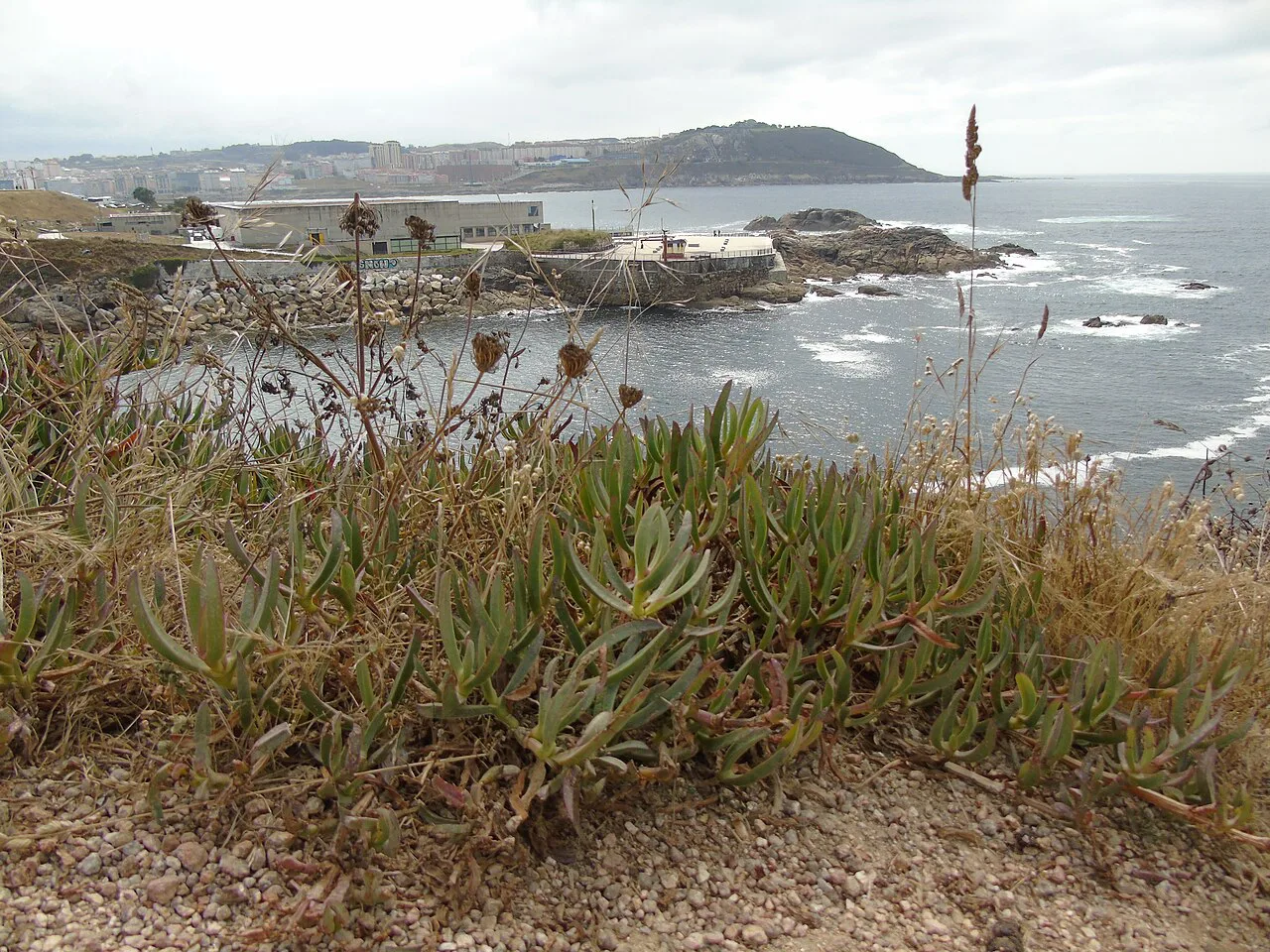
Its position is the first thing to understand when planning. The building stands on the coast immediately beside the Torre de Hércules, so the aquarium and the lighthouse share one headland. You can arrive by the seafront promenade, work through the aquarium, then climb to the lighthouse without returning to the centre.
Because the site faces open Atlantic water, part of the experience is outdoors. The exterior pools sit on the rocks and rise and fall with the tide, so what you find in them changes across the day. Treat the aquarium as a coastal visit with indoor and outdoor halves, and dress for wind and spray even on a bright day.

How to get there along the paseo marítimo
The most rewarding approach is on foot along the paseo marítimo, the promenade that wraps around A Coruña's waterfront. Follow it westwards and the Torre de Hércules rises ahead on its hill, with the aquarium tucked at its base almost at the waterline. Allow a margin for the exposed stretches, where Atlantic wind makes the walk feel longer.
If you are combining the two sights, do the aquarium first and the lighthouse afterwards, since the tower involves a climb and the aquarium is largely indoors. The two share the same headland, so there is no second journey between them. From the city centre, buses and taxis serve the Torre de Hércules area, and the promenade route is the one to take if the weather holds.
The Maremagnum gallery: tides and marine life up close
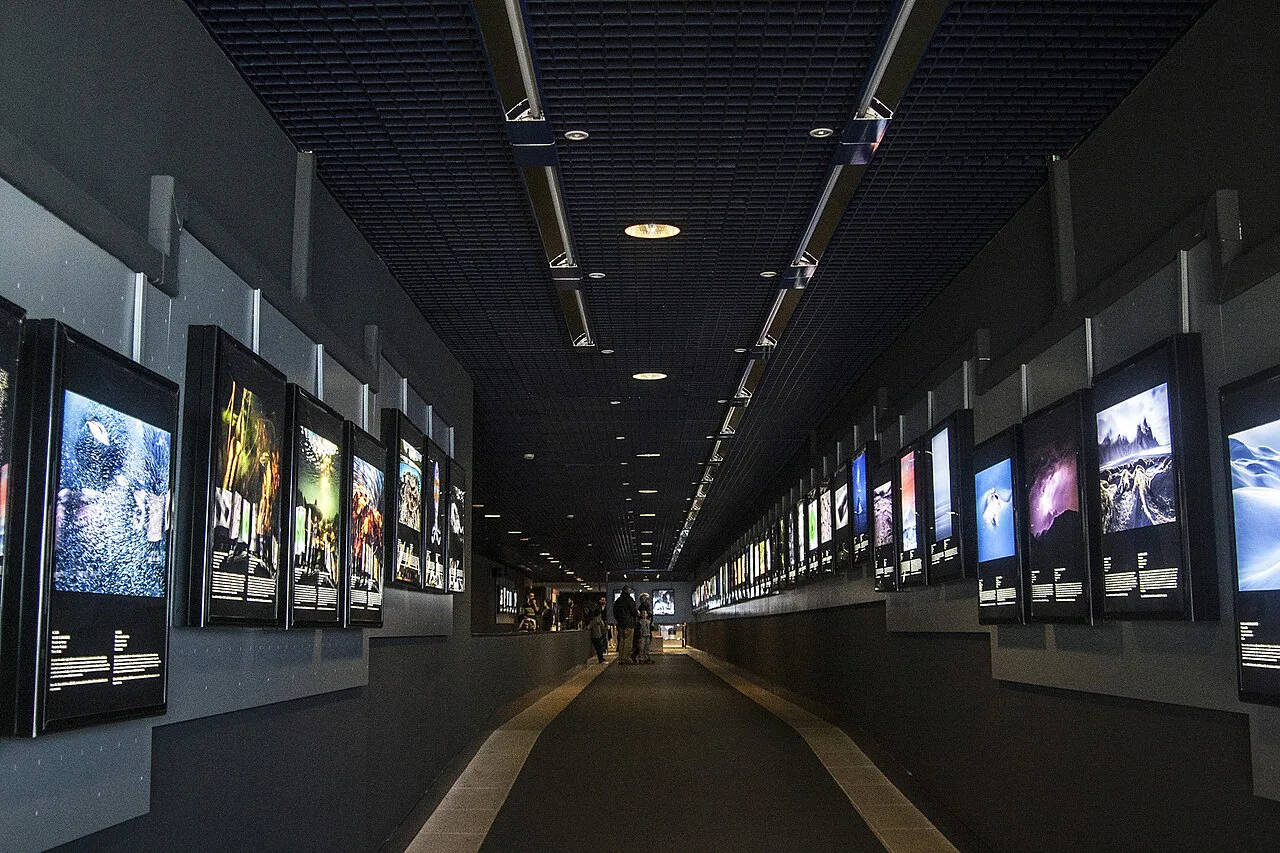
Maremagnum is the aquarium's interactive introduction, a bright room of screens, games and displays built around the sea, its tides and the species that live in it. The tone is explanatory rather than theatrical, which suits adults and children who want to understand what they are about to see in the tanks. Give it twenty to thirty minutes if you read the panels, less if you skim.
This room sets up the rest of the visit, so resist the urge to rush towards the big tank. The tide explains the outdoor pools later on, and the species displays make the Nautilus room easier to read. With children, this is where they can press, turn and experiment before the quieter, darker spaces.
The Nautilus room: sharks and rays in a Nemo-inspired space
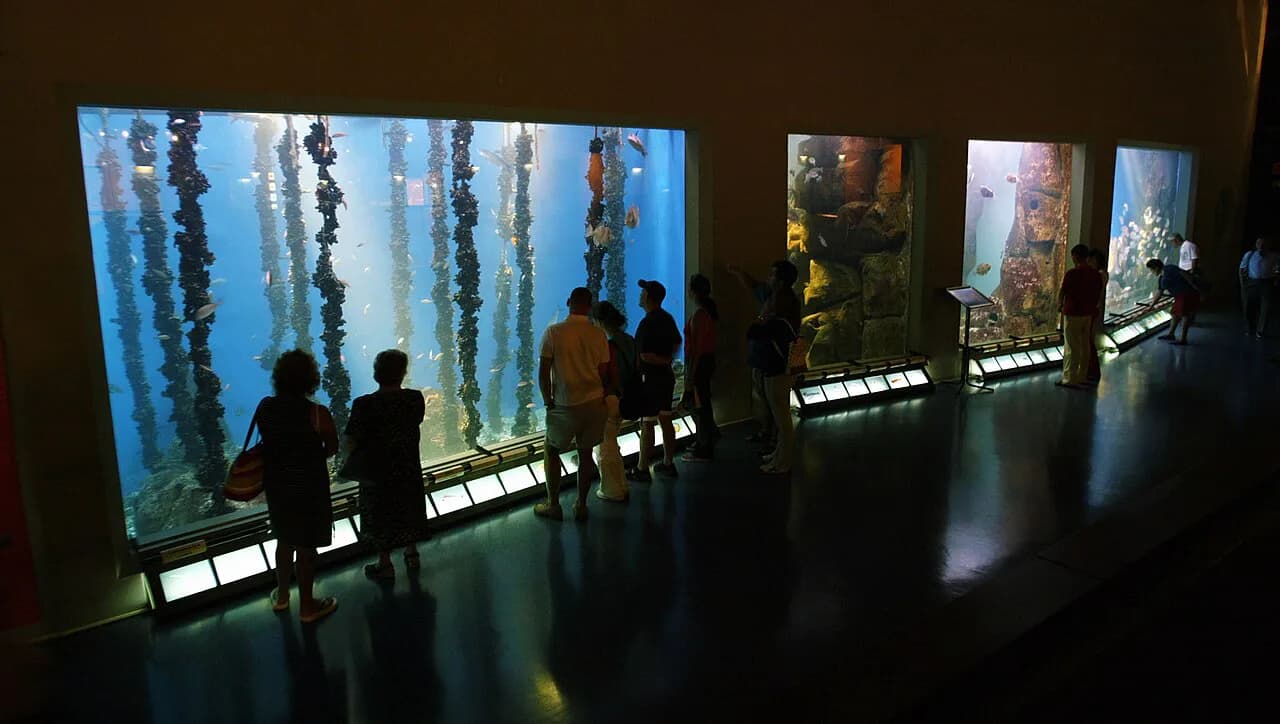
The Nautilus room is the heart of the visit: a circular chamber lined with wood and bronze, built as a nod to Captain Nemo's submarine in Jules Verne's Twenty Thousand Leagues Under the Sea. In the centre stands a large cylindrical tank where sharks, rays and silvery shoals circle in blue light. Descend the stair into it and the daylight fades behind you, which is precisely the effect the designers wanted.
There are seats around the tank, and the room rewards sitting still rather than passing through. The lighting is dim, the water is the main source of colour, and the movement of the animals does the rest. Twenty minutes here is not wasted.
The outdoor intertidal pools
Outside the building, intertidal pools sit on the rock, where sea urchins, starfish and limpets live in water that the tide fills and empties. These are not formal exhibits behind glass: they are a slice of the Galician shore, and the tide dictates how much of it you can see. Go outside before you leave the site, because it is easy to forget the outdoor half once you are inside.
The pools sit on open Atlantic rock, so wind, spray and wet surfaces are part of the deal. Keep an eye on children near the edge and wear shoes with grip. If the weather turns, the indoor rooms still carry the visit and the pools become a brief look rather than a slow examination.
How long to allow
The official guidance is clear: the Aquarium Finisterrae's exhibition rooms take about two hours on average, against around one hour for the Casa das Ciencias rooms and ninety minutes for the Domus. Planetarium programmes at the Casa das Ciencias and cinema sessions in the Domus's Magnavisión last between thirty and fifty minutes, so add that on top if you book one.
In practice, two hours suits a settled visit: Maremagnum, the Nautilus room, the pools and a wander past the smaller tanks. Families with small children often stretch it, while adults moving briskly finish sooner. If you want more than one of the three science museums, spread them across separate slots rather than chaining them in a single morning, and note that the Domus, A Coruña sits a walk away rather than on the same headland.
The cinema sessions are in the Domus's Magnavisión room rather than the aquarium, so treat them as a separate stop elsewhere in the city. A thirty-to-fifty-minute film fits neatly into a visit to the Domus and gives you a reason to sit down before walking back.

Tickets, opening hours and museum FAQs
Admission prices, opening hours and any free-entry slots are set by the Museos Científicos Coruñeses and published on the council's museum pages, which list schedules and prices for the Casa das Ciencias, the Domus and the Aquarium Finisterrae. The same pages answer the common questions about combined tickets, group rates and student reductions. Buy online where the option exists to avoid the ticket desk on busy days.
The museums' own FAQ pages address discounts for visiting more than one centre and whether groups and students pay less. Check those pages, or ask at the desk, if you plan to add the Domus or the Casa das Ciencias, since the arrangement shapes how you order the day. Opening times can vary by season, so confirm the day you intend to go.
What is nearby: the Torre de Hércules and the coast
The Torre de Hércules is the obvious companion, a Roman lighthouse still in use and the symbol of the city, standing on the same headland as the aquarium. Climb it after the aquarium for views along the Atlantic coast, or walk the surrounding path if the tower is busy. The pairing turns a two-hour visit into a half-day on the western edge of A Coruña.
Further along the coast, Monte de San Pedro, A Coruña offers a different kind of viewpoint, with hillside gardens and an outlook over the harbour and the open sea. It is a separate outing rather than a walk from the aquarium, but it fits a stay built around the city's coastal sights.
Back in the centre, the Plaza de María Pita is the city's civic heart, framed by the town hall and ringed by arcaded streets. Pair it with the Castillo de San Antón, the small fortress on the harbour that now houses archaeological collections. Both are a world away from the windswept headland.
Trade-offs to weigh before you go
The first trade-off is the setting: this is an Atlantic coast, not a covered theme park, and the outdoor pools and walkways are exposed to wind and rain. A grey day still works if you take the indoor rooms first and treat the pools as a bonus. The second is timing, since school groups use the science museums through the year and weekday mornings in term time can be livelier than afternoons.
The third is depth against breadth. Two hours at the aquarium plus the Torre de Hércules makes a satisfying half-day, but adding the Domus or the Castillo de San Antón in the same stretch pushes you towards a rushed circuit. Choose one companion sight and give it room.
Bookable extras change the shape of the day as well. Seal sessions and aquarium backstage activities run on set dates and need reserving through the museum's activity listings, separate from general admission.
Should the aquarium anchor your A Coruña half-day?
Yes, if you want one compact, well-run attraction that pairs naturally with the Torre de Hércules. Two hours in the exhibition rooms, a film if you fancy it, and a walk along the promenade gives you the western headland without overfilling the day. The Atlantic setting is part of the appeal, so accept the weather as part of the ticket.
Build the rest of the day around the lighthouse and the coast path, and confirm the day's hours and admission on the museum site before setting out.
Frequently Asked Questions
How much is the aquarium in A Coruña?
Admission is set by the Museos Científicos Coruñeses and published on the council's museum pages, along with any combined ticket for the Casa das Ciencias and the Domus. Check the official site for the current rate before you travel.
Can you buy Aquarium Finisterrae tickets online?
The museum sets out its booking arrangements on the Museos Científicos Coruñeses website, including online purchase where available and separate booking for special activities. Check there before your visit, particularly for weekends and school holidays.
Is the Aquarium Finisterrae worth visiting?
It is a focused science museum with a strong centrepiece in the Nautilus tank and a genuine outdoor element in the tide pools. Its position beside the Torre de Hércules makes it an efficient half-day rather than a standalone trip across the city.