Lugo Roman Walls: Walking the Complete Circuit
Lugo's Roman walls form the only complete circuit of their kind in the world. Here is how to walk them, which gates to use, and what lies inside.
On this page
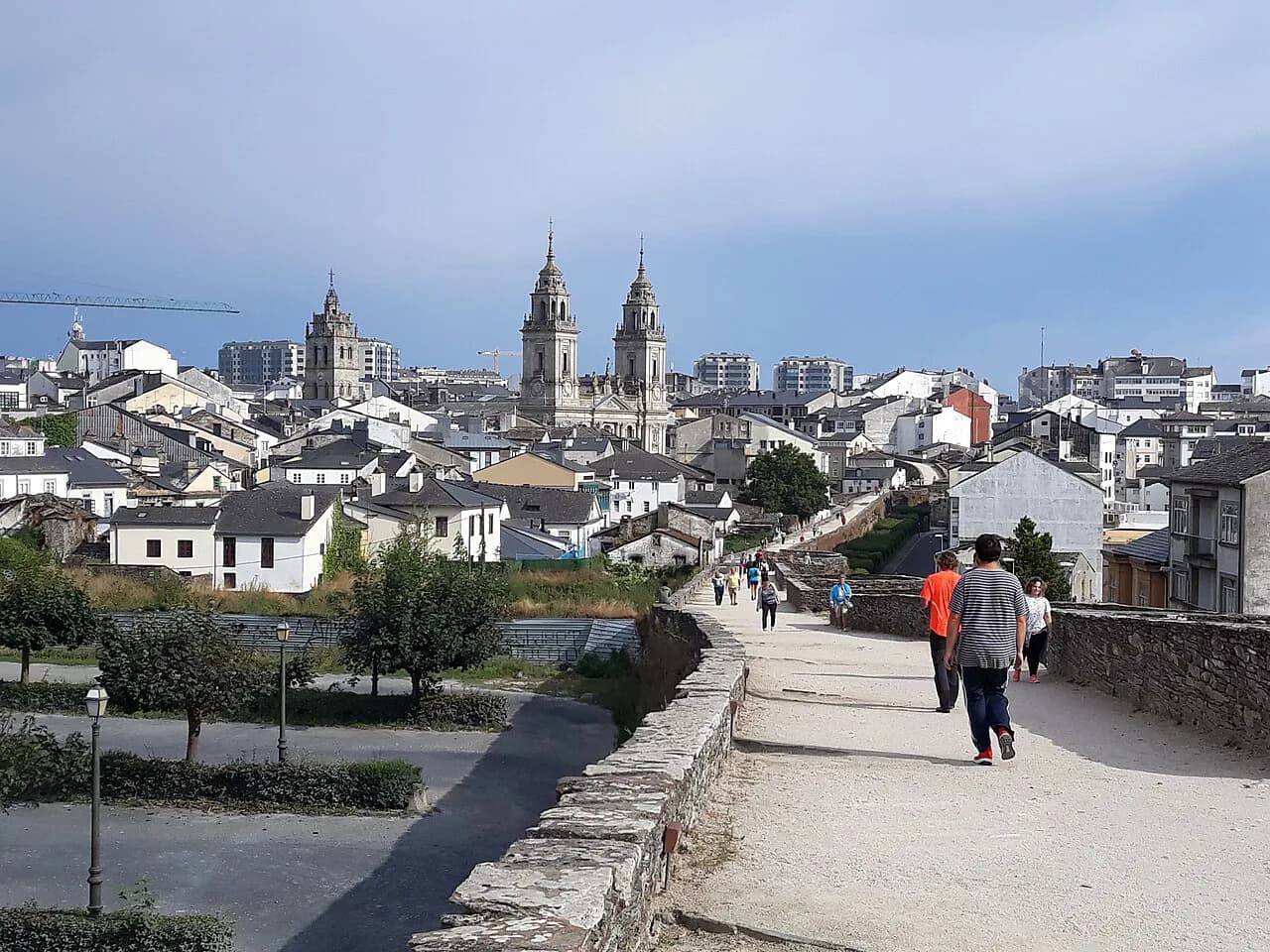
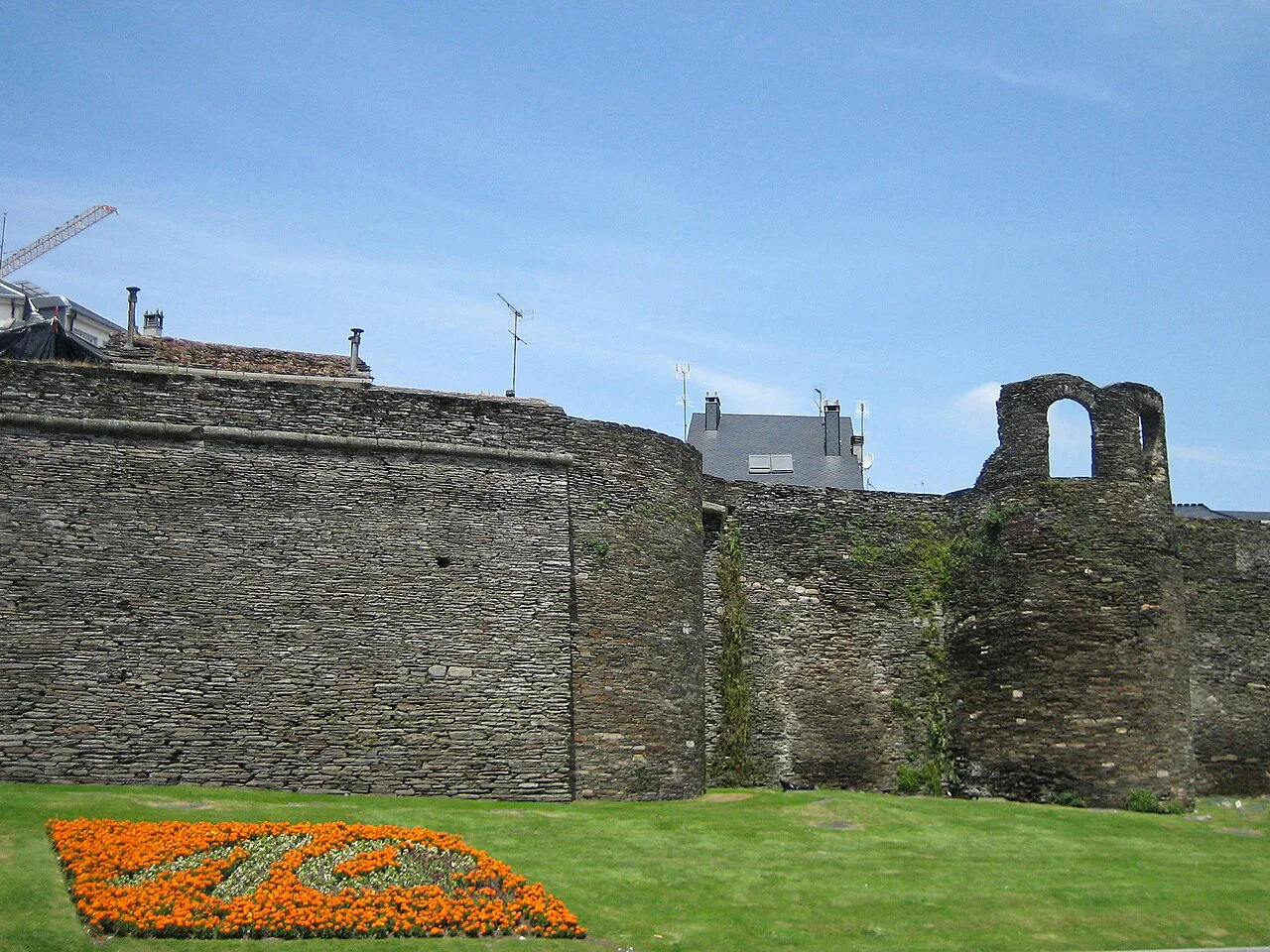
Lugo's Roman walls are the only complete circuit of their kind in the world, and the entire ring is a UNESCO World Heritage Site. That completeness is the reason to come: you can walk the full loop on top of the ramparts rather than inspect a fragment. This guide covers the gates, the old town inside the ring, the free interpretation centre and how to fit the walk into a break in Galicia.
Lugo sits inland in Galicia, within reach of A Coruña and the wider region covered in our things to do in A Coruña guide. Treat the wall as a proper walk of an hour or so rather than a photo stop, then give the old town its own time afterwards.
What the Lugo Roman walls are and why they are a World Heritage Site
The walls are the Roman defensive circuit that still encircles Lugo's historic centre, and Turismo de Galicia lists them among Galicia's standout monuments alongside Santiago's cathedral and the Tower of Hercules. What sets them apart is that the ring survives intact, so the walk on top runs continuously around the city rather than breaking at gaps.
Lugo is also on the Camino de Santiago, and the old town inside the walls has a Camino interpretation centre of its own near Praza do Campo. If you are combining Galicia stops, the wall works as a half-day in Lugo that pairs naturally with time in the Ciudad Vieja of A Coruña.
How long the circuit takes and where to get on
Plan on a leisurely loop of the ramparts, allowing extra time for stops at the views down into the streets and courtyards. Access points sit at several gates and stairways around the ring, so you can join near wherever you arrive and leave at a different gate rather than retracing your steps.
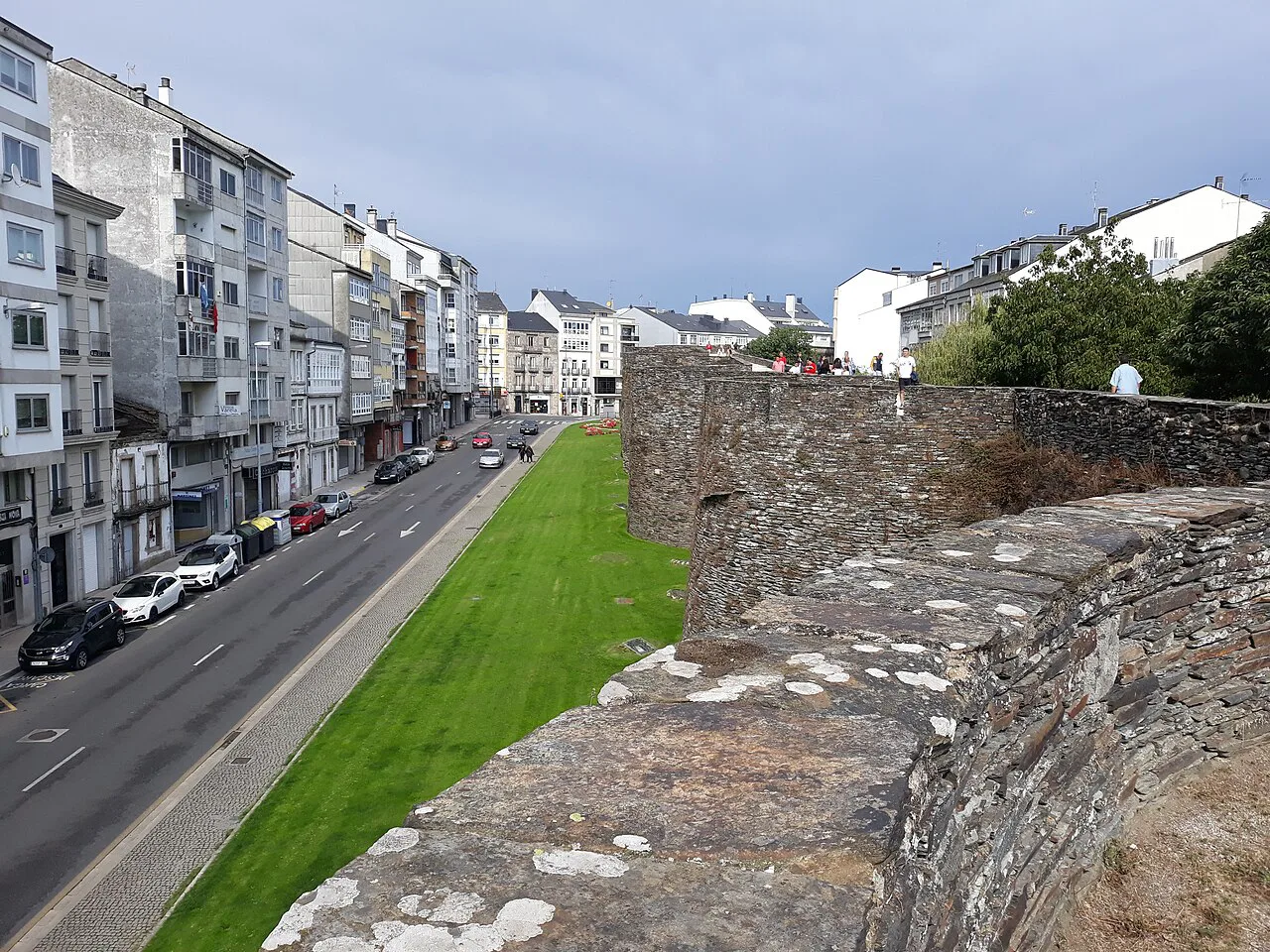
The walkway runs along the top of the ramparts and is exposed, so bring a waterproof jacket in wet weather; Lugo's rain is frequent for much of the year.
Which gates to use: Porta Nova, Porta de San Fernando, Porta Falsa and the rest
Porta Nova is a convenient starting point, with an access stair close to it, and Praza de Ferrol near the Porta de San Fernando and Porta Falsa makes another sensible entry if you arrive by car. Praza de Ferrol also holds two notable buildings, the church of San Froilán and the Cuartel de San Fernando.
Inside the gates the street pattern is compact and easy to grasp: from Praza de Ferrol you can follow Rúa de San Marcos past the Pazo de San Marcos towards Praza de Santo Domingo, then take the commercial Rúa da Raíña to Praza Maior. Using the gates as anchors keeps you oriented without a guide.
What you see from the top: the old town and the cathedral
From the ramparts you look down over roofs, small plazas and courtyards, with the cathedral standing out above the surrounding buildings. The height also makes clear how tightly the historic centre fits inside the ring, which is short enough to lose your sense of being within a walled town once you are down in the streets.
Views back towards the wall itself are best from inside the old town, particularly from Rúa de San Pedro and the area behind the Ayuntamiento. Walking the circuit first and then descending gives you both perspectives on the same monument.
Walking the old town inside the walls: Praza Maior, Praza do Campo and Rúa da Raíña
Praza Maior is the natural centre of the old town, with the Ayuntamiento on one side and the Círculo das Artes, which holds remains of a Roman temple, in a distinctive green building on a corner. A bronze sculpture of the founders, the emperor Augustus and Paulo Fabio Máximo, stands in front of it.
Praza do Campo, reached by Rúa do Miño from the cathedral side, holds the municipal tourist office and the wall interpretation centre, and the surrounding lanes are dense with small bars and restaurants. Coming off the wall here puts you at the practical hub of the visit.
If you are weighing up Galicia's two main city breaks, our guide to things to do in Vigo covers the Atlantic-facing alternative, from the Casco Vello to Porta do Sol. Lugo's appeal is different: a Roman circuit and a cathedral town rather than a port.
The cathedral of Santa María and its Romanesque, Gothic and Baroque layers
Lugo's cathedral mixes Romanesque, Gothic and Baroque work in a single building, and it sits beside the episcopal palace behind the Plaza de Santa María. Approach it from Praza Maior after descending from the wall, and check the posted timetable at the door for visiting hours and any restrictions around services.
The Domus del Mitreo, with remains of a Roman house and a temple to the god Mithras, stands in the same area near the cathedral. Treat the cathedral and the Roman remains as one cluster so you are not crossing the old town twice.
The Centro de Interpretación da Muralla on Praza do Campo: free entry and what it explains
The Centro de Interpretación da Muralla occupies an eighteenth-century building on Praza do Campo, spread over four floors that each cover a different era of the monument's history. Each floor has a video on how residents see the wall and touchscreens with simulations of the city, and entry is free.
In the winter timetable, running from 1 January to 31 May and from 15 October to 31 December, it opens every day from 10:00 to 14:00 and 16:00 to 18:00. From 1 June to 14 October the afternoon session extends to 20:00, and it closes on 24, 25 and 31 December and on 1 and 6 January.
Visit before you walk the wall if you want the gates and building phases to make sense as you go, or afterwards if you prefer to let the circuit speak for itself first. The centre is small enough to fit into the middle of a morning without eating into the old town.
When to go: rain, exposure and quieter hours
Lugo's weather is wet for much of the year, and the exposed walkway on top of the wall gives no cover, so build in flexibility rather than saving the circuit for a fixed slot.
Going early gives you the ramparts at a quieter hour and the circuit is a popular local walk as well as a visitor route. Use the middle hours for the interpretation centre, the cathedral and the Roman remains, which are indoors.
The Museo Provincial and other stops near the wall
The Museo Provincial de Lugo sits near the wall in the Praza da Soidade area, close to the convent church of Santo Domingo and the church of San Pedro. It is a natural add-on if you are walking the inner side of the ring rather than heading straight back to the gates.
Also inside the ring, the Casa de los Mosaicos on Rúa Doutor Castro is a tiny museum of the Roman city's decorative and architectural remains, and O Vello Cárcere, the old prison, is a further stop worth knowing about. Both keep the day centred on the wall instead of scattering you across Lugo.
For the wider region, our guide to A Coruña Attractions: 6 Visitor Guides sets out the coastal city's main sights, which work well as the other half of a Galicia trip built around Lugo.
Walk the wall first, then the old town
Give the circuit the first hour of your visit and use a gate near where you arrive, then descend at Praza do Campo to pick up the interpretation centre and the lanes around it. The cathedral, the Roman remains and the small museums fill the rest of a comfortable half-day inside the ring.
Lugo rewards a slower pace than a single photo from the ramparts. Walk the full loop once, look back at the wall from Rúa de San Pedro, and the town's shape will stay with you. The interpretation centre's opening hours are the fixed point you need to work around; cathedral visits follow whatever the posted timetable at the door shows.
Explore more A Coruña guides
Sources
Notes for your next Spanish town break
Optional updates to our guides.
You might also like

Continue reading
More guides you'll find useful