Roman Ruins in Spain: Where to Go and What to See
Roman ruins in Spain range from Mérida's theatre and the Segovia aqueduct to Tarragona's walls. See what each site holds and how to fit it into a short break.
On this page
Roman ruins in Spain are not one destination but a spread of them, and the most rewarding are Mérida with its theatre and amphitheatre, the Segovia aqueduct, Tarragona's walls and amphitheatre, Lugo's complete circuit of walls, and the buried town plans at Itálica and Baelo Claudia. Plan by what you want to stand in front of rather than by region: an intact aqueduct, a theatre, or a whole Roman street grid.
This guide takes the sites in turn, explains what survives and how the town is laid out around it, and then suggests which ones sit within reach of flights into Málaga, Alicante and Palma and which need a dedicated train or bus leg. Where sources give no price, opening hour or free-entry slot, none is stated here.
What survives from Roman Spain
Rome held the Iberian peninsula for roughly seven centuries, from the landing at Empúries in 218 BC until the Visigoths arrived in the fifth century AD. What remains is not scattered fragments so much as infrastructure: roads such as the Vía de la Plata and the Vía Augusta, city grids, water channels, walls and entertainment buildings sized for whole populations.
That shapes how you should tour them. A Roman town is best read as a plan: forum here, theatre and amphitheatre on the edge, circus for chariot racing, walls around the lot. Several of these ensembles are inscribed on the world heritage list, which is why they also anchor the wider set of UNESCO sites in Spain.
Where a Roman site sits beside later civic buildings, it can pay to see both in one go, since the layers of occupation are often close together. The Tarragona and Lugo sections below show how the Roman street plan sits inside a working old town; allow a half-day for each.
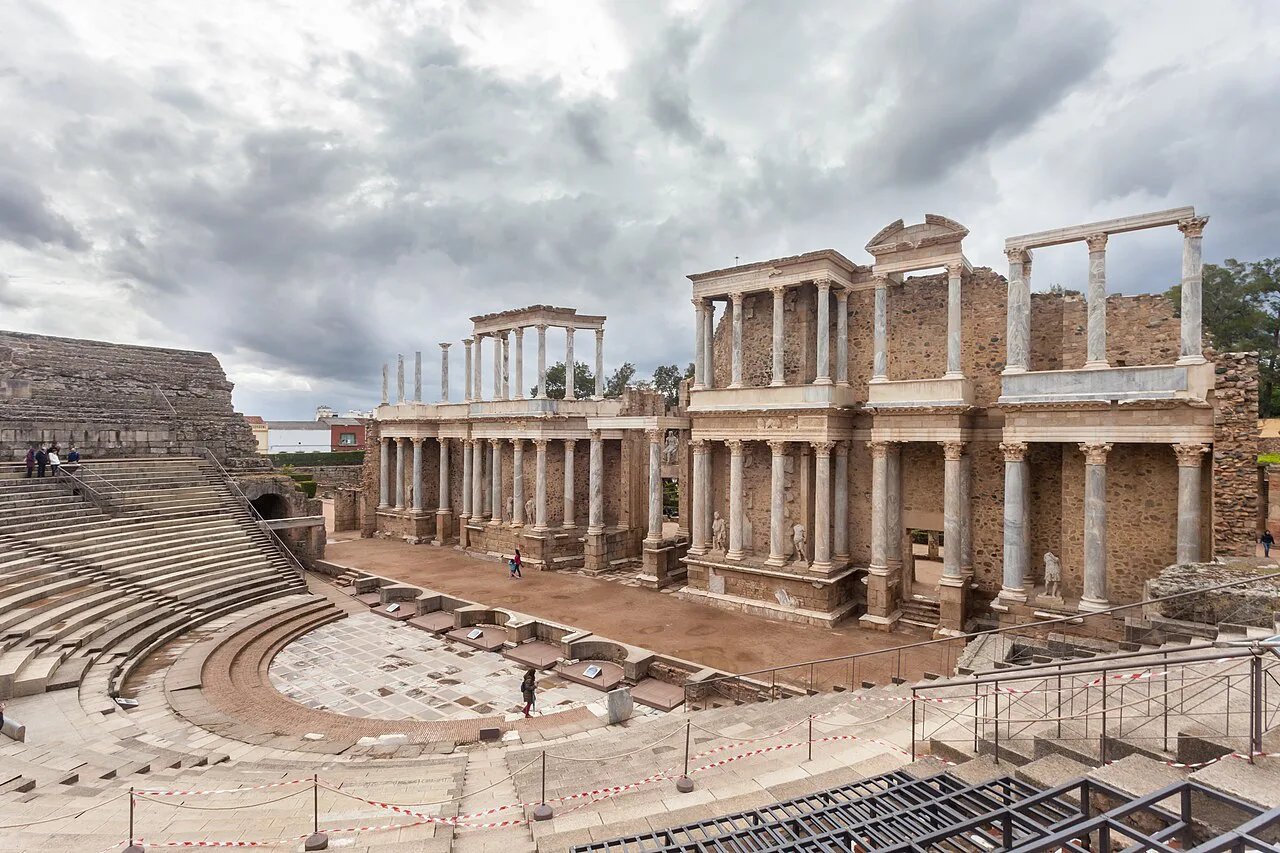
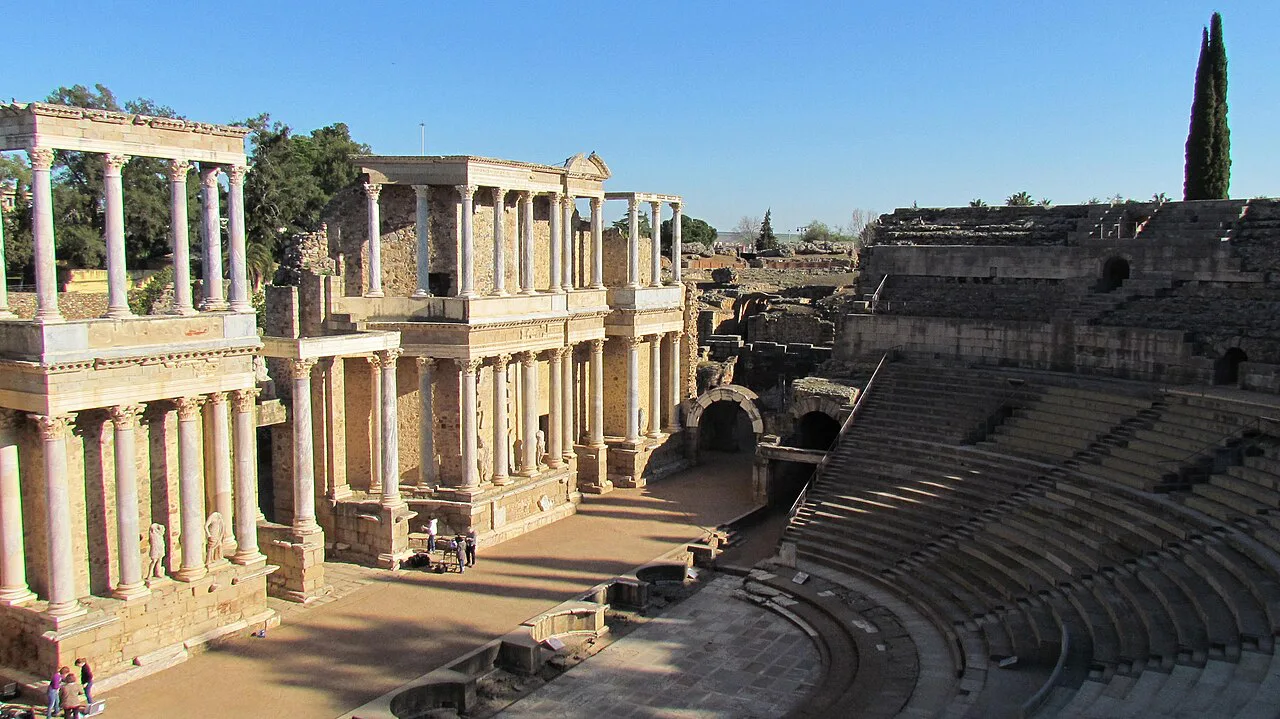
Mérida: the theatre, amphitheatre, circus and Museo Nacional de Arte Romano
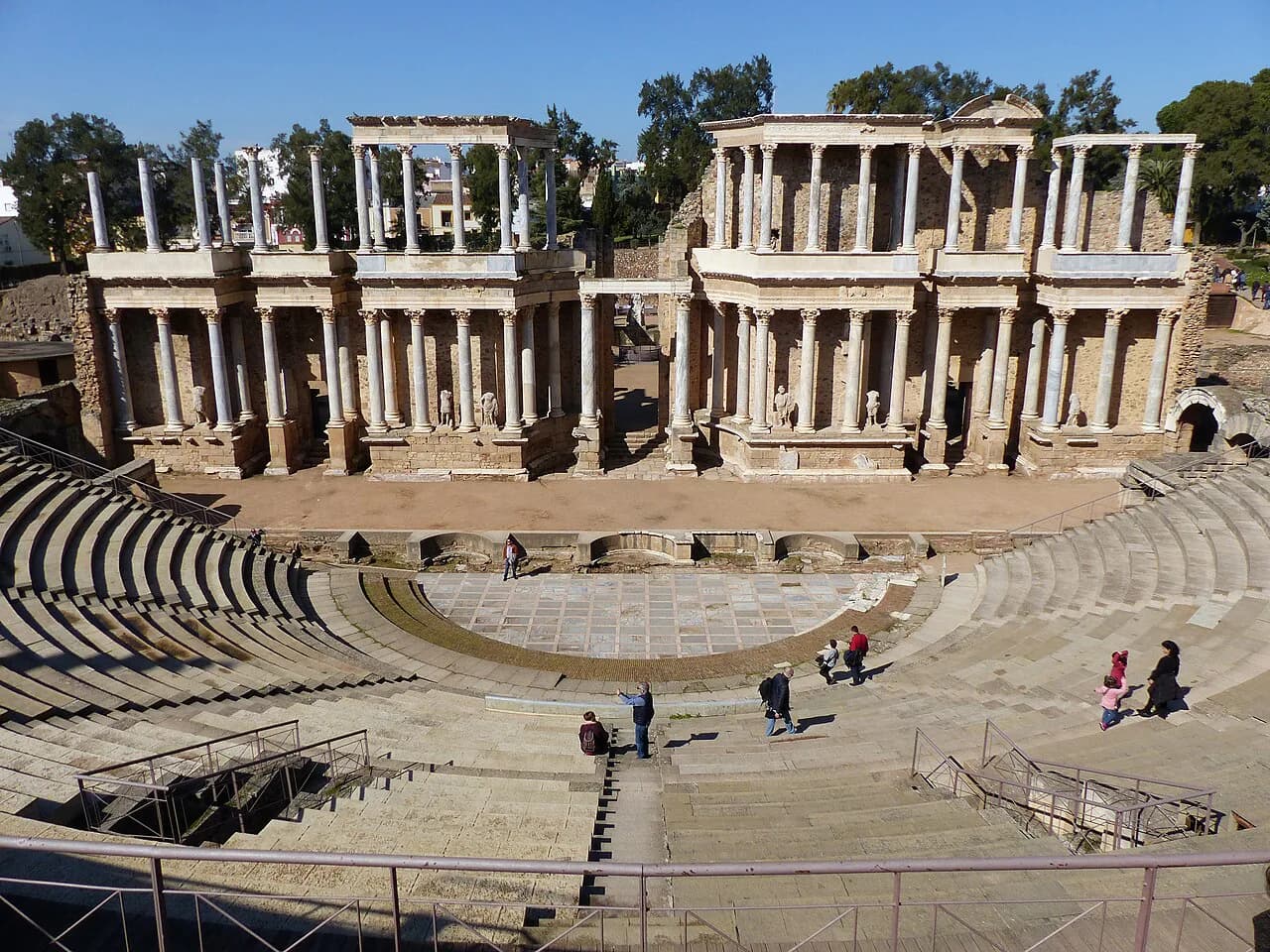
Mérida, the Roman Augusta Emérita and capital of Lusitania, is the one Spanish city where the Roman layer dominates. Much of the ancient city still lies under the modern streets, but the theatre, amphitheatre, circus, temples and excavated houses are open, and the theatre in particular is remarkably well preserved.
The Museo Nacional de Arte Romano is the second half of any visit: sculpture, mosaics and everyday objects arranged so the buildings outside make sense. Give Mérida a full day if you want the theatre, amphitheatre, circus and museum without rushing, and note that the circus sits further out from the theatre cluster.
The theatre has hosted the Festival Internacional de Teatro Clásico de Mérida for almost seventy years, so summer visits can coincide with performances. Check the current programme and dates with the festival before booking travel around it, as the schedule changes each year.
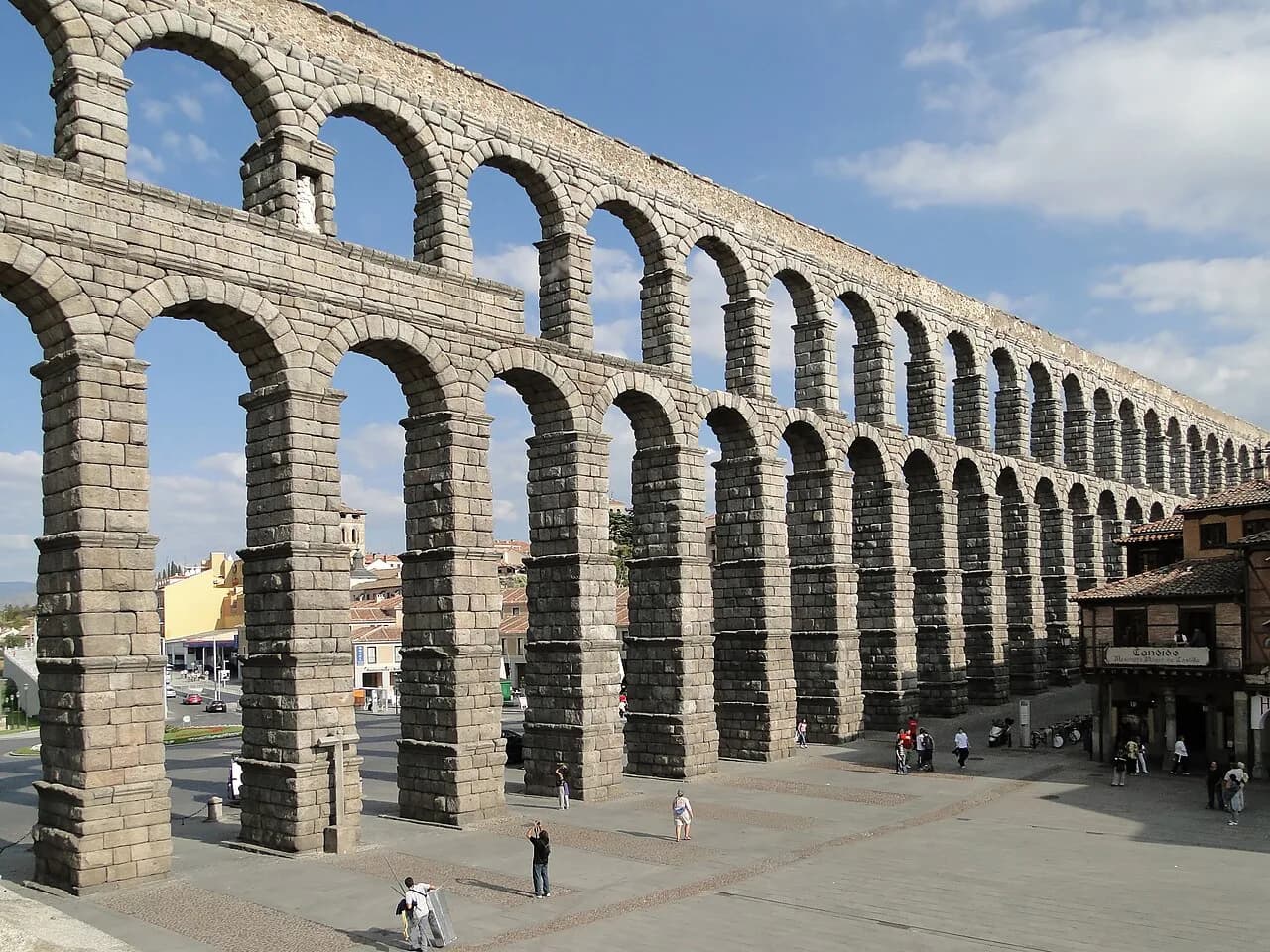
Segovia: the aqueduct, standing without mortar
Segovia's aqueduct is the most immediately legible Roman structure in Spain: nearly 30 metres of granite blocks stacked one on another with no mortar, carrying water from the Fuenfría stream about 17 km away, and standing since the early second century AD. It runs through the public street, which makes it one of the easiest Roman sights to slot into a short break.
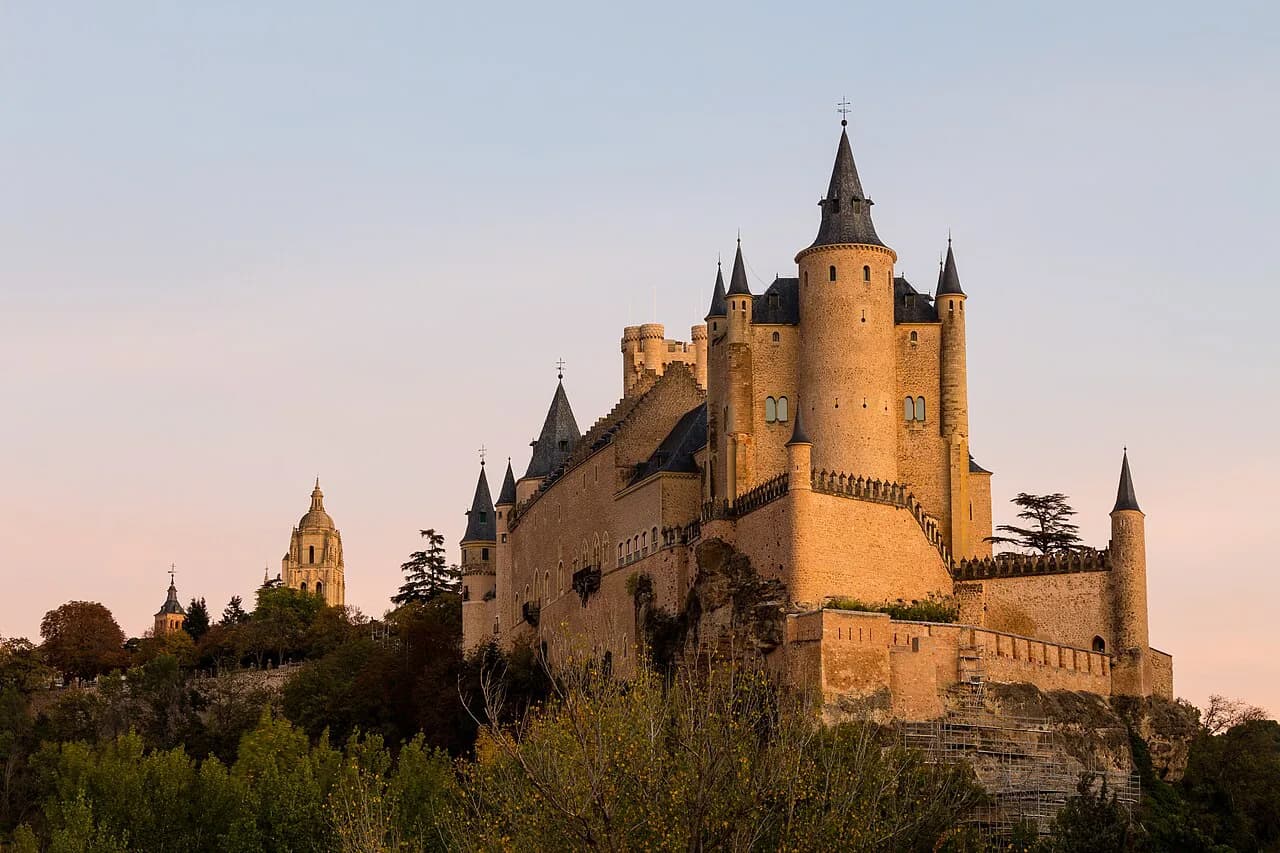
The arcade runs through the middle of the old town, so the practical approach is to walk its length at street level and then take a viewpoint from one of the surrounding streets to see how the arches step up. Pair it with the cathedral and the Alcázar, which are within the same compact centre and make Segovia a natural stop between Madrid and the north.
Tarragona (Tarraco): the walls, the amphitheatre and the rest of the Roman city
Tarragona was Roman Tarraco, capital of Hispania Citerior, and its second-century peak left a dense set of remains: stretches of the republican-era wall, the amphitheatre down by the sea, and the broader archaeological ensemble that surrounds the old town. It is the heart of Roman heritage in Catalonia.
The amphitheatre's position between the beach and the old town is the image most visitors carry away, and the wall gives a sense of how the city was defended before the imperial expansion. Because the pieces are spread across the city rather than gathered on one site, allow most of a day and expect walking between them.
Tarragona fits neatly into a Catalonia trip that includes Girona and the Empúries site further up the coast, and it can be reached from Barcelona as a day trip; treat Barcelona as the transport hub rather than the destination.
Cartagena and its Roman remains
Cartagena, ancient Carthago Nova, sits on the southern coast between Alicante and Almería and is one of the easiest Roman stops to reach from Alicante. Allow part of a day for its Roman remains alongside the rest of the old town.
It works as a stop on a southeastern Spain itinerary rather than a dedicated Roman pilgrimage: useful when you are already on the Costa Blanca or Murcia coast, and easy to combine with the town's other historic layers.
Lugo: the complete Roman city wall
Lugo's Roman wall still rings the historic centre, and you can walk the circuit on or beside it. The wall is the town's defining feature rather than a sight on its edge, so the walk gives you the whole plan of the Roman city at once.
Lugo anchors a Galicia itinerary alongside A Coruña's Torre de Hércules and Santiago de Compostela, and it sits on the Camino Francés rather than on a main tourist trail. That makes it quieter than Mérida or Tarragona and a good choice if you want Roman scale without queues.
Walls are the theme that runs through much of Spain's defensive architecture, Roman and later, and Lugo is the oldest example of a circuit that survives intact. If that interests you, the castles in Spain worth visiting pick up the story where the Romans left off.
Itálica at Santiponce: a Roman town near Seville
Itálica, at Santiponce just outside Seville, is associated with the emperors Trajan and Hadrian, and its excavated streets, mosaics and amphitheatre give the clearest picture in Spain of a whole Roman town plan. The amphitheatre is enormous, and the empty streets between the houses are the reason to come.
Use Seville as the base and Santiponce as a half-day. Seville's own later layers, including the Alcázar and the cathedral, are the other half of the same story of successive occupation.
Baelo Claudia at Bolonia, near Tarifa: a Roman town beside the sea
Baelo Claudia, at Bolonia near Tarifa in Cádiz province, is a Roman town preserved almost in full beside the sea: forum, basilica, theatre, temples, shops and the fish-salting factories that made its fortune. Because the town was abandoned rather than built over, you see the layout as a single plan.
It is the best Roman choice on a Costa del Sol or Cádiz itinerary, reachable from Málaga airport by road via Algeciras, and the coastal setting is a welcome change from inland heat. Combine it with a day around Tarifa rather than treating it as a stop of an hour.
Other Roman sites worth the detour
Segóbriga, at Saelices in Cuenca province, is a Roman city with theatre and amphitheatre set in open country, and Las Médulas in El Bierzo near León is the gold-mining landscape carved by Roman water techniques. Both are rural sites that need a car or a deliberate bus connection.
Empúries in Girona, where the Romans landed in 218 BC, combines a Greek town with the Roman one behind it and is the country's clearest archaeology of arrival. The Puente Romano de Alcántara in Cáceres is a bridge still carrying its original structure, and the Palencia villas of La Olmeda and La Tejada preserve some of the finest Roman floor mosaics in Spain.
The Villa romana de las Musas in Navarra adds another mosaic-rich villa to that list. Towns built on Roman foundations, such as Cáceres, Mérida, Tarragona and Lugo, often turn up in scenic old-town roundups, so a Roman itinerary naturally overlaps with the most beautiful towns in Spain.
Laying out a short break around the sites
From Málaga, the strongest Roman day is Baelo Claudia near Tarifa, with Itálica as a longer option via Seville; both need a car or a booked transfer rather than a quick taxi. Mérida is a separate trip west into Extremadura and is better done as an overnight than a day return from the coast.
From Alicante, Cartagena is the obvious Roman anchor, with the theatre museum and the Punic remains in one compact centre. From Palma, Mallorca has talaiotic rather than Roman remains, so treat the island as a base and fly or ferry to the mainland for Tarragona or Empúries.
By rail, Tarragona sits on the main Catalonia line, Mérida on the Madrid–Badajoz route and Lugo on Galician services, all of which need timetable checks before you build a day around them. Segovia is also served by trains from Madrid, which put the aqueduct within a short walk of the station.
Tickets and free-entry slots
The division to plan around is between monuments that cost nothing to see and sites that are ticketed as a museum or a managed ensemble. The Segovia aqueduct and Lugo's walls are public space, visible and walkable without a ticket, whereas Mérida, Tarragona, Itálica, Baelo Claudia, Segóbriga and Empúries are managed sites with entry arrangements of their own.
Prices and any reduced or free slots change by season and by site, and several of these are state-run archaeological ensembles with their own published conditions. Check the official ticket page for the specific site before you travel, and budget on the assumption that a major ensemble such as Mérida or Tarragona will be a paid visit.
Heat, opening hours and the midday problem
Opening hours vary by site and by season, and many managed archaeological sites keep shorter winter hours. Mérida's museum, the Cartagena theatre museum and the villas at Palencia are indoor or covered visits, which is where to head when heat or rain rules out time outdoors.
Inland Extremadura, Castilla-La Mancha and Castilla y León bring serious midday summer heat, and sites such as Segóbriga, Itálica and Mérida's circus are largely open ground. The practical fix is to start at opening, take the museum in the middle of the day and return to the open site in the late afternoon.
On the coast, Baelo Claudia and Tarragona's amphitheatre benefit from sea air but still put you out on open ground. Carry more water than you think you need, and plan the museum and indoor stops for the hottest hours rather than leaving them as an afterthought.
Which Roman site should you build the trip around?
Build the trip around Mérida if you want the fullest Roman city with a museum to match, around Tarragona if you are flying into Catalonia, and around Baelo Claudia if a Málaga or Cádiz flight is your starting point. Segovia and Lugo are the picks for travellers who want the monument without a ticket queue.
Pair the Roman stops with the later layers where they overlap, from the Alcázar at Segovia to the mosque-cathedral at Córdoba, and use the castles in Spain guide for the medieval end of the same defensive story.
Explore more Spain guides
Frequently Asked Questions
Was Spain ever part of the Roman Empire?
Yes. Rome was present in the Iberian peninsula for about seven centuries, from the landing at Empúries in 218 BC until the Visigoths arrived in the fifth century AD. The peninsula was organised into provinces including Lusitania and Hispania Citerior, with capitals at Augusta Emérita, today's Mérida, and Tarraco, today's Tarragona.
Is Mérida worth visiting for its Roman ruins?
Yes. Mérida holds one of the densest concentrations of Roman remains in Spain, including a remarkably well-preserved theatre, an amphitheatre, a circus, temples and excavated houses, plus the Museo Nacional de Arte Romano. Give it a full day, and check whether a classical theatre performance falls during your dates.
Which Roman site in Spain is the most impressive?
There is no single answer, because the sites offer different things. Mérida gives you a complete Roman city with its entertainment buildings; the Segovia aqueduct is the most striking single structure in the country; Itálica lays out an entire town plan; and Baelo Claudia gives a Roman town beside the sea. Choose by which of those experiences you want.
Sources
Notes for your next Spanish town break
Optional updates to our guides.
You might also like
Continue reading
More guides you'll find useful