Game of Thrones Locations in Spain: What Was Filmed Where
The Spanish towns and monuments used as Game of Thrones filming locations, what each stood in for on screen, and how the sites cluster for a short break.
On this page
Spain stands in for half of Westeros, and the good news for travellers is that most of the sets are monuments that were already worth visiting. The Roman bridge at Córdoba, the amphitheatre at Itálica, the old town of Cáceres and the cathedral at Girona all appear on screen, usually with digital help rather than a film set. This guide pairs each site with the fictional place it represented, flags where the cameras stayed in Belfast, and groups the locations by the corridor that makes them practical on a short break.
Two things decide whether a location repays the trip: how much of the on-screen image survives in the real place, and whether it fits with a second site in the same town or province. Cáceres, for instance, holds both the walled old town and, an hour away, the castle at Trujillo, so one base covers two filming locations. Knowing which buildings carried a scene also stops the mild disappointment of arriving at a courtyard that was entirely computer-generated.
Which Game of Thrones locations in Spain you can actually visit
Filming in Spain began in earnest from the fifth season and ran through the final run, with Andalusia, Catalonia, Extremadura and the Basque Country supplying most of the exteriors. The sites below are public monuments and natural sites rather than purpose-built sets, so you visit them as a normal tourist and see the fiction in your head rather than on a signboard. A few, such as the Castell de Santa Florentina and Zafra Castle, are privately held, so access depends on the owner.
The practical geography is kind: Córdoba, Itálica and Seville sit on one Andalusian line, while Cáceres, Trujillo and Almodóvar del Río form a western cluster that rewards a car. Girona and Osuna work from Barcelona and Málaga respectively, and the Basque coast sites pair naturally with Bilbao. Several of these towns are on the UNESCO list in their own right, which makes the detour worth it even for anyone who has never watched an episode.
Córdoba: the Roman Bridge as the Long Bridge of Volantis
Córdoba's Roman Bridge, the long pedestrian crossing over the Guadalquivir below the Mezquita-Catedral, served as the Long Bridge of Volantis in the fifth season. The show extended and built up the bridge digitally, adding taverns and stalls, so you will recognise the span and the arches but not the ramshackle town that sat on top of it. Tyrion Lannister and Varys walk it after reaching Volantis, which is the scene most people remember.
The bridge is free and open at all hours, and it sits directly beside the Mezquita-Catedral, so the filming stop costs you a short walk rather than a separate outing. Give the city half a day if the monument and the Jewish quarter are also on your list, and treat the bridge as the ten-minute punctuation mark between them.
Itálica, near Seville: the amphitheatre used as the Dragon Pit
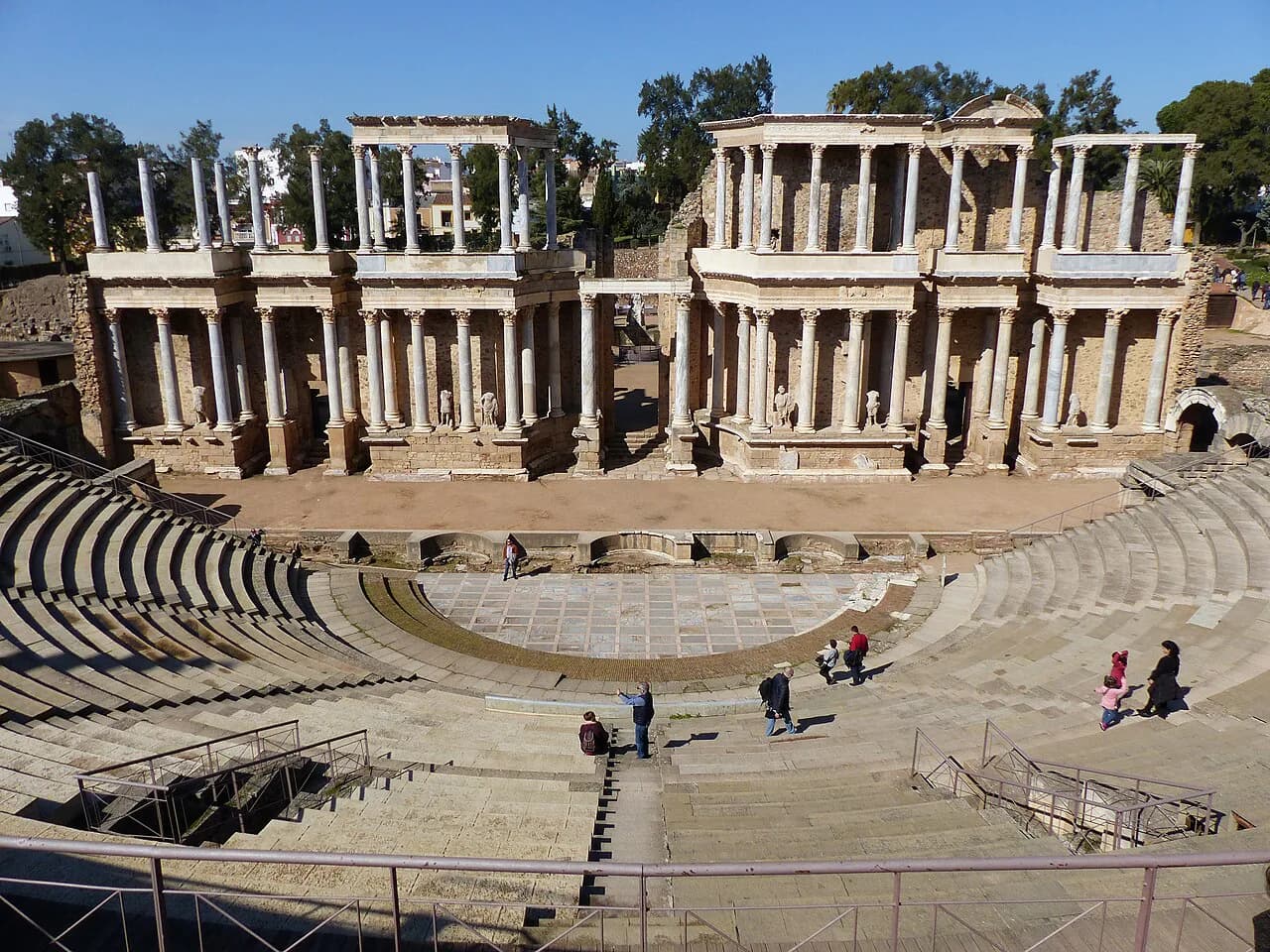
The amphitheatre at Itálica, in Santiponce just outside Seville, stood in for the Dragon Pit in the seventh-season finale and returns in the final episode, where the surviving rulers meet to choose a leader. The production laid a platform over the lower ruins to create the summit, so what you see on screen is partly scaffold and stagecraft; the surviving seating and arena floor give you the scale of the original building instead. It is one of the largest amphitheatres in the Roman world and is worth the visit on its own account among the Roman ruins in Spain.
The travel blog reports that entry is free for EU citizens and costs a small fee for everyone else, and that the site closes on Mondays, so a Monday city break needs Itálica pushed to another day. Check that fee and the current opening times with the monument before you set out, particularly around public holidays.
Castillo de Almodóvar del Río: Highgarden
The hilltop castle at Almodóvar del Río, west of Córdoba, became Highgarden, seat of House Tyrell, in the seventh season, and footage from those shoots was reused later. The march on Highgarden by Jaime Lannister's army gives the castle its screen moment, but the interior scenes were filmed on sound stages in Belfast, so the rooms you walk through are not the rooms the characters stood in. What you get is a restored medieval fortress with towers and views over the Guadalquivir plain.
Almodóvar pairs poorly with Córdoba by public transport and well by car, which makes it a decision rather than an afterthought. If you are relying on buses, treat the castle as a half-day run from Córdoba only after confirming the service with the operator's own timetable. Travellers touring castles in Spain will find plenty of company in this stretch of Andalusia.
Girona Cathedral: the Great Sept of Baelor
Girona's cathedral, at the top of the old-town steps, became the Great Sept of Baelor in King's Landing. The baroque facade and the long stair that approaches it are the shots that register instantly, and the cathedral also carried scenes inside the sept. The city's medieval streets doubled for Braavos and parts of King's Landing in the same run, so the location works better as an old-town wander than as a single photo stop.
The cathedral is a working church, so tourist visits pause during services, and it keeps its own ticket and timetable at the door rather than through any tour operator. Build the visit around the cathedral and the nearby Jewish quarter, then leave the day free for the rest of the city.
Osuna bullring: Danzak's Pit
The bullring at Osuna, in the Seville province, was used for the fighting pit of Meereen, the scene where Daenerys takes on the Sons of the Harpy. It is an ordinary provincial plaza de toros rather than a monument with a visitor centre, which means the reward is the arena itself and the knowledge of what was staged there. Osuna is a straightforward road trip from Seville and Córdoba and an awkward one by rail.
Osuna's old town of palaces and churches justifies the drive even if the bullring is the only thing on your list, and it sits in the same province as Itálica and Seville. If you have a car for the Andalusian leg, three stops in two days is realistic; without one, pick Seville and Itálica and leave Osuna for another trip.
Travellers who like the smaller Andalusian towns will find Osuna typical of the most beautiful towns in Spain and quieter than the provincial capital.
Seville: the Royal Alcázar as Dorne and the Reales Atarazanas as the Red Keep crypts
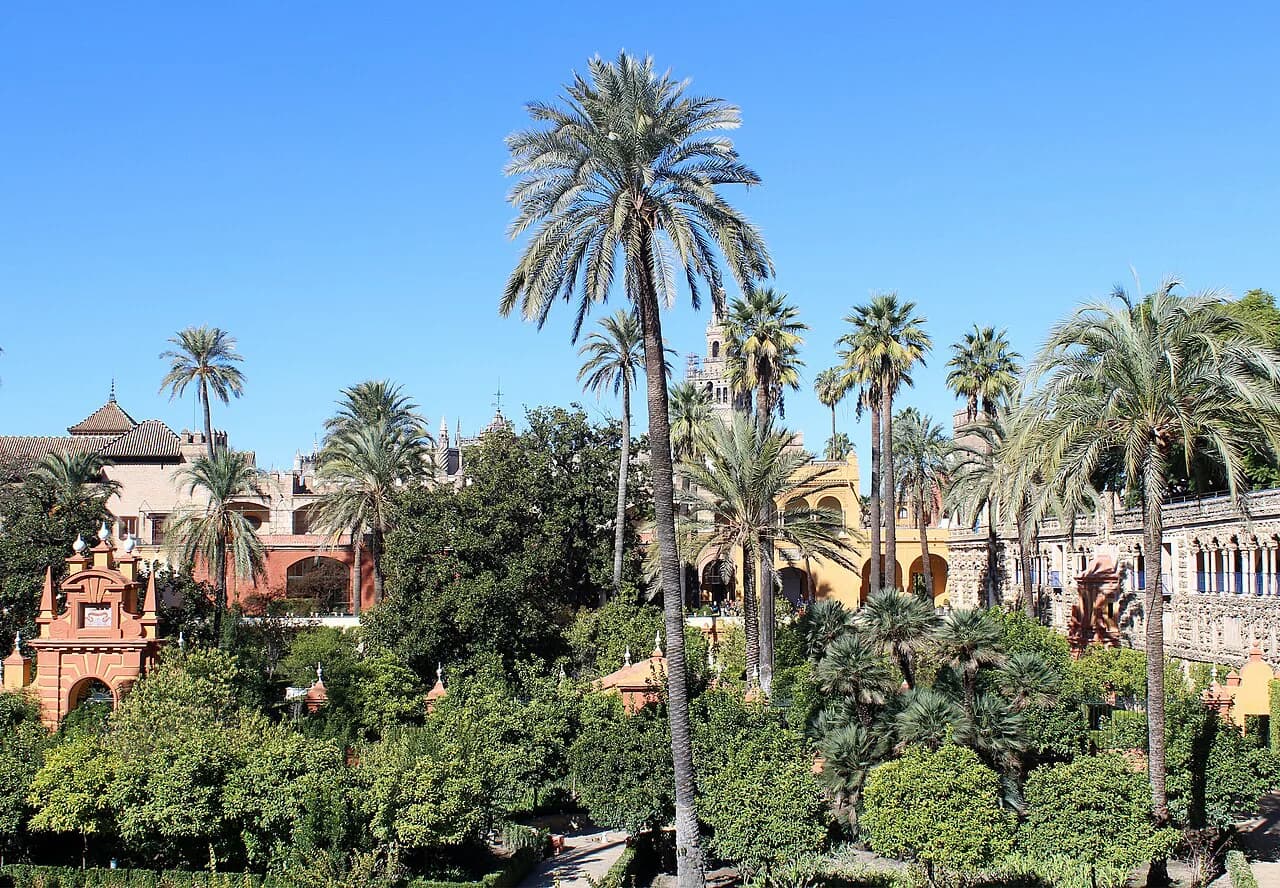
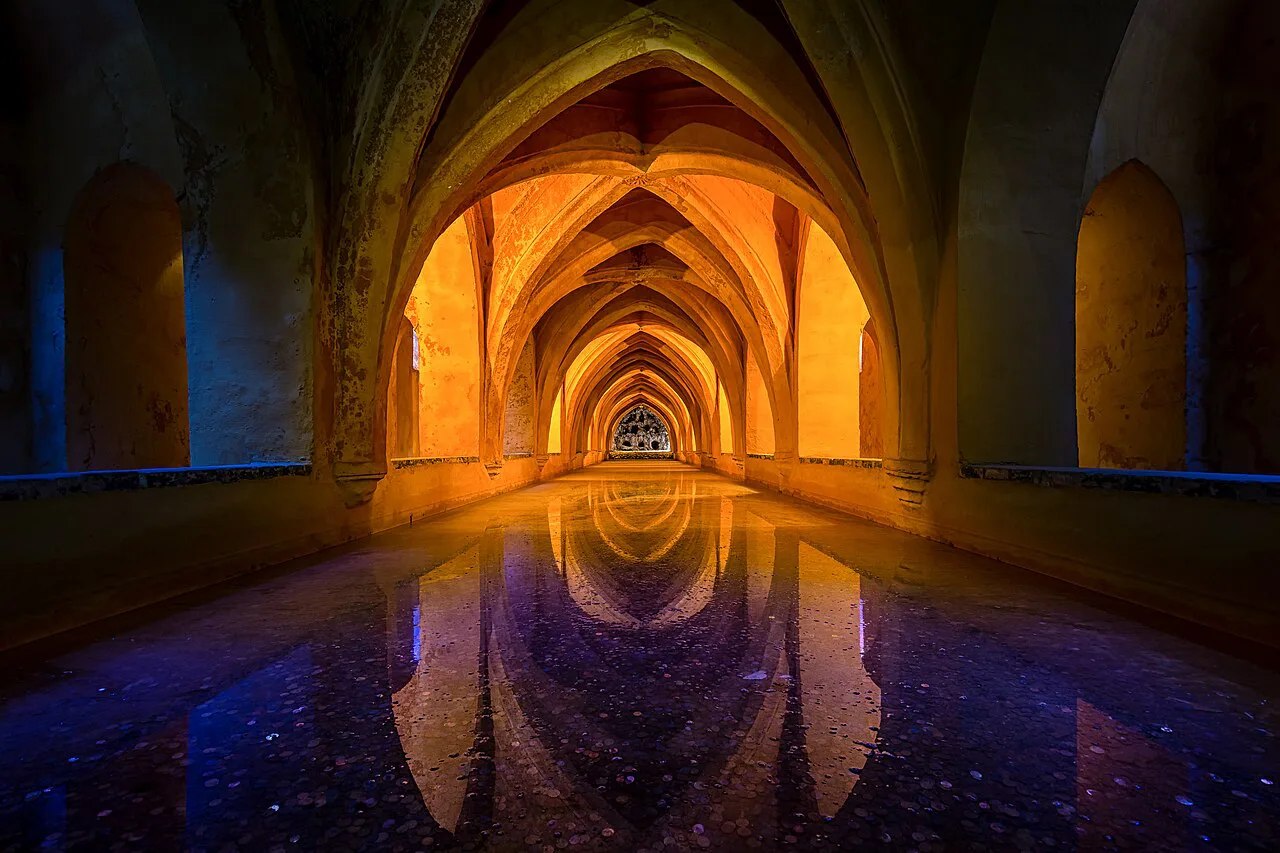
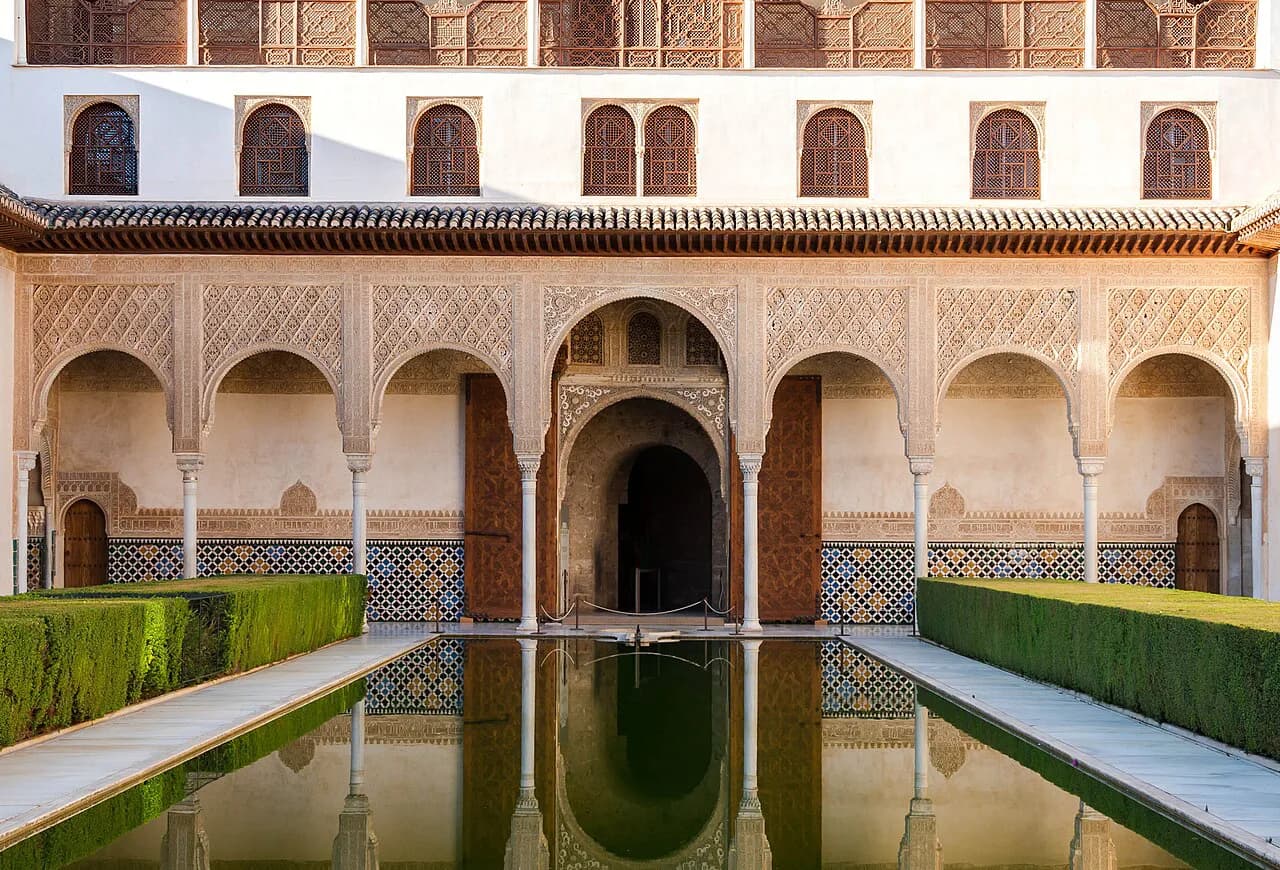
Seville holds two separate filming locations within walking distance. The Royal Alcázar became the Water Gardens of Dorne, the private residence of House Martell, with scenes shot among its gardens, fountains and rooms; the Reales Atarazanas, the medieval shipyards, stood in for the crypts of the Red Keep. The Alcázar is a working royal palace and a UNESCO site, so opening hours and ticket slots are managed by the palace itself, and the queues are what you would expect of a major monument.
Both Seville stops need timed entry, and the Alcázar is the one that sells out on busy weekends, so book its slot before you fix the rest of the day. The Atarazanas is a shorter visit and pairs well with a walk along the river towards the Torre del Oro. Allowing a full day for the two leaves room for the cathedral without rushing either.
Further UNESCO sites in Spain work the same way: you turn up for the monument and the filming history is the bonus.
Cáceres old town: King's Landing
The Ciudad Vieja of Cáceres, a UNESCO World Heritage Site since 1986, was used for King's Landing, with the filming run in the province the longest of the show's Spanish stays. Within the walls you can pick out the building known as Las Veletas, the Arab cisterns and the church of San Francisco Javier, all of which sit on an ordinary walking route through the old town. The appeal is that the medieval streets needed almost no dressing: the stone, the towers and the gateways do the work.
Cáceres also carries plenty of Moorish fabric in its walls and cisterns, which is why the location reads so convincingly as a southern capital. Walk the old town in the morning, when the day-trippers have not yet arrived from the surrounding towns, and keep the afternoon for the wider province.
Trujillo Castle: Casterly Rock
Trujillo's castle, east of Cáceres, became Casterly Rock, the Lannister seat, on screen. The fortress on its hill above the plaza has a small courtyard and walkable walls, and the town below is one of the most rewarding in Extremadura for a wander. Pairs naturally with Cáceres on a two-day loop from Madrid, though the drive is long enough to make an overnight sensible.
The castle and the old town below keep modest hours and charge separately, so check both at the gate rather than assuming a single ticket. If you are chasing the show's castles, Extremadura rewards the effort with fewer crowds than the Andalusian equivalents, and the castles in Spain guide covers the wider set.
San Juan de Gaztelugatxe, near Bilbao: Dragonstone
San Juan de Gaztelugatxe, a rocky peninsula crowned by a small hermitage near Bermeo, became Dragonstone in the seventh season, with the real chapel replaced on screen by a palace guarded by stone dragons. The approach is a stone path over the sea with a long flight of steps, which the characters climb to reach the castle. The site is a protected landscape with fragile vegetation, so access can be limited by the Basque authorities at peak times.
The hermitage itself is tiny and the walk is steep, so this is a half-day rather than an hour's stop, and the car park fills early in summer. Check the access rules and any reservation requirement with the Basque tourism service before you go, since the path has been managed with timed entry in recent years. For anyone drawn to the Targaryen castle in real life, this is the closest you get.
Itzurun beach, Zumaia, and Muriola beach, Barrika
Two Basque beaches appear on screen. The flysch cliffs at Itzurun, in Zumaia, gave the show its Dragonstone beach, while Muriola beach near Barrika, close to Bilbao, was the first Basque location the production used. These are natural sites with no visitor infrastructure, so the filming history is the only thing that distinguishes them from any other stretch of the Basque coast.
If your interest is the locations rather than the sand, treat both as short stops folded into a coastal drive between Bilbao and Zumaia rather than destinations in themselves. Tides and weather decide how much of the rock is reachable, and there is no booking to make.
Peñíscola: Meereen
Peñíscola, the fortified headland town on the Castellón coast, stood in for Meereen. The sea castle, built by the Knights Templar and later a papal residence, gives the show its stepped, whitewashed city by the water, and the old town within the walls is a good hour's wander on its own. It is one of the few filming locations where the fictional city and the real one look broadly alike from a distance.
The castle keeps its own ticket and hours, and the town is a straightforward stop on the coast between Valencia and Barcelona. Combine it with a night in the old town rather than a day trip, since the atmosphere after the coaches leave is the point.
Almería's Alcazaba: House Martell
The Alcazaba of Almería, the great Moorish fortress above the city, appears as a Dornish location for House Martell. It is the largest of the Andalusian alcazabas after the Alhambra in Granada, with walls, gardens and courtyards that need no dressing to read as a southern palace. The walk up from the city is steep, and the site closes in the middle of the day in some seasons.
Almería is the natural base for a Moorish Spain circuit, with the Alcazaba, the cathedral and the coast within a short drive. If you are comparing fortresses, the Alcazaba of Málaga is the closest equivalent and the more visited, but Almería's is larger and emptier.
Castell de Santa Florentina: House Tarly
The Castell de Santa Florentina at Canet de Mar, north of Barcelona, became Horn Hill, seat of House Tarly. It is a private castle with a genuine medieval core wrapped in a nineteenth-century restoration, and it opens for guided visits only. The result is a more formal experience than the public monuments: you see the building with a guide rather than wandering at will.
The castle sits within reach of Barcelona by train and a short walk, which makes it a viable half-day from the city. Book through the castle's own channel and confirm the language of the tour before you commit, since the schedule is limited.
Zafra Castle and Bardenas Reales
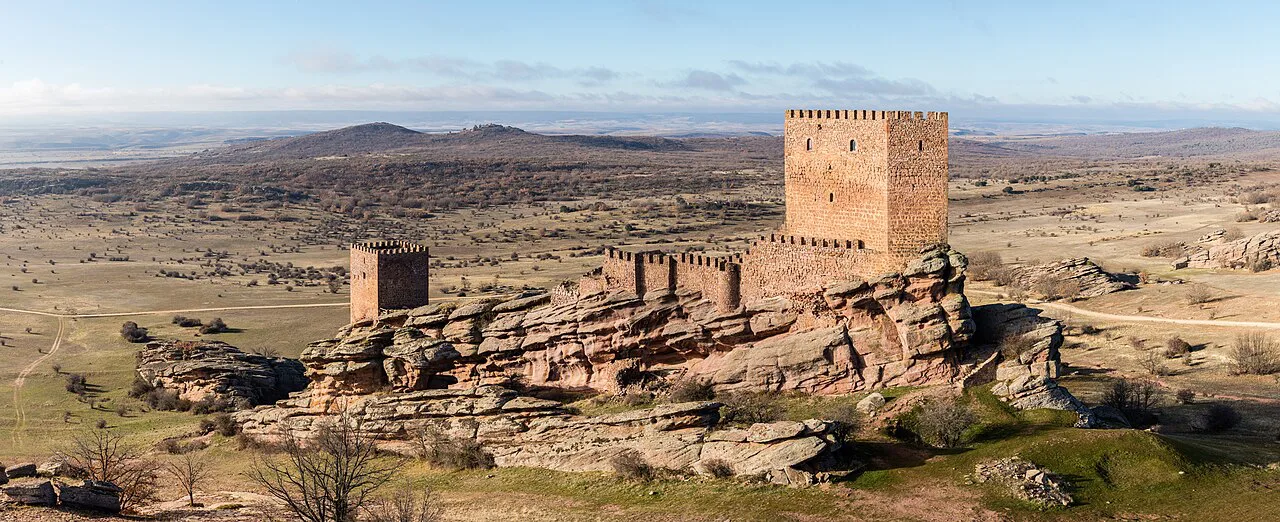
Two further sites complete the map. Zafra Castle, in the Guadalajara province, provided the Tower of Joy, and it is a privately held fortress on a crag with no general visitor opening. The Bardenas Reales, the semi-desert badlands of Navarra, stood in for the Dothraki Sea, and it is a protected natural park with its own access rules for vehicles and walking.
Neither is a casual stop: Zafra needs a specific arrangement with the owner and Bardenas needs a car and a plan for the heat. If your short break is built around cities, leave both for a longer road trip through Castile and Navarra.
Which corridor fits your short break
The most efficient approach is to pick one corridor and accept that you will not see the whole list. Córdoba, Itálica, Seville and Osuna fit a four-day Andalusian trip from Málaga, while Cáceres, Trujillo and Almodóvar del Río form a western loop that rewards a car. Girona and Santa Florentina work from Barcelona, and the Basque coast sites hang off Bilbao.
Before booking anything, check the opening days at each monument, since Monday closures and midday gaps are normal in Spain and will scupper a tight schedule. The good news is that the filming locations are good monuments in their own right, so a closed door costs you a scene rather than the day.
Frequently Asked Questions
Was some of Game of Thrones filmed in Spain?
Yes. From the fifth season onwards, Spain supplied exteriors across Andalusia, Catalonia, Extremadura, the Basque Country and Navarra, including the Roman bridge at Córdoba, the amphitheatre at Itálica, the old town of Cáceres and the cathedral at Girona.
Where was Game of Thrones filmed near Bilbao?
Muriola beach at Barrika and San Juan de Gaztelugatxe near Bermeo, both on the Biscay coast, are the closest locations to Bilbao. Muriola was the production's first Basque site, and Gaztelugatxe appeared as Dragonstone in the seventh season.
Where is Dragonstone in real life?
The Dragonstone exterior is San Juan de Gaztelugatxe, a rocky peninsula with a hermitage near Bermeo in the Basque Country. The real chapel was replaced digitally with a palace, so expect a small church rather than a fortress when you arrive.
Was the Wall filmed in Spain?
The Wall does not appear among the Spanish locations. The Spanish sites cover King's Landing, Dorne, Highgarden, Dragonstone, Meereen and Volantis, among others.
Sources
Notes for your next Spanish town break
Optional updates to our guides.
You might also like
Continue reading
More guides you'll find useful