UNESCO Sites in Spain: World Heritage Towns for a Short Break
Spain's UNESCO World Heritage towns, from Toledo and Segovia to Cuenca and Mérida, with what each listing covers and the town to base yourself in.
On this page
Spain's UNESCO listings are best used as a short-break shortlist rather than a league table: pick the town whose listing matches the streets you want to walk, then check how the base connects to a Spanish airport. A listing can cover an entire old town, a single monument or a landscape, so the word 'site' means something different in Toledo, Segovia and Mérida. This guide groups the towns UK travellers can reach for a city break, names the monuments and squares that carry each listing, and flags the closures and heat that shape a day.
What a UNESCO listing actually covers
World Heritage status is awarded for outstanding universal value, whether a town demonstrates a masterpiece of human creativity, a significant cultural exchange or a unique testimony to a civilisation. That is why a listing can protect a whole historic centre such as Toledo or Córdoba, a single Roman engineering work such as the Aqueduct of Segovia, or a natural landscape such as Teide National Park. The distinction matters on the ground: in a town listing, the streets, walls and churches are the exhibit, while a monument listing is something you queue for.
Spain's list runs from prehistoric cave art and Roman ensembles to Gothic cathedrals, Renaissance squares and island towns, and the geography is spread across the mainland and both archipelagos. A map of the listings is the quickest way to see which cluster around your arrival airport before you commit to a base. For a short break, the practical rule is one or two towns per trip, not a tour of the whole list.
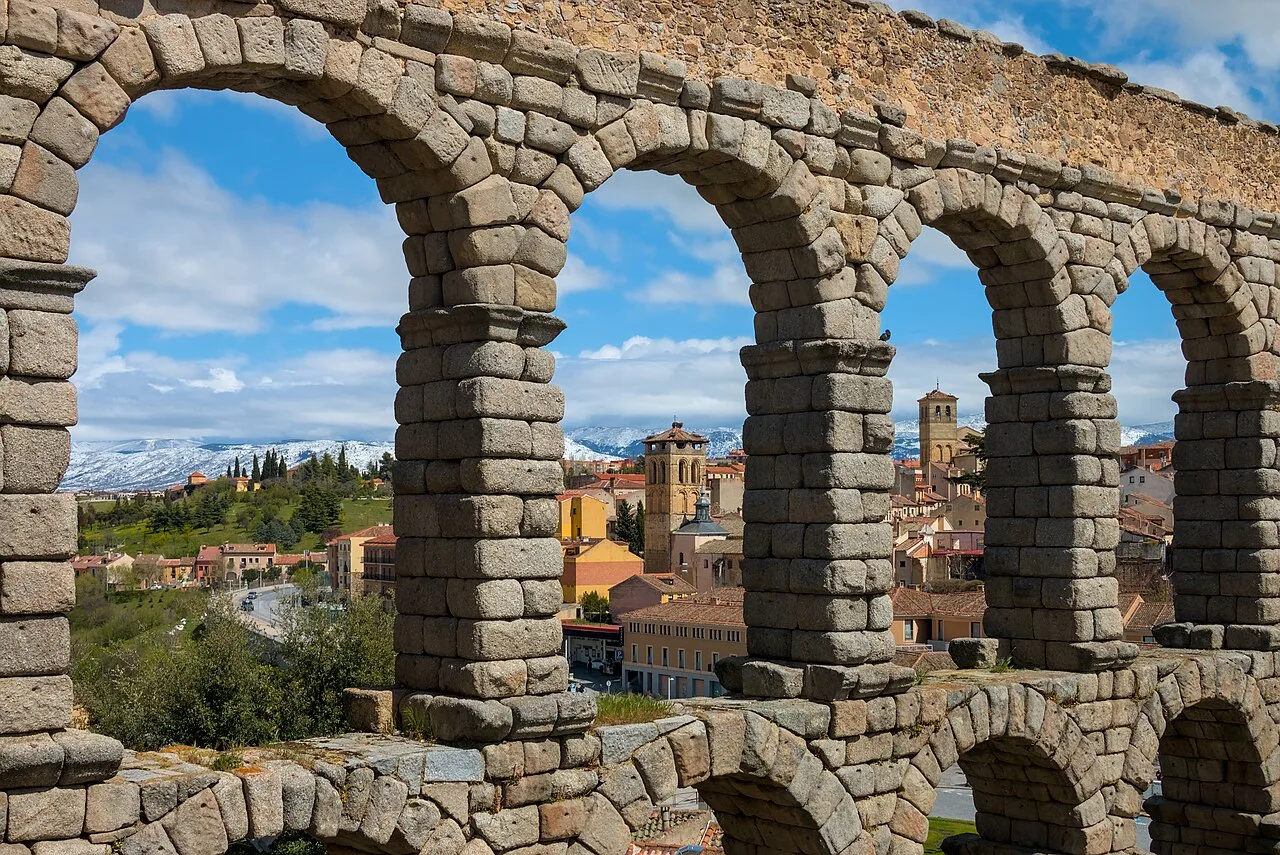
Spain's UNESCO towns at a glance
The town listings that work best for a short break are Toledo, Segovia, Salamanca, Cuenca, Santiago de Compostela, Ávila, Cáceres, Mérida, Tarragona, Úbeda and Baeza, Alcalá de Henares, Lugo and Ibiza's Dalt Vila, with San Cristóbal de La Laguna on Tenerife for an island trip. Most sit on a rail or bus line from a regional airport, which makes them easier to pair than the outlying natural listings. Treat this as a working list to plan around, not a count.
Several of the strongest entries are not old towns at all: the Palmeral of Elche is a historic palm grove, the Roman Walls of Lugo are a defensive circuit, and the Tower of Hercules is a Roman lighthouse on the Galician coast. If your interest is fortifications, the castles in Spain round-up is the better starting point than a generic heritage list. If your interest is antiquity, go straight to the Roman sites.
Toledo: cathedral, synagogue and mosque inside the walls
Toledo is the compact medieval city where Christian, Muslim and Jewish heritage sit within walking distance of each other, which is what makes its listing so legible on foot. The Toledo Cathedral carries the Gothic Christian layer, the Synagogue of Santa María la Blanca the Jewish heritage, and the Mosque of Cristo de la Luz the Islamic influence. The old town is walled and hilly, so plan your day around one loop rather than criss-crossing it.
The cathedral is a working church as well as a monument, so tourist visiting pauses for mass; build that into your timing rather than arriving at the wrong hour. Toledo is an easy rail hop from Madrid, which makes it a workable day trip or an overnight base if you want the old town after the day crowds leave. Check the cathedral's own published timetable for the day you travel.
Segovia: the aqueduct and the Alcázar in one old town
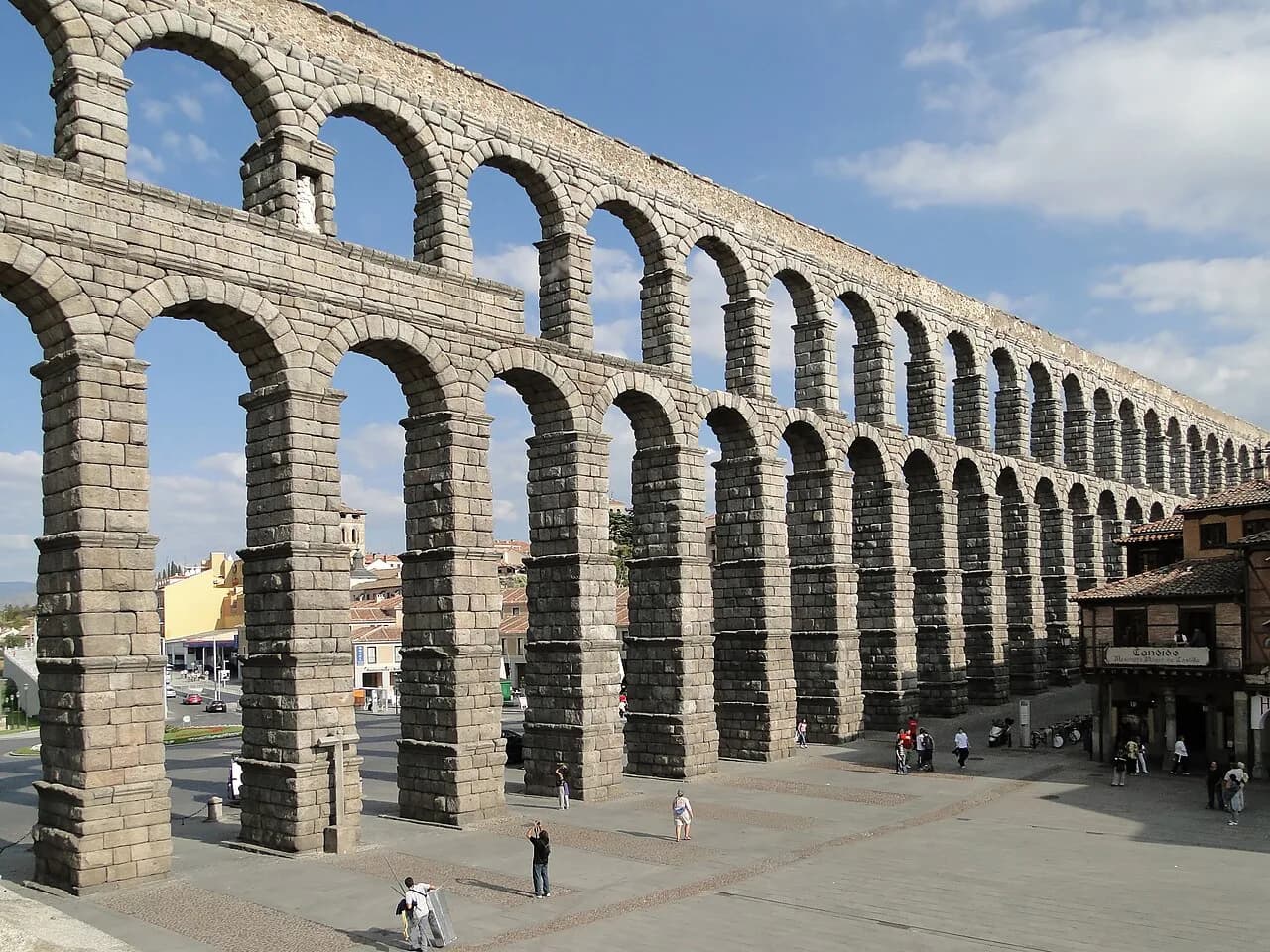
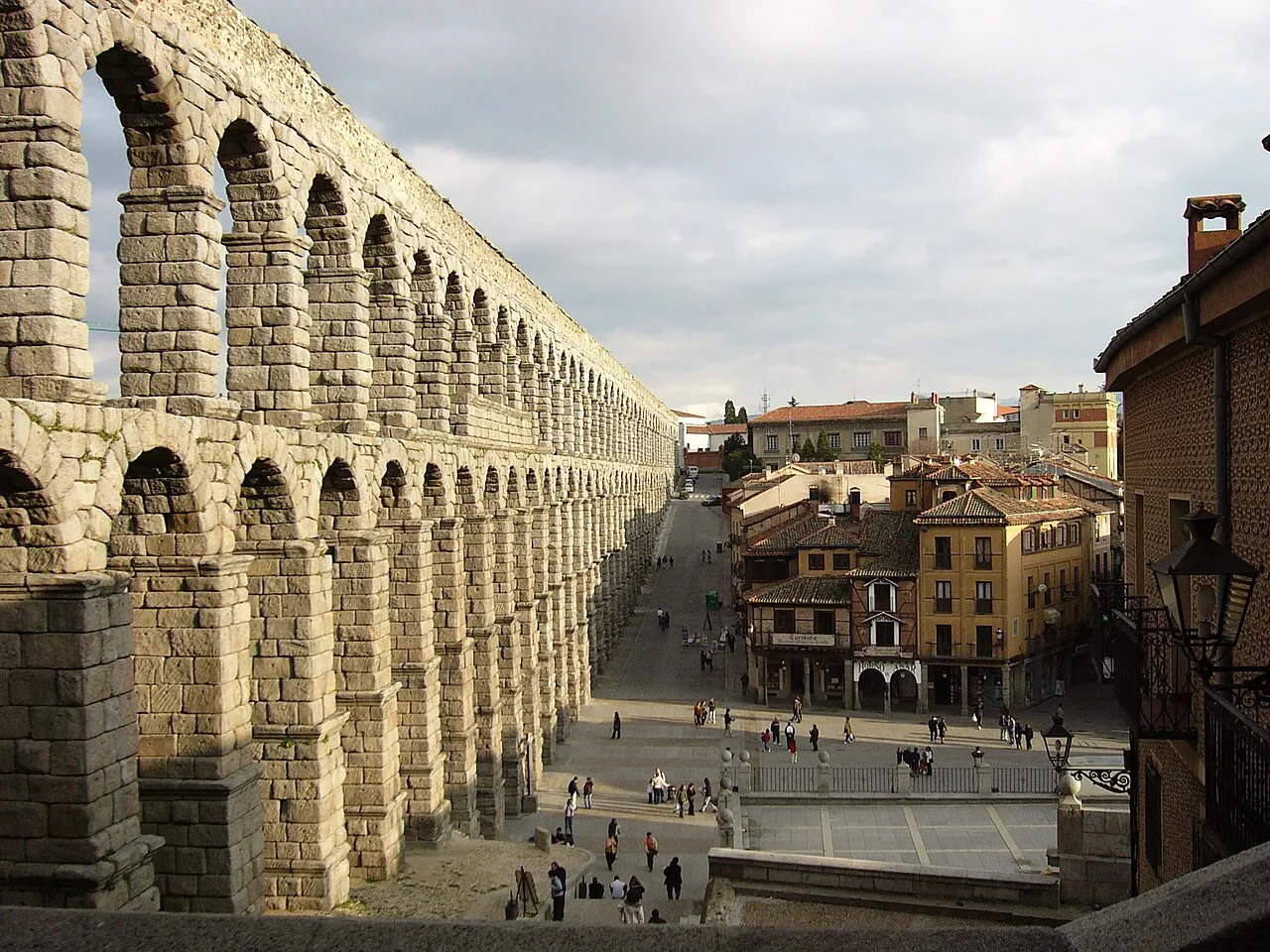
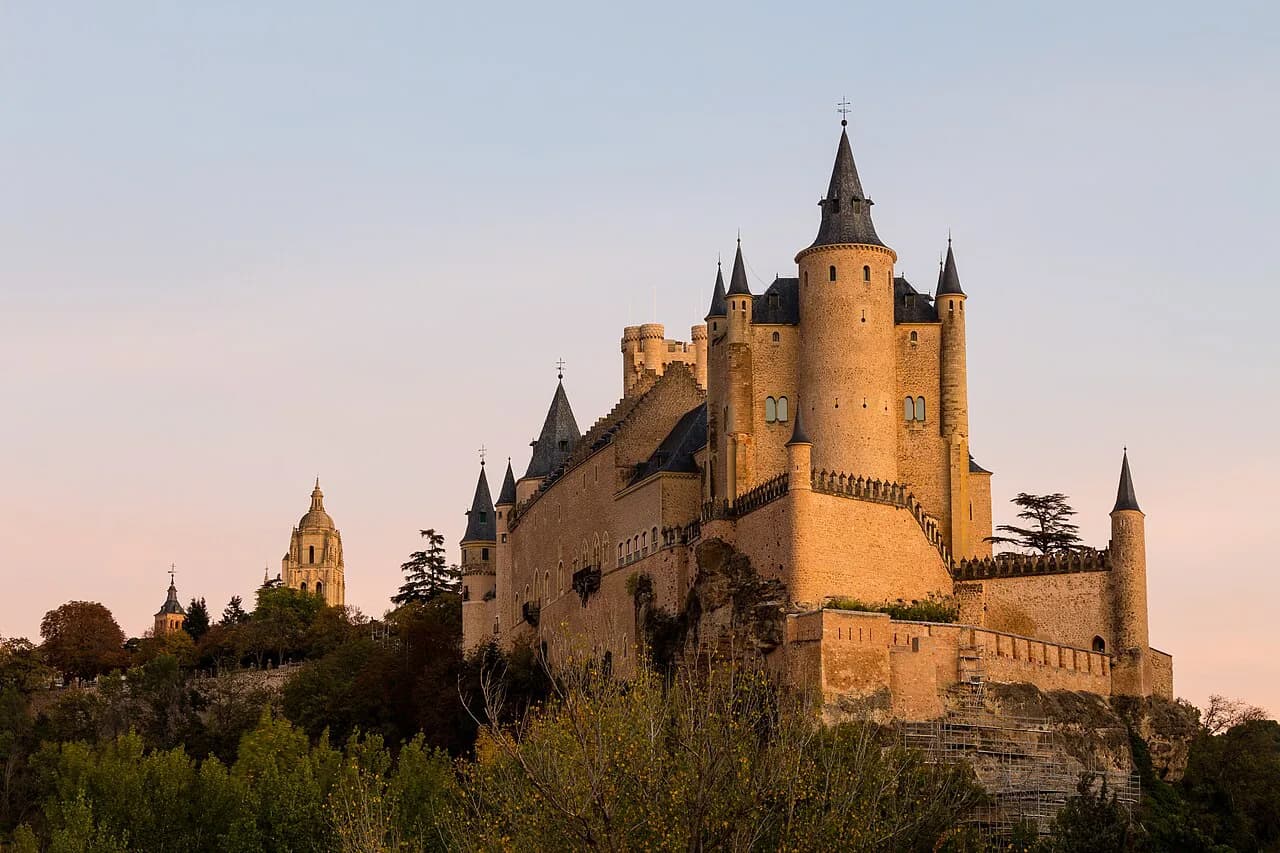
Segovia's listing joins the old town to its Roman aqueduct, a structure that still dominates the streets and is one of the best-preserved Roman works in Spain. The Alcázar is the fairytale fortress at the other end of the historic centre, and together they give Segovia an unusually complete short-break circuit. The aqueduct is outdoors and free to look at, which makes it the anchor of any arrival walk.
Segovia sits close enough to Madrid for a day trip, but staying overnight lets you see the aqueduct and the Alcázar without rushing the climb through the old town. For the wider context of Spanish fortresses, the Castles in Spain guide covers the type. Check the Alcázar's own site for interior opening hours before you build the day around it.
Salamanca: the university façade and the Plaza Mayor
Salamanca's golden sandstone gives the city its nickname, La Ciudad Dorada, and the colour is the reason the old town photographs so well in low light. The university, one of Europe's oldest, is the intellectual anchor of the listing, and its ornate Renaissance façade is the detail most visitors come to see. The Plaza Mayor is the city's other set piece, a Baroque square that works as a meeting point and a place to sit between sights.
Salamanca is a university city, so term-time streets are busy and the atmosphere is younger than in Toledo or Ávila, and you can compare the two walled cities in our guide to things to do in Ávila. It pairs naturally with Ávila by rail if you want two walled cities in one short break. The university's own visitor pages give the current access arrangements for the historic buildings.
Cuenca: the Casas Colgadas above the gorges
Cuenca is built between the Júcar and Huécar gorges, and the Casas Colgadas, the hanging houses that date back to the fourteenth century, are the image that carries the listing. The medieval walled town is remarkably well preserved, with streets and walls winding around the cathedral and its towers rising from the cliff edge. The drama is in the topography, so give yourself time to walk the rim as well as the lanes.
Cuenca's position over deep gorges made it a natural fortress, built under Moorish rule and later used by Christian royalty, which explains why the walls and the viewpoints matter as much as the buildings. If you are following the Moorish thread through Spain, Cuenca belongs on that itinerary alongside Córdoba and the Alcazaba of Málaga. For other cliff-edge towns of the same kind, see the most beautiful towns in Spain.
Santiago de Compostela: the cathedral and the Praza de Obradoiro
Santiago de Compostela's old town is the end point of the Camino pilgrimage route, and the Santiago de Compostela Cathedral is the centrepiece of the listing. The Praza de Obradoiro is the square that frames the cathedral and the arrival of pilgrims, and it is the natural place to start and finish a walk through the medieval streets. The city is compact, so a day covers the core without a bus.
Santiago is a long rail journey from most of Spain's southern airports, so it suits a dedicated trip or a flight into Galicia rather than a bolt-on to an Andalusian break. As at every working cathedral, pilgrim services take priority over tourist visits, so check the published timetable before you plan a mid-morning visit.
Ávila, Cáceres and Lugo: walls, churches and a Roman circuit
Ávila's listing covers the old town together with its extra-muros churches, and the walls are the reason to come: they are among the most complete in Spain and define how the city reads from outside. Cáceres is the other walled old town on the same western circuit, with a historic centre of stone lanes and towers. Both reward slow walking rather than a checklist.
Lugo's listing is the Roman Walls, a defensive circuit you can walk around rather than a cathedral or palace, and it shows how varied the Spanish entries are. Pair Lugo with the Tower of Hercules, the Roman lighthouse at A Coruña, if you are building a Galician itinerary. Check the walls' own visiting information for any restricted sections on the day.
Mérida and Tarragona: Roman Spain away from the big cities
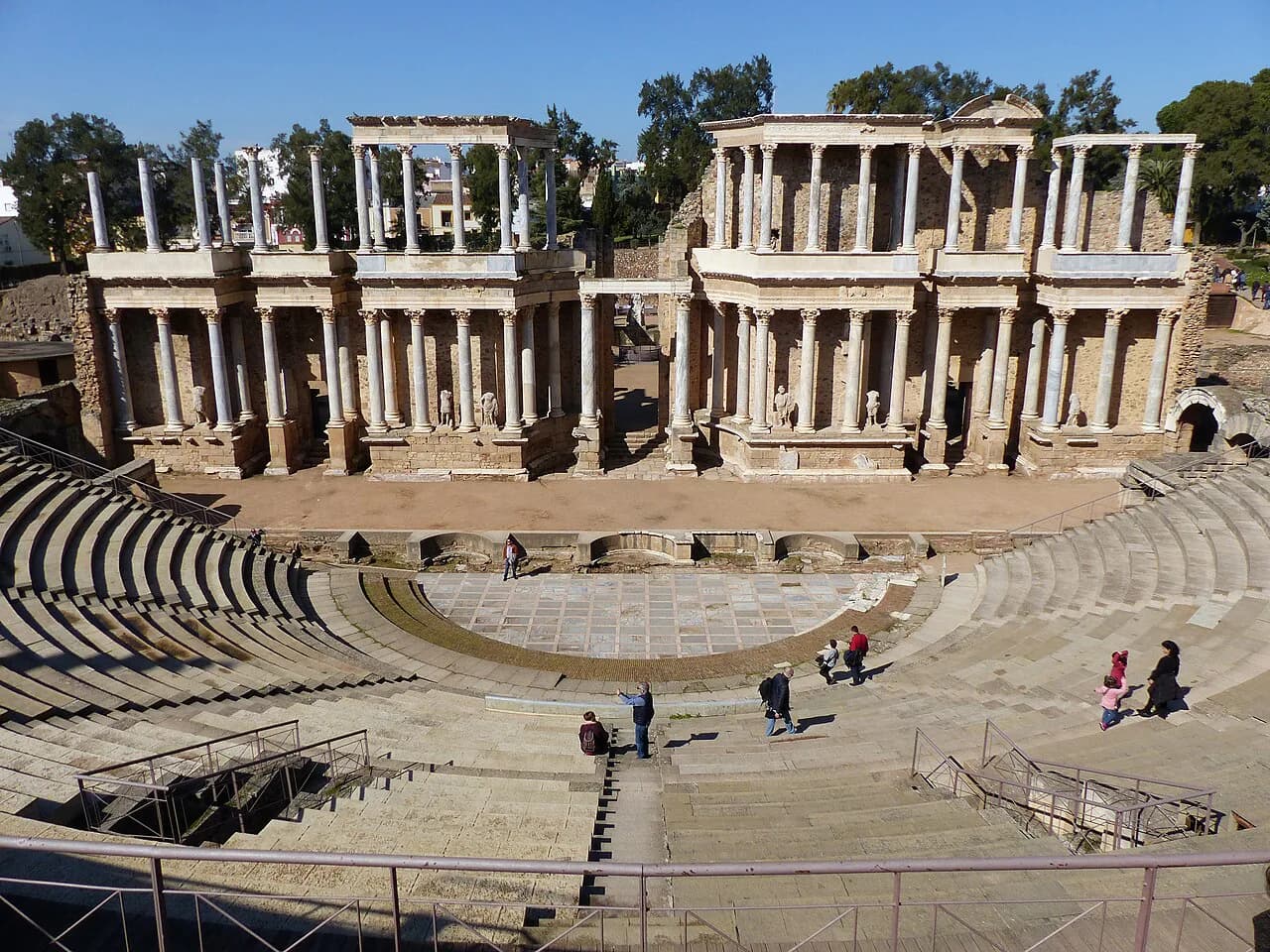
Mérida, the Roman Augusta Emérita, holds one of the densest archaeological ensembles in Spain, with theatre, amphitheatre and monuments woven into the modern town. Tarragona's listing, the Archaeological Ensemble of Tárraco, does the same for the Roman city on the Catalan coast. Both are short-break towns in their own right, not footnotes to a Madrid or Barcelona trip, and you can weigh the two against each other in the Mérida, Spain: Roman Theatre, Amphitheatre and Museum Guide.
Mérida suits the inland Extremadura circuit alongside Cáceres, while Tarragona is an easy rail stop from Barcelona and a base for the Costa Daurada. The Roman ruins in Spain guide covers the monuments in both cities in more detail. Check each monument's own ticket and opening information before you travel, as combined tickets vary by site.
Úbeda and Baeza: Renaissance squares in Jaén
Úbeda and Baeza share a joint listing for their Renaissance monumental ensembles, and the two towns sit close enough together to visit as one break. The squares, palaces and churches are the exhibit, and the pleasure is in the uniform stone architecture rather than a single headline monument. They are the least crowded of the big-town listings, which is part of the appeal.
Jaén's inland position means summer midday heat is a real constraint, so plan indoor visits and shaded squares for the hottest hours. The towns fit a rail itinerary from Madrid or Córdoba, though connections are less frequent than on the main lines, so check timetables rather than assuming a convenient train. The Moorish heritage nearby, including the Alcazaba of Málaga, makes a sensible extension.
Alcalá de Henares: the university and historic precinct
Alcalá de Henares is listed for its university and historic precinct, a Renaissance planned town east of Madrid. It is the easiest UNESCO town to add to a Madrid trip, and the university buildings and streets are the reason to go rather than a single monument. The town is compact enough for a half-day on foot.
Because it is a commuter town on Madrid's rail network, it works as a morning or afternoon rather than a full break. Check the university's own visiting arrangements if you want to see interiors.
Ibiza, biodiversity and culture: Dalt Vila
Ibiza's listing is unusual because it covers culture and biodiversity together, with the fortified old town of Dalt Vila as the cultural anchor and the island's marine and coastal habitats as the natural half. Dalt Vila is a walled hill town of gates, ramparts and lanes, and it is the part a short-break visitor can actually walk. The listing also covers the island's Phoenician and Carthaginian archaeology.
Eivissa (Ibiza Town) is the base for Dalt Vila, and the old town is walkable from the harbour, which makes it a realistic half-day even on a short island break. The island is also the setting for several Game of Thrones locations Spain, which surprises visitors who know it only for its nightlife. Check the town's own heritage pages for opening times of the walls and gates.
San Cristóbal de La Laguna and the Canary Islands list
San Cristóbal de La Laguna on Tenerife is listed as a historic town, and its grid plan is the reason it stands out among Spanish old towns. The Canary Islands also hold natural listings such as Teide National Park, which is a landscape rather than a town and needs different planning. If you are flying to Tenerife, La Laguna is the urban heritage stop.
Teide is a mountain visit, so treat it as a separate day with its own access rules rather than an old-town walk. Check the park's own visitor information for access and any restrictions before you go.
Fitting a UNESCO town into a short break
The realistic pattern is to fly into Málaga, Alicante, Palma or a regional airport and take a train or bus to one town rather than trying to cover several. Toledo and Segovia are easy from Madrid, Tarragona from Barcelona, and Santiago from Galicia's airports, while Mérida, Úbeda and Baeza need longer connections. Check the operator timetables for the day you travel rather than relying on a remembered schedule.
Some towns are genuinely walkable end to end, which makes them good one-night stops; others need a car or a long transfer, which argues for staying two nights or choosing a nearer base. Build the trip around one headline monument and one old-town wander per day. For a wider shortlist of bases, see the most beautiful towns in Spain.
Trade-offs: closures, heat and crowds
Monday closures hit museums and some monuments, so check the specific site rather than assuming a town's sights are open. Inland Andalusia and Extremadura get genuinely hot at midday in summer, so plan indoor visits and shaded squares for the middle hours. Churches and cathedrals close to tourists during mass, which can cut a visit short if you arrive at the wrong time.
The headline monuments draw the biggest queues and the old towns fill up by late morning, so go early or late where you can. Smaller listings such as Úbeda, Baeza and Alcalá de Henares are quieter and easier to enjoy at short notice. Never assume a site is open because a listing exists: the monument, not UNESCO, runs the door.
Which UNESCO town should you book first?
Start with the town whose listing matches the streets you want to walk: Toledo for layered Christian, Muslim and Jewish heritage in one walled city, Segovia for the aqueduct and the Alcázar, Salamanca for the golden university quarter, and Cuenca for the gorges and the hanging houses. Mérida and Tarragona are the picks for Roman remains, Úbeda and Baeza for Renaissance squares, and Alcalá de Henares if you want the easiest add-on to a Madrid trip. Ibiza's Dalt Vila and La Laguna cover the island options.
A listing is a reason to choose a base, not a guarantee of a good day out: check each monument's own opening hours, ticket arrangements and church service times for the day you travel. If you are building a wider Spanish itinerary, the Castles in Spain and Roman Ruins in Spain guides are the natural next reads. Book the train or bus once you have confirmed the connection.
Explore more Spain guides
Frequently Asked Questions
How many UNESCO World Heritage sites are there in Spain?
Spain has one of the largest World Heritage lists in the world, spread across the mainland and both island groups. Rather than work from a count, use the town listings that fit your base: Toledo, Segovia, Salamanca, Cuenca, Santiago de Compostela, Ávila, Cáceres, Mérida, Tarragona, Úbeda and Baeza, Alcalá de Henares, Lugo and Ibiza's Dalt Vila are the easiest for a short break.
Is the Alhambra a UNESCO site?
Yes, the Alhambra, Generalife and Albayzín in Granada form a single World Heritage listing. Granada is best treated as a mention-only starting point here, since the focus of this guide is the towns that work as a base for a short break beyond Madrid, Barcelona, Seville, Granada, Valencia and Córdoba.
Which Spanish UNESCO town is easiest from Madrid?
Toledo and Alcalá de Henares are the easiest additions to a Madrid trip, with Segovia close behind. Each is reachable by train and compact enough to walk, so a day or an overnight covers the core. Check the operator timetable for the day you travel.
Do I need a car to see Spain's UNESCO towns?
No for the big ones: Toledo, Segovia, Salamanca, Santiago, Tarragona, Mérida and Alcalá de Henares all sit on rail lines. Cuenca, Úbeda and Baeza, and the smaller Extremadura towns are less frequent by rail, so a car or a longer bus trip may suit better. Check connections before you commit to a base.
Sources
Notes for your next Spanish town break
Optional updates to our guides.
You might also like
Continue reading
More guides you'll find useful