Mérida, Spain: Roman Theatre, Amphitheatre and Museum Guide
Plan a short break in Mérida, Spain: the Roman theatre and amphitheatre, the National Museum of Roman Art, the Roman bridge and the Arab Alcazaba.
On this page
Mérida is Spain's Roman capital in all but name, and a compact day of walking takes in its theatre, amphitheatre, museum, bridge and Alcazaba. It sits in the Extremadura province of Badajoz, founded as Augusta Emérita in 25 BC and inscribed by UNESCO in 1993 as the Conjunto Arqueológico de Mérida. This guide orders the sights by geography, explains where the ticket logic bites and how the town slots into a trip from Cáceres.
Where Mérida is in Spain and how it fits a short break
Mérida lies in Extremadura, the region that fronts Portugal, and the A-5 motorway links it with Madrid to the east and Badajoz to the west; the A-66, the Vía de la Plata, runs north to Cáceres and Gijón and south towards Seville. Badajoz's airport is the closest at around 41 kilometres, but Seville and Madrid airports carry more commercial flights, so most UK travellers fly into one of those and continue by road or rail. Mérida rewards being treated as a stop on an Extremadura loop rather than a fly-in break.
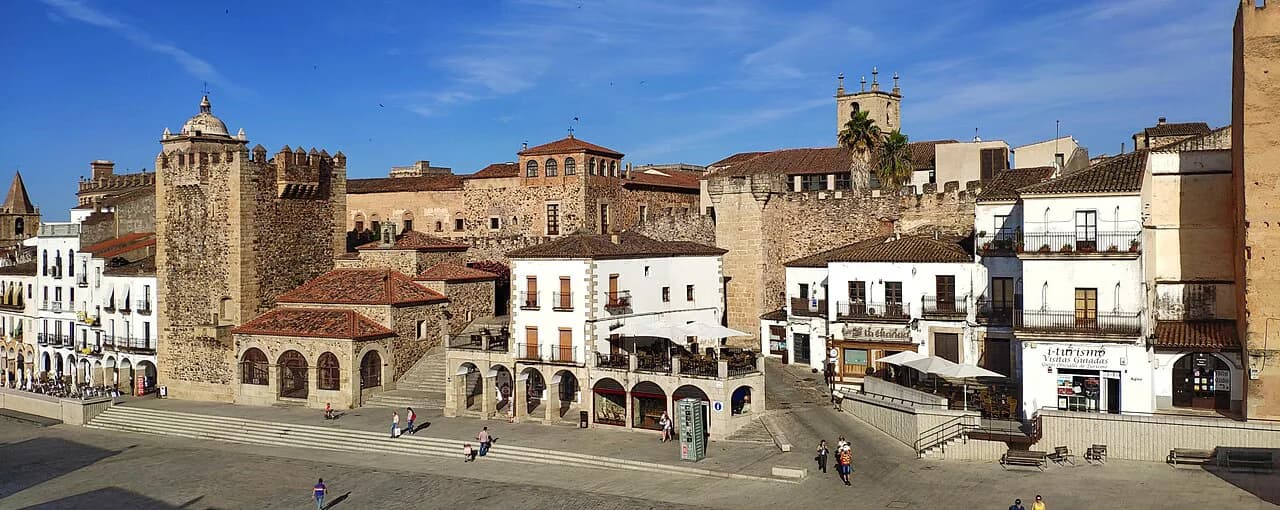
The practical anchor for the region is Cáceres, whose Ciudad Monumental de Cáceres and Plaza Mayor make a natural first base. From there, Mérida is the day out that adds a full Roman layer to the medieval Extremadura circuit; plan your wider route around the things to do in Cáceres and use Mérida as the classical counterweight.
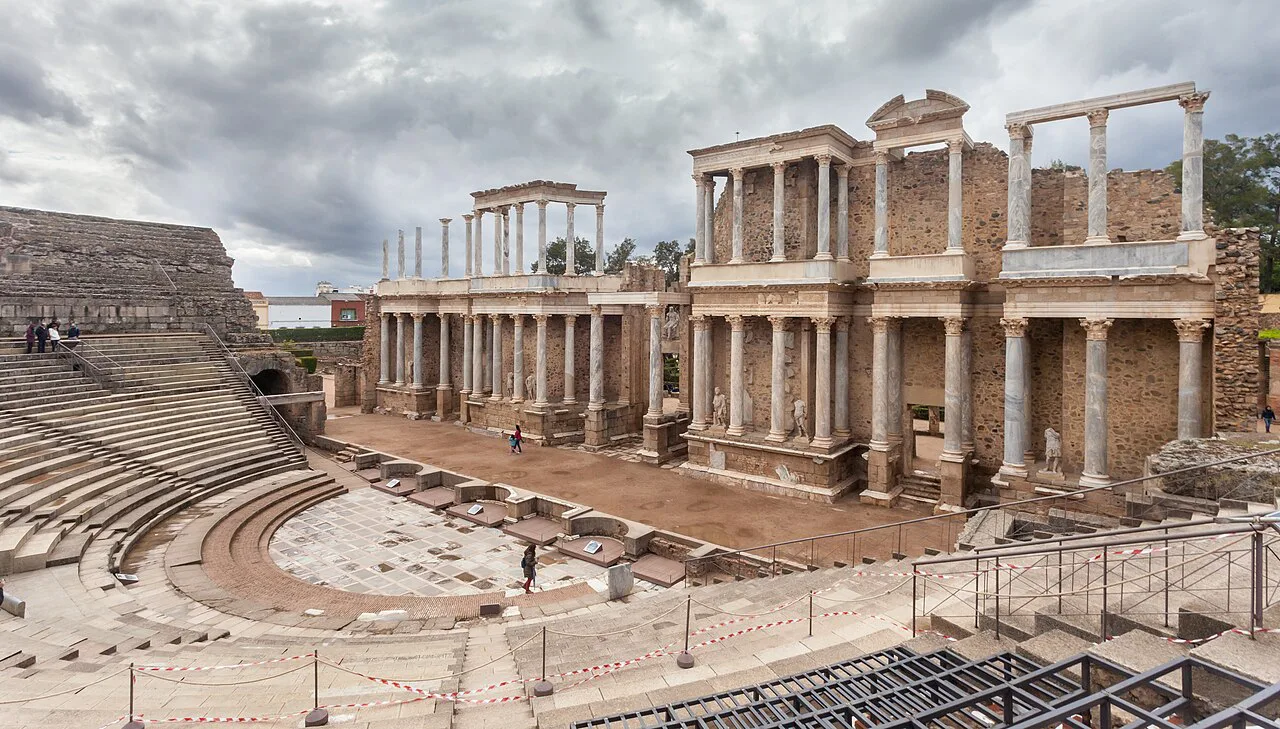
The Roman theatre and amphitheatre: the set-piece visit
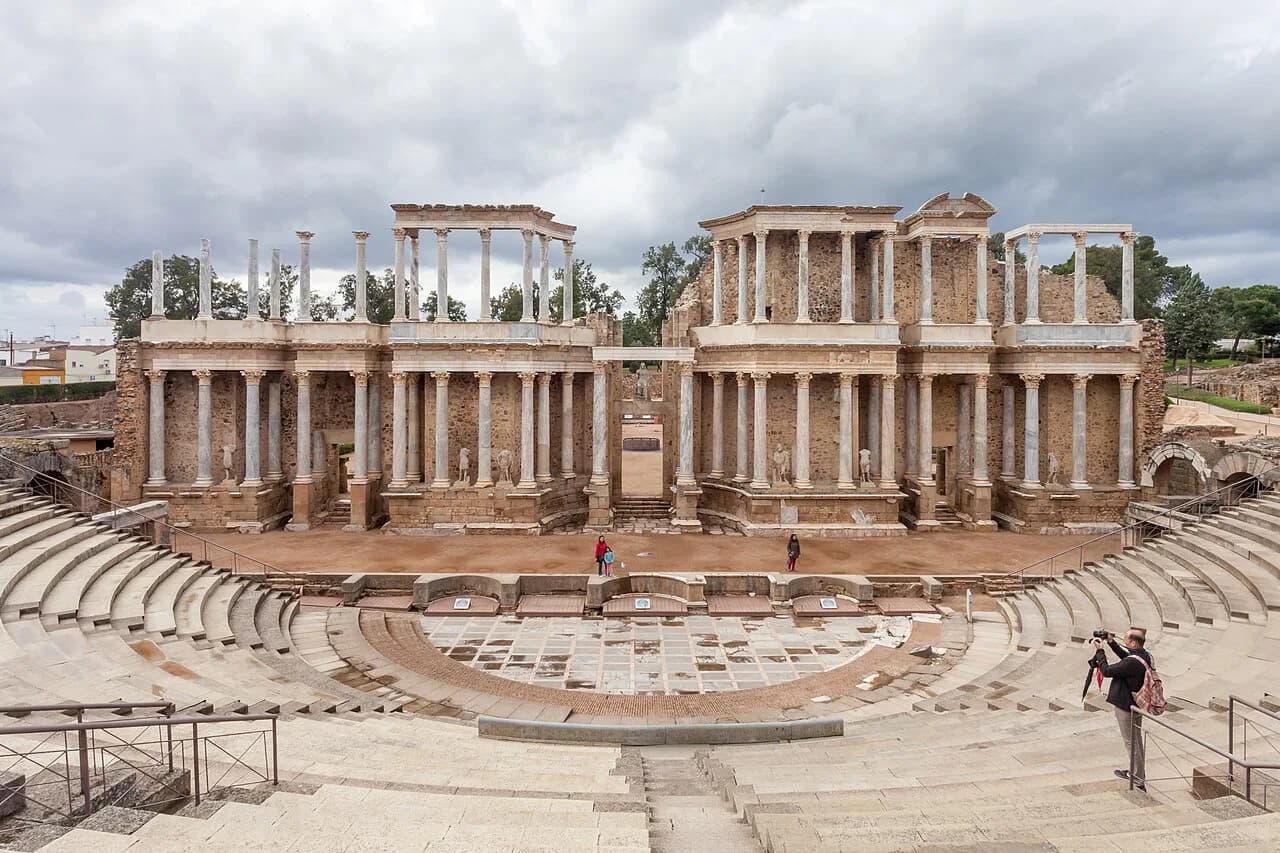
The Teatro Romano and Anfiteatro Romano sit together on the hill at the east edge of the centre, and they are the visit around which everything else is arranged. The theatre is the better preserved of the pair and the reason Mérida's UNESCO listing stands out; the amphitheatre next door staged gladiatorial combat and is entered through the access galleries beneath the seating, where placards label the different fighter types. Allow longer here than at any other site.
In the amphitheatre you can walk up through the cavea and descend into the fossa, the pit under the arena floor, which gives a clearer idea of how the contests were staged than a roofless shell normally does. The combined ticket, sold at these sites and covering the main monuments, already makes financial sense from the second paid monument, so buy it here if you intend to add the Alcazaba, the Circo or the Morería area.
The Museo Nacional de Arte Romano and what the originals are
The Museo Nacional de Arte Romano holds the sculptures, mosaics and inscriptions removed from the city's monuments, so the statues you see on site are copies or replacements and this is where the original pieces live. It is the right follow-up to the theatre and amphitheatre because it explains what the buildings carried before conservation moved the contents indoors.
Sequence the day as theatre and amphitheatre first, museum second, so the artefacts make sense against the buildings you have just walked through. Whether the museum is covered by the combined ticket is confirmed at the ticket desk where you buy it.
The Roman bridge, the Alcazaba and the riverside walk
The Puente Romano, at almost 800 metres, was the longest bridge of antiquity, and its oldest-looking stretches are the original Roman fabric, though it has been restored several times. Walk out on it for the view back to the Alcazaba, then cross to the modern Puente Lusitania, Santiago Calatrava's 1991 cable-stayed bridge, which took over vehicle traffic so the Roman bridge could be pedestrianised.
The Alcazaba Árabe was built in 835 to house the Arab governors and to watch the bridge, and the walls give the best elevated view of the Roman crossing. Inside, the aljibe cistern survives in good condition; the mosque and watchtower that once stood above it are gone, so read the site panels before you climb. The riverside walk between the Alcazaba and the Morería excavation is the natural link between the two halves of the city.
The Acueducto de los Milagros and the Circus, outside the core
The Acueducto de los Milagros stands in open ground north-west of the centre and is free to visit at any hour. The Acueducto y termas de San Lázaro are passed on the walk towards the Circo Romano, also open and free to view from the outside. These are the flexible sites: slot them into early morning or late afternoon rather than the midday block.
The Circo Romano held chariot races for a crowd of up to 30,000, and today the spina and seating need imagination; watching the explanatory video at the information point first makes the ruins legible. Climb to the terrace of the small building for an aerial view over the whole circuit.
The Templo de Diana, the Arco de Trajano and the Concatedral de Santa María la Mayor
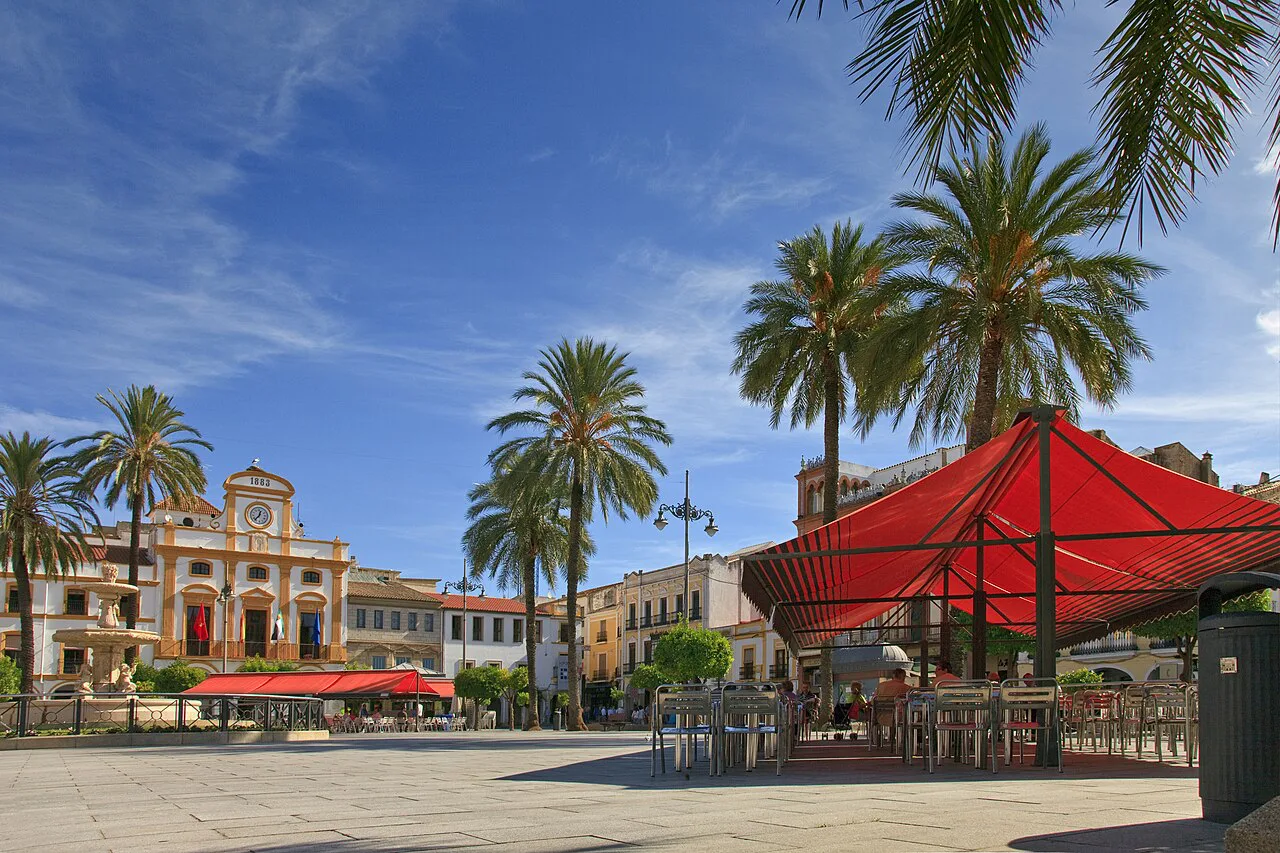
Back in the centre, the Templo de Diana, the Arco de Trajano and the Concatedral de Santa María la Mayor sit within a few minutes of each other and are best walked as a single loop around the Plaza de España. The temple's columns stand among later buildings, the arch marks the old civic axis and the concatedral closes the loop at the heart of the town.
Church interiors can shut for the siesta and may be closed to tourists during services, so treat the concatedral as a sight to catch when the doors are open rather than a certainty. If it is shut, carry on with the temple and the arch, which are exterior monuments and need no entry ticket.
Área Arqueológica de Morería and the Santa Eulalia crypt
The Área Arqueológica de Morería preserves excavated Roman houses and street levels beneath the modern government building that roofs them, so it is a good wet-weather option as well as a cool one. It sits between the river and the centre, on the way back from the bridge.
At the Basílica de Santa Eulalia, the entrance to the crypt is at the rear of the church, and a small exhibition traces how the spot shifted from Roman houses to a Christian necropolis to a basilica. That layered history is the reason to include it rather than a detached curiosity.
The combined ticket: when it pays and when it does not
The ticket office sells single tickets for each monument alongside a combined ticket covering the main sites, and the combined version is the cheaper route the moment you plan to enter two paid monuments. Buy it at the theatre or amphitheatre, where the options are set out clearly, rather than collecting singles one by one.
If your day is built only from the free exterior monuments, the bridge, the aqueduct and the circus shell, skip the combined ticket and pay for the theatre alone. Prices change, so read the board at the ticket desk before deciding.
A walking order for one full day in Mérida
Start early at the Acueducto de los Milagros and walk to the Circo Romano while it is cool, then head to the theatre and amphitheatre for the combined ticket and a long look at both. Break for lunch near the Plaza de España, then take the museum in the early afternoon when the heat peaks, and finish with the temple, arch and concatedral loop before an evening walk over the Puente Romano and up the Alcazaba.
One day covers the set pieces; two days let you add the Morería area, the Santa Eulalia crypt and the riverside at leisure. The distances inside the core are short and walkable, so the constraint is heat rather than transport.
How Mérida fits a trip from Cáceres and Badajoz
Mérida works best as a day within an Extremadura trip based in Cáceres, whose old town and plaza give you medieval contrast, or as an overnight on the Badajoz road. The two cities are linked by the A-66 and by rail, so check operator timetables before fixing your day.
If you are mapping the wider region, the Cáceres Attractions: 6 Visitor Guides hub sets out the monuments of the medieval city so you can balance the two stops. Allow Mérida a full day, or two nights if you want to see the Roman sites without rushing.
Summer heat and midday closures in inland Extremadura
July and August in Mérida reach around 40°C, while December and January average about 3°C, so the town is a split day in summer: outdoor monuments early, museum and shaded interiors through the early afternoon, and the bridge and Alcazaba again in the evening. The open-air aqueduct, bridge and circus need no ticket, so you can rearrange them freely around the heat.
Church interiors such as the concatedral and Santa Eulalia keep their own hours and can shut for midday, so keep the religious sites flexible and build the day around the Roman monuments, which are managed as visitor attractions. Read the notice on each door on the morning you visit.
Should you build your Extremadura break around Mérida?
Yes if you want the densest Roman set piece in Spain inside a walkable town, with the museum and the theatre within a few streets of each other. No if you want a coast or a beach: Mérida is inland, hot at midday in summer and built around monuments rather than a seafront.
Base yourself in Cáceres, check the train and bus timetables yourself, and take the combined ticket once you know how many paid sites you will enter. That way Mérida is a well-planned day rather than a rushed drive through the Roman ruins.
Explore more Cáceres guides
Frequently Asked Questions
Is Mérida in Spain worth visiting on a short break?
It is, if you want Roman monuments on a scale few cities can match. The theatre, amphitheatre, museum, bridge and Alcazaba sit close enough to cover in one full day of walking, and Cáceres or Badajoz make easy bases.
Where is Mérida in Spain?
Mérida is in Extremadura, in the province of Badajoz, on the A-5 towards Portugal and the A-66 Vía de la Plata between Cáceres and Seville. Badajoz's airport is the closest, but Seville and Madrid have more commercial flights.
What is the oldest Roman city in Spain?
Mérida was founded as Augusta Emérita in 25 BC and is often called Spain's little Rome for its concentration of Roman monuments, now a UNESCO World Heritage site. Other Spanish cities also claim Roman origins, so treat the label as a description of Mérida's scale rather than a strict record.
Sources
Notes for your next Spanish town break
Optional updates to our guides.
You might also like
Continue reading
More guides you'll find useful