Things to Do in Cáceres: Old Town Sights, Museums and Towers
Plan things to do in Cáceres: the Plaza Mayor, Arco de la Estrella, Torre de Bujaco, Concatedral de Santa María and two very different museums.
On this page
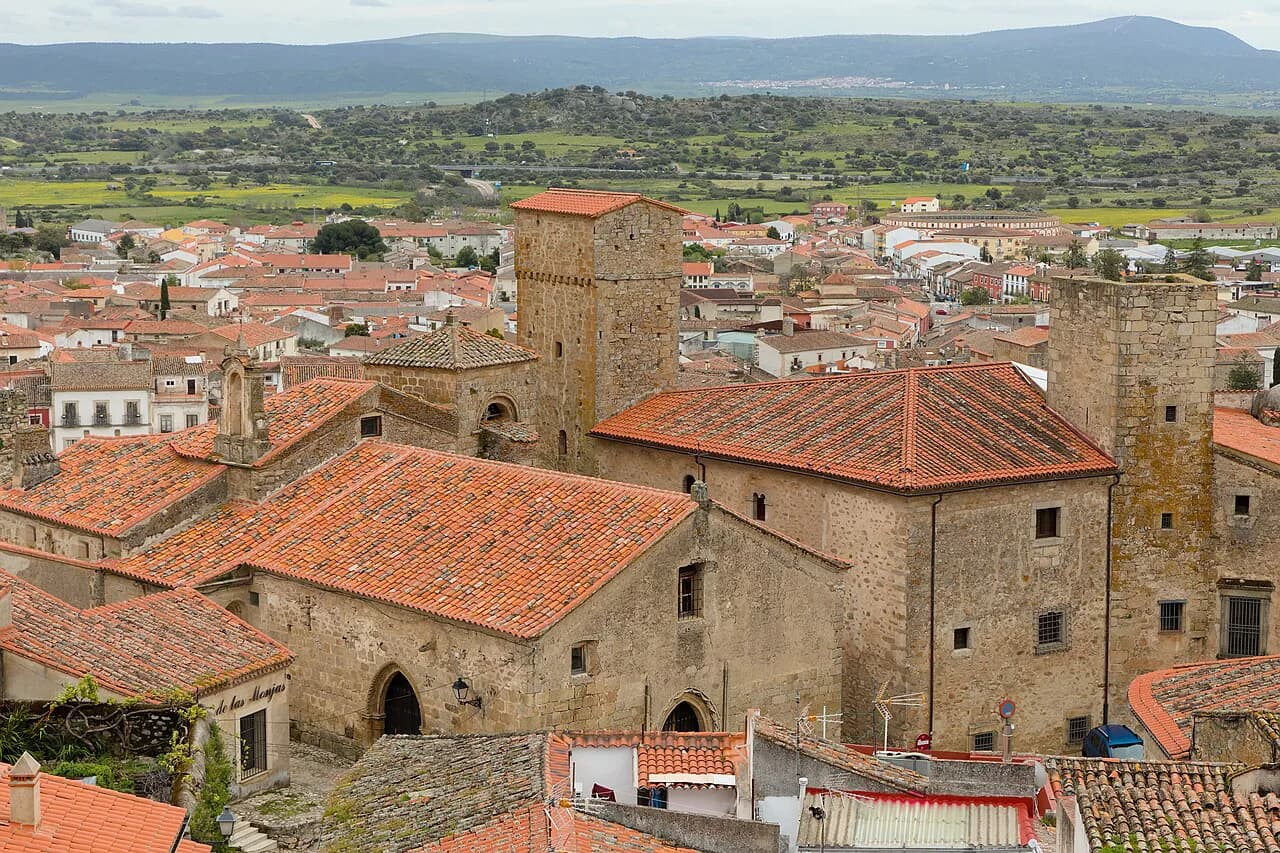
Cáceres is a one-quarter city: nearly everything worth seeing sits inside the Ciudad Monumental de Cáceres, the walled medieval grid listed by UNESCO as World Heritage. Plan on a single unhurried day on foot for the plazas, the cathedral and one museum, then a second half-day for the palaces and the contemporary art museum outside the walls. This guide groups the sights by plaza and gate rather than as a top-ten list, so you can walk them in order.
What to do in Cáceres first: the short answer
Start at the Plaza Mayor, cross into the walled town through the Arco de la Estrella and work uphill through the Plaza de Santa María and the Plaza de San Jorge to the Plaza de San Mateo. That single loop takes in the Ayuntamiento, the Torre de Bujaco, the Concatedral de Santa María and the Iglesia de San Francisco Javier without any backtracking. If you only climb one tower, make it the Torre de Bujaco, which has the panoramic rooftop view over the old town and out to the Sierra de Montánchez.
Keep the museums for later in the day and split them by taste: the Museo de Cáceres for archaeology, fine art and the cistern, the Museo de Arte Contemporáneo Helga de Alvear for modern work. The first sits inside the historic centre, the second is a separate block of time in the modern city. The Cáceres Attractions: 6 Visitor Guides hub collects the individual monument pages if you want to read one sight at a time.
How the old town is laid out and how to walk it
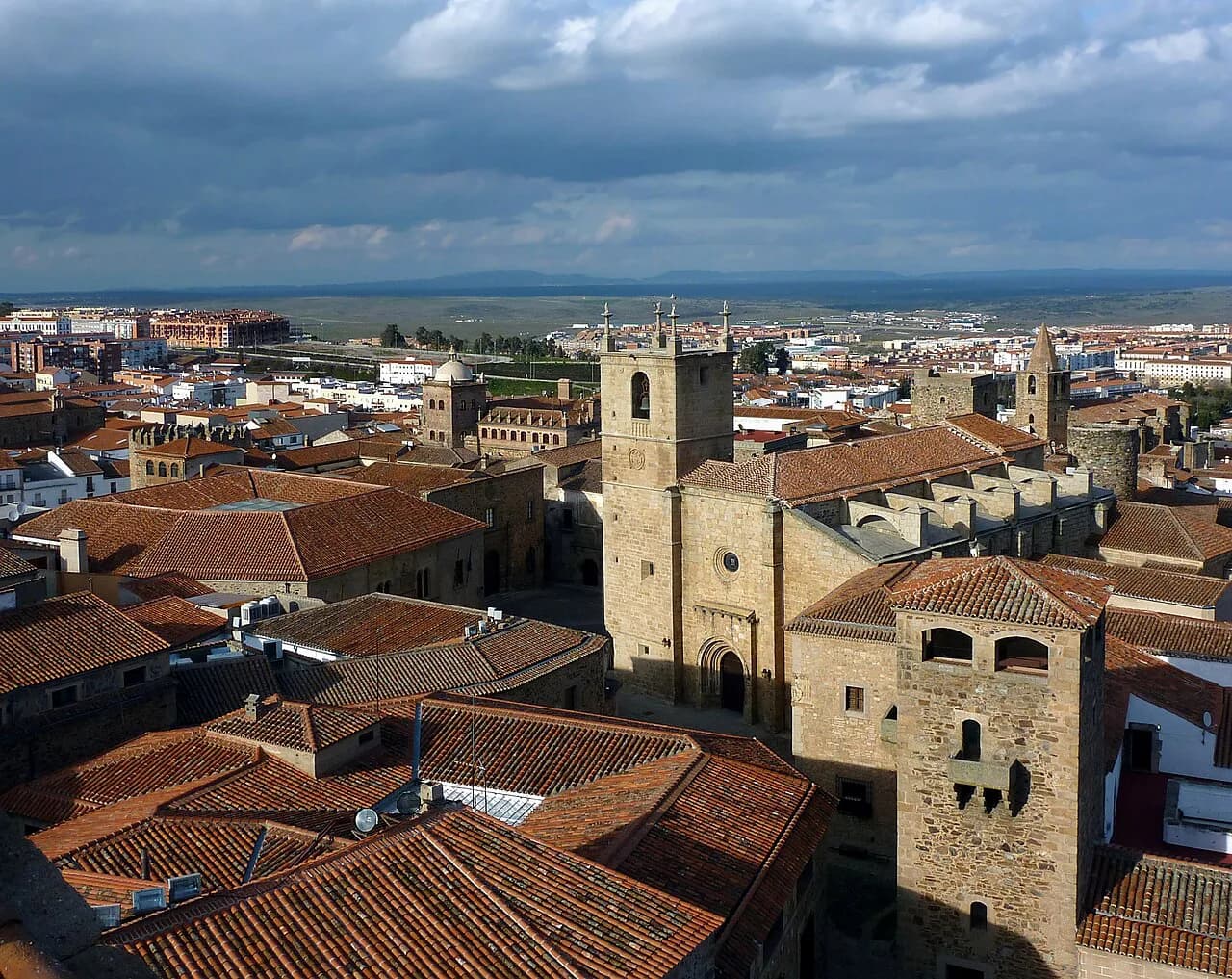
The medieval quarter sits on rising ground behind the Plaza Mayor, ringed by the remains of its Almohad wall and entered through a handful of gates. The Plaza Mayor is the low, open, modern edge; inside the walls the streets narrow into cobbled lanes between palace facades and church towers. Because the quarter is compact, the sensible approach is a loop: enter at the Arco de la Estrella, climb gradually past the main plazas, and drop back down to the Plaza Mayor from the far side.
Cobbles and slopes do most of the work here, so wear shoes with grip and carry water in summer, when the inland Extremaduran heat builds through the middle of the day. Churches and shops in Spain often shut for a long midday break, so treat the early afternoon as museum or shaded-plaza time rather than church-visiting time. Signage inside the quarter is good enough to navigate by the plaza names alone.
Plaza Mayor, the Ayuntamiento and the Torre de Bujaco
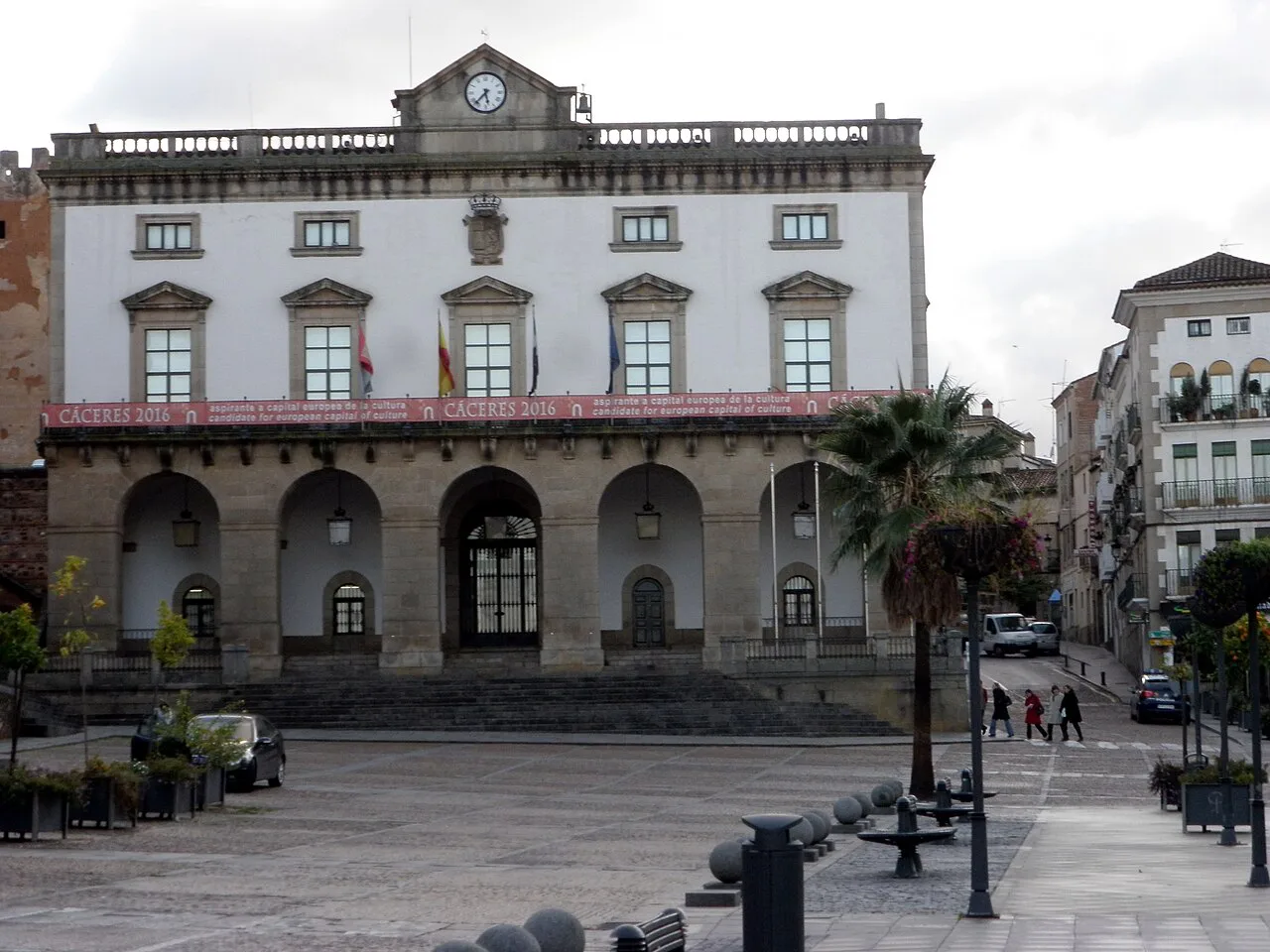
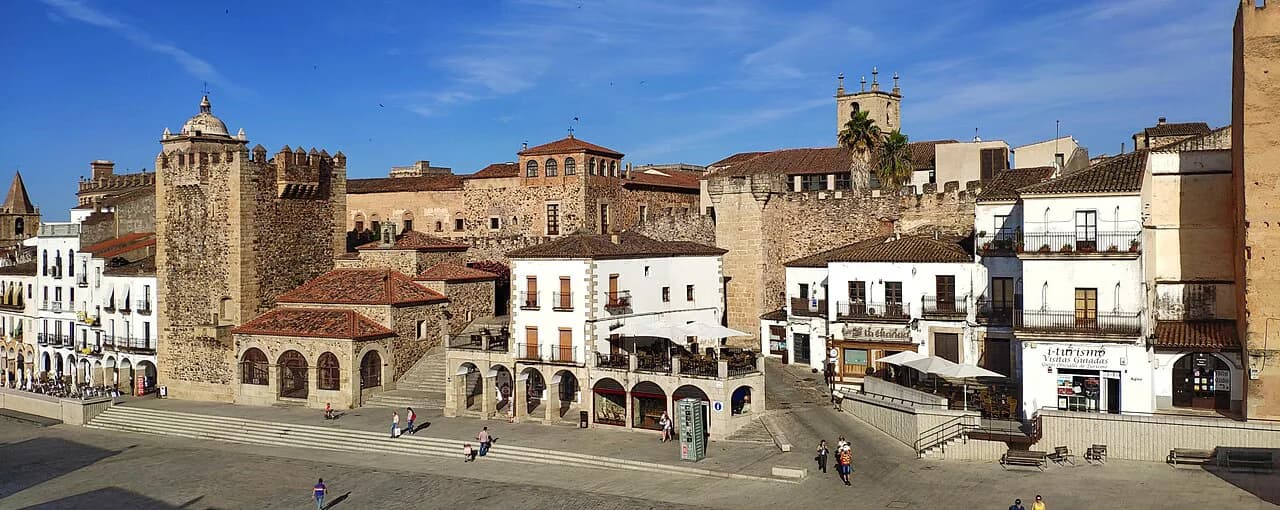
The Plaza Mayor is the natural meeting point, with the Casa Consistorial (the town hall) on one side and the Torre de Bujaco rising at the corner where the walled town begins. It is the one place in Cáceres where the modern city and the medieval one sit in the same frame, which makes it the obvious first photograph and the obvious place to orient yourself.
The Torre de Bujaco is a twelfth-century Almohad tower, one of the best preserved of its kind in Spain, and it formed part of the defensive wall that wrapped the town. Beside it stand the Torre de los Púlpitos and stretches of the original Muralla, so a few minutes at this corner gives you the clearest reading of how Cáceres was fortified.
Climbing the Torre de Bujaco for the rooftop view
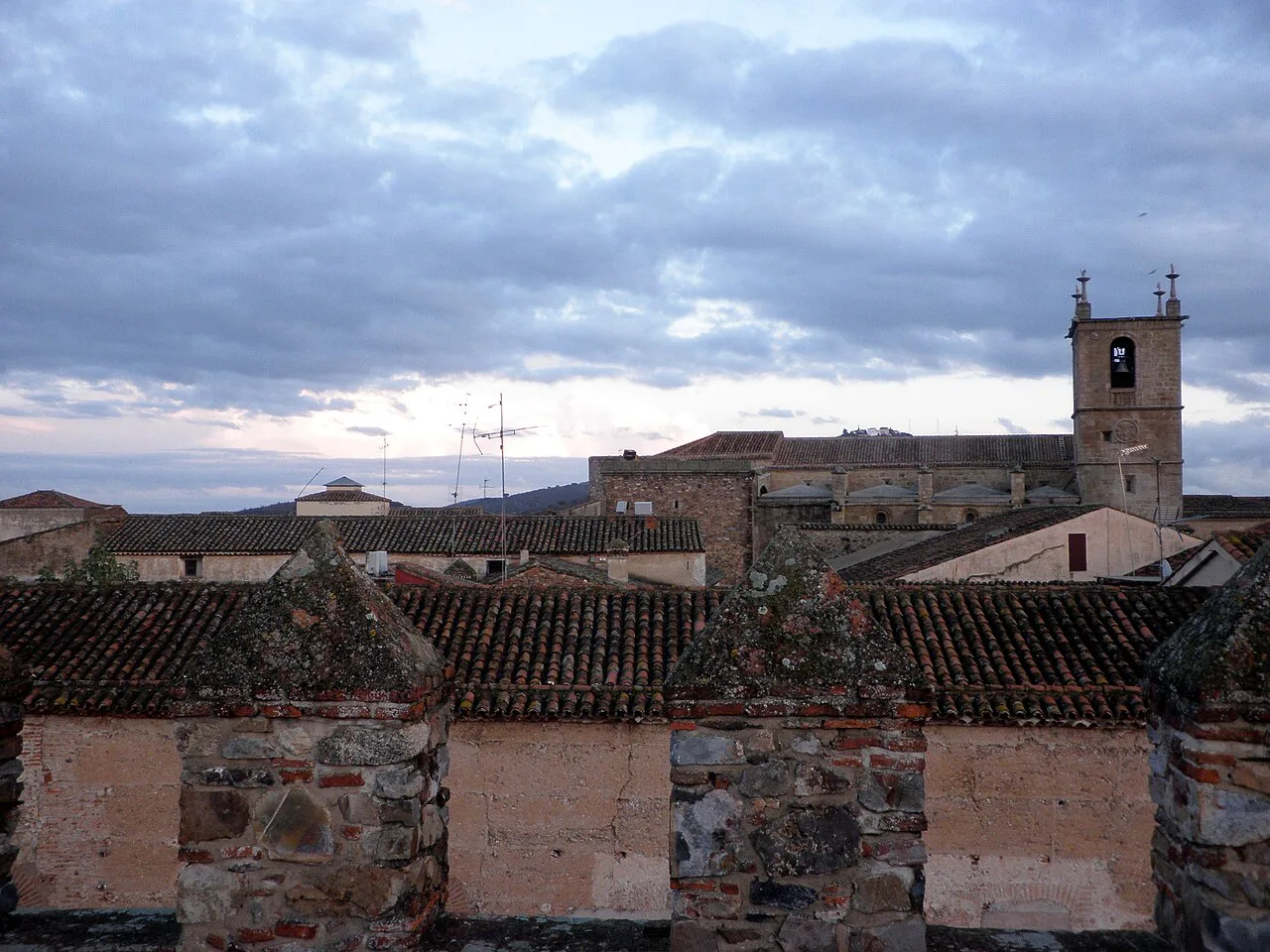
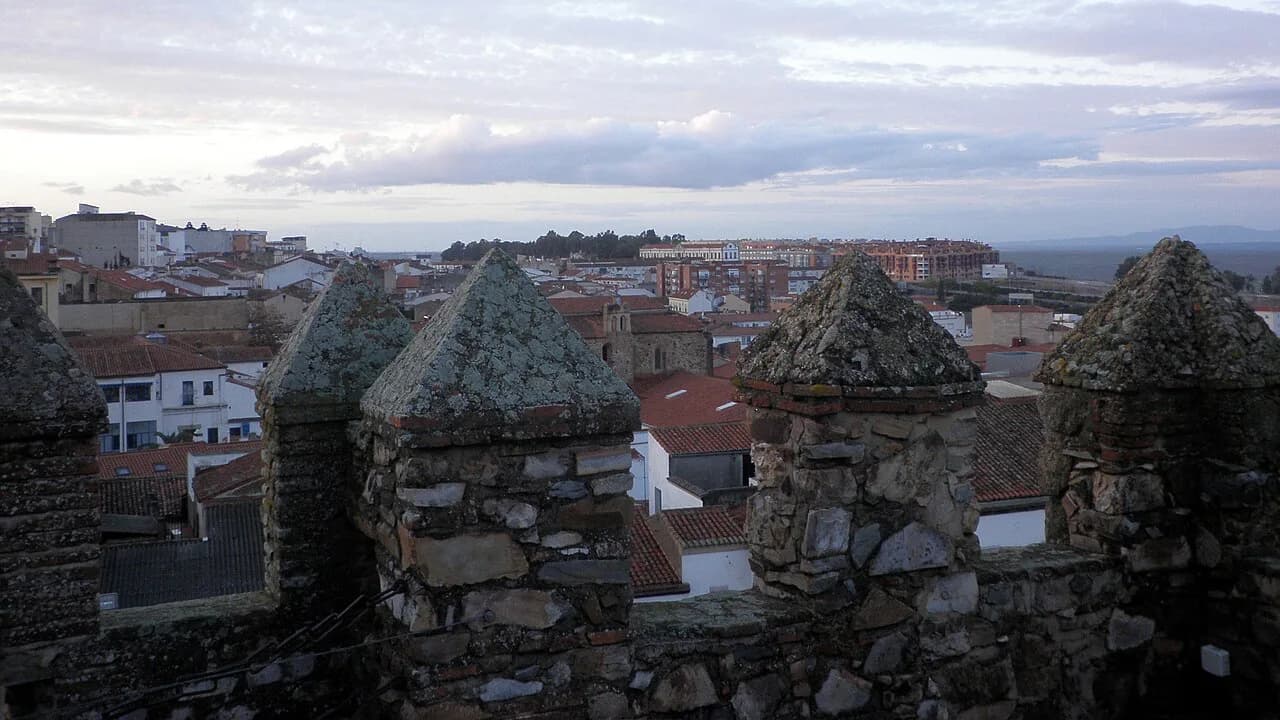
The Torre de Bujaco is the paid climb, and the reward is a rooftop panorama over the tiled roofs of the old town with the Sierra de Montánchez on the horizon. Tickets are sold through the city's tourism service, where you can check current admission and any reduced rates before you go.
There is a second tower in the walled town, the fifteenth-century Torre de las Cigüeñas, built for Diego de Cáceres Ovando after the Catholic Monarchs allowed him to keep his battlements while other noble towers were cut down. It now houses the military command of Cáceres, and a local guide describes entry as free, with views over the city and the storks that nest on the tower. Treat it as the budget alternative to the Bujaco climb, and confirm access arrangements on arrival.
The Arco de la Estrella: the main way into the walled town
The Arco de la Estrella is the gate most visitors cross, a stone arch cut through the wall a few steps from the Torre de Bujaco that leads straight into the Ciudad Monumental de Cáceres. Walking through it is the moment the trip changes register, from café terraces to palace stonework.
Once through the arch you are on the sloping approach to the Plaza de Santa María, with the cathedral tower ahead of you. The gate is also the easiest landmark to navigate back to if you lose your bearings in the lanes, since everything inside the walls drains back towards the Plaza Mayor.
Plaza de Santa María and the Concatedral de Santa María
The Plaza de Santa María is the ceremonial heart of the walled town, framed by the cathedral and the facades of noble houses. The Concatedral de Santa María grew from a thirteenth-century church, with Gothic and Renaissance work layered on over the following centuries, and it was given concathedral status in 1957, sharing its seat with Coria.
Inside, look for the Cristo Negro, a fourteenth-century Gothic image venerated across the city. The concatedral publishes its own visitor information and ticket arrangements, so check there for admission and for any times when tourism gives way to services.
Plaza de San Jorge and the Iglesia de San Francisco Javier
The Plaza de San Jorge is a small, contained square with the statue of the city's patron, and it opens onto the Iglesia de San Francisco Javier, a Baroque church whose position gives it one of the strongest profiles in the quarter. It works as a pause between the dense palace streets and the upper plazas.
The church belongs to the Jesuit foundation associated with the square and is one of the sights local guides place alongside the cathedral in importance. Opening is tied to visiting hours rather than a continuous day, so build it into the middle of your loop rather than the edges.
Plaza de San Mateo, Plaza de San Pablo and Plaza de las Veletas
Higher in the quarter, the Plaza de San Mateo, Plaza de San Pablo and Plaza de las Veletas form a chain of smaller squares at the top of the medieval grid. The Plaza de las Veletas takes its name from the old cistern building that now anchors the Museo de Cáceres, which makes it the natural link between the palaces and the museum. Walking this upper section first and descending afterwards saves you climbing twice.
The Museo de Cáceres and its aljibe
The Museo de Cáceres occupies the Casa de las Veletas and holds archaeology and fine art from the region, but the reason to go is the aljibe, the Moorish cistern preserved beneath the building. It is one of the few places in the city where you see the Islamic layer of Cáceres at close range rather than reading about it on a plaque.
The museum's own site lists the permanent collection and temporary exhibitions, which is the place to confirm opening days, admission charges and free-entry periods. It sits inside the walled town, so it slots neatly into the upper-plaza part of your loop rather than needing its own trip.
The Museo de Arte Contemporáneo Helga de Alvear
The Museo de Arte Contemporáneo Helga de Alvear is the counterweight to all that stone: a contemporary art museum that sits outside the medieval walls and asks for a separate block of time. Local guides treat it as one of the city's cultural reference points rather than an optional extra.
Because it lies beyond the Ciudad Monumental de Cáceres, the honest trade-off is a walk or short transfer away from the plazas, so group it with the modern city and the Parque del Príncipe rather than trying to squeeze it between churches. Check the museum's own pages for current opening hours and admission before committing an afternoon to it.
Palaces worth seeking out: Golfines de Arriba and Golfines de Abajo
The Palacio de los Golfines de Arriba is a Renaissance fortress-house, begun in the fourteenth century for Isabel de la Cerda and García de Golfín, with three of its original four towers surviving in truncated form. Its courtyards, galleries and the Sala de los Torreones are the draw. The Palacio de los Golfines de Abajo, nearer the cathedral, mixes Gothic and Renaissance work and was once a residence of the Golfín family.
The Golfines de Abajo offers guided visits, which is the practical reason to plan this stretch rather than wander into it, since you may need to fit a set time. Both palaces are inside the walls and close together, so they belong in the same hour of your loop.
The Judería Vieja and the Barrio de San Antonio
The Judería Vieja, the old Jewish quarter, is a pocket of narrow cobbled streets and simple houses with planted patios, and it was a significant centre of Jewish life in medieval Cáceres. Look for the Casa del Sol, built by the Solís family, whose coat of arms gives the building its name.
The Barrio de San Antonio is the other quieter walk, described locally as the city's most characteristic neighbourhood, and it suits the hours when the main plazas are at their fullest. Both areas reward slow walking rather than a checklist, so leave them for the part of the day when you are not climbing towers.
Odd corners: the Callejón de los Huesos and the Casa-Museo Árabe Yusuf Al-Burch
The Callejón de los Huesos is one of the quarter's curiosity corners, a lane whose name and associations give the medieval grid a story to tell beyond its palaces. The Casa-Museo Árabe Yusuf Al-Burch is a small house-museum that local guides single out as a magical stop, useful for understanding the Islamic strand in the city's history. Neither replaces the cathedral or the tower climb; they fill the gaps between them.
Small house-museums keep their own hours, so treat them as discoveries rather than fixed appointments and check locally when you are in the quarter. The Casa de los Toledo-Moctezuma, with its connection to Mexico, is another of the smaller sights on the same wandering route.
A sample day in Cáceres on foot
Begin at the Plaza Mayor, look at the Ayuntamiento and the Torre de Bujaco, then climb the tower while the morning is still cool. Cross through the Arco de la Estrella into the Plaza de Santa María for the concatedral, continue to the Plaza de San Jorge and the Iglesia de San Francisco Javier, and take the upper plazas and the Museo de Cáceres before a long lunch.
After the midday pause, use the afternoon for the palaces, the Judería Vieja and the Barrio de San Antonio, then walk out of the walls to the Museo Helga de Alvear if contemporary art appeals. That sequence keeps the climbing in one block and the flat walking in another.
How long Cáceres needs and when to go
One full day covers the walled town, the tower climb and one museum at a comfortable pace; two days lets you add the second museum, the smaller house-museums and a slower pass through the Judería. Cáceres rewards a second morning because the palaces and churches do not open on a single continuous schedule.
Inland Extremadura is hot at midday in summer, and the medieval quarter offers little shade between the plazas, so an early start and a long afternoon break are the practical pattern. Spring and autumn give you the same streets with less heat to manage.
Getting to Cáceres and moving between sights
Cáceres sits in inland Extremadura, with rail and road connections from Madrid, which is the usual starting point for a short break here. The city is compact enough that the walled town is walkable from end to end, and the modern city with the Helga de Alvear is the only part that reliably needs a transfer.
Timetables change by season, so take train and bus times from the operator rather than a plan made months in advance. The same applies to museum and monument hours, which is the one thing worth re-checking in the week before you travel.
What things cost in Cáceres: tickets and free entry
The Torre de Bujaco is a ticketed climb sold through the city's tourism service, and the Torre de las Cigüeñas is described by one local guide as free to enter. That gives you a clear budget choice between the two viewpoints without needing to guess at prices.
The concatedral, the Museo de Cáceres and the Helga de Alvear each set their own admission and free-entry periods, published on their own pages, so the reliable approach is to check those three before you go and budget for the tower on top. Churches sometimes close to tourists for services, which is a scheduling issue rather than a cost one.
Cáceres beyond the walls: Trujillo, Mérida and Monfragüe as add-ons
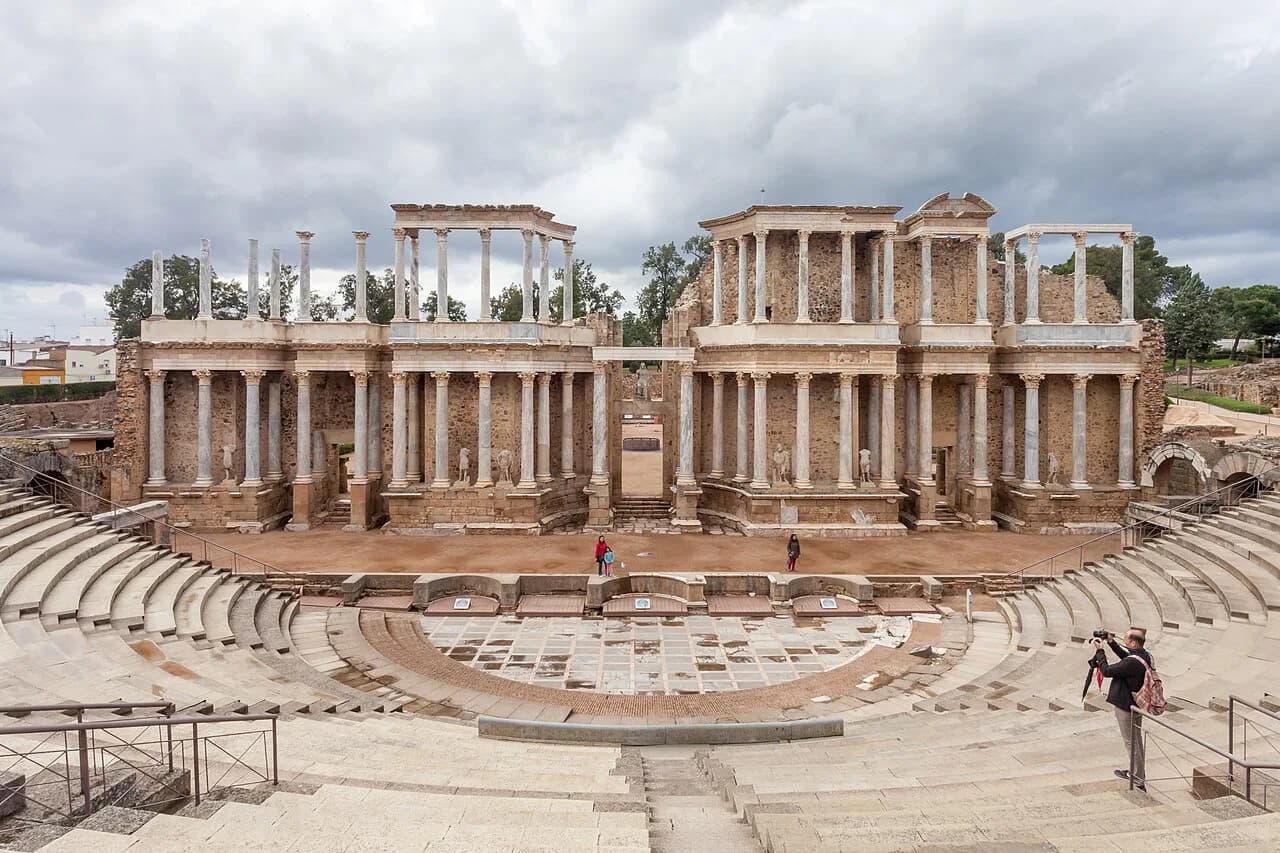
Three outings sit within reach of Cáceres and belong to separate days rather than to the city plan. Trujillo is a historic town in its own right, Mérida Spain holds the Roman theatre and amphitheatre of Augusta Emerita, and the Parque Nacional de Monfragüe is the wildlife and landscape option. Each needs its own travel time, so treat them as add-ons to a Cáceres base rather than as stops in a city loop. If you are weighing another historic quarter in the region, the things to do in a Coruña make a useful comparison.
If you are comparing walled Spanish towns, the Roman grid of Lugo or the Mallorcan walls of Alcúdia make an interesting contrast with Cáceres. For a Roman day out from Cáceres, read the Mérida guide before you book transport.
Build your Cáceres loop around the Arco de la Estrella
The workable plan is one loop inside the walls and one block outside them. Enter through the Arco de la Estrella, take the cathedral, San Jorge, the upper plazas and the Museo de Cáceres, then spend a separate half-day on the Helga de Alvear and the modern city.
Decide the tower question before you go: Bujaco for the ticketed panorama, the Cigüeñas for the free view if you confirm it locally. Then add Trujillo or Mérida as a separate day rather than trying to fold them into the old town.
Explore more Cáceres guides
Frequently Asked Questions
Is there a train from Madrid to Cáceres?
Cáceres has rail connections from Madrid, which is the usual starting point for a short break in the city. Timetables vary by season, so check the current schedule with the rail operator before fixing your plans.
Can you see Cáceres old town in one day?
Yes. The walled town is compact enough to cover the Plaza Mayor, the Arco de la Estrella, the Concatedral de Santa María, the Plaza de San Jorge, the upper plazas and one museum in a single day on foot. The Helga de Alvear museum sits outside the walls and needs a separate block of time.
Sources
Notes for your next Spanish town break
Optional updates to our guides.
You might also like
Continue reading
More guides you'll find useful