Trujillo, Spain: Plaza Mayor, Castle and Conquistador Palaces
Plan a short break in Trujillo, Spain: the Plaza Mayor, the hilltop castle, Santa María la Mayor and the palaces, gates and cistern of its old town.
On this page
Trujillo is best treated as a half-day hill town rather than a full day out: the whole historic core runs from the Plaza Mayor up to the castle on the Cabezo de Zorro, and you can walk the main monuments in a single unhurried circuit. This guide sets out the square and its palaces, the castle and walls, the churches, the Pizarro museum and the old Arab cistern, then explains how the town sits about 50 km east of Cáceres and how to build the visit around that city.
Plaza Mayor: the arcaded heart of Trujillo
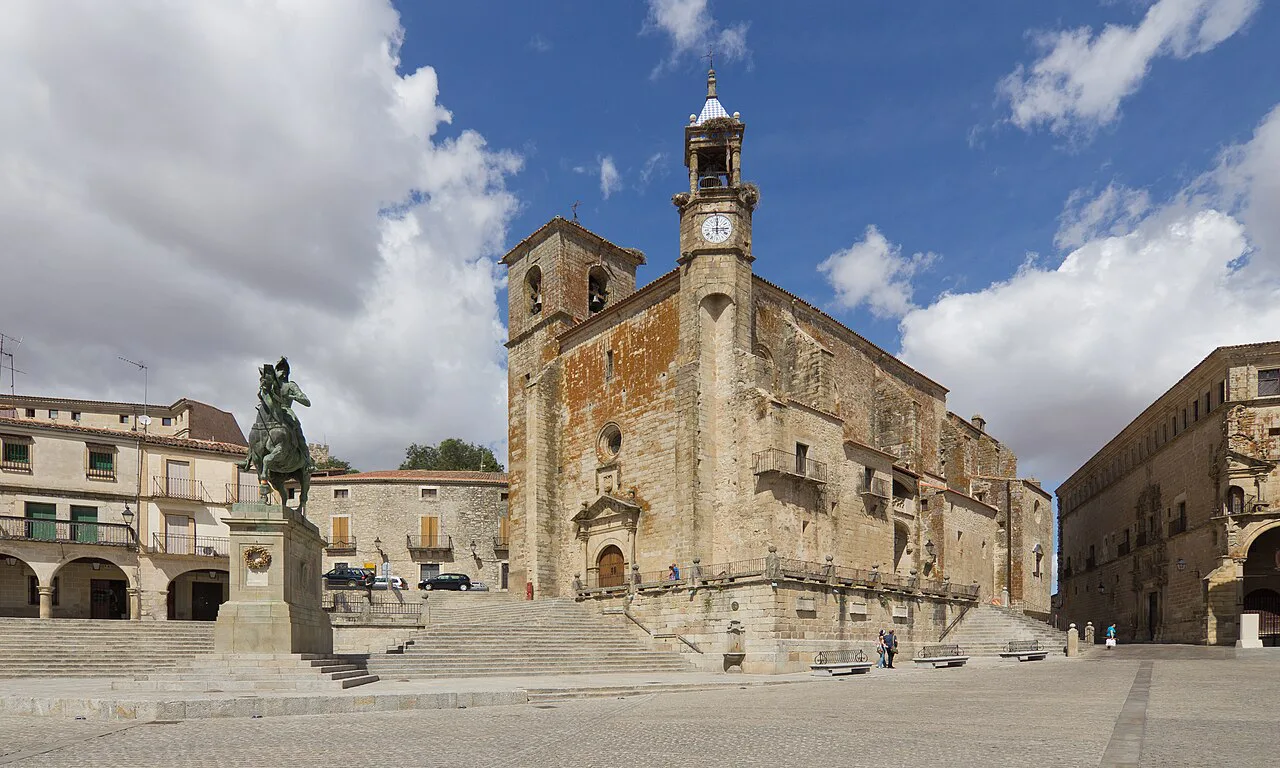
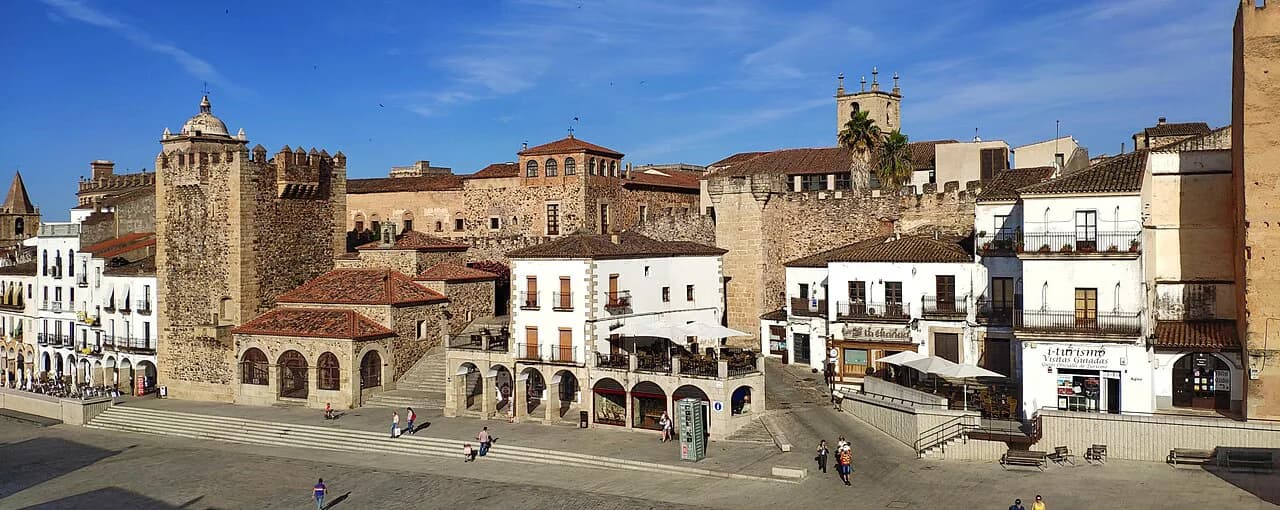
The Plaza Mayor is where the town begins, a broad square ringed by arcades, noble houses and café terraces, with the equestrian statue of Francisco Pizarro at its centre on the spot once occupied by the town's pillory. Because the old town climbs away from the square, the arcades make a practical base: you can see one set of sights, retreat into the shade for a break, then start the ascent again. The square is also the social centre of Trujillo, and it hosts events through the year, so the town can feel busier than its size suggests.
Grouped around the square and its immediate lanes are most of the town's palaces and churches, including the Iglesia de San Martín de Tours, the Palacio de los Duques de San Carlos, the Palacio del Marqués de Piedras Albas, the Palacio del Marqués de la Conquista, the Palacio de los Chaves Cárdenas, the Casa de la Cadena, the Palacio de los Chaves Sotomayor, the Iglesia de la Sangre and the Palacio de los Orellana-Pizarro. That density is the reason a short loop works here: each stop is minutes from the next rather than a separate trip. If you are comparing hill towns, the nearby Cáceres old town offers a larger walled circuit, but Trujillo's is tighter and easier to complete.
The castle and Alcazaba on the Cabezo de Zorro
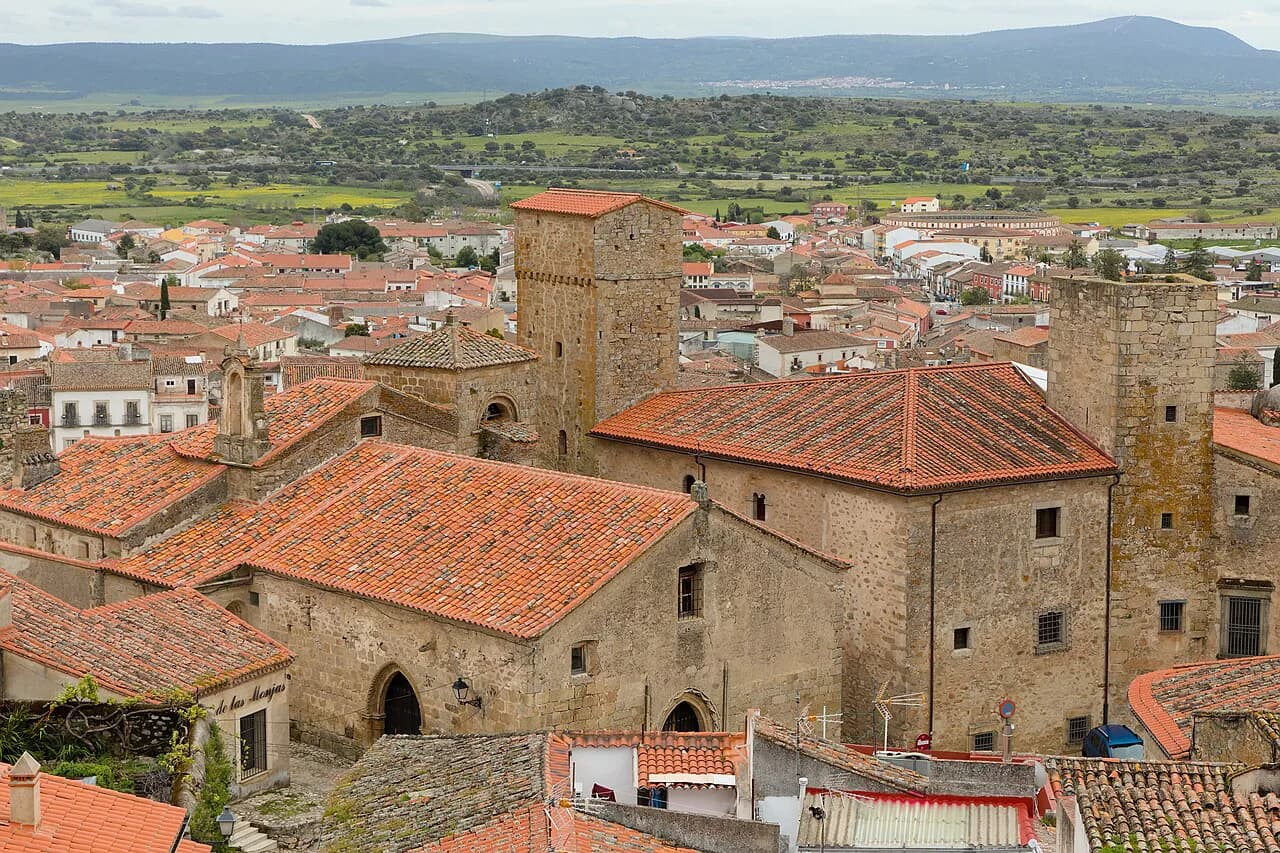
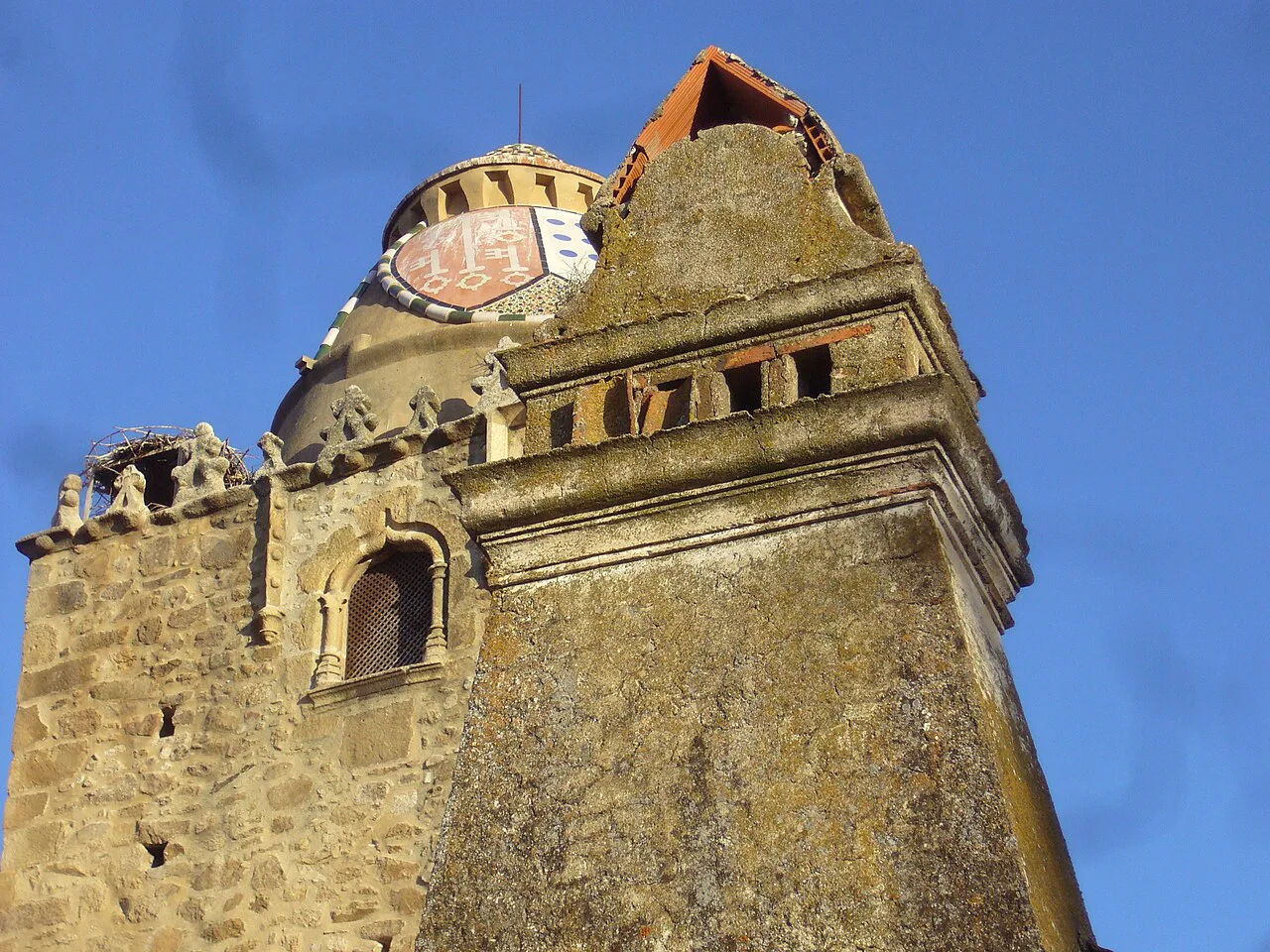
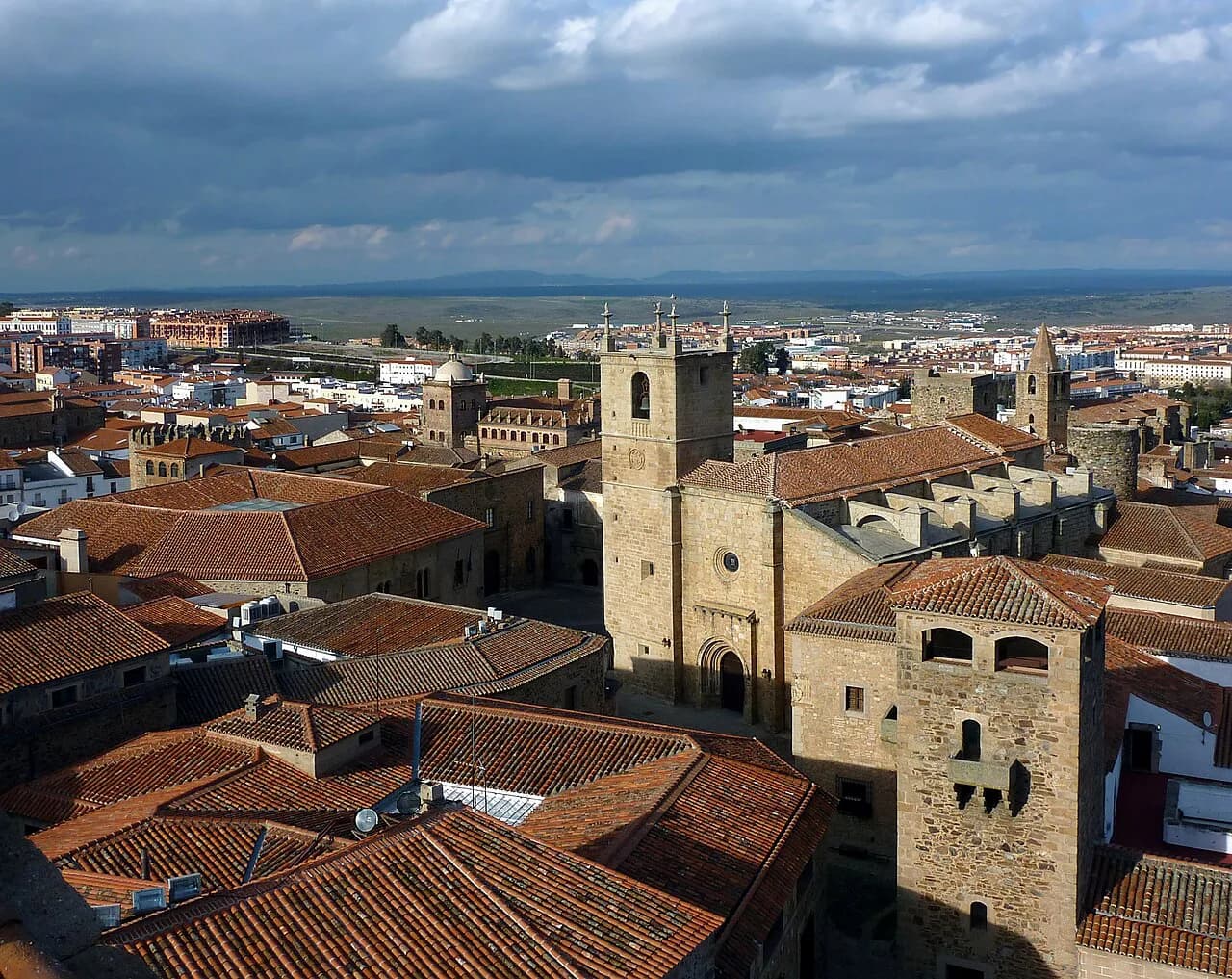
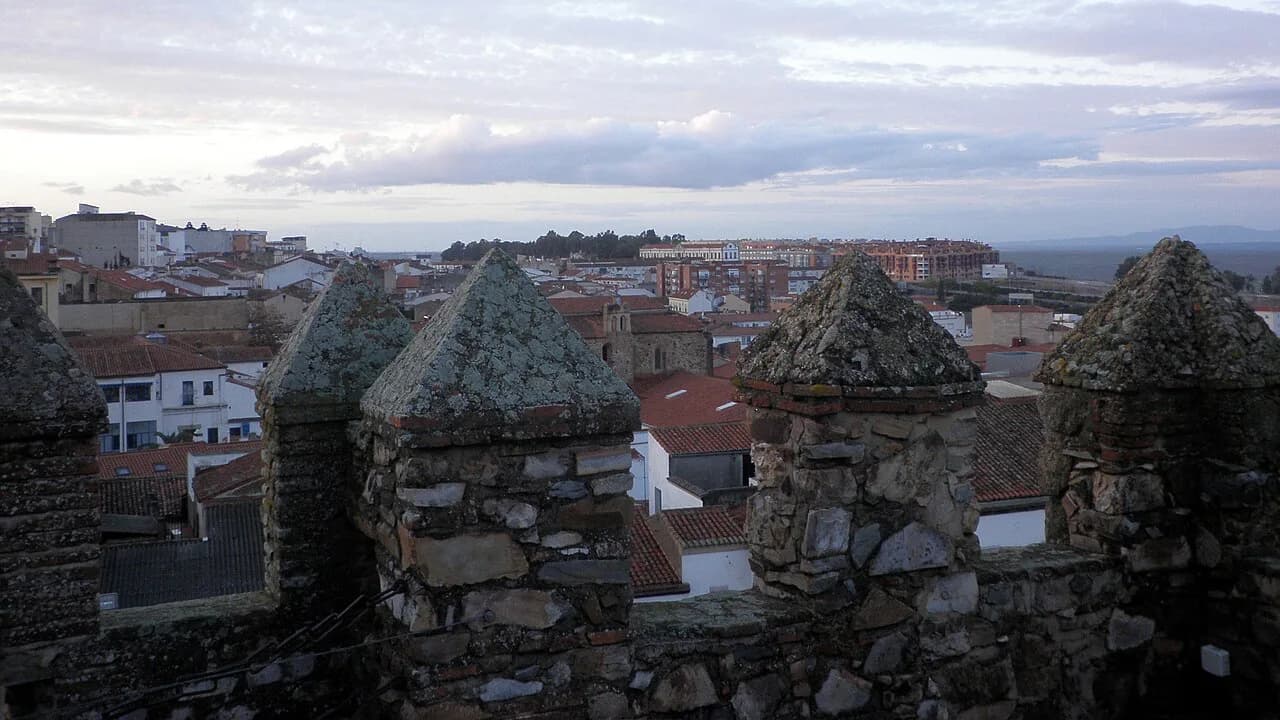
Trujillo's castle is an Arab fortress raised between the ninth and twelfth centuries, sitting on the Cabezo de Zorro and commanding the best views of the town and the surrounding Extremaduran countryside. Inside the walls stands the hermitage of the Virgen de la Victoria, the town's patron, so the visit combines defensive architecture with a small religious space rather than empty masonry. The climb is the trade-off: the hill is exposed, and midday in summer makes the ascent and the unshaded wall-walk uncomfortable.
Approach the castle the old way, through the Puerta de Santiago and along the line of the medieval walls, which still show defensive towers and arches with views out over the fields. The walls themselves are a vestige of the medieval town rather than a restored set piece, so allow time to walk the stretch beside them on the way up instead of treating the gate as a quick photo stop. Timed entry, if any applies, and ticket details are the sort of thing the town's tourist office publishes, so confirm before you build the day around a castle interior.
Iglesia de Santa María la Mayor: the Gothic church and its tower
Near the castle, the Iglesia de Santa María la Mayor is the town's showpiece Gothic church, with a Romanesque tower and a high altarpiece by Fernando Gallego. The tower climb runs to 106 steps and repays the effort with a second panoramic view of Trujillo and its surroundings, distinct from the castle's because it looks back across the rooftops rather than out over the plain. There is a modest charge to enter, so take the current figure at the door.
The conquistador palaces around the square
Trujillo's wealth came back from the Americas, and the family palaces around the Plaza Mayor are the visible result. The Palacio de los Duques de San Carlos is a sixteenth-century Renaissance palace in the historic centre whose facade carries the arms of the Vargas-Carvajal family; it now functions as a convent, but the inner courtyard can be visited and the architecture is the draw rather than furnished rooms. The Palacio del Marqués de la Conquista, named for the conqueror of Peru, and the Palacio de los Chaves Cárdenas are the other names to look for as you circle the square and its lanes.
The Pizarro house-museum and the Museo de la Coria
The Casa-Museo de Pizarro occupies the house traditionally given as Francisco Pizarro's birthplace and now traces his life and the conquest of Peru. It is a small, plain museum rather than a grand one, which suits anyone more interested in the man and the period than in display technology. Confirm current opening hours and any admission charge with the town's tourist office before you go.
Near the walls, the Convento de San Francisco Real houses the Museo de la Coria, which broadens the visit beyond conquest history and palace architecture. It sits on the edge of the historic circuit rather than on the direct line between square and castle, so it works best as an add-on when you have finished the main loop and still have time.
La Alberca: the old Arab cistern
La Alberca is a former Arab water cistern tucked into a side street of the old town, a stone-vaulted chamber built to store water and now one of the quietest corners of the circuit. It is small, and the appeal is the cool, enclosed atmosphere rather than a long visit; it makes a natural pause on the climb. Because it hides in a lane, it is easy to miss: look for it on a town plan before you start rather than hoping to stumble on it.
The walls, the Puerta de Santiago and a walking route from the square
A sensible route starts in the Plaza Mayor with San Martín de Tours, crosses to the palace lanes, climbs through the Puerta de Santiago along the walls to the castle, then drops back by Santa María la Mayor and La Alberca to the square. Everything is within the historic core, so the circuit is short in distance but steep in places, and the lanes between square and castle are the toughest section. Finish back in the arcades, where a broken walk is easy to resume after a rest.
Iglesia de San Martín de Tours on the square
The Iglesia de San Martín de Tours stands on the Plaza Mayor itself, a fifteenth-century building that mixes Gothic and Renaissance work and keeps a sober, elegant interior. Its tower can also be climbed for another view, which gives you a low-effort option if the castle and Santa María la Mayor both feel like too much climbing in the heat. The church sometimes hosts summer concerts, so it is worth glancing for any poster or parish notice as you pass.
How long Trujillo takes, and fitting it into a Cáceres break
Trujillo sits about 50 km east of Cáceres, between the Guadiana and Tajo river valleys, which makes it a straightforward addition to a short break based in the city rather than a destination in its own right. A half-day covers the Plaza Mayor, the palaces and churches around it, the climb to the castle and the return past Santa María la Mayor and La Alberca. Add an hour if you want the Pizarro museum and the Museo de la Coria, and check how you will get back before you commit to a late afternoon in the castle.
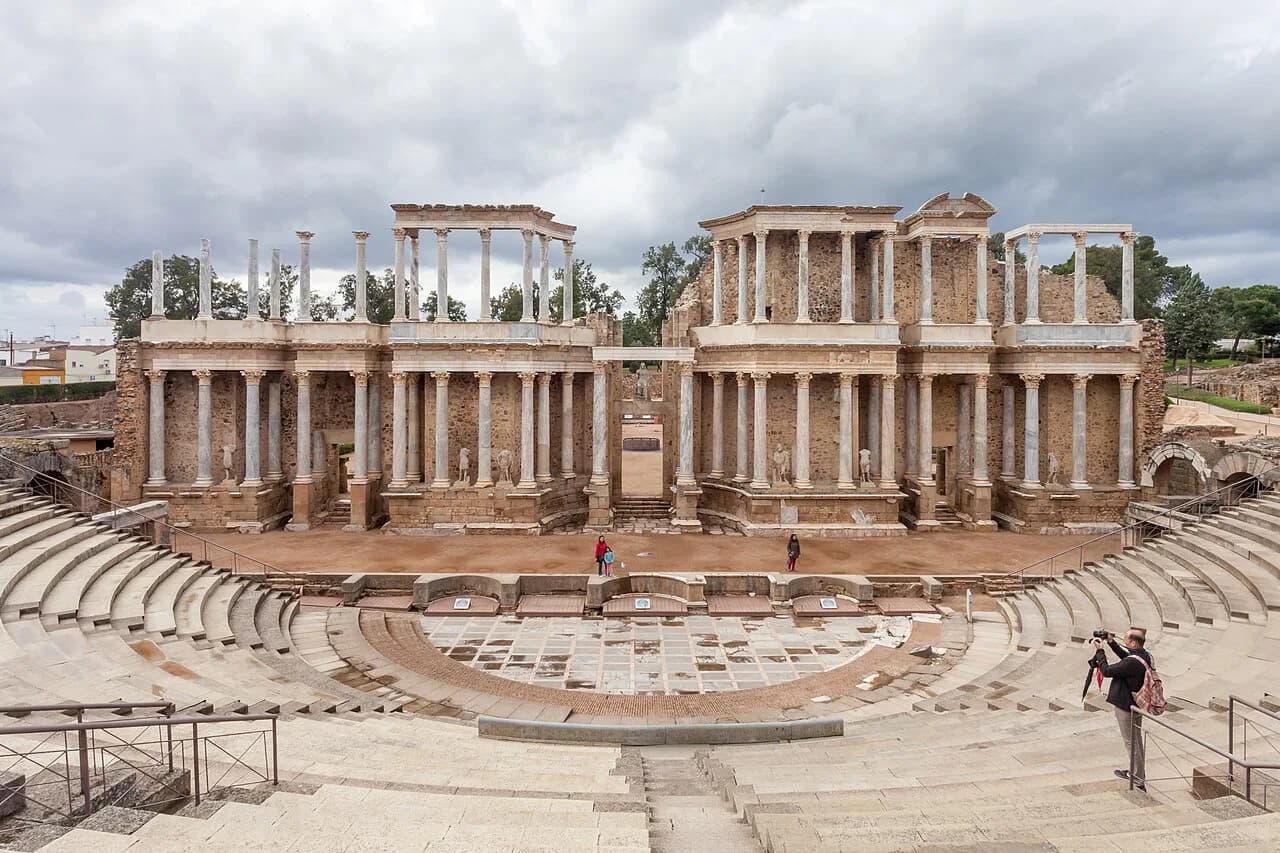
Use the things to do in Cáceres guide to plan the city side of the trip and this page for the outlying town, so you are not duplicating monuments in a single day. Public transport between Cáceres and Trujillo runs on published timetables that change with the season, so take times from the operator rather than from a plan made months in advance. If you are travelling on by rail or road, Mérida Spain is the other obvious Extremaduran stop, with its Roman theatre and amphitheatre.
Sights nearby: Monfragüe and the Llanos de Cáceres
The Parque Nacional de Monfragüe lies roughly 40 minutes away by car and is the region's great birdwatching area, with griffon vultures, deer and dehesa landscapes that reward a day of their own with binoculars. It is not a walking route from Trujillo, so treat it as a separate drive. Closer in, just before Cáceres, the Llanos de Cáceres y Sierras de Fuentes is a protected regional area of open plains that is good for observing birdlife without committing to a full day.
Practical trade-offs: heat, siesta hours and the climb
The main practical constraint in Trujillo is the hill: the old town and castle sit above the square, so every circuit includes real ascent, and the inland Extremaduran summer makes midday the worst time to attempt it. Start early or come back up in the late afternoon, and use the arcades of the Plaza Mayor as your shade and your regrouping point. As with churches across Spain, opening hours can vary and some close to tourists for services, so plan visits around services rather than assuming an all-day opening.
Build Trujillo around the square, not the castle alone
Trujillo rewards a plan built on the Plaza Mayor: see the palaces and San Martín de Tours first, climb to the castle and Santa María la Mayor while it is cool, and come back down through La Alberca to the arcades. If you have a car, add Monfragüe as a separate day rather than squeezing it into the same afternoon, and keep the Cáceres Attractions: 6 Visitor Guides page open if you want to compare what the city offers before committing your days.
Explore more Cáceres guides
Frequently Asked Questions
Which country is Trujillo in?
Trujillo is in Spain, in the province of Cáceres in the Extremadura region, about 50 km east of the city of Cáceres and towards Badajoz.
Is Trujillo, Spain worth visiting?
It is worth it if you want a compact historic town rather than a large city. The Plaza Mayor, the Arab castle above it, Santa María la Mayor and a cluster of conquistador palaces and churches sit within one steep but short circuit, which makes it a natural half-day addition to a break based in Cáceres.
How many people live in Trujillo, Spain?
Trujillo is a small town rather than a city; population figures change and are best taken from the town council's current statistics rather than from older guides.
Sources
Notes for your next Spanish town break
Optional updates to our guides.
You might also like
Continue reading
More guides you'll find useful